Call Us
+86 136 6007 9809
Call Us
+86 136 6007 9809

Material: Carbon Steel, Stainless Steel(5.8 (free-cutting steel shall not be used, and the carbon content shall not be higher than 0.2%).)
Standard: Q C/T598©&IFI 148 (UR) - 2002,DIN34817
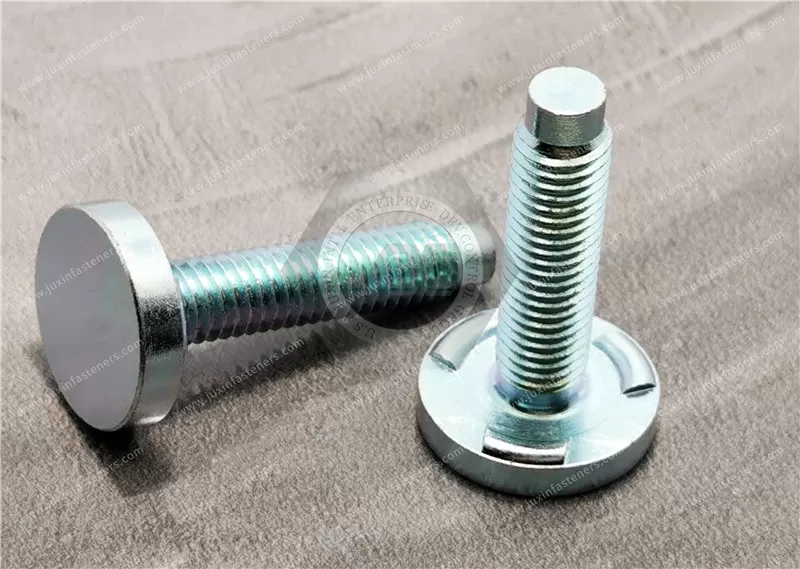
M8 Welding Bolt 10b21 Class 8.8 10.9 Square 3 Projections Under Head Sun Roof Weld Bolt Automotive Fasteners
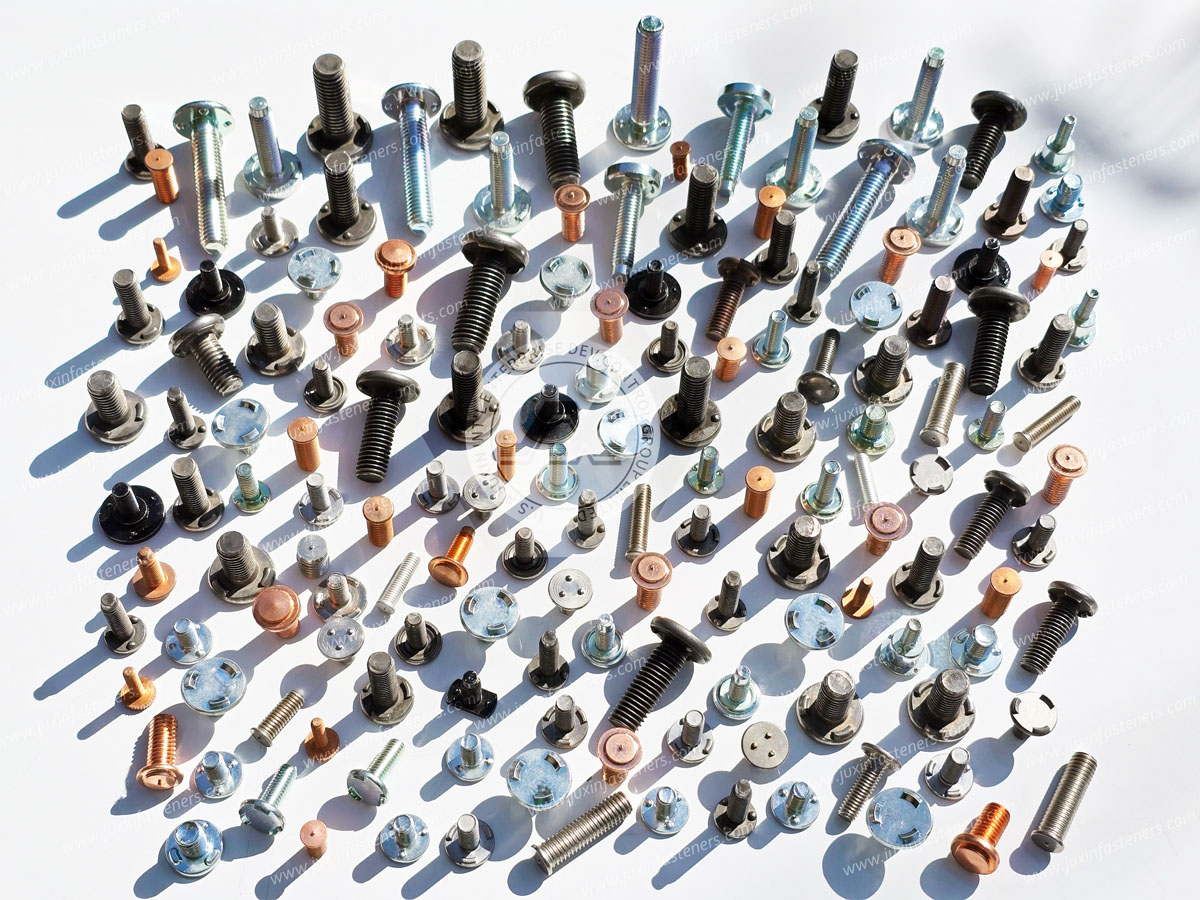
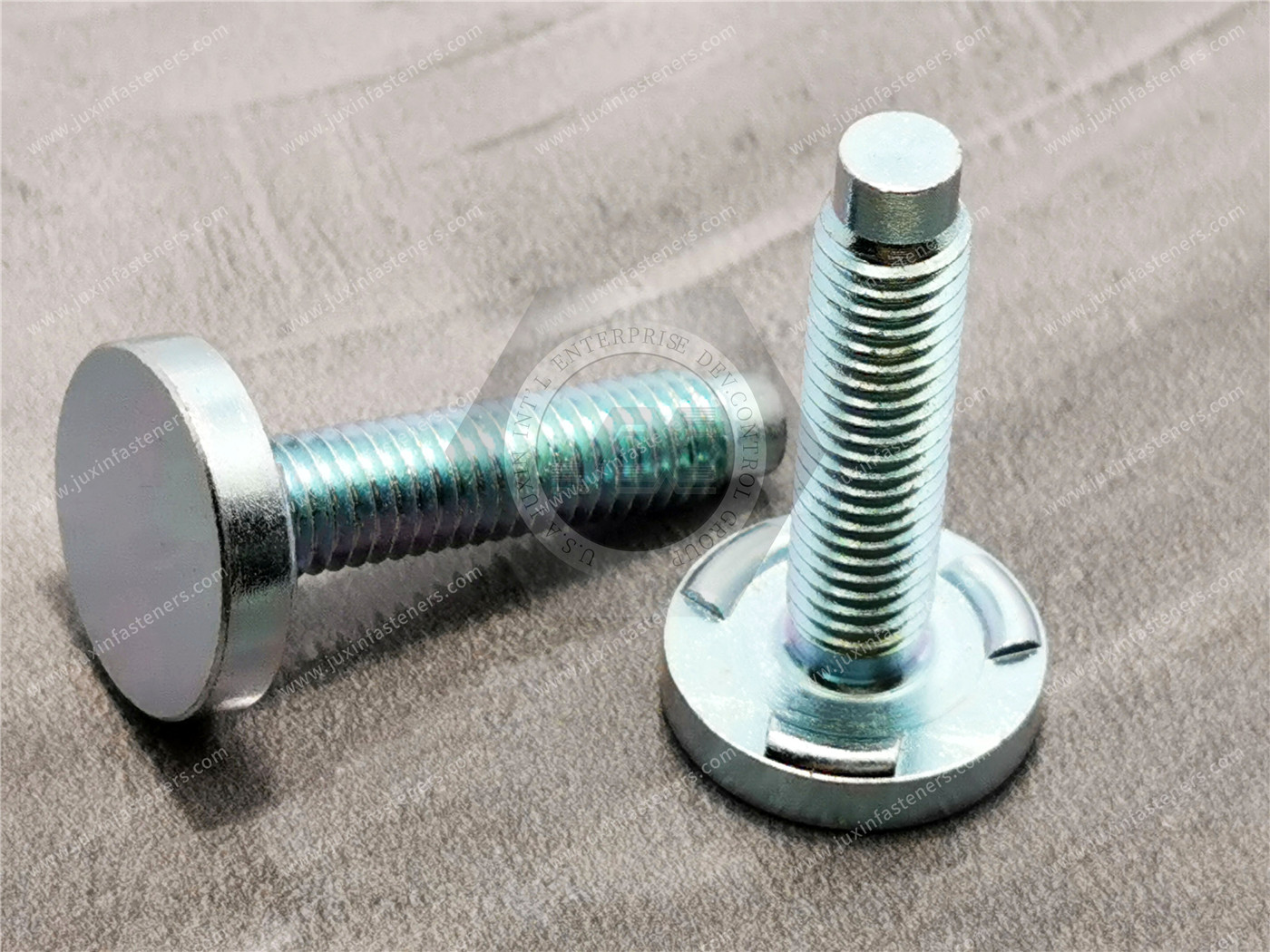
These studs have a broad base that distributes the load and projections that concentrate the weld. The length listed is the overall length.
①, Material: Maximum carbon content Cmax = 0.25% standard DIN EN 10263-4; performance class 8.8, DIN EN 10263-4 - 2018
Steel rods, cold-headed and cold extruded bars and wires
Note: In addition to Cmax = 0.25%, a maximum carbon equivalent CEVmax = 0.5% is recommended to ensure weldability, carbon steel (Cmax = 0.25%), DIN EN 10263-4
Thread standard: DIN ISO 965-1
Surface finish: The surface roughness is specified in DIN 267-2.
Precision Welding Screws DIN 34817
Welding screws with round heads and metric thread, according to DIN 34817, are a reliable solution for professional welding applications. Available in a variety of materials and strength classes, including 8.8, A2, and A4, these screws provide excellent stability and durability of connections.
Excellent Durability and Corrosion Resistance
DIN 34817 zinc-plated (Zn) screws offer not only excellent strength but also corrosion resistance, which is crucial for long-term use in a variety of atmospheric and industrial environments. The round head and precise metric thread guarantee easy and reliable welding, translating into high assembly efficiency.
Product Specification
Name: Projection weld screws - pilot point
Material: Carbon steel, Stainless steel.Brass
Advantages of self-guiding welded bolts:
(1) It can solve the problem of thread cross-threading. Significant cost savings by avoiding downtime, rework, and scrap costs associated with cross-threading.
(2) The built-in guide can automatically correct the installation deviation angle, which greatly improves the installation efficiency.
(3) Insensitive to assembly speed.
(4) Lighter and more versatile than other specialty fasteners.
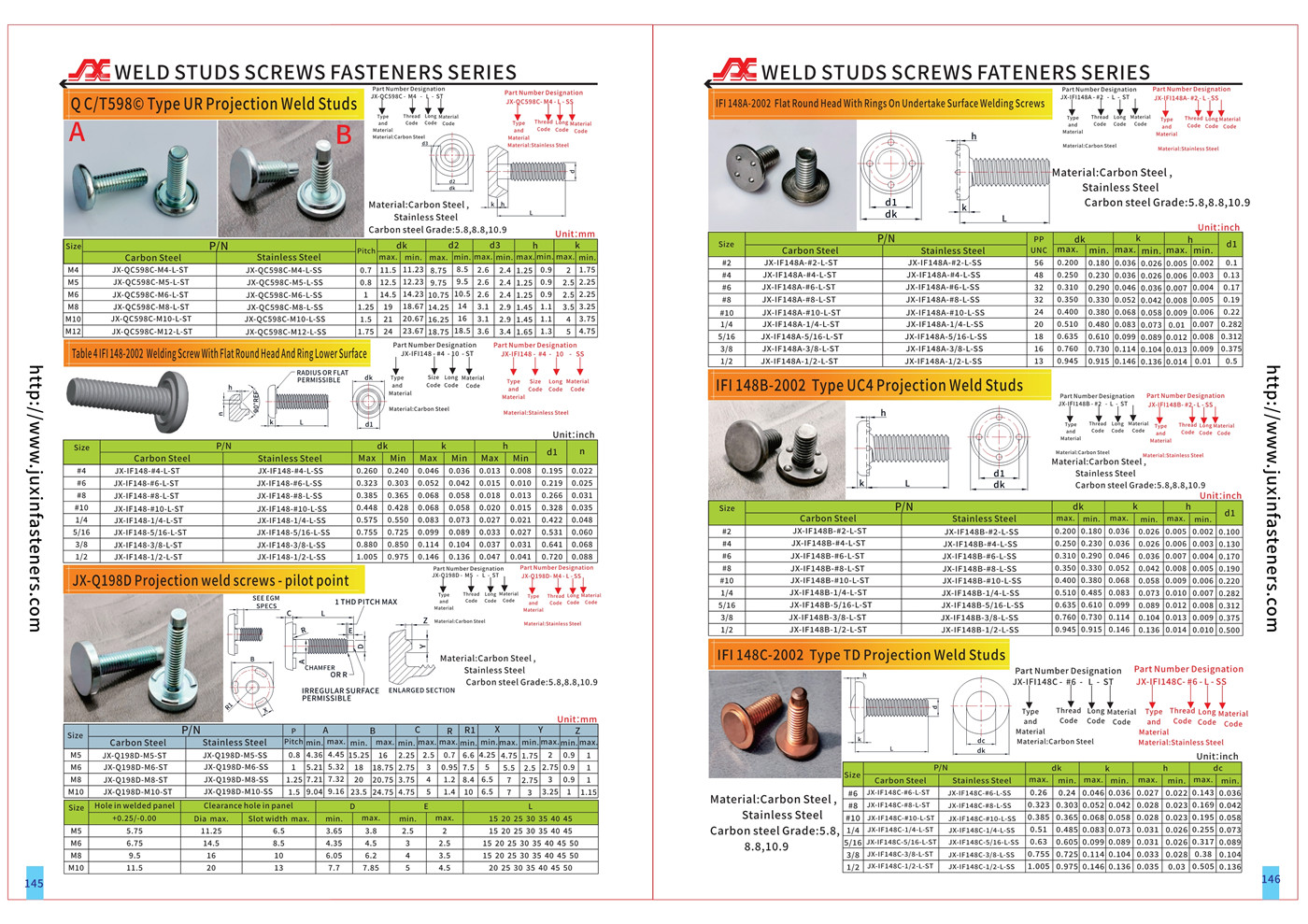
Size Can also be According to the Customer's requirement for manufacturing, please check the detailed specification sheet details PDF, CAD, 145-146 Page See more product details.
DIN 34817 Weld Stud Solutions for Automotive Structural Engineering
Engineered Fastening Components for Body-in-White and Energy Vehicle Platforms
In modern automotive structural design, fastening systems are not simple assembly accessories — they are load-transferring structural elements integrated into crash management, vibration control, and modular architecture.
For body-in-white (BIW) structures and new energy vehicle platforms, pre-welded studs have become the preferred fastening solution due to their ability to achieve permanent metallurgical bonding without secondary machining.
As a professional fastener manufacturer, we supply DIN 34817 weld studs engineered for high-strength automotive structural applications and fully compatible with automated resistance-welding production lines.
DIN 34817 Weld Studs — Designed for Resistance and Projection Welding
DIN 34817 defines metric-thread weld screws specifically designed for resistance welding processes.
The bottom structure of the stud features:
Three precision welding projections or a single optimized welding boss
Controlled projection geometry for stable heat concentration
Engineered weld interface for uniform fusion penetration
During resistance welding, current density concentrates at the projection points, generating localized melting and forming a metallurgical bond between the stud and the sheet metal substrate.
This process provides:
No pre-drilling or tapping required
Improved sealing performance of the body structure
Reduced assembly cycle time
Higher positional repeatability in robotic welding systems
For OEM production lines, this translates directly into manufacturing efficiency and structural reliability.
High-Strength Material Selection for Safety-Critical Applications
Our DIN 34817 weld studs are produced using automotive-grade low-carbon boron steels such as:
19MnB4 (in accordance with DIN standards)
10B21 alloy structural steel
Through controlled heat treatment and tempering processes, mechanical performance levels are achieved:
Property Class 8.8
Property Class 10.9
Typical mechanical characteristics:
High tensile strength
High shear resistance
Stable fatigue performance
Controlled hardness for optimal weldability
These properties make the studs suitable for structural zones subjected to dynamic loads, including:
Seat belt anchorage reinforcement
Suspension mounting nodes
Crash beam structures
Battery pack structural frames
Precision Manufacturing for Automated Production Compatibility
Automotive structural fastening requires high positional accuracy and consistency.
Our weld studs are manufactured under strict dimensional control:
Thread tolerance: 6g
Product precision: Grade A
Controlled projection height and geometry
Stable concentricity and perpendicularity
The bottom locating feature ensures precise alignment with sheet metal positioning holes.
In automated welding lines, repeatability can reach ±0.2 mm, supporting integration with:
Robotic resistance welding systems
Vision-guided production systems
High-volume automotive assembly lines
For engineering teams, this ensures design intent is fully maintained in mass production.
Engineering Applications in Automotive and Energy Vehicles
Body Structure Load Nodes
DIN 34817 weld studs are widely applied in structural reinforcement areas such as:
Door hinge reinforcement plates
A/B pillar structural nodes
Roof reinforcement structures
Crash energy transmission paths
These fastening points directly affect vehicle stiffness and crash safety performance.
Chassis and Dynamic Systems
In chassis systems, weld studs provide mounting interfaces for:
Suspension brackets
Steering system supports
Brake line routing structures
These nodes must withstand vibration, torsional stress, and long-term fatigue loads.
New Energy Vehicle Battery Systems
With the growth of electric vehicle platforms, weld studs are increasingly used in:
Battery enclosure mounting
High-voltage cable management
Thermal barrier panel fixation
Fastening reliability in battery systems directly impacts structural integrity and long-term safety performance.
Welding Process Optimization and Quality Control Support
As a professional fastener supplier, we understand that weld quality depends not only on product design but also on the control of process parameters.
Key welding factors include:
Welding current control
Welding time management
Electrode lift height
Surface cleanliness of base material
Improper parameter settings may result in:
Porosity
Incomplete fusion
Excessive burn-through
Reduced mechanical performance
We support engineering teams by providing:
Technical guidance on projection design
Material compatibility recommendations
Mechanical property verification reports
Sampling validation support
Validation and Mechanical Testing Support
For automotive structural projects, validation typically includes:
Tensile load testing
Torque resistance testing
Shear testing
Fatigue cycle evaluation
We can support prototype and PPAP-level documentation requirements for automotive programs.
Partnering with Engineering Teams for Structural Reliability
Selecting the right weld stud supplier is critical for ensuring:
Structural load reliability
Automated production stability
Long-term durability performance
Consistent quality across global production programs
With extensive experience in automotive structural fastening applications, we provide engineered DIN 34817 weld stud solutions tailored for high-performance vehicle platforms.
Product Packaging
Packaging: The inner packaging is a plastic bag, and the outer packaging is a carton. Then the tray. Carton size: 29*19*19.5CM and 23.5*17.5*8, CM and pallet size: 215*100*90CM, or as your request
Product Pictures
Contact Us
Tel.:
+86 020 8621 0320
+86 020 3121 6067
E-mail:
Technical Support:
Navigation
SEND INQUIREY