Call Us
+86 136 6007 9809
Call Us
+86 136 6007 9809

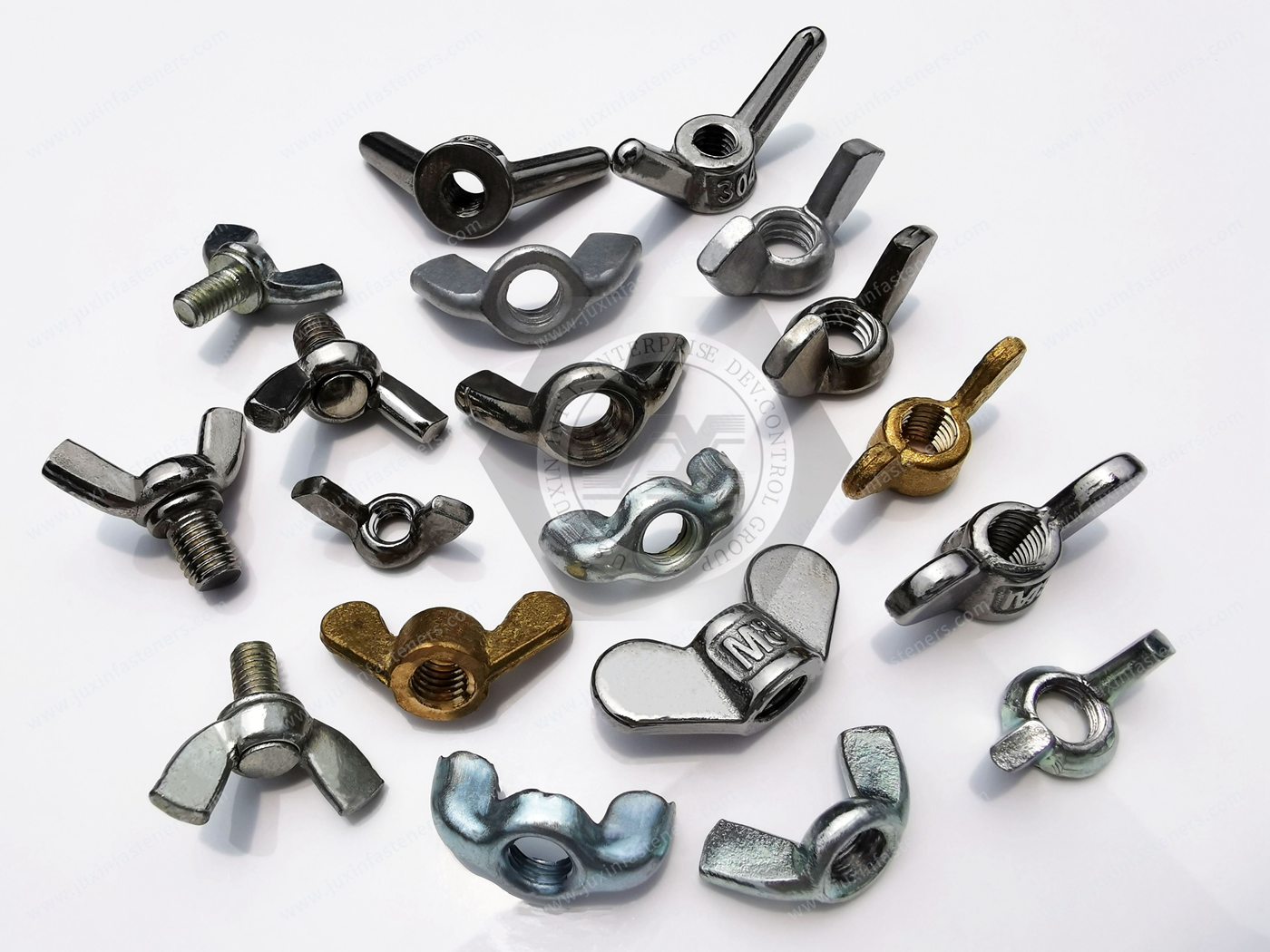
Material: Stainless Steel, Carbon Steel, Brass
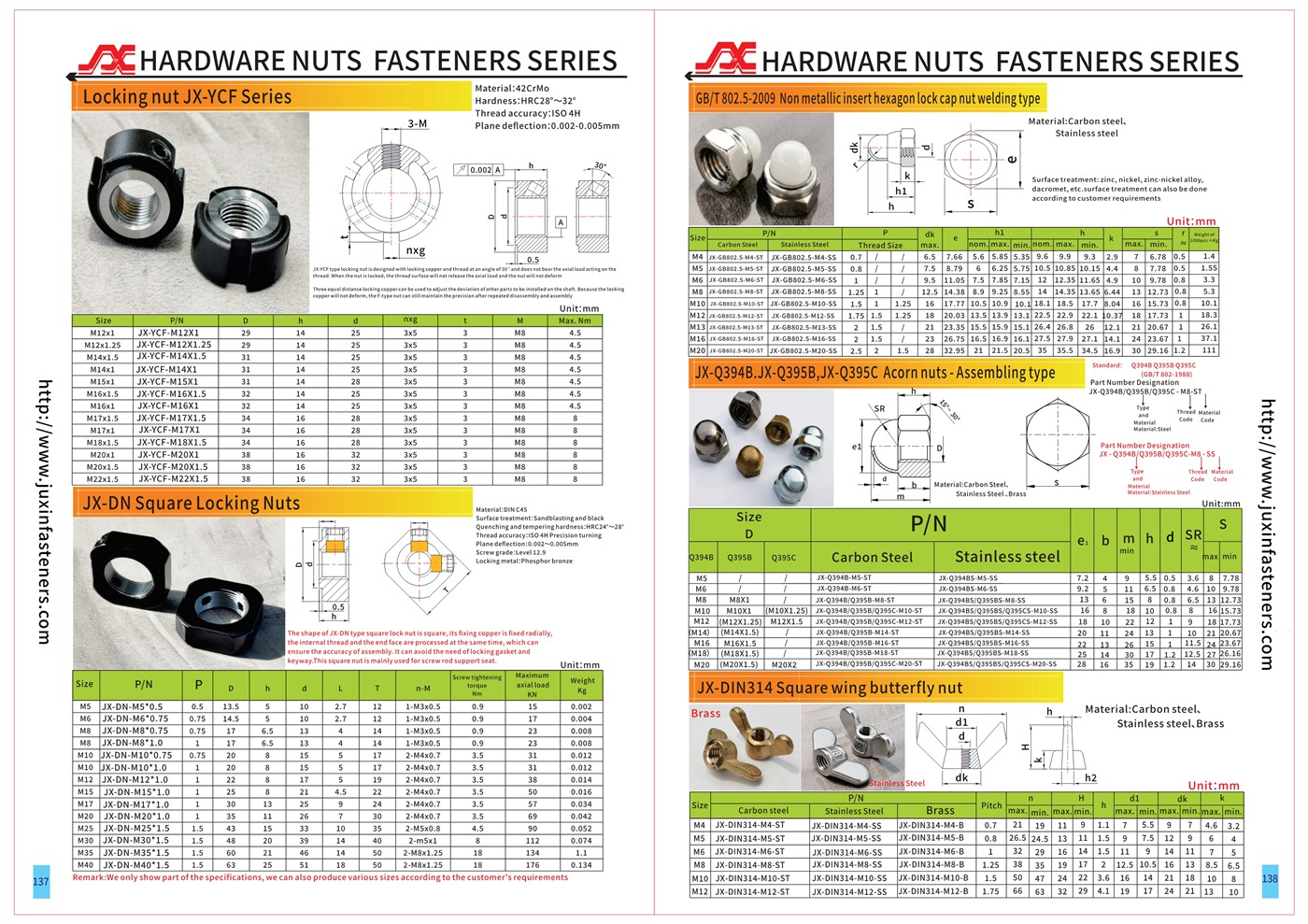
Standard: GB /T 62.1 - 2004, GB /T 62.4, GB /T 62.3, GB /T 62.2, DIN 315, ANSI/ASME B 18.6.9, JIS B 1185, Q 390B, DIN 314, ANSI/ASME B 18.6.9, JIS B 1185.
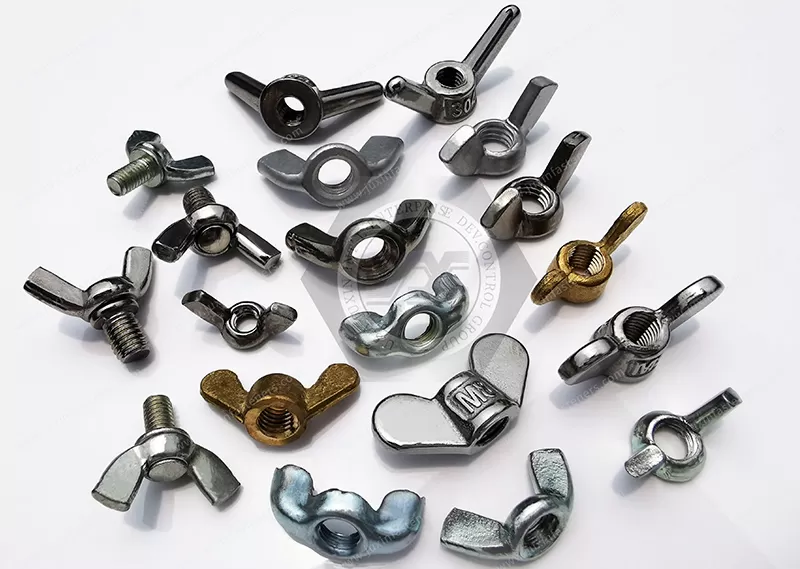
The easiest nuts to twist on and off by hand, these are commonly used to fasten parts that need frequent disassembly, such as access panels and covers. The wings give you more leverage than knurled-head nuts, so you can apply greater torque and achieve a tighter fit.
Zinc-Plated Steel—A step up from plain steel, the zinc plating withstands occasional exposure to moisture.
Black Corrosion-Resistant-Coated Steel—Combines a finished appearance with the rust resistance of stainless steel. The coating has been tested to stringent standards, including 1,000 hours of salt spray testing, to withstand wet and outdoor environments. Also known as black luster.
Steel—Best for dry environments since moisture will cause these nuts to rust.
The easiest nuts to twist on and off by hand, these are commonly used to fasten parts that need frequent disassembly, such as access panels and covers. The wings give you more leverage than knurled-head nuts, so you can apply greater torque and achieve a tighter fit.
Product Specification
Name: Wing nuts
Material: Stainless Steel, Carbon Steel, Brass
Size: M4, M5, M6, M8, M10, M12
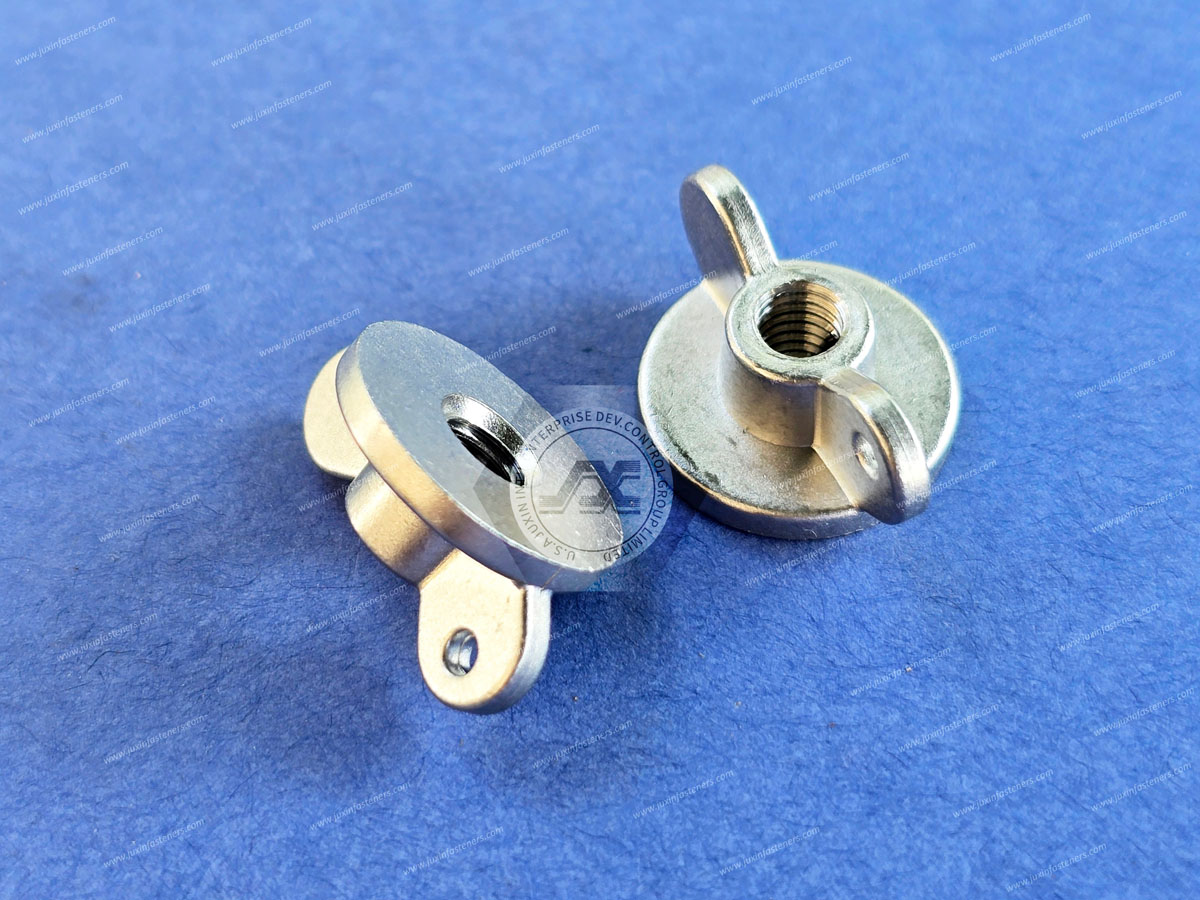
The application advantages of wing nuts are as follows:
1. Keep the back of the board completely flat;
2. Small and exquisite, suitable for all electronic or precision equipment;
3. High torque resistance;
4. It is easy to equip, and only needs simple pressure riveting;
5. Serialization of specifications can meet various design requirements.
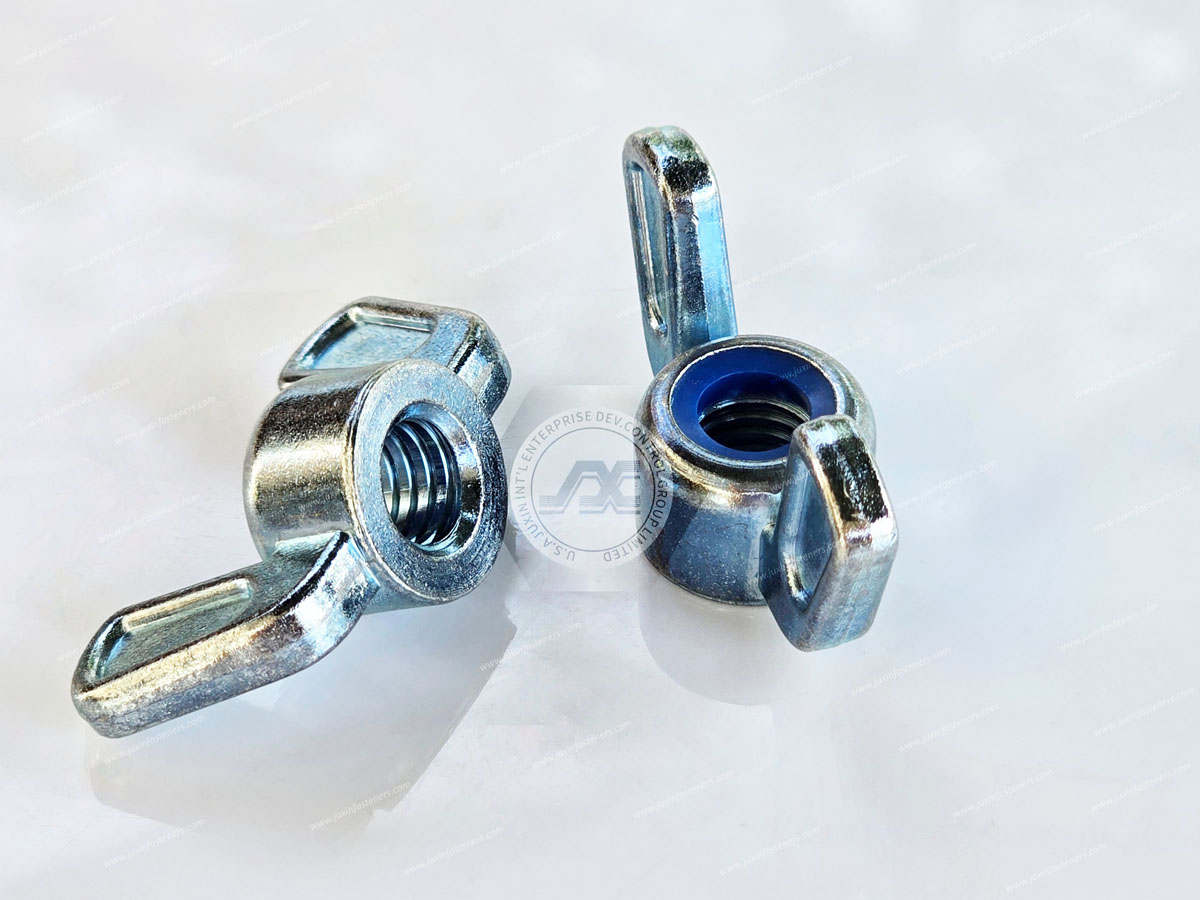
Wing nuts have superior performance that cannot be replaced by other nuts, so they are widely used in the medical device industry because wing nuts are also made of plastic, plastic is an insulator, and it is environmentally friendly and can prevent interference when used in medical devices. Also in the electric energy industry, because electricity needs to prevent conductors, insulators are necessary, and plastic wing nuts can do it very well. For example, the aviation industry, the aviation industry is all mechanical equipment, as long as it is about mechanical equipment, is where wing nuts are used. In addition to playing a huge role in mechanical equipment, wing nuts also play a huge role in the electronics industry, petrochemical industry, and shipping industry. Because ships are often soaked in water, they have very high requirements for acid resistance, alkali resistance, and corrosion resistance. The high and far selection of wing nuts is also because the wing nuts have a long service life. Not only that, but the communication industry also often chooses wing nuts, because plastic wing nuts can better isolate magnetic fields. The petrochemical industry needs high-temperature resistance, and wing nuts just have this feature, so wing nuts are also used in the petrochemical industry.
Wing Nuts: Features, Materials, Standards, and Applications
Wing nuts are hand-operated fasteners featuring a distinctive wing-shaped design, enabling quick installation and removal without tools. Thanks to their ease of use and reliable performance, they are widely applied across a broad range of industrial and technical sectors.
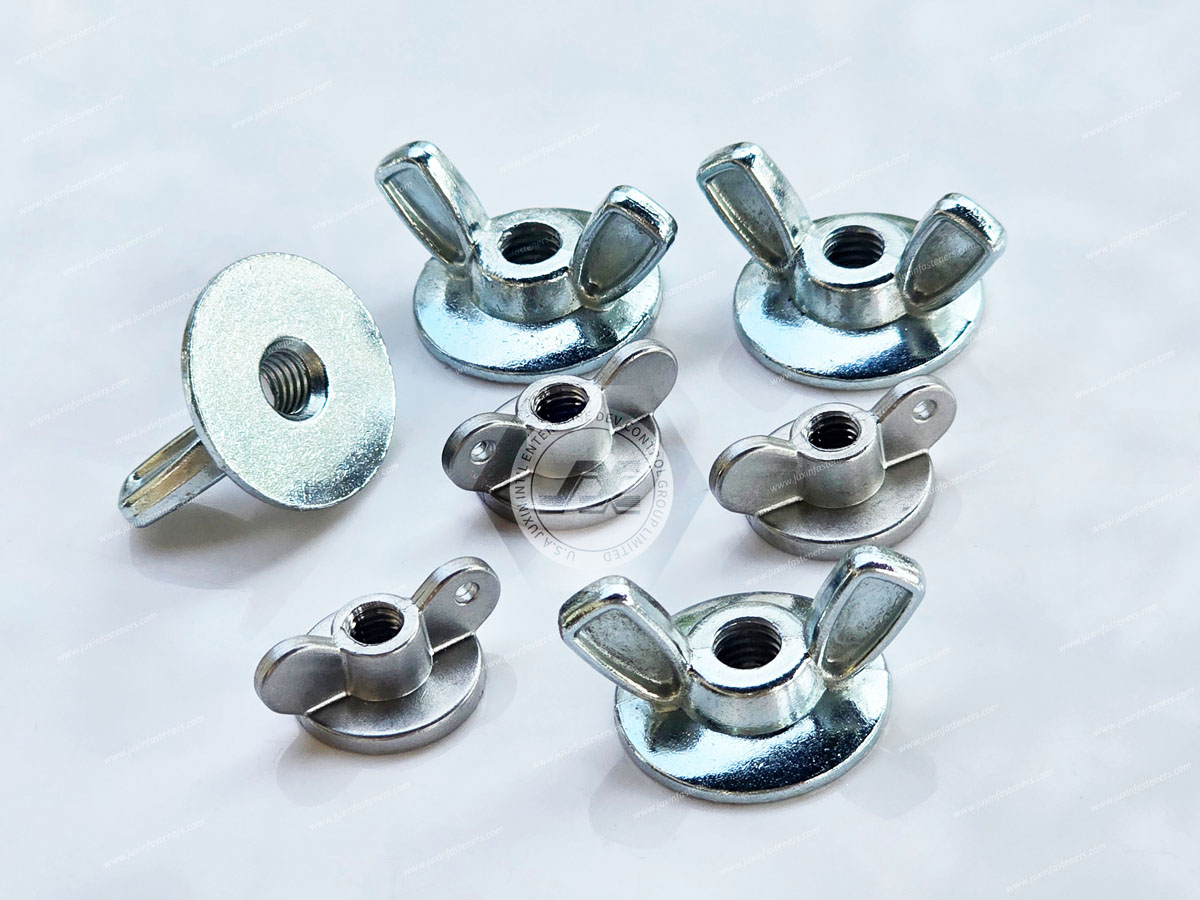
Easy Manual Operation
The extended wing geometry increases finger contact area, allowing users to tighten or loosen the nut quickly by hand. This tool-free operation significantly improves assembly efficiency, especially in applications requiring frequent adjustment or maintenance.
Multiple Material Options and Performance Advantages
Wing nuts are available in a variety of materials to meet different performance requirements:
Metal materials: stainless steel and carbon steel, offering high mechanical strength and durability
Engineering plastics: nylon or polyamide, including reinforced grades with 30% glass fiber, providing:
High strength and impact resistance
Electrical insulation and non-magnetic properties
Excellent corrosion resistance and rust-free performance
Operating temperature range from –40°C to +120°C
These material options make wing nuts suitable for both standard industrial and specialized technical environments.
Optimized Structural Design
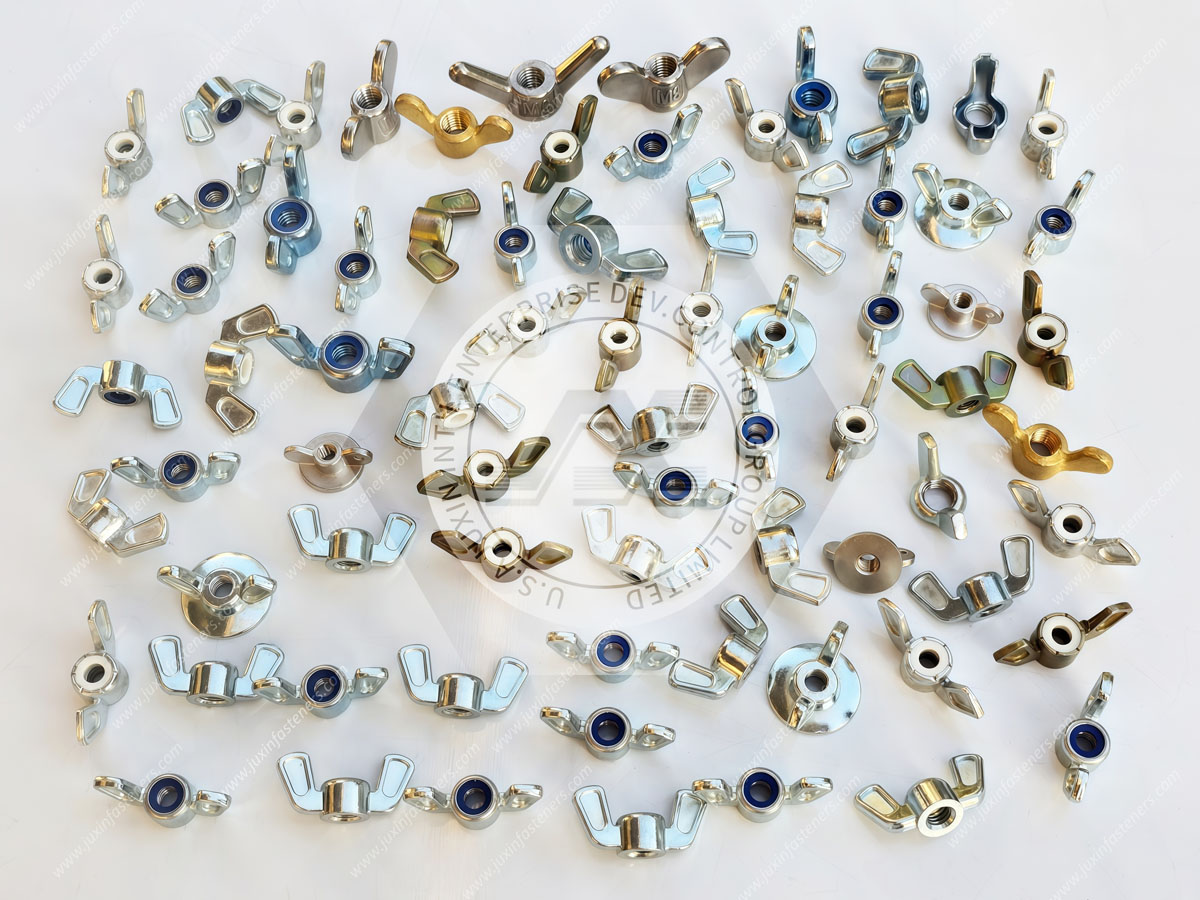
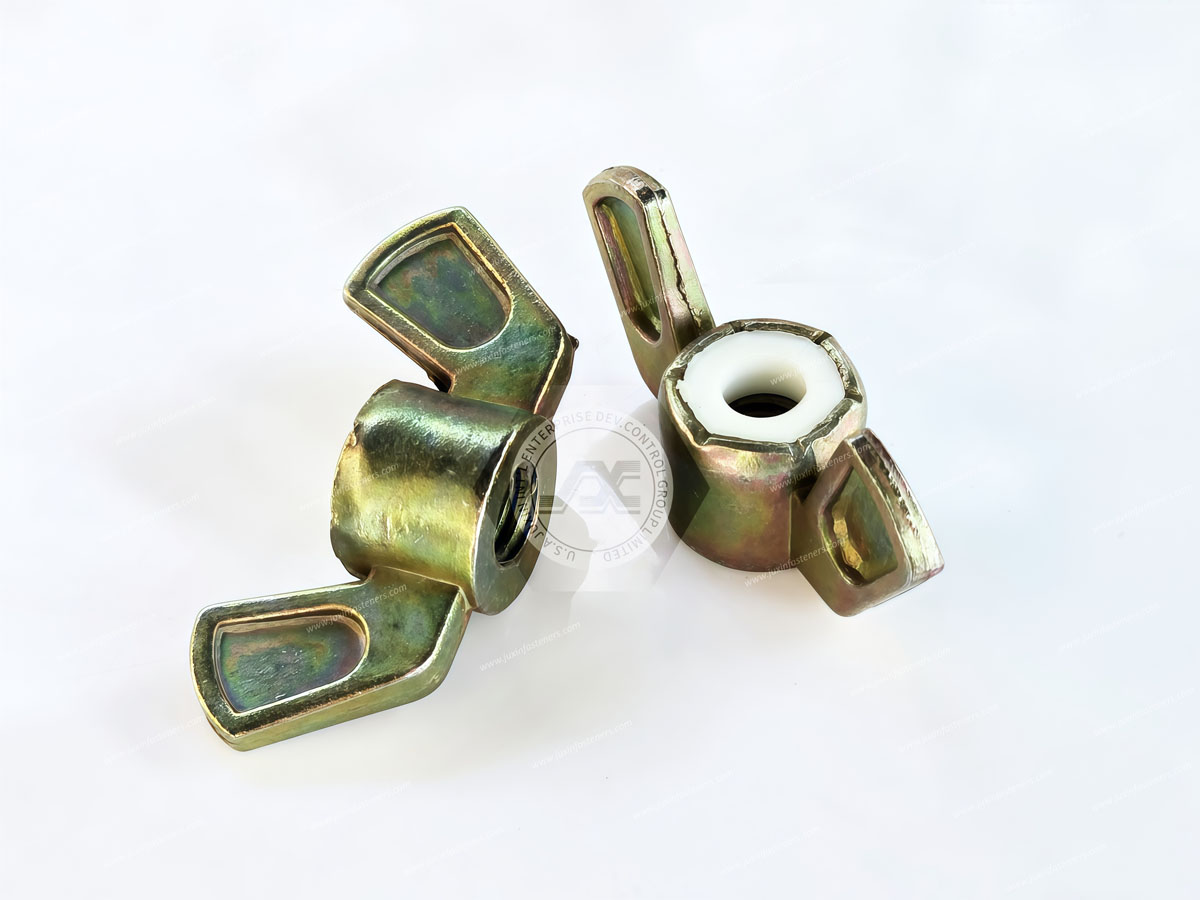
Many wing nuts feature an ergonomic concave arc wing profile, improving grip comfort during manual operation.
Certain designs also adopt modular structures, such as press-fit end caps, allowing for screwdriver-assisted disassembly and easier maintenance when required.
Standardized Thread Specifications
Wing nuts are manufactured in standardized thread sizes, typically ranging from M3 to M10, and comply with relevant international and national standards, such as GB/T 62.1-2004.
Material type, size, and color are commonly identified using standardized coding systems (e.g. EWN codes), ensuring clear specification and traceability.
Wide Range of Industrial Applications
Thanks to their insulation, non-magnetic, and corrosion-resistant characteristics, wing nuts are widely used in:
Medical equipment (including MRI systems)
Energy equipment, such as wind turbines
Petrochemical installations
Electronics and telecommunications
Shipbuilding and marine engineering
Aerospace and high-tech industries
In medical applications alone, wing nuts account for a significant portion of fastening solutions due to their non-magnetic and corrosion-free properties.
Types and Manufacturing Processes
Wing nuts can be classified by both manufacturing method and shape:
Manufacturing processes:
Cold heading
Casting
Stamping
Wing shapes:
Square wing
Round wing
Each process and design type is selected based on mechanical requirements, production volume, and application conditions.
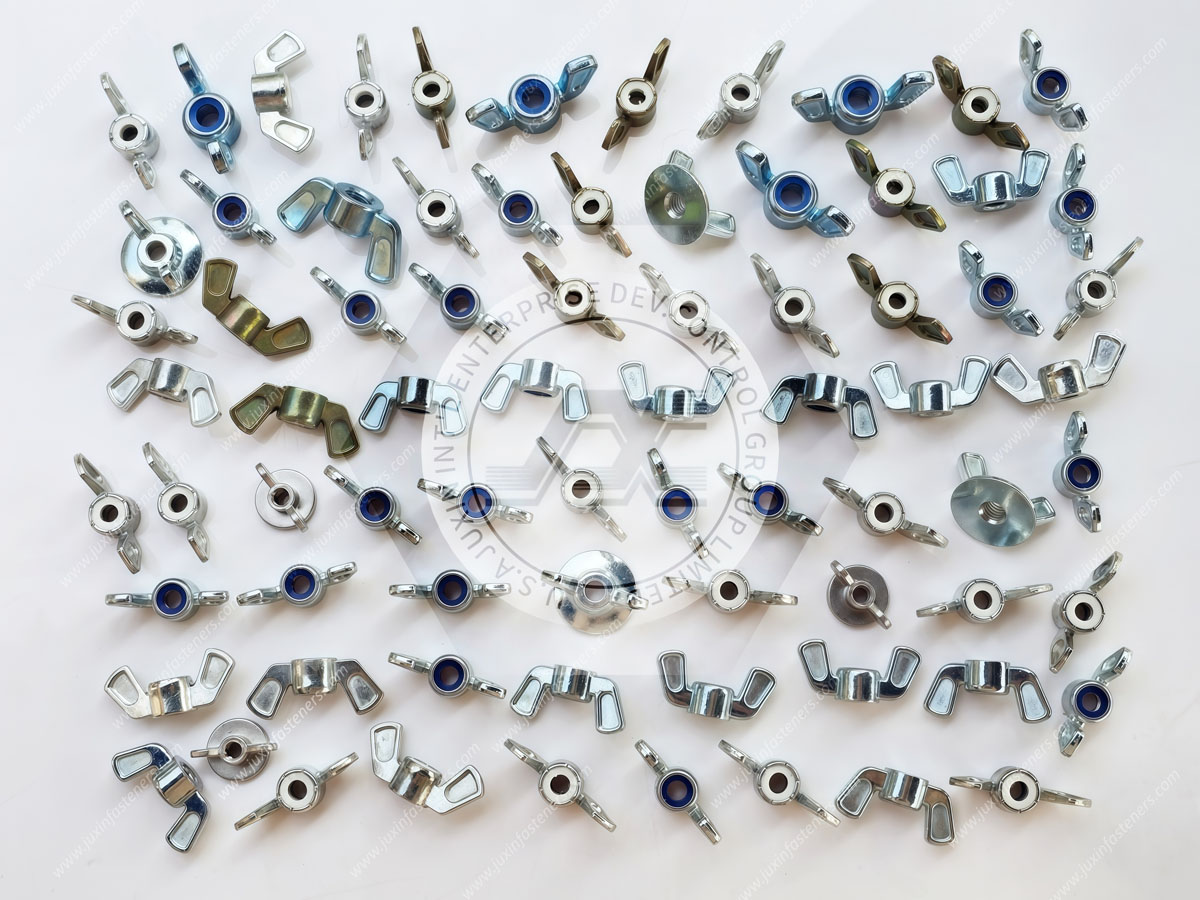
Size Can also be According to the Customer's requirement please check the detailed specification sheet details PDF, CAD, 137-138Page See more product details.
Product Packaging
Packing: Inner is Poly foam, out is carton. Then pallet. Carton size: 29*19*19.5CM and 23.5*17.5*8, CM and pallet size is: 215*100*90CM, or as your requirement.
Product Pictures
Contact Us
Tel.:
+86 020 8621 0320
+86 020 3121 6067
E-mail:
Technical Support:
Navigation
SEND INQUIREY