Call Us
+86 136 6007 9809
Call Us
+86 136 6007 9809

Material:
1. Aluminum Body+Steel Mandrel
2. Aluminum Body+Aluminum Mandrel Close End 120°Countersunk Head
Product Specification
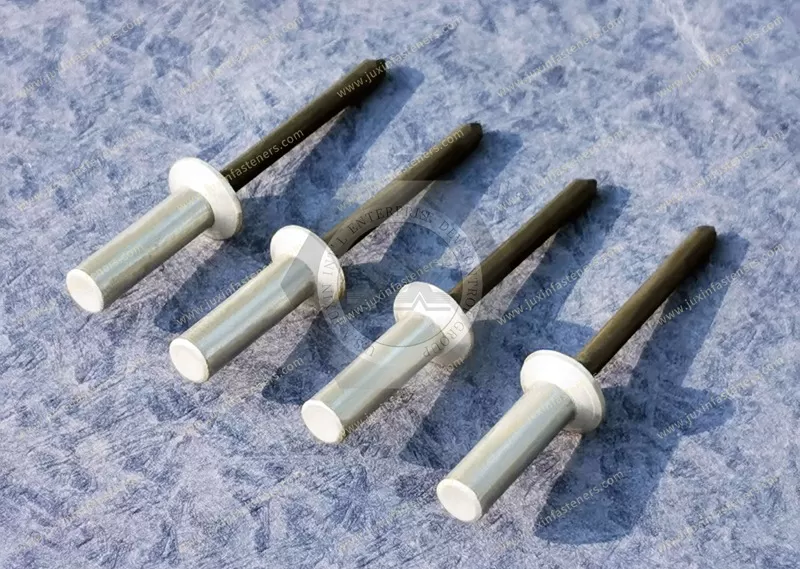
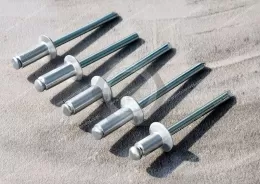
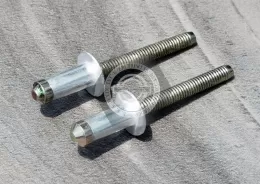
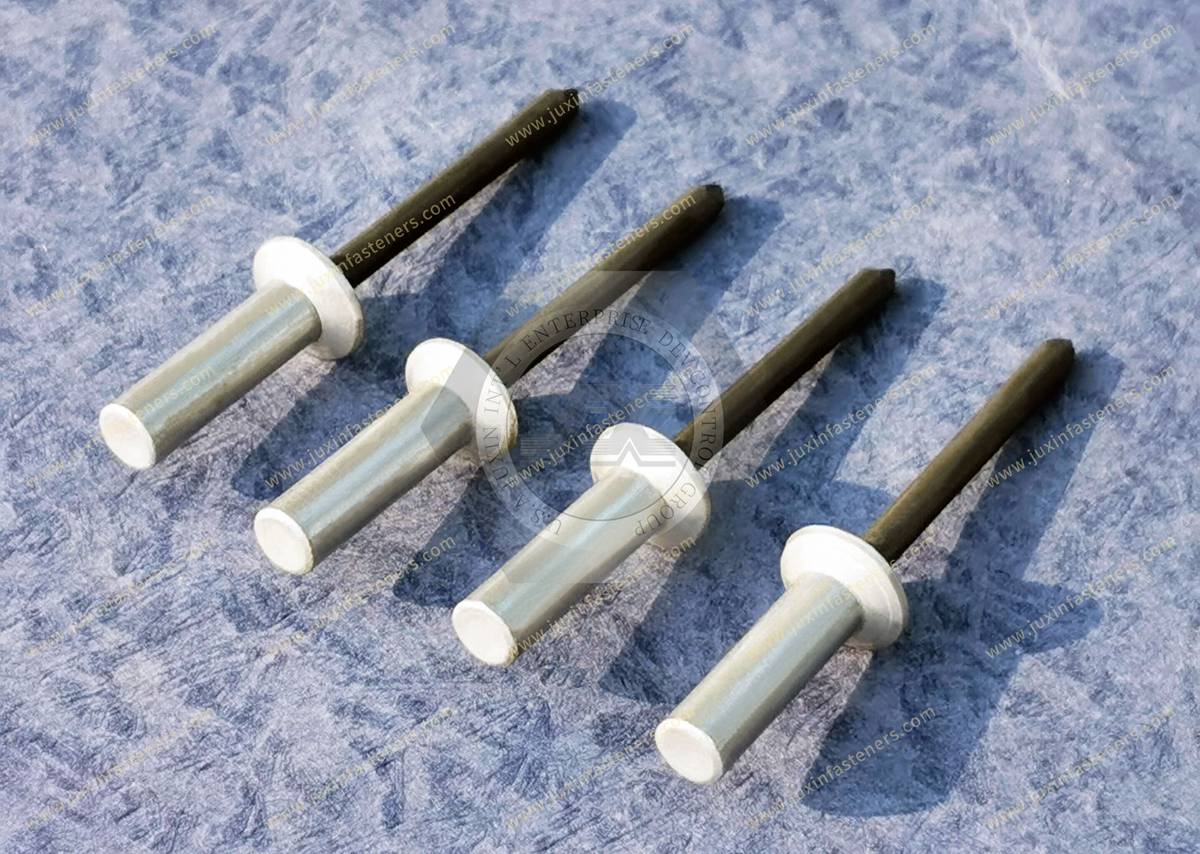
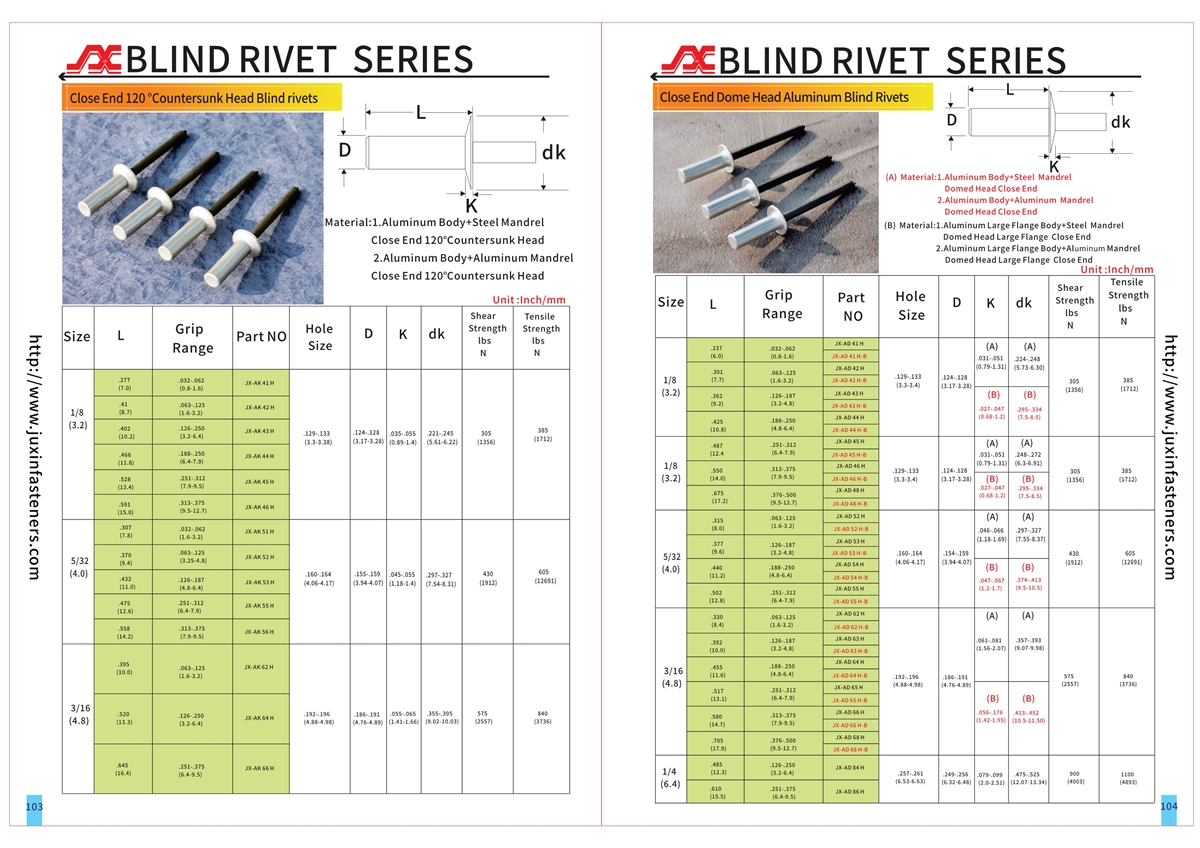
Aluminum Close End 120°Countersunk Head Blind Rivets
Material:
1. Aluminum Body+Steel Mandrel
2. Aluminum Body+Aluminum Mandrel Close End 120°Countersunk Head
Lightweight and nonmagnetic, these rivets have good corrosion resistance. The body deforms to seal the bottom of the rivet and prevent water and air from passing through. They provide higher shear and tensile strengths than standard blind rivets and the portion of the mandrel that's retained inside the rivet after installation won't loosen over time and fall out. Use blind rivets to fasten material when you only have access to one side. A low-profile domed head creates a finished appearance. The combined thickness of the material must fall within the rivet's material thickness range. Shear strength is the force it takes to break a rivet from the side, and tensile strength is the pull a rivet can withstand without breaking. Joint strength is also affected by rivet spacing and hole size.
A blind rivet tool (sold separately) with a nosepiece that matches the rivet's diameter is required for installation.
Size Can also be According to the Customer's requirement and please check the detailed specification sheet details PDF, CAD, 103-104Page See more product details.
How to Select Blind Rivets for EV Battery Pack Cooling Plate Fixing
Professional guide to selecting aluminum or steel blind rivets for fixing EV battery pack cooling plates. Improve lightweight design, vibration resistance, and structural reliability with automotive-grade fastening solutions.
Structural Characteristics of EV Battery Pack Enclosures
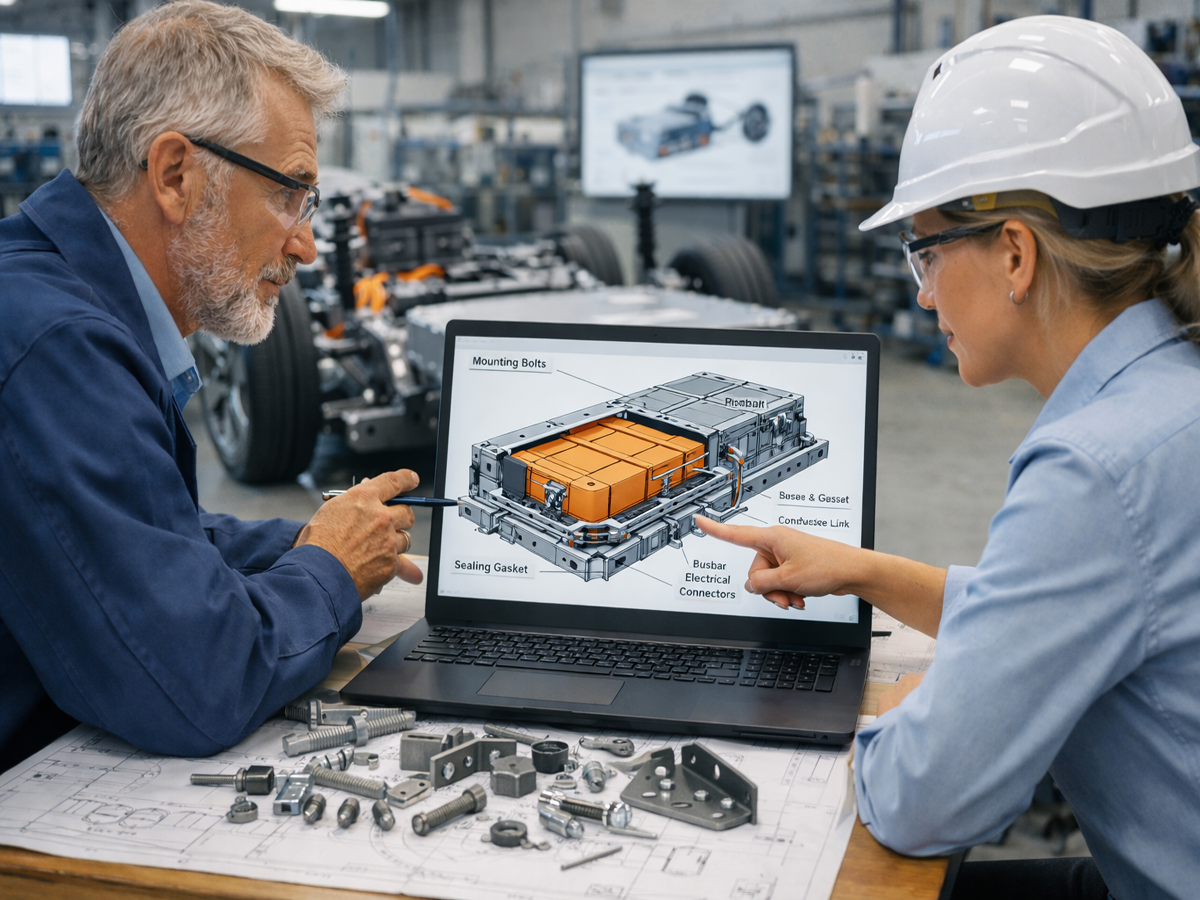
In modern electric vehicles (EVs), the battery pack is typically constructed using stamped-aluminum enclosures and internal liquid-cooling plates. These cooling systems ensure the thermal stability of battery modules under high-charge and high-discharge conditions.
The internal structure usually features:
Aluminum stamped housing
Aluminum cooling plates
Multi-point fastening design
High vibration exposure during vehicle operation
Although internal components are generally protected from direct moisture exposure, fasteners must still ensure long-term mechanical stability, lightweight performance, and manufacturing efficiency.
Key Engineering Requirements for Blind Rivets in EV Battery Packs
When selecting blind rivets for fixing cooling plates inside the battery enclosure, engineers typically evaluate the following factors:
1. Structural Strength
The rivet must provide sufficient shear and tensile strength to withstand vehicle vibration and long-term fatigue loads.
2. Lightweight Design
Lightweight construction is a critical target in EV development. Fastener material selection directly impacts total battery pack weight, especially in high-volume applications.
3. Compatibility with Aluminum Structures
Since most battery enclosures and cooling plates are aluminum, material compatibility must be evaluated to prevent structural weakening.
4. Production Efficiency
Blind rivets are widely used because they allow one-sided installation, making them ideal for closed battery housing assemblies.
Aluminum vs Steel Blind Rivets in EV Applications
Aluminum Blind Rivets
Advantages:
Approximately 1/3 the weight of steel rivets
Good compatibility with aluminum structures
Adequate strength for non-load-bearing fixing
Cost-effective for high-volume production
Recommended for:
Cooling plate positioning, internal non-structural fixing, and lightweight-focused designs.
Steel Blind Rivets
Advantages:
Higher tensile and shear strength
Better performance under high vibration loads
Suitable for semi-structural or reinforced areas
Recommended for:
Connection points that require higher mechanical performance or additional structural rigidity.
When Corrosion Is Not the Primary Concern
For internal battery pack applications where:
The enclosure is fully sealed.
No direct exposure to external humidity
No coolant leakage risk
Material selection may prioritize mechanical strength and weight reduction over corrosion resistance alone.
However, automotive-grade surface treatment and consistent quality control remain essential for long-term reliability.
Recommended Riveting Solutions for EV Battery Cooling Systems
At Juxin Fasteners, we provide automotive-grade blind riveting solutions tailored for EV battery pack applications:
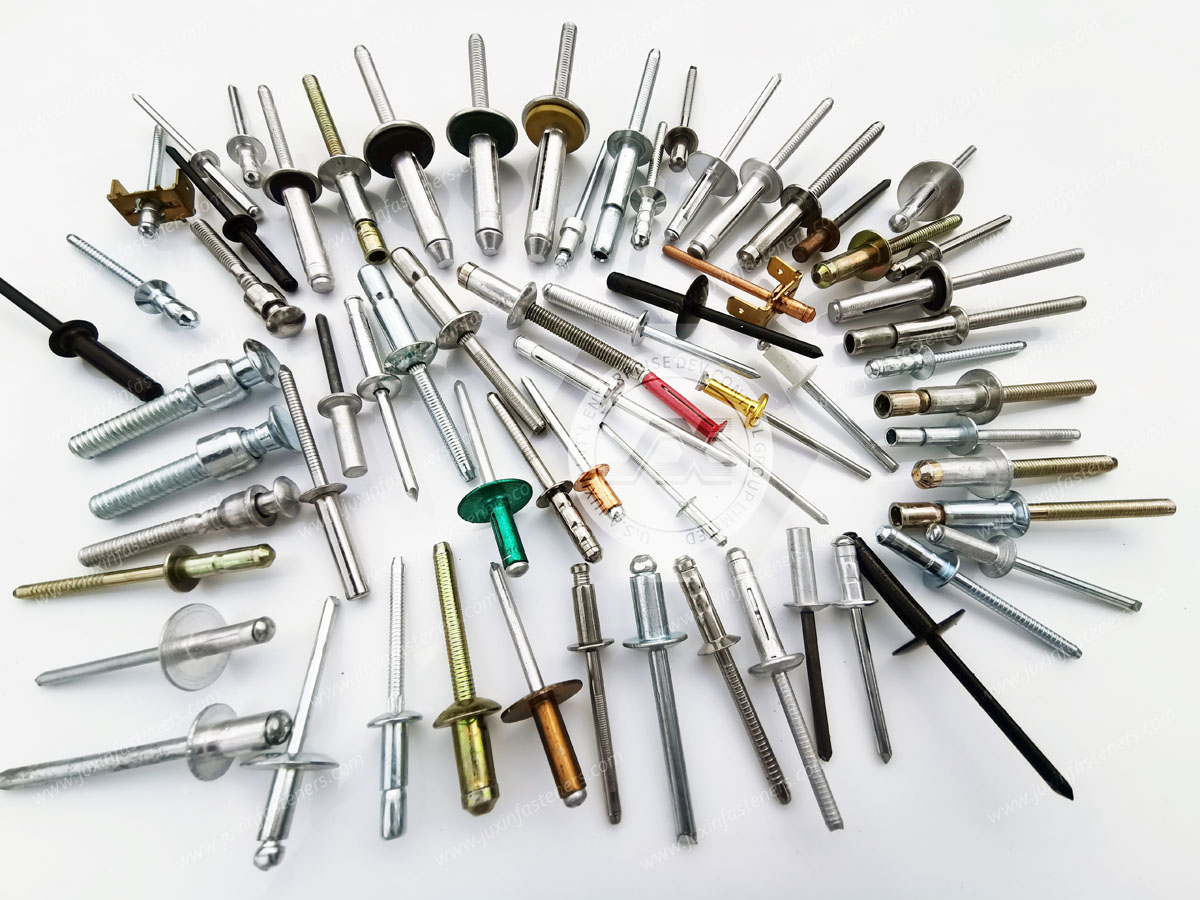
Aluminum open-end and closed-end blind rivets
High-strength steel blind rivets
Customized grip range for multi-layer aluminum assemblies
PPAP-supported production
OEM fastener customization
With over 23 years of experience in industrial and automotive fastening systems, we support EV manufacturers with reliable, high-volume, and precision fastening solutions.
Conclusion
Selecting the right blind rivet for EV battery pack cooling plate fixing requires balancing:
Structural load requirements
Lightweight targets
Vibration resistance
Manufacturing efficiency
Aluminum blind rivets are typically preferred for lightweight internal fixing, while steel blind rivets are selected when higher structural strength is required.
Proper engineering evaluation ensures long-term stability of the battery pack and production efficiency.
Product Pictures
Contact Us
Tel.:
+86 020 8621 0320
+86 020 3121 6067
E-mail:
Technical Support:
Navigation
SEND INQUIREY