
Call Us
+86 136 6007 9809
Call Us
+86 136 6007 9809

Feb. 28, 2026
DIN 34817 Automotive Weld Stud Solution for Vehicle Manufacturing
High Performance Welding Fastening Technology for the Automotive Industry
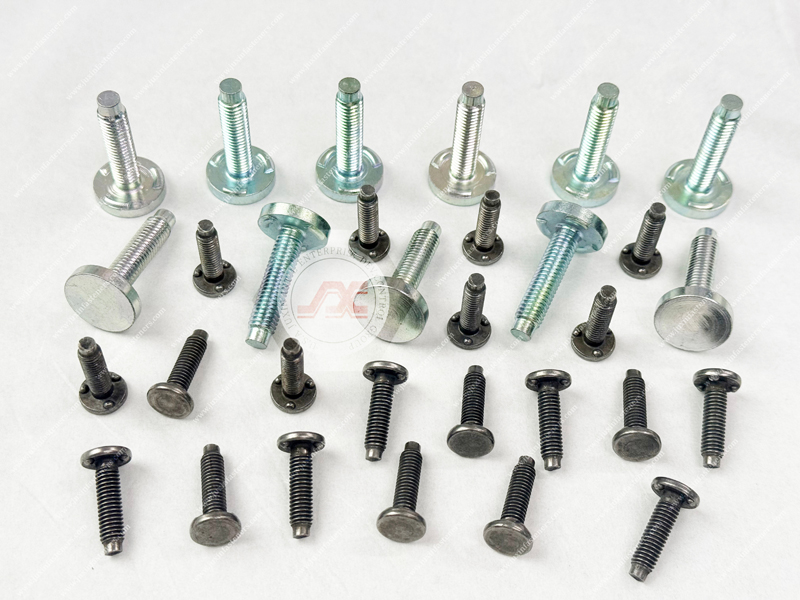
The DIN 34817 weld stud is a precision welding fastener widely used in modern automotive manufacturing. It is designed for high-strength structural fastening, automated welding assembly, and lightweight vehicle engineering.
As a professional welding fastening component, DIN 34817 weld studs are commonly applied in body-in-white structures, chassis reinforcement systems, electrical grounding connections, and interior assembly fastening systems.
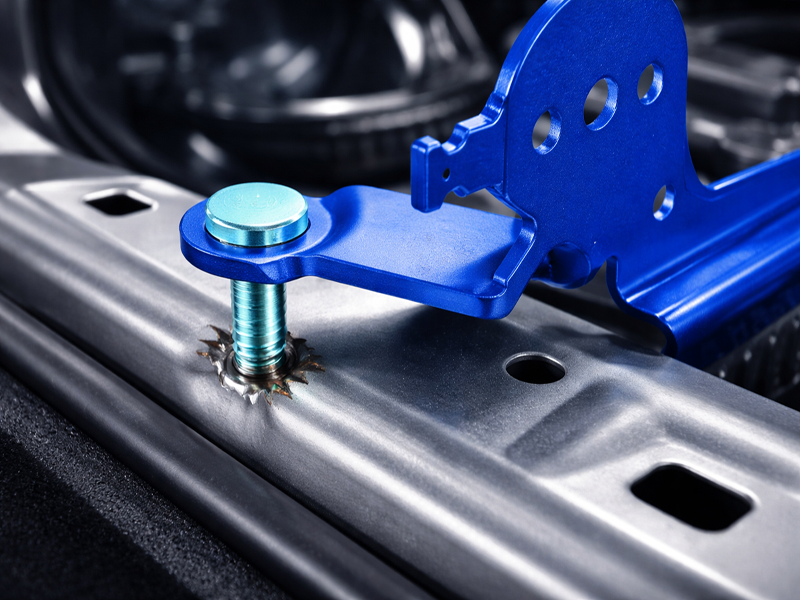
These weld studs are typically installed using resistance projection welding or arc stud welding, forming a strong metallurgical bond between the stud and the sheet-metal substrate.
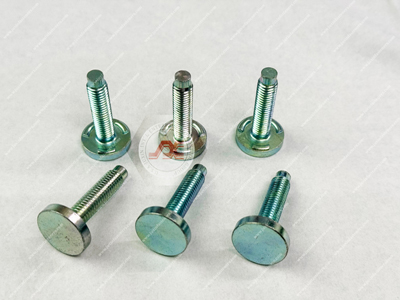
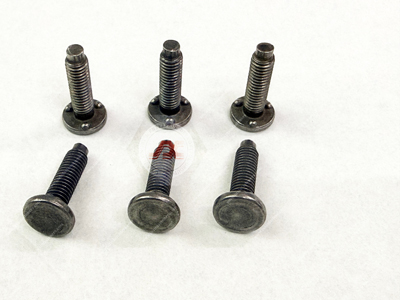
Structural Design of Thread Run-out Control Welding Studs
The thread run-out control design is an important engineering feature of DIN 34817 weld studs.
This structure provides several manufacturing advantages:
Improves welding positioning accuracy
Reduces thread damage caused by heat stress
Improves assembly torque stability after welding
In automotive production lines, manufacturing precision requirements typically include:
Position tolerance: ≤ 0.15 mm
Verticality tolerance: ≤ 1°
Welding consistency rate: above 95%
These parameters are critical for automated welding production systems used in modern vehicle manufacturing plants.
Material Strength and Mechanical Performance
DIN 34817 weld studs are manufactured using high-strength materials to meet automotive safety requirements.
Common material grades include:
Carbon steel grade 8.8
Alloy steel grade 10.9
High-strength alloy steel grade 12.9
Stainless steel corrosion-resistant variants
Mechanical properties:
Tensile strength: 800 – 1200 MPa
Yield strength: 640 – 1100 MPa
High-strength weld studs are widely used in components requiring high load resistance, such as crash safety structures and structural reinforcement plates.
Automotive Body Structural Applications
Weld studs are widely used in body structure assembly.
Typical applications include:
Seat Belt Anchor Systems
These components require extremely high reliability because they directly relate to passenger safety.
Testing standards often require:
Tensile pull-out force exceeding 20–35 kN, depending on stud diameter
Fatigue cycle testing exceeding 1 million cycles
Crash Energy Absorption Structures
Weld studs help distribute impact force across reinforcement structures, improving vehicle crash performance.
Door Hinge Reinforcement Systems
Provide stable mechanical fastening without compromising sheet metal integrity.
Interior Automotive Assembly Applications
In automotive interior systems, weld studs are used to fix lightweight components.
Applications include:
Wiring harness mounting brackets
Thermal insulation panels
Carpet and interior trim panels
Common specifications:
Metric: M4 to M12
Imperial: 8-32 UNC to 7/16-20,1/2-13 UNC
Benefits include improved assembly accuracy and reduced transmission of vibration and noise.
Chassis and Electrical System Applications
Weld studs are also widely used in chassis and electrical systems.
Chassis Fastening
Used in:
Suspension mounting brackets
Brake line fixation systems
Electrical Grounding Systems
Electrical performance requirements include:
Ground resistance below 0.1 ohms
Stable long-term conductivity performance
These requirements are especially important in electric vehicle architectures.
Automated Welding Manufacturing Compatibility
Modern automotive manufacturing relies heavily on automation technology.
DIN 34817 weld studs are compatible with:
Robotic welding systems
CNC-controlled stud welding equipment
Laser surface cleaning systems
For galvanized steel welding:
Typical process parameters include:
Welding current: 800 – 1500 A
Welding time: 50 – 200 milliseconds
Zinc coating thickness: 5 – 15 μm
Surface cleaning using laser technology can significantly improve weld quality and reduce porosity defects.
Lightweight Vehicle Engineering Advantages
Compared with traditional drilling and mechanical fastening methods, weld stud technology provides several advantages:
Reduces vehicle assembly weight
Eliminates secondary fastening components
Improves structural rigidity
Weight reduction potential in fastening systems can reach 5 – 12%, which is particularly important in electric vehicle manufacturing.
Quality Control Requirements in Automotive Manufacturing
Automotive weld studs must pass strict quality testing procedures.
Mechanical testing includes:
Tensile strength testing
Shear resistance testing
Torque resistance verification
Surface inspection standards include:
No cracks
No welding voids
Uniform fusion zone formation
These quality requirements ensure long-term vehicle reliability and safety performance.
Future Development of Automotive Welding Fasteners
Future trends in automotive fastening technology include:
New energy vehicle battery structural fastening solutions
Aluminum alloy and magnesium alloy welding compatibility
Intelligent welding quality monitoring systems
As vehicle manufacturing continues to evolve, high-performance welding fasteners will remain an important part of automotive structural engineering.
Summary
DIN 34817 weld stud fastening technology provides reliable solutions for automotive structural assembly, electrical system grounding, and interior component installation.
With advantages in strength, automation compatibility, and lightweight design support, these welding fasteners are widely used in modern vehicle manufacturing.
 MORE NEWS
Sep. 27, 2026
Sep. 27, 2026
Sep. 27, 2026
Contact Us
Tel.:
+86 020 8621 0320
+86 020 3121 6067
E-mail:
Technical Support:
Navigation
SEND INQUIREY