Call Us
+86 136 6007 9809
Call Us
+86 136 6007 9809

Automotive Blind Rivet Nuts for Car Body Assembly
Reliable Fastening Solutions for Sheet Metal Structures
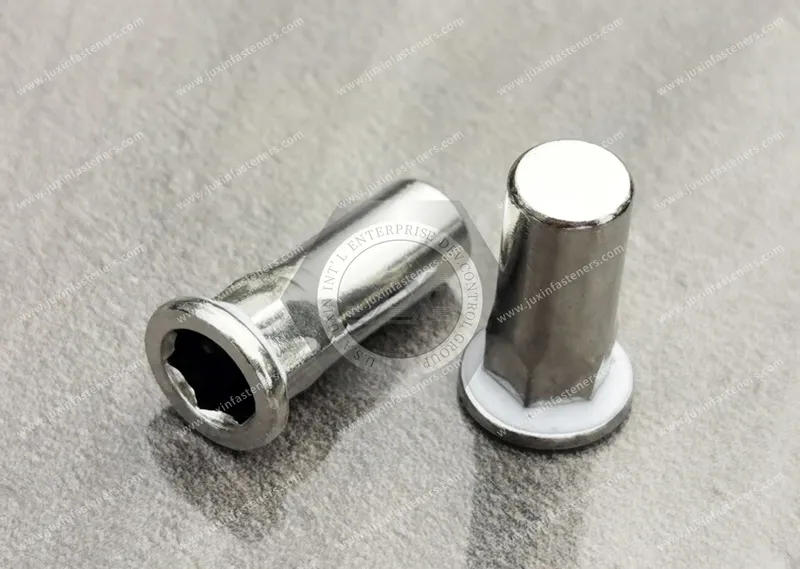
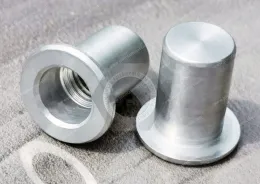
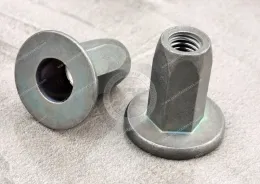
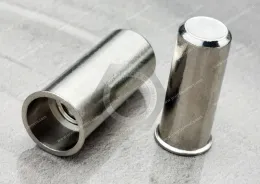
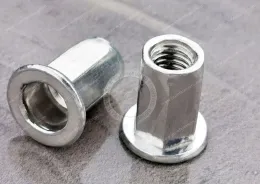
Modern automotive manufacturing requires lightweight structures, high-strength joints, and efficient assembly processes. Blind rivet nuts have become a critical fastening solution for automotive sheet metal structures, especially in areas where welding or tapping is impractical.
Product Specification
Automotive Blind Rivet Nuts for Car Body Assembly
Reliable Fastening Solutions for Sheet Metal Structures
Modern automotive manufacturing requires lightweight structures, high-strength joints, and efficient assembly processes. Blind rivet nuts have become a critical fastening solution for automotive sheet metal structures, especially in areas where welding or tapping is impractical.
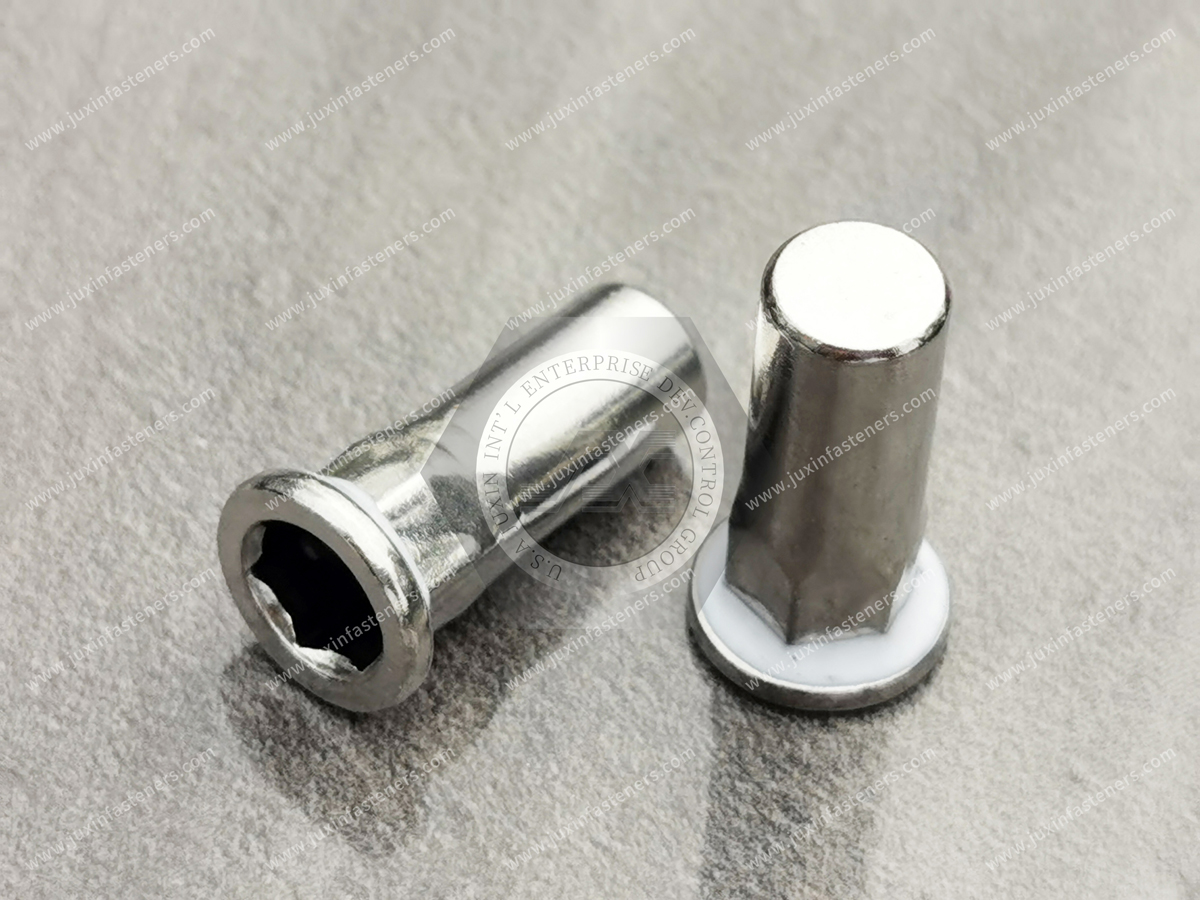
Blind rivet nuts provide strong internal threads in thin-sheet materials, enabling engineers to create reliable mechanical connections for components such as body panels, interior modules, brackets, and chassis assemblies.
Challenges in Automotive Sheet Metal Fastening
Automotive body structures typically involve thin steel sheets, aluminum panels, and multi-layer metal assemblies. These materials present several fastening challenges:
Thin material thickness makes thread tapping difficult
Welding nuts can cause heat deformation
Access to the backside of the panel may be limited
High vibration environments require strong anti-rotation fastening
Blind rivet nuts solve these issues by enabling single-side installation with high structural reliability.
Key Advantages of Blind Rivet Nuts in Automotive Manufacturing
1. Strong Threads in Thin Metal Panels
Blind rivet nuts create durable internal threads in sheet metal without increasing material thickness.
2. One-Side Installation
Automotive body panels often restrict access to the backside. Blind rivet nuts can be installed only from the accessible side, simplifying assembly.
3. Reduced Heat Distortion
Unlike weld nuts, blind rivet nuts do not introduce heat into the structure, preventing:
Metal distortion
Surface damage
Coating degradation
4. High Resistance to Vibration
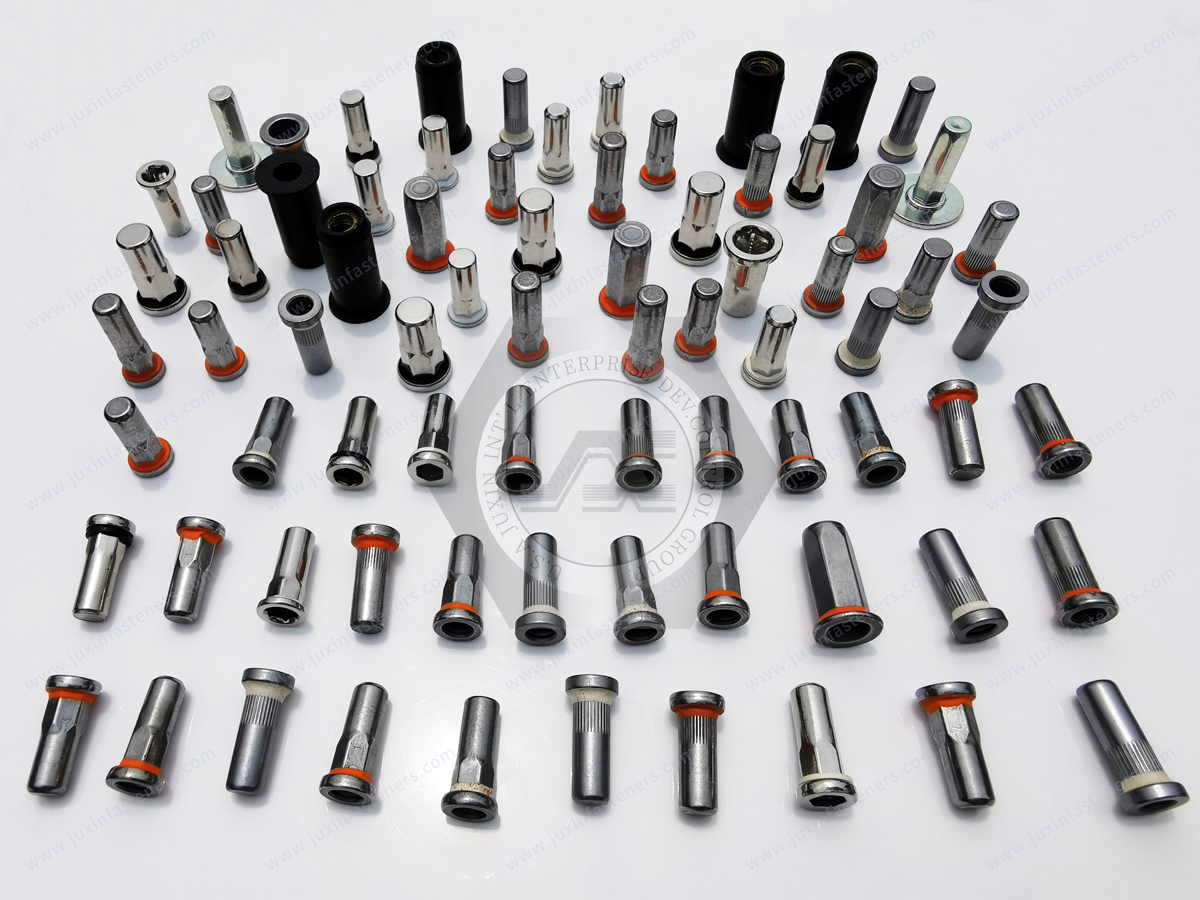
Vehicles experience constant vibration during operation. Ribbed and knurled rivet nuts provide excellent anti-rotation performance, ensuring long-term joint stability.
5. Compatibility with Automated Assembly
Blind rivet nuts are compatible with automated installation equipment, improving production efficiency in automotive assembly lines.
Typical Automotive Applications
Blind rivet nuts are widely used in various automotive structural components.
Car Body Panels
Used to connect:
Exterior sheet metal panels
Reinforcement brackets
Mounting structures
Interior Trim Structures
Blind rivet nuts provide fastening points for:
Instrument panels
Interior trim brackets
HVAC system components
Chassis Brackets
Used for mounting lightweight structural components within the vehicle frame.
Seat and Safety Components
Blind rivet nuts can also provide reliable threaded mounting points for seat support structures and interior safety components.
Materials and Surface Treatments
Automotive blind rivet nuts are commonly manufactured from:
Carbon steel
Stainless steel
Aluminum alloy
To improve corrosion resistance and durability, several surface treatments are used:
Zinc plating
Zinc-nickel coating
Trivalent chromate passivation
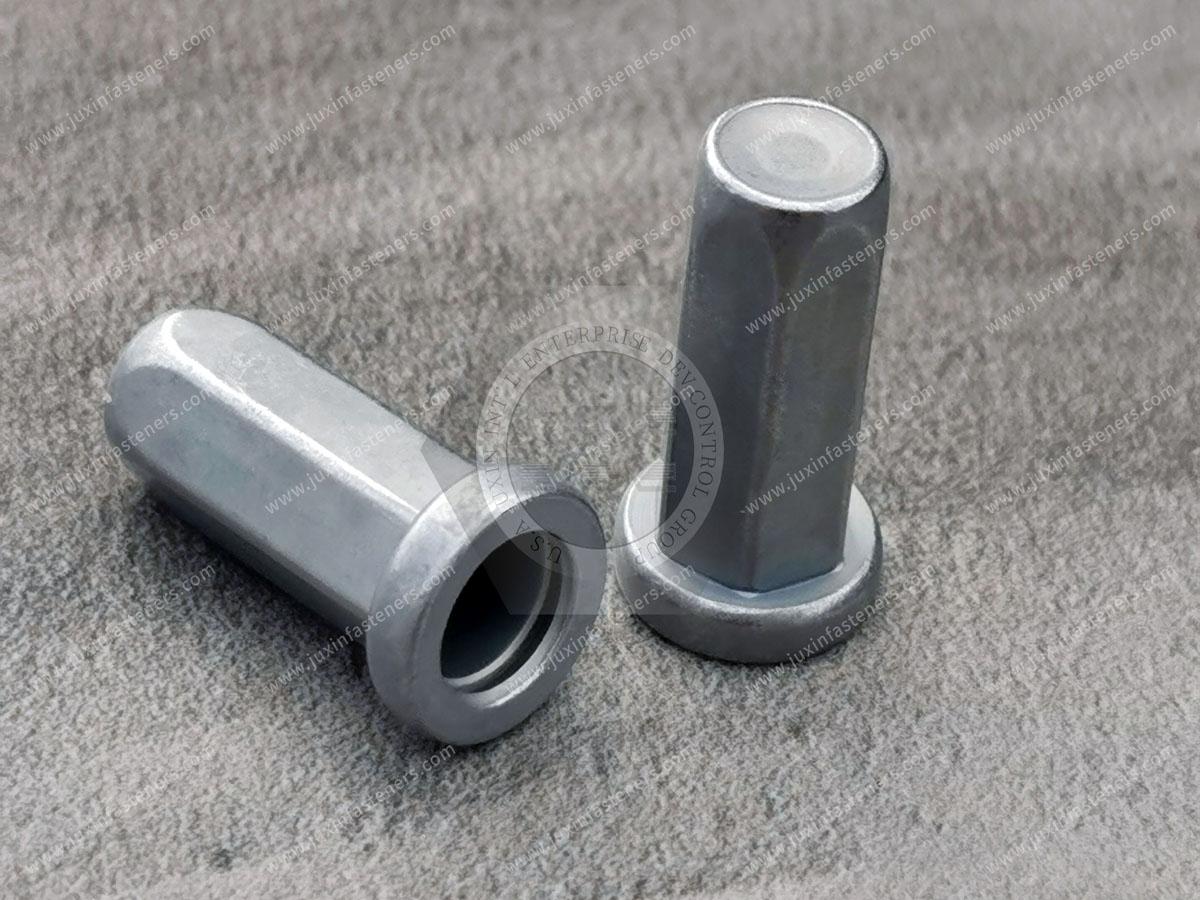
Zinc-nickel coatings are widely used in automotive applications due to their excellent corrosion resistance and long service life.
Why Automotive Engineers Prefer Blind Rivet Nuts
Blind rivet nuts combine structural strength, installation efficiency, and manufacturing flexibility, making them an ideal fastening solution for modern vehicle designs.
As automotive manufacturers continue to adopt lightweight materials and modular design concepts, blind rivet nuts will remain an essential fastening technology for vehicle assembly.
For reliable automotive fastening solutions, manufacturers worldwide rely on high-quality rivet nuts from experienced fastener suppliers.
Learn more about our automotive fastening solutions at:
Product Packaging
Automotive Blind Rivet Nuts for Car Body Assembly
Reliable Fastening Solutions for Sheet Metal Structures
Modern automotive manufacturing requires lightweight structures, high-strength joints, and efficient assembly processes. Blind rivet nuts have become a critical fastening solution for automotive sheet metal structures, especially in areas where welding or tapping is impractical.
Blind rivet nuts provide strong internal threads in thin-sheet materials, enabling engineers to create reliable mechanical connections for components such as body panels, interior modules, brackets, and chassis assemblies.
Challenges in Automotive Sheet Metal Fastening
Automotive body structures typically involve thin steel sheets, aluminum panels, and multi-layer metal assemblies. These materials present several fastening challenges:
Thin material thickness makes thread tapping difficult
Welding nuts can cause heat deformation
Access to the backside of the panel may be limited
High vibration environments require strong anti-rotation fastening
Blind rivet nuts solve these issues by enabling single-side installation with high structural reliability.
Key Advantages of Blind Rivet Nuts in Automotive Manufacturing
1. Strong Threads in Thin Metal Panels
Blind rivet nuts create durable internal threads in sheet metal without increasing material thickness.
2. One-Side Installation
Automotive body panels often restrict access to the backside. Blind rivet nuts can be installed only from the accessible side, simplifying assembly.
3. Reduced Heat Distortion
Unlike weld nuts, blind rivet nuts do not introduce heat into the structure, preventing:
Metal distortion
Surface damage
Coating degradation
4. High Resistance to Vibration
Vehicles experience constant vibration during operation. Ribbed and knurled rivet nuts provide excellent anti-rotation performance, ensuring long-term joint stability.
5. Compatibility with Automated Assembly
Blind rivet nuts are compatible with automated installation equipment, improving production efficiency in automotive assembly lines.
Typical Automotive Applications
Blind rivet nuts are widely used in various automotive structural components.
Car Body Panels
Used to connect:
Exterior sheet metal panels
Reinforcement brackets
Mounting structures
Interior Trim Structures
Blind rivet nuts provide fastening points for:
Instrument panels
Interior trim brackets
HVAC system components
Chassis Brackets
Used for mounting lightweight structural components within the vehicle frame.
Seat and Safety Components
Blind rivet nuts can also provide reliable threaded mounting points for seat support structures and interior safety components.
Materials and Surface Treatments
Automotive blind rivet nuts are commonly manufactured from:
Carbon steel
Stainless steel
Aluminum alloy
To improve corrosion resistance and durability, several surface treatments are used:
Zinc plating
Zinc-nickel coating
Trivalent chromate passivation
Zinc-nickel coatings are widely used in automotive applications due to their excellent corrosion resistance and long service life.
Why Automotive Engineers Prefer Blind Rivet Nuts
Blind rivet nuts combine structural strength, installation efficiency, and manufacturing flexibility, making them an ideal fastening solution for modern vehicle designs.
As automotive manufacturers continue to adopt lightweight materials and modular design concepts, blind rivet nuts will remain an essential fastening technology for vehicle assembly.
For reliable automotive fastening solutions, manufacturers worldwide rely on high-quality rivet nuts from experienced fastener suppliers.
Learn more about our automotive fastening solutions at:
Product Pictures
Contact Us
Tel.:
+86 020 8621 0320
+86 020 3121 6067
E-mail:
Technical Support:
Navigation
SEND INQUIREY