Call Us
+86 136 6007 9809
Call Us
+86 136 6007 9809

Mechanical vs. Rubber Ring Sealing for Rivet Nuts
Selecting the Right Sealing Configuration for Battery Enclosures
Different battery enclosure designs require different sealing strategies.
Product Specification
Mechanical vs. Rubber Ring Sealing for Rivet Nuts
Selecting the Right Sealing Configuration for Battery Enclosures
Different battery enclosure designs require different sealing strategies.
Two common approaches are mechanical sealing and elastomeric or rubber ring sealing.
Understanding the difference helps engineers select the right configuration for the application.
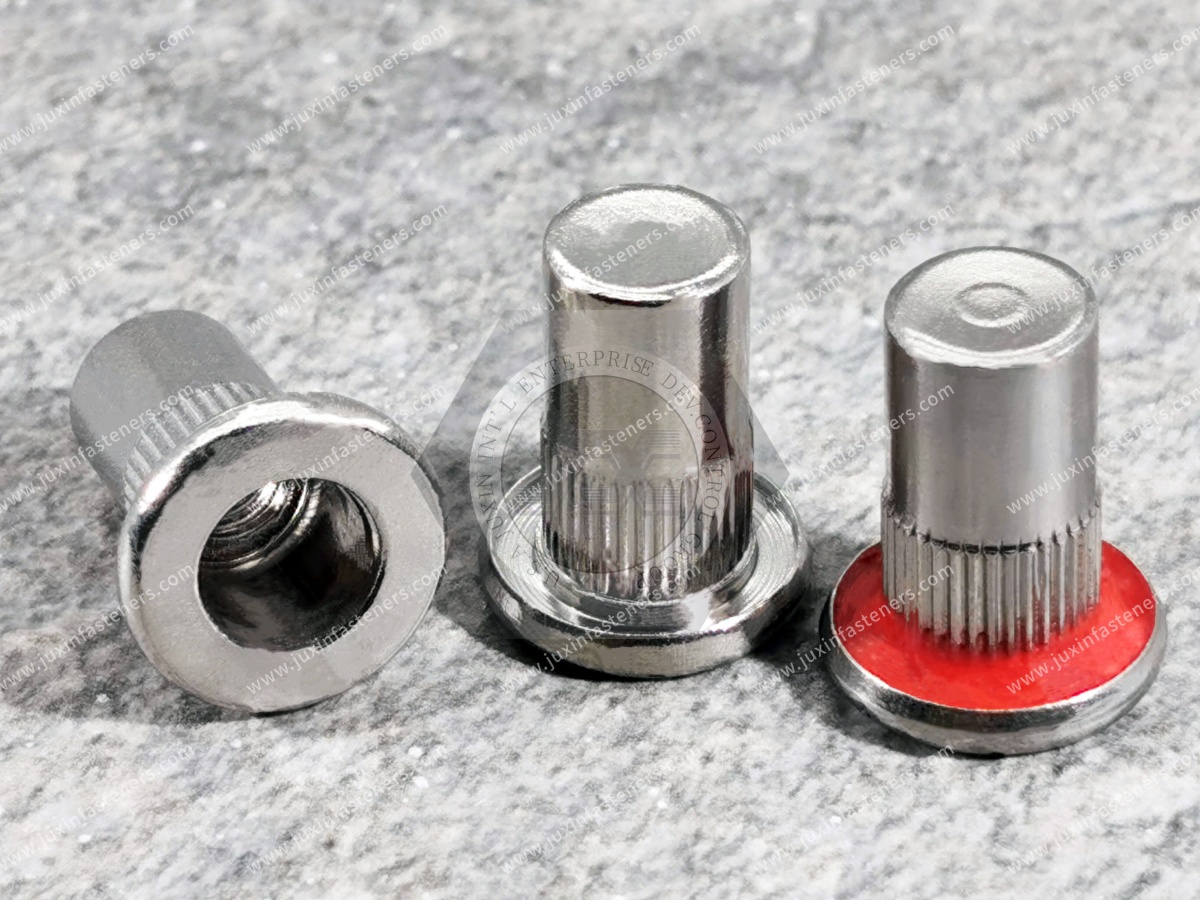
Mechanical Sealing
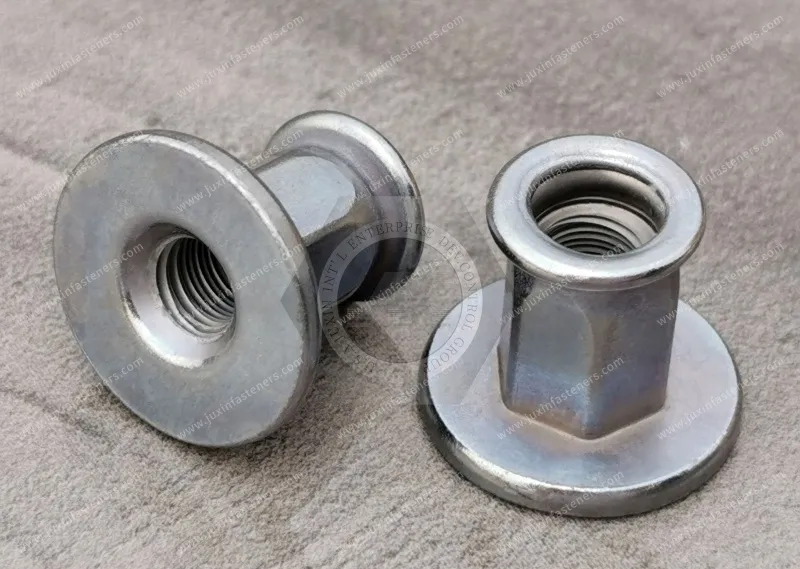
Mechanical sealing uses the geometry and contact surfaces of the fastening components to create the sealing interface.
Advantages can include:
Simple assembly
Stable dimensions
No separate elastomer in certain designs
Potential suitability for higher-temperature environments
Rubber Ring Sealing
Rubber or elastomeric sealing uses a compliant material to fill small surface irregularities.
Potential advantages include:
Improved conformity
Flexible sealing interface
Suitable for uneven surfaces
Application-specific chemical resistance
Material Selection
The elastomer should be evaluated against:
Temperature range
Water exposure
Oils
Coolants
Cleaning chemicals
Compression
Aging
UV exposure where relevant
Which Is Better?
There is no universal answer.
Mechanical sealing may be appropriate where simplicity, temperature resistance, and dimensional stability are priorities.
Rubber ring sealing may be advantageous where surface conformity and flexible sealing matter more.
The choice depends on the complete enclosure design.
EV Battery Applications
These sealing configurations may be considered for:
Battery trays
Battery housings
High-voltage enclosures
Charging equipment
Power electronics
Energy storage systems
Juxin Fasteners can evaluate sealing configurations according to customer drawings and application requirements.
Website: www.juxinfasteners.com
Email: info@juxinfasteners.com
Product Packaging
Packaging Standard
At Juxin Fasteners, we apply standardized export packaging to ensure product protection, traceability, and compliance with international logistics requirements.
1. Standard Export Packaging
Unless otherwise specified, all products will be packed according to our factory standard export packaging, which includes:
Moisture-resistant inner protection
Poly bag or small box packing as required
Reinforced export cartons
Clear labeling with part number, specification, batch number, and quantity
Palletizing for sea or air shipment when necessary
Our standard packaging is designed to ensure safe transportation, efficient warehousing, and long-distance international shipping.
2. Customized Packaging Options
We also provide customized packaging solutions according to customer requirements, including but not limited to:
Private labeling
Customized barcodes
Specific carton dimensions
Retail packaging
Special pallet configuration
Customer-specific marking and identification
So that you know, customized packaging may involve additional costs and extended lead time depending on the complexity of the requirements.
3. Compliance & Quality Assurance
All packaging processes are controlled under our ISO 9001 quality management system to ensure consistency, traceability, and product integrity throughout the supply chain.
Product Pictures
Contact Us
Tel.:
+86 020 8621 0320
+86 020 3121 6067
E-mail:
Technical Support:
Navigation
SEND INQUIREY