Call Us
+86 136 6007 9809
Call Us
+86 136 6007 9809

Sealed Rivet Nuts for EV Battery Pack Trays
Reliable Threaded Fastening and Sealing Solutions for Aluminum Battery Enclosures
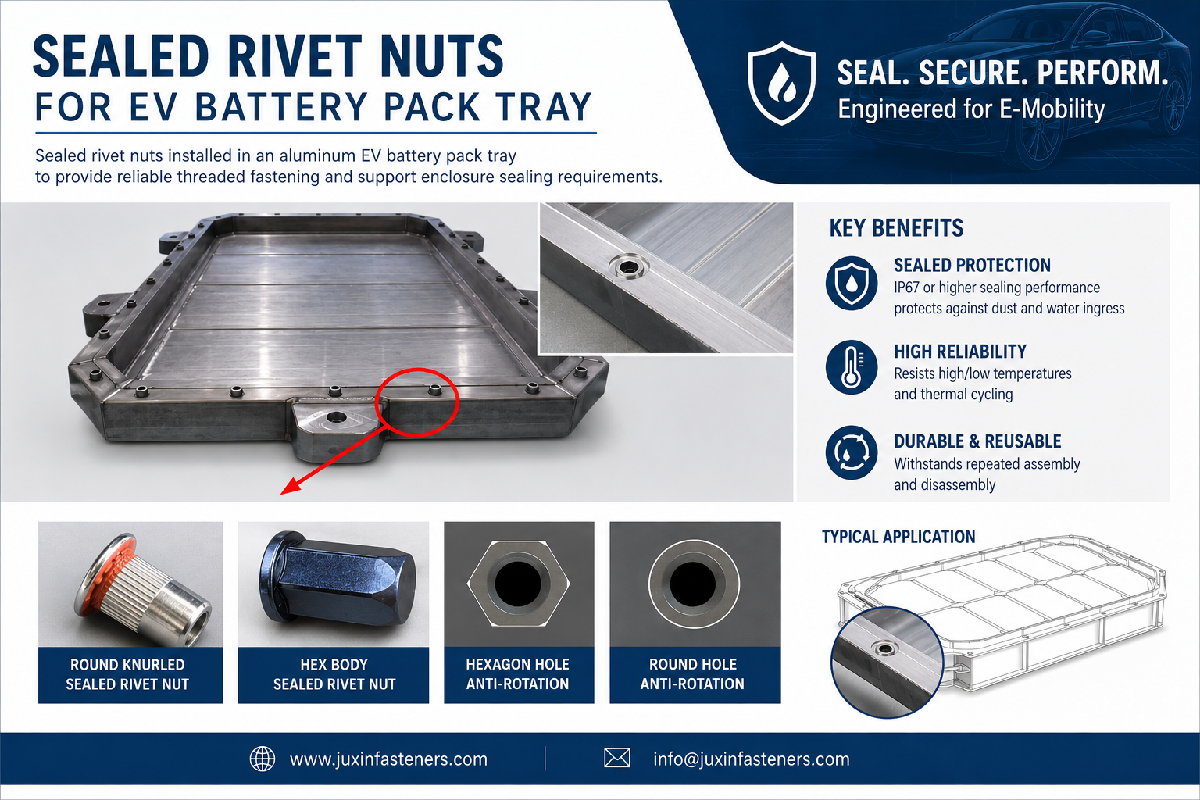
Electric vehicle (EV) battery packs require fastening systems that can combine mechanical reliability, serviceability, corrosion resistance, and environmental protection. As battery enclosures increasingly use lightweight aluminum sheet, extrusions, and formed components, creating durable threaded fastening points in thin-wall structures can present a significant engineering challenge.
Product Specification
Sealed Rivet Nuts for EV Battery Pack Trays
Reliable Threaded Fastening and Sealing Solutions for Aluminum Battery Enclosures
Electric vehicle (EV) battery packs require fastening systems that can combine mechanical reliability, serviceability, corrosion resistance, and environmental protection.
As battery enclosures increasingly use lightweight aluminum sheet, extrusions, and formed components, creating durable threaded fastening points in thin-wall structures can present a significant engineering challenge.
Sealed rivet nuts provide a practical blind-installation solution for these applications.
They create a mechanically retained internal thread in thin materials, while closed-end configurations can help address sealing requirements at the fastening point.
Juxin Fasteners supplies sealed rivet nuts for EV battery pack trays, aluminum battery enclosures, battery housings, and related automotive applications,
with material, dimensional, coating, grip-range, and sealing options available for application-specific requirements.
What Is a Sealed Rivet Nut?
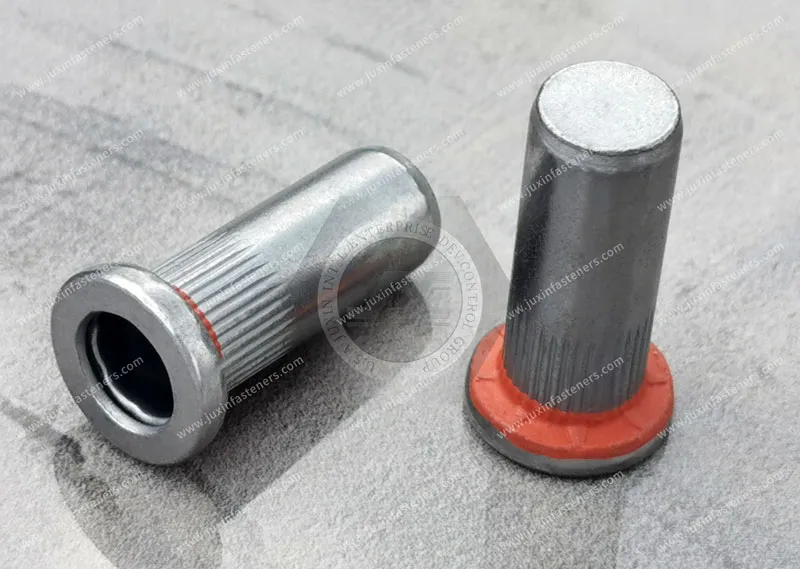
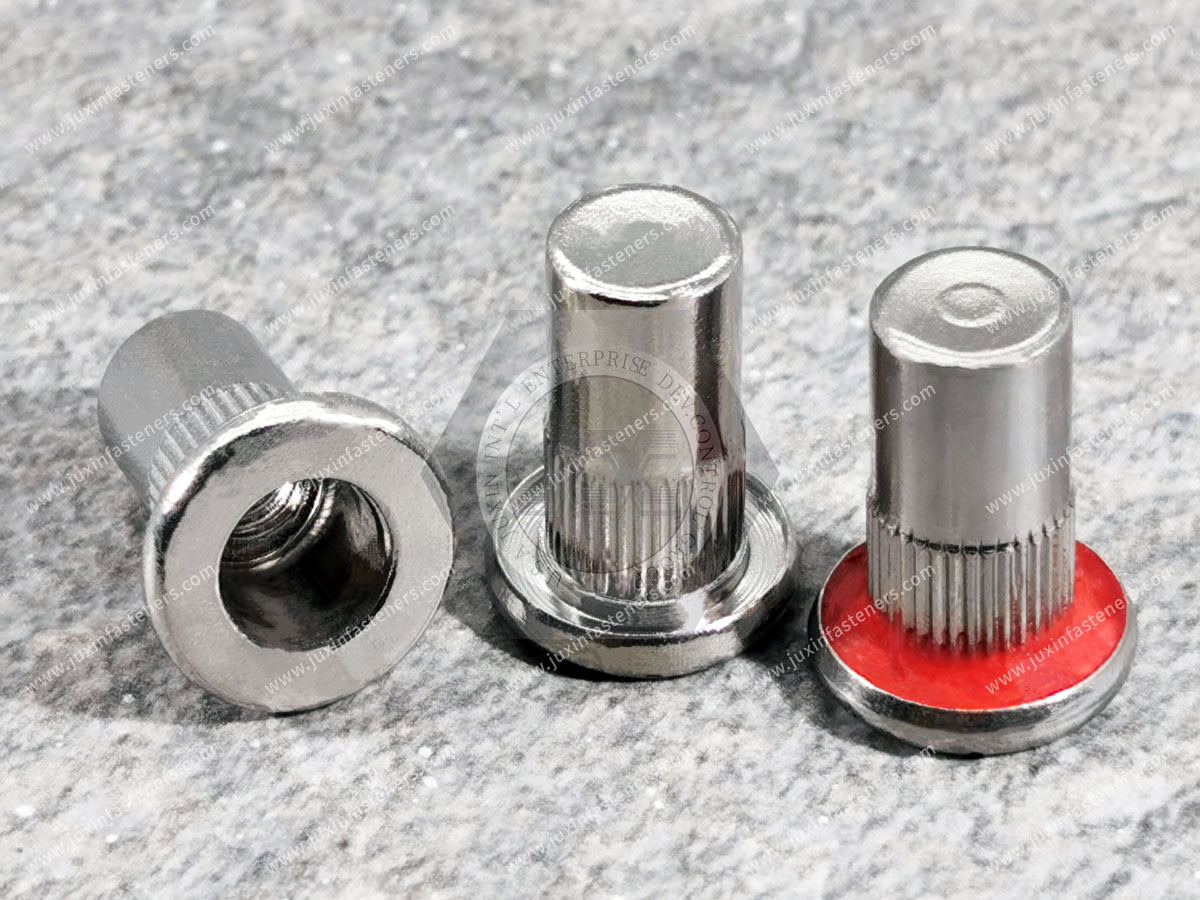
A sealed rivet nut is a type of blind threaded insert designed to create an internal thread in a sheet-metal component without requiring access to the rear side of the panel.
Unlike a conventional open-end rivet nut, a closed-end sealed rivet nut incorporates a closed blind end.
This construction can help prevent direct passage through the fastener body and can be integrated with other sealing elements as part of an enclosure fastening system.
The result is a threaded fastening point that you can install from one accessible side of the assembly.
This is particularly useful for battery trays and enclosures where the rear side of the panel may be inaccessible after assembly.
Why Use Sealed Rivet Nuts in EV Battery Pack Trays?
EV battery packs face demanding operating and environmental conditions.
Depending on the vehicle and enclosure design, fastening components may encounter vibration, temperature cycling, moisture, road splash, dust, cleaning agents, and repeated service operations.
The fastening system must therefore be considered as part of the complete battery enclosure design.
A sealed rivet nut can offer several practical advantages.
Blind-Side Installation
You can install rivet nuts from one side of the panel. This is valuable for closed battery trays and box structures where conventional nuts cannot be positioned behind the sheet.
Durable Internal Thread
A rivet nut provides a dedicated threaded connection in thin-wall materials, avoiding the limitations of directly tapping a relatively thin aluminum panel.
Support for Enclosure Sealing
Closed-end configurations can help reduce potential ingress paths through the fastener itself.
When combined with an appropriate gasket, sealing washer, O-ring, or other sealing interface, the fastening point can be incorporated into the overall enclosure sealing strategy.
Serviceability
Battery systems may require inspection, maintenance, component replacement, or access to internal modules. A threaded insert provides a reusable fastening point for repeated assembly and disassembly.
Lightweight Aluminum Structures
Battery trays frequently use aluminum to reduce vehicle weight while maintaining structural performance.
Rivet nuts allow threaded fastening points to be added to thin aluminum panels and profiles without welding a conventional nut to the structure.
Sealed Rivet Nut Construction
A typical sealed rivet nut for battery enclosure applications consists of a threaded body, a flange, a deformable installation section, and a closed or sealed end.
During installation, the body deforms behind the panel and forms a mechanical connection with the sheet material.
The flange remains on the accessible surface and establishes the fastening location.
The closed-end configuration provides an additional barrier compared with an open-end rivet nut.
The exact geometry can be customized according to:
Thread specification
Panel thickness
Grip range
Flange configuration
Body diameter
Material
Surface treatment
Sealing structure
Installation requirements
Closed-End Rivet Nuts vs. Standard Open-End Rivet Nuts
The correct rivet nut design depends on the application.
A conventional open-end rivet nut is suitable for many structural and general-purpose fastening applications.
However, when the fastening point is located within an enclosure where environmental protection is important, a closed-end configuration may be more appropriate.
Feature | Open-End Rivet Nut | Closed-End Sealed Rivet Nut |
Internal thread | Yes | Yes |
Blind installation | Yes | Yes |
Thin-sheet installation | Yes | Yes |
Closed blind end | No | Yes |
Suitable for sealing-focused applications | Application dependent | More suitable |
Repeated fastening | Yes | Yes |
Battery enclosure applications | Selected applications | Particularly relevant |
The choice should always be based on the complete enclosure design and required performance rather than the rivet nut alone.
Sealing Options for Battery Enclosures
There is no single sealing method suitable for every battery enclosure.
Juxin can support different sealing configurations according to the required assembly design.
Mechanical Sealing
Mechanical sealing relies on the geometry and contact surfaces of the fastener and mating components.
This approach can provide a stable sealing interface without necessarily requiring a separate elastomeric component.
Potential advantages include:
Simple assembly
Stable dimensions
No separate rubber component in certain designs
Good compatibility with specific high-temperature applications
Elastomeric or Rubber Ring Sealing
A rubber ring, O-ring, or other elastomeric element can provide compliance between the fastener and enclosure surface.
The material should be selected according to the expected:
Temperature range
Fluid exposure
Chemical environment
Compression requirements
Aging characteristics
Service life
For automotive battery applications, the sealing material and geometry should be validated together with the enclosure rather than evaluated independently.
Sealed Rivet Nuts and IP Protection
Battery enclosures may be designed to meet specific ingress protection requirements.
However, a sealed rivet nut should not be considered independently responsible for achieving an enclosure rating such as IP65, IP66, or IP67.
The final protection level depends on the complete assembly, including:
Enclosure construction
Gasket design
Fastener spacing
Clamp load
Sealing interface
Rivet nut geometry
Panel tolerances
Installation consistency
Temperature cycling
Environmental testing
For this reason, engineers should validate the complete battery enclosure assembly under the applicable testing conditions.
A properly selected sealed rivet nut can form one part of that overall sealing system.
Rivet Nuts for Aluminum EV Battery Trays
Aluminum is widely used in EV battery structures because of its favorable strength-to-weight ratio and corrosion resistance.
However, aluminum sheet can be relatively thin, making conventional tapped threads unsuitable for some applications.
A rivet nut creates a dedicated threaded connection without requiring a thick boss or welded nut.
For aluminum battery trays, engineers should consider:
Panel Thickness
The rivet nut grip range must match the actual material thickness and manufacturing tolerances.
Thread Size
The thread should be selected according to the required fastener size, clamp load, installation torque, and available space.
Pull-Out Resistance
The surrounding aluminum sheet and rivet nut geometry must provide sufficient resistance to axial loads.
Spin-Out Resistance
The installation configuration must prevent the rivet nut from rotating during fastener installation or removal.
Corrosion Compatibility
When different metals are combined, the material and coating system should be evaluated for corrosion compatibility and the expected operating environment.
Rivet Nut Installation in Battery Enclosures
Proper installation is essential to achieving reliable performance.
A typical installation process includes:
Prepare the correctly sized hole in the aluminum panel.
Select the rivet nut according to the panel thickness and grip range.
Install the rivet nut using the appropriate manual, pneumatic, hydraulic, or battery-powered installation tool.
Form the rivet nut behind the panel to create the mechanical retention.
Verify the flange seating and installation condition.
Check thread condition and fastening torque.
Inspect the sealing interface where applicable.
Perform application-specific testing.
Installation parameters should be controlled during mass production to maintain consistent clamp load and connection performance.
Key Engineering Parameters for Sealed Rivet Nuts
Selecting a sealed rivet nut should involve more than choosing the correct thread size.
Important engineering parameters include:
Thread Specification
Common options may include metric or inch threads depending on the vehicle platform and customer specification.
Grip Range
The grip range must correspond to the actual panel thickness.
Material
Depending on the application, options may include:
Carbon steel
Stainless steel
Aluminum
Application-specific materials
Surface Treatment
Coatings can be selected according to corrosion resistance, appearance, electrical requirements, and compatibility with the surrounding materials.
Flange Type
Different flange geometries can be used according to the available installation space and load requirements.
Sealing Configuration
Mechanical sealing, elastomeric sealing, or other application-specific configurations can be evaluated.
Installation Method
The rivet nut must be compatible with the selected installation equipment and production process.
Corrosion Resistance in EV Battery Enclosures
Corrosion protection is an important consideration when fasteners are installed in aluminum battery structures.
The fastener material, surface treatment, aluminum substrate, environmental exposure, and assembly conditions should be considered together.
Depending on the application, Juxin can evaluate options such as:
Stainless steel
Corrosion-resistant coatings
Zinc-based coatings
Application-specific surface treatments
For demanding automotive environments, corrosion performance should be verified through appropriate testing and customer-specific specifications.
Applications of Sealed Rivet Nuts
Sealed rivet nuts can be used in a range of automotive, electrical, and industrial enclosure applications.
Electric Vehicles
EV battery packs
Battery trays
Battery module housings
High-voltage battery enclosures
Battery pack covers
Automotive Electronics
Power electronics
Control units
Electronic housings
Sensor enclosures
Charging system components
Energy Storage
Battery energy storage systems
Outdoor battery cabinets
Power storage enclosures
Electrical equipment housings
Industrial Enclosures
Electrical cabinets
Control panels
Aluminum equipment housings
Outdoor industrial enclosures
Why Choose Juxin Fasteners?
Juxin Fasteners supplies industrial fastening components for OEM and engineering applications, with experience in custom fastener development and high-volume manufacturing.
For sealed rivet nut projects, we can support:
Custom dimensions
Metric and inch threads
Different grip ranges
Material selection
Surface treatment
Sealing configurations
Application-specific packaging
Production and quality requirements
Our engineering approach focuses on the complete fastening application rather than simply supplying a standard component.
For EV battery enclosure projects, customers can provide drawings, panel thickness, thread requirements, application conditions, or samples for evaluation.
Sealed Rivet Nuts for EV Battery Pack Manufacturing
As EV battery systems continue to use lightweight aluminum structures, fastening technology must evolve with the enclosure design.
Sealed rivet nuts provide a practical solution for creating durable threaded connections in thin aluminum battery trays and
enclosures while allowing the fastening point to be integrated into the overall sealing strategy.
From blind installation and repeated serviceability to corrosion resistance and environmental protection,
the right rivet nut configuration can contribute to a more reliable battery enclosure assembly.
Juxin Fasteners can provide sealed rivet nuts, closed-end rivet nuts, and customized threaded fastening solutions for
EV battery packs, aluminum battery trays, battery enclosures, automotive electronics, and energy storage applications.
Contact us to discuss your battery enclosure fastening requirements, request samples, or evaluate a customized sealed rivet nut solution.
Juxin Fasteners
Website: www.juxinfasteners.com
Email: info@juxinfasteners.com
Frequently Asked Questions
What is a sealed rivet nut?
A sealed rivet nut is a blind threaded insert with a closed-end or sealing configuration designed to provide a threaded fastening point in thin sheet materials while helping address environmental sealing requirements.
Can sealed rivet nuts be used in EV battery trays?
Yes. Sealed rivet nuts can be used in aluminum EV battery trays, battery housings, battery covers, and other enclosure components that require blind installation and a durable threaded connection.
Are sealed rivet nuts waterproof?
A sealed rivet nut can help prevent direct passage through the fastener body,
but the final waterproof or ingress protection performance depends on the complete enclosure design, sealing interface, installation process, and validation testing.
Can rivet nuts be installed in aluminum?
Yes. Rivet nuts are commonly used in aluminum sheet and profiles.
Select the rivet nut material, geometry, grip range, hole size, and installation parameters based on the aluminum substrate and application requirements.
What is the difference between a sealed rivet nut and an open-end rivet nut?
An open-end rivet nut has an opening through the body, while a closed-end sealed rivet nut incorporates a closed blind end.
Closed-end designs are particularly relevant when the fastening point must be considered part of an enclosure sealing system.
Can Juxin customize sealed rivet nuts?
Yes. Customization can include thread size, body dimensions, grip range, flange configuration, material, surface treatment,
and sealing structure, based on customer drawings and application requirements.
Product Packaging
Packaging Standard
At Juxin Fasteners, we apply standardized export packaging to ensure product protection, traceability, and compliance with international logistics requirements.
1. Standard Export Packaging
Unless otherwise specified, all products will be packed according to our factory standard export packaging, which includes:
Moisture-resistant inner protection
Poly bag or small box packing as required
Reinforced export cartons
Clear labeling with part number, specification, batch number, and quantity
Palletizing for sea or air shipment when necessary
Our standard packaging is designed to ensure safe transportation, efficient warehousing, and long-distance international shipping.
2. Customized Packaging Options
We also provide customized packaging solutions according to customer requirements, including but not limited to:
Private labeling
Customized barcodes
Specific carton dimensions
Retail packaging
Special pallet configuration
Customer-specific marking and identification
So that you know, customized packaging may involve additional costs and extended lead time depending on the complexity of the requirements.
3. Compliance & Quality Assurance
All packaging processes are controlled under our ISO 9001 quality management system to ensure consistency, traceability, and product integrity throughout the supply chain.
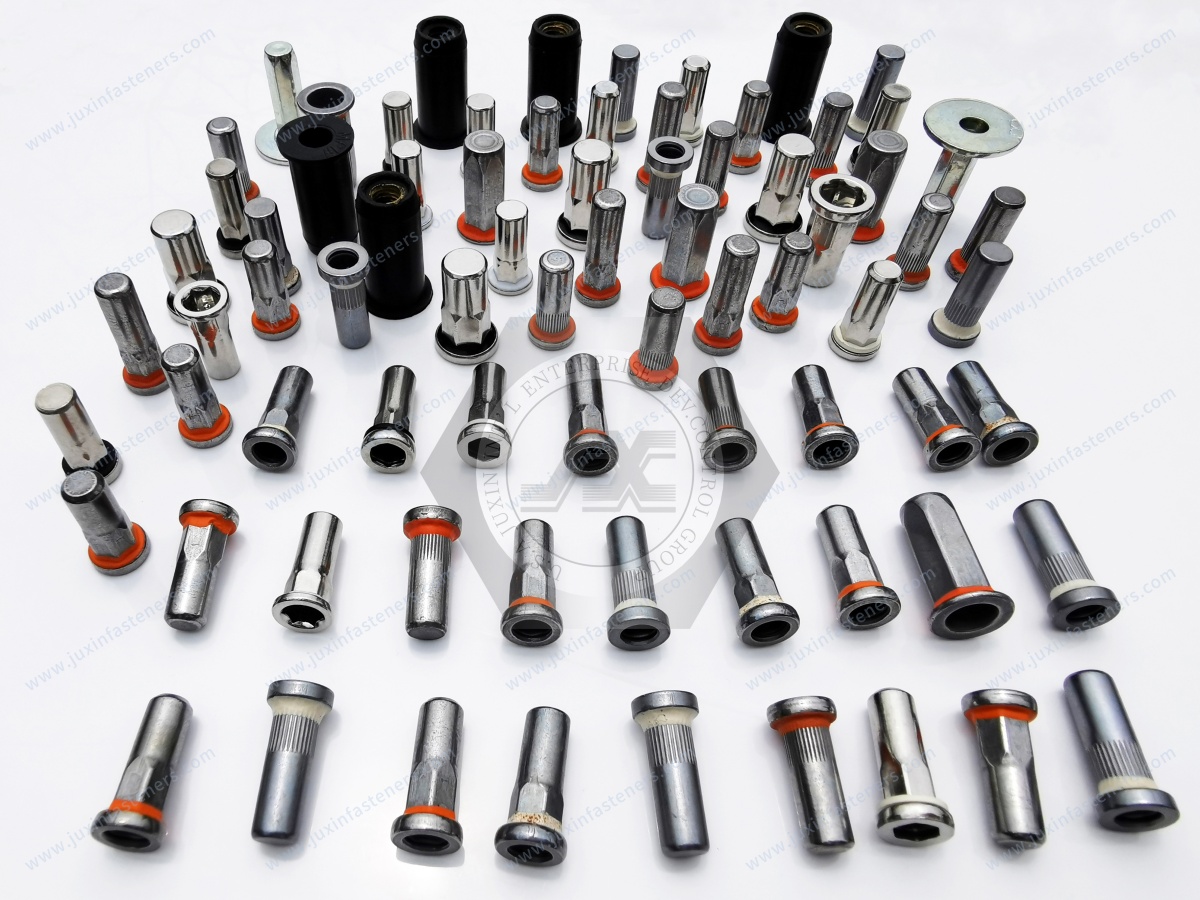
Product Pictures
Contact Us
Tel.:
+86 020 8621 0320
+86 020 3121 6067
E-mail:
Technical Support:
Navigation
SEND INQUIREY