Call Us
+86 136 6007 9809
Call Us
+86 136 6007 9809

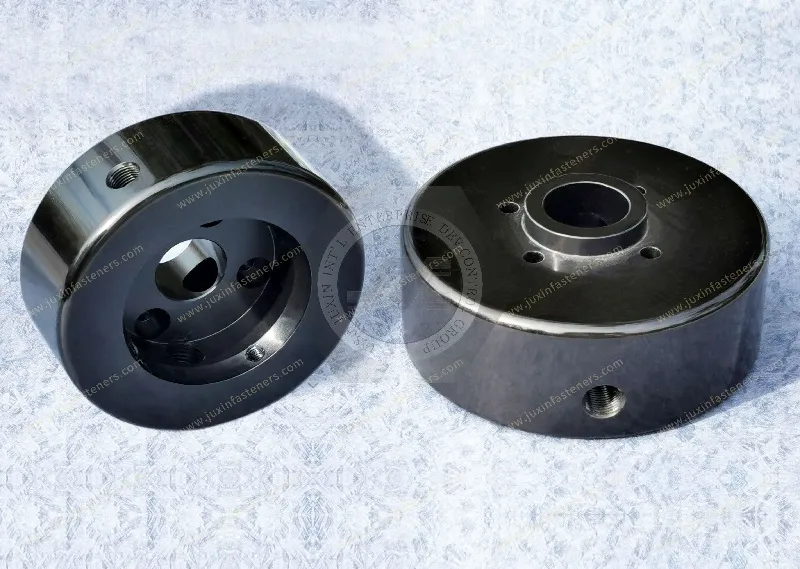
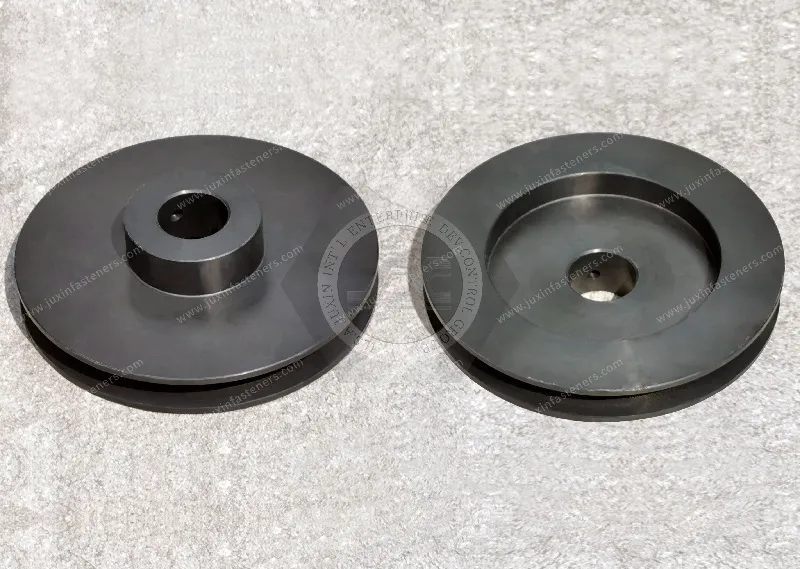
Industrial equipment manufacturers often require fastening components that cannot be selected directly from a standard fastener catalog.
Product Specification
Industrial equipment manufacturers often require fastening components that cannot be selected directly from a standard fastener catalog.
Robotic automation systems, CNC machine tools, conveyor equipment, precision machinery, automotive assemblies and industrial enclosures may require:
Nonstandard head geometry
Special shoulder diameters
Stepped shafts
Reduced shanks
Custom collars
Unusual thread lengths
Special thread configurations
Controlled bearing surfaces
Drawing-specific tolerances
Custom material and surface finish requirements
These requirements create an important manufacturing decision:
Should the component be cold-headed, CNC machined, or produced through a combination of forming and machining?
JUXIN FASTENERS supports drawing-based custom fastener and precision component sourcing for industrial OEM applications,
including the technical review of cold-heading, secondary machining and other suitable manufacturing routes.
Depending on the part geometry, material, tolerance requirements and production quantity, the manufacturing process may involve:
Cold heading
Cold forming
Multi-station forming
Thread rolling
CNC turning
CNC milling
Secondary drilling
Secondary machining
Grinding where required
Heat treatment where specified
Surface finishing
The objective is not to force every custom component into one manufacturing process.
The objective is to select a feasible and economical manufacturing route that satisfies the controlled engineering drawing.
Cold-headed fasteners are metallic components produced by plastically deforming material at or near room temperature using forming tools and dies.
Unlike conventional machining, which removes material, cold heading redistributes material into the required geometry.
Cold heading is commonly associated with the manufacture of:
Bolts
Screws
Rivets
Headed pins
Studs
Special fastening components
Certain nut blanks
Other drawing-controlled formed parts
The achievable geometry depends on:
Material formability
Starting wire or blank diameter
Forming ratio
Head geometry
Die design
Number of forming stations
Required tolerances
Secondary operations
Cold heading can be an efficient manufacturing method, particularly when the component geometry and production volume justify dedicated tooling.
The terms are related but not always identical.
Cold heading commonly refers to forming operations used to create enlarged heads or other features on wire or bar blanks.
Cold forming is a broader term covering plastic deformation processes carried out without intentional bulk heating of the workpiece.
In industrial fastener sourcing, the terms are sometimes used interchangeably.
For OEM procurement, the important issue is not the terminology alone.
It is whether the proposed process can produce the required:
Geometry
Material properties
Dimensional tolerances
Surface condition
Production quantity
A common sourcing mistake is to send a drawing to a supplier and immediately ask:
“Can you cold-head this part?”
A better question is:
“Which manufacturing route best satisfies the drawing at the required annual volume?”
Cold heading may be attractive for one geometry.
CNC machining may be better for another.
A hybrid process may be necessary when a component combines a formable head with precision-machined functional surfaces.
This distinction can determine the total project cost.
Standard fasteners are designed around widely adopted dimensional systems.
They are suitable for many applications, but specialized equipment can create additional requirements.
Examples include:
Restricted installation space
Special bearing interfaces
Limited tool access
Nonstandard thread engagement
Weight constraints
Positioning requirements
Controlled shoulder length
Special corrosion exposure
Equipment-specific assembly methods
A custom fastener may be required when these constraints cannot be addressed by a standard component.
However, custom geometry should be justified by the application.
Unnecessary customization can increase tooling cost, lead time and replacement-part complexity.
Robotic automation equipment can contain fastening components used in:
Equipment frames
End-effectors
Sensor brackets
Actuator housings
Guarding systems
Tooling fixtures
Positioning mechanisms
Cable-management assemblies
Different locations have different requirements.
A fastener securing a stationary equipment cover does not experience the same loading as a component used in a moving mechanical linkage.
Therefore, the word robotics should not automatically imply high fatigue strength or precision-bearing capability.
The actual joint function must be identified.
Consider two custom components:
Component A: A special bolt securing a robot control enclosure.
Component B: A shoulder pin supporting a moving linkage.
Component A may primarily require:
Clamp load
Thread strength
Corrosion protection
Installation access
Component B may require:
Shoulder diameter tolerance
Surface finish
Wear resistance
Concentricity
Fatigue evaluation
Bearing compatibility
Both may be called custom fasteners.
But their manufacturing and inspection requirements can be very different.
Shoulder bolts combine a threaded portion with a larger unthreaded shoulder.
Depending on the application, the shoulder may provide:
Component positioning
Controlled spacing
A bearing interface
Alignment
A defined mounting length
Potential applications include:
Industrial automation
Fixtures
Equipment linkages
Machinery assemblies
Sliding mechanisms
For shoulder bolts, important dimensions can include:
Shoulder diameter
Shoulder length
Thread diameter
Thread length
Head dimensions
Transition radius
Concentricity
Surface finish
A shoulder bolt may be manufactured through:
Cold heading with subsequent operations
CNC machining
A hybrid forming-and-machining process
Cold heading can form certain head and shoulder features efficiently.
However, tight shoulder diameter tolerances or demanding surface-finish requirements may still require secondary machining or grinding.
Therefore:
Cold-headed does not automatically mean precision ground.
The required accuracy must be defined on the drawing.
Some shoulder bolts are used as locating or bearing components.
Others are primarily fastening components.
A shoulder bolt intended to support rotational movement may need tighter control of:
Diameter
Roundness
Surface finish
Concentricity
Hardness
These requirements should be explicitly specified.
The term precision shoulder bolt is not sufficient by itself.
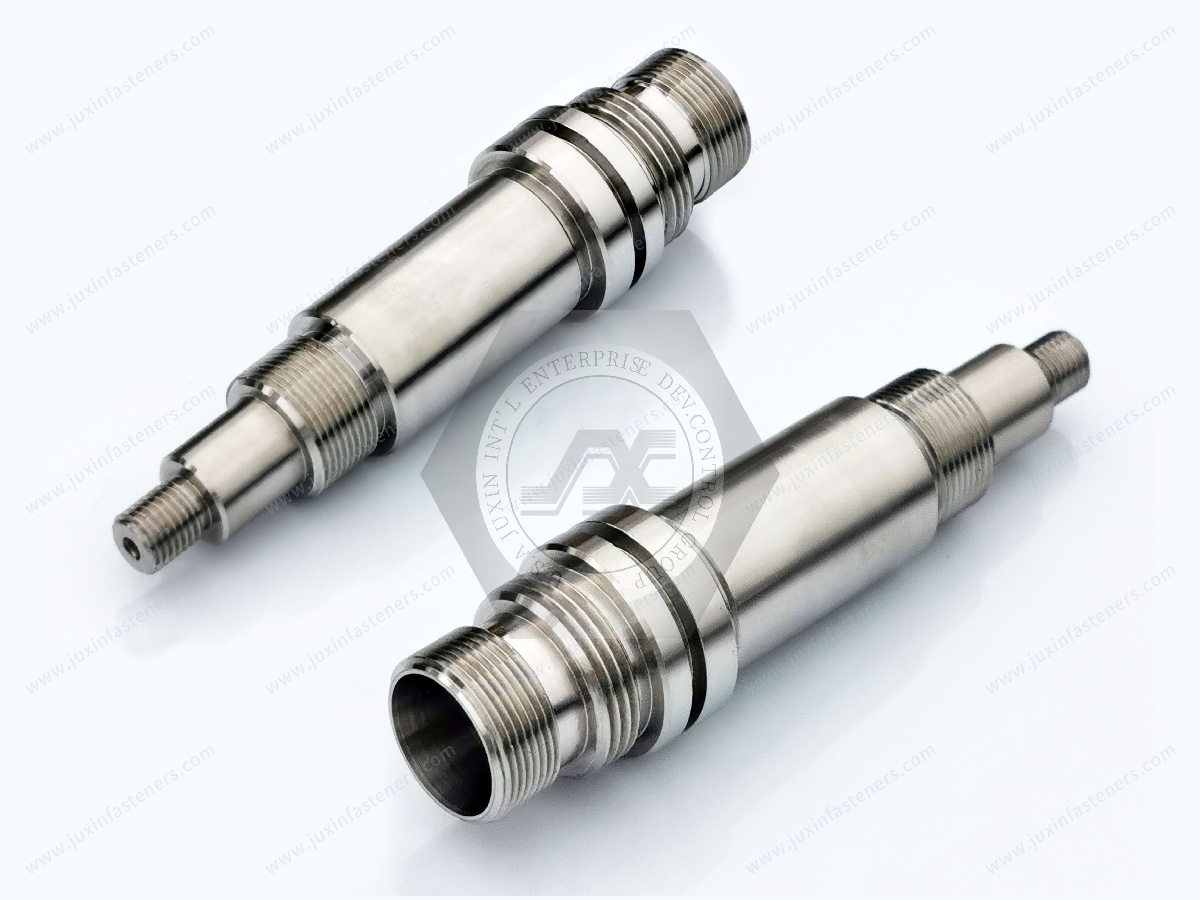
Stepped pins contain two or more diameter sections.
They may be used for:
Positioning
Mechanical stops
Assembly location
Retention
Equipment fixtures
Special linkage connections
Important design factors include:
Diameter transitions
Shoulder lengths
Fillet radii
Surface finish
Material
Heat treatment
Required tolerances
The manufacturing route depends on the complexity of the steps and the required accuracy.
Multi-diameter parts can be candidates for cold forming when their geometry and material flow are suitable.
However, some shapes require:
Secondary turning
Drilling
Milling
Grinding
Threading
The presence of multiple diameters does not mean the part can be completed entirely in one cold-forming operation.
Cold forming can produce a component close to its final dimensions.
This is often called near-net-shape manufacturing.
But a near-net-shape blank may still require secondary processing.
For example:
Cold-Formed Blank → CNC Turning → Thread Rolling → Surface Finish
may be a more suitable route than either cold forming or machining alone.
The final process should be selected from the drawing.
Headed pins can provide:
Mechanical retention
Positioning
Attachment
Controlled movement
Assembly stops
Depending on geometry, headed pins may be suitable for cold-heading processes.
Relevant drawing requirements can include:
Head diameter
Head height
Shank diameter
Overall length
Transition radius
Surface finish
Material
For precision applications, the shank may require secondary machining.
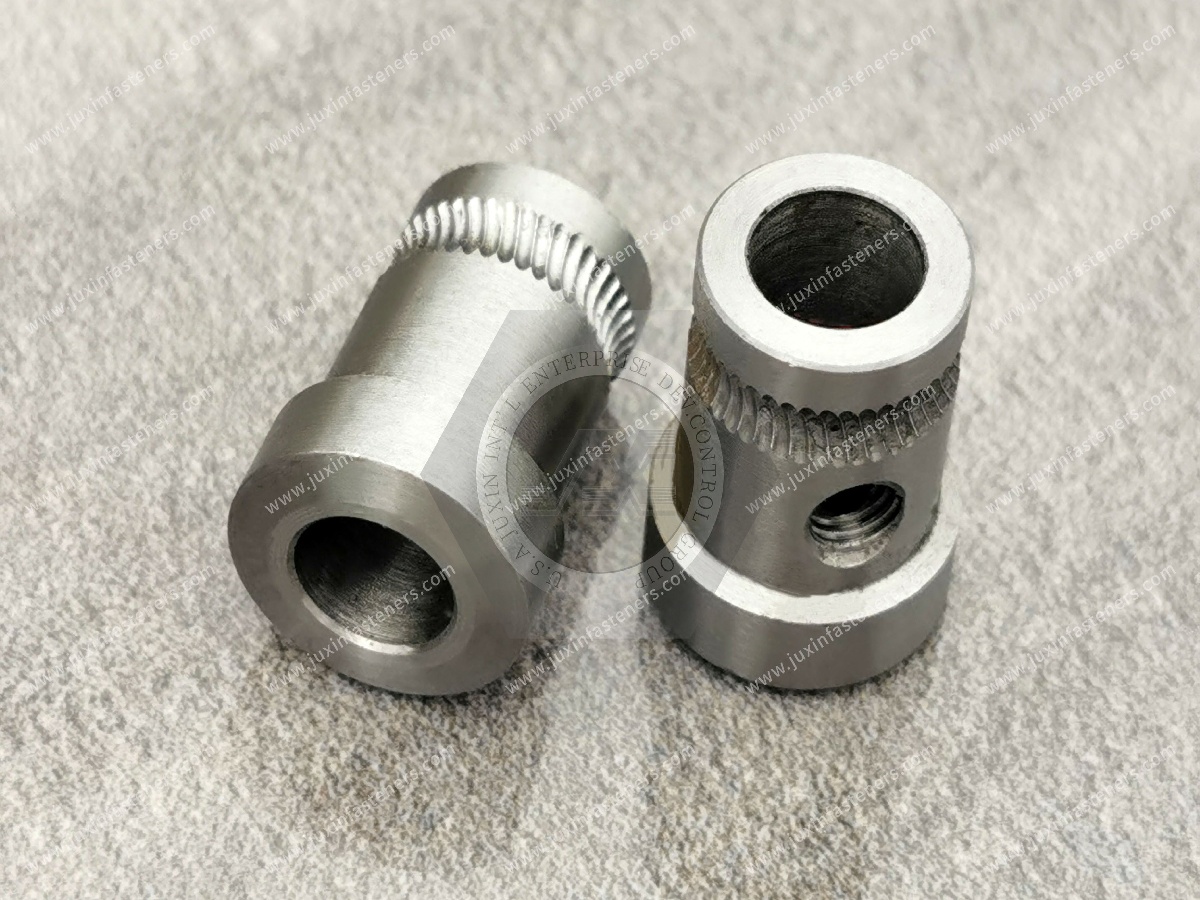
Custom nuts may require:
Special external geometry
Special flange dimensions
Reduced height
Nonstandard thread
Special locking features
Drawing-specific bearing surfaces
JUXIN FASTENERS supports custom nut requirements, including drawing-based machined components and appropriate formed fastener solutions.
The manufacturing method should follow the geometry and volume.
Not every specialty nut is a cold-headed product.
OEM custom screws may require:
Special head styles
Custom drive recesses
Reduced shanks
Special thread lengths
Unusual overall lengths
Controlled under-head geometry
Special material
Special coating
Cold heading may be appropriate for certain designs.
For low-volume or highly specialized geometries, CNC machining may be more practical.
| Selection Factor | Cold Heading / Cold Forming | CNC Machining |
|---|---|---|
| Material removal | Often relatively low | Depends on starting stock and geometry |
| Dedicated tooling | Often required | Generally lower dedicated forming-tool requirement |
| Production volume | Often attractive at medium/high volume | Often attractive at prototype/low volume |
| Complex external geometry | Depends on formability and die design | Often flexible |
| Internal features | May require secondary operations | Often directly machinable |
| Tight local tolerances | May require secondary finishing | Can be suitable depending on feature |
| Design changes | May require tooling changes | Often easier during development |
| Unit cost at volume | Can be advantageous after tooling investment | Depends on cycle time and material |
| Prototype speed | Depends on tooling | Often favorable for early iterations |
The correct process depends on the actual drawing and production program.
Cold heading can require dedicated tooling.
CNC machining can require more machining time per component.
Therefore, a sourcing decision should consider:
Total Program Cost = Tooling + Samples + Unit Production + Secondary Operations + Inspection + Inventory + Design Change Risk
A cold-headed component may have a lower unit price at volume but a higher initial development cost.
A machined component may be more economical during prototype or early production.
The crossover point depends on the project.
For engineering evaluation, consider two possible production routes.
Total cost may include:
Material
Machine setup
Cycle time
Tooling wear
Secondary operations
Inspection
Total cost may include:
Forming tooling
Setup
Forming cycle
Secondary machining
Thread rolling
Heat treatment
Inspection
A simplified cost comparison is:
CNC Program Cost = CNC Setup Cost + Quantity × CNC Unit Cost
Cold-Heading Program Cost = Forming Tooling Cost + Quantity × Formed-Part Unit Cost
This is a simplified model.
Actual costs may include additional operations, yield losses, inspection and logistics.
Nevertheless, it demonstrates why annual volume matters.
An OEM may initially request 100 samples.
But the project may require 50,000 pieces annually after approval.
Those are different sourcing conditions.
For custom fasteners, procurement teams should provide:
Prototype quantity
Initial production quantity
Expected annual usage
Program duration
This allows the supplier to evaluate whether dedicated tooling is justified.
Cold forming changes material geometry through plastic deformation.
Depending on the process, this can influence:
Grain flow
Work hardening
Residual stresses
Material properties
However, the effect is not universally beneficial for every geometry or loading condition.
It is incorrect to assume that cold heading automatically produces a fixed percentage improvement in fatigue strength.
A fastener can have favorable grain flow and still fail due to:
Poor transition radius
High stress concentration
Incorrect preload
Material defects
Surface damage
Corrosion
Improper heat treatment
Unexpected cyclic loading
Fatigue performance depends on the complete component and application.
The manufacturing process is only one factor.
Machining removes material.
But that does not mean every machined fastener has inferior mechanical performance.
Machined components can be appropriate where:
Geometry is complex
Tolerances are tight
Volume is limited
Material is difficult to form
Design changes are expected
Secondary features are extensive
The mechanical suitability of a machined part depends on its material, geometry, processing and loading.
Potential material families for industrial custom fasteners can include:
Low-carbon steels
Medium-carbon steels
Alloy steels
Stainless steels
Aluminum alloys
Titanium alloys
Brass and other application-specific materials
The correct material depends on:
Required strength
Formability
Machinability
Heat-treatment requirements
Corrosion exposure
Weight
Cost
Customer specification
JUXIN FASTENERS can review suitable materials according to the actual drawing and manufacturing route.
Material selection affects manufacturing feasibility.
A material may machine well but have limited formability for a proposed cold-heading geometry.
Another material may be suitable for cold heading but require additional heat treatment or finishing to meet final requirements.
Therefore, engineers should consider manufacturing feasibility before freezing the material specification.
Carbon steels are commonly used for industrial fastening components.
Selection depends on:
Required mechanical properties
Forming process
Heat treatment
Corrosion protection
Mating components
For cold-headed products, the material must be compatible with the proposed deformation process.
Alloy steels may be selected where the component requires particular mechanical properties after appropriate processing.
However, the presence of an alloy-steel designation does not automatically establish a finished fastener property class.
The final mechanical requirements should be specified and verified as applicable.
Stainless steel may be selected for:
Corrosion resistance
Material compatibility
Appearance
Environmental requirements
But stainless steels vary in:
Formability
Machinability
Strength
Work-hardening behavior
Corrosion resistance
The selected grade should be reviewed against the proposed manufacturing route.
Aluminum may be appropriate for selected lightweight industrial components.
Potential applications include:
Equipment housings
Automation assemblies
Lightweight mounting hardware
However, aluminum components should be evaluated for:
Thread strength
Bearing stress
Fatigue
Corrosion
Galvanic compatibility
Surface treatment
Titanium can be considered for specialized applications requiring particular combinations of:
Weight
Strength
Corrosion resistance
Material compatibility
But titanium may create different machining, forming and thread-behavior challenges.
It should not be selected solely because it is considered a premium material.
Some custom fasteners require heat treatment to achieve specified mechanical properties.
Potential considerations include:
Material grade
Required hardness
Strength
Toughness
Distortion
Surface condition
Heat treatment must be matched to the actual material and design.
JUXIN FASTENERS should not claim that every custom cold-headed component receives induction hardening or controlled-atmosphere treatment.
A component may meet dimensional requirements before heat treatment.
Depending on material and process, heat treatment can introduce dimensional changes.
Therefore, the manufacturing plan should identify whether critical dimensions are controlled:
Before heat treatment
After heat treatment
Through secondary finishing
This matters for precision shoulders, pins and threaded components.
Threads may be produced through different methods depending on the component.
Potential methods include:
Thread rolling
Thread cutting
CNC threading
Tapping
Thread rolling may be attractive for certain suitable external-thread geometries and materials.
But it is not appropriate for every custom component.
The manufacturing route should follow the required thread and geometry.
Thread rolling plastically forms the thread profile.
Thread cutting removes material.
Both methods can produce functional threads when properly specified and manufactured.
Selection depends on:
Material
Geometry
Thread size
Production quantity
Required tolerance
Mechanical requirements
No universal fatigue improvement should be claimed without relevant validation.
An OEM drawing should specify:
Thread diameter
Thread pitch
Thread direction
Thread length
Tolerance class
Applicable standard
Surface finish where relevant
For metric threads, ISO thread requirements may apply.
For inch threads, ASME/ANSI specifications may be relevant.
The correct reference should be selected according to the drawing.
Shoulder transitions can influence local stress concentration.
Engineers should consider:
Fillet radius
Undercut
Shoulder diameter
Thread runout
Bearing contact
Loading direction
An unnecessarily sharp transition can increase local stress concentration.
But the optimal geometry depends on the complete component.
Increasing a transition radius can reduce stress concentration in some geometries.
However, a larger radius may interfere with:
Bearing seating
Washer contact
Assembly clearance
Adjacent components
Therefore, the transition radius must balance fatigue considerations with functional assembly geometry.
Custom fasteners may require controlled:
Diameter
Length
Concentricity
Perpendicularity
Thread position
Head geometry
Surface finish
The drawing should distinguish between:
Critical functional dimensions
General manufacturing dimensions
Cosmetic requirements
This helps avoid unnecessary cost.
A drawing may specify tight tolerances across every dimension.
But only a few dimensions may actually control function.
If all dimensions require secondary precision machining, much of the economic benefit of cold heading may disappear.
Engineers should identify the truly critical features before finalizing the manufacturing process.
Custom fasteners may require:
Zinc-based protective coatings
Zinc-nickel coatings
Passivation where appropriate
Other customer-specified finishes
The correct finish depends on:
Base material
Corrosion environment
Assembly friction
Dimensional tolerance
Appearance
Mating hardware
A coating change can affect both dimensions and assembly behavior.
Coating thickness can influence threaded fit.
For drawing-controlled custom fasteners, engineers should identify whether dimensions and thread requirements apply:
Before coating
After coating
This is particularly important for tight thread tolerances and precision interfaces.
For susceptible high-strength steel fasteners, manufacturing and surface-treatment processes can introduce hydrogen-related risks.
Relevant considerations can include:
Material strength
Heat treatment
Cleaning process
Electroplating
Post-treatment requirements
Application stress
The appropriate risk-control measures depend on the actual fastener and process.
A coating specification should therefore be reviewed together with the material and strength requirement.
CNC machinery can require specialized hardware for:
Spindle-related assemblies
Tooling fixtures
Equipment guards
Precision brackets
Mounting interfaces
Motion-control equipment
However, the required precision depends on the component's function.
A special guard bolt and a precision spindle lock nut should not be treated as equivalent manufacturing challenges.
Industrial automation equipment can use:
Special bolts
Stepped pins
Shoulder components
Mounting studs
Specialty nuts
Custom spacers
Drawing-based machined parts
Potential requirements include:
Repeatable assembly
Restricted installation space
Controlled positioning
Material compatibility
Equipment-specific geometry
The correct manufacturing route should be selected individually.
Automotive assemblies may use drawing-specific fasteners for:
Brackets
Equipment housings
Interior mechanisms
Structural accessories
Specialized mounting interfaces
Some designs are suitable for cold heading.
Others may require machining or hybrid manufacturing.
The customer drawing and program requirements should determine the process.
Agricultural and heavy industrial equipment may require:
Special mounting bolts
Stepped pins
Shoulder bolts
Specialty nuts
Custom threaded components
Environmental requirements can include:
Vibration
Corrosion
Dirt
Water
Temperature changes
The component should be evaluated according to its actual load and exposure.
Early development quantities may be small.
For example:
10 pieces
50 pieces
100 pieces
At this stage, CNC machining may be practical even if cold heading is planned for eventual production.
However, prototype parts manufactured through a different process may not reproduce every material or mechanical characteristic of the final production component.
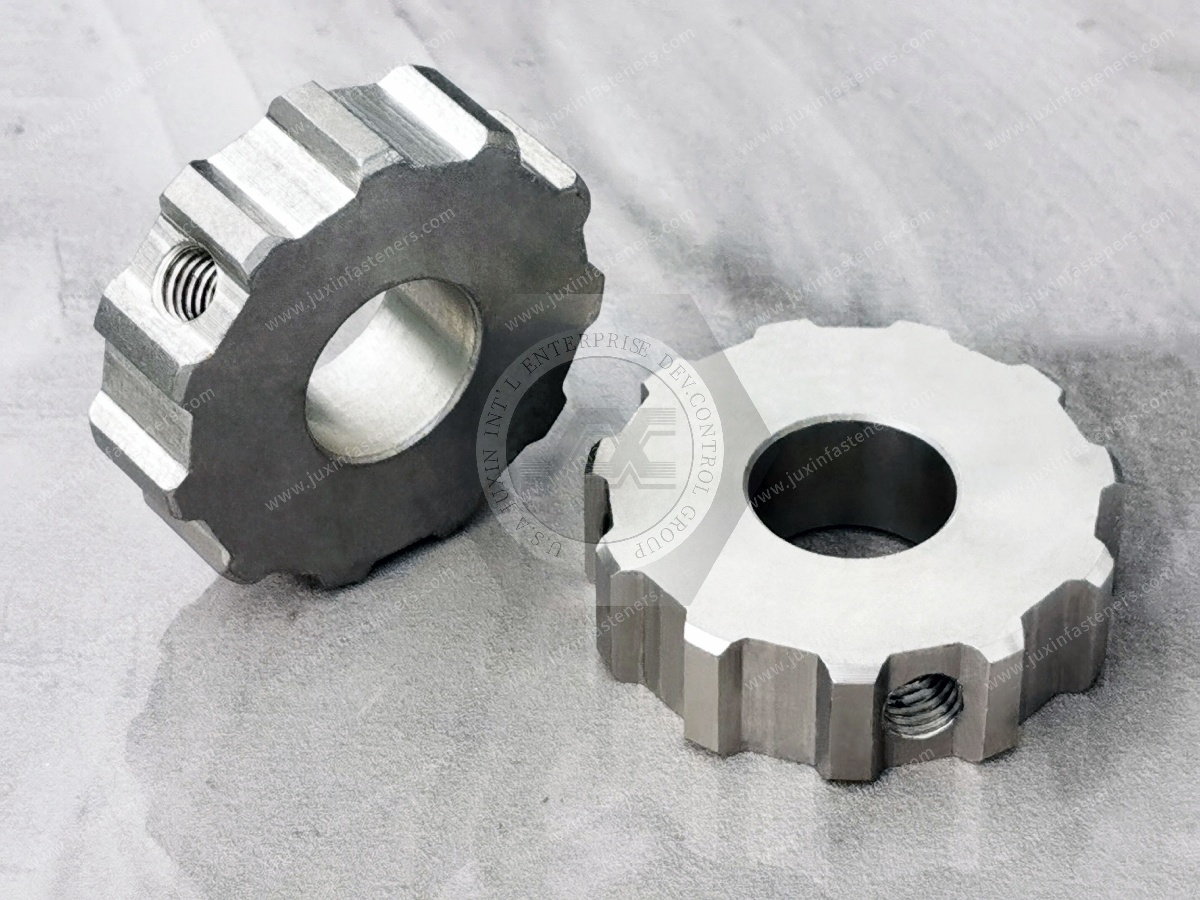
This is a critical distinction.
A machined prototype may confirm:
Geometry
Assembly fit
Tool access
Functional interface
But it may not fully represent:
Forming-related material behavior
Production residual stresses
Final surface condition
Heat-treatment response
Process-specific mechanical performance
Therefore, final production validation may be required after the manufacturing route is established.
Before tooling investment, engineers should review:
Starting material
Head-to-shank ratio
Forming feasibility
Shoulder geometry
Undercuts
Internal features
Thread design
Tolerances
Secondary operations
Heat treatment
Coating
The goal is to identify manufacturing constraints early.
A custom fastener drawing may be technically functional but expensive to manufacture.
A small change in:
Radius
Shoulder length
Head geometry
Undercut
Tolerance
may simplify manufacturing.
However, any design change must be approved by the OEM.
The supplier should not alter functional geometry without customer authorization.
Cold-heading tooling can be an important part of the total program cost.
Tooling requirements depend on:
Part geometry
Material
Number of forming operations
Tool life
Production volume
Procurement teams should ask for a clear distinction between:
Tooling cost
Sample cost
Unit price
Secondary-operation cost
Production lead time
This makes quotations easier to compare.
For custom OEM components, procurement teams should clarify:
Who pays for tooling?
Who owns the tooling?
Where is tooling maintained?
What happens if the drawing changes?
How are replacement tools handled?
Can the tooling support the expected production volume?
These commercial questions can materially affect supplier continuity.
For custom fasteners, the supplier should understand:
Initial order quantity
Annual forecast
Peak monthly demand
Program duration
Expected design changes
This helps evaluate:
Tooling investment
Manufacturing route
Production scheduling
Inventory requirements
A quotation based only on the first sample quantity may not reflect the long-term program.
Inspection requirements should follow the actual drawing and risk level.
Potential controls can include:
Dimensional inspection
Thread verification
Material verification
Hardness testing where required
Mechanical testing where specified
Coating inspection where required
Functional assembly evaluation
Additional documentation should be agreed during RFQ review.
JUXIN FASTENERS should not claim that every custom component automatically includes PPAP, SPC, FEA or EN 10204 3.1 documentation.
Depending on the product and customer requirements, relevant references may include:
ISO metric thread standards
ASME/ANSI inch-thread standards
ISO 898-1 for applicable carbon/alloy steel bolt, screw and stud mechanical-property requirements
ISO 3506 series for applicable stainless fastener mechanical-property requirements
ASTM material or test specifications where applicable
Customer-specific drawing and inspection requirements
Not every custom formed or machined part falls within the scope of a standard fastener property-class system.
The controlled drawing and purchase specification remain essential.
Design engineers should review the component in this sequence.
Is the component primarily fastening, positioning, bearing, spacing or transmitting load?
Does it contain a head, shoulder, step, undercut, recess or internal feature?
Is the material compatible with the proposed forming or machining route?
Which dimensions are functionally critical?
Is strength, fatigue, wear or corrosion the limiting factor?
Is the part a prototype, low-volume special or long-term high-volume component?
Will the part require turning, grinding, drilling, threading or heat treatment?
Which dimensional, mechanical or functional tests are required?
What is the total program cost, including tooling?
Can the proposed production route reproduce the approved component?
This sequence helps prevent process selection from being driven only by unit price.
For accurate technical evaluation and quotation, provide:
2D drawing
3D model where available
Material specification
Required mechanical properties
Thread requirements
Critical tolerances
Surface finish
Heat-treatment requirements
Coating requirements
Application
Operating environment
Prototype quantity
Initial production quantity
Annual forecast
Program duration
Inspection requirements
Required documentation
Packaging requirements
Where the drawing contains proprietary information, provide the approved technical package through the customer's normal sourcing process.
Do not compare only:
Custom bolt + material + unit price.
Compare:
Manufacturing route
Tooling cost
Tooling lead time
Unit price
Secondary operations
Material availability
Critical tolerance capability
Inspection approach
Sample approval process
Production capacity
Change-control requirements
Long-term supply considerations
A lower quoted unit price may not represent the lowest total sourcing cost.
For an existing custom fastener, a practical process can follow:
Existing Part Review → Drawing Review → Critical Feature Identification → Manufacturing Feasibility → Material & Finish Confirmation
→ Prototype / Sample → Assembly Evaluation → Required Testing → Golden Sample Approval → Production
When changing from machining to cold heading, the OEM should evaluate whether the process change affects:
Geometry
Mechanical properties
Surface condition
Fatigue behavior
Dimensional consistency
Functional performance
A manufacturing process change should not be treated as automatically equivalent.
For drawing-based custom components, a Golden Sample approval process can help establish the intended production reference.
The approved sample should be linked to:
Drawing revision
Material
Manufacturing route
Critical dimensions
Surface finish
Required functional tests
This helps prevent discrepancies between development samples and later production orders.
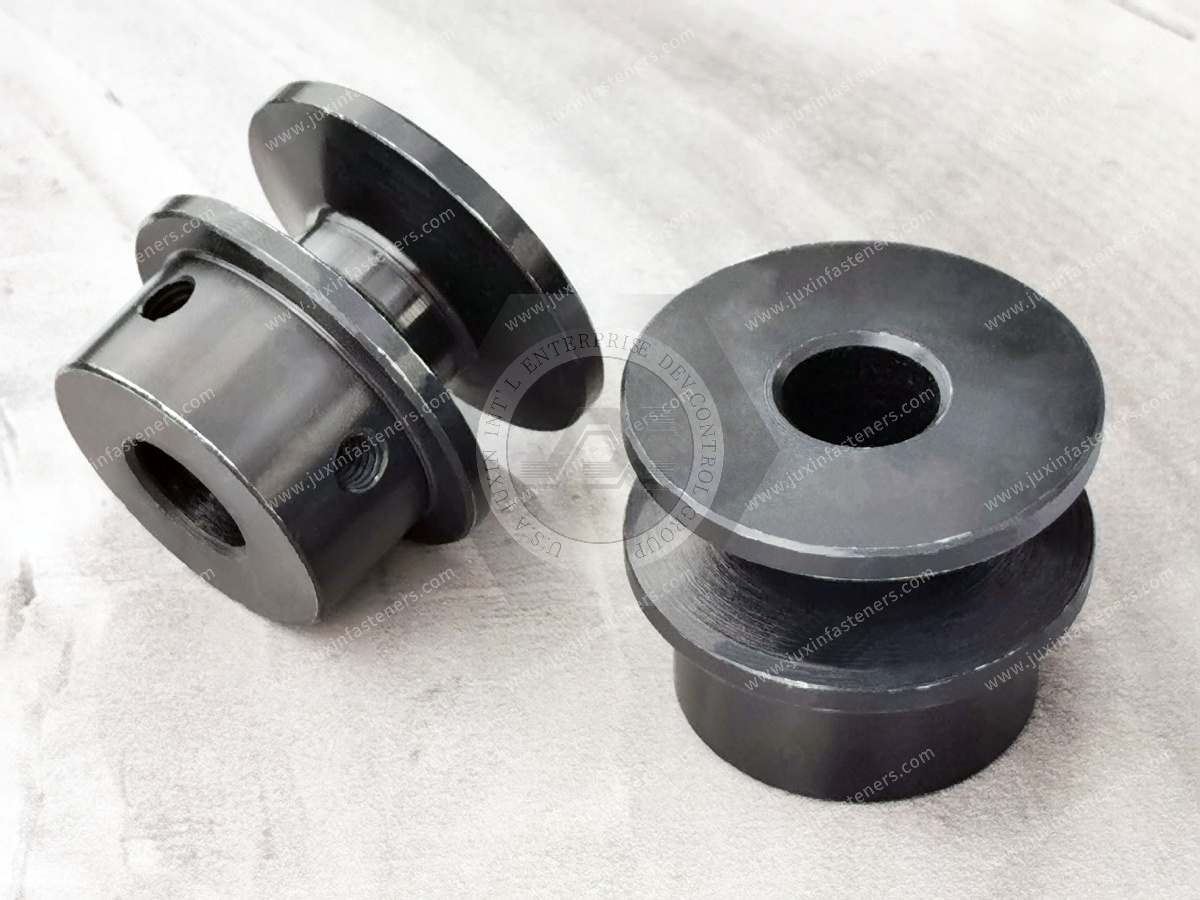
This page connects to the wider JUXIN FASTENERS custom fastener and industrial component architecture.
Related solutions include:
Precision Locknuts & Custom Machined Nuts for CNC Spindles and Rotary Systems — drawing-based precision nuts and machined components
All-Metal Prevailing-Torque Lock Nuts for High-Vibration Industrial Assemblies — mechanical locking solutions for industrial machinery
Projection Weld Nuts for Automotive Chassis & Sheet Metal Assemblies — welded fastening solutions for fabricated structures
Self-Clinching Studs for Thin Sheet Metal & Equipment Enclosures — permanent male threaded attachment in sheet metal
Blind Rivet Nuts for Sheet Metal Enclosures & One-Sided Assembly — blind-side threaded fastening
Custom CNC Machined Components — precision machining for drawing-controlled industrial parts
Custom Screws, Bolts and Special Fasteners — OEM fastening requirements beyond standard catalog dimensions
The internal decision path should be:
High-volume formable geometry → Evaluate Cold Heading
Low-volume complex geometry → Evaluate CNC Machining
Formed blank with precision features → Evaluate Hybrid Manufacturing
Standard fastener available → Evaluate Standard Product First
Drawing-specific mechanical interface → Custom Fastener Review
This provides a practical selection path for engineers and procurement teams.
If you are sourcing custom fastening components for:
Robotic automation
CNC machinery
Industrial equipment
Automotive assemblies
Agricultural machinery
Conveyor systems
Equipment frames
Electrical equipment
Precision fixtures
Specialized OEM assemblies
send us:
2D Drawing + 3D Model (if available) + Material + Critical Tolerances + Surface Finish + Prototype Quantity + Annual Forecast
JUXIN FASTENERS can review requirements for:
Custom cold-headed fasteners
Special formed components
Shoulder bolts
Stepped pins
Headed pins
Specialty nuts
Custom screws and bolts
Drawing-based CNC machined components
Hybrid formed-and-machined parts
Manufacturing feasibility, tooling requirements and the proposed production route should be confirmed during technical review.
The goal is not simply to manufacture a custom part.
The goal is to select a manufacturing process that provides the required function, geometry, material performance, production economics and supply continuity.
JUXIN FASTENERS
Website: www.juxinfasteners.com
Engineering & RFQ: info@juxinfasteners.com
Product Packaging
Packaging Standard
At Juxin Fasteners, we apply standardized export packaging to ensure product protection, traceability, and compliance with international logistics requirements.
1. Standard Export Packaging
Unless otherwise specified, all products will be packed according to our factory standard export packaging, which includes:
Moisture-resistant inner protection
Poly bag or small box packing as required
Reinforced export cartons
Clear labeling with part number, specification, batch number, and quantity
Palletizing for sea or air shipment when necessary
Our standard packaging is designed to ensure safe transportation, efficient warehousing, and long-distance international shipping.
2. Customized Packaging Options
We also provide customized packaging solutions according to customer requirements, including but not limited to:
Private labeling
Customized barcodes
Specific carton dimensions
Retail packaging
Special pallet configuration
Customer-specific marking and identification
So that you know, customized packaging may involve additional costs and extended lead time depending on the complexity of the requirements.
3. Compliance & Quality Assurance
All packaging processes are controlled under our ISO 9001 quality management system to ensure consistency, traceability, and product integrity throughout the supply chain.
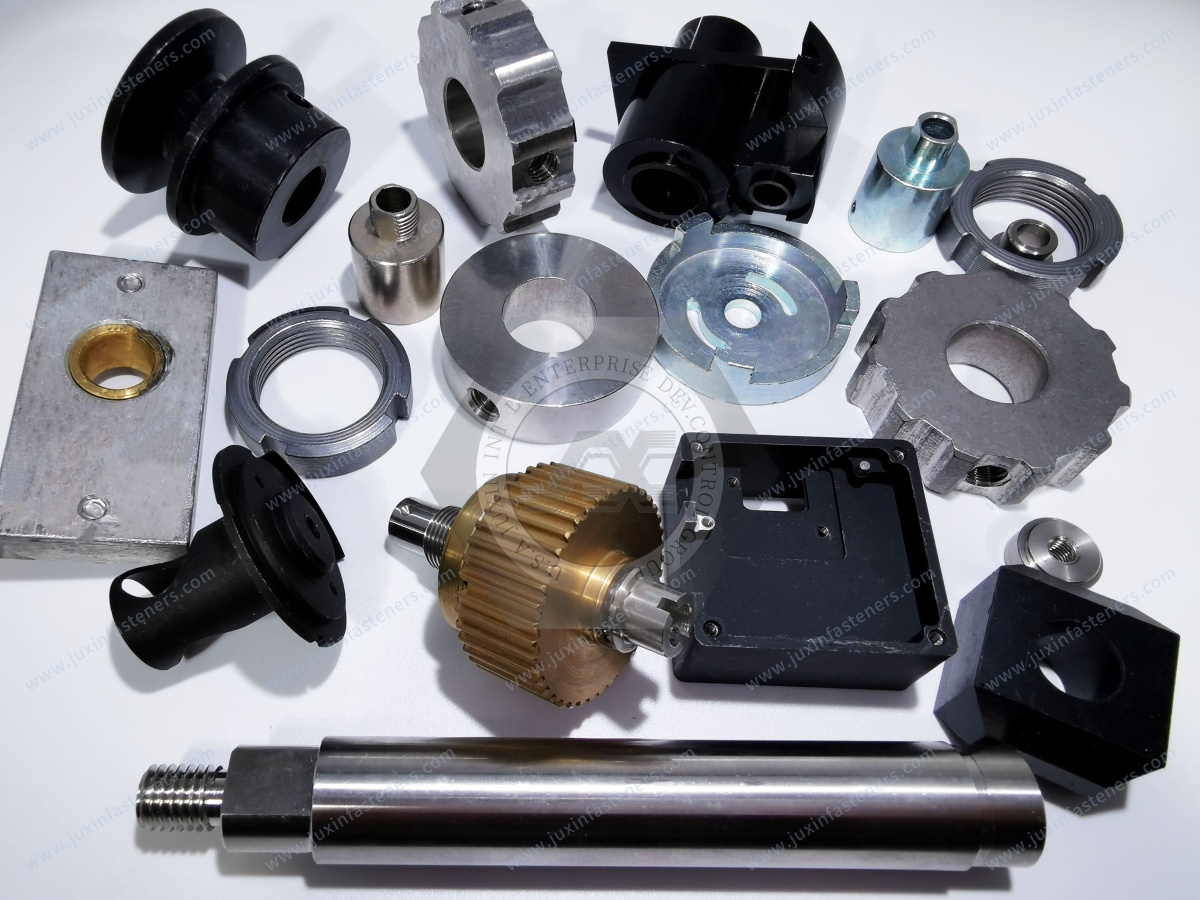
Product Pictures
Contact Us
Tel.:
+86 020 8621 0320
+86 020 3121 6067
E-mail:
Technical Support:
Navigation
SEND INQUIREY