Call Us
+86 136 6007 9809
Call Us
+86 136 6007 9809

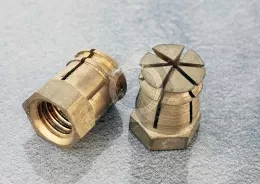
Stainless steel breakaway tamper-resistant nuts, also called shear nuts or break-off security nuts, feature a hexagonal installation head connected to a smooth conical nut body by an engineered shear section.
When the specified tightening torque is reached, the hexagonal head separates, leaving a tamper-resistant cone that is difficult to remove using conventional wrenches.
Juxin Fasteners manufactures 304 stainless steel breakaway nuts for public infrastructure, security fencing, guardrail accessories, outdoor signage, lighting equipment, telecommunications cabinets and custom OEM assemblies.
Metric configurations include M5, M6, M8, M10, M12 and M16, with Unified inch-thread options subject to drawing confirmation.
Custom manufacturing supports shear torque requirements, breakaway neck geometry, thread tolerances, installed height, material selection and industrial batch production.
Additional aluminum and zinc alloy configurations may be evaluated for specific projects.
Product Specification
Stainless Steel Breakaway Tamper-Resistant Nuts
304 Stainless Steel Shear Nuts and Break-Off Security Nuts for Public Infrastructure and Custom OEM Assemblies
Juxin Fasteners manufactures stainless steel breakaway tamper-resistant nuts for industrial OEM manufacturers requiring fastening components that discourage unauthorized removal after installation.
Also known as stainless steel shear nuts, break-off security nuts, snap-off nuts or tamper-resistant cone nuts,
these components feature a hexagonal installation head connected to a smooth conical nut body by an engineered breakaway section.
During installation, a conventional wrench or socket applies torque to the hexagonal head.
When the designed breakaway torque is reached, the head separates from the remaining nut body.
The installed conical section has no conventional hexagonal wrenching surface, making unauthorized removal more difficult with ordinary hand tools.
This fastening design is relevant to public infrastructure, outdoor equipment, security fencing, lighting installations,
telecommunications equipment and other assemblies where access control and resistance to casual tampering are important.
Juxin Fasteners supports OEM/ODM manufacturing, stainless steel material selection,
metric and Unified inch-thread configurations, controlled breakaway geometry and industrial batch production.
Product Technical Specifications
| Parameter | Specification |
|---|---|
| Product Name | Stainless Steel Breakaway Tamper-Resistant Nut |
| Alternative Names | Shear Nut, Break-Off Security Nut, Snap-Off Nut |
| Product Category | Tamper-Resistant Security Fasteners |
| Primary Material | Stainless Steel |
| Material Option | AISI 304 / 18-8, Subject to Material Verification |
| Additional Materials | Aluminum, Zinc Alloy — Project-Specific |
| Installation Head | Hexagonal |
| Installed Body | Smooth Conical / Tapered |
| Breakaway Feature | Engineered Shear Neck |
| Locking Principle | Removal-Resistant Geometry After Head Separation |
| Installation Method | Conventional Wrench or Socket |
| Breakaway Torque | Drawing-Specified |
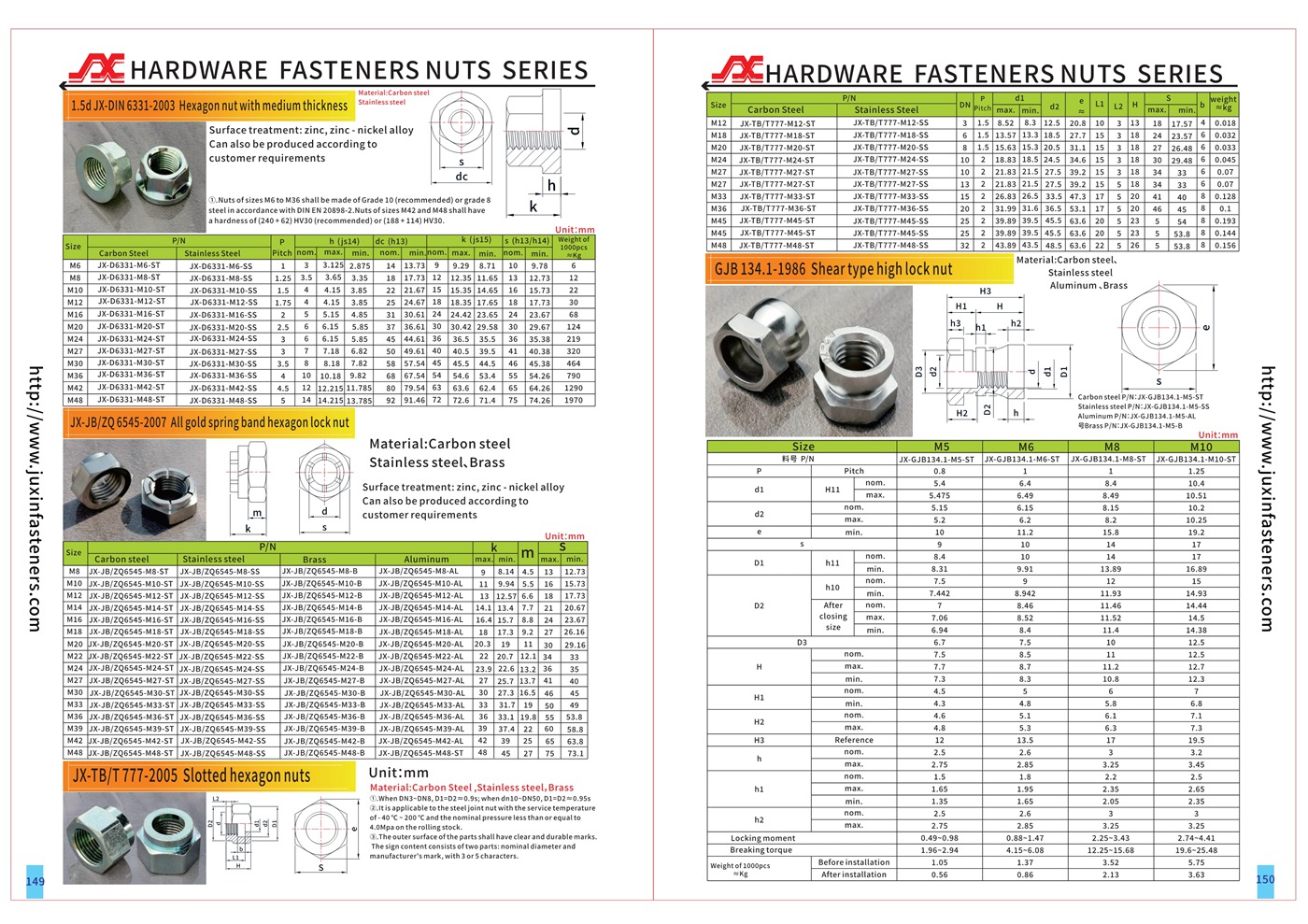
| Metric Sizes | M5, M6, M8, M10; M12 and M16 by Engineering Review |
| Inch Thread Options | #10-24, #10-32, 1/4-20, 1/4-28, 5/16-18, 3/8-16 |
| Thread Systems | ISO Metric, UNC, UNF |
| Surface Finish | Natural Stainless Steel or Customer-Specified |
| Installed Height | According to Approved Drawing |
| Manufacturing | OEM/ODM Made-to-Drawing |
| Production | Industrial Batch Manufacturing |
Engineering Note: Breakaway torque, installed dimensions, material grade, mechanical properties and thread tolerances must be established for each product configuration.
The listed sizes do not imply that every material and size combination is available as a standard stocked product.
What Is a Breakaway Tamper-Resistant Nut?
A breakaway tamper-resistant nut is a security fastener designed to make conventional removal difficult after installation.
The nut consists of two connected functional sections:
An upper hexagonal drive head.
A lower tapered or conical nut body.
An engineered shear section joins the two parts.
When the nut is tightened to its specified breakaway condition, the upper hexagonal section separates.
The remaining conical nut body continues to engage the mating bolt or stud but no longer provides the original wrenching surfaces.
This creates a permanent-style security fastening arrangement.
However, the term permanent refers to the intended security function. Removal may still be possible using specialized or destructive methods.
How the Breakaway Mechanism Works
The breakaway mechanism depends on a controlled reduction in cross-sectional strength at the engineered shear neck.
During installation:
The nut is threaded onto a compatible bolt or stud.
A conventional wrench or socket engages the hexagonal drive head.
Tightening torque is applied.
The engineered shear section experiences increasing torsional loading.
The hexagonal drive head separates when the specified breakaway condition is reached.
The conical nut body remains installed.
The resulting fastening arrangement reduces access to conventional wrenching surfaces.
The actual breakaway torque depends on the shear neck geometry, material properties, thread friction and installation conditions.
Breakaway Security Nuts vs. Conventional Hex Nuts
| Feature | Conventional Hex Nut | Breakaway Security Nut |
|---|---|---|
| Hexagonal Installation Surface | Yes | Yes, Before Breakaway |
| Breakaway Head | No | Yes |
| Conical Installed Body | No | Yes |
| Conventional Removal | Generally Possible | Made More Difficult |
| Tamper Resistance | Limited | Enhanced |
| Repeated Adjustment | Generally Possible | Not Intended |
| Installation | Wrench or Socket | Wrench or Socket |
| Typical Application | General Mechanical Fastening | Security-Sensitive Assemblies |
Breakaway nuts are most appropriate where routine disassembly is not expected.
Breakaway Nuts vs. Prevailing-Torque Locknuts
A breakaway security nut and a prevailing-torque locknut address different engineering requirements.
A breakaway nut primarily reduces access to conventional removal surfaces after installation.
A prevailing-torque locknut uses thread interference or another locking mechanism to resist unintended rotation.
Examples of prevailing-torque designs include:
Nylon-insert locknuts.
Distorted-thread locknuts.
All-metal flexible-top locknuts.
A conventional breakaway security nut does not automatically incorporate a prevailing-torque mechanism.
Tamper resistance and vibration resistance must therefore be evaluated separately.
Breakaway Nuts vs. Aerospace Shear-Type Locking Nuts
Certain aerospace fastening systems use specialized shear-type collars or installation components.
Although these products may also incorporate breakaway installation features, their design and performance requirements can differ substantially from conventional anti-theft shear nuts.
A stainless steel breakaway security nut should not automatically be described as an aerospace shear-type locking nut.
Aerospace applications require separately verified materials, geometry, mechanical properties, installation procedures and qualification requirements.
304 Stainless Steel Breakaway Nuts
AISI 304 stainless steel is a widely used corrosion-resistant material for industrial fasteners.
It may be suitable for selected outdoor and humid environments where protection against atmospheric corrosion is important.
Potential applications include:
Outdoor security fencing.
Public signage.
Street lighting accessories.
Telecommunications equipment.
Equipment cabinets.
Public access infrastructure.
Security-sensitive industrial assemblies.
The actual suitability of 304 stainless steel depends on the environment, including chloride exposure, temperature, cleaning chemicals and surface condition.
18-8 Stainless Steel Security Nuts
18-8 is a common American industrial fastener designation associated with chromium-nickel austenitic stainless steels.
It is relevant to American procurement terminology for breakaway security nuts.
AISI 304 is commonly associated with this material family.
However, the term 18-8 does not independently establish the finished nut's mechanical properties or breakaway torque.
The actual alloy and acceptance requirements must be confirmed.
316 Stainless Steel Custom Options
AISI 316 stainless steel may be evaluated for selected projects requiring improved resistance to certain chloride-containing environments.
Potential applications include coastal equipment, outdoor infrastructure and exposed industrial installations.
However, 316 stainless steel is not immune to pitting or crevice corrosion.
Material selection must also account for the shear neck design and the required breakaway torque.
A 316 configuration should be treated as a custom engineering option unless specifically confirmed for production.
Aluminum Breakaway Nuts
Aluminum breakaway nuts may be considered for selected lightweight assemblies.
Potential advantages include:
Lower component weight.
Nonmagnetic material characteristics.
Suitable corrosion resistance in compatible environments.
Different breakaway torque characteristics.
Aluminum alloy grade, strength, thread performance and shear neck geometry must be evaluated for the application.
Aluminum versions are not mechanically interchangeable with stainless steel designs without verification.
Zinc Alloy Breakaway Nuts
Zinc alloy may be considered for selected security fastening applications.
Important engineering considerations include:
Mechanical strength.
Dimensional requirements.
Corrosion environment.
Thread engagement.
Breakaway torque.
Manufacturing process.
The appropriate material depends on the OEM specification.
Metric Stainless Steel Breakaway Nuts
The following metric thread configurations are relevant to the supplied product range and related OEM engineering requirements.
| Metric Thread | Nominal Diameter | Common Coarse Pitch |
|---|---|---|
| M5 | 5 mm | 0.80 mm |
| M6 | 6 mm | 1.00 mm |
| M8 | 8 mm | 1.25 mm |
| M10 | 10 mm | 1.50 mm |
| M12 | 12 mm | 1.75 mm |
| M16 | 16 mm | 2.00 mm |
M5, M6, M8 and M10 are included in the supplied technical specifications.
M12 and M16 are included as additional target configurations for engineering review.
The actual dimensions, breakaway torque and manufacturing availability must be confirmed for each size.
Unified Inch-Thread Breakaway Security Nuts
American OEM manufacturers frequently specify Unified inch-thread security fasteners.
The following thread designations are relevant to custom breakaway nut applications.
| Thread | Series | Nominal Diameter | TPI |
|---|---|---|---|
| #10-24 | UNC | 0.1900 in | 24 |
| #10-32 | UNF | 0.1900 in | 32 |
| 1/4-20 | UNC | 0.2500 in | 20 |
| 1/4-28 | UNF | 0.2500 in | 28 |
| 5/16-18 | UNC | 0.3125 in | 18 |
| 3/8-16 | UNC | 0.3750 in | 16 |
These sizes are based on the supplied product information, with the incorrect #10-332 designation corrected to #10-32 UNF for engineering review.
Additional custom configurations may include 5/16-24 UNF, 3/8-24 UNF and 1/2-13 UNC, subject to manufacturing feasibility.
The nut body dimensions and shear neck geometry must be developed for the actual thread size and required breakaway performance.
Metric and Unified Threads Are Not Interchangeable
Metric and Unified threads differ in nominal diameter, pitch and tolerance requirements.
For example:
| Parameter | M6 × 1.0 | 1/4-20 UNC |
|---|---|---|
| Nominal Diameter | 6.000 mm | 6.350 mm |
| Pitch | 1.000 mm | 1.270 mm |
| Thread System | ISO Metric | Unified Coarse |
| Interchangeable | No | No |
A breakaway nut must match the mating bolt or stud thread exactly.
Breakaway Torque — A Critical Engineering Parameter
Breakaway torque is the torque at which the hexagonal installation head separates from the remaining nut body.
It is a fundamental functional characteristic of a shear nut.
The required breakaway torque depends on:
Thread size.
Material grade.
Shear neck diameter.
Shear neck thickness.
Neck geometry.
Manufacturing tolerances.
Surface finish.
Mating thread friction.
Installation conditions.
The required value must be established through engineering design and functional testing.
Breakaway torque is not automatically equivalent to the final clamp load.
Shear Neck Geometry
The engineered shear neck controls where separation occurs.
Important dimensions may include:
Minimum neck diameter.
Neck wall thickness.
Groove profile.
Transition radius.
Axial position.
Concentricity.
Material cross-section.
The design must balance installation requirements with controlled head separation.
An excessively weak neck may separate before the intended joint condition is achieved.
An excessively strong neck may require excessive installation torque or damage the mating fastener.
Installed Cone Geometry
After the hexagonal head separates, the remaining body presents a smooth tapered or conical profile.
Important dimensions include:
Cone diameter.
Cone height.
Taper angle.
Installed overall height.
Bearing surface diameter.
Thread engagement length.
Surface finish.
The conical shape reduces conventional wrench access.
However, it does not make removal physically impossible.
Public Infrastructure Security Fasteners
Breakaway security nuts are useful for selected public infrastructure installations where unauthorized disassembly is a concern.
Potential applications include:
Public equipment enclosures.
Outdoor fixtures.
Security fencing.
Municipal equipment.
Street furniture.
Access-restricted assemblies.
The fastener must still meet the structural and environmental requirements of the actual installation.
Highway Guardrails and Roadside Equipment
Security fasteners may be considered for selected guardrail accessories and roadside infrastructure.
Potential applications include:
Non-critical guardrail accessories.
Roadside signs.
Equipment brackets.
Access-restricted covers.
Roadside monitoring equipment.
Safety-critical crash barrier connections require the specified qualified fastening system.
A generic breakaway nut must not be substituted for a certified structural guardrail fastener without engineering approval.
Rail Transit and Station Infrastructure
Rail transit operators and equipment manufacturers may require tamper-resistant fasteners for public-facing installations.
Potential applications include:
Station signage.
Passenger-area fixtures.
Equipment cabinet accessories.
Platform equipment covers.
Non-critical infrastructure brackets.
Rail track fastenings, rolling stock safety connections and other critical systems require separately qualified components.
Street Lighting and Outdoor Electrical Equipment
Breakaway nuts may be used for selected street lighting accessories and public electrical installations.
Potential applications include:
Lighting equipment brackets.
Pole-mounted accessories.
Electrical cabinet covers.
Public lighting fixtures.
Equipment mounting hardware.
The nut should be selected according to the structural loading, corrosion environment and maintenance requirements.
Telecommunications and Communication Equipment
Telecommunications infrastructure may include outdoor equipment exposed to unauthorized access.
Potential applications include:
Communication cabinet accessories.
Antenna support accessories.
Equipment enclosure panels.
Pole-mounted auxiliary equipment.
Non-critical mounting brackets.
The final assembly must meet the required mechanical and environmental specifications.
Public Signage and Advertising Displays
Breakaway security nuts can help discourage casual removal of signs and display equipment.
Potential applications include:
Street signs.
Directional signage.
Public information displays.
Advertising structures.
Outdoor equipment labels.
Display mounting brackets.
For load-bearing installations, the nut and mating fastener must satisfy the applicable structural requirements.
Security Fencing and Perimeter Equipment
Security fencing is a common application for breakaway nuts.
Potential uses include:
Perimeter fencing.
Security gates.
Access barriers.
Fence panel brackets.
Protective enclosures.
Public facility boundaries.
The installed cone makes removal with conventional hex sockets more difficult.
Where future authorized disassembly is expected, the maintenance plan must account for the security fastener design.
Solar and Renewable Energy Equipment
Breakaway security nuts may be considered for selected auxiliary components in renewable energy installations.
Potential applications include:
Equipment cabinet accessories.
Monitoring device brackets.
Outdoor enclosure hardware.
Non-critical protective covers.
They should not automatically replace specified structural mounting fasteners in wind turbines or solar panel support systems.
Industrial Machinery and Equipment Enclosures
Manufacturers may use tamper-resistant nuts for selected access-restricted machine components.
Potential applications include:
Equipment enclosure covers.
Non-serviceable guards.
Protective panels.
Security-sensitive accessories.
Public-access machinery housings.
Safety regulations and maintenance access requirements must be considered.
A breakaway nut may be inappropriate where routine emergency access or regular servicing is required.
Automotive and Transportation Equipment
Breakaway security nuts may be evaluated for selected non-critical vehicle accessories or public transportation equipment.
Potential applications include:
Security-sensitive accessories.
External equipment covers.
Non-critical mounting components.
Fleet equipment accessories.
Public transport fixtures.
They should not automatically be used for steering, braking, suspension or other safety-critical vehicle connections.
Medical and Public Access Equipment
Tamper-resistant nuts may be relevant to selected public-access equipment housings.
Potential applications include:
Equipment enclosure accessories.
Public-facing display fixtures.
Non-critical mounting brackets.
Access-restricted panels.
Medical-device compliance, cleaning requirements and patient safety must be evaluated separately.
Installation Procedure
A typical installation process includes:
Verify the correct thread size and pitch.
Inspect the mating bolt or stud.
Confirm the specified breakaway torque.
Check the nut's shear neck and cone geometry.
Engage the nut by hand to avoid cross-threading.
Tighten using a compatible wrench or socket.
Continue according to the approved installation procedure.
Allow the hexagonal head to separate at the specified condition.
Inspect the remaining installed cone.
Confirm the required joint condition.
The installation procedure must follow the approved OEM specification.
Installation Torque vs. Joint Preload
A breakaway head is designed to separate at a specified torque.
However, tightening torque does not directly guarantee a specific clamp load.
Actual preload depends on:
Thread friction.
Bearing surface friction.
Lubrication.
Coating.
Mating materials.
Thread condition.
Joint geometry.
Where controlled preload is critical, the complete fastening system must be validated.
Removal and Maintenance Considerations
Breakaway security nuts are generally intended for installations where frequent removal is not required.
Once the hexagonal drive head has separated, conventional wrench removal becomes difficult.
Authorized removal may require specialized procedures or destructive techniques.
The installation should therefore be evaluated for:
Maintenance access.
Replacement requirements.
Equipment service life.
Emergency removal.
Joint inspection.
Replacement part availability.
A breakaway nut is not generally intended to be reused after its installation head has separated.
Corrosion Resistance and Outdoor Durability
Stainless steel is often selected for exposed security fasteners because of its corrosion resistance.
However, corrosion performance depends on:
Alloy grade.
Surface condition.
Chloride exposure.
Temperature.
Atmospheric contamination.
Crevice geometry.
Mating materials.
Stainless steel fasteners are not universally immune to corrosion.
The material must be selected according to the actual environment.
Stainless Steel Thread Galling
Austenitic stainless steel threaded components may be susceptible to galling.
Potential contributing factors include:
High installation pressure.
Similar mating materials.
Thread misalignment.
Surface condition.
Installation speed.
Friction.
For breakaway security nuts, changes in lubrication or coating may also affect breakaway torque.
Therefore, thread treatment and installation conditions must be included in functional validation.
Custom Breakaway Nut Manufacturing
Juxin Fasteners is an industrial fastener manufacturer supporting standard and customer-engineered security fastening components.
Our manufacturing capabilities include:
Cold heading.
Cold forming.
CNC machining.
Precision internal threading.
Custom metal component manufacturing.
Product-specific secondary operations.
OEM/ODM made-to-drawing production.
Industrial batch manufacturing.
The actual manufacturing process depends on material grade, nut geometry, shear neck dimensions, thread size, tolerances and production volume.
Some designs may require a combination of forming and machining.
Not every product requires every available manufacturing process.
OEM Customization Options
Customer-specific requirements may include:
Custom shear neck geometry.
Specified breakaway torque.
Modified cone profile.
Custom installed height.
Special hex dimensions.
Metric thread configurations.
UNC and UNF threads.
AISI 304 stainless steel.
Other stainless steel grades.
Aluminum alloys.
Zinc alloys.
Surface finishing.
Dimensional tolerances.
OEM packaging.
All custom configurations are subject to engineering and manufacturing feasibility review.
Quality Inspection and Functional Testing
A project-specific inspection plan may include:
Material verification.
Thread gauge inspection.
Hex width across flats.
Overall height measurement.
Cone diameter measurement.
Cone height inspection.
Shear neck dimensional inspection.
Surface finish inspection.
Breakaway torque testing.
Post-breakaway visual inspection.
Functional assembly evaluation.
Packaging and quantity verification.
The required breakaway torque and acceptable tolerance must be specified by the customer.
Testing should be performed under defined conditions using representative mating fasteners.
Breakaway Torque Consistency
For OEM production, consistent breakaway behavior is important.
Variations may result from:
Material properties.
Shear neck dimensions.
Machining variation.
Surface condition.
Thread fit.
Heat treatment where applicable.
Installation conditions.
Process control and functional inspection should be established according to the approved specification.
Production Manager Considerations
Production managers should evaluate:
Installation tool compatibility.
Assembly cycle time.
Breakaway torque consistency.
Post-installation inspection.
Hex head separation.
Scrap handling.
Mating bolt condition.
Assembly accessibility.
Production batch consistency.
Rework procedures.
The separated hexagonal drive head must be handled appropriately during production.
OEM Purchasing and Supply Chain Requirements
Purchasing managers and supplier development engineers should confirm:
Approved engineering drawing.
Drawing revision.
Metric or Unified thread designation.
Thread tolerance.
Material grade.
Hex head dimensions.
Cone diameter.
Installed height.
Shear neck geometry.
Required breakaway torque.
Surface finish.
Mating bolt specification.
Operating environment.
Inspection requirements.
Sample approval requirements.
Initial order quantity.
Annual purchasing forecast.
Packaging requirements.
Controlled engineering specifications help maintain consistent performance across production batches.
Relevant International Engineering References
ASME B1.1
Unified inch screw-thread requirements for applicable UNC and UNF configurations.
ISO 261 / ISO 724
ISO metric screw-thread designations and basic dimensions.
ISO 965 Series
ISO metric screw-thread tolerances.
ISO 3506 Series
Mechanical property references for applicable corrosion-resistant stainless steel fasteners, within the scope of the relevant part.
ASTM A967 / ASTM A380
References for applicable stainless steel passivation and cleaning requirements.
Customer-Approved Engineering Drawings
The controlling requirements for breakaway torque, shear neck geometry, material selection, thread dimensions, installed height and functional acceptance criteria.
These references do not independently establish conformity, certification or security performance ratings.
Frequently Asked Questions
What is a stainless steel breakaway nut?
It is a security nut with a hexagonal installation head that separates at a designed torque, leaving a smooth conical body.
What is another name for a breakaway nut?
Common names include shear nut, break-off security nut and snap-off nut.
Are breakaway nuts the same as nylon-insert locknuts?
No. Breakaway nuts primarily discourage unauthorized removal, while nylon-insert locknuts generate prevailing torque to resist rotation.
Can breakaway nuts be installed using standard tools?
Many designs can be installed with conventional wrenches or sockets before the hexagonal head separates.
Can breakaway nuts be removed after installation?
Removal is made more difficult but is not physically impossible.
Specialized or destructive methods may be required.
What metric sizes are relevant?
The supplied range includes M5, M6, M8 and M10, with M12 and M16 configurations available for engineering review.
What American inch-thread sizes are relevant?
The supplied specifications include #10-24, #10-32, 1/4-20, 1/4-28, 5/16-18 and 3/8-16.
Is #10-32 UNC or UNF?
#10-32 is UNF. #10-24 is UNC.
Can breakaway torque be customized?
Yes. Breakaway torque can be specified as an engineering requirement, subject to design feasibility and functional validation.
Are breakaway nuts suitable for outdoor equipment?
Stainless steel configurations may be suitable for selected outdoor applications, depending on material grade and environmental exposure.
Are breakaway nuts vibration-resistant?
Tamper resistance does not automatically establish vibration resistance.
The complete joint must be evaluated separately.
Can breakaway nuts be reused?
A breakaway nut is generally not intended for reuse after the hexagonal installation head has separated.
Can Juxin Fasteners manufacture custom shear nuts?
Yes. Juxin Fasteners supports OEM/ODM manufacturing, drawing-based engineering review and industrial batch production.
Request a Quote — Stainless Steel Breakaway Tamper-Resistant Nuts
Juxin Fasteners manufactures custom security fastening components for global OEM manufacturers, equipment engineers,
production managers, purchasing teams and industrial supply chain professionals.
We support stainless steel breakaway nut manufacturing for public infrastructure, outdoor signage,
security fencing, telecommunications equipment, lighting installations and custom industrial assemblies.
Recommended RFQ Information
2D engineering drawing or 3D CAD model.
Metric, UNC or UNF thread designation.
Thread tolerance.
Stainless steel material grade.
Hex head dimensions.
Cone diameter and taper angle.
Installed height.
Shear neck geometry.
Required breakaway torque and tolerance.
Mating bolt or stud specification.
Surface finish.
Operating environment.
Corrosion exposure.
Joint loading requirements.
Functional inspection criteria.
Initial order quantity.
Estimated annual purchasing volume.
Packaging and delivery requirements.
Please send your engineering drawings, technical specifications and purchasing requirements for manufacturing feasibility review and quotation.
Juxin Fasteners
Industrial Fastener Manufacturer | Stainless Steel Breakaway Security Nuts | Custom Shear Nuts | OEM/ODM Security Fastener Manufacturing
Website: https://www.juxinfasteners.com/
Email: info@juxinfasteners.com
Product Packaging
Packaging Standard
At Juxin Fasteners, we apply standardized export packaging to ensure product protection, traceability, and compliance with international logistics requirements.
1. Standard Export Packaging
Unless otherwise specified, all products will be packed according to our factory standard export packaging, which includes:
Moisture-resistant inner protection
Poly bag or small box packing as required
Reinforced export cartons
Clear labeling with part number, specification, batch number, and quantity
Palletizing for sea or air shipment when necessary
Our standard packaging is designed to ensure safe transportation, efficient warehousing, and long-distance international shipping.
2. Customized Packaging Options
We also provide customized packaging solutions according to customer requirements, including but not limited to:
Private labeling
Customized barcodes
Specific carton dimensions
Retail packaging
Special pallet configuration
Customer-specific marking and identification
So that you know, customized packaging may involve additional costs and extended lead time depending on the complexity of the requirements.
3. Compliance & Quality Assurance
All packaging processes are controlled under our ISO 9001 quality management system to ensure consistency, traceability, and product integrity throughout the supply chain.
Product Pictures

Contact Us
Tel.:
+86 020 8621 0320
+86 020 3121 6067
E-mail:
Technical Support:
Navigation
SEND INQUIREY