Call Us
+86 136 6007 9809
Call Us
+86 136 6007 9809

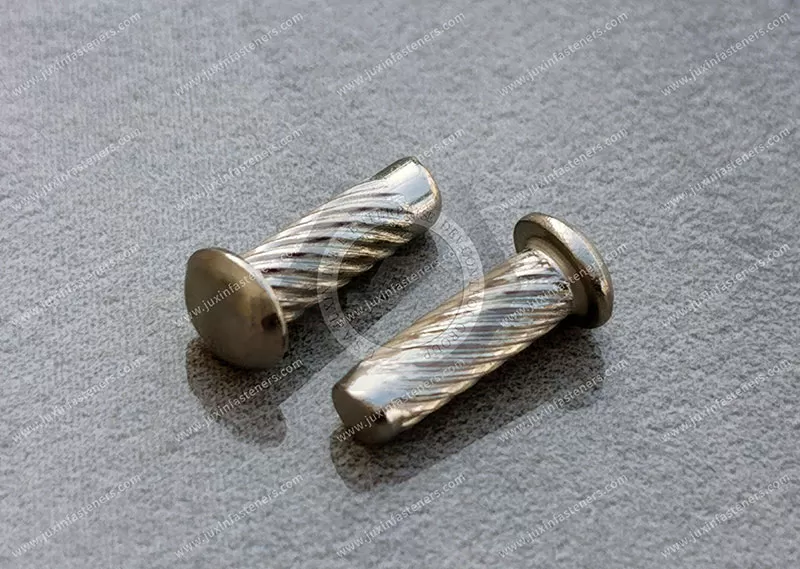
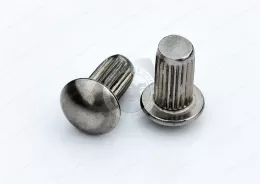
JUXIN FASTENERS supplies stainless steel screw nails, also known in the US market as round-head Type U drive screws, for OEM manufacturing applications.
These driven fasteners use a formed shank to engage suitably prepared holes without conventional screw rotation. Steel is also listed as a material option.
Potential applications include industrial nameplates, equipment housings, metal components and compatible plastic or plywood assemblies.
Explore material selection, hole sizing, installation, retention testing and custom engineering-drawing RFQs.
Product Specification
Stainless Steel Screw Nails for OEM Metal, Plastic and Plywood Assemblies
Stainless steel screw nails are industrial drive fasteners designed for axial installation into appropriately prepared holes.
In the American industrial fastening market, this type of product is commonly identified as a round-head Type U drive screw.
Unlike conventional machine screws that require rotational tightening, screw nails are driven into position.
Their formed shank features mechanically engage the receiving material to provide retention without the need for a tapped internal thread.
JUXIN FASTENERS supplies stainless steel screw nails and steel material options for industrial OEM manufacturing.
These fasteners may be considered for selected metal, plastic and plywood assemblies where the receiving material, installation hole and required joint performance are compatible.
For OEM manufacturers, the primary engineering considerations include shank geometry, hole dimensions, installation force, material compatibility, pull-out resistance, corrosion exposure and production repeatability.
Custom requirements can be evaluated according to customer drawings and technical specifications.
Product Overview and Engineering Specifications
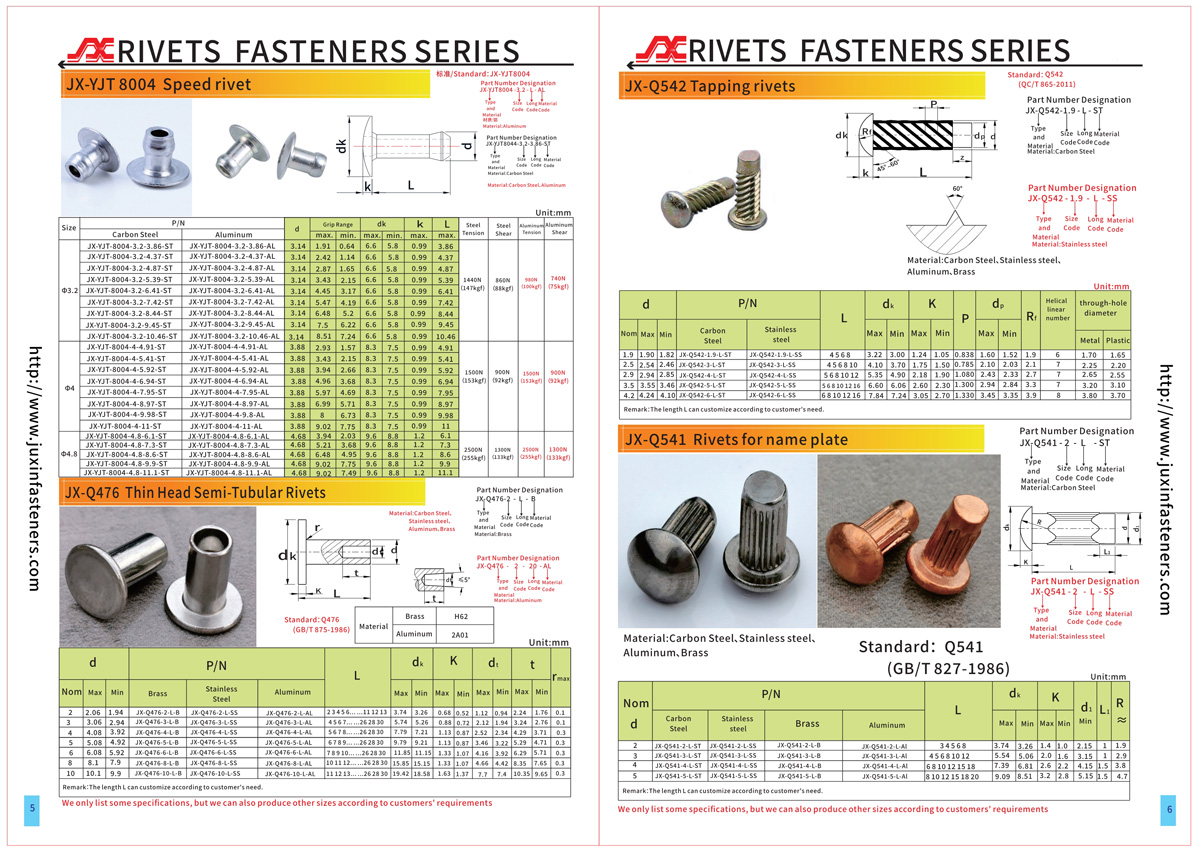
Product Name: Stainless Steel Screw Nails
Professional US Industry Name: Round-Head Type U Drive Screws
Related Search Terms: Type U Drive Screws, Round Head Drive Screws, Screw Nails, Stainless Steel Drive Fasteners
Primary Material: Stainless Steel
Additional Listed Material: Steel
Head Configuration: Round Head, subject to drawing confirmation
Installation Method: Axial Driving into a Prepared Hole
Fastening Principle: Mechanical Engagement Between the Formed Shank and Receiving Material
Existing Listed Inch Sizes:
1/8"
3/16"
1/4"
5/16"
3/8"
1/2"
3/4"
These seven inch-size values are retained from the existing JUXIN product information.
In American Type U drive screw catalogs, comparable inch values are commonly used as length designations.
However, the exact dimensional meaning of the JUXIN values must be confirmed from the original engineering specification.
They must not be treated as seven confirmed shank diameters.
Actual screw size numbers, shank diameters, lengths, head dimensions, drive profiles, material grades and tolerances require drawing verification.
What Are Stainless Steel Screw Nails?
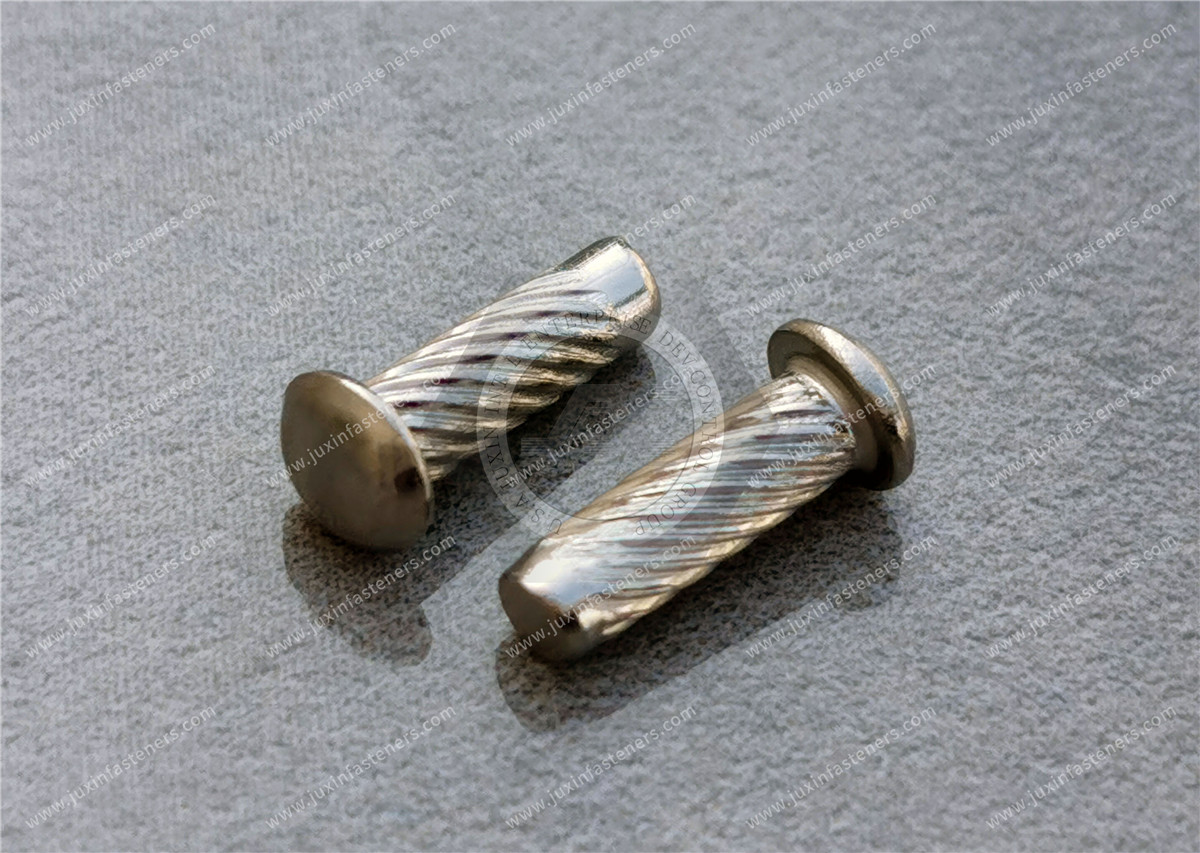
Stainless steel screw nails combine nail-like axial installation with a specially formed shank designed to engage a receiving hole.
The fastener is positioned in a drilled, punched or otherwise prepared hole and driven axially using suitable installation equipment.
As the fastener enters the hole, the shank profile interacts with the surrounding material to develop mechanical retention.
Typical characteristics include:
A manufactured head.
A formed drive shank.
Axial installation without conventional screw rotation.
No requirement for a tapped internal thread.
Potential installation access from one side.
Retention dependent on the receiving material and hole geometry.
The precise drive profile must be confirmed against the product drawing. Different drive screw and spiral-shank fastener designs should not automatically be treated as dimensionally interchangeable.
Why Are They Called Type U Drive Screws?
Type U drive screw is an established American industrial designation for a family of driven fasteners.
The term screw nail is also used in industrial catalogs, particularly when products are grouped by their installation method and intended receiving materials.
The two terms may describe the same fastener family when the shank geometry and head configuration correspond.
However, naming similarity alone does not establish conformity with a particular dimensional standard.
For replacement parts or OEM production programs, the actual geometry and installation requirements should be checked against the engineering drawing.
Screw Nails vs. Conventional Screws and Rivets
Stainless Steel Screw Nails
Screw nails are typically installed by axial driving.
The formed shank engages the receiving material and provides mechanical retention.
Machine Screws
Machine screws generally have external threads designed to engage a tapped hole or mating nut.
They are installed by rotation and may be removable for servicing.
Self-Tapping Screws
Self-tapping screws form or cut mating threads as they rotate into the receiving material.
They require a different installation method and joint design.
Solid Rivets
Solid rivets are normally installed by deforming the opposite end of the shank to create a second retaining head.
This generally requires access to both sides of the assembly.
Blind Rivets
Conventional blind rivets use a setting mechanism to deform the rivet body from one accessible side.
Screw nails instead depend on direct engagement between their drive shank and the receiving hole.
These fastener types should not be substituted without reviewing the required retention, installation process and serviceability.
Stainless Steel Material Selection
Stainless steel is the primary material focus of this product page.
Depending on the grade and operating environment, stainless steel can provide useful resistance to corrosion and staining.
However, the exact grade and material condition influence installation and performance.
18-8 Stainless Steel Screw Nails
18-8 stainless steel is a recognized material option for Type U drive screws in the American market.
It is often associated with austenitic stainless steel fasteners.
Nevertheless, the existing JUXIN product information confirms stainless steel without identifying the specific grade.
The product must not be represented as confirmed 18-8 stainless steel unless the material specification supports that designation.
Corrosion Resistance
Stainless steel may be appropriate for selected industrial environments where moisture or chemical exposure is relevant.
Material selection should consider:
Stainless steel grade.
Environmental exposure.
Chlorides and cleaning chemicals.
Temperature.
Contact with dissimilar metals.
Surface condition.
Customer-defined corrosion requirements.
Stainless steel does not provide unlimited corrosion resistance under all operating conditions.
Material Hardness and Installation
Type U drive screw performance depends on the interaction between the shank and receiving material.
The material condition must support the intended drive profile and installation process.
Excessive installation force can damage the fastener or receiving component.
The actual material grade, hardness and manufacturing condition should be specified for demanding OEM applications.
Steel Screw Nails as an Additional Material Option
The existing JUXIN product information also lists steel.
Steel drive screws may be suitable for industrial assemblies where the required mechanical properties and corrosion protection are compatible with the operating conditions.
Zinc plating is a common industry finish for steel drive screws, but its availability for a specific JUXIN size must be confirmed.
The steel material option should not be confused with the stainless steel version.
Critical Engineering Dimensions for Screw Nails
Correct fastener selection requires several dimensions to be evaluated together.
1. Screw Size Designation
American Type U drive screws may use numbered screw sizes.
A screw size designation is not necessarily identical to the actual measured shank diameter.
2. Shank Diameter
The shank diameter influences hole engagement and installation force.
It must be evaluated together with the receiving-hole diameter and substrate properties.
3. Nominal Length
The length must provide adequate engagement without interfering with the opposite surface or bottoming out in a blind hole.
The applicable length definition should follow the product drawing.
4. Head Diameter
Head diameter influences the bearing area against the attached component.
The head must provide sufficient coverage without damaging or distorting the workpiece.
5. Head Height
Head height affects assembly clearance and finished appearance.
6. Drive Profile
The drive profile is a critical functional feature.
Its geometry determines how the shank interacts with the receiving material during installation.
7. Receiving-Hole Diameter
The receiving hole must be sized for the selected fastener and substrate.
Incorrect hole dimensions can result in insufficient retention or excessive installation force.
8. Hole Depth
For blind-hole applications, the hole depth must accommodate the fastener and any installation clearance required by the design.
9. Dimensional Tolerances
OEM drawings should identify critical dimensions and tolerances affecting fit, feeding, installation and retention.
Hole Sizing for Stainless Steel Screw Nails
The receiving hole is a key part of the fastening system.
Type U drive screws are commonly installed into prepared holes that are slightly smaller than the relevant shank dimension.
However, the exact hole size must not be selected using an arbitrary percentage or universal clearance.
Hole design depends on:
Fastener size.
Shank profile.
Actual shank diameter.
Receiving material.
Material hardness.
Material thickness.
Hole manufacturing method.
Surface coating.
Required installation force.
Required retention.
Oversized Holes
An oversized hole may reduce the engagement between the drive shank and receiving material.
This can lead to inadequate retention or looseness.
Undersized Holes
An undersized hole may increase insertion force and cause:
Fastener deformation.
Plastic cracking.
Metal distortion.
Surface damage.
Installation tool overload.
Engineering Recommendation
For an OEM project, verify the receiving-hole dimensions against the approved fastener specification and representative installation trials.
Stainless Steel Screw Nails for Metal Assemblies
Metal assemblies are an important potential application for Type U drive screws.
Suitable receiving materials may include selected sheet-metal components, metal castings and fabricated industrial parts.
Typical OEM Applications
Industrial equipment nameplates.
Metal identification plates.
Equipment brackets.
Fabricated metal hardware.
Selected machine components.
Engineering Challenge
Different metals have different hardness, ductility and hole-forming characteristics.
The same drive screw may behave differently in soft aluminum, carbon steel or cast metal.
Engineering Solution
The fastener and receiving hole should be designed as a matched system.
Evaluate:
Receiving material hardness.
Hole diameter and tolerance.
Material thickness.
Fastener engagement depth.
Installation force.
Pull-out resistance.
Surface finish.
Corrosion compatibility.
For hard metal castings, additional hole preparation or a different fastening method may be required.
Stainless Steel Screw Nails for Plastic Components
Certain Type U drive screws can be considered for compatible plastic assemblies.
Potential OEM Applications
Plastic equipment housings.
Molded mechanical components.
Industrial identification plates.
Selected plastic-to-metal assemblies.
Non-threaded retaining hardware.
Engineering Challenge
Plastic materials can experience local deformation, cracking, creep and relaxation.
A connection that initially appears secure may lose retention after temperature exposure or sustained stress.
Engineering Solution
Review the actual polymer properties and molded geometry.
Important considerations include:
Polymer grade.
Hole diameter.
Boss wall thickness.
Edge distance.
Insertion force.
Stress concentration.
Operating temperature.
Long-term creep.
Retention after aging.
The suitability of a drive screw for one plastic does not establish suitability for every polymer.
For fragile or thin-walled components, a threaded insert, self-tapping screw or another fastener may be more appropriate.
Stainless Steel Screw Nails for Plywood and Engineered Wood
Screw nails may be evaluated for selected plywood and engineered wood assemblies.
Potential OEM Applications
Manufactured equipment panels.
Non-structural retaining hardware.
Industrial enclosure components.
Identification plates.
Selected composite panel assemblies.
Engineering Challenge
Plywood properties depend on material construction, density, moisture content and loading direction.
Local splitting or inadequate retention may occur if the fastener and hole geometry are unsuitable.
Engineering Solution
Evaluate:
Plywood thickness.
Material grade.
Pilot-hole requirements.
Edge distance.
Fastener engagement.
Moisture exposure.
Installation force.
Pull-out resistance.
Structural wood connections require their own validated fastening design.
Industrial Applications and Engineering Solutions
1. Electrical Equipment and Industrial Enclosures
Electrical equipment manufacturers may require compact permanent fasteners for mechanical hardware and identification components.
Potential applications include:
Equipment nameplates.
Enclosure identification plates.
Selected mechanical brackets.
Instrument housings.
Non-threaded retaining components.
Engineering Challenge
The fastening process must retain the component while avoiding damage to the enclosure or nearby equipment.
Engineering Solution
A suitable stainless steel screw nail may provide mechanical retention through a prepared hole.
Important factors include:
Hole dimensions.
Head clearance.
Surface finish.
Corrosion exposure.
Installation accessibility.
Required retention.
Electrical clearances.
Metal drive fasteners are electrically conductive. They should not be assumed to provide electrical insulation or an approved grounding path.
2. Industrial Machinery and Equipment Manufacturing
Machinery OEMs may use drive screws for selected permanent mechanical attachments.
Potential applications include:
Machine identification plates.
Equipment information plates.
Small retaining hardware.
Selected covers and brackets.
Mechanical component identification.
Engineering Challenge
Industrial equipment may experience vibration, temperature changes and maintenance activity.
Engineering Solution
The fastener must be selected according to the receiving material, retention requirements and expected service conditions.
Evaluate:
Hole tolerance.
Substrate hardness.
Installation force.
Pull-out resistance.
Vibration exposure.
Corrosion environment.
Serviceability.
Where repeated disassembly is necessary, a removable threaded fastener may be more appropriate.
3. Automotive OEM and Tier-1/Tier-2 Component Manufacturing
Automotive manufacturers may consider drive fasteners for selected non-safety-critical component retention applications.
Potential applications include:
Identification plates.
Interior equipment hardware.
Selected brackets.
Non-structural mechanical attachments.
Metal casting accessories.
Engineering Challenge
Automotive assemblies may be exposed to vibration, cyclic temperature changes and corrosion.
Engineering Solution
The fastener and installed joint should be validated against the specific operating requirements.
Important considerations include:
Receiving material.
Hole geometry.
Insertion force.
Retention after vibration.
Temperature exposure.
Corrosion resistance.
Dimensional repeatability.
Customer-defined inspection requirements.
Safety-critical applications require separate engineering validation and customer approval.
4. Appliance and HVAC Equipment Manufacturing
Appliance and HVAC manufacturers may require compact drive fasteners for repetitive assembly of mechanical hardware.
Potential applications include:
Equipment identification plates.
Small mounting components.
Metal enclosure hardware.
Selected appliance subassemblies.
Non-threaded retaining parts.
Engineering Challenge
High-volume assembly requires consistent hole quality, installation force and finished component condition.
Engineering Solution
Type U drive screws may be evaluated where axial installation and permanent retention are appropriate.
Production engineering should consider:
Fastener feeding.
Hole manufacturing consistency.
Tool alignment.
Installation force.
Workpiece support.
Coating protection.
Inspection criteria.
5. Lighting and Electronic Equipment Manufacturing
Lighting and electronic equipment manufacturers may use small drive fasteners for mechanical retention where suitable holes and material thickness are available.
Potential applications include:
Lighting fixture nameplates.
Equipment identification hardware.
Small enclosure components.
Selected non-electrical brackets.
Engineering Challenge
Compact assemblies may have limited space and sensitive surfaces.
Engineering Solution
The fastener geometry and installation process should be reviewed for:
Available installation space.
Head clearance.
Material thickness.
Substrate damage.
Tooling access.
Electrical clearance.
Retention requirements.
No electrical performance or certification should be inferred solely from the fastener material.
Installation Process for Stainless Steel Screw Nails
Step 1: Confirm the Fastener Specification
Verify the material, drive profile, shank diameter, length, head dimensions and critical tolerances.
Step 2: Prepare the Receiving Hole
Drill, punch or form the hole according to the approved specification.
Check diameter, depth, alignment and burr condition.
Step 3: Position the Assembly
Align the attached component with the receiving hole.
Provide adequate support to prevent unwanted movement or deformation.
Step 4: Insert the Fastener
Position the screw nail perpendicular to the receiving surface.
Step 5: Drive the Fastener
Use suitable controlled installation equipment to drive the fastener axially.
The process must be compatible with the receiving material and fastener geometry.
Step 6: Inspect the Joint
Verify head seating, workpiece condition and required retention.
The correct installation force and acceptance criteria should be established through representative production trials.
Common Installation Problems and Engineering Prevention
Insufficient Retention
Potential causes:
Oversized receiving hole.
Incorrect shank profile.
Unsuitable substrate material.
Inadequate engagement depth.
Review the fastener-to-hole fit and substrate characteristics.
Excessive Installation Force
Potential causes:
Undersized receiving hole.
Excessive substrate hardness.
Incorrect fastener dimensions.
Tool misalignment.
Review hole dimensions and the installation process.
Plastic Cracking
Potential causes:
Excessive interference.
Insufficient boss wall thickness.
Brittle polymer behavior.
Inadequate edge distance.
Review molded-part geometry and polymer properties.
Workpiece Distortion
Potential causes:
Poor fixture support.
Excessive driving force.
Incorrect tool alignment.
Thin receiving material.
Review assembly support and process parameters.
Corrosion at the Joint
Potential causes:
Inappropriate material grade.
Dissimilar-metal contact.
Aggressive service environment.
Surface contamination.
Review material selection and environmental requirements.
Inconsistent Production Installation
Potential causes:
Variation in fastener dimensions.
Inconsistent hole diameter.
Tool wear.
Incorrect part orientation.
Variation in receiving materials.
Establish appropriate dimensional and process controls.
Quality Inspection for OEM Screw Nails
Quality requirements should follow the approved engineering drawing and customer specifications.
Dimensional Inspection
Relevant characteristics may include:
Screw size designation.
Shank diameter.
Overall length.
Head diameter.
Head height.
Drive profile geometry.
Critical tolerances.
Material Verification
Confirm the specified stainless steel or steel grade and material condition.
Surface Inspection
Check for:
Burrs.
Cracks.
Surface damage.
Deformed heads.
Irregular shank features.
Defects affecting installation.
Installation Validation
Verify the compatibility of the fastener with the receiving material, hole geometry and installation equipment.
Functional Testing
Depending on the application, customer-defined tests may include:
Insertion force.
Axial pull-out resistance.
Retention after vibration.
Substrate damage.
Temperature exposure.
Corrosion performance.
Installation repeatability.
These are possible engineering validation requirements, not claims that every test is routinely performed on every JUXIN product.
Production Engineering and Assembly Efficiency
For production managers, screw nail selection affects more than individual fastener cost.
Important considerations include:
Hole manufacturing consistency.
Fastener feeding and orientation.
Installation equipment.
Operator handling.
Workpiece alignment.
Insertion force monitoring.
Finished head seating.
Retention inspection.
Rework and scrap.
Production throughput.
A reliable assembly process depends on consistent fastener geometry and controlled receiving-hole conditions.
Custom Stainless Steel Screw Nails to Engineering Drawings
Standard catalog dimensions may not meet every OEM manufacturing requirement.
Custom engineering review may consider:
Screw size.
Shank diameter.
Nominal length.
Head diameter and height.
Drive profile geometry.
Stainless steel grade.
Steel material alternatives.
Surface finish.
Dimensional tolerances.
Receiving-hole requirements.
Required retention performance.
Installation process.
Expected production volume.
Custom manufacturing feasibility must be evaluated against the supplied engineering drawings and production specifications.
Frequently Asked Engineering Questions
What are stainless steel screw nails?
They are drive fasteners designed for axial installation into prepared holes, using a formed shank to create mechanical retention.
Are screw nails the same as Type U drive screws?
Round-head Type U drive screws are commonly identified as screw nails in the American industrial market.
Exact equivalence must be verified from the shank geometry and dimensions.
Do screw nails require a tapped hole?
Generally, no. They are designed to engage a suitably sized prepared hole without conventional internal threading.
Can stainless steel screw nails be used in metal?
They may be suitable for selected metal components when the receiving material, hole dimensions and retention requirements are compatible.
Can screw nails be installed in plastic?
Certain designs may be suitable for compatible plastics, but polymer properties, hole geometry and long-term retention require validation.
Can screw nails be used in plywood?
They may be considered for selected non-structural plywood assemblies, subject to material properties and fastening requirements.
Are stainless steel screw nails corrosion resistant?
Stainless steel can provide useful corrosion resistance, but performance depends on the grade and service environment.
Are these screw nails made from 18-8 stainless steel?
18-8 is a recognized material in the US market, but the exact JUXIN material grade must be confirmed from the specification.
Are the listed inch sizes diameters or lengths?
The original product information lists values from 1/8" to 3/4". Similar US catalog products use these values as lengths,
but the actual JUXIN dimensions must be verified before publication as a confirmed size table.
Can screw nails be removed and reused?
Type U drive screws are generally intended for permanent or difficult-to-remove retention.
Routine removal and reuse should not be assumed.
Can these fasteners be used for automotive components?
They may be suitable for selected non-safety-critical components, subject to engineering validation and customer approval.
Can custom screw nails be manufactured?
Custom requirements can be evaluated according to customer drawings, material specifications and production demand.
What information is needed for an OEM quotation?
A dimensioned drawing, material grade, drive profile, head geometry, receiving-hole details, substrate material,
required retention and estimated annual demand provide a useful basis for technical review.
Request a Drawing-Based OEM Stainless Steel Screw Nail RFQ
JUXIN FASTENERS supports technical inquiries for stainless steel screw nails and custom drive fastening components used in industrial manufacturing.
For a new OEM assembly or an existing production component, please provide:
2D engineering drawing or 3D CAD file.
Required stainless steel grade.
Steel material alternative, if applicable.
Screw size designation.
Shank diameter and nominal length.
Head dimensions.
Drive profile geometry.
Critical dimensional tolerances.
Receiving material and hole dimensions.
Installation method and tooling requirements.
Required insertion force or pull-out resistance.
Environmental and corrosion requirements.
Quality and inspection specifications.
Prototype or initial production quantity.
Estimated annual demand.
Target project schedule.
Our team can review the supplied technical requirements and discuss the next steps for engineering clarification and quotation.
JUXIN FASTENERS
Website: https://www.juxinfasteners.com/
Email: info@juxinfasteners.com
Submit Your Engineering Drawings for a Custom Stainless Steel Screw Nail RFQ.
Product Packaging
Packaging Standard
At Juxin Fasteners, we apply standardized export packaging to ensure product protection, traceability, and compliance with international logistics requirements.
1. Standard Export Packaging
Unless otherwise specified, all products will be packed according to our factory standard export packaging, which includes:
Moisture-resistant inner protection
Poly bag or small box packing as required
Reinforced export cartons
Clear labeling with part number, specification, batch number, and quantity
Palletizing for sea or air shipment when necessary
Our standard packaging is designed to ensure safe transportation, efficient warehousing, and long-distance international shipping.
2. Customized Packaging Options
We also provide customized packaging solutions according to customer requirements, including but not limited to:
Private labeling
Customized barcodes
Specific carton dimensions
Retail packaging
Special pallet configuration
Customer-specific marking and identification
So that you know, customized packaging may involve additional costs and extended lead time depending on the complexity of the requirements.
3. Compliance & Quality Assurance
All packaging processes are controlled under our ISO 9001 quality management system to ensure consistency, traceability, and product integrity throughout the supply chain.
Product Pictures
Contact Us
Tel.:
+86 020 8621 0320
+86 020 3121 6067
E-mail:
Technical Support:
Navigation
SEND INQUIREY