Call Us
+86 136 6007 9809
Call Us
+86 136 6007 9809

Understanding Washer Standards in Industrial Fastening
Washers are essential components used in conjunction with bolts, screws, and nuts to improve fastening performance. In industrial applications, washers must comply with specific international standards to ensure compatibility, safety, and reliability.
The most widely used washer standards include:
DIN standards (Germany)
ISO standards (International Organization for Standardization)
ASTM standards (United States)
Product Specification
Understanding Washer Standards in Industrial Fastening
Washers are essential components used in conjunction with bolts, screws, and nuts to improve fastening performance. In industrial applications, washers must comply with specific international standards to ensure compatibility, safety, and reliability.
The most widely used washer standards include:
DIN standards (Germany)
ISO standards (International Organization for Standardization)
ASTM standards (United States)
These standards define washer dimensions, material properties, hardness requirements, and tolerance ranges, ensuring consistent quality across different manufacturers.
DIN Washer Standards
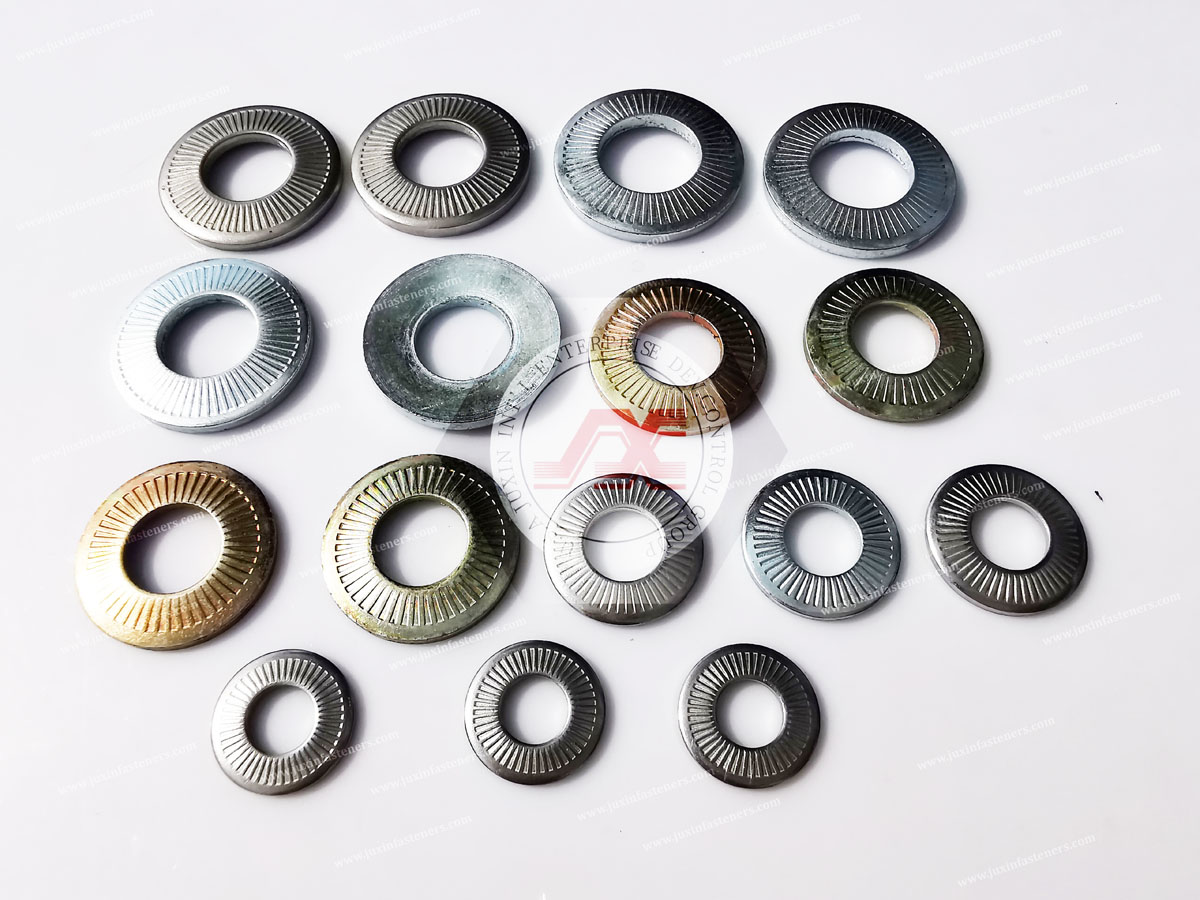
DIN standards are widely used in the European engineering and mechanical industries.
Some of the most common DIN washer standards include:
DIN 125 – Flat Washers
DIN 125 is one of the most widely used flat washer standards.
Key characteristics:
standard flat washer design
used with metric bolts and screws
suitable for general mechanical assemblies
DIN 125 washers are commonly used in:
machinery manufacturing
automotive components
construction equipment
DIN 9021 – Large Flat Washers
DIN 9021 washers have a larger outer diameter than standard washers.
Main functions:
distribute load over a larger surface area
prevent damage to softer materials
improve connection stability
Typical applications include:
sheet metal assemblies
thin material connections
structural components
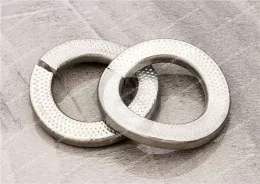
DIN 127 – Spring Lock Washers
DIN 127 defines split spring washers used for anti-loosening purposes.
Characteristics:
split ring structure
elastic tension after tightening
vibration resistance
These washers are widely used in machinery, automotive, and equipment assembly.
ISO Washer Standards
ISO standards are international standards widely adopted in global engineering and manufacturing industries.
ISO 7089 – Flat Washers
ISO 7089 washers are equivalent to DIN 125 flat washers.
Features include:
standard washer dimensions
compatibility with metric fasteners
consistent international manufacturing specifications
ISO 7093 – Large Series Washers
ISO 7093 washers correspond to large outer diameter washers, similar to DIN 9021.
Advantages:
increased load distribution
improved surface protection
suitable for thin materials
These washers are commonly used in steel structures and heavy equipment.
ASTM Washer Standards
ASTM standards are commonly used in North American engineering projects, particularly in structural and construction applications.
ASTM F436 – Hardened Structural Washers
ASTM F436 washers are designed for high-strength structural bolts.
Key characteristics:
high hardness
excellent load-bearing capacity
suitable for heavy structural connections
These washers are widely used in:
steel structures
bridges
infrastructure projects
ASTM F844 – General Purpose Washers
ASTM F844 washers are used in general fastening applications.
Features include:
standard washer design
broad range of sizes
compatibility with many bolt types
They are commonly used in industrial equipment and machinery assemblies.
Key Differences Between DIN, ISO, and ASTM Washers
Standard | Region | Typical Applications |
DIN | Europe | Machinery, automotive, industrial equipment |
ISO | International | Global engineering applications |
ASTM | North America | Structural and construction projects |
Although many DIN and ISO washers are dimensionally similar, ASTM washers are often designed for structural and heavy-load applications.
Choosing the Correct Washer Standard
When selecting washers for industrial fastening systems, engineers should consider:
regional engineering standards
bolt specifications
load requirements
environmental conditions
compatibility with existing fasteners
Using washers that comply with international standards ensures consistent performance, safety, and interchangeability.
Industrial Applications of Standard Washers
Standard washers are widely used across multiple industries:
Automotive Industry
engine assemblies
chassis connections
suspension systems
Machinery Manufacturing
equipment frames
gearboxes
mechanical assemblies
Construction and Structural Engineering
steel structures
bridge connections
heavy equipment installations
Electrical Equipment
equipment panels
enclosures
mounting systems
Reliable Industrial Fastener Supplier
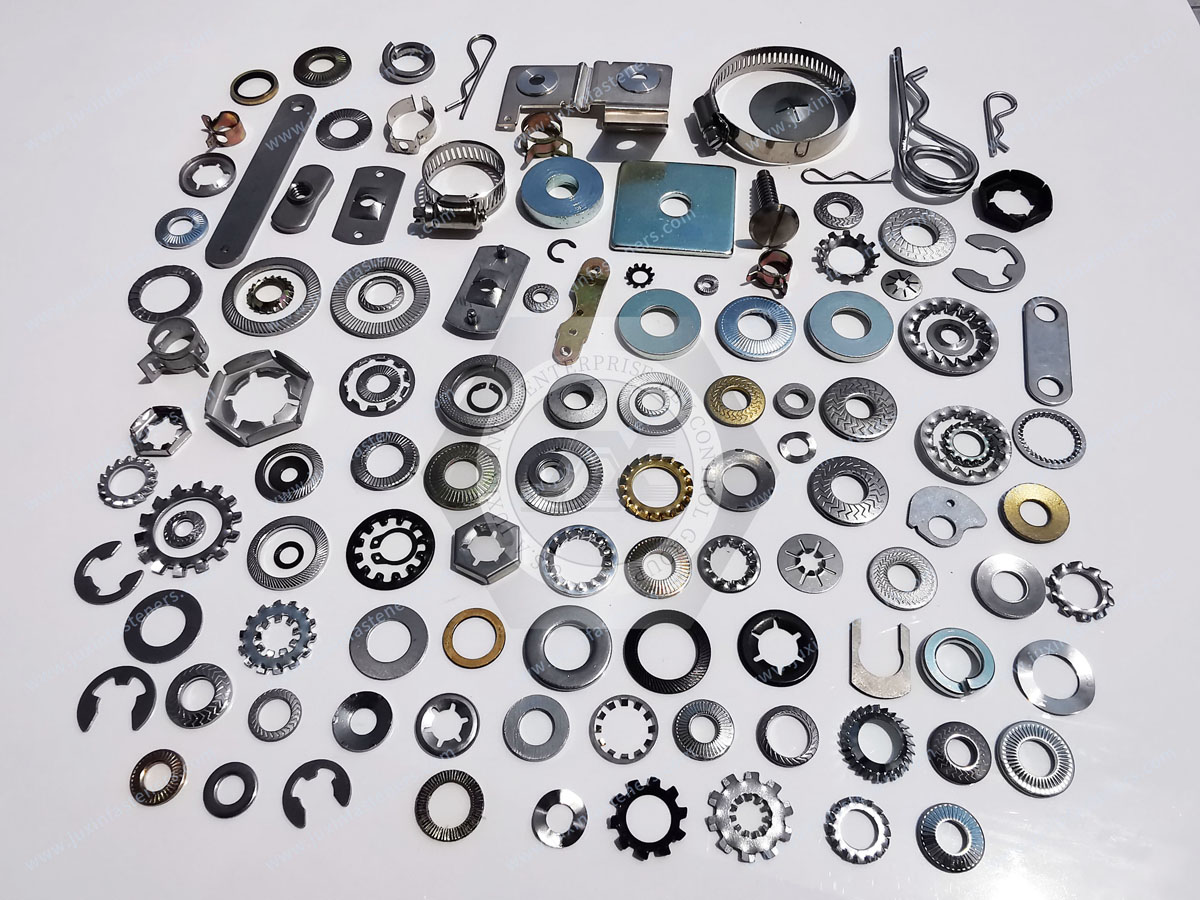
If you are looking for high-quality washers, bolts, and fastening components, or need technical support for fastening design, please get in touch with us.
Website: https://www.juxinfasteners.com
Product Packaging
Packaging Standard
At Juxin Fasteners, we apply standardized export packaging to ensure product protection, traceability, and compliance with international logistics requirements.
1. Standard Export Packaging
Unless otherwise specified, all products will be packed according to our factory standard export packaging, which includes:
Moisture-resistant inner protection
Poly bag or small box packing as required
Reinforced export cartons
Clear labeling with part number, specification, batch number, and quantity
Palletizing for sea or air shipment when necessary
Our standard packaging is designed to ensure safe transportation, efficient warehousing, and long-distance international shipping.
2. Customized Packaging Options
We also provide customized packaging solutions according to customer requirements, including but not limited to:
Private labeling
Customized barcodes
Specific carton dimensions
Retail packaging
Special pallet configuration
Customer-specific marking and identification
So that you know, customized packaging may involve additional costs and extended lead time depending on the complexity of the requirements.
3. Compliance & Quality Assurance
All packaging processes are controlled under our ISO 9001 quality management system to ensure consistency, traceability, and product integrity throughout the supply chain.
Product Pictures
Contact Us
Tel.:
+86 020 8621 0320
+86 020 3121 6067
E-mail:
Technical Support:
Navigation
SEND INQUIREY