Call Us
+86 136 6007 9809
Call Us
+86 136 6007 9809

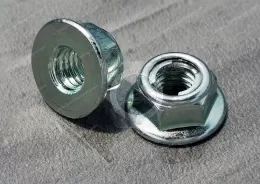
JUXIN FASTENERS supplies stainless steel hex flanged spring-stop locknuts for industrial OEM assemblies requiring corrosion resistance, vibration-resistant fastening and serviceable threaded connections.
Also searched as stainless steel Fuji-style flange lock nuts, these fasteners use an elastic metallic locking feature to generate prevailing torque without a nylon insert.
The original product range lists M5, M6, M8, M10, M12, M14, M16 and M20 with a natural stainless steel finish.
Exact stainless grade, spring locking geometry, mechanical properties and dimensional standard must be confirmed from the approved engineering drawing.
Explore spring-stop locking mechanisms, repeated installation performance, thread galling prevention, flange bearing design, ISO 2320 testing, industrial applications and drawing-based OEM RFQs.
Product Specification
Stainless Steel Hex Flanged Spring-Stop Locknuts for Corrosion-Resistant OEM Assemblies
Reusable All-Metal Fuji-Style Flange Locking Solutions for Industrial Equipment
JUXIN FASTENERS supplies stainless steel hex flanged spring-stop locknuts for industrial machinery, automotive equipment,
HVAC systems, electrical enclosures, commercial equipment and other OEM manufacturing applications.
These specialized all-metal locking nuts use an elastic metallic locking feature to generate prevailing torque when engaged with a compatible threaded bolt.
Unlike nylon-insert locknuts, the locking action does not rely on a polymer insert.
Depending on the approved product design, the locking feature may use formed spring prongs or a separate metallic friction ring attached to the nut body.
The integrated flange provides an enlarged bearing surface, while the stainless steel construction offers corrosion resistance appropriate to the selected material grade and service environment.
In American industrial fastener terminology, related products are commonly called Spring-Stop Locknuts, Hex Flanged Spring-Stop Locknuts, Fuji-Style Lock Nuts and All-Metal Prevailing-Torque Flange Nuts.
JUXIN FASTENERS supports drawing-based OEM sourcing and custom fastener inquiries from mechanical engineers, structural engineers,
manufacturing engineers, production managers, purchasing managers and international supply chain teams.
Product Overview and Technical Specifications
Product Name: Stainless Steel Hex Flanged Spring-Stop Locknuts
Primary American Industry Name: Stainless Steel Hex Flanged Spring-Stop Locknuts
Alternative Industry Names:
Stainless Steel Spring-Stop Locknuts
Stainless Steel Fuji-Style Flange Lock Nuts
Stainless Steel Spring-Locking Flange Nuts
All-Metal Stainless Steel Flange Locknuts
Stainless Steel Prevailing-Torque Flange Nuts
Stainless Steel Metal Spring Lock Nuts
Material: Stainless Steel
Original Surface Finish: Natural Stainless Steel Finish
Original Listed Metric Sizes:
M5
M6
M8
M10
M12
M14
M16
M20
Product Configuration: Hexagon Nut with Integrated Flange and Metallic Spring Locking Feature
Locking Principle: Elastic Metallic Interference / Prevailing Torque
Original Standard Reference: DIN 6927
Related Standards for Engineering Review:
DIN EN 1664
ISO 7044
ISO 2320
Manufacturing Basis: Applicable Customer Engineering Drawing and Technical Specifications
Important Specification Notes
The original product information identifies stainless steel but does not establish a specific grade.
18-8, 304, 316, A2 and A4 are relevant stainless steel search and sourcing terms, but they must not be treated as confirmed material specifications for the featured product.
The original DIN 6927 reference also requires verification against the actual spring-stop construction and applicable standard edition.
Specific size availability, spring geometry and mechanical performance must be confirmed for each OEM order.
What Are Stainless Steel Hex Flanged Spring-Stop Locknuts?
Stainless steel hex flanged spring-stop locknuts are threaded fastening components that use an elastic metal locking feature to resist unintended rotation.
A conventional hex nut normally rotates freely along a compatible bolt until it contacts the joint.
A spring-stop locknut generates additional resistance as its locking element engages the bolt thread.
This resistance is called prevailing torque.
The locking feature may consist of a formed spring element or a separate metallic friction ring, depending on the design.
The stainless steel nut body provides corrosion resistance, while the flange offers an enlarged contact surface.
These characteristics can make the product suitable for evaluation in assemblies requiring:
Vibration resistance.
Corrosion resistance.
Repeated maintenance access.
Compact fastening geometry.
Integrated flange bearing contact.
All-metal locking construction.
The suitability of the fastener must be verified for the actual joint loading, operating conditions and customer specifications.
How the Spring-Stop Locking Mechanism Works
A spring-stop locknut uses elastic deformation to create resistance against rotation.
During installation, the metallic locking feature contacts the mating bolt thread.
As the nut advances, the spring element deflects.
The resulting reaction force produces frictional resistance between the locking feature and the mating thread.
This resistance is the prevailing-torque locking action.
In a properly designed spring-locking system, the metallic element may recover its shape after removal.
This elastic recovery can support repeated installation and removal.
However, the actual reuse capability depends on the locking design, material properties, installation conditions and customer-defined performance limits.
Spring-Prong Locking Designs
Some spring-stop locknuts use formed metallic prongs or teeth.
The prongs contact the bolt thread and generate rotational resistance.
Their geometry, quantity and orientation depend on the product design.
Metallic Friction-Ring Designs
Other locknuts use a separate spring-like metallic friction ring.
The ring is secured to the top of the nut body and engages the mating bolt.
Its elastic deformation produces prevailing torque.
The actual spring-ring material and attachment method must be confirmed from the approved drawing.
Stainless Steel Spring-Stop Locknuts vs. FUJILOK U-NUT
FUJILOK U-NUT is a recognized locking nut product family developed by Fuji Seimitsu.
The FUJILOK design uses a specialized metallic friction ring attached to the nut body.
The ring contacts the mating bolt thread and produces prevailing torque through elastic deformation.
The term Fuji-style is also encountered in the industrial fastener market for related spring-locking designs.
However, not every spring-stop locknut uses the same patented or proprietary construction.
For OEM sourcing, the engineering drawing must define the actual locking feature.
The term Fuji-style is used descriptively and does not imply that JUXIN FASTENERS is the original FUJILOK manufacturer or an authorized licensee.
Stainless Steel Spring-Stop Locknuts vs. Distorted-Thread Locknuts
Both product families are all-metal prevailing-torque fasteners.
However, their locking mechanisms differ.
Spring-Stop Locknuts
Use an elastic metallic locking feature.
Potential characteristics include:
Spring-generated locking resistance.
Repeated installation capability where validated.
No nylon insert.
Compatibility with selected vibration-exposed joints.
Distorted-Thread Locknuts
Use controlled deformation of the nut thread or body.
The deformed section creates interference with the mating bolt.
Engineering Selection
The two designs may differ in:
Prevailing-on torque.
Prevailing-off torque.
Reuse performance.
Installation effort.
Locking feature durability.
Manufacturing requirements.
Mechanical properties.
They should not be substituted without evaluating the relevant specifications.
Stainless Steel Spring-Stop Locknuts vs. Nylon-Insert Locknuts
Nylon-insert locknuts use a polymer insert to create locking interference.
Stainless steel spring-stop locknuts use metallic locking features.
Potential Advantages of All-Metal Spring-Stop Designs
No nylon insert.
Potential suitability for selected elevated-temperature environments.
Elastic metallic locking action.
Repeated installation capability where qualified.
Stainless steel corrosion resistance.
Compatibility with selected serviceable OEM assemblies.
Important Limitations
All-metal construction does not establish an unlimited temperature rating.
Stainless steel can experience thread galling.
Repeated installation may eventually reduce locking performance.
The correct fastener must be selected according to the joint design and actual operating conditions.
Stainless Steel Material Selection
The original product information specifies stainless steel without identifying the grade.
For OEM procurement, the exact stainless steel grade should be confirmed before quotation or production.
18-8 Stainless Steel
18-8 is a common commercial designation for stainless steels containing approximately 18% chromium and 8% nickel.
It is used in many corrosion-resistant industrial fastener applications.
However, 18-8 does not uniquely identify every mechanical or metallurgical requirement of a finished nut.
304 Stainless Steel
304 stainless steel is commonly used in industrial equipment and general corrosion-resistant fastening applications.
Its suitability depends on the required mechanical properties, environmental conditions and manufacturing process.
316 Stainless Steel
316 stainless steel may be selected for applications involving more demanding corrosion exposure.
Its performance depends on the actual environment and product specification.
A2 and A4 Stainless Steel
A2 and A4 are commonly used stainless steel fastener material groups under relevant ISO standards.
They are not automatically interchangeable with every commercial 304 or 316 material description.
The approved drawing must establish the required material group and mechanical property designation.
Spring Element Material
Where a separate metallic spring element is used, the spring material may differ from the nut body material.
The spring element must provide the required elasticity and locking performance.
The exact spring material, heat treatment and corrosion compatibility must be specified.
Natural Stainless Steel Surface Finish
The original product information identifies a natural stainless steel finish.
Natural finish generally refers to the appearance of the stainless steel surface without an additional decorative color coating.
However, natural finish does not establish that a part has undergone passivation, electropolishing or another specific surface treatment.
Potential finishing requirements may include:
Deburring.
Cleaning.
Surface roughness control.
Passivation.
Electropolishing.
Customer-specific appearance requirements.
Any additional finishing process must be confirmed.
Stainless Steel Passivation
Passivation may be specified for certain stainless steel components to improve surface cleanliness and corrosion performance by removing free iron contamination.
The actual process and acceptance requirements should follow the approved customer specification.
Passivation is not the same as zinc electroplating.
Corrosion Resistance Considerations
Stainless steel can provide corrosion resistance without relying on a zinc coating.
However, performance depends on:
Stainless steel grade.
Surface condition.
Chloride exposure.
Chemical exposure.
Crevices.
Temperature.
Contact with dissimilar metals.
Cleaning procedures.
No specific salt spray duration is established by the original product information.
A corrosion test requirement should be defined separately for each OEM project.
Stainless Steel Thread Galling
Thread galling is an important engineering concern when stainless steel nuts and bolts are assembled.
Galling involves adhesive wear and material transfer between contacting surfaces.
It can cause:
Increased installation torque.
Thread damage.
Seizing.
Difficulty during removal.
Inconsistent assembly performance.
Factors That May Increase Galling Risk
High contact pressure.
Rapid installation.
Inadequate lubrication.
Poor thread alignment.
Damaged threads.
Unsuitable material combinations.
Repeated installation.
Potential Engineering Controls
Select compatible mating materials.
Maintain correct thread geometry.
Avoid cross-threading.
Use appropriate assembly speeds.
Consider approved lubrication where permitted.
Validate installation torque.
Inspect threads before reuse.
Lubrication can change friction and clamp-force behavior.
For critical OEM assemblies, lubrication and tightening procedures must be validated together.
Integrated Hex Flange Design
The integrated flange provides a larger bearing surface than a comparable non-flanged hex nut.
Potential benefits include:
Wider bearing contact.
Reduced need for a separate plain washer in suitable designs.
Lower component count.
Simplified parts handling.
Compatibility with selected automated assembly processes.
Flange Engineering Considerations
Flange diameter.
Flange thickness.
Bearing surface geometry.
Hole diameter.
Workpiece thickness.
Mating surface hardness.
Edge distance.
Available installation clearance.
A flange does not automatically make an oversized or damaged mounting hole acceptable.
Smooth vs. Serrated Flange
Some flange nuts use a smooth bearing surface.
Other designs use serrations.
The featured product should not be assumed to have serrations unless the engineering drawing confirms them.
Smooth and serrated flange designs can affect the mating surface and joint behavior differently.
DIN 6927, DIN EN 1664 and ISO 7044
The original product description identifies DIN 6927.
DIN 6927
DIN 6927 is a historical German standard designation associated with prevailing-torque all-metal hexagon nuts with flange.
DIN EN 1664
DIN EN 1664 replaced the earlier DIN 6927 designation.
ISO 7044
ISO 7044:2012 specifies prevailing-torque all-metal hexagon nuts with flange, style 2, for M5 through M20.
However, the standard specifies particular product grades and mechanical property classes.
It should not automatically be applied to every stainless steel spring-stop design.
Important Standard Compliance Note
The featured stainless steel product may use dimensions related to DIN 6927 while employing a customer-specific locking mechanism.
Dimensional similarity does not establish full conformity.
For OEM projects, verify:
Thread size.
Thread pitch.
Nut height.
Width across flats.
Flange diameter.
Locking feature geometry.
Material designation.
Mechanical properties.
Prevailing-torque requirements.
The approved customer drawing should control the final specification.
ISO 2320 and Prevailing-Torque Testing
ISO 2320 provides functional requirements and test methods for prevailing-torque steel nuts within its defined scope.
It is relevant to understanding prevailing-torque behavior.
However, applicability to a particular stainless steel spring-stop design must be confirmed.
Prevailing-On Torque
The torque required to advance the nut along a compatible mating bolt before significant clamp force develops.
Prevailing-Off Torque
The torque required during removal after the joint clamp force has been relieved.
Repeated Installation Performance
A reusable locking nut should maintain the customer-specified locking performance after the defined installation and removal cycles.
Proof Load
Mechanical load capability is a separate requirement from prevailing torque.
A nut that provides locking resistance must also have sufficient mechanical strength for the joint.
Available Metric Thread Sizes
The original product range lists:
M5
M6
M8
M10
M12
M14
M16
M20
Common metric coarse-thread designations for reference include:
M5 × 0.8
M6 × 1.0
M8 × 1.25
M10 × 1.5
M12 × 1.75
M14 × 2.0
M16 × 2.0
M20 × 2.5
These are common reference thread designations.
The actual thread pitch, tolerance class and available combinations must be confirmed for each order.
Metric and Inch Thread Compatibility
American buyers may search for similar stainless steel locking nuts using UNC or UNF thread terminology.
However, the original product range is metric.
Metric, UNC and UNF threads are not directly interchangeable.
For example:
M6 is not interchangeable with 1/4"-20 UNC.
M8 is not interchangeable with 5/16"-18 UNC.
M10 is not interchangeable with 3/8"-16 UNC.
Any inch-series requirement must be reviewed and quoted separately.
Industrial Applications and Engineering Solutions
1. Industrial Machinery and Automation
Industrial machinery often contains vibration-exposed mechanical assemblies.
Potential applications include:
Equipment frames.
Machine brackets.
Mechanical guards.
Auxiliary mounting hardware.
Serviceable equipment components.
Engineering Challenge
Repeated machine operation may affect joint retention.
Potential Solution
A stainless steel spring-stop flange locknut may provide metallic prevailing-torque resistance while offering corrosion protection appropriate to the selected material grade.
The complete joint must be validated.
2. Automotive Mechanical Equipment
Automotive manufacturers may require all-metal locking fasteners for selected mechanical assemblies.
Potential applications include:
Equipment brackets.
Auxiliary mounting hardware.
Serviceable mechanical supports.
Selected body equipment connections.
Engineering Challenge
Vibration and repeated maintenance may place demands on the locking mechanism.
Potential Solution
A qualified spring-stop design may be considered where its reuse behavior, mechanical properties and installation requirements meet the OEM specification.
Safety-critical automotive connections require customer approval.
3. Motorcycle Equipment
Motorcycle assemblies may experience vibration and require periodic maintenance.
Potential applications include:
Accessory brackets.
Mechanical supports.
Serviceable equipment mounts.
Engineering Challenge
The connection may require locking resistance and repeated service access.
Potential Solution
A stainless steel spring-stop locknut may be evaluated where the required locking and corrosion characteristics are compatible.
4. HVAC and Thermal Management Equipment
HVAC equipment contains fans, pumps and other mechanical systems.
Potential applications include:
Fan support brackets.
Pump mounting hardware.
Equipment frames.
Mechanical support assemblies.
Engineering Challenge
Vibration and condensation may affect fastening reliability.
Potential Solution
A stainless steel spring-stop flange nut may be considered for suitable mechanical joints.
The material grade and locking performance must meet the service requirements.
5. Commercial Kitchen and Foodservice Equipment
Commercial foodservice equipment may require corrosion-resistant fastening hardware for selected mechanical assemblies.
Potential applications include:
Equipment brackets.
Exterior panels.
Mechanical support hardware.
Non-food-contact equipment accessories.
Engineering Challenge
Cleaning moisture, repeated service and equipment vibration may affect fastener selection.
Potential Solution
A suitable stainless steel spring-stop locknut may be evaluated for approved mechanical connections.
Food-contact suitability, cleanability and any applicable sanitation certification must be assessed separately.
The product is not represented as NSF-certified without supporting documentation.
6. Electrical Enclosures and Power Distribution Equipment
Electrical equipment manufacturers may require corrosion-resistant mechanical fasteners.
Potential applications include:
Enclosure brackets.
Mechanical support frames.
Equipment mounting accessories.
Non-current-carrying mechanical connections.
Engineering Challenge
The assembly may experience vibration, humidity or thermal cycling.
Potential Solution
A stainless steel spring-stop flange nut may be evaluated where the mechanical fastening requirements permit.
Electrical grounding and insulation requirements must be addressed independently.
7. AI Data Center Cooling Infrastructure
AI data centers contain mechanical support systems associated with cooling equipment.
Potential applications include:
Cooling equipment brackets.
Pump support hardware.
Mechanical equipment frames.
Auxiliary rack components.
Engineering Challenge
Continuous equipment operation may create vibration and require maintenance access.
Potential Solution
A suitable stainless steel spring-stop locknut may be considered for selected mechanical connections.
The actual equipment specification must establish suitability.
8. Semiconductor Manufacturing Equipment
Semiconductor equipment may require carefully specified stainless steel hardware for selected mechanical assemblies.
Potential applications include:
External equipment brackets.
Mechanical support hardware.
Serviceable equipment accessories.
Engineering Challenge
Material cleanliness, corrosion resistance and particle control may be important.
Potential Solution
A stainless steel spring-stop locknut may be evaluated where the design permits it.
Cleanroom suitability, particle generation and chemical compatibility require separate validation.
9. Agricultural and Food Processing Machinery
Agricultural and food processing equipment may operate in wet or frequently cleaned environments.
Engineering Challenge
Moisture exposure and vibration may affect mechanical connections.
Potential Solution
A suitable stainless steel locking nut may be evaluated according to the required material grade, locking performance and cleaning conditions.
10. Marine and Outdoor Equipment
Outdoor and marine-adjacent equipment may require corrosion-resistant fastening hardware.
Potential applications include:
Mechanical brackets.
Equipment enclosures.
Support assemblies.
Serviceable accessories.
Engineering Challenge
Moisture and chloride exposure may accelerate corrosion.
Potential Solution
A suitable stainless steel grade may be considered according to the actual environment.
316 stainless steel may be relevant to some demanding applications, but its availability for the featured design must be confirmed.
11. Renewable Energy Equipment
Renewable energy equipment may contain mechanical support and enclosure assemblies.
Potential applications include:
Equipment brackets.
Mechanical supports.
Outdoor enclosure hardware.
Auxiliary mounting components.
Engineering Challenge
Environmental exposure and vibration may affect long-term fastening performance.
Potential Solution
A stainless steel spring-stop locknut may be evaluated according to the approved structural and mechanical requirements.
12. Rail and Transportation Equipment
Rail and transportation systems contain mechanical assemblies exposed to vibration.
Engineering Challenge
Repeated loading and service intervals may affect joint retention.
Potential Solution
A qualified spring-stop locking nut may be considered where permitted by the applicable equipment requirements.
Rail-specific approvals must be confirmed separately.
Installation and Assembly Engineering
Spring-stop locknuts require correct thread engagement and installation procedures.
Step 1: Verify the Mating Bolt
Confirm the thread size, pitch, material and mechanical properties.
Step 2: Inspect the Locking Feature
Check the spring prongs or friction ring for damage or abnormal deformation.
Step 3: Align the Threads
Start the nut correctly to avoid cross-threading.
Step 4: Engage the Locking Feature
Advance the nut according to the approved installation procedure.
Step 5: Apply the Required Tightening Method
Use the specified tool and tightening requirements.
Step 6: Verify the Finished Assembly
Check seating, thread engagement and any required clamp-force or torque criteria.
Important Installation Considerations
Avoid cross-threading.
Consider stainless steel galling.
Follow approved lubrication requirements.
Monitor prevailing torque.
Verify flange seating.
Confirm adequate thread engagement.
Inspect the locking feature after removal where reuse is permitted.
For critical OEM joints, generic torque tables may not account for the locking feature and actual friction conditions.
Repeated Installation and Reuse Performance
Certain spring-stop designs are intended for repeated installation and removal.
Their elastic locking features may recover after disengagement from the mating bolt.
However, reuse performance depends on:
Spring material.
Locking geometry.
Surface condition.
Thread wear.
Galling.
Installation torque.
Operating temperature.
Number of cycles.
The allowable number of installation cycles should be defined by the approved product specification.
Do not assume unlimited reuse.
Common Engineering Problems and Solutions
Problem 1: Excessive Installation Torque
Possible causes include incorrect thread fit, galling or excessive locking interference.
Review the mating bolt, locking feature and assembly conditions.
Problem 2: Insufficient Prevailing Torque
Possible causes include spring wear, incorrect locking geometry or damage.
Review the functional locking requirements.
Problem 3: Thread Galling
Possible causes include high friction, unsuitable material combinations or rapid installation.
Review the assembly procedure and approved lubrication requirements.
Problem 4: Spring Feature Damage
Possible causes include incorrect installation or excessive deformation.
Inspect the spring element and verify the approved assembly method.
Problem 5: Inconsistent Clamp Force
Possible causes include friction variation or incorrect tightening procedures.
Review the actual torque/clamp-force relationship.
Problem 6: Corrosion
Possible causes include unsuitable stainless steel grade or environmental exposure.
Review material selection and surface condition.
Problem 7: Reduced Reuse Performance
Possible causes include spring fatigue, thread wear or galling.
Review the specified installation cycles and locking torque requirements.
Problem 8: Joint Loosening
Possible causes include inadequate preload, joint settlement or insufficient locking performance.
Evaluate the complete bolted joint.
Quality Inspection and Functional Validation
Quality requirements should follow the approved engineering drawing and customer specification.
Dimensional Inspection
Potential characteristics include:
Thread diameter.
Thread pitch.
Nut height.
Width across flats.
Flange diameter.
Flange thickness.
Locking feature geometry.
Critical dimensional tolerances.
Material Verification
Confirm the stainless steel grade and, where applicable, the spring element material.
Mechanical Property Verification
Verify the required mechanical performance according to the applicable product specification.
Prevailing-Torque Testing
Depending on the customer requirements, testing may include:
Prevailing-on torque.
Prevailing-off torque.
Repeated installation performance.
Torque/clamp-force behavior.
Spring Feature Inspection
Inspect for:
Cracks.
Permanent deformation.
Incorrect positioning.
Retention defects.
Surface damage.
Surface Inspection
Potential requirements include:
Natural finish appearance.
Burr removal.
Surface cleanliness.
Corrosion condition.
Passivation requirements, where specified.
Functional Assembly Validation
Depending on the application, customer validation may include:
Mating bolt compatibility.
Installation torque.
Reuse performance.
Vibration resistance.
Temperature exposure.
Corrosion exposure.
Joint retention.
These are potential customer-defined requirements, not claims that every test is routinely performed on every production lot.
OEM and Industrial Quality Documentation
Depending on customer requirements, documentation may include:
Approved engineering drawings.
Material specifications.
Dimensional inspection reports.
Mechanical property reports.
Prevailing-torque test reports.
Surface treatment specifications.
Corrosion test reports.
First article inspection.
Production traceability.
Process control records.
PPAP documentation where applicable.
Engineering change control.
Specific certifications and customer approvals must be supported by the appropriate records.
Production Management and Total Assembly Cost
For production managers and procurement teams, fastener selection should consider the complete assembly process.
Relevant factors include:
Material cost.
Nut feeding efficiency.
Installation torque.
Locking feature consistency.
Assembly cycle time.
Galling prevention.
Inspection cost.
Rework.
Maintenance access.
Reuse performance.
Repeat-order consistency.
Supply continuity.
A reusable locking design may offer advantages in selected serviceable assemblies.
Actual savings depend on the validated production and maintenance requirements.
Custom Stainless Steel Spring-Stop Flange Locknuts to Engineering Drawings
JUXIN FASTENERS supports technical inquiries for stainless steel spring-stop flange locknuts and related custom all-metal locking fasteners.
Customer-specific requirements may include:
Stainless steel grade.
Spring element material.
Metric thread size.
Thread pitch.
Nut height.
Hexagon dimensions.
Flange diameter.
Flange thickness.
Locking feature geometry.
Prevailing-torque requirements.
Reuse cycle requirements.
Surface finish.
Passivation requirements.
Corrosion resistance.
Operating temperature.
Quality documentation.
Packaging.
Production quantity.
Manufacturing feasibility and quotation depend on the approved engineering requirements.
Frequently Asked Engineering Questions
What is a stainless steel hex flanged spring-stop locknut?
It is a stainless steel flange nut that uses an elastic metallic locking feature to generate prevailing torque on a compatible bolt.
What is the American name for this product?
Common terminology includes Spring-Stop Locknuts, Hex Flanged Spring-Stop Locknuts and Fuji-Style Flange Lock Nuts.
Are Fuji-style locknuts and distorted-thread locknuts the same?
No. Fuji-style spring-locking designs generally use an elastic metallic feature, while distorted-thread locknuts use controlled deformation of the nut thread or body.
Are all Fuji-style locknuts identical?
No. Locking geometry and manufacturing details may differ.
Can stainless steel spring-stop locknuts be reused?
Certain designs are intended for repeated installation, subject to specified performance requirements.
Are these nuts suitable for high-temperature applications?
All-metal designs may be considered for selected elevated-temperature applications, but actual temperature capability must be validated.
What stainless steel grade is used?
The original product information specifies stainless steel without identifying a particular grade.
Can 304 or 316 stainless steel be supplied?
Customer requests for specific stainless grades can be evaluated against manufacturing feasibility and the required locking design.
What is the standard surface finish?
The original product information identifies a natural stainless steel finish.
What metric sizes are listed?
M5, M6, M8, M10, M12, M14, M16 and M20.
Are these nuts DIN 6927 compliant?
DIN 6927 is listed in the original product information, but conformity of the specific stainless steel spring-stop design must be verified.
Do these nuts require separate washers?
The integrated flange may eliminate a separate plain washer in suitable assemblies.
What is prevailing torque?
Prevailing torque is rotational resistance produced by the locking feature before significant joint clamp force develops.
Can stainless steel locknuts experience galling?
Yes. Stainless steel threaded components can experience adhesive wear or seizing under certain assembly conditions.
Can these nuts be used in foodservice equipment?
They may be suitable for selected mechanical equipment connections, subject to material, hygiene and customer requirements.
Can these nuts be used in marine environments?
Suitability depends on the stainless steel grade, exposure conditions and application requirements.
Can metric spring-stop nuts be used on UNC bolts?
No. Metric and UNC threads are not directly interchangeable.
Can JUXIN FASTENERS evaluate custom stainless steel spring-stop locknut drawings?
Yes. Customer-specific inquiries can be reviewed according to the supplied drawings and production requirements.
What information is required for an OEM quotation?
A dimensioned drawing, stainless steel grade, locking feature design, thread size, mechanical requirements, surface finish and estimated annual quantity provide a useful basis for review.
Request a Custom Stainless Steel Hex Flanged Spring-Stop Locknut RFQ
JUXIN FASTENERS supports OEM sourcing and technical inquiries for stainless steel hex flanged spring-stop locknuts, Fuji-style locking flange nuts and specialized all-metal prevailing-torque fasteners.
For a new product development program or an existing production component, please provide:
2D engineering drawing or 3D CAD file.
Required product standard, if applicable.
Stainless steel material grade.
Spring element material, if specified.
Metric thread size and pitch.
Mating bolt specification.
Nut height and width across flats.
Flange diameter and thickness.
Spring locking feature geometry.
Prevailing-on torque requirements.
Prevailing-off torque requirements.
Reuse cycle requirements.
Natural finish or additional surface treatment requirements.
Corrosion resistance requirements.
Operating temperature and service environment.
Galling prevention or lubrication requirements.
Quality and inspection requirements.
Initial order quantity.
Estimated annual production demand.
Target delivery schedule.
Our team can review the technical specifications and discuss engineering clarification, manufacturing feasibility and quotation.
JUXIN FASTENERS
Website: https://www.juxinfasteners.com/
Email: info@juxinfasteners.com
Submit Your Engineering Drawings for a Custom Stainless Steel Hex Flanged Spring-Stop Locknut RFQ.
Product Packaging
Packaging Standard
At Juxin Fasteners, we apply standardized export packaging to ensure product protection, traceability, and compliance with international logistics requirements.
1. Standard Export Packaging
Unless otherwise specified, all products will be packed according to our factory standard export packaging, which includes:
Moisture-resistant inner protection
Poly bag or small box packing as required
Reinforced export cartons
Clear labeling with part number, specification, batch number, and quantity
Palletizing for sea or air shipment when necessary
Our standard packaging is designed to ensure safe transportation, efficient warehousing, and long-distance international shipping.
2. Customized Packaging Options
We also provide customized packaging solutions according to customer requirements, including but not limited to:
Private labeling
Customized barcodes
Specific carton dimensions
Retail packaging
Special pallet configuration
Customer-specific marking and identification
So that you know, customized packaging may involve additional costs and extended lead time depending on the complexity of the requirements.
3. Compliance & Quality Assurance
All packaging processes are controlled under our ISO 9001 quality management system to ensure consistency, traceability, and product integrity throughout the supply chain.
Product Pictures


Contact Us
Tel.:
+86 020 8621 0320
+86 020 3121 6067
E-mail:
Technical Support:
Navigation
SEND INQUIREY