Call Us
+86 136 6007 9809
Call Us
+86 136 6007 9809

Automotive chassis and undercarriage fastening systems operate in an environment that can combine mechanical loading, vibration, moisture, road debris, temperature cycling, and corrosive road treatments.
The fastening requirements therefore differ significantly from those of interior trim or other lightly loaded vehicle assemblies.
Product Specification
Automotive chassis and undercarriage fastening systems operate in an environment that can combine mechanical loading, vibration, moisture, road debris, temperature cycling, and corrosive road treatments.
The fastening requirements therefore differ significantly from those of interior trim or other lightly loaded vehicle assemblies.
For engineers, the correct chassis fastener is not determined by material or strength class alone.
Mounting geometry, joint configuration, mating materials, thread engagement, assembly method, surface treatment, environmental exposure, and production requirements all influence the final specification.
For procurement and supply chain teams, the challenge is equally broader than unit price.
Customer-specific chassis fasteners often require drawing or CAD review, controlled material and finish requirements, sample approval,
dimensional consistency, packaging specifications, and reliable production coordination.
JUXIN FASTENERS supplies customer-specific and non-standard automotive fastening components according to approved drawings, specified materials,
surface finishes, application requirements, and customer-defined specifications.
Unlike interior cabin trim or upper-body cosmetic components, chassis and undercarriage fastening systems may be exposed to several interacting mechanical and environmental conditions.
The fastener specification should therefore be evaluated as part of the complete joint rather than as an isolated component.
Undercarriage components may encounter repeated wet-dry cycles, mud, water, road debris, and chemical road treatments such as de-icing salts.
These conditions can influence the selection of the base material and surface treatment. Corrosion evaluation may also need to consider contact between dissimilar materials.
For example, a steel fastener assembled with an aluminum component may require consideration of galvanic corrosion, surface condition, electrical contact,
environmental exposure, and any specified protective or isolating measures.
This means that a coating should not be selected simply because it is described as “corrosion resistant.”
The required surface treatment should be evaluated against the actual material combination and application environment.
Chassis components can experience repeated loads and movement during vehicle operation.
Suspension-related assemblies, crossmembers, subframes, brackets, and underbody components may therefore require careful consideration of joint geometry,
preload, thread engagement, fastener material, and assembly conditions.
The relevant engineering question is not simply:
“How strong is the fastener?”
A more useful question is:
“Does the complete joint configuration provide the required mechanical performance under the specified operating conditions?”
Fastener selection may therefore need to consider:
Thread size and pitch
Thread engagement
Fastener material
Mating material
Joint geometry
Clamp load requirements
Tightening method
Friction conditions
Surface treatment
Temperature exposure
Cyclic loading
Installation consistency
These parameters interact. Changing the fastener material or coating, for example, can change friction behavior and therefore influence the relationship between tightening torque and resulting preload.
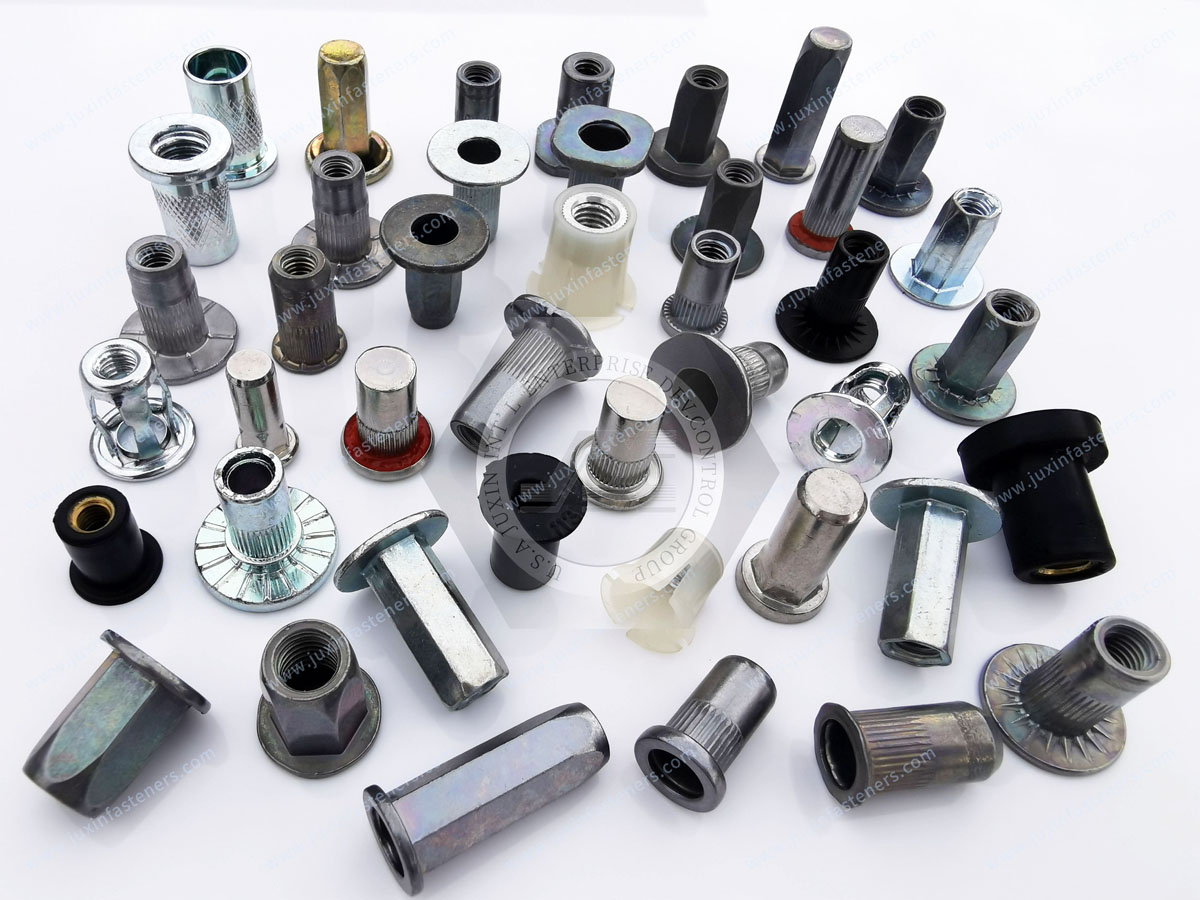
Modern vehicle structures can include hollow sections, stamped components, tubular structures, and other areas where the rear side of the mounting location is difficult or impossible to access.
This creates a specific fastening challenge.
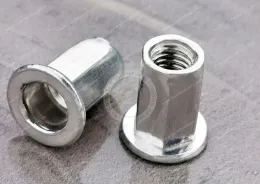
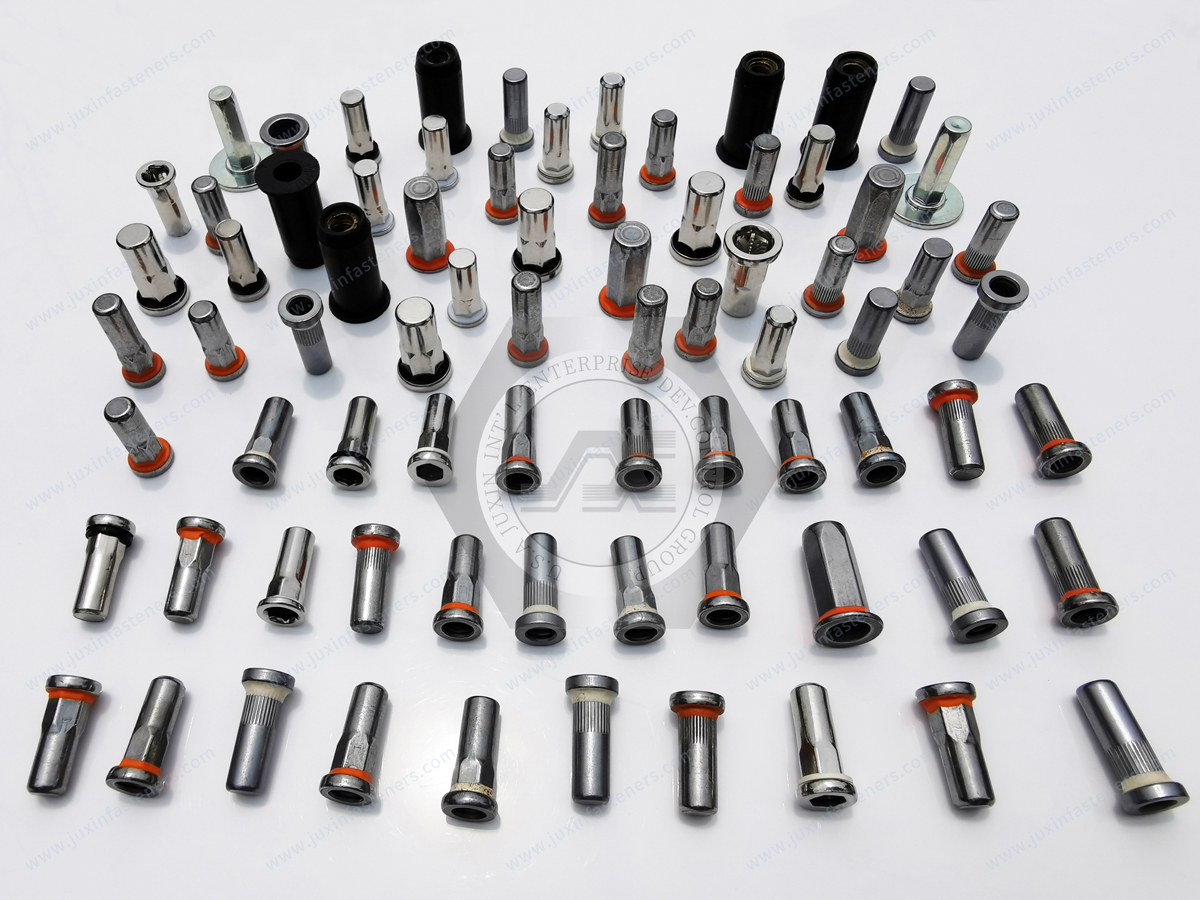
Where conventional nuts cannot be installed because backside access is unavailable, rivet nuts can provide an internally threaded attachment point from one accessible side,
subject to the design of the component and the requirements of the joint.
The suitability of a rivet nut depends on factors such as:
Base material
Material thickness
Hole geometry
Grip range
Thread specification
Setting method
Required retention characteristics
Joint loading
Installation equipment
Service environment
This is why a chassis rivet nut should be selected according to the actual mounting interface rather than simply by thread size.
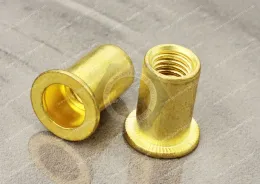
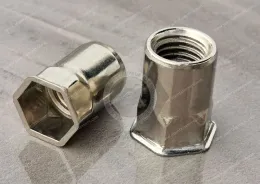
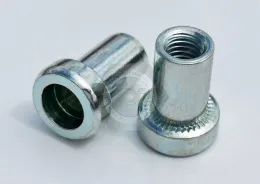
Chassis rivet nuts are particularly relevant when an internally threaded attachment point is required in a thin-wall or closed-section component and conventional backside nut installation is impractical.
During installation, the rivet nut is set so that its body deforms within the mounting material and creates the required mechanical interface.
The actual retention and joint performance depend on the rivet nut design, base material, wall thickness, hole condition, grip range, installation process, thread engagement, and joint configuration.
For this reason, engineers should avoid treating all rivet nuts as interchangeable.
When evaluating a rivet nut for a chassis or undercarriage application, the engineering specification may include:
Thread size and pitch
Rivet nut body geometry
Base material thickness
Mounting-hole diameter and geometry
Grip range
Material combination
Installation direction
Setting method
Required torque or assembly process
Joint loading requirements
Environmental exposure
Surface treatment
Dimensional requirements
A drawing or CAD model is particularly useful where the rivet nut interface is application-specific.
JUXIN FASTENERS manufactures customer-specific rivet nuts and related fastening components according to approved customer specifications and application requirements.
Aluminum alloy fasteners and other customer-specific aluminum components can be considered where low mass, material compatibility,
corrosion considerations, or application-specific mechanical requirements influence the fastening design.
However, aluminum should not automatically be selected simply because the surrounding chassis structure contains aluminum.
The complete material combination should be evaluated.
For example, when aluminum components are assembled with steel or other dissimilar materials, engineers may need to consider:
Galvanic interaction
Surface condition
Protective coatings
Electrical contact
Moisture exposure
Temperature cycling
Mechanical requirements
Thread interface
Assembly torque
Long-term environmental conditions
The engineering decision is therefore better expressed as:
Fastener Material + Mating Material + Surface Treatment + Joint Geometry + Environment
rather than simply:
“Use aluminum for an aluminum chassis.”
This distinction is important when sourcing customer-specific aluminum alloy fasteners for automotive applications.
JUXIN FASTENERS can manufacture customer-specific aluminum alloy fastening components according to specified material, geometry, surface treatment, and application requirements.
Surface treatment can be an important part of chassis and undercarriage fastener design because these components may encounter moisture, road contaminants, and corrosive environmental conditions.
The appropriate treatment depends on the fastener material, mating material, application environment, assembly process, and customer specification.
Zinc-Nickel Alloy coatings can be specified for steel automotive fasteners where enhanced corrosion protection is required by the application.
For chassis and undercarriage components, the coating specification should be evaluated together with:
Base material
Coating system
Required corrosion performance
Mating material
Thread condition
Tightening requirements
Environmental exposure
Customer specifications
Salt-spray testing or other corrosion evaluations should be based on the applicable customer or project requirement rather than assuming one universal performance value for every Zinc-Nickel Alloy finish.
For aluminum alloy components, anodizing or hard anodizing may be considered depending on the required surface characteristics and application.
These treatments can be evaluated for factors such as surface protection, wear behavior, dimensional considerations, and interaction with mating components.
The final treatment should be established according to the specific aluminum alloy, component geometry, functional requirements, and customer specification.
Some chassis fasteners may require a coating or surface treatment that also considers assembly friction.
This is important because tightening torque does not directly represent preload without considering the friction behavior of the joint.
Changes in coating, lubrication, thread condition, or mating surfaces can influence torque-tension behavior.
Therefore, for critical assembly processes, the coating specification and tightening method should be considered together rather than treated as independent purchasing parameters.
One of the most important engineering considerations when sourcing automotive chassis fasteners is that no single parameter defines the suitability of a component.
A practical selection model is:
1. Base Material
What material is the fastener made from?
2. Mating Material
What material does the fastener contact?
3. Mounting Geometry
What hole, slot, wall, bracket, tube, or structural interface receives the fastener?
4. Thread Geometry
What thread size, pitch, engagement, and interface are required?
5. Assembly Method
How is the component installed and tightened?
6. Surface Treatment
What corrosion, wear, friction, or appearance requirements apply?
7. Environment
Will the component encounter moisture, salt, mud, temperature cycling, vibration, or other application-specific conditions?
8. Production Requirements
What dimensional consistency, packaging, documentation, sampling, and supply requirements apply?
This eight-factor model provides a more useful starting point for OEM sourcing than selecting a fastener from a generic product category.
For threaded chassis fasteners, tightening torque and resulting clamp load are related but are not identical.
Torque-tension behavior can be influenced by:
Thread geometry
Thread surface condition
Coating
Lubrication
Mating materials
Fastener geometry
Nut or threaded component condition
Assembly speed
Tightening method
Temperature and environmental conditions
Therefore, a torque value should not be transferred from one fastener configuration to another simply because the thread size is identical.
For OEM applications, the tightening specification should follow the approved engineering requirement for the complete joint.
This is particularly relevant when a fastener changes from one coating system to another, because the change in surface condition can affect friction and therefore the torque-to-preload relationship.
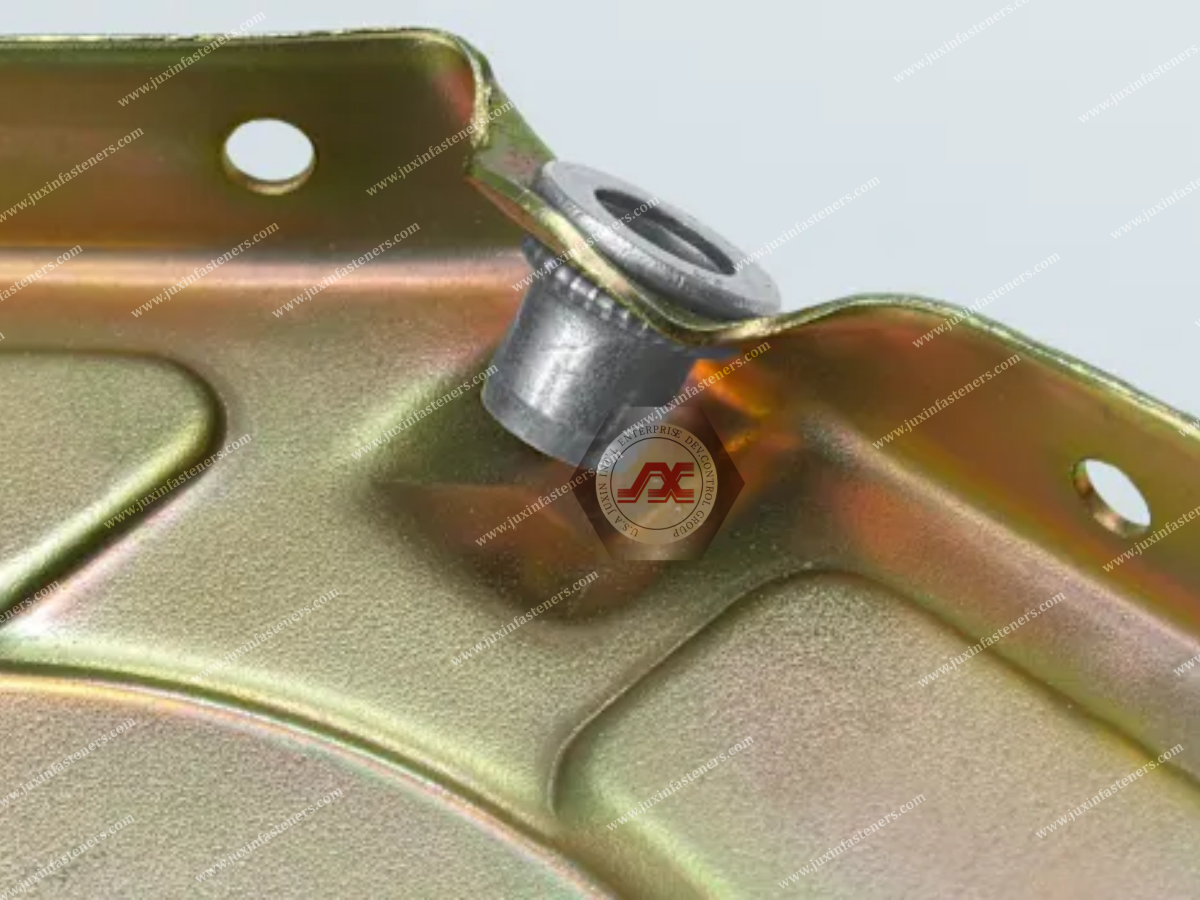
Chassis and undercarriage systems can use a wide range of fastening components depending on the vehicle architecture and application.
Potential component categories include:
Rivet nuts
Customer-specific bolts
High-strength fastening components
Aluminum alloy fasteners
Customer-specific screws
Nuts and self-locking nuts
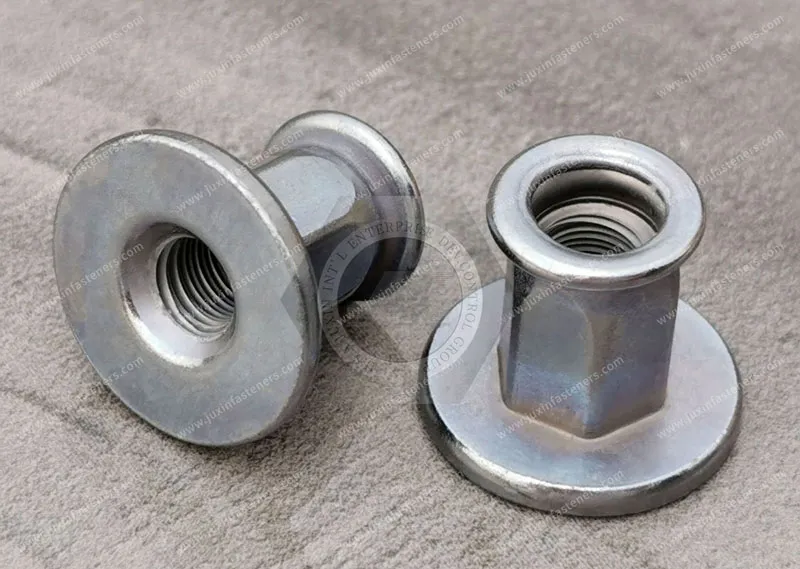
Weld nuts
Flange weld nuts
Pins
Shafts
Bracket fastening components
Protective-panel fasteners
Application-specific mounting hardware
The exact component should follow the joint requirement.
A fastener that is appropriate for an underbody shield, for example, should not automatically be treated as suitable for a structural suspension attachment.
This distinction between application-specific fastening and generic hardware is important for both engineering and procurement.
Automotive chassis and undercarriage systems do not use only structural metal fasteners.
Protective covers, wheel-arch liners, underbody shields, cable routing components, and other adjacent assemblies may use polymer fastening components where the application requires them.
For example, plastic push rivets may be used for selected body or underbody components, depending on panel geometry, material, hole design, retention requirements, and environmental exposure.
This creates a broader automotive fastening ecosystem in which plastic and metal components can serve different functions within the same vehicle.
JUXIN FASTENERS supplies both customer-specific plastic fastening components and metal fastening components according to application requirements.
For broader information on automotive polymer fastening components, see the JUXIN FASTENERS guide on automotive plastic fasteners.
The rear spoiler provides another example of how different fastening technologies can work within one automotive assembly.
A typical application may combine a Nylon Rear Spoiler Clip with an Automotive Spoiler Slide Bolt, depending on the customer's specific design.
The metal Automotive Spoiler Slide Bolt uses a special head geometry that can engage a mounting slot, track, or channel.
The assembly sequence can be understood as:
Slide → Position → Engage → Tighten
Depending on the mating geometry, the head and mounting interface may provide an anti-rotation function after engagement.
JUXIN FASTENERS has customer-specific configurations including M5 and M6 applications, with representative M6 × 14 and M6 × 20
configurations. Applicable property classes include 8.8 and 10.9 for specified configurations. Surface finish options may include Color Zinc,
Zinc-Nickel Alloy, and Black Zinc. Certain configurations may also include a pre-applied thread-locking patch where specified.
The final selection depends on the spoiler mounting interface, mating components, thread requirements, assembly method, and customer specification.
This example demonstrates an important principle in automotive fastener engineering:
The correct fastener is defined by the complete mounting interface, not by the product name alone.
For more information, see the JUXIN FASTENERS guides on automotive rear spoiler fastening components and automotive spoiler slide bolts.
Chassis fastening is one part of a wider automotive application-specific fastening system.
JUXIN FASTENERS also supplies customer-specific components for applications such as:
Automotive wiper mechanisms may use stainless steel solid rivets, stainless steel shoulder rivets, step rivets, and other customer-specific linkage fastening components.
These applications require attention to pivot geometry, repeated movement, mating components, material selection, dimensional consistency, and environmental exposure.
See the related automotive wiper system fastening solutions.
Gear-shifting mechanisms can include application-specific:
Shift shafts
Shift pins
Rolling shafts
Fixed pivot shafts
Swing or pivot shafts
Shift sliding columns
Rocker pivot shafts
Ball pins
These components are generally defined by their mechanical interface and movement requirements rather than by a generic fastener category.
Sunroof assemblies may incorporate customer-specific shafts, pins, pivot components, and fastening hardware.
The specification can depend on the movement mechanism, mating geometry, dimensional requirements, assembly process, and environmental conditions.
Depending on the vehicle design, fastening components may include:
Weld nuts
Rivet nuts
Flange weld nuts
Metal self-locking nuts
Customer-specific fastening components
The specific component and material should be established according to the approved vehicle design and applicable engineering requirements.
Door modules, instrument panels, headlamp assemblies, access panels, and interior trim can combine plastic and metal fastening technologies.
Potential components include:
Plastic retainers
Screw-type retainers
Customer-specific screws
Plastic fastening components
Non-standard metal fasteners
Application-specific clips
Plastic-to-plastic and plastic-to-metal assemblies can require different fastening considerations from conventional metal-to-metal joints.
Seat systems may use metal fastening components, pins, retainers, mounting hardware, and other application-specific components.
Material, geometry, dimensional consistency, surface treatment, assembly requirements, and the customer's specified performance criteria should be considered when sourcing these components.
Engineers and procurement teams often evaluate the same component from different perspectives.
Understanding this difference can make the sourcing process more efficient.
Design and structural engineers may focus on:
Mounting geometry
Joint configuration
Thread engagement
Material compatibility
Fastener geometry
Surface treatment
Corrosion environment
Torque and preload requirements
Installation method
Dimensional requirements
Application-specific mechanical requirements
The most useful technical information is therefore normally connected to the actual joint.
A generic statement such as “high strength” provides less engineering value than a clearly defined material, property requirement, thread specification, geometry, surface treatment, and application condition.
Procurement managers and supply chain teams typically need to evaluate:
Drawing and specification compliance
Material requirements
Surface finish
Dimensional consistency
Sample approval
Production consistency
Packaging requirements
Documentation
Quantity and forecast
Communication during engineering changes
Long-term supply coordination
For customer-specific chassis fasteners, procurement should ideally begin with the approved engineering data rather than a generic product description.
A practical sourcing workflow can follow these steps:
Identify where the component will be used:
Chassis
Subframe
Crossmember
Undercarriage
Bracket
Underbody protection
Wheel-arch area
Other application-specific location
Provide the relevant:
Drawing
3D CAD model
Hole dimensions
Wall thickness
Bracket geometry
Thread requirements
Mating components
Specify the required material or material family where already established by the engineering design.
For aluminum components, the applicable alloy and temper should be identified where required.
For steel fasteners, the required mechanical property specification should be clearly defined rather than relying on general descriptions such as “heavy duty.”
Identify the required finish, such as:
Zinc-Nickel Alloy
Zinc-based finish
Black Zinc
Anodizing
Hard anodizing
Other customer-specified surface treatment
The finish should be evaluated together with corrosion requirements, mating materials, and assembly conditions.
Where applicable, provide:
Installation method
Tightening requirements
Torque specification
Thread engagement
Lubrication requirements
Installation direction
Setting requirements for rivet nuts
Procurement teams should also specify:
Initial sample quantity
Expected production volume
Packaging requirements
Labeling requirements
Inspection requirements
Required documentation
Delivery requirements
This information allows the supplier to evaluate the component as a complete sourcing project rather than simply quote a generic fastener.
Many automotive chassis components are not adequately defined by a product name such as “rivet nut,” “chassis bolt,” or “aluminum fastener.”
Two components can share the same nominal thread but have different:
Body geometry
Head geometry
Grip range
Mounting interface
Material
Surface treatment
Assembly method
Functional requirements
This is why customer-specific and non-standard automotive fastening components are often better sourced from engineering drawings or CAD data.
For procurement teams, this also reduces the risk of treating visually similar components as interchangeable when their mounting interfaces or specifications are different.
An M6 thread does not define the complete fastener.
Body geometry, head configuration, material, finish, grip range, and application requirements may all be different.
A coating should be evaluated together with corrosion requirements, mating materials, thread condition, and torque-tension behavior.
Rivet nut performance depends on the component design, base material, wall thickness, hole geometry, grip range, setting method, and joint configuration.
“High strength” is not a complete engineering specification.
The required material, property class where applicable, dimensions, joint configuration, and customer-defined mechanical requirements should be clearly established.
Steel-to-aluminum, aluminum-to-aluminum, and other material combinations can create different corrosion and assembly considerations.
For non-standard automotive components, a drawing, CAD model, material requirement, surface finish, application information, and quantity forecast can significantly improve quotation and engineering review accuracy.
JUXIN FASTENERS is an OEM-oriented supplier of customer-specific and non-standard automotive fastening components.
Our automotive fastening scope includes application-specific components such as:
Chassis rivet nuts
Automotive rivet nuts
Aluminum alloy fasteners
Customer-specific screws
Bolts
Nuts
Weld nuts
Self-locking nuts
High-strength fastening components
Plastic fasteners
Nylon retainers
Automotive rear spoiler clips
Automotive spoiler slide bolts
Other customer-specific fastening components
JUXIN FASTENERS manufactures components according to approved drawings, specified materials, surface finishes, dimensional requirements, and application conditions.
For chassis and undercarriage projects, the most useful starting point is normally the complete component and joint information rather than the product name alone.
For a customer-specific chassis fastener inquiry, the following information can help suppliers evaluate the requirement accurately:
Engineering drawing or 3D CAD model
Part number
Thread size and pitch
Required dimensions
Mounting-hole information
Material
Wall thickness or grip range where applicable
Mechanical property requirements
Surface treatment
Corrosion requirements
Mating material
Assembly method
Tightening requirements
Initial sample quantity
Annual or projected production volume
Packaging requirements
Inspection or documentation requirements
The more completely the component is defined, the easier it is to distinguish a technically suitable supplier from a supplier that is simply offering a similar-looking standard component.
What fastening components are commonly used in automotive chassis systems?
Automotive chassis and undercarriage systems can use rivet nuts, bolts, nuts, weld nuts, self-locking nuts, aluminum alloy fasteners, pins, and other customer-specific fastening components.
The appropriate component depends on the mounting interface, joint configuration, material combination, assembly method, and application requirements.
Why are rivet nuts used in automotive chassis applications?
Rivet nuts can provide an internally threaded mounting interface where conventional backside nut installation is impractical,
including selected thin-wall or closed-section applications. Suitability depends on the base material, wall thickness, hole geometry, grip range, setting method, thread requirements, and joint design.
Are aluminum alloy fasteners suitable for automotive chassis applications?
They can be suitable for selected applications where material, weight, corrosion, mechanical, and assembly requirements support their use.
The complete fastener-to-mating-material combination should be evaluated rather than selecting aluminum solely because the surrounding structure is aluminum.
What surface treatments can be considered for automotive chassis fasteners?
Depending on the material and application, surface treatment options may include Zinc-Nickel Alloy coatings for specified steel components,
anodizing or hard anodizing for selected aluminum components, and other customer-specified functional or lubricating coatings.
The final treatment should be based on the actual environmental, corrosion, assembly, and mating-material requirements.
Does Zinc-Nickel Alloy automatically make a chassis fastener suitable for severe corrosion environments?
No. Zinc-Nickel Alloy can be specified where enhanced corrosion protection is required, but coating performance depends on the complete coating system, substrate,
application conditions, mating materials, processing, and customer-defined requirements.
How should engineers evaluate automotive chassis fasteners?
Engineers should consider the complete joint, including base material, mating material, mounting geometry, thread geometry, engagement, surface treatment,
assembly method, environmental exposure, and application-specific mechanical requirements.
What information should procurement teams provide when sourcing custom chassis fasteners?
A drawing or 3D CAD model, material requirement, dimensions, thread specification, mounting-hole information, grip range where applicable, surface treatment,
application conditions, quantity, packaging, and documentation requirements are useful starting points for an OEM sourcing evaluation.
Can JUXIN FASTENERS supply custom chassis rivet nuts and non-standard automotive fasteners?
JUXIN FASTENERS supplies customer-specific rivet nuts, aluminum alloy fasteners, bolts, screws, nuts, weld nuts,
and other automotive fastening components according to approved drawings, specified materials, surface finishes, and application requirements.
For OEM automotive chassis, undercarriage, rivet nut, aluminum alloy, and other customer-specific fastening requirements,
send the relevant drawing or CAD data together with the required material, finish, application information, and production quantity.
JUXIN FASTENERS works with customers on application-specific and non-standard fastening components for automotive and industrial applications.
Email: info@juxinfasteners.com
Website: www.juxinfasteners.com
Product Packaging
Packaging Standard
At Juxin Fasteners, we apply standardized export packaging to ensure product protection, traceability, and compliance with international logistics requirements.
1. Standard Export Packaging
Unless otherwise specified, all products will be packed according to our factory standard export packaging, which includes:
Moisture-resistant inner protection
Poly bag or small box packing as required
Reinforced export cartons
Clear labeling with part number, specification, batch number, and quantity
Palletizing for sea or air shipment when necessary
Our standard packaging is designed to ensure safe transportation, efficient warehousing, and long-distance international shipping.
2. Customized Packaging Options
We also provide customized packaging solutions according to customer requirements, including but not limited to:
Private labeling
Customized barcodes
Specific carton dimensions
Retail packaging
Special pallet configuration
Customer-specific marking and identification
So that you know, customized packaging may involve additional costs and extended lead time depending on the complexity of the requirements.
3. Compliance & Quality Assurance
All packaging processes are controlled under our ISO 9001 quality management system to ensure consistency, traceability, and product integrity throughout the supply chain.
Product Pictures
Contact Us
Tel.:
+86 020 8621 0320
+86 020 3121 6067
E-mail:
Technical Support:
Navigation
SEND INQUIREY