Call Us
+86 136 6007 9809
Call Us
+86 136 6007 9809

Automotive Blind Rivet Nuts
High-Performance One-Sided Fastening Solutions for Vehicle Body Panels and Interior Assemblies
Overview
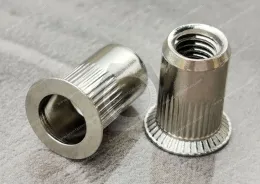
Automotive blind rivet nuts are engineered as a single-sided, weld-free fastening solution for modern vehicle manufacturing and repair. They are widely used in body panels, interior assemblies, and lightweight structures, especially in aluminum bodies and new energy vehicles (EVs)
Product Specification
Automotive Blind Rivet Nuts
High-Performance One-Sided Fastening Solutions for Vehicle Body Panels and Interior Assemblies
Overview
Automotive blind rivet nuts are engineered as a single-sided, weld-free fastening solution for modern vehicle manufacturing and repair. They are widely used in body panels, interior assemblies, and lightweight structures, especially in aluminum bodies and new energy vehicles (EVs).
With advanced designs such as the large-cap rivet nut, these fasteners provide enhanced load distribution, improved anti-rotation performance, and reliable thread strength—making them ideal for thin sheets and dissimilar-material connections.
Target Keywords: automotive blind rivet nuts, large cap rivet nut, interior panel fasteners, closed-end rivet, one-sided installation
Why Blind Rivet Nuts Are Essential in Automotive Applications
Automotive structures increasingly require:
Lightweight materials (aluminum, galvanized steel)
Hybrid material joining
High assembly efficiency
Reliable fastening without thermal distortion
Blind rivet nuts solve these challenges by enabling:
One-sided installation in enclosed structures
No welding or tapping required
Consistent and repeatable thread formation
They are now a standard solution in automotive EV assembly and traditional vehicle production.
Key Features of Automotive Blind Rivet Nuts
Large Cap Head Design
Increased contact surface area
Reduces stress on thin sheets
Enhances pull-out resistance and thread stability
Minimizes deformation of panels
Closed-End Sealing Options
Prevents ingress of:
Moisture
Dust
Contaminants
Improves durability in harsh automotive environments
Ideal for sealed body and interior applications
Material Versatility
Available in:
Carbon steel (high-strength applications)
Stainless steel (corrosion resistance)
Zinc-plated finishes (cost-effective protection)
One-Sided Installation Capability
Installation from a single side only
Suitable for:
Enclosed cavities
Box sections
Interior structures
Improves assembly efficiency and reduces labor time
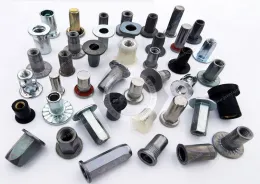
Multiple Head and Body Configurations
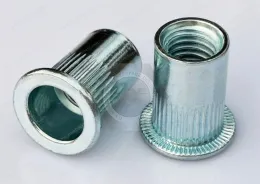
Flat head, countersunk, round head
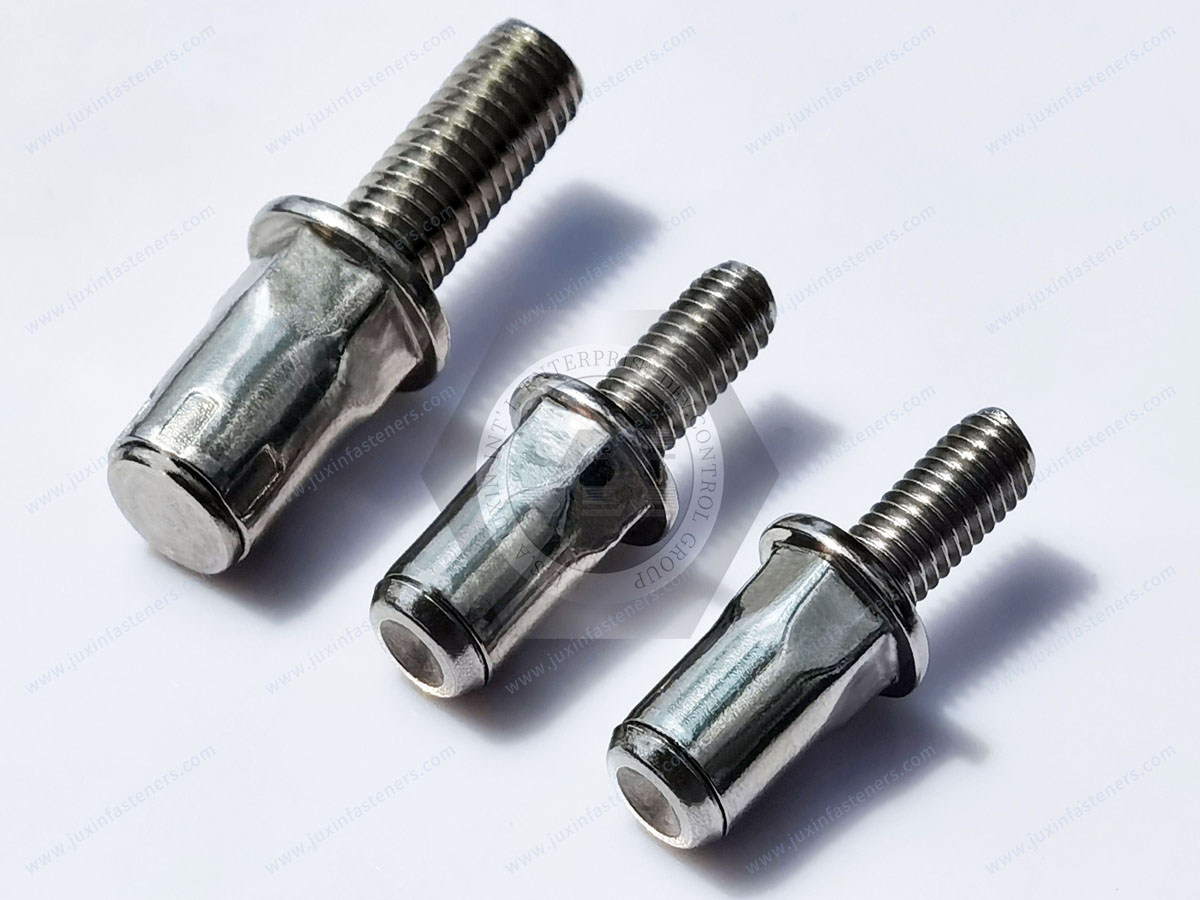
Half-hex and full-hex for anti-rotation
Knurled bodies for enhanced grip
Core Advantages Over Traditional Fastening Methods
Feature | Blind Rivet Nuts | Welding | Tapping |
Installation Access | One-sided | Two-sided | Two-sided |
Heat Impact | None | High | None |
Thin Sheet Compatibility | Excellent | Poor | Limited |
Sealing Performance | Excellent (closed-end) | Poor | Requires sealing |
Production Efficiency | High | Low | Medium |
Typical Automotive Application Scenarios
Body Panel Assembly
Door panels
Roof structures
Dashboard mounting systems
Interior Systems
Seat frame installation
Interior trim panels
Plastic and composite assemblies
Structural and Semi-Structural Components
Chassis bracket mounting
Reinforcement plate installation
Side step and accessory fixation
New Energy Vehicle (EV) Applications
Battery tray and enclosure mounting
Integrated battery-body structures
Lightweight hybrid material assemblies
Engineering Advantages in Modern Vehicle Design
Compatibility with Lightweight Materials
Blind rivet nuts are ideal for:
Aluminum alloys
High-strength steel sheets
Mixed-material body structures
They eliminate welding-related deformation and preserve material integrity.
High Strength and Shear Performance
Strong mechanical interlock formed during installation
Enhanced performance when combined with structural adhesives
Improved resistance to:
Vibration
Dynamic loads
Fatigue stress
Excellent Sealing and Durability
Closed-end rivet nuts provide:
Reliable waterproofing
Reduced corrosion risk
Long-term durability in automotive environments
Recommended Installation Process
To ensure optimal performance, a standardized installation process is critical:
Positioning and Marking
Define installation points using precision tools
Drilling
Hole diameter typically 0.1–0.3 mm larger than the rivet nut outer diameter
Surface Preparation
Remove burrs, oil, and contaminants
Ensure clean contact surfaces
Adhesive Application (Optional)
Apply structural adhesive in a controlled pattern
Enhances sealing and vibration resistance
Rivet Nut Installation
Use manual or pneumatic rivet nut tools
Ensure proper deformation and seating
Quality Inspection
Check for:
Proper alignment
No loosening
No panel deformation or cracks
Advanced Solutions and Industry Practices
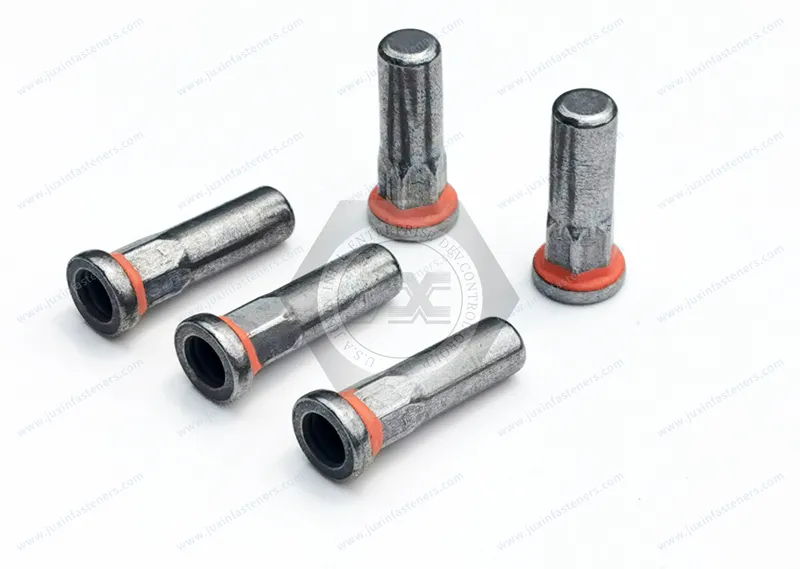
Hexagonal Closed-End Rivet Nuts
Combine high torque resistance with sealing performance
Reduce installation defects and improve assembly consistency
Integration with Smart Manufacturing
Pneumatic and digital rivet tools enable:
Torque monitoring
Installation traceability
Quality data recording
Industry Trends
Lightweight and EV-Oriented Design
Growing adoption in:
Electric vehicle platforms
Aluminum-intensive body structures
Battery integration systems
Weld-Free Assembly Technologies
Manufacturers are shifting toward:
Cold installation methods
Reduced thermal impact processes
Faster production cycles
Focus on Reliability and Lifecycle Performance
Reduced maintenance requirements
Improved durability under real-world conditions
Lower total cost of ownership

Conclusion
Automotive blind rivet nuts are a critical fastening solution for modern vehicle manufacturing, offering efficient, reliable, and lightweight connections for body panels and interior systems.
With features such as a large-cap head design, closed-end sealing, and one-sided installation, they offer clear advantages over traditional fastening methods—especially in EV structures and lightweight vehicle platforms.
As the automotive industry continues to evolve toward high efficiency, lightweight design, and advanced manufacturing, blind rivet nuts will remain a key technology in achieving these goals.
Product Packaging
Packaging Standard
At Juxin Fasteners, we apply standardized export packaging to ensure product protection, traceability, and compliance with international logistics requirements.
1. Standard Export Packaging
Unless otherwise specified, all products will be packed according to our factory standard export packaging, which includes:
Moisture-resistant inner protection
Poly bag or small box packing as required
Reinforced export cartons
Clear labeling with part number, specification, batch number, and quantity
Palletizing for sea or air shipment when necessary
Our standard packaging is designed to ensure safe transportation, efficient warehousing, and long-distance international shipping.
2. Customized Packaging Options
We also provide customized packaging solutions according to customer requirements, including but not limited to:
Private labeling
Customized barcodes
Specific carton dimensions
Retail packaging
Special pallet configuration
Customer-specific marking and identification
So that you know, customized packaging may involve additional costs and extended lead time depending on the complexity of the requirements.
3. Compliance & Quality Assurance
All packaging processes are controlled under our ISO 9001 quality management system to ensure consistency, traceability, and product integrity throughout the supply chain.
Product Pictures
Contact Us
Tel.:
+86 020 8621 0320
+86 020 3121 6067
E-mail:
Technical Support:
Navigation
SEND INQUIREY