Call Us
+86 136 6007 9809
Call Us
+86 136 6007 9809

Rivet Nuts for Aluminum: Reliable Fastening Solutions for Lightweight Sheet Applications
In industries where lightweight design and corrosion resistance are critical, aluminum has become a preferred material. From electric vehicles to aerospace structures, aluminum sheet components are widely used—but they also present a key engineering challenge:
Thin aluminum sheets cannot support durable internal threads.
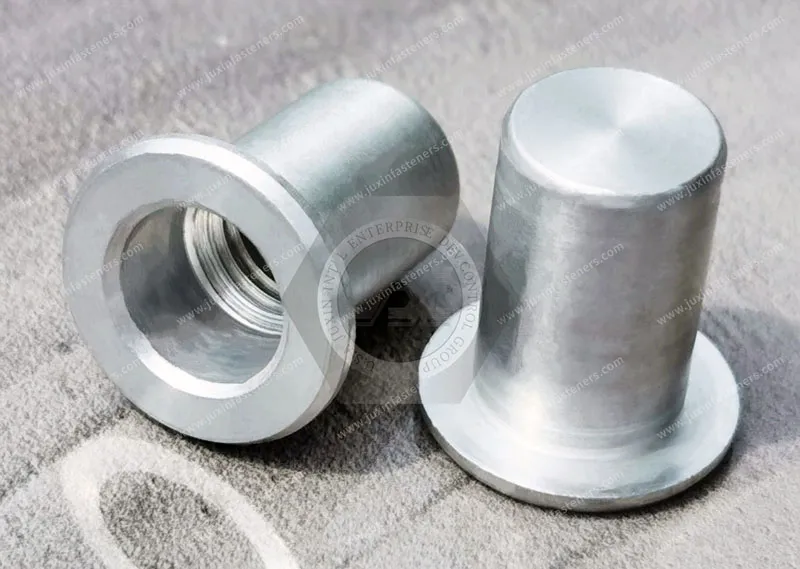
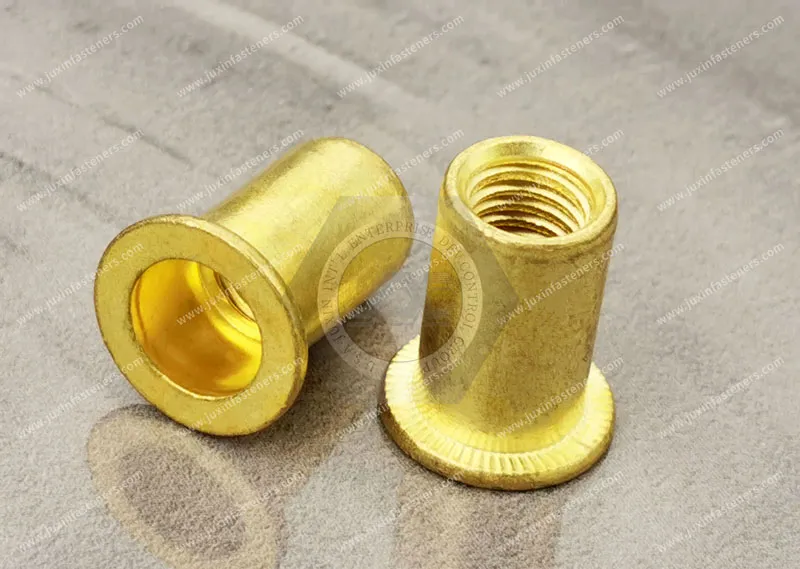
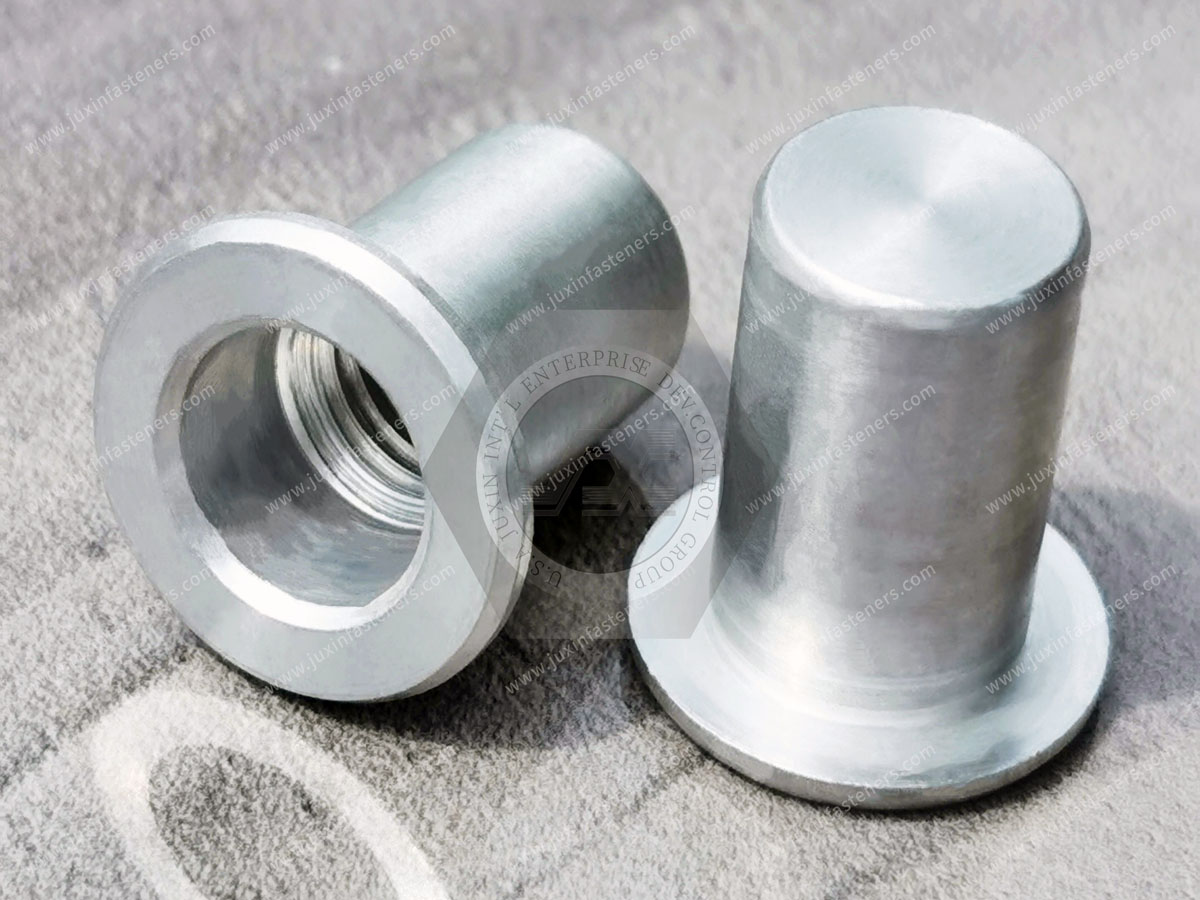
This is where rivet nuts for aluminum provide an efficient and scalable fastening solution. As one of the most reliable aluminum sheet fasteners, blind rivet nuts enable strong threaded connections without increasing material thickness or compromising structural integrity.
Product Specification
Rivet Nuts for Aluminum: Reliable Fastening Solutions for Lightweight Sheet Applications
In industries where lightweight design and corrosion resistance are critical, aluminum has become a preferred material. From electric vehicles to aerospace structures, aluminum sheet components are widely used—but they also present a key engineering challenge:
Thin aluminum sheets cannot support durable internal threads.
This is where rivet nuts for aluminum provide an efficient and scalable fastening solution. As one of the most reliable aluminum sheet fasteners, blind rivet nuts enable strong threaded connections without increasing material thickness or compromising structural integrity.
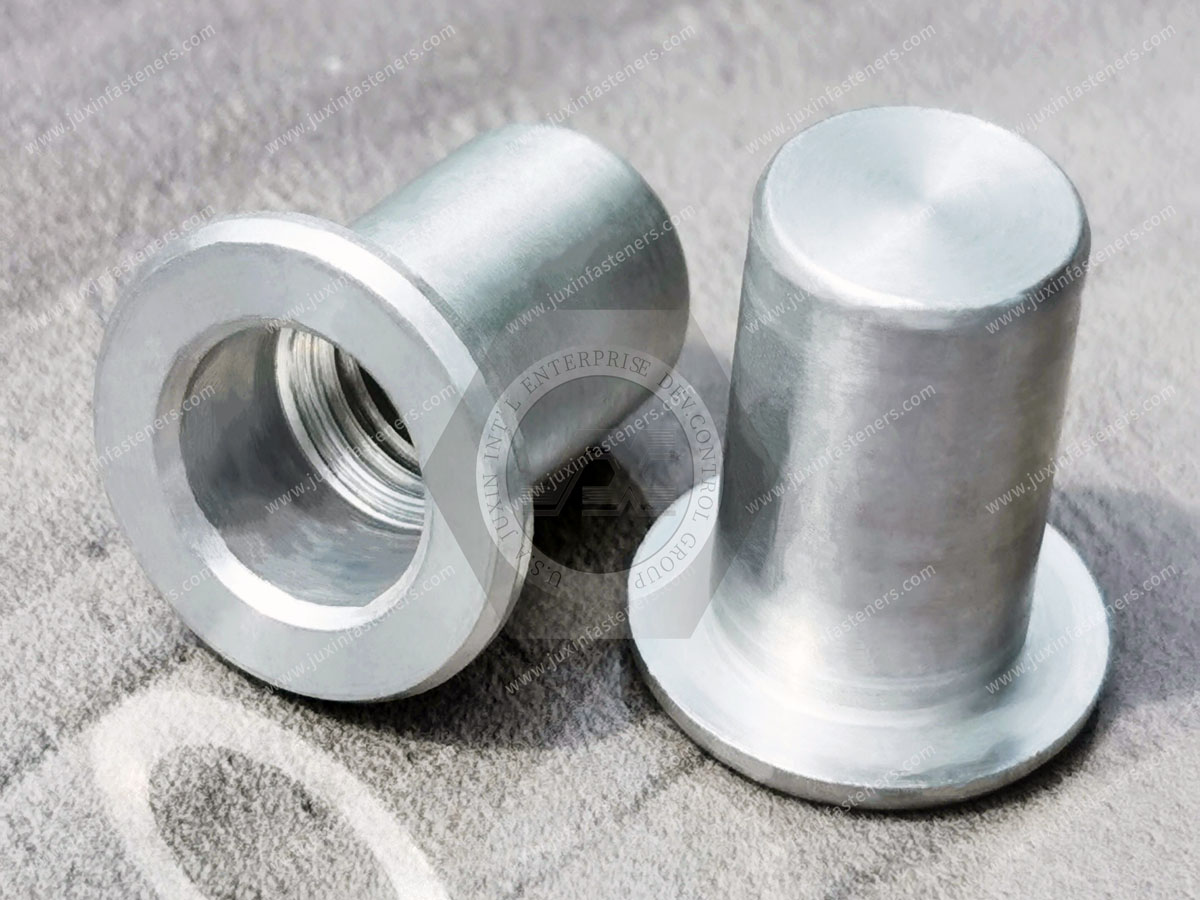
Why Use Rivet Nuts for Aluminum Sheet?
Solving the Thin Material Challenge
Aluminum sheets are often too thin for tapping threads. Rivet nuts for aluminum create a load-bearing internal thread by forming a mechanical lock behind the sheet.
Ideal for Blind Installation
Blind rivet nuts can be installed from one side only, making them perfect for closed structures, tubular assemblies, and inaccessible areas.
Key Benefits of Aluminum Sheet Fasteners
Lightweight Structural Performance
Using aluminum sheet fasteners like rivet nuts allows engineers to maintain lightweight designs without sacrificing fastening strength—critical in EV and aerospace applications.
No Heat Distortion
Unlike welding or heat-based joining processes, installing rivet nuts for aluminum does not introduce thermal stress:
No deformation of aluminum sheets
No damage to surface coatings
No impact on material properties
High Vibration Resistance
Blind rivet nuts form a tight mechanical grip, providing:
Strong resistance to loosening
Stable performance in dynamic environments
Long-term reliability in machinery and transport systems
Corrosion Compatibility
Rivet nuts can be selected in materials and coatings compatible with aluminum to reduce galvanic corrosion risks.
Typical Applications
Rivet nuts for aluminum are widely used across multiple industries:
Electric Vehicles (EV)
Battery housings
Lightweight structural frames
Charging system enclosures
Aerospace & Aviation
Interior panels
Lightweight structural assemblies
Access panels and mounting points
Electronics & Electrical Equipment
Aluminum enclosures
Control boxes
Heat dissipation housings
Industrial Equipment
Machine covers
Sheet metal assemblies
Modular structural systems
How to Install Rivet Nuts in Aluminum Sheets
Understanding how to install rivet nuts correctly is essential for ensuring optimal performance.
Standard Rivet Nut Installation Process
Drill or punch a hole in the aluminum sheet
Insert the rivet nut into the prepared hole
Use a dedicated rivet nut installation tool
The tool expands the rivet nut body behind the sheet
A secure, load-bearing internal thread is formed
This process ensures a strong and permanent fastening point in thin materials.
Rivet Nut Installation Tools
Selecting the right tool is critical for efficient and consistent rivet nut installation:
Manual Rivet Nut Tools
Ideal for low-volume or on-site applications
Pneumatic Rivet Nut Tools
Suitable for medium to high production environments
Hydraulic Installation Systems
Designed for high-volume industrial production with maximum consistency
The choice depends on production scale, material thickness, and application requirements.
Best Practices for Aluminum Applications
To maximize performance when using aluminum sheet fasteners, engineers should consider:
Proper hole size and tolerance control
Matching rivet nut material to aluminum to prevent galvanic corrosion
Selecting the correct grip range for sheet thickness
Ensuring proper installation force and tool calibration
Why Engineers Choose Rivet Nuts for Aluminum
For both design engineers and procurement professionals, rivet nuts for aluminum offer a combination of:
Strong internal threads in thin materials
Fast and efficient installation
Compatibility with automated production
Reduced assembly costs
Improved product reliability
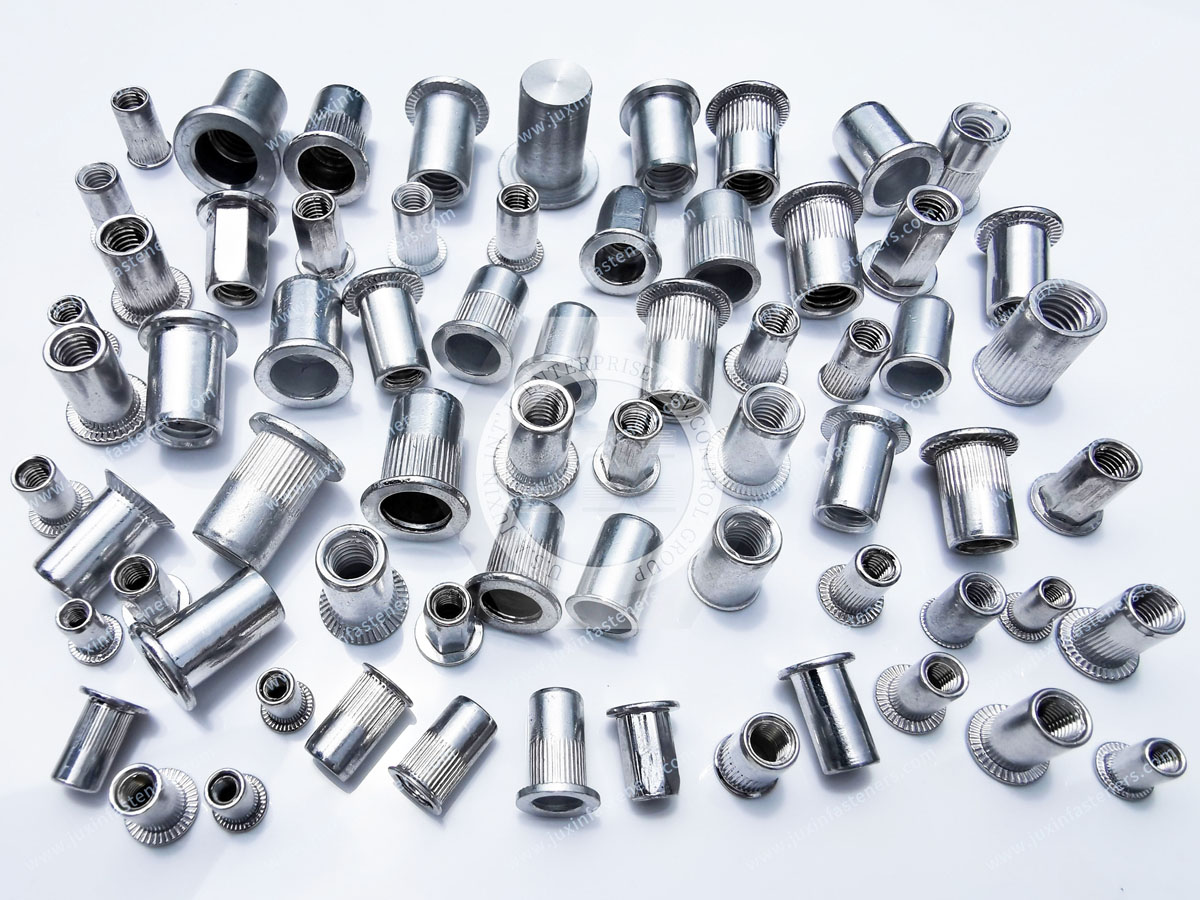
These advantages make them one of the most versatile and widely adopted aluminum sheet fasteners in modern manufacturing.
Conclusion
As lightweight materials continue to dominate industrial design, the demand for reliable fastening solutions is growing.
Rivet nuts for aluminum provide a proven method to create durable threaded connections in thin sheet structures—without welding, without distortion, and without compromise.
For applications requiring strength, efficiency, and scalability, blind rivet nuts remain the optimal solution for aluminum assemblies.
Product Packaging
Packaging Standard
At Juxin Fasteners, we apply standardized export packaging to ensure product protection, traceability, and compliance with international logistics requirements.
1. Standard Export Packaging
Unless otherwise specified, all products will be packed according to our factory standard export packaging, which includes:
Moisture-resistant inner protection
Poly bag or small box packing as required
Reinforced export cartons
Clear labeling with part number, specification, batch number, and quantity
Palletizing for sea or air shipment when necessary
Our standard packaging is designed to ensure safe transportation, efficient warehousing, and long-distance international shipping.
2. Customized Packaging Options
We also provide customized packaging solutions according to customer requirements, including but not limited to:
Private labeling
Customized barcodes
Specific carton dimensions
Retail packaging
Special pallet configuration
Customer-specific marking and identification
So that you know, customized packaging may involve additional costs and extended lead time depending on the complexity of the requirements.
3. Compliance & Quality Assurance
All packaging processes are controlled under our ISO 9001 quality management system to ensure consistency, traceability, and product integrity throughout the supply chain.
Product Pictures
Contact Us
Tel.:
+86 020 8621 0320
+86 020 3121 6067
E-mail:
Technical Support:
Navigation
SEND INQUIREY