Call Us
+86 136 6007 9809
Call Us
+86 136 6007 9809

Blind Rivet Nuts vs Weld Nuts: Choosing the Right Sheet Metal Fastening Solution
Introduction: Understanding Modern Sheet Metal Fasteners
In manufacturing and industrial design, creating reliable threaded connections in metal structures is critical for both structural integrity and production efficiency. Two commonly used fastening solutions are blind rivet nuts and weld nuts.
Choosing the right fastener depends on your application, material thickness, installation accessibility, and performance requirements. Understanding the differences between rivet nuts and weld nuts helps engineers and manufacturers optimize both sheet-metal fastening solutions and production processes.
Product Specification
Blind Rivet Nuts vs Weld Nuts: Choosing the Right Sheet Metal Fastening Solution
Introduction: Understanding Modern Sheet Metal Fasteners
In manufacturing and industrial design, creating reliable threaded connections in metal structures is critical for both structural integrity and production efficiency. Two commonly used fastening solutions are blind rivet nuts and weld nuts.
Choosing the right fastener depends on your application, material thickness, installation accessibility, and performance requirements. Understanding the differences between rivet nuts and weld nuts helps engineers and manufacturers optimize both sheet-metal fastening solutions and production processes.
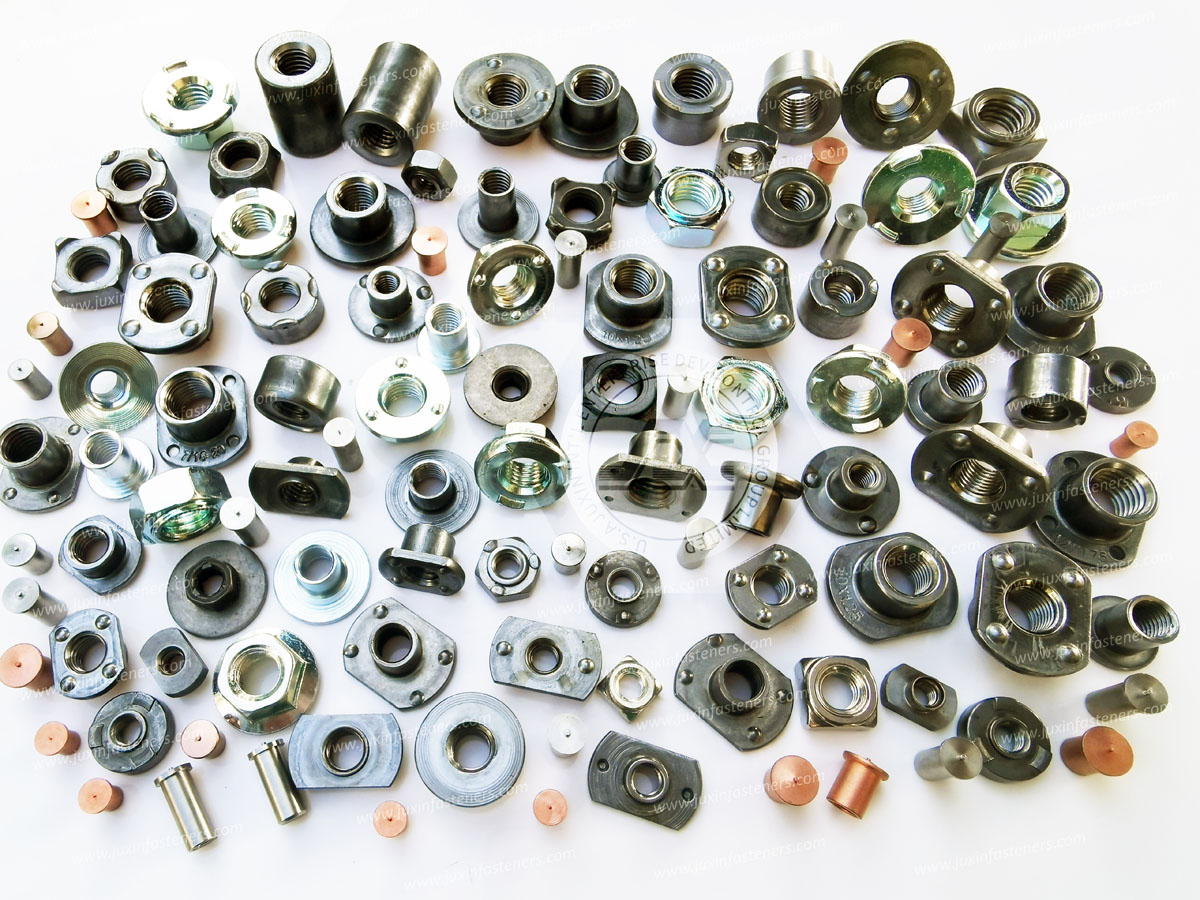
Weld Nuts: Traditional Fastening for Thick Metal Structures
Weld nuts are fasteners attached to metal surfaces through projection or resistance welding. They are widely used in automotive, machinery, and heavy equipment manufacturing due to their strong structural bonding.
Advantages of Weld Nuts
High structural strength – suitable for heavy-duty applications
Effective for thick metal components – ideal for automotive body panels and machinery frames
Reliable permanent connection – integrates directly into the welded structure
Limitations of Weld Nuts
Despite their strengths, weld nuts present several challenges:
Heat deformation – welding can warp thin sheet metal
Surface damage – coatings or finishes may be compromised during welding
Dual-side access required – installation is limited in enclosed assemblies
Additional equipment needed – welding machines and skilled operators increase costs
These limitations make weld nuts less suitable for modern lightweight or thin-sheet metal assemblies.
Blind Rivet Nuts: Flexible Fastening for Thin Sheets
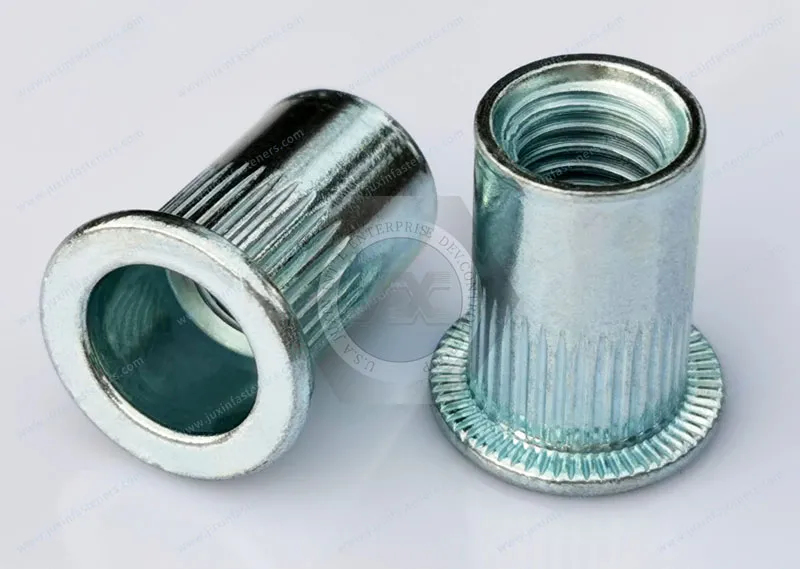
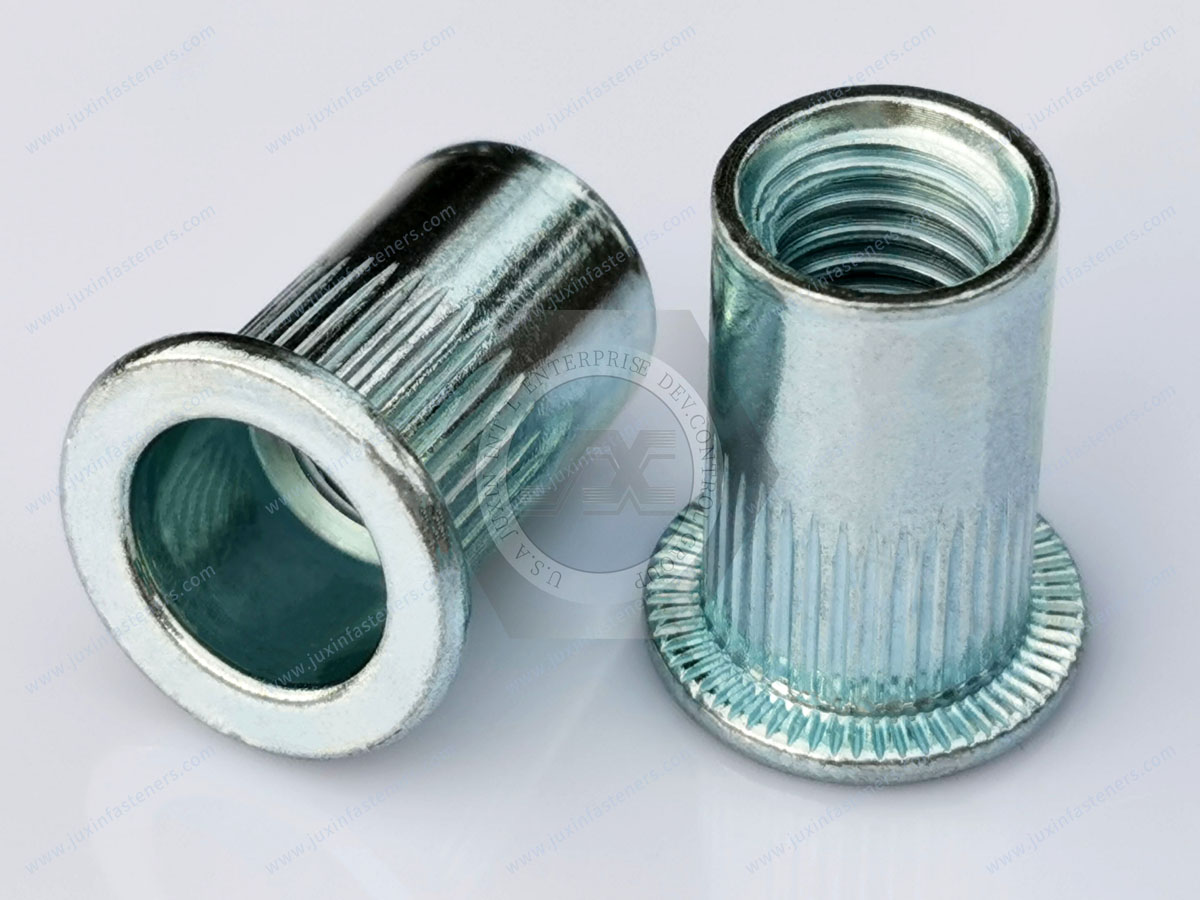
Blind rivet nuts provide an alternative by forming internal threads through plastic deformation of the rivet body, creating a locking structure behind the sheet metal.
Advantages of Blind Rivet Nuts
No welding required – reduces equipment and labor needs
Single-side installation – ideal for enclosed or difficult-to-access assemblies
Perfect for thin sheet materials – prevents heat distortion
Clean surface finish – maintains coatings and aesthetics
Easy maintenance and replacement – supports modular design and serviceability
These characteristics make blind rivet nuts a preferred choice for modern sheet metal fastening solutions in automotive, electronics, aerospace, and industrial equipment.
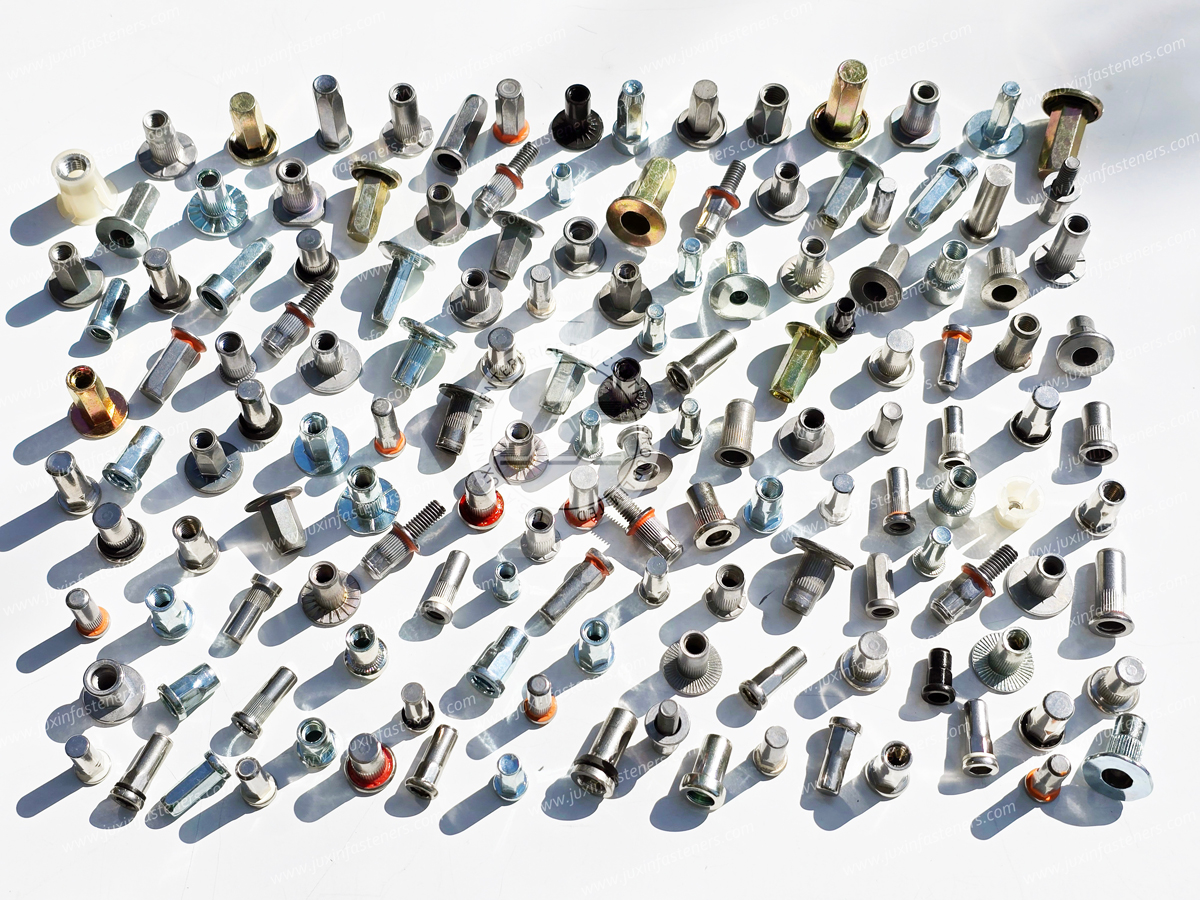
Rivet Nuts vs Weld Nuts: How to Choose
The decision between blind rivet nuts vs weld nuts depends on material, structural requirements, and production considerations.
Use Weld Nuts When:
Working with thick structural steel
Welding is already integrated into the production process
Extremely high structural loads are required
Use Blind Rivet Nuts When:
Working with thin sheet metal
Heat distortion must be avoided
Installation access is limited to one side
Production efficiency is a priority
For many modern applications, especially in lightweight sheet metal assemblies, blind rivet nuts provide a more flexible, cost-effective, and efficient solution than traditional weld nuts.
Typical Applications of Blind Rivet Nuts
Automotive body panels and chassis components
Electronic equipment enclosures
Industrial machinery frames
Aerospace and rail transportation lightweight panels
Modular metal furniture assemblies
Material and Surface Options
Blind rivet nuts are available in:
Stainless steel – corrosion resistance for harsh environments
Carbon steel – high-strength applications
Aluminum – lightweight designs
Surface treatments such as zinc plating or anodizing further enhance durability and appearance, making them suitable for a wide range of sheet-metal fastening applications.
Conclusion: Optimize Your Fastening Strategy
Understanding the differences between rivet nuts vs weld nuts enables engineers and manufacturers to maximize production efficiency, maintain structural integrity, and reduce costs.
Blind rivet nuts are especially valuable for modern sheet metal assemblies, offering:
Easy single-side installation
Protection against heat distortion
Flexibility for modular designs
By integrating blind rivet nuts into your projects, you gain a reliable, efficient, and cost-effective sheet metal fastening solution for today’s industrial demands.
Product Packaging
Packaging Standard
At Juxin Fasteners, we apply standardized export packaging to ensure product protection, traceability, and compliance with international logistics requirements.
1. Standard Export Packaging
Unless otherwise specified, all products will be packed according to our factory standard export packaging, which includes:
Moisture-resistant inner protection
Poly bag or small box packing as required
Reinforced export cartons
Clear labeling with part number, specification, batch number, and quantity
Palletizing for sea or air shipment when necessary
Our standard packaging is designed to ensure safe transportation, efficient warehousing, and long-distance international shipping.
2. Customized Packaging Options
We also provide customized packaging solutions according to customer requirements, including but not limited to:
Private labeling
Customized barcodes
Specific carton dimensions
Retail packaging
Special pallet configuration
Customer-specific marking and identification
So that you know, customized packaging may involve additional costs and extended lead time depending on the complexity of the requirements.
3. Compliance & Quality Assurance
All packaging processes are controlled under our ISO 9001 quality management system to ensure consistency, traceability, and product integrity throughout the supply chain.
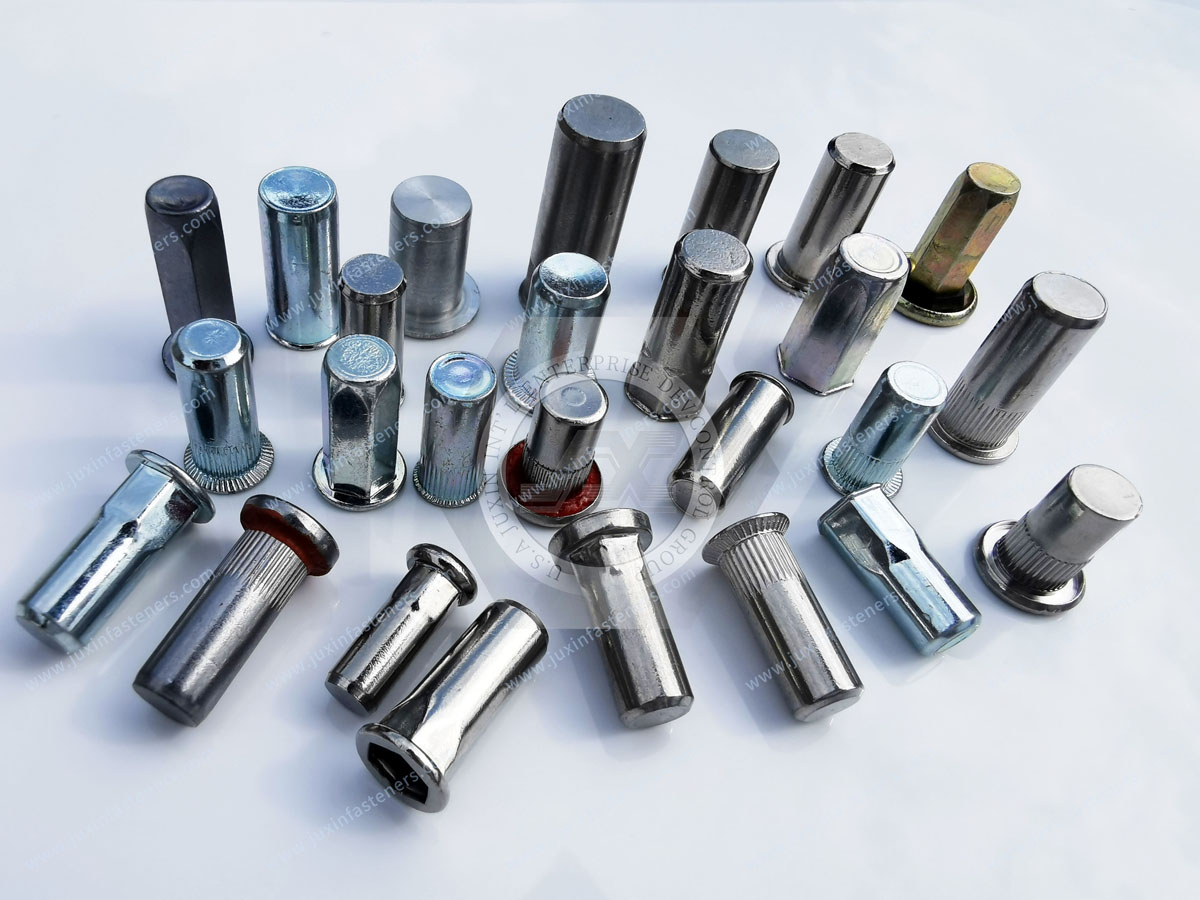
Product Pictures
Contact Us
Tel.:
+86 020 8621 0320
+86 020 3121 6067
E-mail:
Technical Support:
Navigation
SEND INQUIREY