Call Us
+86 136 6007 9809
Call Us
+86 136 6007 9809

Stainless Steel Rivet Nuts and Fastener Solutions for Rail Transit Manufacturing Industry
High-Performance Vibration-Resistant Fastening Systems for Trains, Metro & Rail Vehicles
In the rail transit manufacturing industry, vehicles such as high-speed trains, subways, light rail, monorails, and maglev systems operate under extreme conditions, including continuous vibration, cyclic loading, humidity, and corrosive environments. These demanding conditions require fastening systems with exceptional corrosion resistance, fatigue strength, and anti-loosening performance.
Product Specification
Stainless Steel Rivet Nuts and Fastener Solutions for Rail Transit Manufacturing Industry
High-Performance Vibration-Resistant Fastening Systems for Trains, Metro & Rail Vehicles
In the rail transit manufacturing industry, vehicles such as high-speed trains, subways, light rail, monorails, and maglev systems operate under extreme conditions, including continuous vibration, cyclic loading, humidity, and corrosive environments. These demanding conditions require fastening systems with exceptional corrosion resistance, fatigue strength, and anti-loosening performance.
Among modern fastening technologies, stainless steel rivet nuts and rail transit fastener systems have become a core solution for lightweight structures, interior assemblies, sheet metal connections, and electrical cabinet installations. Their single-sided installation capability, weld-free structure, and high load-bearing performance make them ideal for modern rail vehicle manufacturing.
1. Rail Transit Application Background and Engineering Requirements
Rail transit systems operate under strict safety and performance standards, where fastener reliability directly impacts operational safety and lifecycle cost.
Key Engineering Challenges:
High-frequency vibration and impact loading
Cyclic fatigue stress from long-term operation
Corrosion in humid, coastal, and salt-spray environments
Lightweight structure requirements for energy efficiency
Maintenance-free and long-life performance demands
Safety-critical structural stability requirements
Traditional welding and threaded fastening systems often suffer from:
Thread stripping in thin materials
Preload loss under vibration
Thermal deformation during welding
High maintenance frequency
To address these issues, stainless-steel rivet-nut fasteners for rail transit manufacturing offer a permanent, vibration-resistant, and lightweight alternative.
2. Classification and Technical Structure of Stainless Steel Rivet Nuts
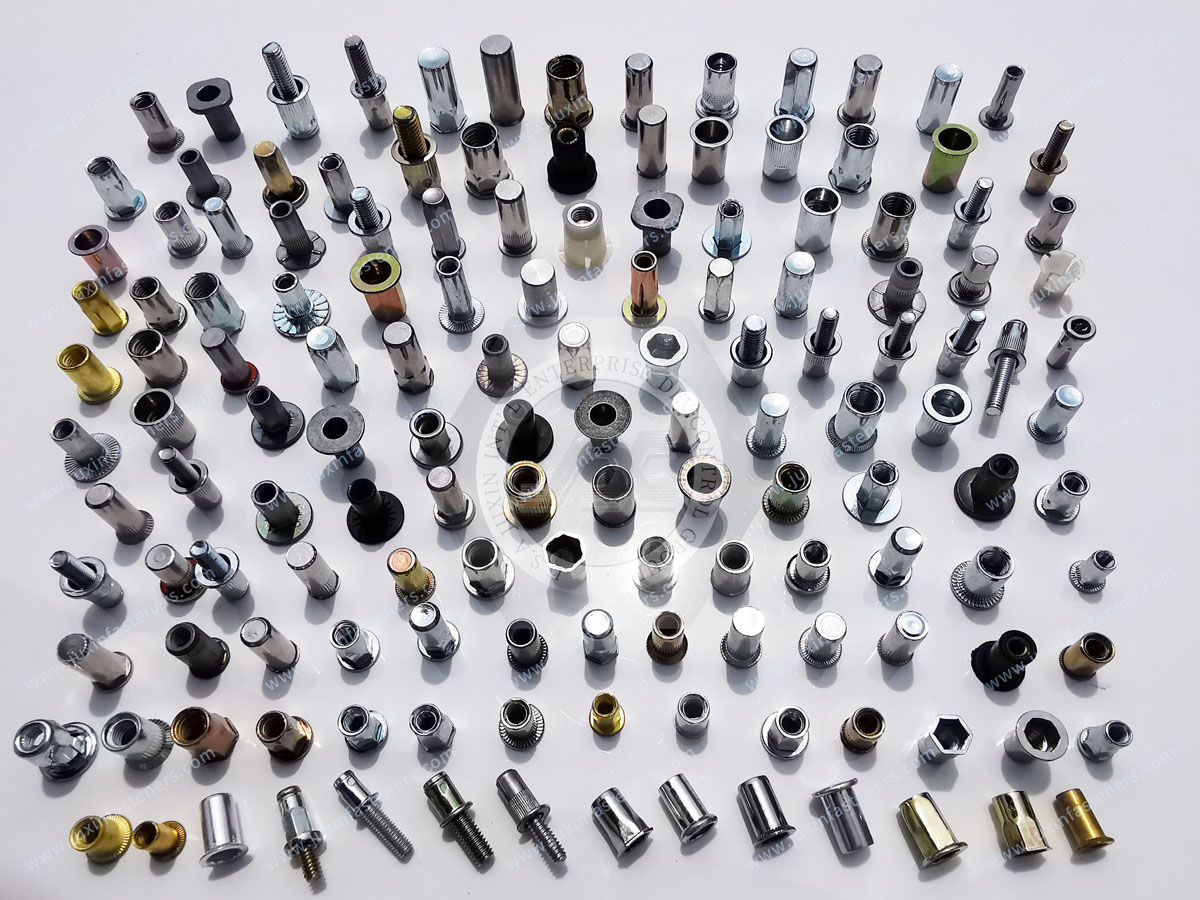
In rail transit engineering, stainless steel rivet nuts are categorized based on structure, head type, and installation geometry.
2.1 Head Type Classification
Flat head rivet nuts
Small-head (low-profile) rivet nuts
Countersunk rivet nuts
These designs ensure compatibility with flush surface requirements in rail interior systems and visible carbody components.
2.2 Structural Configuration
Through-hole rivet nuts
Blind-hole rivet nuts
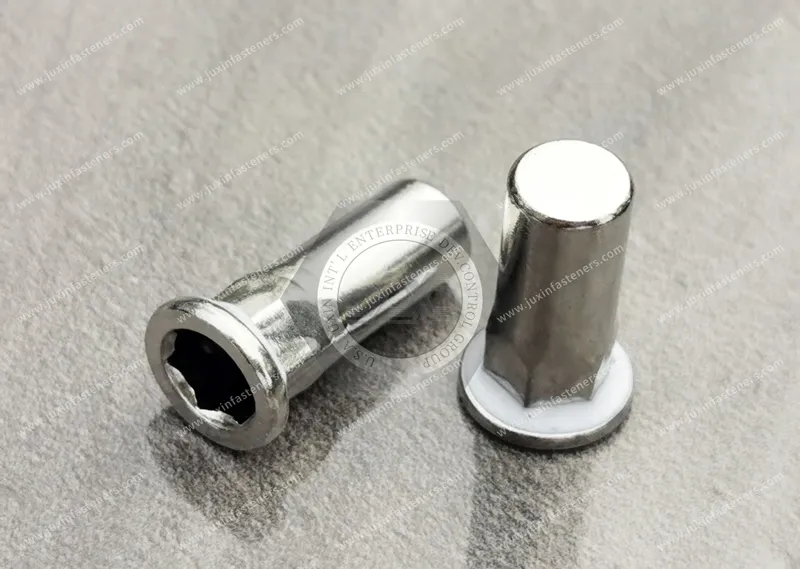
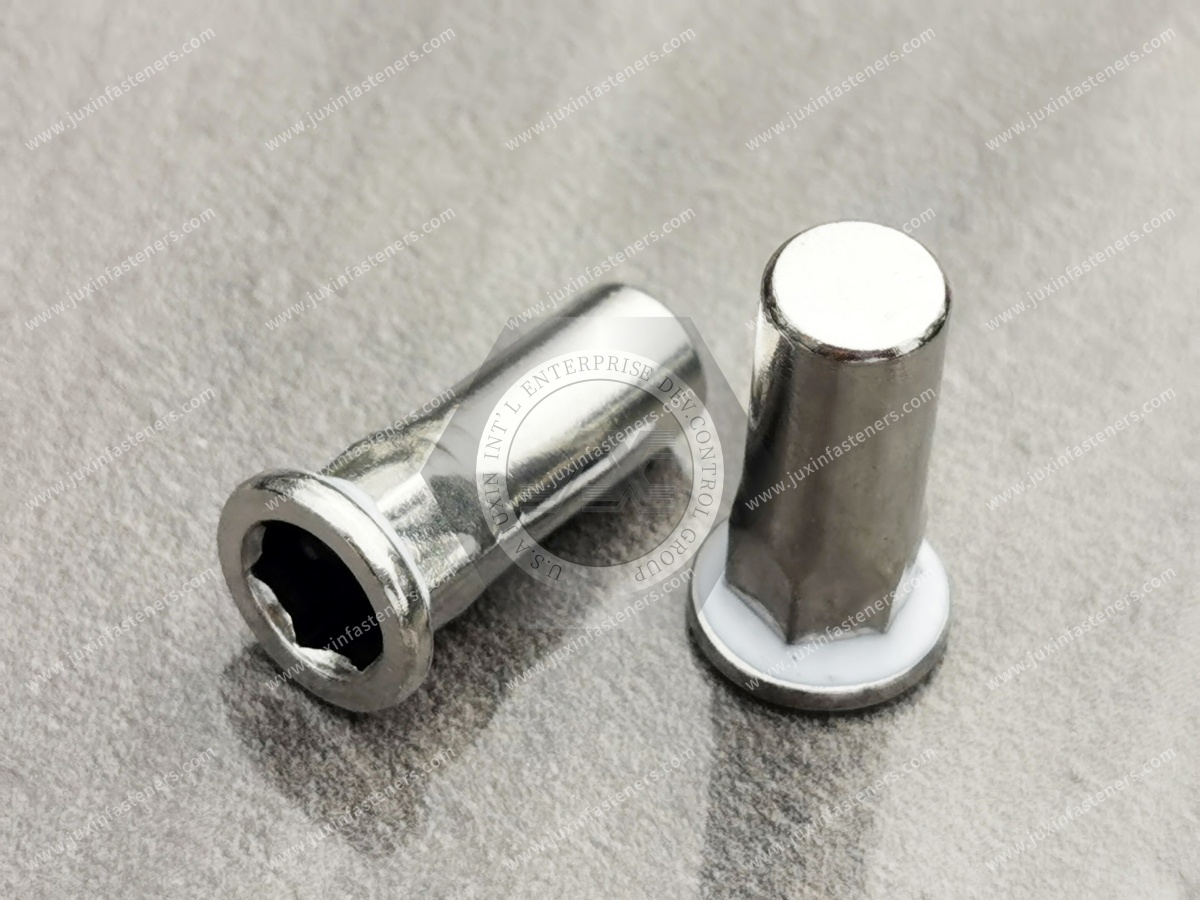
Hexagonal rivet nuts (anti-rotation design)
Cylindrical rivet nuts (general applications)
2.3 Material Options
Stainless steel rivet nuts (304 / 316)
Carbon steel rivet nuts
Aluminum rivet nuts (lightweight structures)
304/316 stainless steel rivet nuts are widely used in rail transit due to their superior corrosion resistance and long-term durability.
3. Core Application Scenarios in Rail Transit Manufacturing
3.1 Carbody Interior Systems and Lightweight Structures
Stainless steel rivet nuts for railcar interiors are widely used in:
Interior wall panels
Ceiling structures
Seat mounting systems
Luggage racks and brackets
Hexagonal rivet nuts are preferred due to their:
High anti-rotation capability
Stable torque resistance
Strong load-bearing performance in aluminum structures
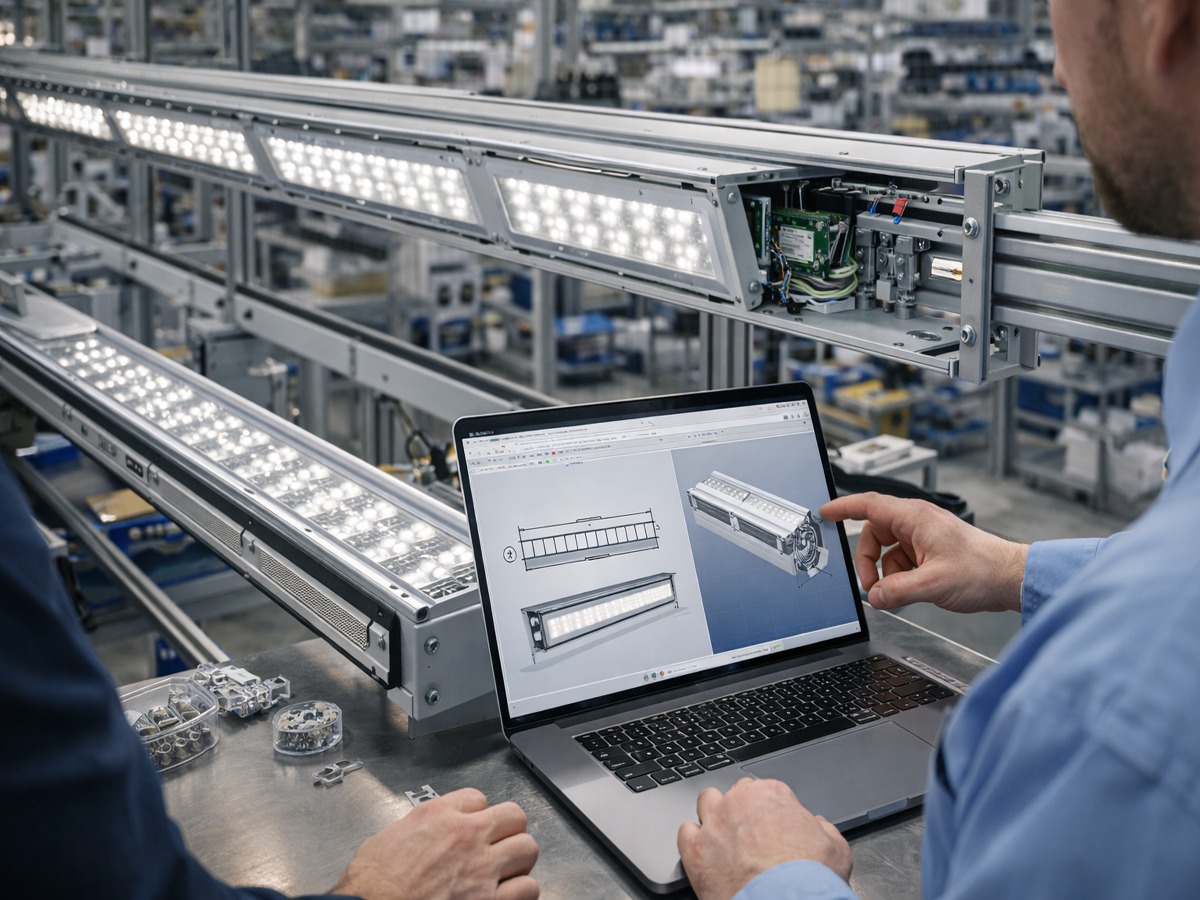
3.2 Electrical Cabinets and Sheet Metal Assemblies
For electrical and control systems in rail vehicles:
Cabinet enclosures
Control boxes
Wiring fixtures
Blind rivet nut systems for rail electrical cabinets enable:
Single-sided installation (no rear access required)
Fast assembly in confined spaces
High installation efficiency in mass production
3.3 Aluminum Carbody Reinforcement
With the widespread use of aluminum alloy structures in rail transit:
Stainless steel rivet nuts
Thread reinforcement inserts
Self-tapping reinforcement inserts
These systems significantly improve:
Thread wear resistance
Vibration durability
Long-term fastening stability in aluminum materials
3.4 Bogie and Structural Load-Bearing Areas
In high-stress rail components such as bogies:
Structural rivet nuts
High-strength locking rivet systems
Multi-grip rivet configurations
These rail transit structural fasteners provide:
High shear strength
Enhanced fatigue resistance
Reliable performance under continuous dynamic loading
4. Structural Rivets and High-Load Fastening Integration
For critical applications, stainless steel rivet nut systems are combined with structural rivets, including:
Internal-locking pull-mandrel rivets
External-locking pull-mandrel rivets
Monobolt-style structural rivets
Single-bulb and multi-bulb rivets
These rail transit structural rivet systems offer:
Superior anti-loosening capability
Higher tensile and shear strength than standard rivets
Stable performance under vibration-intensive environments
5. Anti-Loosening Engineering Solutions
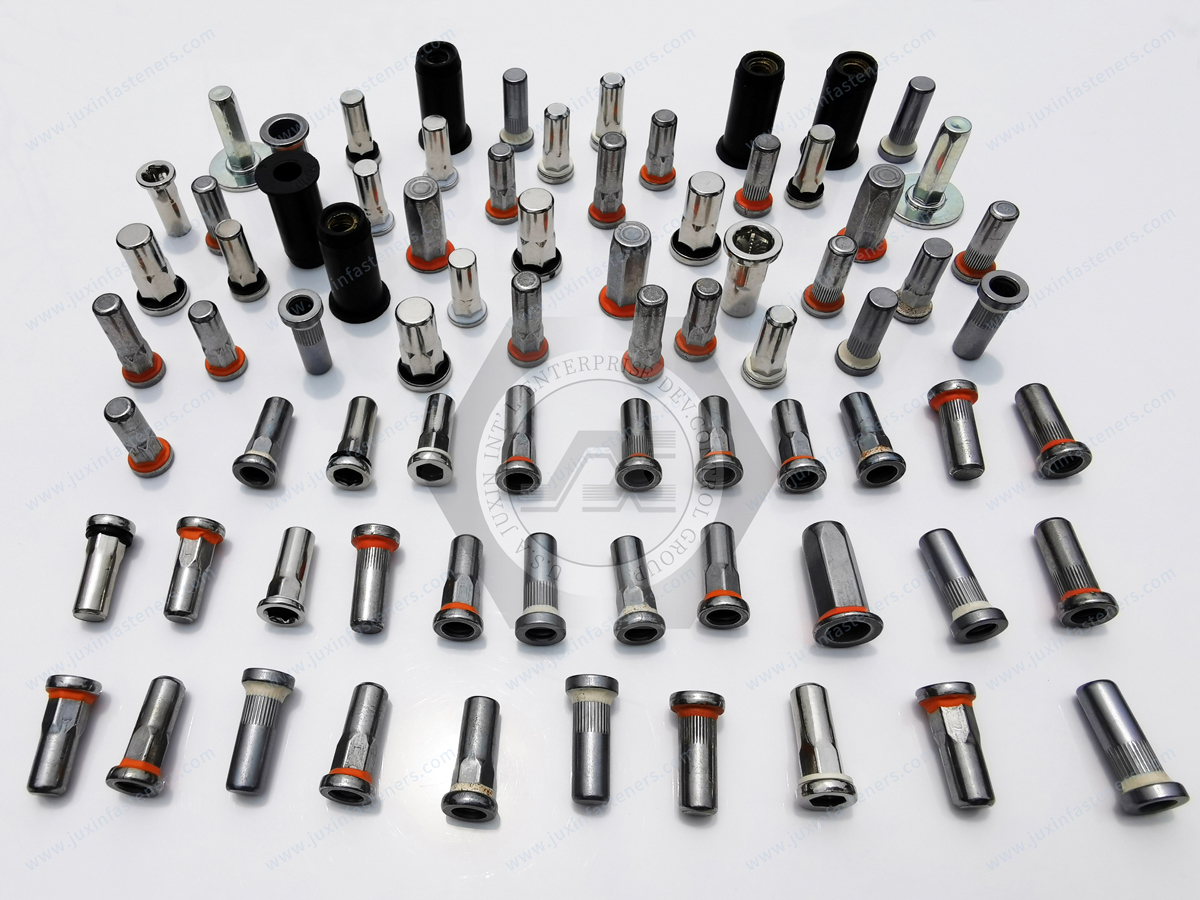
In rail transit environments, vibration is the primary cause of fastener failure. Therefore, stainless-steel rivet-nut systems for rail transit integrate multi-layer anti-loosening strategies.
5.1 Lock Washer Systems
Serrated conical washers
VS/CS anti-loosening washers
Elastic stacked washer systems
These components increase friction and eliminate thread clearance.
5.2 Locknut Technologies
All-metal locknuts (thread deformation locking)
Nylon insert locknuts (elastic friction locking)
These systems adapt to different:
Temperature conditions
Vibration frequencies
Load requirements
5.3 Standardization + Custom Engineering
We follow global standards:
GB
DIN
ISO
IFI
And also provide:
Custom rivet nut designs
Non-standard fastener development
Application-specific engineering support
This ensures precise mechanical matching for rail transit fastening systems.
6. Installation Technology and Manufacturing Quality Control
6.1 Installation Process
Stainless steel rivet nuts for rail transit are installed using:
Pneumatic riveting tools
Hydraulic press systems
Advantages:
Single-sided installation
High consistency
High-speed assembly capability
6.2 Manufacturing Process Control
Advanced manufacturing includes:
CNC precision machining
Multi-station cold heading
Controlled surface treatment processes
This ensures:
Stable thread accuracy
Consistent mechanical performance
High production repeatability
6.3 Quality Assurance System
All rail transit rivet nut fasteners are manufactured under:
IATF 16949 quality management system
Full traceability production chain
Incoming material inspection
Final mechanical testing and validation
7. Industry Trends and Future Development
The rail transit industry is evolving toward:
Lightweight vehicle structures
High-speed operation
Green and low-carbon manufacturing
Intelligent production systems
Future stainless steel rivet nut fastening solutions will focus on:
Duplex stainless steel materials for extreme environments
Smart digital installation monitoring systems
Full lifecycle traceability integration
Higher fatigue and corrosion resistance performance
Automated assembly compatibility
These advancements will further enhance the reliability of rail transit fastening systems.
Conclusion
Stainless steel rivet nuts and rail transit fastener solutions provide a highly reliable, lightweight, and vibration-resistant fastening system for modern rail vehicle manufacturing. With excellent corrosion resistance, structural strength, and single-sided installation capability, they are widely used in carbody interiors, electrical cabinets, aluminum structures, and bogie assemblies.
Through standardized engineering design, anti-loosening optimization, and strict quality control systems, rail transit stainless steel rivet nut fasteners deliver long-term safety, reduced maintenance costs, and improved operational efficiency across the entire rail industry lifecycle.
Product Packaging
Packaging Standard
At Juxin Fasteners, we apply standardized export packaging to ensure product protection, traceability, and compliance with international logistics requirements.
1. Standard Export Packaging
Unless otherwise specified, all products will be packed according to our factory standard export packaging, which includes:
Moisture-resistant inner protection
Poly bag or small box packing as required
Reinforced export cartons
Clear labeling with part number, specification, batch number, and quantity
Palletizing for sea or air shipment when necessary
Our standard packaging is designed to ensure safe transportation, efficient warehousing, and long-distance international shipping.
2. Customized Packaging Options
We also provide customized packaging solutions according to customer requirements, including but not limited to:
Private labeling
Customized barcodes
Specific carton dimensions
Retail packaging
Special pallet configuration
Customer-specific marking and identification
So that you know, customized packaging may involve additional costs and extended lead time depending on the complexity of the requirements.
3. Compliance & Quality Assurance
All packaging processes are controlled under our ISO 9001 quality management system to ensure consistency, traceability, and product integrity throughout the supply chain.
Product Pictures
Contact Us
Tel.:
+86 020 8621 0320
+86 020 3121 6067
E-mail:
Technical Support:
Navigation
SEND INQUIREY