Call Us
+86 136 6007 9809
Call Us
+86 136 6007 9809

Stainless Steel Blind Rivet Nuts (Rivet Nuts) – High-Temperature Fastening Solution for Industrial Oven Manufacturing
In industrial oven manufacturing, fastening systems are exposed to extreme working conditions, including continuous high temperatures, thermal cycling, vibration, and corrosive gases. In such environments, traditional welding nuts or tapping methods often fail due to thread stripping, thermal deformation, or fatigue cracking.
Stainless steel blind rivet nuts (stainless steel rivet nuts/rivet nuts) provide a robust, high-reliability fastening solution designed specifically for thin-sheet structures and high-temperature industrial equipment.
Product Specification
Stainless Steel Blind Rivet Nuts (Rivet Nuts) – High-Temperature Fastening Solution for Industrial Oven Manufacturing
In industrial oven manufacturing, fastening systems are exposed to extreme working conditions, including continuous high temperatures, thermal cycling, vibration, and corrosive gases. In such environments, traditional welding nuts or tapping methods often fail due to thread stripping, thermal deformation, or fatigue cracking.
Stainless steel blind rivet nuts (stainless steel rivet nuts/rivet nuts) provide a robust, high-reliability fastening solution designed specifically for thin-sheet structures and high-temperature industrial equipment.
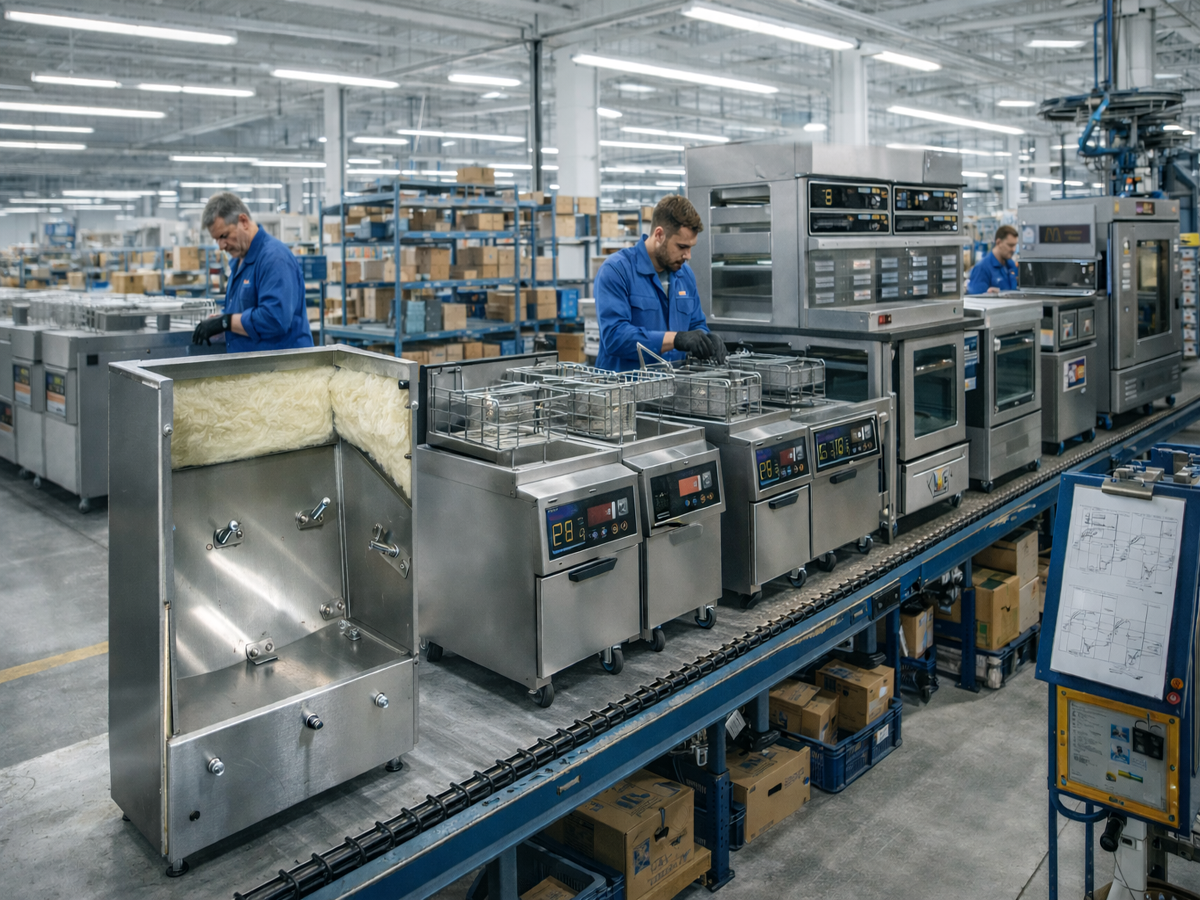
I. Core Material Selection and Engineering Advantages
High-Temperature Stainless Steel Performance (304 / 316 Rivet Nuts)
For industrial ovens operating under sustained thermal loads, material selection is critical.
Stainless steel rivet nuts manufactured from:
AISI 304 stainless steel
AISI 316 stainless steel
deliver:
Excellent oxidation resistance at elevated temperatures
Strong mechanical stability under thermal cycling
High resistance to corrosive gases and condensate
Long-term anti-seizing performance in threaded connections
These properties ensure stable fastening integrity even in continuous industrial baking, curing, or heat-treatment environments.
Structural Advantage of Blind Rivet Nut Technology
A key advantage of stainless steel blind rivet nuts (rivet nuts) is their ability to form internal threads in thin metal sheets without welding.
This solves common manufacturing issues such as:
Heat-affected zone weakening from welding
Thread stripping in thin plates
Sheet metal deformation under thermal stress
The blind installation method enables one-sided assembly, making it ideal for:
Closed oven chambers
Insulated sandwich panels
Internal structural frames
Sealing and Closed-End Design Options
For ovens with humidity or steam exposure, such as food-processing or steam-assisted industrial ovens, closed-end stainless steel rivet nuts provide additional benefits:
Improved sealing performance
Reduced moisture ingress
Protection of internal threads from contamination
II. High-Temperature Process Optimization for Industrial Ovens
Heat Treatment for Thermal Stability
Industrial oven applications require rivet nuts with enhanced stability under long-term heat exposure.
To achieve this, stainless steel rivet nuts may undergo:
Bright annealing
Stress-relief heat treatment
This process improves:
Creep resistance
Dimensional stability
Structural integrity under thermal cycling
Consistent heat treatment ensures reliable performance in continuous high-temperature environments.
Anti-Rotation Structural Design
To enhance mechanical locking in thin sheets, industrial-grade rivet nuts often feature:
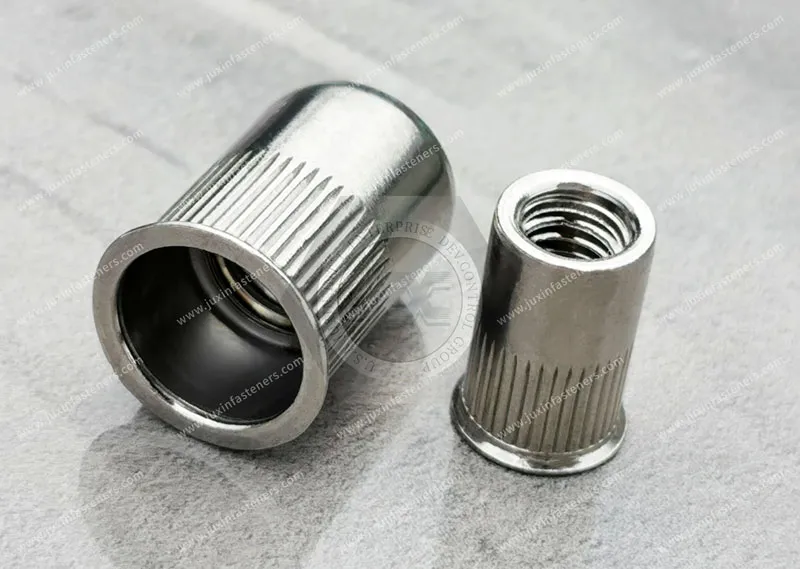
Knurled shank design
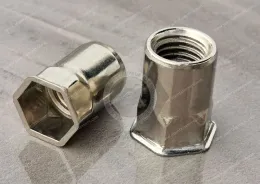
Hexagonal anti-rotation bodies
Serrated grip surfaces
These structures ensure strong resistance to:
Torque loosening
Vibration-induced rotation
Thermal expansion movement
This is critical for maintaining stable fastening in oven shells and internal frameworks.
Surface Treatment and Durability Enhancement
To further improve corrosion resistance and safety compliance, advanced treatments include:
Chromium-free passivation
Eco-friendly anti-oxidation coatings
These surface treatments ensure:
Long-term corrosion protection
Stability under high-temperature oxidation
Compliance with industrial environmental standards
III. Key Application Scenarios in Industrial Oven Systems
1. Oven Shell and Structural Frame Assembly
Stainless steel blind rivet nuts (rivet nuts) are widely used in:
Outer casing panels
Internal support frames
Thermal insulation structures
Their blind installation capability allows fast assembly of closed structures without rear access.
2. Oven Door and Hinge Systems
In high-temperature ovens, door systems experience repeated mechanical stress.
Rivet nuts provide:
Strong threaded anchoring for hinges
Resistance to repeated opening/closing vibration
Long-term structural stability under thermal expansion
This ensures reliable sealing performance and operational safety.
3. Internal Heating and Functional Components
Used for mounting:
Heating element brackets
Fan covers and cooling assemblies
Guide rails and trays
Sensor and control modules
Their vibration resistance ensures stable positioning of critical functional components during operation.
4. Control Cabinets and Electrical Integration
In electrical compartments of industrial ovens, stainless steel rivet nuts enable:
Secure PCB mounting
Stable control panel installation
Reliable electrical enclosure assembly
This improves system safety and simplifies maintenance.
IV. Specification Selection and Installation Guidelines
1. Thread and Size Selection
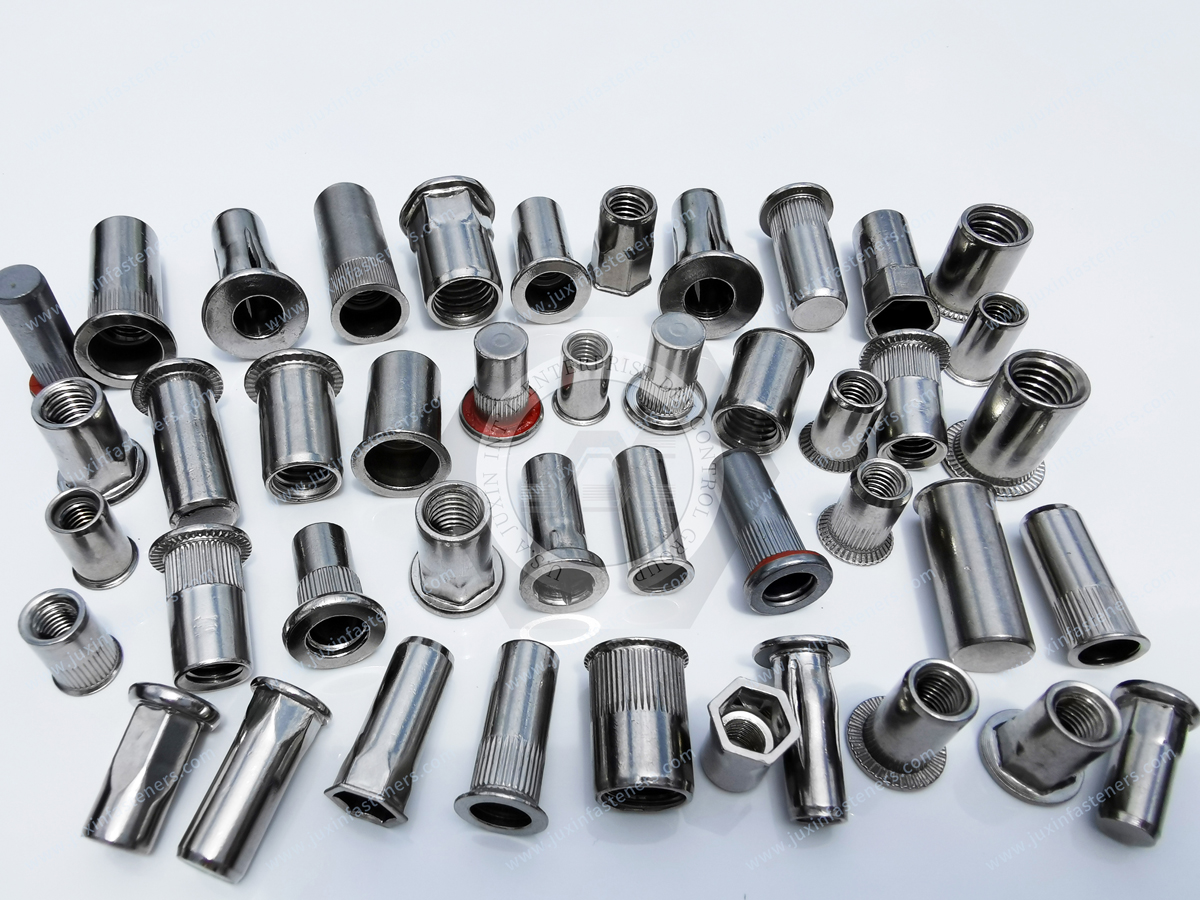
Common industrial specifications include:
M3 to M12 metric thread systems
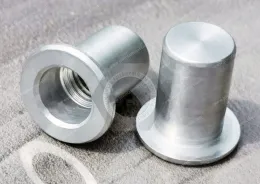
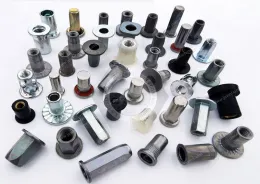
Flat head, countersunk head, and hex body options
Thickness compatibility: thin sheet to medium-gauge steel panels
Proper selection ensures optimal pull-out strength and torque resistance.
2. Installation Process Control
For reliable performance of stainless steel rivet nuts, installation must follow strict process control:
Use pneumatic or manual rivet nut tools
Ensure precise pre-drilled hole sizing
Apply controlled setting force
Confirm full expansion of the rivet body behind the sheet
Incorrect installation may significantly reduce mechanical strength.
3. Quality Traceability and Certification
For industrial oven manufacturing, suppliers should provide:
Material certificates (304 / 316 stainless steel)
Mechanical performance reports
Batch traceability documentation
Compliance with GB / ISO / DIN standards
This ensures long-term reliability in high-temperature environments.
V. Engineering Value and Industry Trends
As industrial ovens evolve toward:
Higher temperature operation
Modular assembly design
Energy efficiency optimization
Reduced maintenance downtime
stainless steel blind rivet nuts (rivet nuts) are becoming a standard fastening solution.
Their key engineering benefits include:
Eliminating welding distortion
Improving production efficiency
Enabling modular equipment design
Reducing lifecycle maintenance costs
In long-life industrial systems, they significantly improve both manufacturing efficiency and operational reliability.
Conclusion
Stainless steel blind rivet nuts provide a high-performance fastening solution for industrial oven manufacturing, combining:
High-temperature resistance
Corrosion durability
Thin-sheet structural adaptability
One-sided installation efficiency
For engineers, procurement teams, and OEM manufacturers, selecting the right stainless steel rivet nuts (rivet nuts) ensures long-term structural stability, reduced maintenance cost, and improved safety performance in demanding thermal environments.
Product Packaging
Packaging Standard
At Juxin Fasteners, we apply standardized export packaging to ensure product protection, traceability, and compliance with international logistics requirements.
1. Standard Export Packaging
Unless otherwise specified, all products will be packed according to our factory standard export packaging, which includes:
Moisture-resistant inner protection
Poly bag or small box packing as required
Reinforced export cartons
Clear labeling with part number, specification, batch number, and quantity
Palletizing for sea or air shipment when necessary
Our standard packaging is designed to ensure safe transportation, efficient warehousing, and long-distance international shipping.
2. Customized Packaging Options
We also provide customized packaging solutions according to customer requirements, including but not limited to:
Private labeling
Customized barcodes
Specific carton dimensions
Retail packaging
Special pallet configuration
Customer-specific marking and identification
So that you know, customized packaging may involve additional costs and extended lead time depending on the complexity of the requirements.
3. Compliance & Quality Assurance
All packaging processes are controlled under our ISO 9001 quality management system to ensure consistency, traceability, and product integrity throughout the supply chain.
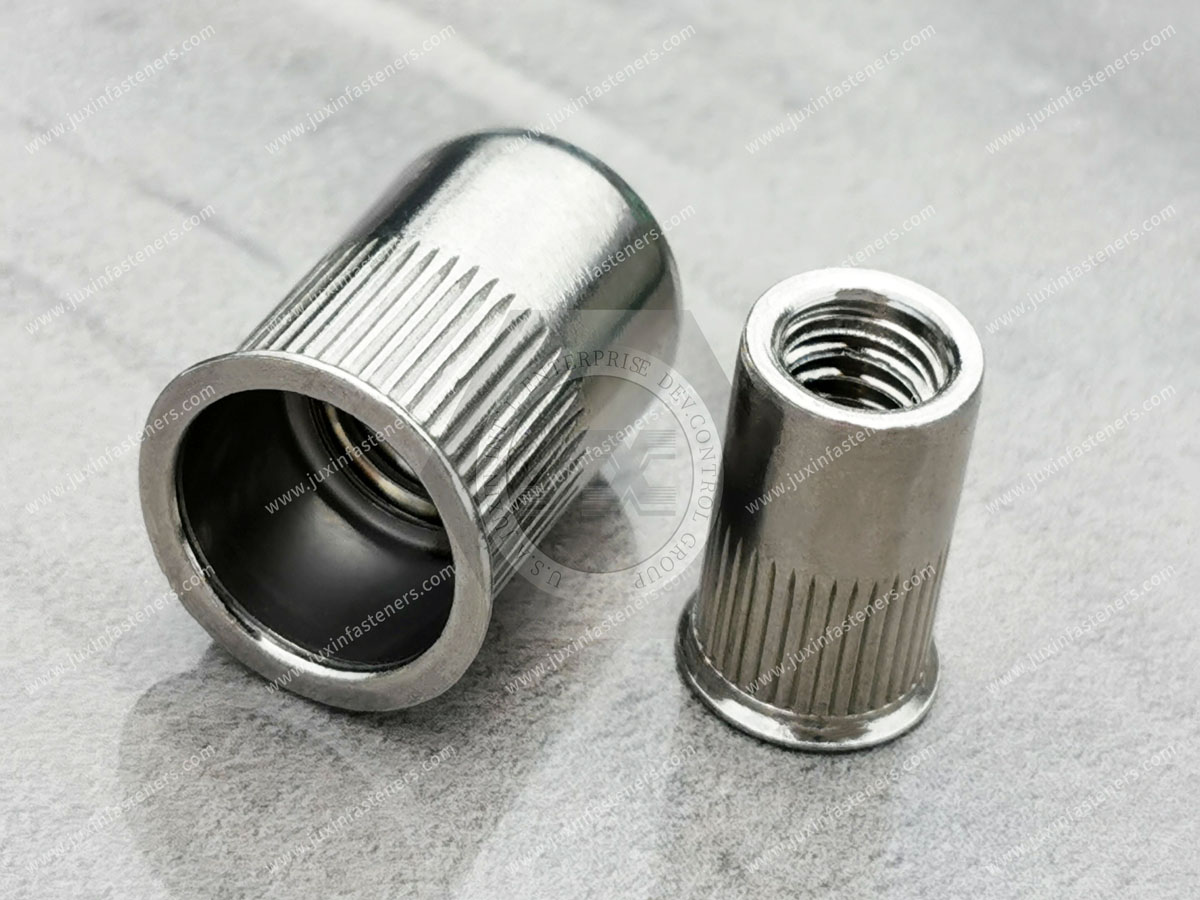
Product Pictures
Contact Us
Tel.:
+86 020 8621 0320
+86 020 3121 6067
E-mail:
Technical Support:
Navigation
SEND INQUIREY