Call Us
+86 136 6007 9809
Call Us
+86 136 6007 9809

Stainless Steel Blind Rivet Nuts (Rivet Nuts) – High-Reliability Fastening Solution for Rail Transit Equipment Manufacturing
In modern rail transit equipment manufacturing, the demand for lightweight structures, high vibration resistance, and long-term maintenance-free performance continues to increase. Traditional welding or tapping methods often fail under continuous vibration, fatigue loading, and exposure to corrosion.
Stainless steel blind rivet nuts (stainless steel rivet nuts) provide a proven engineering solution. They enable strong, reusable threaded connections in thin-walled materials while significantly improving assembly efficiency, structural reliability, and lifecycle cost performance.
Product Specification
Stainless Steel Blind Rivet Nuts (Rivet Nuts) – High-Reliability Fastening Solution for Rail Transit Equipment Manufacturing
In modern rail transit equipment manufacturing, the demand for lightweight structures, high vibration resistance, and long-term maintenance-free performance continues to increase. Traditional welding or tapping methods often fail under continuous vibration, fatigue loading, and exposure to corrosion.
Stainless steel blind rivet nuts (stainless steel rivet nuts) provide a proven engineering solution. They enable strong, reusable threaded connections in thin-walled materials while significantly improving assembly efficiency, structural reliability, and lifecycle cost performance.
I. Technical Characteristics and Core Advantages of Stainless Steel Blind Rivet Nuts
High Strength and Fatigue Resistance Under Continuous Vibration
The core advantage of stainless steel blind rivet nuts lies in their cold-forming installation process. During installation, the rivet nut is mechanically deformed and anchored into the base material without heat input.
This structure eliminates heat-affected zones common in welding and avoids:
Material weakening
Thermal deformation
Stress concentration from welded joints
As a result, stainless steel rivet nuts deliver:
Excellent vibration resistance
High fatigue durability
Stable performance under long-term dynamic loads
In rail transit environments with continuous vibration and cyclic stress, this significantly reduces the risk of joint loosening or structural failure.
Non-Destructive Threaded Connection for Thin Materials
Unlike traditional welding or tapping methods, blind rivet nuts (rivet nuts) create internal threads in thin sheets without damaging the substrate.
Key advantages include:
No welding deformation
No risk of thread stripping in base material
Strong performance in aluminum, stainless steel, and coated steel sheets
One-sided installation capability (blind installation)
This makes stainless steel rivet nuts particularly suitable for thin-walled structures and closed profiles, where access from the back is not possible.
Excellent Corrosion Resistance for Harsh Rail Environments
Manufactured from 304 or 316L stainless steel, these rivet nuts provide strong resistance against:
Humidity
Dust and pollution
Salt spray environments
Outdoor temperature cycling
This ensures long-term structural stability in both indoor and outdoor rail transit applications.
Flexible Structural Adaptability
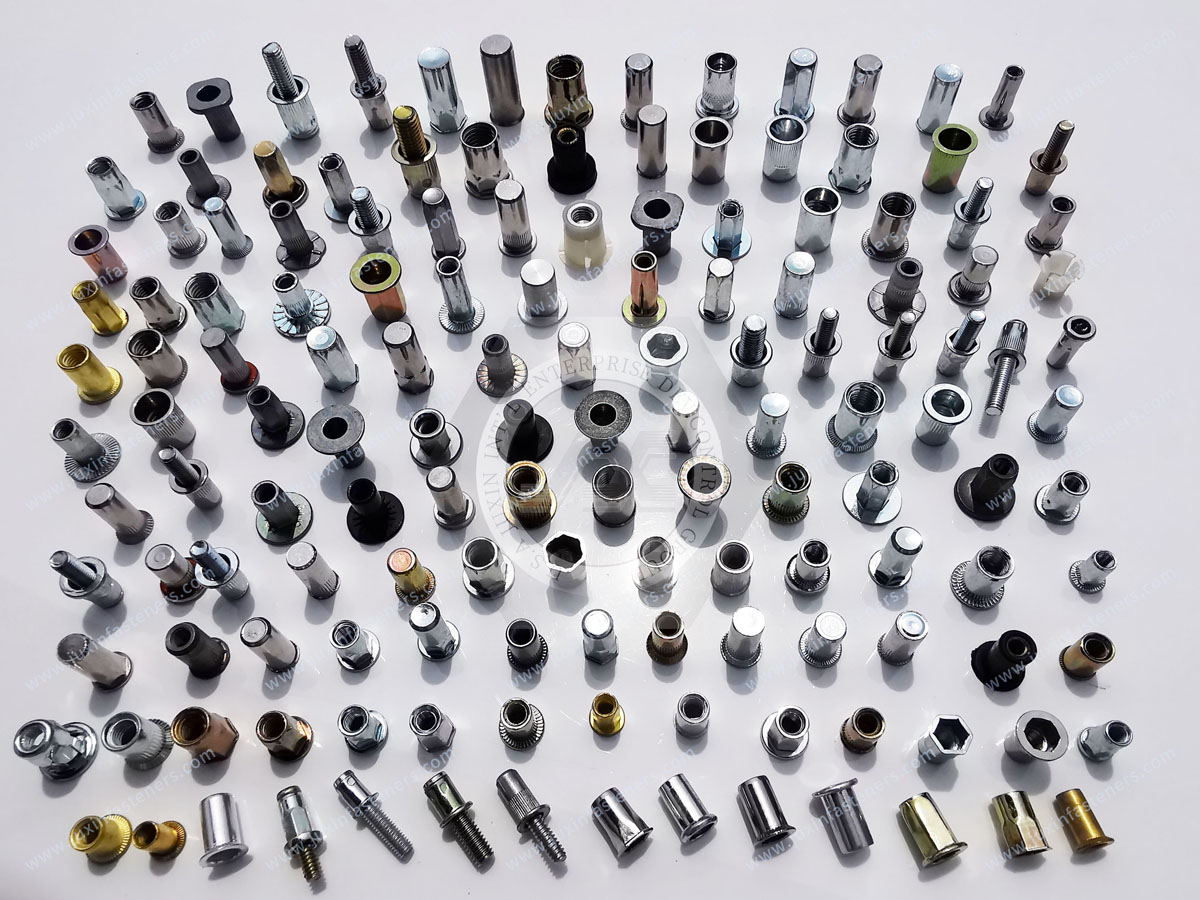
Advanced designs of stainless steel blind rivet nuts include:
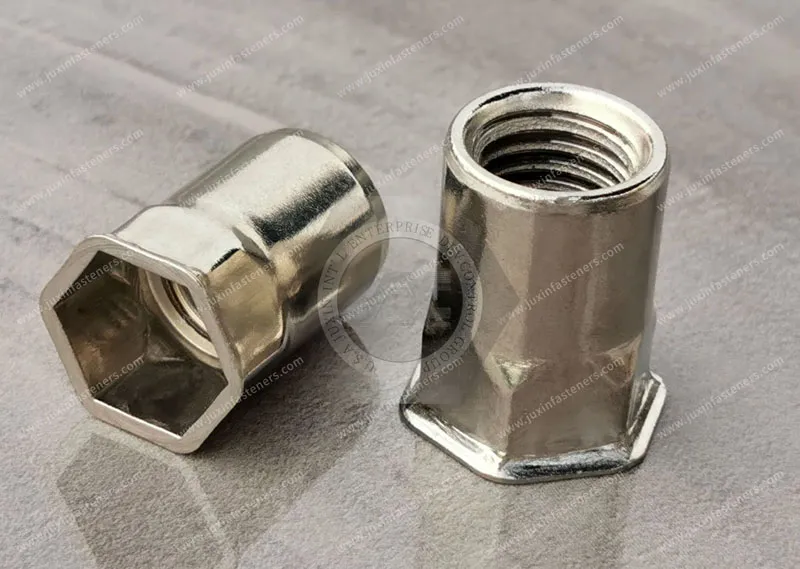
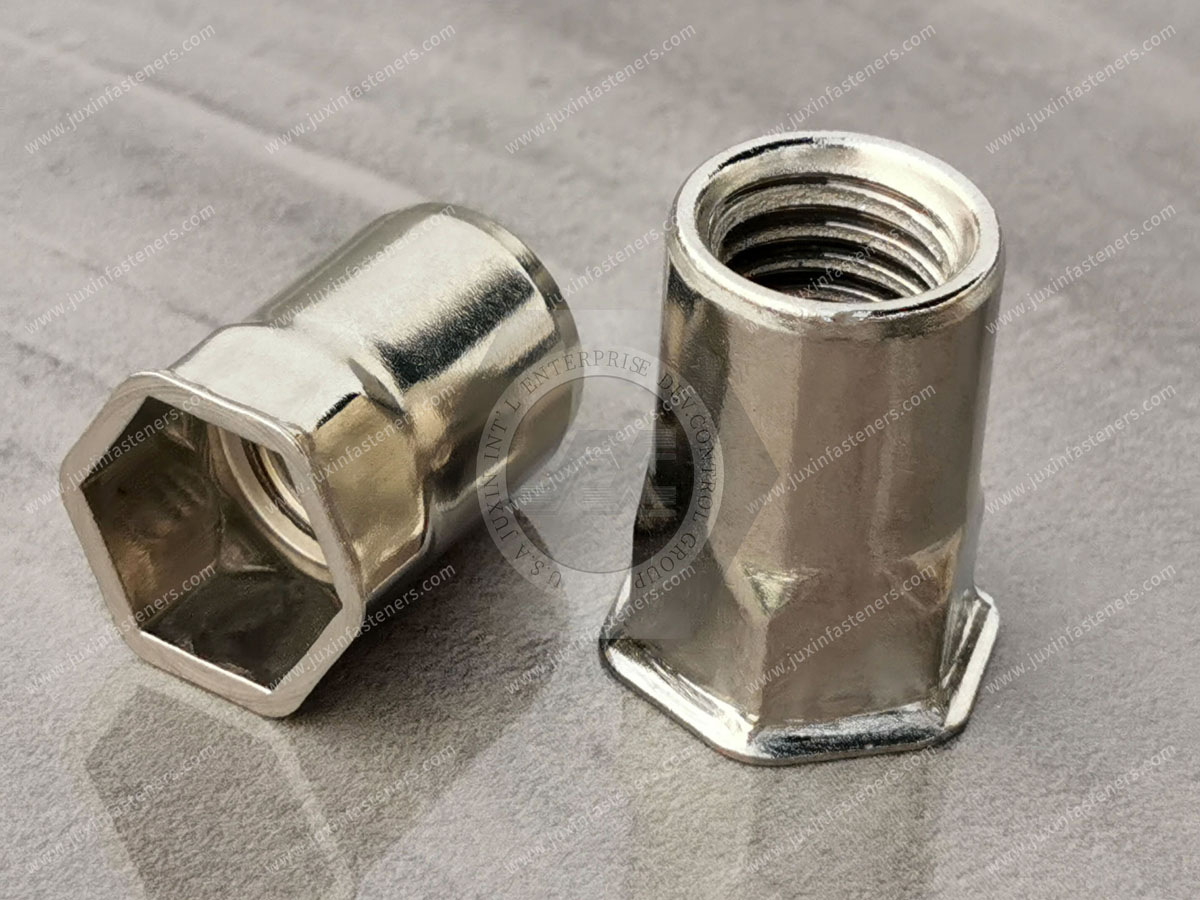
Hexagonal anti-rotation bodies
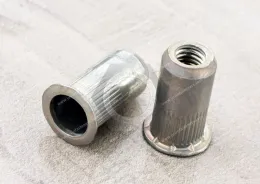
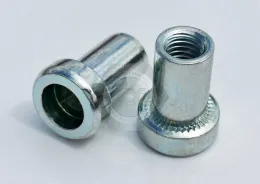
Knurled shanks for improved grip
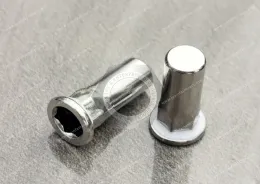
Flat head and countersunk head options
Closed-end (sealed) configurations
These variations allow engineers to optimize fastening performance based on load direction, vibration level, and assembly space constraints.
II. Key Application Scenarios in Rail Transit Equipment Manufacturing
1. Car Body Structure and Interior Systems
Application areas:
Side panels
Interior trim panels
Flooring systems
Ceiling structures
Engineering value:
Enables fast, repeatable assembly of thin-sheet components
Eliminates welding distortion in lightweight structures
Improves modular manufacturing efficiency
2. Bogies, Coupler Systems, and Auxiliary Structures
In rail vehicles, certain non-primary structural or auxiliary components require stable threaded fixation.
Stainless steel rivet nuts provide:
Reliable fastening under vibration
Reduced maintenance frequency
Compatibility with aluminum alloy structures
For higher anti-loosening requirements, hex-body rivet nuts with an anti-rotation design are recommended.
3. Electrical Cabinets and Control Equipment Installation
Rail transit systems rely heavily on electrical integration, including:
Control boxes
Electrical cabinets
Ventilation ducts
Signal housings
Stainless steel blind rivet nuts enable:
Quick installation on sheet metal enclosures
Strong threaded support for heavy components
High resistance to vibration-induced loosening
Improved maintenance accessibility
4. Infrastructure and Trackside Equipment
These include:
Cable trays
Signal boxes
Inspection doors
Protective covers
Rivet nuts provide a maintenance-friendly fastening method that supports rapid replacement and modular upgrades.
III. Selection and Implementation Guidelines
1. Material Selection
For rail transit applications, priority should be given to:
AISI 304 stainless steel (standard corrosion resistance)
AISI 316L stainless steel (enhanced marine/chemical resistance)
These materials ensure long-term structural integrity in demanding environments.
2. Specification and Structural Selection
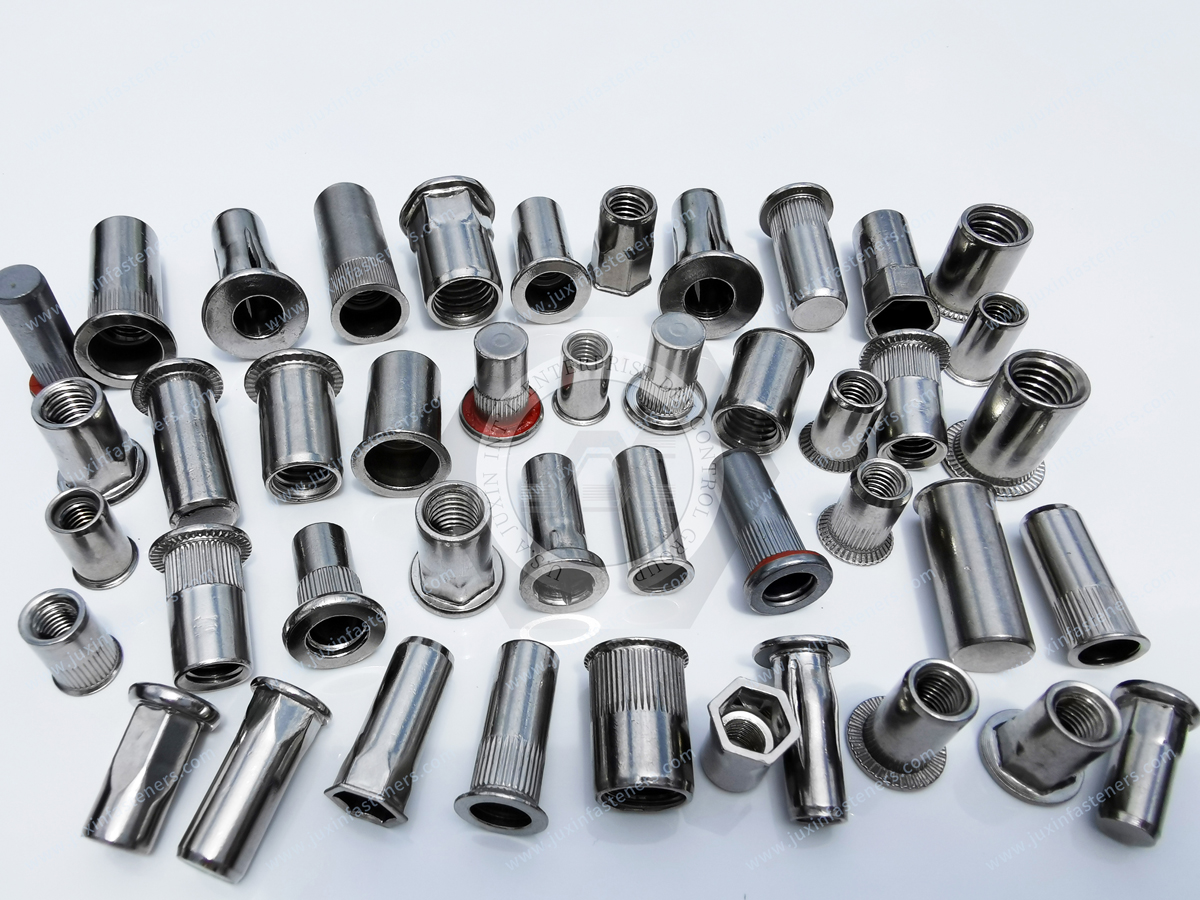
Common engineering selection parameters include:
Thread sizes: M6, M8, M10 (typical rail applications)
Plate thickness compatibility: 0.5 mm – 6 mm+
Head type: flat head, countersunk head
Body type: hexagonal anti-rotation or knurled round body
Proper matching ensures optimal pull-out strength and torque resistance.
3. Installation Process Control
Correct installation is critical to performance:
Use professional pneumatic or manual rivet nut tools
Ensure accurate pre-drilled hole diameter
Apply controlled pulling force during installation
Verify full expansion and locking of the rivet body
Improper installation may significantly reduce load-bearing performance.
4. Supplier Engineering Capability
For rail transit projects, selecting a supplier with:
Full technical documentation support
Installation process guidance
Quality traceability systems
Batch consistency control
It is essential to ensure system-level reliability.
IV. Industry Value and Development Trends
As rail transit moves toward:
Lightweight structures
Modular assembly
Reduced maintenance cycles
Higher safety standards
Stainless steel blind rivet nuts (rivet nuts) are becoming a standard fastening solution.
Their key lifecycle benefits include:
Reduced welding and machining costs
Faster assembly line efficiency
Lower maintenance downtime
Improved structural reliability under vibration
In long-life rail applications, they significantly reduce the total cost of ownership (TCO) while improving engineering flexibility.
Conclusion
Stainless steel blind rivet nuts provide a robust, vibration-resistant, and installation-efficient fastening solution for rail transit equipment manufacturing. Their combination of:
High fatigue resistance
Corrosion durability
Thin-sheet adaptability
One-sided installation capability
makes them an essential component in modern rail engineering design.
For OEMs, engineers, and procurement teams, selecting the right stainless steel rivet nuts directly improves equipment reliability, safety performance, and lifecycle cost efficiency.
Product Packaging
Packaging Standard
At Juxin Fasteners, we apply standardized export packaging to ensure product protection, traceability, and compliance with international logistics requirements.
1. Standard Export Packaging
Unless otherwise specified, all products will be packed according to our factory standard export packaging, which includes:
Moisture-resistant inner protection
Poly bag or small box packing as required
Reinforced export cartons
Clear labeling with part number, specification, batch number, and quantity
Palletizing for sea or air shipment when necessary
Our standard packaging is designed to ensure safe transportation, efficient warehousing, and long-distance international shipping.
2. Customized Packaging Options
We also provide customized packaging solutions according to customer requirements, including but not limited to:
Private labeling
Customized barcodes
Specific carton dimensions
Retail packaging
Special pallet configuration
Customer-specific marking and identification
So that you know, customized packaging may involve additional costs and extended lead time depending on the complexity of the requirements.
3. Compliance & Quality Assurance
All packaging processes are controlled under our ISO 9001 quality management system to ensure consistency, traceability, and product integrity throughout the supply chain.
Product Pictures
Contact Us
Tel.:
+86 020 8621 0320
+86 020 3121 6067
E-mail:
Technical Support:
Navigation
SEND INQUIREY