Call Us
+86 136 6007 9809
Call Us
+86 136 6007 9809

Stainless Steel Blind Rivet Solutions for Rail Transit Manufacturing Industry
High-Reliability Fastening Systems for High-Speed Rail, Metro & Rolling Stock Applications
In the rail transit manufacturing industry, equipment is continuously exposed to high-frequency vibration, alternating dynamic loads, humidity, and corrosive environments. These extreme operating conditions place strict requirements on the reliability, fatigue resistance, and anti-loosening performance of all structural connections.
Product Specification
Stainless Steel Blind Rivet Solutions for Rail Transit Manufacturing Industry
High-Reliability Fastening Systems for High-Speed Rail, Metro & Rolling Stock Applications
In the rail transit manufacturing industry, equipment is continuously exposed to high-frequency vibration, alternating dynamic loads, humidity, and corrosive environments. These extreme operating conditions place strict requirements on the reliability, fatigue resistance, and anti-loosening performance of all structural connections.
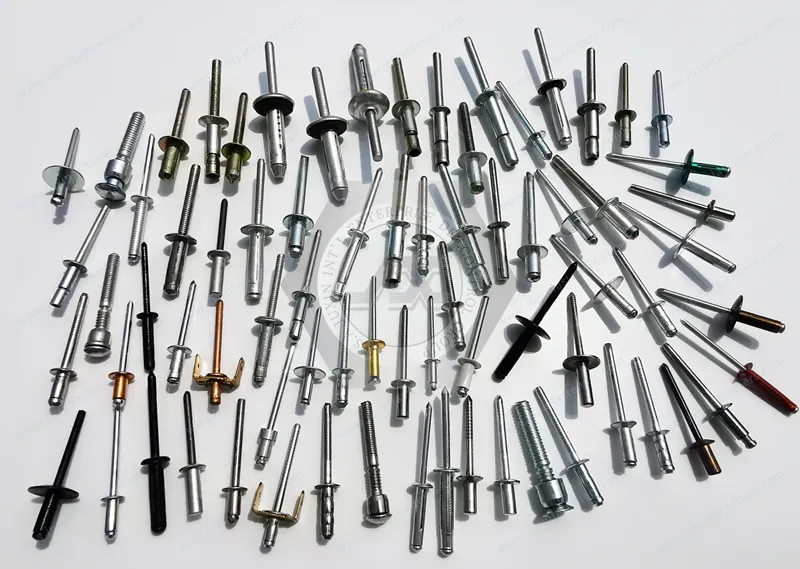
Among modern fastening technologies, stainless steel blind rivets for rail transit applications have become a critical solution for lightweight structures and high-reliability assemblies. Their permanent mechanical locking structure, corrosion resistance, and high installation efficiency make them ideal for rail vehicle body systems, interior assemblies, and electrical enclosures.
1. Application Background and Engineering Requirements
Rail transit systems—including high-speed trains, metro vehicles, and freight wagons—operate under severe mechanical and environmental conditions:
Continuous vibration and shock loading
Cyclic stress from high-speed operation
Salt spray and high-humidity corrosion environments
Lightweight structural design requirements
High safety and zero-failure tolerance standards
Traditional threaded fasteners often suffer from preload loss, loosening, and fatigue failure, especially under long-term vibration. As a result, the industry increasingly relies on stainless-steel blind-rivet fastening systems as a permanent, maintenance-free connection solution.
These fasteners are widely used in rail vehicle manufacturing, interior assembly, and electrical cabinet installation, where reliability and weight reduction are both critical design priorities.
2. Stainless Steel Blind Rivet Product Selection for Rail Transit
The correct selection of stainless steel blind rivets for rail transit manufacturing is essential for ensuring structural integrity and long-term durability.
2.1 Structural Rivet Systems (High-Load Applications)
For critical load-bearing connections, the following structural blind rivets are recommended:
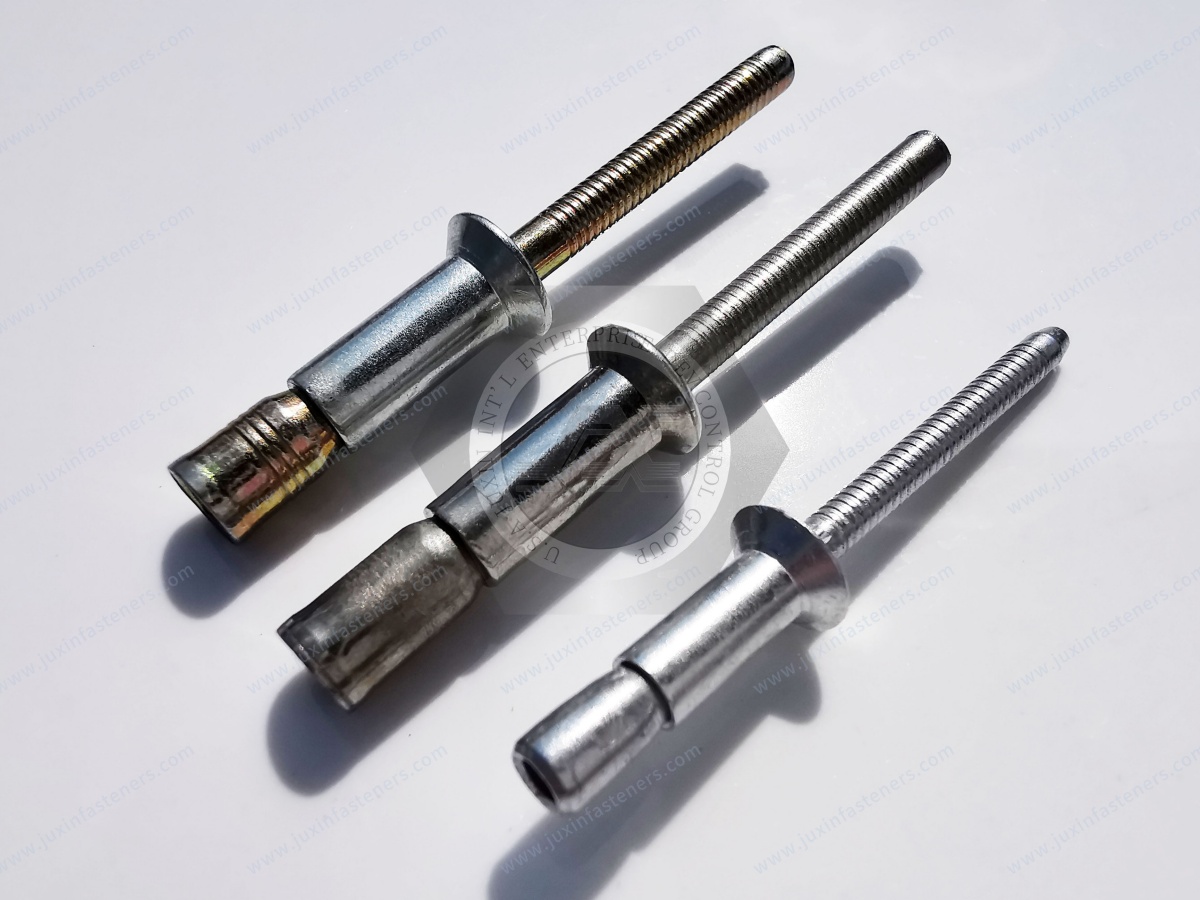
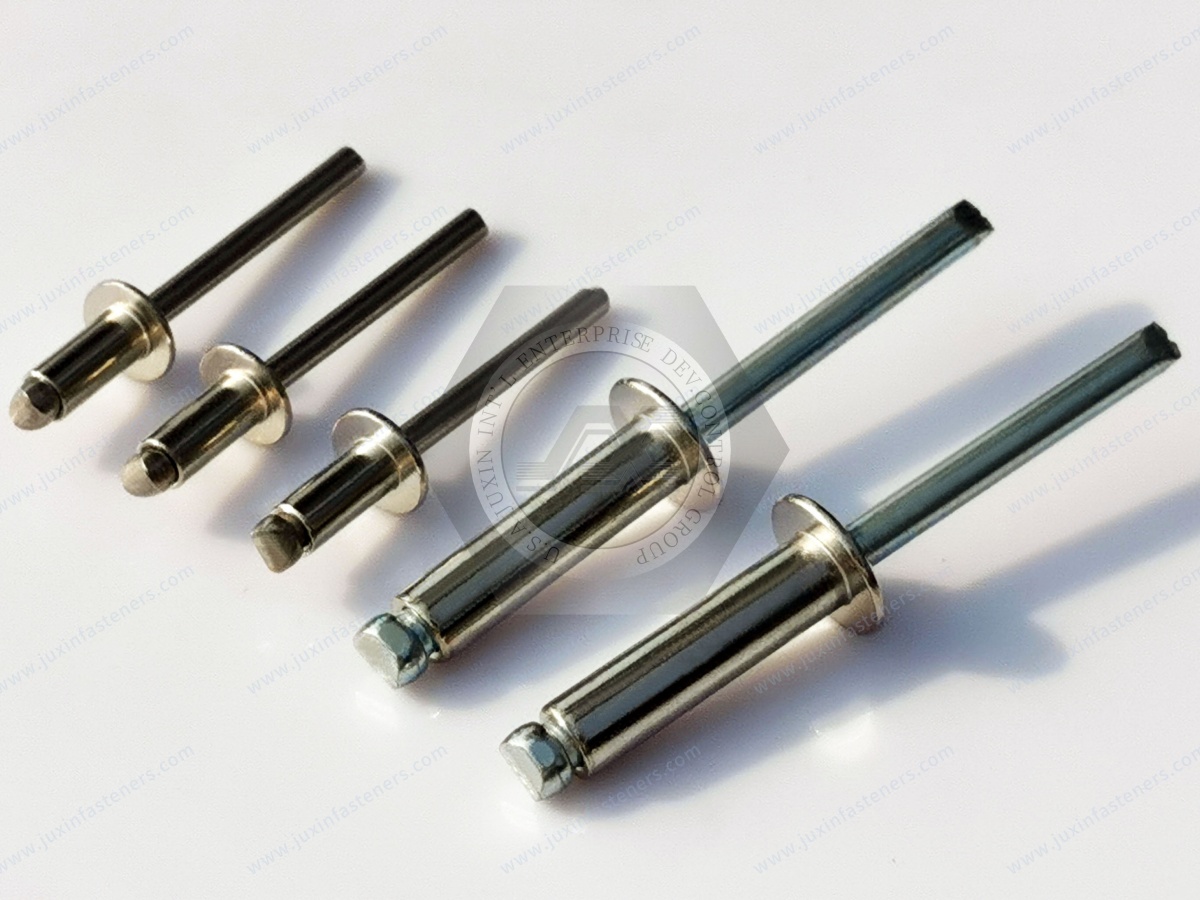
Internal-locking mandrel blind rivets
External-locking pull mandrel rivets
Monobolt-style structural rivets
Single and multi-grip bulb rivets
These high-strength stainless steel blind rivets provide:
Mechanical interlocking for superior anti-loosening performance
High shear and tensile strength
Excellent vibration resistance in rail environments
They are widely used in rail vehicle body structures and chassis assemblies.
2.2 Material Selection: 304 & 316 Stainless Steel Rivets
For rail transit applications, material performance is critical:
304 stainless steel blind rivets: general rail vehicle applications
316 stainless steel blind rivets: high-corrosion environments (coastal, high humidity, salt spray exposure)
Key advantages:
Excellent corrosion resistance
Stable mechanical performance under long-term vibration
Suitable for full lifecycle rail transit service environments
2.3 Head Style and Structural Adaptability
To meet different assembly requirements, rail transit blind rivet systems are available in:
Dome head blind rivets
Reduced dome head rivets
Countersunk blind rivets for flush surface requirements
These designs ensure compatibility with:
Thin-walled sheet metal
Interior panels
Electrical enclosure systems
Lightweight structural components
3. Installation Technology and Anti-Loosening Engineering
Vibration is the primary failure factor in rail transit fastening systems. Therefore, stainless steel blind-rivet installation systems must adhere to strict process control.
3.1 Controlled Installation Process
Professional installation requires:
Pneumatic blind riveting tools
Hydraulic riveting systems for high-load applications
Controlled tensile force and stroke calibration
This ensures:
Proper rivet deformation
Prevention of panel distortion
Stable mechanical locking formation
3.2 Anti-Vibration Riveting Design
For high-frequency vibration zones in rail transit equipment, recommended solutions include:
External-locking pull mandrel blind rivets
Double-bulb structural rivet systems
These anti-vibration blind rivets eliminate the risk of loosening through:
Tail-side mechanical interlocking
Permanent structural deformation locking
No reliance on friction-based preload
3.3 Multi-Layer Anti-Loosening System
In critical applications, blind rivets can be combined with:
Serrated locking washers
Double-stack anti-loosening washers
Non-metallic insert locking systems (hybrid fastening systems)
This creates a multi-tier rail transit fastening security system, significantly improving operational safety.
4. Quality Control and Rail Transit Compliance Standards
After installation of stainless steel blind rivets, strict quality validation is required:
Random torque and pull-force verification
Vibration bench testing for dynamic stability
Structural integrity inspection of rivet heads and joints
Full compliance with IATF 16949 quality management standards
These procedures ensure consistent performance across mass production rail vehicle systems.
5. Full Lifecycle Technical Support and Supply Chain Reliability
Modern rail transit blind-rivet solutions require more than product supply—they require comprehensive engineering support.
5.1 Engineering Technical Services
Professional suppliers provide:
Application condition analysis
Fastener selection engineering support
On-site installation guidance
Failure mode and fatigue analysis
Maintenance optimization strategies
5.2 Application Coverage Across Rail Systems
Customized stainless steel blind rivet solutions are applied in:
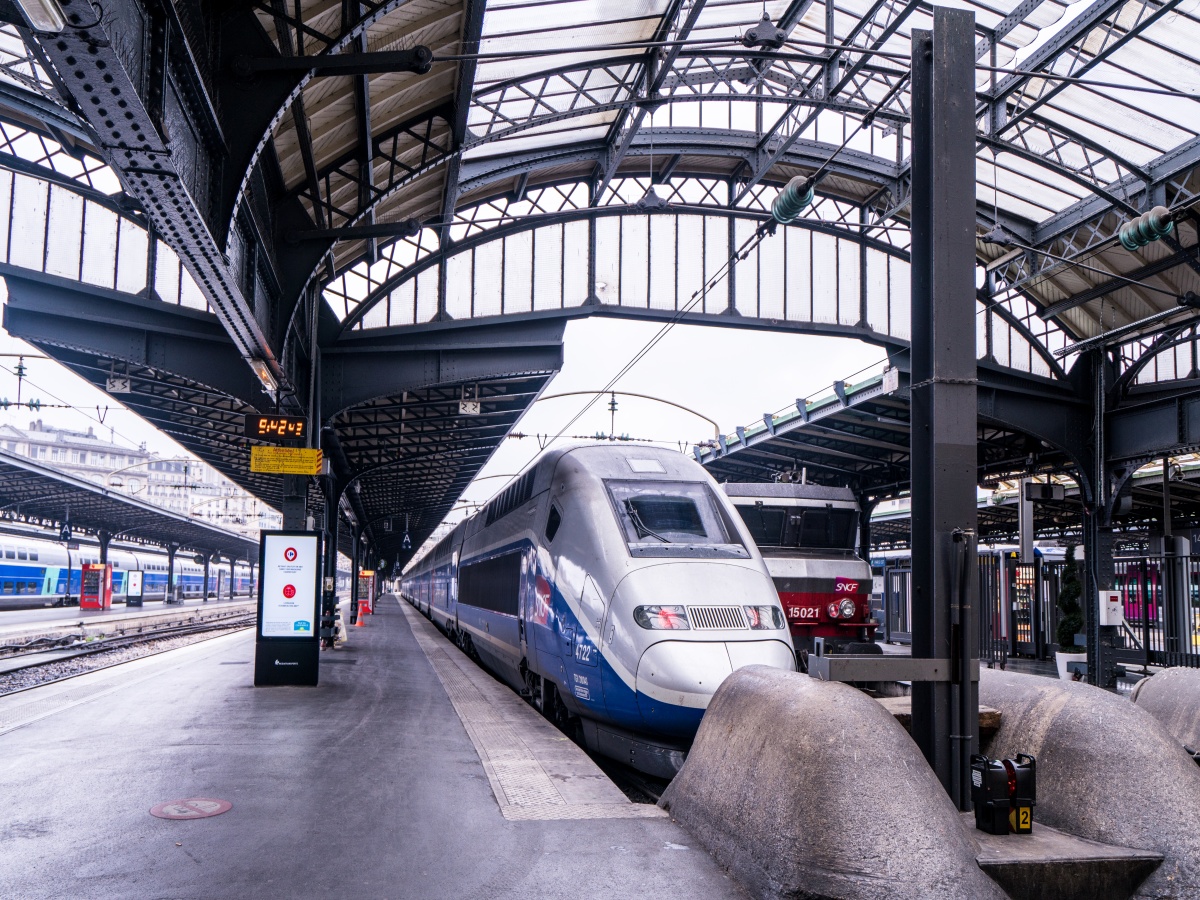
High-speed train manufacturing
Metro vehicle assembly
Freight wagon structural systems
Electrical control cabinets
Interior panel systems
5.3 Supply Chain Stability
Reliable supply systems ensure:
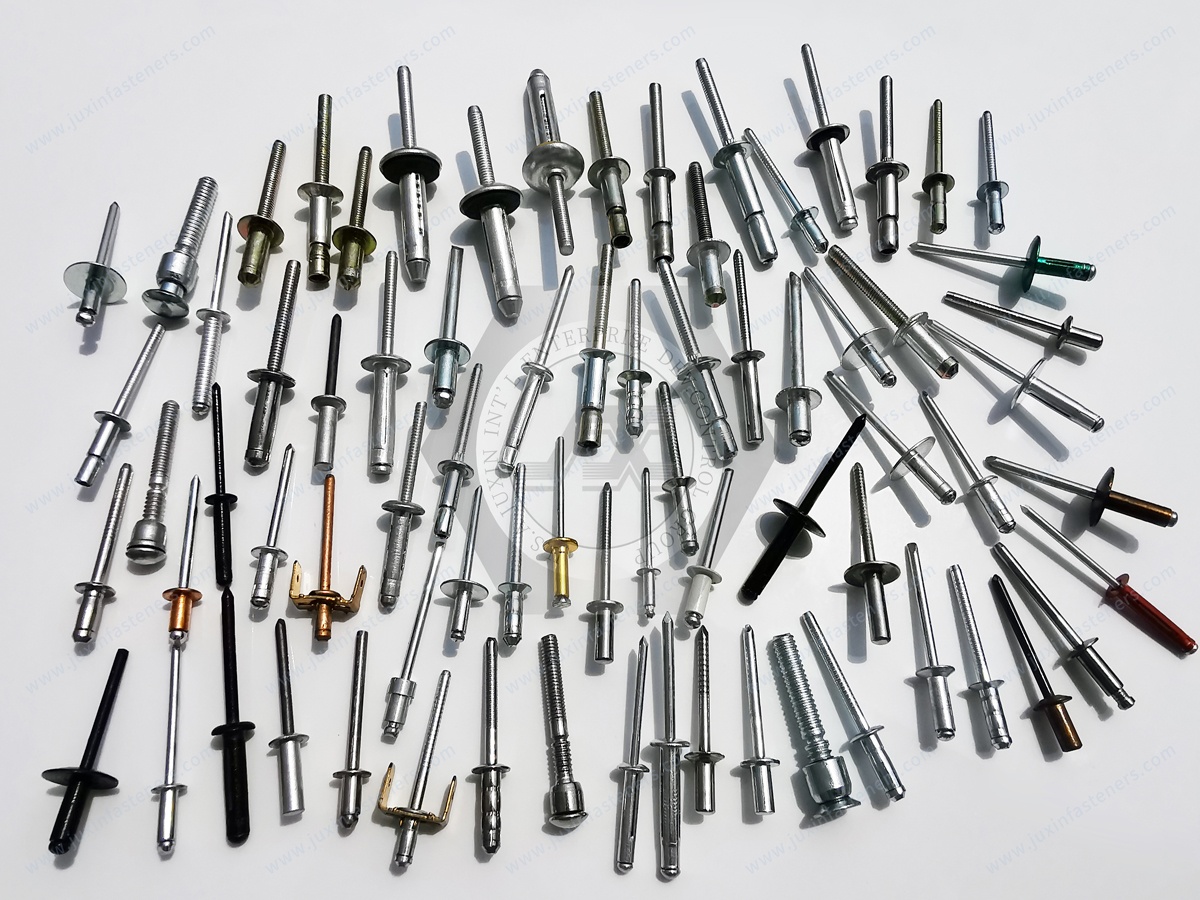
Full specification coverage of blind rivets
Stable production lead times
Rapid spare parts response capability
Reduced risk of assembly line delays
6. Total Cost of Ownership (TCO) Optimization Strategy
In rail transit procurement, decision-making must go beyond unit price and focus on Total Cost of Ownership (TCO).
Key evaluation factors include:
Installation efficiency of blind rivet systems
Maintenance frequency reduction
Service life extension under vibration conditions
Downtime cost reduction due to fastener failure
High-performance stainless steel blind rivets for rail transit manufacturing significantly reduce lifecycle costs by minimizing maintenance interventions and structural failures.
7. Engineering Value of Stainless Steel Blind Rivet Systems
The adoption of rail transit stainless steel blind rivet solutions delivers major engineering benefits:
Permanent vibration-resistant fastening
Reduced vehicle maintenance requirements
Improved structural safety and fatigue resistance
Lightweight design compatibility
Higher assembly efficiency in mass production
These advantages make blind rivet systems a core fastening technology for modern rail transit engineering.
Conclusion
In the rail transit manufacturing industry, where safety, durability, and reliability are non-negotiable, stainless steel blind rivets provide a permanent, vibration-resistant, and corrosion-proof fastening solution.
By combining advanced structural rivet design, optimized material selection (304/316 stainless steel), and strict installation control, manufacturers can achieve superior performance in high-speed rail, metro systems, and rolling stock applications.
With full-lifecycle engineering support and standardized supply chain systems, stainless-steel blind-rivet solutions for rail transit manufacturing play a critical role in improving operational safety, reducing maintenance costs, and ensuring long-term structural stability across global rail networks.
Product Packaging
Packaging Standard
At Juxin Fasteners, we apply standardized export packaging to ensure product protection, traceability, and compliance with international logistics requirements.
1. Standard Export Packaging
Unless otherwise specified, all products will be packed according to our factory standard export packaging, which includes:
Moisture-resistant inner protection
Poly bag or small box packing as required
Reinforced export cartons
Clear labeling with part number, specification, batch number, and quantity
Palletizing for sea or air shipment when necessary
Our standard packaging is designed to ensure safe transportation, efficient warehousing, and long-distance international shipping.
2. Customized Packaging Options
We also provide customized packaging solutions according to customer requirements, including but not limited to:
Private labeling
Customized barcodes
Specific carton dimensions
Retail packaging
Special pallet configuration
Customer-specific marking and identification
So that you know, customized packaging may involve additional costs and extended lead time depending on the complexity of the requirements.
3. Compliance & Quality Assurance
All packaging processes are controlled under our ISO 9001 quality management system to ensure consistency, traceability, and product integrity throughout the supply chain.
Product Pictures
Contact Us
Tel.:
+86 020 8621 0320
+86 020 3121 6067
E-mail:
Technical Support:
Navigation
SEND INQUIREY