Call Us
+86 136 6007 9809
Call Us
+86 136 6007 9809

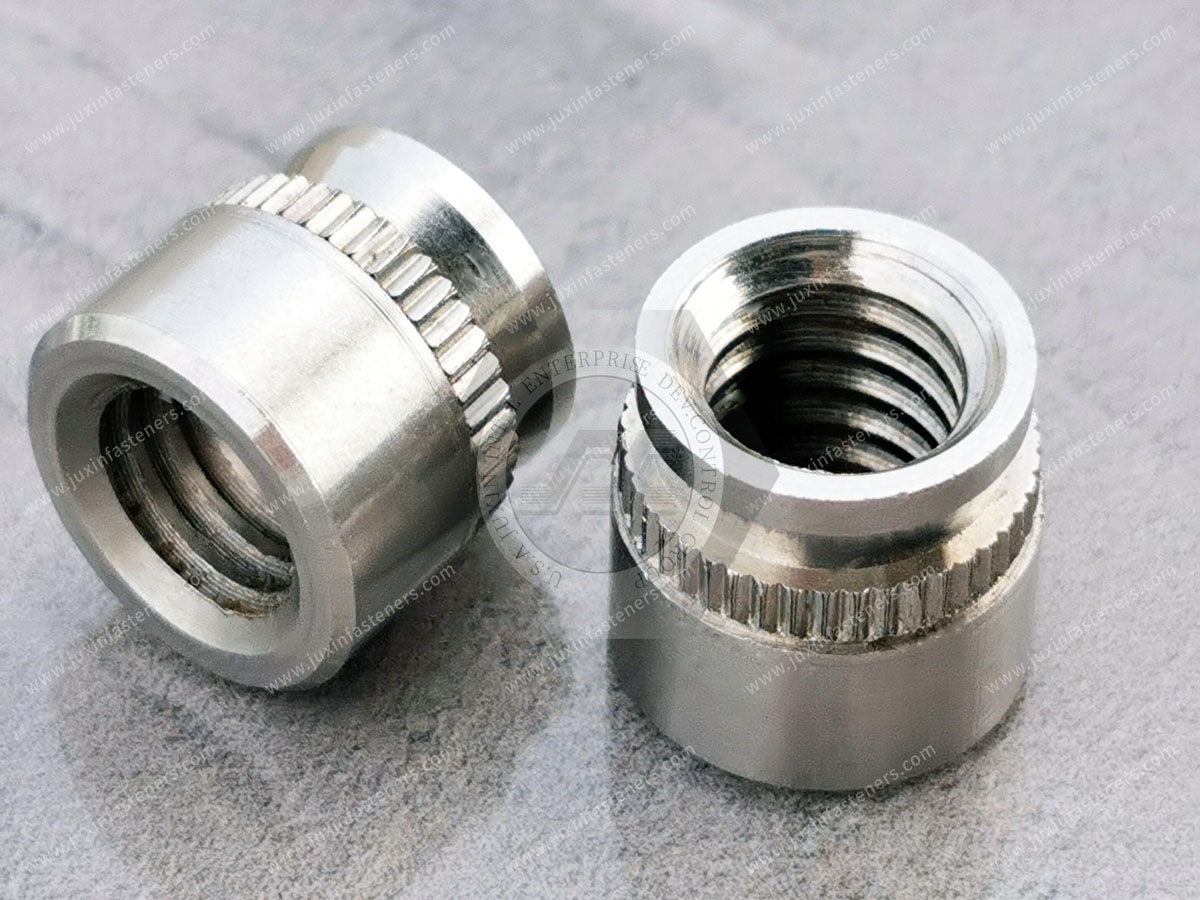
Blind self-clinching nuts solve a different engineering problem from standard open-ended self-clinching nuts.
Both can provide a permanent female thread in compatible sheet metal. The difference is what happens on the blind side of that thread.
Product Specification
Blind self-clinching nuts solve a different engineering problem from standard open-ended self-clinching nuts.
Both can provide a permanent female thread in compatible sheet metal. The difference is what happens on the blind side of that thread.
An open-ended self-clinching nut allows the screw path to continue through the threaded member.
A blind self-clinching nut, also called a closed-end self-clinching nut, terminates the thread within an enclosed fastener body.
That closed-end architecture can be useful when an equipment designer needs to control screw projection, protect nearby internal components,
reduce direct exposure of the thread cavity to the opposite side of a panel, or maintain a closed blind-side fastener geometry.
These requirements occur in electrical cabinets, AI server and network equipment, data-center cooling equipment, power electronics,
EV electronics, telecommunications equipment, semiconductor machinery, industrial automation and many other engineered sheet-metal assemblies.
However, one distinction is essential:
Closed-end does not automatically mean waterproof, airtight, hermetic or IP-rated.
A blind self-clinching nut can close the thread cavity at the fastener level, but environmental sealing remains a function of the complete enclosure and fastener interface.
For engineers and procurement teams, correct selection therefore requires evaluating both the threaded connection and the enclosure architecture.
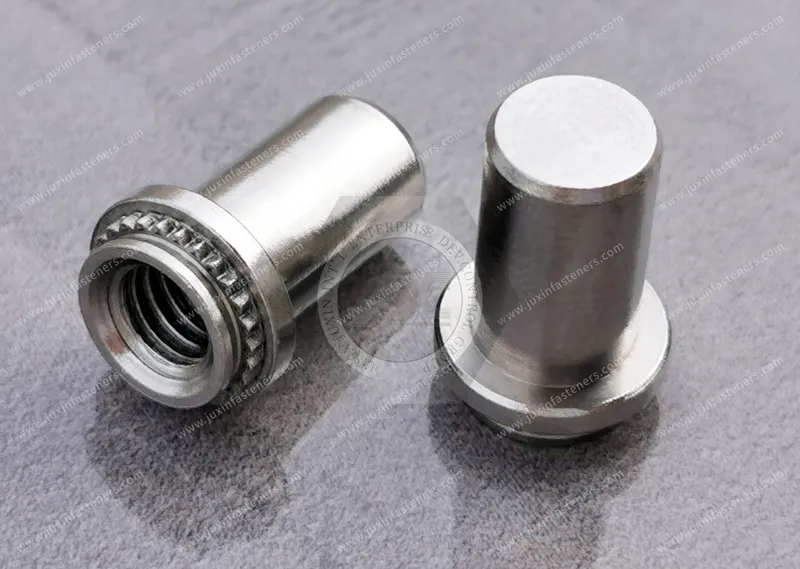
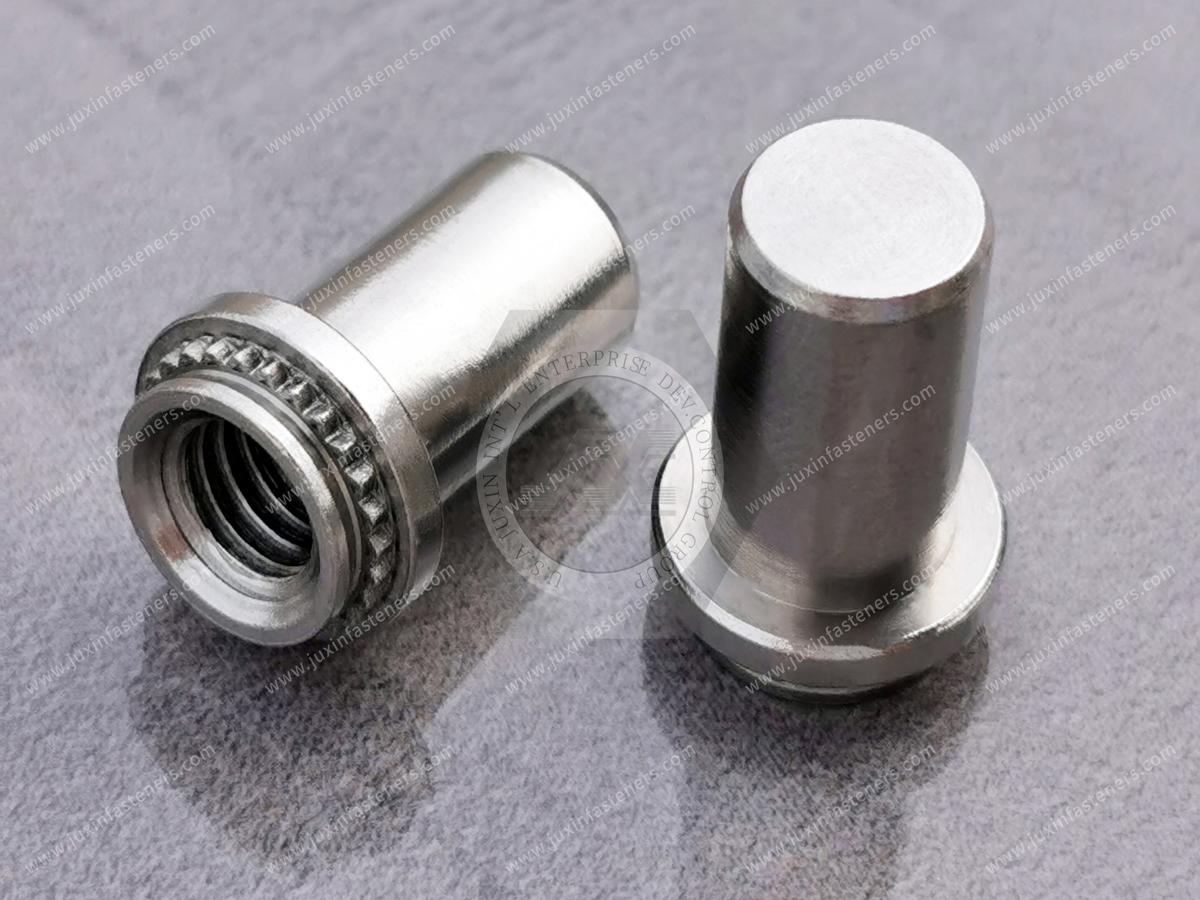
A blind self-clinching nut is an internally threaded panel fastener with a closed-end body and a self-clinching mounting interface.
Its functional architecture can be understood as:
Host Sheet → Self-Clinching Retention → Internal Female Thread → Closed-End Body
The self-clinching feature attaches the fastener to compatible sheet material.
The female thread accepts the mating screw.
The closed-end body prevents the screw from passing completely through the nut and creates a physical boundary at the end of the threaded cavity.
This gives the fastener several potential functions:
permanent female thread attachment in suitable sheet metal;
controlled blind-side geometry;
limitation of screw projection;
protection of nearby internal components from an extending screw tip;
reduced direct exposure of the threaded cavity to the opposite side;
and simplified one-side screw access after the nut has been installed.
The exact value of each function depends on the product geometry and assembly.
This terminology causes frequent confusion.
A blind self-clinching nut is called blind because its threaded cavity is closed at one end.
That does not automatically mean it is installed using a blind-access setting process.
Self-clinching installation normally depends on access and tooling appropriate to the particular fastener and panel.
By contrast, a blind rivet nut is a different fastening architecture designed around a deformation-based setting process that can provide a thread where backside access is unavailable during installation.
Therefore:
Blind self-clinching nut ≠ blind rivet nut.
This distinction matters for engineering design, supplier searches and RFQs.
The strongest reason is usually not simply “sealing.”
It is control of the blind-side interface.
Consider an electronic enclosure where a PCB, cable, busbar, cooling tube or other sensitive component sits close behind a sheet-metal panel.
With an open-ended nut, a screw that is longer than expected may project beyond the nut.
With a blind self-clinching nut, the screw enters a cavity with a defined physical end.
This changes the screw-length design problem.
The engineer must now ensure that the selected screw provides sufficient thread engagement without bottoming against the closed end.
The blind geometry therefore trades unlimited pass-through for controlled internal depth.
A standard open self-clinching nut may be preferable when:
screw pass-through is acceptable;
internal clearance is generous;
thread depth is not restricted by a closed cavity;
backside screw projection does not create interference;
and an open thread path is compatible with the equipment.
A blind self-clinching nut may be preferable when:
screw projection must be controlled;
internal components are close to the panel;
the designer wants a closed thread cavity;
backside access to the screw end is undesirable;
contamination from the blind side should be reduced;
or enclosure architecture benefits from a closed-end threaded feature.
Neither architecture is universally superior.
The correct choice depends on what exists behind the panel and how the threaded joint is expected to function.
Blind self-clinching nuts make screw-length selection more important because the available internal depth is finite.
A useful engineering relationship is:
Available Internal Depth
must accommodate
Actual Screw Penetration
while preserving any required
Bottoming Clearance
and still providing sufficient
Thread Engagement
for the intended joint.
The exact values are design-specific.
There is no universal screw-length margin suitable for every blind clinch nut.
If a screw reaches the closed end before the intended joint is properly clamped, tightening behavior can become misleading.
The installer may feel resistance and assume that the joint is tight even though the mating parts have not achieved the intended clamp condition.
Depending on the assembly, continued tightening may also load the fastener or surrounding structure in an unintended way.
For that reason:
Screw bottoming should not be used as the normal tightening stop unless the joint was specifically engineered for that behavior.
The selected screw length should be checked against:
panel thickness;
mating-part stack;
washer thickness where applicable;
thread engagement;
internal blind depth;
dimensional tolerances;
and required clearance.
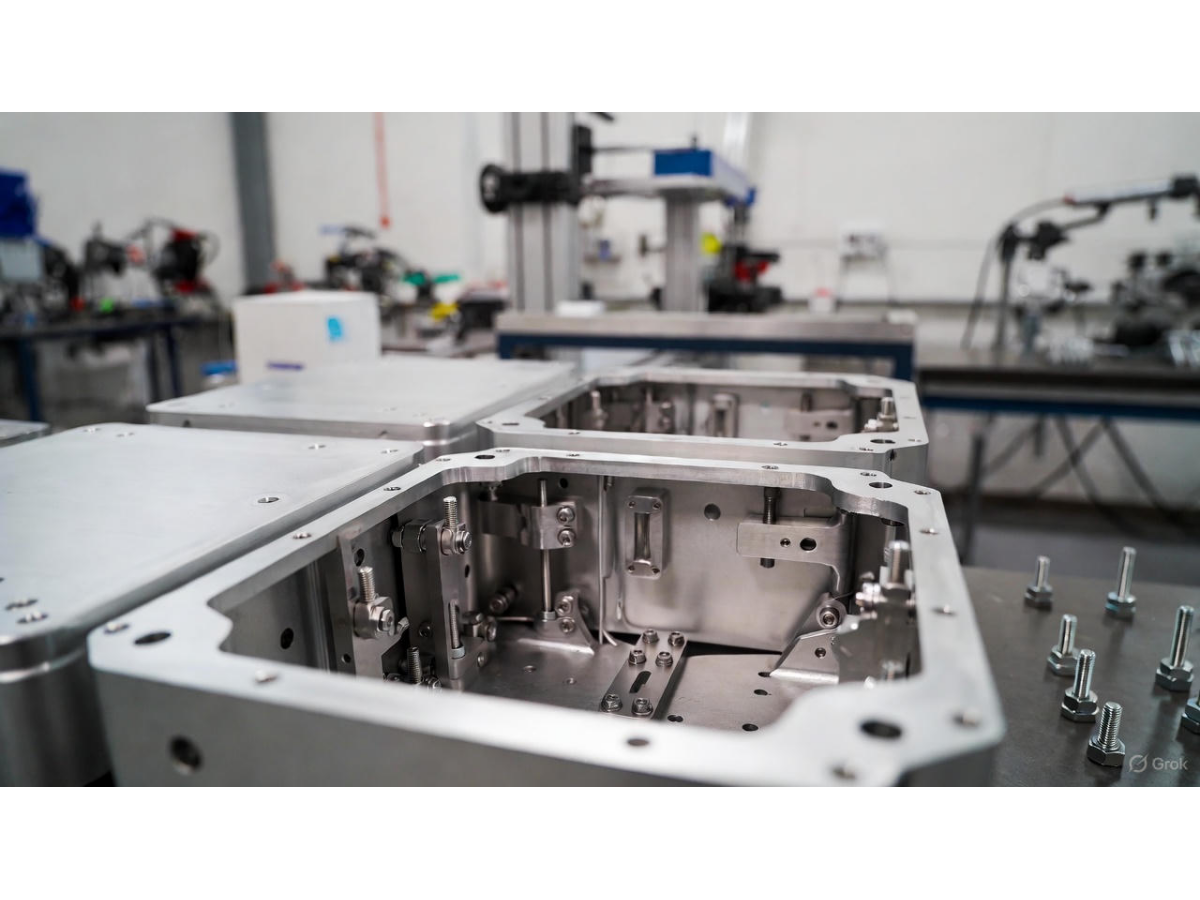
Compact equipment increasingly places electronics, cooling hardware and wiring close to enclosure walls.
Examples can include:
PCB assemblies;
busbars;
cable harnesses;
battery modules;
sensors;
cooling lines;
manifolds;
connectors;
fans;
and internal brackets.
A closed-end nut can provide a predictable fastener envelope on the blind side.
This can be particularly valuable where an over-length replacement screw could otherwise extend toward a sensitive component.
However, the fastener's own closed-end body still occupies space.
The designer should therefore check maximum fastener protrusion, not merely assume that “blind” means zero blind-side envelope.
Like other self-clinching fasteners, blind self-clinching nuts rely on a compatible relationship between the fastener retention geometry and the host sheet.
Relevant variables include:
panel material;
panel thickness;
material condition or hardness;
mounting-hole geometry;
hole quality;
edge distance;
distance from bends;
local panel flatness;
installation tooling;
installation access;
and surface condition.
The thread size alone cannot determine panel compatibility.
An M5 blind self-clinching nut intended for one panel condition is not automatically interchangeable with every other M5 closed-end nut.
Self-clinching installation requires appropriate material interaction between the fastener and the host sheet.
However, generic statements such as “all aluminum, cold-rolled steel and stainless sheet are suitable” are too broad.
Compatibility depends on the specific:
fastener material;
retention geometry;
sheet alloy;
sheet condition;
sheet hardness;
thickness;
and installation requirements.
Where stainless or higher-hardness sheet is involved, the fastener architecture must be selected accordingly.
The approved product drawing and installation requirement should control the decision.
Mounting holes may be produced by punching, drilling, laser cutting or another controlled fabrication method depending on the panel process.
Important characteristics can include:
diameter;
roundness;
burr condition;
edge quality;
chamfer condition where relevant;
coating condition;
and local flatness.
There should be no universal instruction to “never deburr” or “never chamfer” every self-clinching application.
Follow the requirements of the actual fastener and approved manufacturing process.
This is the most important technical boundary in this article.
A closed-end body removes an open passage through the center of the threaded cavity.
That can be useful when the designer wants a closed blind-side thread geometry.
But leakage can potentially occur through other interfaces depending on the design.
The complete enclosure may still contain:
fastener-to-panel interfaces;
panel joints;
gasket interfaces;
seams;
welds;
cable entries;
connectors;
ventilation openings;
doors;
and other penetrations.
Therefore:
A blind self-clinching nut should not be independently advertised as IP54, IP65, IP66, IP67, IP68, waterproof,
airtight or hermetic unless the specific fastener or complete assembly has appropriate verified evidence.
If the mounting point is part of an environmental enclosure, engineers should evaluate the complete sealing architecture.
Relevant factors can include:
fastener geometry;
panel material;
mounting-hole interface;
gasket or seal design where applicable;
panel flatness;
joint stiffness;
fastener spacing;
clamp distribution;
surface finish;
coating;
installation;
temperature;
pressure differential;
chemical exposure;
and assembly-level validation.
This is particularly important in EV battery systems, outdoor electrical equipment and liquid-cooling infrastructure.
A closed-end threaded fastener and a purpose-designed sealing fastener are not automatically the same product.
A sealing fastener may incorporate additional features such as:
sealing elements;
elastomeric interfaces;
specialized geometry;
sealing washers;
controlled compression features;
or other application-specific mechanisms.
A blind self-clinching nut primarily describes a closed-end threaded architecture.
If leak prevention is a critical requirement, the RFQ should state the sealing requirement separately rather than assuming that the word “blind” defines it.
The product becomes particularly relevant where designers need both a permanent female thread in sheet metal and controlled blind-side geometry.
AI servers, GPU systems, network switches, rack-mounted power equipment and supporting infrastructure contain dense mechanical and electronic packaging.
Potential applications for blind self-clinching nuts include suitable:
server chassis;
network equipment enclosures;
power shelves;
rack-mounted electronic equipment;
PDU housings;
UPS enclosures;
control cabinets;
and internal service structures.
The engineering value may be internal clearance rather than environmental sealing.
A closed-end nut can help prevent an over-length screw from projecting toward a PCB, cable or other tightly packaged component.
This is particularly useful where multiple screw lengths exist within the same equipment platform and service mistakes must be considered during design.
Liquid-cooled data centers introduce cooling distribution units, manifolds, pumps, valves, heat exchangers, controls and associated electrical equipment.
Potential blind self-clinching applications may include suitable:
CDU enclosure panels;
cooling-control cabinets;
electronics compartments;
pump or control housings;
manifold-support structures;
and service covers.
The closed-end architecture may reduce direct exposure through the center of the threaded cavity and can control screw projection near cooling hardware.
It should not be claimed to prevent coolant leakage by itself.
Where the fastener location forms part of a fluid or environmental boundary, the complete interface must be evaluated for sealing.
Electrical cabinets can contain:
busbars;
switching components;
control electronics;
power modules;
inverters;
wiring;
sensors;
and communication hardware.
Blind self-clinching nuts may be useful on suitable:
cabinet walls;
equipment covers;
inverter housings;
UPS enclosures;
PDU structures;
power-electronics chassis;
control panels;
and internal partitions.
Closed-end geometry can help manage screw projection toward internal electrical components.
However, the nut does not automatically establish electrical insulation, grounding, arc containment or enclosure certification.
Vehicle electronics increasingly use compact enclosures containing control electronics, power electronics, sensors and high-voltage components.
Potential applications may include suitable:
electronics housings;
inverter enclosures;
charging equipment;
control modules;
serviceable sheet-metal covers;
battery-related equipment;
and vehicle electrical boxes.
Closed-end female threads can be useful where screw projection toward internal components needs to be controlled.
The product should not automatically be described as waterproof, crash-qualified or suitable for high-voltage battery sealing.
Those requirements belong to the complete assembly.
Battery packs and stationary energy-storage systems combine mechanical structures, electrical systems, cooling components and enclosure requirements.
Potential closed-end threaded applications may exist in:
control compartments;
electronics covers;
serviceable secondary panels;
BMS-related enclosures;
power-distribution compartments;
and other suitable sheet-metal structures.
The engineering advantage may include:
controlled screw projection;
closed blind-side geometry;
component clearance;
and permanent female threads.
If a fastener penetrates a critical battery enclosure boundary, sealing requirements must be separately engineered and validated.
Closed-end does not equal IP67 or IP68.
Outdoor and indoor telecommunications equipment can use compact electronics enclosures with limited internal clearance.
Possible applications include:
communication cabinets;
network equipment;
outdoor electronics boxes;
base-station-associated equipment;
antenna electronics housings;
fiber distribution equipment;
and rack-mounted communication modules.
Blind self-clinching nuts can provide controlled screw depth and a closed thread cavity.
For outdoor equipment, corrosion resistance and environmental protection must still be specified independently.
The nut alone does not establish weatherproof performance.
Semiconductor manufacturing equipment can contain densely packaged control electronics, automation systems, sensors and precision mechanical structures.
Potential applications include suitable:
equipment enclosures;
control cabinets;
electronics panels;
automation modules;
service covers;
and internal fabricated assemblies.
A closed-end threaded feature may be useful where screw projection toward nearby equipment must be limited.
No generic blind self-clinching nut should be described as cleanroom-qualified, vacuum-compatible or suitable for process chambers unless specifically validated.
Industrial machines and robotic systems frequently use fabricated sheet-metal panels around electrical, control and mechanical equipment.
Potential applications include:
robot controller enclosures;
machine control cabinets;
automation equipment;
inspection systems;
packaging machinery;
conveyor controls;
service covers;
and machinery electronics housings.
Closed-end nuts can reduce the risk of screw tails extending into crowded internal spaces.
Where vibration exists, however, closed-end geometry does not automatically prevent thread loosening.
Rail equipment includes numerous electrical, communication and control enclosures.
Blind self-clinching nuts may be considered for suitable:
electrical cabinets;
control boxes;
communication equipment;
electronics housings;
interior equipment;
and maintenance panels.
The closed-end feature may help control internal screw projection.
It does not independently establish rail vibration, fire or other system compliance.
HVAC systems contain control electronics, sensors, wiring, motors and other components inside fabricated cabinets.
Potential applications include:
electrical control compartments;
cooling-unit enclosures;
equipment covers;
control panels;
and internal mounting structures.
Closed-end threaded hardware can help where internal clearance is limited or the designer wants to avoid screw projection.
If the panel contributes to an air or water boundary, sealing must be evaluated separately.
Suitable applications may include:
diagnostic equipment;
laboratory instruments;
electronics housings;
medical carts;
equipment control panels;
and serviceable internal structures.
Blind self-clinching nuts can support compact packaging and controlled screw projection.
They do not establish medical-device certification, sterile compatibility, biocompatibility or cleanroom suitability.
Instrumentation often contains sensitive PCBs, displays, wiring and sensors in compact enclosures.
A closed-end female thread can be useful where the designer wants to prevent a screw from extending toward those components.
Relevant considerations include:
available internal space;
thread depth;
panel thickness;
screw length;
material;
finish;
and repeated service requirements.
Commercial food-service equipment can contain electrical controls, heaters, motors and mechanical components behind service panels.
Blind self-clinching nuts may be useful for suitable equipment covers and internal enclosures where controlled screw projection is valuable.
If cleaning chemicals, washdown or food-contact requirements exist, those conditions must be separately specified.
A closed-end fastener should not automatically be described as washdown-rated or food-contact approved.
Construction machinery can contain compact electrical boxes, control enclosures and service panels exposed to demanding environments.
Blind self-clinching nuts may help control internal screw projection in suitable sheet-metal assemblies.
Environmental sealing, vibration resistance and structural performance remain separate engineering requirements.
Closed-end self-clinching hardware may be relevant to suitable aerospace-related electronics enclosures, tooling, ground-support equipment and other assemblies where program requirements permit.
No generic industrial blind self-clinching nut should be represented as flight-qualified or aerospace-certified.
Customer-specific drawings, materials, traceability and qualification requirements govern such applications.
For sheet-metal fabricators, blind self-clinching nuts affect both the enclosure design and production sequence.
Important questions include:
When is the fastener installed?
Is the panel formed before hardware installation?
Is the mounting area flat?
Does the closed-end body interfere with tooling or nearby components?
Will coating affect the thread or installation interface?
Is blind-side protrusion compatible with packaging?
Can installation tooling reach the fastener location?
Is the final screw length already defined?
Considering these questions before releasing the sheet-metal drawing can reduce later redesign.
These two product names are frequently confused in search and sourcing.
Both can provide a female thread associated with relatively thin material, but their installation architectures differ.
A blind self-clinching nut uses a self-clinching retention mechanism compatible with the host sheet and installation process.
A blind rivet nut is installed by setting and deforming the rivet-nut body, typically where one-sided installation access is an important requirement.
A closed-end rivet nut may also exist, but:
closed-end rivet nut ≠ blind self-clinching nut.
Selection should consider:
installation access;
installation process;
panel material;
panel thickness;
hole geometry;
backside envelope;
required thread;
screw projection;
sealing requirements;
tooling;
and production sequence.
This comparison is especially valuable for procurement teams because similar search terminology can lead to completely different fastener families.
Material selection should be based on the actual application rather than a universal ranking.
Potential considerations include:
host-panel material;
fastener material;
installation behavior;
thread requirements;
corrosion environment;
galvanic compatibility;
magnetic requirements where relevant;
finish;
internal clearance;
temperature;
availability;
and cost.
Carbon steel and stainless steel can both be appropriate depending on the product design.
Stainless steel is not automatically corrosion-proof.
Plated carbon steel is not automatically suitable for every outdoor or fluid-exposed environment.
Depending on material and product design, finish options may include:
trivalent clear zinc;
trivalent yellow zinc;
black zinc;
zinc-nickel;
nickel;
black nickel where validated;
and stainless-steel passivation.
Hexavalent chromium should not be specified.
If corrosion performance is critical, the RFQ should define the applicable coating system and test requirement rather than use appearance terms such as “silver,” “yellow” or “black” alone.
A salt-spray test result, where specified, is a laboratory corrosion-test result and should not automatically be converted into expected field service life.
Blind self-clinching nuts may use metric or Unified inch threads depending on the design.
For metric general-purpose screw threads, relevant ISO thread standards may be applied where appropriate.
For Unified inch threads, ASME B1.1 may be applicable.
However, the thread standard does not define the complete blind self-clinching fastener.
The drawing still needs to establish:
mounting geometry;
panel range;
body dimensions;
blind depth;
material;
finish;
and other functional requirements.
Same nominal thread size does not mean two blind self-clinching nuts are interchangeable.
Procurement teams frequently seek alternative sources for existing blind self-clinching nuts because of:
supply continuity;
lead time;
cost;
supplier consolidation;
discontinued parts;
regional sourcing;
or production-volume changes.
The correct question is not simply:
“Do you have the same thread?”
A proper second-source review should determine whether the project requires:
Critical dimensions and interfaces match the approved specification.
Some non-critical geometry may differ while required form, fit, function and installation remain acceptable after customer validation.
One or more features are intentionally changed, such as material, finish, thread depth or mounting geometry.
A new fastener is developed around the actual enclosure and joint requirements.
A functional equivalent is not automatically an identical replacement.
For blind self-clinching nuts, review the relevant:
mounting-hole geometry;
panel material;
panel thickness;
material condition;
fastener mounting geometry;
installed height;
blind-side protrusion;
thread system;
thread size;
thread pitch;
thread tolerance/class where specified;
usable thread depth;
total cavity depth;
screw length;
screw-tip geometry where relevant;
material;
finish;
installation method;
surrounding component clearance;
and environmental requirements.
If push-out, torque-out or other mechanical values are specified by the customer, those requirements should be included rather than inferred from another supplier's product.
Where an existing drawing is unavailable, a physical sample can support replacement development.
A practical workflow is:
Physical Sample → Dimensional Review → Functional Review → Critical Feature Identification
→ Material / Finish Information Review → Drawing Confirmation → Manufacturing Feasibility → Prototype / Sample Development → Customer Validation → Production
For a blind self-clinching nut, sample review should pay particular attention to:
thread;
internal thread depth;
closed-end geometry;
external body envelope;
mounting interface;
panel relationship;
screw compatibility;
and blind-side clearance.
A physical sample alone may not establish exact alloy chemistry, heat treatment, hardness or coating chemistry.
Where those characteristics are critical, the original specification or appropriate verification requirements should be provided.
A technically complete RFQ should define both the self-clinching installation and the closed-end thread requirement.
Provide:
2D engineering drawing;
3D model where available;
physical sample where applicable;
equipment type;
joint function;
nearby internal components;
and whether the project is new, replacement, functional equivalent or second source.
Specify:
panel material;
panel thickness;
material condition or hardness where relevant;
mounting-hole geometry;
nearby bends;
edge constraints;
coating condition;
and installation access.
Specify:
metric or Unified inch;
thread size;
pitch or threads per inch;
thread tolerance/class where required;
mating screw;
required thread engagement;
and screw length.
Define:
required internal thread depth;
available blind-side envelope;
maximum acceptable external protrusion;
required bottoming clearance;
and nearby component clearance.
Where relevant, define:
operating environment;
corrosion requirement;
temperature;
chemical exposure;
cleaning exposure;
and whether the mounting point is part of an enclosure environmental boundary.
If actual sealing performance is required, state it explicitly rather than assuming that closed-end geometry provides it.
Provide:
fastener material;
required surface finish;
restricted-substance requirements;
appearance requirements;
mating materials;
and any customer-specific specification.
Include:
prototype/sample quantity;
initial order quantity;
estimated annual usage;
packaging requirements;
traceability requirements where applicable;
target schedule;
and expected production program.
Large OEM procurement and supplier-development teams should evaluate more than unit price.
Relevant supplier capabilities may include:
drawing review;
understanding of self-clinching installation;
manufacturing feasibility review;
thread control;
dimensional inspection;
material control;
surface-finish control;
sample development;
production capacity;
high-volume scalability;
inspection planning;
packaging;
change communication;
and long-term supply capability.
For high-volume suitable fastener programs, automatic optical sorting may be used for compatible externally measurable characteristics.
It should not be represented as verification of internal thread depth, sealing performance or other characteristics that the inspection method does not directly measure.
JUXIN FASTENERS supports engineered metal panel fasteners for OEM manufacturers, sheet-metal fabricators, equipment builders and industrial supply chains.
Blind self-clinching nut and custom panel fastener projects can be developed from:
customer 2D drawings;
3D models;
existing physical samples;
required panel geometry;
thread specifications;
custom dimensions;
specified materials;
specified finishes;
and customer-defined functional requirements.
The appropriate manufacturing route depends on the fastener geometry, material, thread, blind-body design, tolerances, finish, tooling requirements and production quantity.
There is no universal manufacturing method or quantity threshold suitable for every closed-end fastener.
Prototype or sample evaluation can be used before volume production so that the customer can verify installation, screw engagement, blind-side clearance and assembly compatibility.
A blind self-clinching nut project can be reduced to a practical decision path:
Why does the female thread need a closed end?
→ Is the objective screw-projection control, contamination protection, enclosure-boundary design or a combination?
→ Is self-clinching installation appropriate for the host sheet?
→ What panel material and thickness are used?
→ What mating screw and thread are required?
→ How much thread engagement is required?
→ What internal depth is available before screw bottoming?
→ What blind-side external envelope is available?
→ Is environmental sealing actually required?
→ If sealing is required, what complete assembly interface provides it?
→ What material and finish suit the environment?
→ Which dimensions and functions are critical for second-source qualification?
→ How will the sample be validated in the actual assembly?
→ What production and supply requirements apply?
This decision path prevents one of the most common sourcing errors in closed-end hardware:
treating “blind,” “closed-end,” “sealed” and “waterproof” as if they mean the same thing.
They do not.
For new designs, blind self-clinching nuts, closed-end threaded fasteners, replacement parts, functional equivalents,
second-source programs or custom OEM fasteners, send your available 2D drawing, 3D model, physical sample, panel information and application requirements to:
JUXIN FASTENERS can review the available information and evaluate an appropriate sample-development and manufacturing path for your engineered metal panel fastener project.
Product Packaging
Packaging Standard
At Juxin Fasteners, we apply standardized export packaging to ensure product protection, traceability, and compliance with international logistics requirements.
1. Standard Export Packaging
Unless otherwise specified, all products will be packed according to our factory standard export packaging, which includes:
Moisture-resistant inner protection
Poly bag or small box packing as required
Reinforced export cartons
Clear labeling with part number, specification, batch number, and quantity
Palletizing for sea or air shipment when necessary
Our standard packaging is designed to ensure safe transportation, efficient warehousing, and long-distance international shipping.
2. Customized Packaging Options
We also provide customized packaging solutions according to customer requirements, including but not limited to:
Private labeling
Customized barcodes
Specific carton dimensions
Retail packaging
Special pallet configuration
Customer-specific marking and identification
So that you know, customized packaging may involve additional costs and extended lead time depending on the complexity of the requirements.
3. Compliance & Quality Assurance
All packaging processes are controlled under our ISO 9001 quality management system to ensure consistency, traceability, and product integrity throughout the supply chain.
Product Pictures
Contact Us
Tel.:
+86 020 8621 0320
+86 020 3121 6067
E-mail:
Technical Support:
Navigation
SEND INQUIREY