Call Us
+86 136 6007 9809
Call Us
+86 136 6007 9809

Spring plungers, indexing plungers, ball plungers and locating pins can look similar in a catalog or engineering drawing, but they do not perform the same mechanical function.
One component may apply continuous spring pressure.
Product Specification
Spring plungers, indexing plungers, ball plungers and locating pins can look similar in a catalog or engineering drawing, but they do not perform the same mechanical function.
One component may apply continuous spring pressure.
Another may create a detent.
Another may engage a hole to establish a defined indexing position.
Another may simply establish a rigid geometric reference.
For mechanical engineers and procurement teams, this creates an important sourcing rule:
Do not select positioning hardware by appearance or product name alone. Select it by the function required by the assembly.
This becomes even more important when developing custom components, replacing an obsolete part or qualifying a second source from an existing drawing or physical sample.
The starting decision can be simplified as follows:
Need continuous spring pressure against a component?
Consider a spring plunger.
Need a spring-loaded ball for detent or light positioning behavior?
Consider a ball plunger.
Need a retractable pin to enter a defined hole, slot or indexing position?
Consider an indexing plunger.
Need spring-assisted positioning that pushes a workpiece toward fixed locating references?
Consider a spring-loaded locating pin.
Need a permanent rigid geometric reference without spring movement?
Consider a fixed locating pin.
These are starting points, not complete specifications.
The final decision must also consider mating geometry, movement, mounting, load path, clearance, environment and service requirements.
The terminology used across drawings, catalogs and legacy BOMs is not always consistent.
A component may be called:
spring pin;
spring plunger;
locating plunger;
indexing pin;
indexing plunger;
retractable pin;
positioning pin;
detent pin;
spring locator.
Two components with similar names may perform different functions.
Two components with different names may perform nearly the same function.
That is why engineering review should begin with:
Function → Movement → Engagement → Load Path → Mounting → Mating Geometry
rather than:
Product Name → Purchase
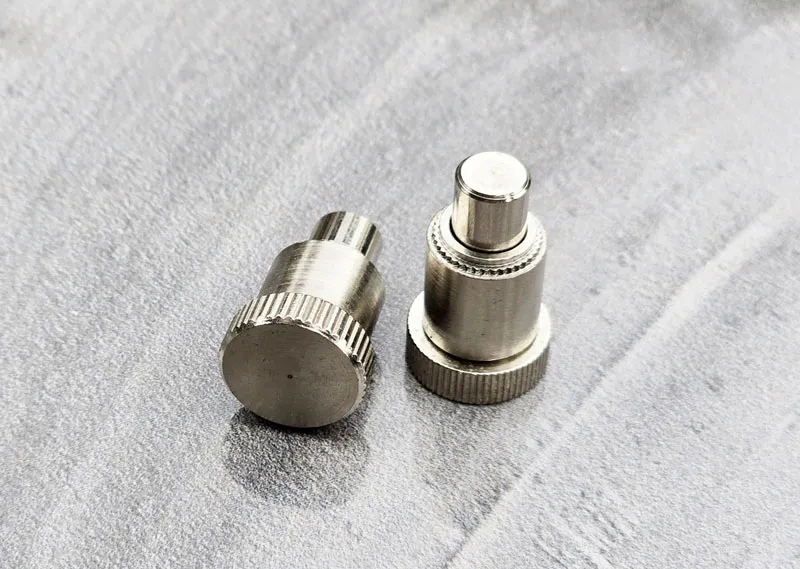
A spring plunger contains a spring-loaded nose, pin or similar contact element that moves into the body when external force is applied and returns when that force is removed.
Depending on the design, a spring plunger can provide:
contact pressure;
positioning assistance;
detent action;
temporary holding;
ejection;
spring return.
Its main engineering characteristic is controlled spring-loaded movement.
A spring plunger should not automatically be interpreted as a positive locking device.
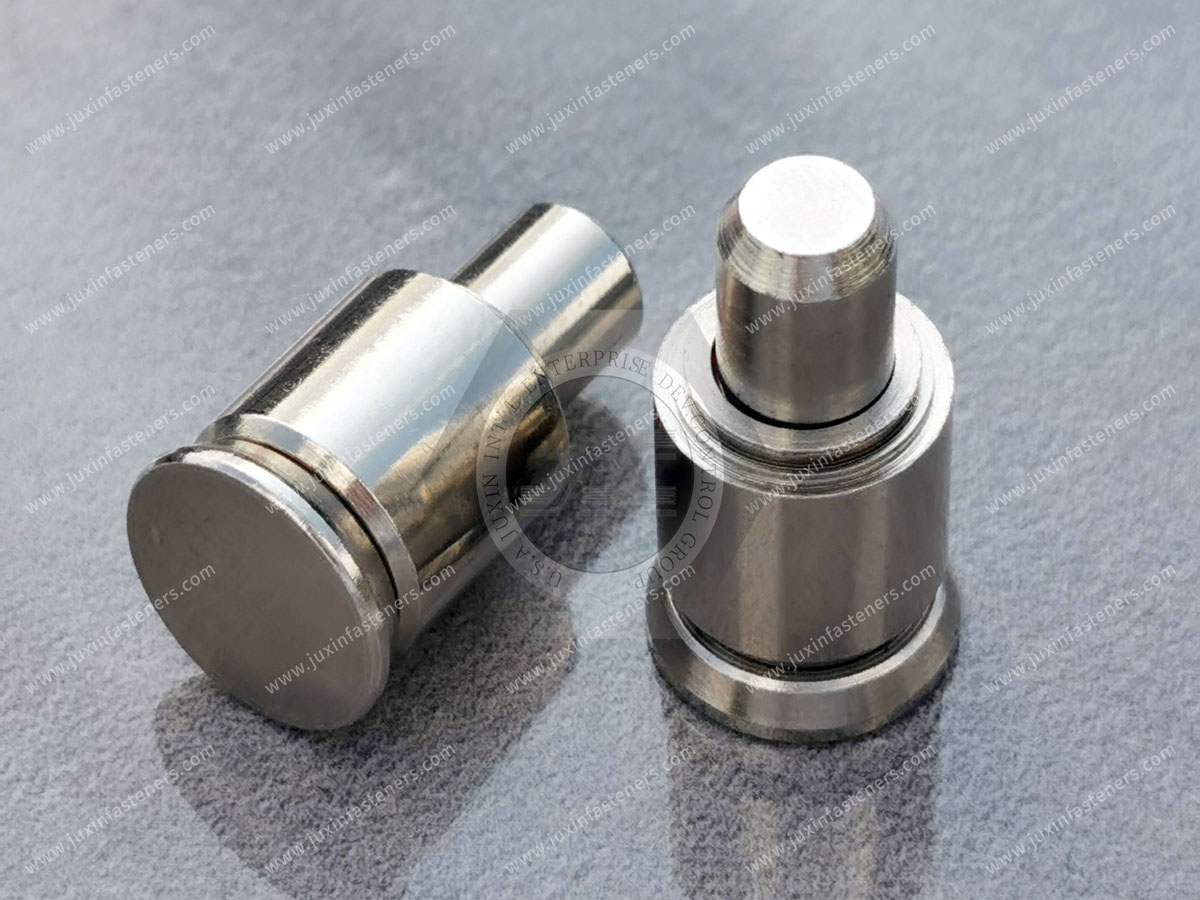
An indexing plunger typically uses a retractable pin that engages a corresponding hole, slot, notch or other defined locating feature.
When engaged, the pin establishes a selected position.
When retracted, the mating component can move to another position.
Typical applications include:
adjustable machinery;
fixtures;
changeover equipment;
indexing mechanisms;
movable brackets;
position-adjustment assemblies.
The defining question is:
Does the pin need to deliberately engage and disengage a defined indexing position?
If yes, an indexing-plunger architecture may be appropriate.
A ball plunger uses a spring-loaded ball as the contact element.
The ball can retract as a mating surface passes over it and then extend into a recess, groove or detent.
This makes ball plungers useful for functions such as:
detent positioning;
temporary holding;
tactile indexing;
light retention;
positioning feedback.
The ball geometry creates a different contact condition from a cylindrical locating or indexing pin.
Therefore:
Ball Plunger ≠ Cylindrical Indexing Pin
A spring-loaded locating pin uses spring movement to assist positioning.
In fixture and workholding applications, one useful architecture is to use the spring-loaded device to push the workpiece toward fixed locating references.
In this arrangement, the spring-loaded pin assists loading and positioning, while the fixed locators establish the final geometric reference.
This creates an important distinction:
Positioning Assistance ≠ Final Geometric Location
A spring-loaded locating pin should not automatically be assumed to establish the complete dimensional reference of the assembly.
A fixed locating pin has no spring-driven movement.
It is used where a rigid feature is required to establish component position relative to another part or datum structure.
Applications may include:
fixture location;
component alignment;
assembly referencing;
repeatable mating geometry.
A fixed locating pin is often the simpler choice when spring movement is not required.
Adding a spring mechanism without a functional reason can create unnecessary complexity.
The most important difference is usually the intended engagement function.
A spring plunger generally applies spring force through its nose or pin.
An indexing plunger is intended to establish a defined position by engaging a corresponding locating feature.
Ask:
Does the component mainly apply pressure, or does it positively engage a selected position?
If the primary requirement is spring pressure, start with a spring plunger.
If the primary requirement is deliberate engagement and disengagement of a defined position, start with an indexing plunger.
The primary difference is the contact element.
A spring plunger may use a projecting pin or nose.
A ball plunger uses a ball.
That difference affects:
contact geometry;
engagement behavior;
movement over the mating surface;
detent behavior;
wear interface.
A ball can transition over a mating feature differently from a cylindrical nose.
The correct choice depends on the mechanism.
Both can participate in positioning systems, but they generally solve different problems.
An indexing plunger is more appropriate when the pin must deliberately enter a defined locating feature.
A ball plunger is often more appropriate where a detent action is required without the same type of manual pin retraction.
The distinction can be expressed as:
Defined Pin Engagement → Indexing Plunger
Spring-Loaded Detent → Ball Plunger
The actual design still needs to be validated against the application.
A fixed locating pin remains engaged.
An indexing plunger can retract.
This difference matters when equipment must:
change position;
open;
rotate;
slide;
be adjusted;
be reconfigured.
If the locating feature never needs to disengage during normal operation, a fixed locating architecture may be more appropriate.
These two are particularly easy to confuse.
A spring-loaded locating pin may assist the workpiece into the correct relationship with fixed locators.
An indexing plunger may intentionally engage a corresponding hole or feature to establish a selected position.
The decision therefore depends on whether the spring-loaded element is:
assisting location
or
creating the indexed position.
That distinction should be clear in the drawing and RFQ.
The term “spring pin” often refers to a completely different fastener architecture.
Slotted or coiled spring pins are interference-fit pins that elastically compress during installation into a hole.
They do not contain an internal spring-loaded plunger mechanism.
Therefore:
Spring Pin / Roll Pin ≠ Spring Plunger
and
Spring Pin / Roll Pin ≠ Indexing Plunger
A procurement RFQ that says only “spring pin” can therefore result in the wrong product being quoted.
Start with the most basic question.
Does the pin or contact element need to move?
If no, a fixed locating pin may be sufficient.
If yes, determine why it needs to move.
Possible reasons include:
component insertion;
retraction;
indexing;
detent action;
spring pressure;
temporary retention;
assembly compensation;
automatic return.
This immediately narrows the architecture.
A component that must enter a defined hole or slot has different requirements from one that merely presses against a surface.
Positive engagement introduces considerations such as:
engagement depth;
mating-hole geometry;
pin diameter;
positional alignment;
release movement;
clearance;
side loading.
If positive engagement is not required, a spring or ball plunger may provide a simpler solution.
Some devices retract when the mating component pushes against them.
Others require the operator to pull or actuate a handle.
These are different operating sequences.
Ask:
What causes retraction?
What causes extension?
Does the operator need control?
Should the pin automatically re-engage?
Must it remain retracted during movement?
The answers determine the appropriate mechanism.
Some indexing mechanisms should automatically re-engage when released.
Others need a lock-out or rest-position function so the pin can remain retracted.
A lock-out function can be useful when:
the mechanism passes multiple indexing positions;
free movement is required;
the operator needs both hands for another task;
the pin must stay clear during servicing.
Therefore:
Automatic Return ≠ Lock-Out
This requirement should be specified before sourcing.
A detent can create positional feedback or temporary holding without necessarily providing a structural lock.
A positive indexing pin can provide a more definite mechanical engagement.
These functions should not be described interchangeably.
A useful design question is:
If the spring force disappeared, what would happen to the mechanism?
If the assembly immediately loses its intended position, the designer should examine whether the spring-loaded component is being asked to perform a function better handled by a dedicated locking or structural feature.
Spring force describes the force associated with compressing or extending the spring-loaded element.
It does not automatically define:
structural load capacity;
allowable side load;
locking capacity;
joint strength;
positioning accuracy.
These are different engineering characteristics.
Therefore:
Higher Spring Force ≠ Higher Structural Capacity
Increasing spring force does not automatically improve positioning precision.
Positioning can depend on:
locating geometry;
pin geometry;
mating feature;
mounting position;
clearances;
fixed locators;
tolerance stack-up;
wear.
The spring is only one part of the mechanism.
A plunger may move axially while experiencing force from another direction.
This creates side loading.
Excessive side load can contribute to:
friction;
binding;
uneven wear;
difficult retraction;
pin deflection;
damage to mating features.
The permissible side load depends on the actual component design.
There is no responsible universal side-load number for all spring plungers or indexing plungers.
This is one of the most useful design checks.
Ask:
What component carries the operating load after positioning is complete?
In some assemblies, the plunger establishes position while another feature carries the operational load.
That other feature may be:
a stop;
clamp;
bolt;
fixed pin;
rail;
bracket;
structural interface.
Separating these functions can reduce unintended loading on the spring-loaded component.
When a pin enters a mating hole, both components form the locating system.
Engineering review should consider:
hole geometry;
pin geometry;
alignment;
engagement;
clearance;
edge condition;
surrounding material;
wear.
Specifying the plunger without understanding the mating feature can lead to an incomplete design.
Different mechanisms may use:
rounded tips;
cylindrical tips;
tapered tips;
ball contacts;
custom profiles.
No single tip geometry is correct for every application.
Tip selection depends on:
required engagement;
approach direction;
mating feature;
release behavior;
positioning requirement;
wear considerations.
A tapered nose can assist engagement in some indexing systems.
But a universal taper angle should not be copied into every custom design.
The correct geometry depends on the mating feature and functional requirement.
For OEM components, the controlled engineering drawing should define the required geometry.
Spring-loaded components operate over a defined movement range.
The required travel depends on:
component insertion;
retraction distance;
engagement depth;
surrounding clearance;
mating-part movement.
Too little travel may prevent disengagement.
Unnecessary travel can increase package size or change the operating sequence.
There is no universal correct stroke.
For moving components, overall length alone may not be enough.
A drawing may need to control:
free position;
working position;
engaged position;
retracted position.
This is especially important where the component operates inside compact equipment.
Spring-loaded positioning hardware can use different mounting methods depending on the design.
Possible architectures include:
threaded body;
press-in body;
flange mounting;
panel mounting;
custom retained body;
bracket-integrated design.
The correct mounting method depends on:
host material;
panel or block geometry;
installation access;
alignment requirement;
serviceability;
available space.
Two plungers with the same mounting thread can still differ in:
body length;
pin diameter;
projection;
travel;
tip geometry;
actuation;
spring behavior;
material;
finish.
Therefore:
Same Thread ≠ Same Plunger
This is particularly important in second-source procurement.
For metal-panel equipment, positioning hardware may interact with:
sheet-metal panels;
brackets;
chassis;
covers;
equipment frames;
access mechanisms;
adjustable structures.
The design should consider the complete panel interface rather than treating the plunger as an isolated component.
This is why spring-loaded and positioning hardware can form part of a broader
Engineered Metal Panel Fasteners architecture even though not every product is a self-clinching fastener.
A self-clinching nut, stud or standoff creates a permanent mechanically retained attachment feature in suitable sheet material.
A spring plunger or indexing plunger provides movement, pressure, positioning or engagement.
These functions can exist in the same equipment assembly, but they should not be confused.
For example:
Self-Clinching Fastener → Permanent Attachment Point
Spring Plunger → Spring Pressure / Positioning
Indexing Plunger → Retractable Position Engagement
Captive Screw → Retained Service Fastener
Different fastening architectures solve different assembly problems.
Material selection should begin with the application rather than a generic material ranking.
Relevant considerations can include:
mechanical requirement;
wear;
corrosion environment;
mating material;
manufacturing process;
surface finish;
cost;
availability.
Depending on the specific component architecture, materials may include carbon steel, stainless steel or other engineering materials.
Do not assume stainless steel is automatically the best choice.
For a moving plunger, surface finish can affect:
clearance;
sliding behavior;
wear;
corrosion protection;
appearance.
Changing the coating can therefore change more than color.
This is especially important when replacing an existing part.
An RFQ that says:
“Same part, black finish”
is incomplete.
Where technically applicable, possible black finishing systems may include:
black zinc;
black nickel;
dark zinc-nickel systems;
black oxide.
The appropriate system depends on:
base material;
corrosion requirement;
moving clearance;
wear surfaces;
appearance requirement;
mating components.
Sample validation should confirm that the finished component still moves and engages as intended.
A coating adds material to surfaces.
For components with close sliding or engagement relationships, that can affect:
movement;
fit;
release;
engagement;
friction.
Therefore, a finish substitution should be reviewed together with dimensional requirements.
Wear does not occur only on the plunger.
The mating feature may also wear.
Potential wear interfaces include:
ball against detent;
pin against hole;
nose against surface;
plunger against internal guide;
pin against slot edge.
The complete contact pair should be considered.
Applications with frequent adjustment, indexing or servicing can accumulate wear differently from rarely operated assemblies.
Relevant questions include:
How often is the mechanism operated?
Is it manually or automatically actuated?
Is contamination present?
Does the pin slide under side load?
Is the mating component replaceable?
Is maintenance access available?
A universal cycle-life claim should not replace application-specific validation.
Spring and indexing plungers can be useful in:
adjustable fixtures;
assembly tooling;
changeover mechanisms;
positioning systems;
workpiece handling equipment.
The correct architecture depends on whether the application requires pressure, detent action or positive indexing.
Potential uses include:
end-effector adjustments;
fixture mechanisms;
tooling changeover;
auxiliary positioning assemblies;
adjustable brackets.
The presence of a robot alone does not determine the fastener.
The actual mechanical function does.
Possible applications include:
welding fixtures;
assembly fixtures;
inspection equipment;
adjustable tooling;
production-line changeover mechanisms.
Use in automotive manufacturing equipment does not automatically mean the component is a vehicle-qualified automotive fastener.
Spring-loaded positioning hardware may be used in:
machine adjustment;
guards and covers;
tooling;
fixture systems;
service mechanisms;
equipment setup.
Service frequency and operator access can strongly influence the preferred design.
Relevant uses may exist in:
adjustable brackets;
service panels;
equipment positioning mechanisms;
internal mounting assemblies.
However, a spring or indexing plunger does not automatically provide:
grounding;
electrical bonding;
sealing;
IP protection.
Those are separate system-level requirements.
The relevant application is not “server screws.”
Spring-loaded positioning hardware may be appropriate only where data-center equipment contains a real mechanical requirement for:
positioning;
indexing;
controlled engagement;
retractable access hardware;
adjustable mechanisms;
serviceable equipment assemblies.
Possible equipment contexts include:
cooling equipment;
liquid-cooling equipment;
cooling distribution units;
power equipment cabinets;
network equipment;
control cabinets;
serviceable rack equipment.
If the assembly only needs permanent fastening, another fastener architecture is more appropriate.
Spring-loaded positioning hardware may be relevant to:
equipment mechanisms;
fixtures;
service assemblies;
adjustable hardware;
automation structures.
Cleanroom, vacuum or process-compatibility requirements must be separately specified and validated where applicable.
Potential applications include:
adjustable equipment;
diagnostic-equipment structures;
serviceable assemblies;
laboratory fixtures;
positioning mechanisms.
Medical-equipment use does not automatically imply medical certification, sterilization compatibility or cleanroom suitability.
Consider another architecture when the application requires:
rigid permanent location;
high structural load carried by the pin;
deliberate manual indexing;
a retained service screw;
permanent threaded attachment;
another dedicated locking mechanism.
Do not add spring movement unless it serves a real function.
An indexing plunger may be unnecessary when:
no position changes occur;
the component never needs to disengage;
only light detent action is needed;
the final location is established by another mechanism;
a fixed pin is sufficient.
Simpler architecture can be better architecture.
A ball plunger may not be appropriate when the assembly requires:
deep positive pin engagement;
substantial structural load;
a dedicated rigid locating feature;
controlled manual retraction.
The contact geometry must match the required function.
When replacing an existing spring-loaded component, a visually similar product is not automatically interchangeable.
Compare:
mounting interface;
body envelope;
pin or ball geometry;
projection;
travel;
engagement;
mating feature;
actuation;
material;
finish;
surrounding clearance.
The supplier should understand the functional requirement, not merely copy the appearance.
Second-source projects can have different objectives.
Controlled dimensions and interfaces must reproduce the existing requirement.
Certain differences may be acceptable if form, fit and function remain suitable after engineering review and customer validation.
A controlled change is intentionally introduced.
A new component is developed around revised equipment requirements.
These should be identified before quotation.
A supplier cross-reference does not automatically prove interchangeability.
A functional-equivalent review should consider:
form;
fit;
function;
mounting;
engagement;
movement;
mating component;
material;
finish;
environment;
serviceability.
Customer validation should confirm the replacement in the actual assembly.
When the original drawing is unavailable, a physical sample can support development.
A practical workflow is:
Physical Sample
→ Dimensional Review
→ Functional Review
→ Critical Feature Identification
→ Material / Finish Information Review
→ Drawing Confirmation
→ Manufacturing Feasibility
→ Prototype / Sample Development
→ Customer Validation
→ Production
A physical sample cannot automatically reveal every original manufacturing specification.
Exact alloy chemistry, heat treatment, hardness profile or coating chemistry may require customer information or appropriate external verification where critical.
A dimension is critical when changing it affects the required function.
For spring-loaded positioning hardware, potentially critical characteristics can include:
mounting interface;
body diameter;
pin diameter;
projection;
travel;
engagement;
mating geometry;
clearance;
actuation geometry.
Whether each is critical depends on the assembly.
Before volume production, the customer may need to validate characteristics such as:
dimensions;
mounting;
movement;
retraction;
return;
engagement;
mating-component fit;
clearance;
finish;
appearance.
Additional program-specific validation can be added where required.
Prototype fit alone should not automatically be treated as production approval.
Design and mechanical engineers may search:
spring plunger vs indexing plunger;
spring plunger vs ball plunger;
indexing plunger vs locating pin;
ball plunger for positioning;
retractable locating pin;
spring-loaded positioning pin.
Their main question is:
Which mechanical architecture performs the function my assembly actually requires?
Procurement teams may search:
spring plunger manufacturer;
custom indexing plunger supplier;
custom ball plunger manufacturer;
locating pin OEM supplier;
replacement indexing plunger;
spring-loaded hardware second source;
custom positioning hardware from drawing.
Their main question is:
Can the supplier identify the functional requirements and reproduce the characteristics that actually control the assembly?
Provide the information relevant to the project:
product drawing;
3D model where available;
physical sample where applicable;
product function;
mounting method;
mounting thread or interface;
body dimensions;
pin or ball geometry;
required projection;
required travel;
engaged and retracted positions;
mating-hole or detent geometry;
actuation method;
automatic-return or lock-out requirement;
material requirement;
surface finish;
corrosion environment;
operating environment;
critical dimensions;
sample quantity;
production quantity;
annual demand;
packaging requirements.
Where spring force is functionally critical, include the controlled requirement rather than asking the supplier to guess it.
JUXIN FASTENERS supports OEM and ODM custom fastener and engineered hardware projects based on:
customer 2D drawings;
customer 3D models;
physical samples;
custom dimensions;
custom materials where applicable;
custom surface finishes where applicable.
The appropriate manufacturing route depends on component geometry, material, tolerances, threads, moving features, secondary operations, finish, tooling and production quantity.
Depending on the specific component, manufacturing may involve combinations of forming, machining, turning, stamping, thread production, secondary machining and assembly operations.
For applicable high-volume fastener production, automatic optical sorting can be considered as part of production inspection planning.
The most reliable sourcing path is:
Required Function
→ Spring Pressure / Detent / Locating / Indexing
→ Product Architecture
→ Movement
→ Engagement
→ Mating Geometry
→ Load Path
→ Mounting Method
→ Material
→ Surface Finish
→ Drawing or Physical Sample
→ Sample Validation
→ Supplier Qualification
→ Production RFQ
For custom spring plungers, indexing plungers, spring-loaded locating pins, positioning hardware and drawing-based engineered metal panel fasteners, contact:
The most useful question for both engineering and procurement is not:
“Which plunger looks like the existing part?”
It is:
“Which mechanical function must this component perform, and which features control that function?”
Once that is clear, the correct product architecture—and the correct sourcing specification—becomes much easier to define.
Product Packaging
Packaging Standard
At Juxin Fasteners, we apply standardized export packaging to ensure product protection, traceability, and compliance with international logistics requirements.
1. Standard Export Packaging
Unless otherwise specified, all products will be packed according to our factory standard export packaging, which includes:
Moisture-resistant inner protection
Poly bag or small box packing as required
Reinforced export cartons
Clear labeling with part number, specification, batch number, and quantity
Palletizing for sea or air shipment when necessary
Our standard packaging is designed to ensure safe transportation, efficient warehousing, and long-distance international shipping.
2. Customized Packaging Options
We also provide customized packaging solutions according to customer requirements, including but not limited to:
Private labeling
Customized barcodes
Specific carton dimensions
Retail packaging
Special pallet configuration
Customer-specific marking and identification
So that you know, customized packaging may involve additional costs and extended lead time depending on the complexity of the requirements.
3. Compliance & Quality Assurance
All packaging processes are controlled under our ISO 9001 quality management system to ensure consistency, traceability, and product integrity throughout the supply chain.
Product Pictures
Contact Us
Tel.:
+86 020 8621 0320
+86 020 3121 6067
E-mail:
Technical Support:
Navigation
SEND INQUIREY