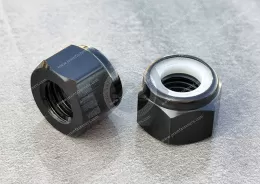
Call Us
+86 136 6007 9809
Call Us
+86 136 6007 9809

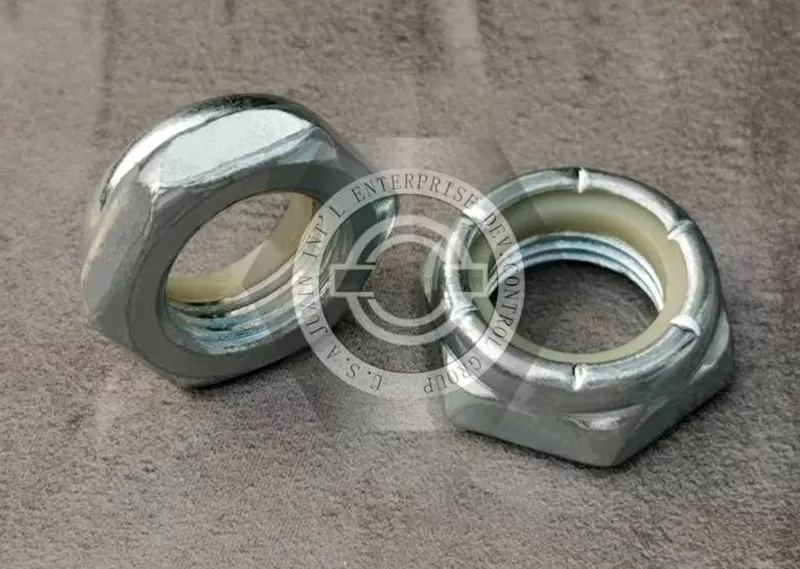
Juxin Fasteners manufactures low-strength steel thin-profile nylon-insert locknuts for light-duty industrial fastening applications where installation height is limited.
These low-profile prevailing-torque nuts incorporate a retained nylon locking insert that engages the mating bolt thread and helps resist unintentional rotation.
Their reduced height makes them suitable for selected compact assemblies and engineered jam-nut arrangements, subject to joint loadability requirements.
The identified metric sizes are M3, M4, M5, M6, M8, M10 and M12. Unified inch-thread sizes include #4-40, #6-32, #8-32, #10-24, #10-32, 1/4-20, 5/16-18, 3/8-16 and 1/2-13.
ISO 10511:2025 provides a principal reference for metric thin-pattern nylon-insert locknuts. ASME B18.16.6 provides relevant inch-series requirements where the specified nut style is applicable.
Juxin Fasteners supports OEM/ODM manufacturing, custom engineering drawings, cold heading, cold forming, CNC machining and product-specific secondary operations for industrial batch production.
Product Specification
Low-Strength Steel Thin-Profile Nylon-Insert Locknuts
Low-Clearance Prevailing-Torque Hex Nuts for Light-Duty OEM Assemblies
Juxin Fasteners manufactures low-strength steel thin-profile nylon-insert locknuts for industrial equipment, electrical enclosures, machinery accessories, automation systems and custom OEM fastening assemblies.
These fasteners combine a reduced-height carbon steel hexagonal nut with a retained non-metallic locking insert.
During installation, the nylon insert engages the mating screw or bolt thread, generating prevailing torque that helps resist unintentional nut rotation.
Compared with regular-height nylon-insert locknuts, thin-profile versions require less axial installation space.
They are commonly selected for light-duty assemblies where available thread length or component clearance is limited.
However, thin-pattern nuts have reduced loadability compared with regular or high-profile nuts and must be selected according to the actual joint requirements.
Juxin Fasteners is an industrial fastener manufacturer supporting standard and custom-engineered locking components.
Our manufacturing capabilities include cold heading, cold forming, CNC machining and product-specific secondary operations, selected according to product design, material, tolerances and production requirements.
Product Specifications
| Parameter | Description |
|---|---|
| Product Name | Low-Strength Steel Thin-Profile Nylon-Insert Locknuts |
| Alternative Names | Thin Nylon Locknuts; Low-Profile Nylon-Insert Hex Lock Nuts |
| Product Type | Thin Hexagonal Prevailing-Torque Nut |
| Identified Material | Carbon Steel |
| Locking Mechanism | Non-Metallic Insert |
| Identified Metric Sizes | M3, M4, M5, M6, M8, M10, M12 |
| Identified Inch Sizes | #4-40, #6-32, #8-32, #10-24, #10-32, 1/4-20, 5/16-18, 3/8-16, 1/2-13 |
| Metric Standard Reference | ISO 10511:2025 |
| Traditional Dimensional Reference | DIN 985 |
| Inch-Series Reference | ASME B18.16.6, Where Applicable |
| Strength Category | Low-Strength Steel |
| Mechanical Property Class | According to Approved Specification |
| Surface Finish | Customer-Specified |
| Manufacturing | OEM/ODM Made-to-Drawing Production |
The actual strength grade, dimensions, surface coating, insert composition and performance requirements must be verified against the approved engineering drawing.
What Is a Thin-Profile Nylon-Insert Locknut?
A thin-profile nylon-insert locknut is a reduced-height hexagonal nut containing a non-metallic prevailing-torque locking element.
The locking insert engages the mating thread during installation.
This creates frictional resistance to nut rotation, even before the nut is fully tightened against the clamped component.
The thin configuration reduces the axial space required by the fastener.
This makes it useful in selected compact assemblies, provided that the reduced loadability is acceptable.
How the Nylon Insert Locking Mechanism Works
Metal Thread Engagement
The mating bolt initially engages the carbon steel internal thread.
Nylon Insert Contact
As installation continues, the bolt enters the non-metallic locking insert.
Elastic Deformation
The insert deforms around the bolt thread and generates contact pressure.
Prevailing Torque
The resulting friction creates resistance to rotation.
Joint Tightening
The nut is tightened according to the specified assembly procedure.
The installation method must account for prevailing torque and the torque required to establish joint preload.
Resistance to Loosening
The insert helps resist unintended nut rotation under suitable service conditions.
The complete joint must still be evaluated for vibration, load and temperature.
Why Choose Thin-Profile Nylon-Insert Locknuts?
Reduced Installation Height
The thin hexagonal body occupies less axial space than a regular-profile locknut.
This can be useful where installation clearance is limited.
Integrated Locking Feature
The retained nylon insert provides a prevailing-torque function without requiring a separate locking washer in suitable designs.
Compact Assembly Design
The reduced-height configuration may help engineers accommodate fastening hardware in compact mechanical assemblies.
Light-Duty Applications
Low-strength thin-pattern locknuts can be appropriate where the required loadability is within the product's verified limits.
OEM Customization
Thread sizes, dimensions, material requirements and surface finishes can be evaluated according to customer engineering drawings.
Low-Strength Steel and Loadability
Low-strength steel nylon-insert locknuts are used in applications where high-strength fastening is not required.
Depending on the applicable standard, low-strength inch-series nuts may use a Grade 2-related designation, while metric products may have a specified lower mechanical property class.
However, the actual strength classification must be confirmed for the finished product.
The terms Grade 2 and Property Class 6 are not interchangeable designations.
Furthermore, thin-pattern nuts have reduced loadability because of their geometry.
Engineers should not assume that a thin-pattern nut can carry the same load as a regular-height nut of the same nominal thread diameter.
ISO 10511:2025 — Thin Nylon-Insert Locknuts
ISO 10511:2025 specifies prevailing-torque hexagon thin nuts with non-metallic inserts.
The standard covers metric coarse-pitch threads from M3 to M39 for applicable steel and stainless steel products.
It distinguishes thin-pattern nuts from regular and high-profile configurations.
Thin-pattern nuts have reduced loadability and are not designed to provide the same resistance to thread stripping as regular or high nuts.
Juxin Fasteners can review customer drawings against the relevant requirements.
Actual conformity must be established through dimensional and performance verification.
DIN 985 Steel Nylon-Insert Locknuts
DIN 985 is a traditional European designation associated with thin-pattern hexagonal nylon-insert locknuts.
It remains a recognizable engineering and procurement search term.
For new projects, ISO 10511 is an important international reference.
However, dimensional details and applicable requirements should be checked rather than assuming that all editions or designations are identical.
Metric Thread Sizes
The identified metric product range includes M3, M4, M5, M6, M8, M10 and M12.
| Metric Thread | Nominal Diameter | Coarse Pitch | Approximate Inch Diameter |
|---|---|---|---|
| M3 × 0.5 | 3 mm | 0.50 mm | 0.118 in |
| M4 × 0.7 | 4 mm | 0.70 mm | 0.157 in |
| M5 × 0.8 | 5 mm | 0.80 mm | 0.197 in |
| M6 × 1.0 | 6 mm | 1.00 mm | 0.236 in |
| M8 × 1.25 | 8 mm | 1.25 mm | 0.315 in |
| M10 × 1.5 | 10 mm | 1.50 mm | 0.394 in |
| M12 × 1.75 | 12 mm | 1.75 mm | 0.472 in |
The table provides standard metric coarse-thread references.
Actual nut dimensions, thread tolerances and locking performance must match the approved product specification.
Unified Inch-Thread Sizes for North American OEMs
The identified Unified inch-thread range includes the following sizes.
| Thread Designation | Series | Threads per Inch | Nominal Diameter |
|---|---|---|---|
| #4-40 | UNC | 40 | 0.112 in |
| #6-32 | UNC | 32 | 0.138 in |
| #8-32 | UNC | 32 | 0.164 in |
| #10-24 | UNC | 24 | 0.190 in |
| #10-32 | UNF | 32 | 0.190 in |
| 1/4-20 | UNC | 20 | 0.250 in |
| 5/16-18 | UNC | 18 | 0.3125 in |
| 3/8-16 | UNC | 16 | 0.375 in |
| 1/2-13 | UNC | 13 | 0.500 in |
Additional custom UNC and UNF sizes may be evaluated according to customer drawings.
Inch-series nut dimensions and performance requirements must be specified independently of metric ISO standards.
Metric and Unified inch threads are not interchangeable.
Thin-Profile vs. Regular-Profile Nylon-Insert Locknuts
| Feature | Thin Profile | Regular Profile |
|---|---|---|
| Nut Height | Reduced | Greater |
| Installation Clearance | Suitable for Limited Space | Requires More Space |
| Loadability | Reduced | Generally Greater |
| Locking Feature | Non-Metallic Insert | Non-Metallic Insert |
| Typical Selection | Light-Duty Compact Assemblies | General Mechanical Assemblies |
| Metric Reference | ISO 10511 | ISO 7040 |
The choice should be based on joint loads, installation space, thread engagement and required performance.
Thin-Profile vs. High-Profile Nylon-Insert Locknuts
High-profile nylon-insert locknuts provide a different nut geometry and height series.
The relevant metric reference for high-pattern nuts is ISO 7041.
A high-profile nut should not be replaced with a thin-profile nut solely to reduce installation height without evaluating loadability.
Thin Nylon-Insert Locknuts as Jam Nuts
Thin nuts are sometimes used in engineered jam-nut arrangements.
In these assemblies, a thin nut may be tightened against another nut to create a locking interaction.
However, the performance of a jam-nut arrangement depends on installation sequence, thread engagement, preload and the geometry of both nuts.
The presence of a nylon insert does not automatically make every jam-nut configuration suitable.
The complete arrangement should be validated for the intended application.
Surface Finish Options
Carbon steel thin nylon-insert locknuts may be manufactured with customer-specified surface finishes.
Zinc-Plated Steel
Zinc plating provides a protective barrier against corrosion.
It may be suitable for many indoor and moderately moist environments.
Black Zinc or Black Corrosion-Resistant Coatings
Black finishes may be specified for appearance and corrosion protection.
The corrosion performance depends on the actual coating system.
A black appearance alone does not establish a particular salt spray resistance.
Other Specified Finishes
Additional surface treatments may be evaluated according to engineering requirements and compatibility with the nylon insert.
Coating thickness, corrosion testing and appearance requirements should be specified in the approved drawing.
Nylon Insert Temperature Limitations
The locking insert can be the temperature-limiting component of the fastener.
Conventional nylon inserts may lose mechanical performance at elevated temperatures.
The allowable service temperature must be based on the actual insert material and product specification.
For elevated-temperature applications, an all-metal prevailing-torque locknut may be more appropriate.
Installation Torque and Bolt Preload
Prevailing torque is the resistance created by the locking insert during nut rotation.
It is not the same as the torque required to establish joint clamp load.
Production engineers should account for:
Prevailing torque
Thread friction
Bearing surface friction
Bolt preload
Installation speed
Thread condition
Lubrication specification
Tool accuracy
Thin-pattern nuts must also be evaluated for their reduced loadability.
Reusability and Locking Performance
Nylon-insert locknuts may be reusable under specified conditions.
However, repeated installation can change the locking insert's performance.
Reuse depends on:
Insert wear
Thread condition
Temperature exposure
Number of installation cycles
Required prevailing torque
Customer acceptance criteria
For critical assemblies, the applicable specification may require replacement after removal.
Industrial Machinery Applications
Thin nylon-insert locknuts may be used in suitable light-duty machinery assemblies.
Potential applications include:
Equipment covers
Mechanical guards
Accessory brackets
Adjustment hardware
Auxiliary mounting components
The required mechanical load must be within the verified capability of the nut.
Electrical Enclosures and Control Cabinets
Low-profile locknuts may be useful in electrical enclosure assemblies with limited installation space.
Potential applications include:
Cabinet accessory brackets
Mechanical mounting hardware
Equipment panels
Instrument supports
Enclosure components
The nylon insert does not make the complete fastener electrically insulating.
Electrical bonding requirements must be addressed separately.
HVAC and Refrigeration Equipment
Thin nylon-insert locknuts may be considered for suitable light-duty mechanical connections in HVAC equipment.
Potential applications include:
Equipment covers
Control box hardware
Light brackets
Mechanical accessories
Serviceable components
Temperature and vibration conditions must be evaluated.
Industrial Automation and Robotics
Automation equipment often contains compact brackets, guards and accessory assemblies.
Thin-profile locknuts may help accommodate fastening requirements where axial space is limited.
Production engineers should evaluate installation access, thread engagement and the required joint preload.
Electronic Equipment and Instrumentation
Potential applications include:
Instrument housings
Mechanical chassis brackets
Equipment mounting accessories
Control panel hardware
Light-duty fixtures
For sensitive equipment, the fastener's dimensions, material and mechanical performance must match the assembly requirements.
Data Center and Server Infrastructure
Selected data center and server equipment assemblies may require compact mechanical fastening solutions.
Thin nylon-insert locknuts may be evaluated for suitable light-duty brackets, covers and equipment accessories.
The application must be assessed for actual loads, service conditions and installation clearance.
Automotive and EV Manufacturing Equipment
Low-strength thin-profile locknuts may be considered for noncritical equipment accessories, assembly fixtures and light-duty brackets.
They should not be specified for safety-critical or highly loaded automotive joints without appropriate engineering validation.
Medical and Laboratory Equipment
Thin-profile locknuts may be evaluated for noncritical mechanical accessories in laboratory and equipment housings.
Any regulated or safety-critical application requires its own qualification and approval.
Production Engineering Benefits
For production managers and manufacturing engineers, thin-profile nylon-insert locknuts may offer:
Reduced axial installation space
Integrated prevailing-torque locking
Potential reduction in separate locking components
Compact mechanical assembly options
Custom thread and dimension selection
These benefits must be balanced against reduced loadability, installation requirements and inspection costs.
OEM/ODM Manufacturing Capabilities
Juxin Fasteners is an industrial fastener manufacturer supporting standard and custom-engineered fastening components.
Our manufacturing capabilities include:
Cold heading
Cold forming
CNC machining
Product-specific secondary operations
Made-to-drawing fastener manufacturing
Industrial batch production
Manufacturing processes are selected according to product geometry, material, dimensional tolerances and production volume.
Custom Thin Nylon-Insert Locknuts
Juxin Fasteners can evaluate customer-specific designs based on 2D drawings and 3D CAD models.
Customization may include:
Metric thread size and pitch
UNC and UNF threads
Nut height
Hexagon dimensions
Carbon steel material grade
Mechanical property requirements
Nylon insert material
Insert retention geometry
Surface treatment
Dimensional tolerances
Prevailing-torque requirements
Packaging and identification
All custom designs require engineering and manufacturing feasibility review.
Quality Inspection and Functional Validation
Depending on the customer specification, inspection may include:
Material verification
Internal thread gauging
Hexagon dimensions
Nut height
Nylon insert retention
Surface coating inspection
Coating thickness
Mechanical property verification
Proof-load testing where applicable
Prevailing-torque testing
Functional assembly testing
The test methods and acceptance criteria must be agreed according to the applicable product standard or OEM specification.
Relevant International Standards
| Standard | Engineering Relevance |
|---|---|
| ISO 10511:2025 | Metric Thin Nylon-Insert Prevailing-Torque Hex Nuts |
| DIN 985 | Traditional Thin Nylon-Insert Hex Nut Reference |
| ISO 7040 | Regular Nylon-Insert Hex Nuts for Comparison |
| ISO 7041 | High Nylon-Insert Hex Nuts for Comparison |
| ISO 261 | Metric Thread General Plan |
| ISO 965 Series | Metric Thread Tolerances |
| ISO 898-2 | Mechanical Properties of Steel Nuts |
| ASME B1.1 | Unified Inch Screw Threads |
| ASME B18.16.6 | Inch-Series Prevailing-Torque Locknut Requirements |
| ASTM B117 | Salt Spray Testing When Specified |
These standards apply to different product geometries and requirements.
The actual product must be verified before a standard-compliance claim is made.
Frequently Asked Questions
What is a thin-profile nylon-insert locknut?
It is a reduced-height hexagonal nut containing a non-metallic insert that generates prevailing torque against the mating bolt thread.
What is the American name for DIN 985 nylon locknuts?
Thin-Profile Nylon-Insert Locknuts is a widely used American industrial product name.
What is the difference between thin and regular nylon locknuts?
Thin-pattern locknuts require less installation height but have reduced loadability.
Are thin nylon locknuts suitable for high-strength bolted joints?
Not automatically. Their reduced loadability must be evaluated against the required joint strength.
Can thin nylon locknuts be used as jam nuts?
They may be used in suitable engineered jam-nut arrangements, subject to installation and performance validation.
What metric sizes are identified?
M3, M4, M5, M6, M8, M10 and M12.
What inch-thread sizes are identified?
#4-40, #6-32, #8-32, #10-24, #10-32, 1/4-20, 5/16-18, 3/8-16 and 1/2-13.
Can Juxin Fasteners manufacture custom UNC and UNF sizes?
Custom Unified inch-thread designs can be evaluated according to customer drawings and manufacturing feasibility.
Can thin nylon-insert locknuts be reused?
Reuse depends on the applicable specification and remaining prevailing-torque performance.
Are zinc-plated steel locknuts suitable for wet environments?
Zinc plating provides corrosion protection, but suitability depends on coating specification and environmental exposure.
Are thin nylon-insert locknuts suitable for high temperatures?
Only within the qualified temperature limits of the locking insert and complete fastener assembly.
Can Juxin Fasteners manufacture custom thin nylon-insert locknuts?
Yes. We support OEM/ODM made-to-drawing industrial fastener manufacturing and batch production.
Request a Quote — Thin-Profile Nylon-Insert Locknuts
Juxin Fasteners supports global OEM, Tier-1 and Tier-2 manufacturers requiring low-profile nylon-insert locknuts and custom industrial fastening components.
Our manufacturing capabilities combine cold heading, cold forming, CNC machining and product-specific secondary operations according to engineering and production requirements.
For a manufacturing quotation, please provide:
2D engineering drawing or 3D CAD model
Customer part number
Metric, UNC or UNF thread designation
Thread diameter and pitch
Nut height and hexagon dimensions
Carbon steel material grade
Required mechanical property class
Nylon insert specification
Surface treatment
Operating temperature
Joint load requirements
Prevailing-torque requirements
Dimensional tolerances
Inspection and acceptance criteria
Initial order quantity
Estimated annual demand
Packaging requirements
Target delivery schedule
Our engineering team can review your specifications for manufacturing feasibility, custom production and long-term OEM supply.
Juxin Fasteners
Industrial Fastener Manufacturer | Thin-Profile Nylon-Insert Locknuts | OEM/ODM Fastener Manufacturing
Website: https://www.juxinfasteners.com/
Email: info@juxinfasteners.com
Product Packaging
Packaging Standard
At Juxin Fasteners, we apply standardized export packaging to ensure product protection, traceability, and compliance with international logistics requirements.
1. Standard Export Packaging
Unless otherwise specified, all products will be packed according to our factory standard export packaging, which includes:
Moisture-resistant inner protection
Poly bag or small box packing as required
Reinforced export cartons
Clear labeling with part number, specification, batch number, and quantity
Palletizing for sea or air shipment when necessary
Our standard packaging is designed to ensure safe transportation, efficient warehousing, and long-distance international shipping.
2. Customized Packaging Options
We also provide customized packaging solutions according to customer requirements, including but not limited to:
Private labeling
Customized barcodes
Specific carton dimensions
Retail packaging
Special pallet configuration
Customer-specific marking and identification
So that you know, customized packaging may involve additional costs and extended lead time depending on the complexity of the requirements.
3. Compliance & Quality Assurance
All packaging processes are controlled under our ISO 9001 quality management system to ensure consistency, traceability, and product integrity throughout the supply chain.
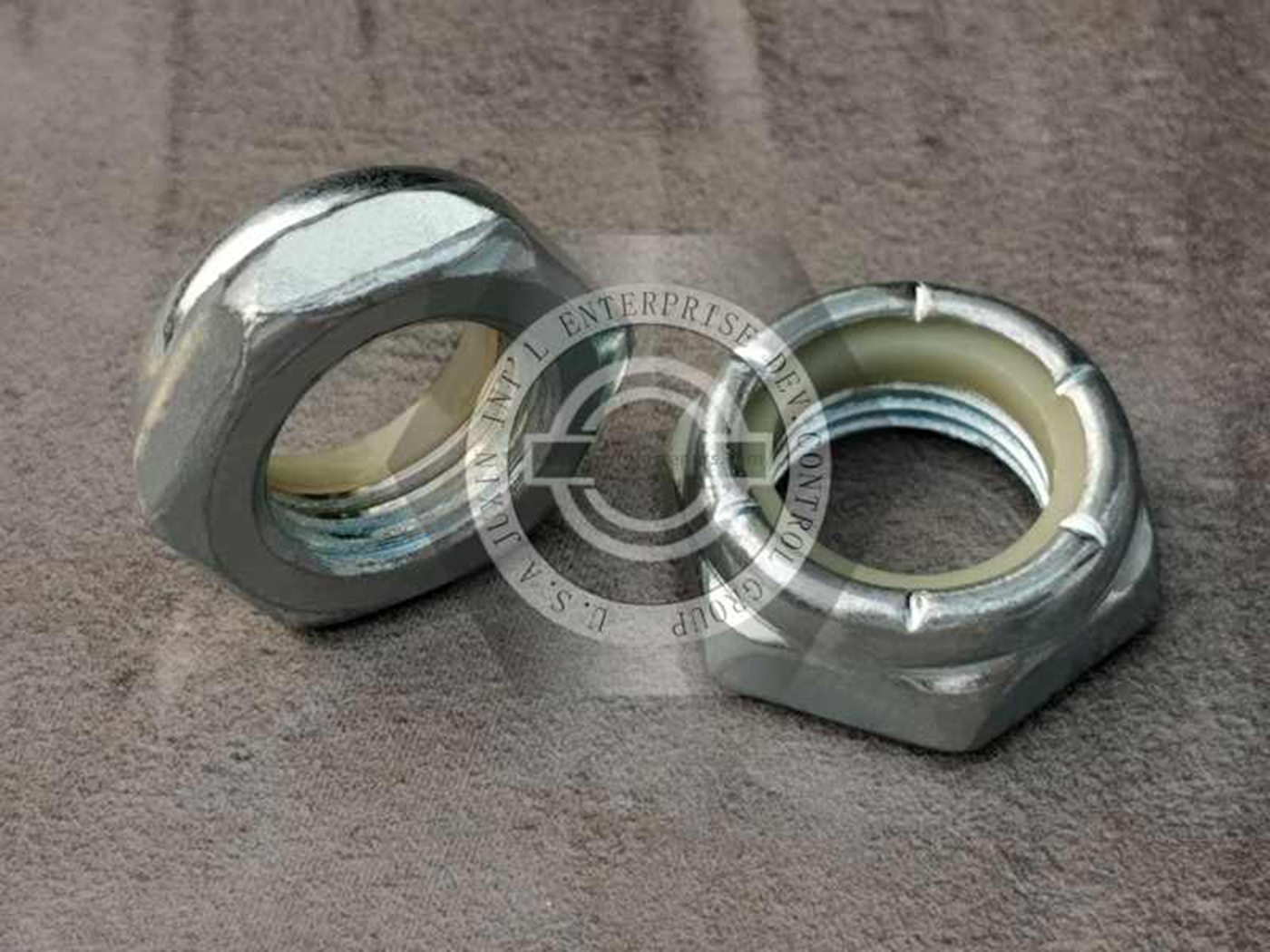
Product Pictures
Contact Us
Tel.:
+86 020 8621 0320
+86 020 3121 6067
E-mail:
Technical Support:
Navigation
SEND INQUIREY