Call Us
+86 136 6007 9809
Call Us
+86 136 6007 9809

Zinc-Plated Steel Open-End Blind Rivets
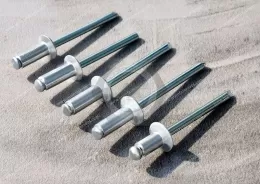
JUXIN FASTENERS supplies steel-body, steel-mandrel open-end blind rivets with a dome head and zinc-plated finish.
Designed for one-sided installation, these rivets provide permanent mechanical fastening for compatible sheet-metal, equipment and industrial assemblies.
The zinc coating provides a degree of corrosion protection, while actual performance depends on the specified coating system and service environment.
Product Specification
Zinc-Plated Steel Open-End Dome Head Blind Rivets
Product Overview
JUXIN FASTENERS supplies zinc-plated steel open-end blind rivets featuring a steel rivet body, steel mandrel and standard dome head.
These break-mandrel rivets provide permanent mechanical fastening where installation access is available from only one side of the assembly.
The steel/steel construction is suitable for applications requiring a steel fastener configuration,
while the zinc-plated surface provides corrosion protection according to the specified coating system and environmental conditions.
Material and Construction
| Component | Specification |
|---|---|
| Rivet Body Material | Steel |
| Mandrel Material | Steel |
| Surface Finish | Zinc-Plated |
| Rivet Type | Open-End Blind Rivet |
| Head Style | Dome Head / Protruding Head |
| Installation Method | One-Sided Blind Riveting |
| Fastening Mechanism | Break-Mandrel Blind Rivet |
The steel grade, coating specification and mechanical performance must be confirmed against the applicable product drawing and technical documentation.
Product Features
Steel body and steel mandrel construction
Standard dome head for general-purpose blind riveting
Open-end design for one-sided installation
Zinc-plated surface for specified corrosion-protection requirements
Permanent mechanical fastening without access to the blind side
Suitable for compatible sheet-metal and industrial assemblies
OEM dimensional and packaging requirements subject to technical review
Dimensions and Technical Specifications
| Parameter | Engineering Requirement |
|---|---|
| Rivet Body Diameter (d) | According to product drawing |
| Rivet Body Length (L) | According to product drawing |
| Dome Head Diameter (D) | According to product drawing |
| Head Height (H) | According to product drawing |
| Mandrel Diameter | According to selected rivet size |
| Recommended Hole Diameter | According to product specification |
| Grip Range | According to product specification |
| Shear Strength | According to verified product data |
| Tensile Strength | According to verified product data |
| Zinc Coating | According to agreed finish specification |
Detailed dimensions and drawings: Refer to the existing product PDF/CAD documentation, pages 93–94.
The original product drawing and specification table govern the actual available dimensions, tolerances and mechanical requirements.
Steel/Steel Blind Rivet Construction
A steel/steel blind rivet consists of a steel rivet body and a steel pull mandrel.
During installation, the riveting tool pulls the mandrel through the rivet body.
The rivet body deforms on the blind side of the joint, forming a retaining head. The mandrel then breaks at its designed break point.
The steel body and mandrel form a distinct material configuration from aluminum/steel and stainless steel blind rivets.
Mechanical performance depends on the specific rivet geometry, steel grade and manufacturing specification.
Dome Head Design
The standard dome head, also called a protruding head, provides a bearing surface against the accessible side of the joined material.
Unlike a countersunk head, the dome head remains above the panel surface after installation.
The dome head should seat properly against the material without excessive interference, distortion or damage to the surrounding panel.
For applications requiring a flush surface, a suitable countersunk blind rivet may be more appropriate.
For applications requiring a wider bearing area on thin or relatively soft materials, a large flange blind rivet may be considered.
These are separate product configurations and should not be treated as interchangeable without engineering verification.
Grip Range and Material Thickness
Grip range is the total thickness of the joined materials that a selected blind rivet is designed to fasten.
The correct rivet size must accommodate the combined material stack-up.
Key considerations include:
Total joint thickness
Rivet body diameter and length
Recommended mounting-hole diameter
Panel material and stiffness
Blind-side clearance
Head-side bearing area
Required mechanical performance
The nominal rivet body length is not equivalent to the grip range.
A rivet outside its specified grip range may not form the intended blind-side retaining head.
Mounting Hole Requirements
The mounting-hole diameter must match the selected rivet specification.
An oversized hole may reduce joint support or affect the setting result.
An undersized or misaligned hole may prevent proper insertion or damage the rivet during installation.
For production assemblies, hole diameter, burr condition, alignment and panel thickness should be controlled according to the approved joint design.
Metric and Inch Diameter Reference
Common nominal blind rivet diameter references include:
| Metric Diameter | Approximate Inch Reference |
|---|---|
| 2.4 mm | 3/32 in |
| 3.2 mm | 1/8 in |
| 4.0 mm | 5/32 in |
| 4.8 mm | 3/16 in |
| 6.4 mm | 1/4 in |
These are general nominal references, not a confirmed list of sizes available for this JUXIN product.
Metric and inch-designated rivets must be checked against the actual dimensions, hole requirements, tolerances and mechanical performance before substitution.
Zinc-Plated Surface Finish
Zinc plating provides a protective metallic coating on the specified steel surfaces.
The level of corrosion protection depends on the coating system, coating thickness, supplementary treatments and service environment.
For OEM applications, the finish specification may include:
Zinc coating type
Coating thickness
Appearance requirements
Supplementary passivation or sealing
Corrosion testing where specified
Environmental exposure conditions
The zinc-plated finish should not be interpreted as a universal corrosion rating.
No specific salt spray duration or corrosion-performance value is claimed without verified test data.
Installation Method
These steel open-end blind rivets are installed using a compatible blind riveting tool and nosepiece.
The typical installation sequence is:
Prepare the mounting holes according to the specified diameter.
Align the components to be joined.
Insert the blind rivet through the aligned holes.
Engage the mandrel with the riveting tool.
Pull the mandrel to deform the rivet body on the blind side.
Complete the installation when the mandrel breaks at its designed break point.
The riveting tool must be suitable for the selected rivet diameter and steel/steel construction.
Tool capability, nosepiece compatibility and installation access should be considered during production planning.
Mechanical Performance and Joint Design
Shear strength and tensile strength describe different loading conditions.
Shear strength relates to loading across the rivet, while tensile strength relates to loading that tends to separate the joined materials along the rivet axis.
The applicable values depend on the rivet size, steel material and product design.
Joint performance also depends on the mounting-hole condition, grip range, rivet spacing, edge distance and installation quality.
The steel/steel construction should not be assigned a universal strength rating without the relevant product data.
Typical Industrial Applications
Zinc-plated steel dome head blind rivets may be used in compatible assemblies such as:
Sheet-metal fabrication
Industrial equipment housings
Electrical cabinets and enclosures
HVAC equipment panels
Machinery covers and guards
Steel brackets and mounting assemblies
General industrial metal assemblies
OEM production and equipment manufacturing
The selected rivet must meet the actual joint design and service requirements.
International Standard Reference — ISO 15979
ISO 15979:2002 covers open-end blind rivets with a break-pull mandrel and protruding head, using a steel rivet body and steel mandrel.
Its defined nominal diameter range is 2.4–6.4 mm.
This standard provides dimensional, mechanical and application-related requirements for products within its scope.
The JUXIN product's compliance with ISO 15979 must be established by comparing the actual product dimensions, material specifications and performance data with the standard.
A zinc-plated appearance alone does not establish standard conformity.
Inspection and Quality Requirements
Relevant inspection characteristics may include:
Rivet body diameter and length
Dome head dimensions
Mandrel dimensions
Steel material specification
Surface coating condition
Recommended hole diameter
Grip range
Setting characteristics
Shear and tensile performance where specified
Appearance and packaging requirements
Inspection methods and acceptance criteria should follow the approved drawing and agreed customer requirements.
OEM Customization and Bulk Supply
JUXIN FASTENERS supports drawing-based OEM sourcing for zinc-plated steel blind rivets.
Customer requirements may include specific rivet dimensions, material grades, coating systems, packaging and inspection documentation.
Product availability, manufacturing feasibility and commercial conditions are reviewed according to the applicable specifications and purchasing quantities.
Frequently Asked Questions
What is a steel/steel blind rivet?
It is a blind rivet with both a steel rivet body and steel pull mandrel.
What is the difference between steel/steel and aluminum/steel blind rivets?
The rivet body materials differ. This affects material characteristics and potentially the mechanical and environmental performance of the finished joint.
Can zinc-plated steel blind rivets be installed from one side?
Yes. Open-end blind rivets are designed for installation from the accessible side of the assembly.
Are zinc-plated steel blind rivets corrosion-resistant?
Zinc plating provides corrosion protection, but actual performance depends on the coating specification and environmental exposure.
Does ISO 15979 apply to this product?
ISO 15979 is relevant to the steel-body, steel-mandrel, open-end protruding-head construction. Product conformity must be verified against the standard's detailed requirements.
Can steel blind rivets be used in sheet-metal assemblies?
Yes, provided the rivet dimensions, grip range, mounting hole and mechanical performance are suitable for the joint.
Can JUXIN supply custom steel blind rivets?
Customer-specific requirements can be submitted for technical evaluation and quotation.
Request an OEM Steel Blind Rivet Quotation
JUXIN FASTENERS supplies industrial blind rivets for OEM manufacturing and bulk purchasing projects.
Please provide the required rivet body diameter, length, grip range, mounting-hole diameter, material specification, zinc-plating requirements,
engineering drawings, estimated purchasing quantity and any applicable quality requirements.
Email: info@juxinfasteners.com
Website: https://www.juxinfasteners.com/
JUXIN FASTENERS — Industrial Blind Rivets and Custom Fastening Solutions for Global OEM Applications.
Product Packaging
Packaging Standard
At Juxin Fasteners, we apply standardized export packaging to ensure product protection, traceability, and compliance with international logistics requirements.
1. Standard Export Packaging
Unless otherwise specified, all products will be packed according to our factory standard export packaging, which includes:
Moisture-resistant inner protection
Poly bag or small box packing as required
Reinforced export cartons
Clear labeling with part number, specification, batch number, and quantity
Palletizing for sea or air shipment when necessary
Our standard packaging is designed to ensure safe transportation, efficient warehousing, and long-distance international shipping.
2. Customized Packaging Options
We also provide customized packaging solutions according to customer requirements, including but not limited to:
Private labeling
Customized barcodes
Specific carton dimensions
Retail packaging
Special pallet configuration
Customer-specific marking and identification
So that you know, customized packaging may involve additional costs and extended lead time depending on the complexity of the requirements.
3. Compliance & Quality Assurance
All packaging processes are controlled under our ISO 9001 quality management system to ensure consistency, traceability, and product integrity throughout the supply chain.
Product Pictures


Contact Us
Tel.:
+86 020 8621 0320
+86 020 3121 6067
E-mail:
Technical Support:
Navigation
SEND INQUIREY