Call Us
+86 136 6007 9809
Call Us
+86 136 6007 9809

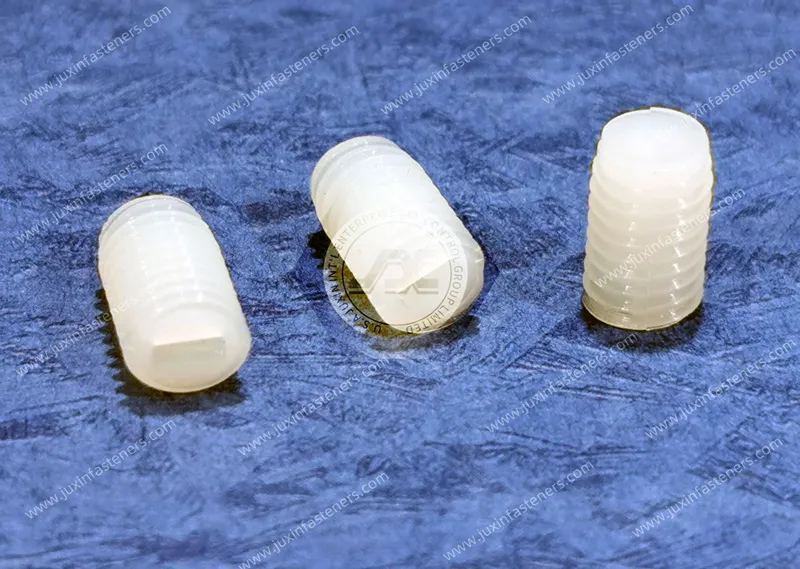
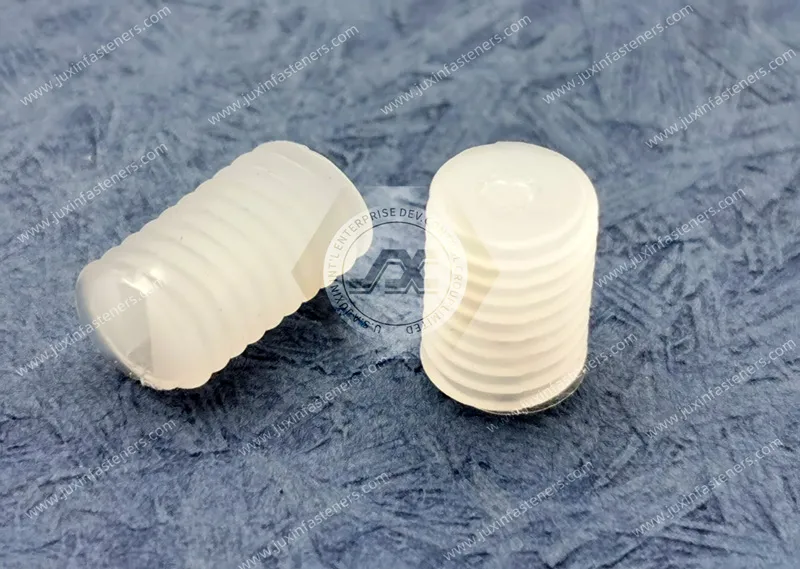
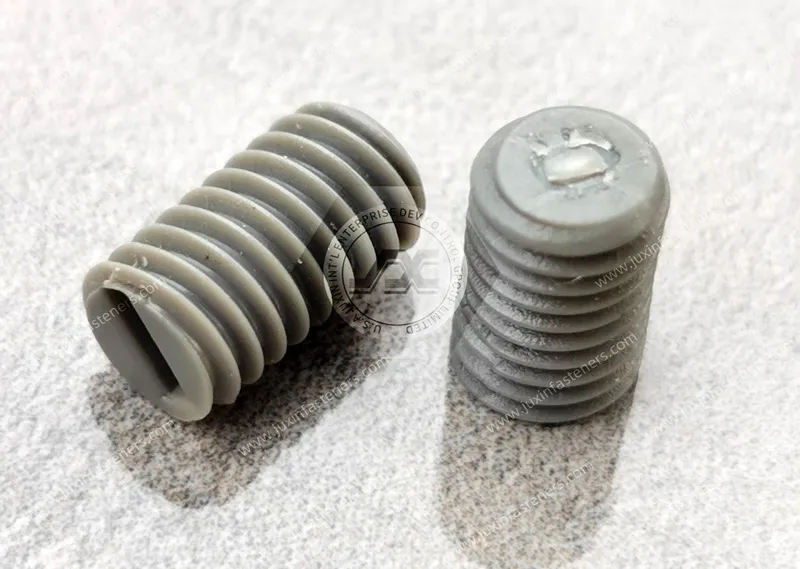
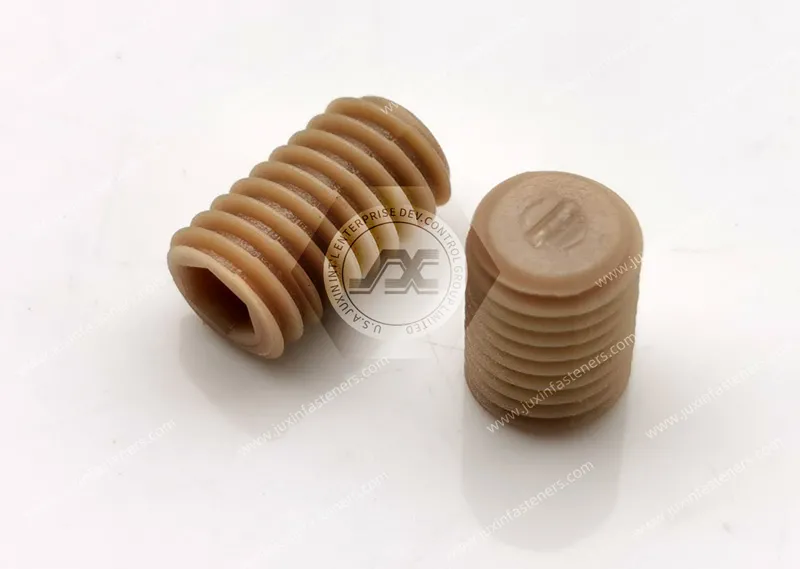
Plastic set screws, nylon grub screws, and headless polymer adjustment screws provide a specialized fastening
solution where conventional metallic set screws may create unwanted surface damage,
electrical conductivity, corrosion concerns, excessive localized contact stress, or unnecessary component weight.
Product Specification
Plastic set screws, nylon grub screws, and headless polymer adjustment screws provide a specialized fastening solution where conventional metallic set screws may create unwanted surface damage,
electrical conductivity, corrosion concerns, excessive localized contact stress, or unnecessary component weight.
Unlike conventional headed machine screws, a set screw is generally installed through a threaded hub, collar,
housing, or mounting component so that its tip applies direct contact force against a shaft, component, adjustment surface, or locating feature.
In suitable applications, plastic set screws, nylon set screws, plastic grub screws, nylon grub screws, and related non-marring set screws can be used for:
component positioning;
light-duty shaft retention;
optical adjustment;
sensor positioning;
knob retention;
collar positioning;
instrument adjustment;
electrical interface separation;
temporary locking;
precision equipment assembly.
These components are particularly relevant to precision instruments, optical equipment, electronics, medical equipment, industrial automation,
robotics, test and measurement equipment, semiconductor equipment, and laboratory systems.
However, replacing a steel set screw with a polymer version is not a direct material substitution.
The functional system must be evaluated as:
Set Screw Material + Thread Geometry + Point Geometry + Mating Thread + Contact Surface + Tightening Torque + Required Holding Force + Environment
Juxin Fasteners supplies standard and custom nylon machine screws, plastic set screws, headless polymer screws, plastic nuts, washers, spacers, standoffs,
and drawing-based custom molded plastic fasteners for industrial OEM applications.
Engineering and sourcing evaluation can begin from an existing manufacturer part number, OEM part number, physical sample, 2D drawing,
3D CAD model, thread specification, shaft information, or application requirement.
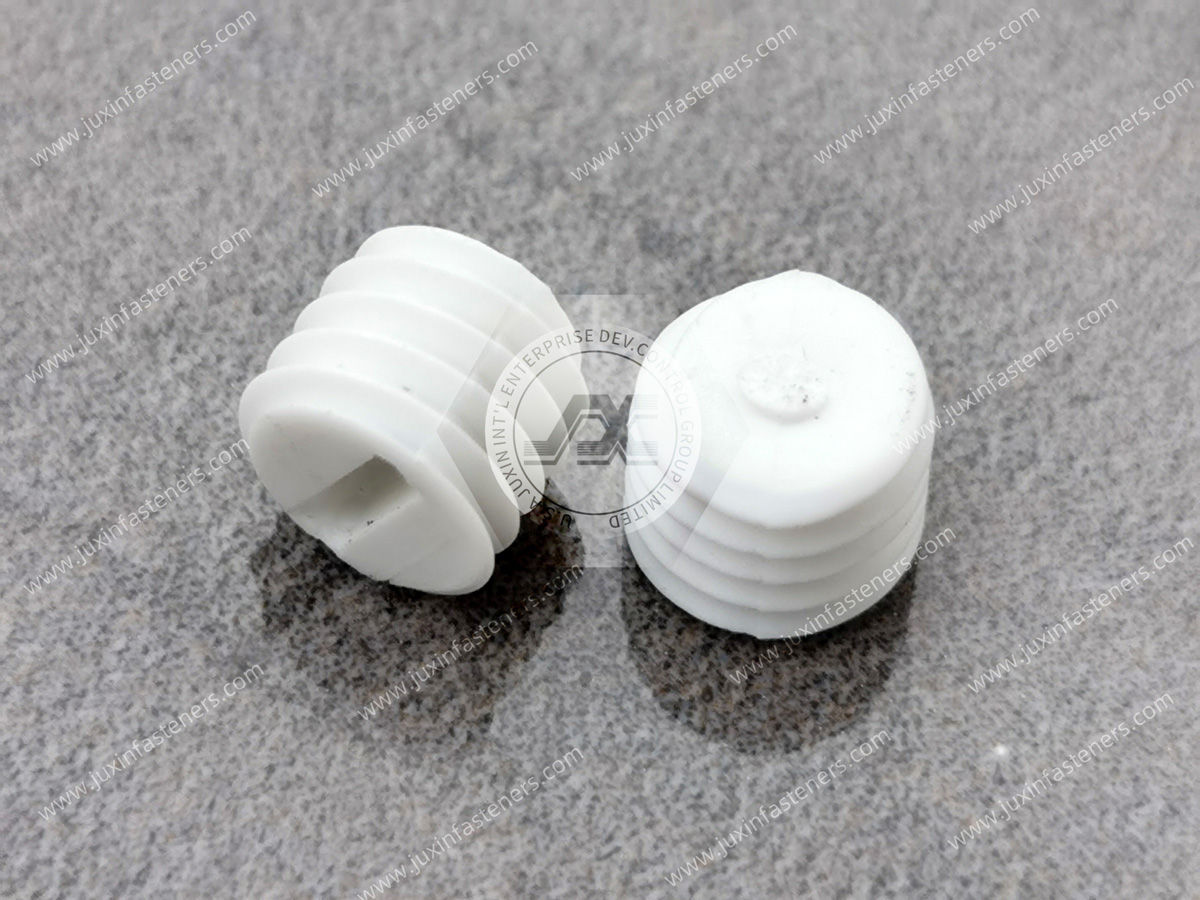
A plastic set screw is a threaded polymer fastener, normally without a conventional projecting head, designed to apply localized contact force through its tip.
Depending on the assembly, it may be used to:
prevent relative movement;
position one component relative to another;
hold an adjustment setting;
retain a knob or collar;
provide controlled contact against a sensitive surface.
In British and many international sourcing contexts, the term grub screw is also commonly used.
Therefore, buyers may search for the same general product family using terms such as:
plastic set screw;
nylon set screw;
plastic grub screw;
nylon grub screw;
headless plastic screw;
insulating set screw;
non-marring set screw.
These terms overlap, but the actual engineering specification still depends on the thread, drive, tip geometry, material, and application.
Metal set screws can provide high localized contact pressure and substantial holding capability.
For many structural or high-torque applications, that is desirable.
However, aggressive metallic contact can also:
mark polished shafts;
create indentations;
damage coatings;
generate burrs;
alter precision surfaces.
A suitable polymer set screw can provide a more compliant contact interface.
This makes plastic set screws useful when the design priority is not maximum possible holding force but rather a balance of:
Positioning + Surface Protection + Adequate Retention
Therefore:
Non-marring performance and maximum holding force are usually competing design objectives.
The correct fastener depends on which objective matters more.
A set screw and a conventional machine screw should not be treated as interchangeable merely because they share the same nominal thread.
A machine screw normally generates clamp load through its head.
A set screw generally generates contact force through its tip.
That creates two fundamentally different load paths.
Head → Clamped Components → Mating Thread
Drive → Thread → Tip → Shaft / Contact Surface
The point geometry is therefore a functional part of a set screw specification.
See our Nylon Machine Screws solutions for conventional polymer clamping applications.
Drive selection affects installation access, achievable tightening input, and risk of damage to the polymer fastener.
An internal hex or socket drive provides compact tool access because the driving feature remains inside the screw body.
Potential advantages include:
recessed installation;
compact assembly packaging;
compatibility with common hex-key tooling;
no projecting head.
However, plastic socket geometry has lower torque capability than an equivalent steel socket.
Excessive torque can damage:
socket corners;
thread flanks;
the screw body;
the transition around the drive recess.
Therefore:
Hex socket geometry ≠ metal-fastener torque capability.
Installation limits must be established for the actual polymer fastener.
A slotted drive can provide a simple tool interface using a flat-blade screwdriver.
Potential applications include:
low-torque adjustment;
laboratory equipment;
instrumentation;
recessed positioning;
light retention.
The designer should evaluate screwdriver access and the possibility of slot damage if excessive torque is applied.
Custom headless polymer fasteners can potentially use other drive geometries where required by an OEM drawing.
The appropriate drive should be selected according to:
required installation torque;
available radial and axial access;
tool type;
service frequency;
screw diameter;
polymer material.
One of the most important differences between set screws is the tip.
Two screws with the same thread and length can perform very differently if their point geometries differ.
Relevant configurations can include:
flat point;
dog point;
application-specific rounded or modified contact geometry;
other drawing-defined tip forms.
The correct choice depends on whether the objective is:
frictional holding;
positioning;
repeatable location;
surface protection;
engagement with a dedicated feature.
Therefore:
Same thread + same length + different point ≠ equivalent set screw.
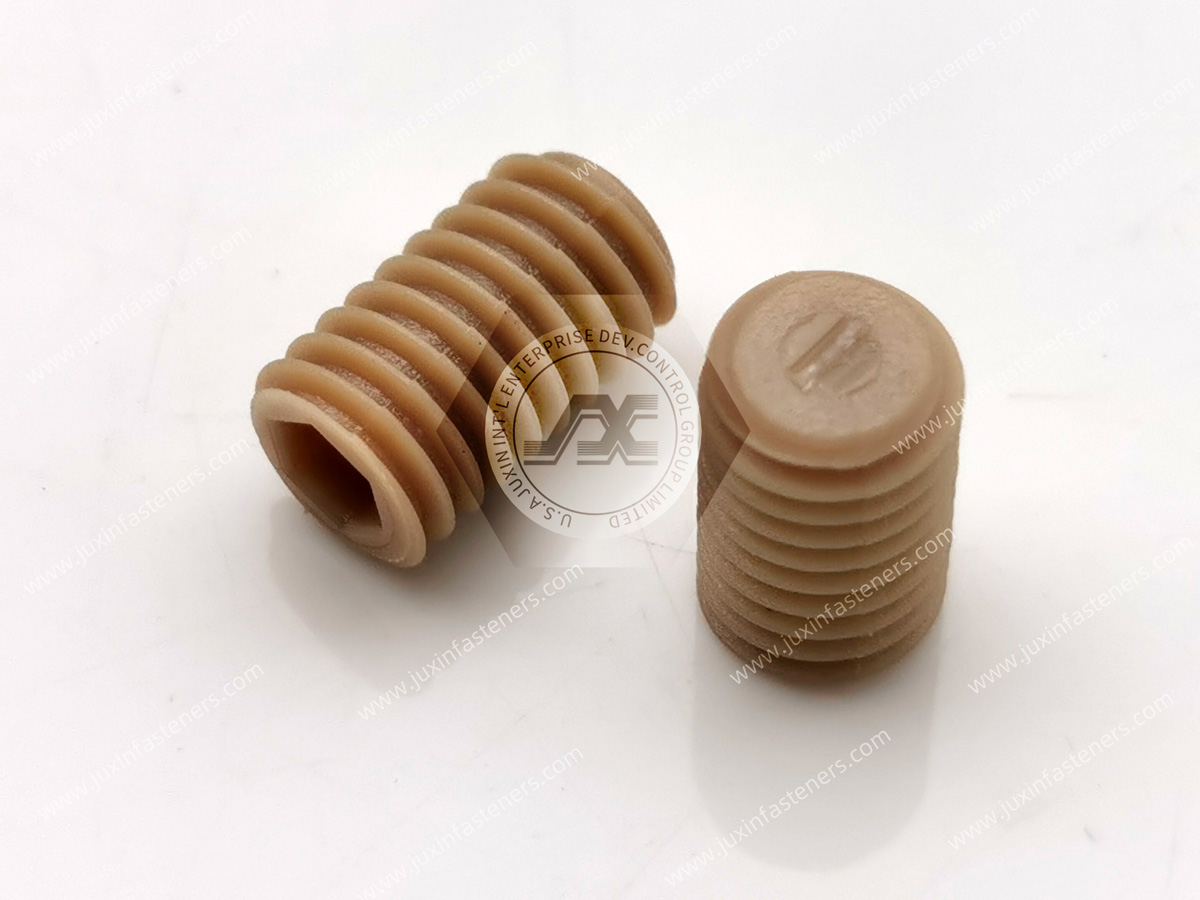
A flat point provides a relatively broad contact interface compared with sharper metallic set-screw tips.
This can be useful where minimizing surface marking is important.
Potential applications include:
polished shafts;
instrument components;
adjustment assemblies;
knobs;
lightweight collars;
sensitive surfaces.
However, the holding force depends strongly on:
contact force;
friction;
shaft material;
surface condition;
shaft diameter;
applied external load.
A flat polymer tip should not be expected to provide the same bite as an aggressive metallic point.
A dog-point design incorporates an extended tip that can engage a matching hole, slot, recess, or locating feature.
This changes the retention mechanism.
Instead of relying only on friction, the joint can gain positive geometric location.
This can be useful for:
repeatable positioning;
alignment;
controlled travel;
indexing;
component location.
The mating feature must be designed for the actual dog-point diameter and length.
Therefore:
Dog point retention can be geometric rather than purely frictional.
This distinction is important when engineers require repeatable positioning without high surface contact pressure.
Point geometries intended to bite into a shaft can increase holding force but may conflict with the primary reason for choosing a polymer set screw.
If the application requires a non-marring interface, the designer should not automatically select the most aggressive available point.
The correct question is:
Does the application need frictional retention, positive location, or surface protection?
That decision should come before point selection.
“Non-marring set screw” is a useful commercial search term, but it should not be interpreted as a universal guarantee that no surface change can occur.
Surface response depends on:
tightening force;
contact area;
shaft material;
coating;
temperature;
vibration;
duration of loading.
A polymer tip generally offers a more compliant contact interface than a hard metal point, but sufficient contact pressure can still affect soft or sensitive surfaces.
Therefore:
Polymer contact reduces surface-damage risk; it does not eliminate contact mechanics.
Critical cosmetic or precision surfaces should be tested using the actual mating material.
Set screw applications can be divided into two broad retention mechanisms.
A flat or similar tip presses against a shaft.
Resistance to movement depends significantly on interface friction and normal force.
Conceptually:
Available Frictional Resistance ∝ Contact Force × Interface Friction
This is useful for understanding why contamination, lubricant, shaft finish, and material can change holding performance.
A dog point or other locating feature engages a matching recess or geometry.
Retention then depends less exclusively on friction.
This can provide more predictable positioning where the assembly permits a dedicated locating feature.
Gemini's original article focuses primarily on axial slip, but a set screw may experience several different functional demands.
These can include:
axial sliding;
rotational torque;
vibration;
repeated adjustment;
combined axial and torsional loading.
For example, retaining a knob on a shaft is not necessarily the same mechanical problem as preventing a collar from sliding axially.
Therefore, engineers should define:
What movement is the set screw actually preventing?
before selecting the fastener.
The curvature of a shaft affects the contact geometry between a flat set-screw tip and the shaft surface.
The same screw can create different contact conditions on:
a small-diameter shaft;
a large-diameter shaft;
a flat surface.
Therefore:
Same screw + different shaft diameter ≠ identical contact condition.
This can influence surface pressure and slip resistance.
Potential mating materials include:
stainless steel;
carbon steel;
aluminum;
engineering plastics;
coated metals;
optical or precision components.
A polymer screw contacting polished stainless steel can behave differently from one contacting aluminum or another polymer.
Design validation should therefore use the actual mating material whenever possible.
Frictional holding performance can change with:
lubricant;
oil;
dust;
coatings;
surface roughness;
cleaning residue.
A set screw validated on a clean laboratory shaft may behave differently in an actual production environment.
Therefore:
Clean prototype interface ≠ guaranteed production friction condition.
This is particularly important for applications relying primarily on frictional retention.
PA66 is commonly used for plastic threaded fasteners because suitable grades can provide a practical combination of:
mechanical strength;
toughness;
wear resistance;
moldability;
electrical properties;
corrosion-free polymer construction.
However:
PA66 is a material family, not a complete performance specification.
Actual performance can depend on:
resin grade;
moisture condition;
additives;
operating temperature;
screw geometry;
mating interface.
Material requirements should therefore be evaluated at the application level.
Polyamides absorb moisture from the environment.
Moisture can affect:
stiffness;
toughness;
dimensions;
thread behavior;
socket resistance;
contact force.
A dry PA66 set screw and a moisture-conditioned screw may not produce identical mechanical behavior.
Therefore:
Dry-state tightening performance ≠ necessarily in-service performance.
Applications with narrow retention margins should consider expected environmental conditions during validation.
POM can be considered in selected precision applications where characteristics such as low moisture absorption and dimensional stability are important.
Potential application drivers can include:
precision mechanisms;
repeated adjustment;
controlled dimensions;
low-friction interfaces.
However:
POM is not automatically superior to PA66.
Material selection should consider the complete combination of:
load;
temperature;
environment;
toughness;
dimensional requirements;
chemical exposure;
equipment requirements.
See our PA66 vs POM Fasteners engineering guide for material-selection considerations.
Reinforced polymer materials may provide increased stiffness in appropriate applications.
However, they should not automatically be selected for non-marring set-screw applications.
A stiffer or filled material can change:
contact behavior;
surface interaction;
toughness;
thread performance;
molded geometry.
Where protection of a precision surface is the primary requirement, material selection must consider both fastener strength and contact behavior.
Availability of specific reinforced grades should be confirmed during project review.
A plastic set screw is non-metallic and can avoid creating a direct metallic fastening path at selected interfaces.
This can be valuable in:
electronics;
instrumentation;
test equipment;
optical equipment;
selected electrical assemblies.
However:
Plastic set screw ≠ complete electrical isolation system.
Equipment-level electrical performance depends on:
polymer electrical properties;
voltage;
geometry;
creepage;
clearance;
contamination;
surrounding conductive components;
applicable equipment requirements.
The set screw should therefore be evaluated as one component within the electrical insulation architecture.
Polymer fasteners do not corrode in the same manner as carbon-steel fasteners.
This can be beneficial in selected environments.
However, corrosion elsewhere in the assembly can still occur.
For example, metallic components may remain subject to:
galvanic interaction;
atmospheric corrosion;
chemical exposure.
Therefore:
Plastic fastener ≠ corrosion-proof assembly.
The complete material system should be reviewed.
Plastic set screws generally have substantially lower allowable tightening torque than comparable metallic fasteners.
Potential overload modes include:
male thread stripping;
socket rounding;
slot damage;
torsional fracture;
tip deformation;
mating polymer thread damage.
The appropriate installation limit depends on:
screw diameter;
pitch;
polymer;
drive geometry;
engagement length;
mating thread;
temperature;
moisture condition.
Therefore, one universal torque value should not be applied across all plastic set screws.
A polymer set screw should not inherit the torque specification of a steel set screw merely because both are M4, M5, or another identical nominal thread size.
The materials have different:
strength;
stiffness;
torsional capability;
thread behavior;
creep characteristics.
Therefore:
Same nominal thread ≠ same installation torque.
This is a critical consideration when replacing metal hardware with polymer alternatives.
The original draft suggested a universal thread engagement of approximately 1.5–2 times nominal diameter.
That should not be treated as a fixed requirement for all polymer set screw assemblies.
Required engagement depends on:
male fastener material;
female thread material;
thread pitch;
load;
torque;
repeated service;
geometry.
A polymer screw in a metal tapped hole may have a different limiting failure mode from a polymer screw installed into a molded polymer boss.
Therefore:
Required engagement should be determined from the actual thread pair and load case.
When a plastic set screw is installed into a properly formed metal female thread, the female thread may be significantly stronger than the polymer male thread.
Potential failure can then shift toward:
male thread damage;
socket damage;
torsional failure.
This should be considered when defining assembly torque.
When both male and female threads are polymeric, the joint can be more sensitive to:
thread deformation;
creep;
temperature;
repeated adjustment;
moisture.
The complete thread pair should be validated.
Set screws may be small and recessed, making correct thread starting important.
A mismatch in:
thread system;
pitch;
diameter;
mating-thread condition;
can cause binding or thread damage.
For procurement and second-source projects, the specification should explicitly identify whether the thread is metric or Unified and include the correct pitch or threads per inch.
A plastic set screw can remain under sustained compressive and tensile stresses after tightening.
Engineering polymers exhibit time-dependent behavior.
Over time, contact force can change due to:
polymer stress relaxation;
local tip deformation;
mating polymer creep;
temperature;
moisture.
Therefore:
Initial holding force ≠ guaranteed long-term holding force.
This is particularly important where the set screw relies only on friction to resist motion.
See our Polymer Creep & Stress Relaxation in Plastic Fasteners engineering guide for additional joint-design considerations.
Polymer set screws generally have different thermal expansion behavior from steel, stainless steel, aluminum, and other common equipment materials.
Temperature changes can therefore alter:
thread fit;
contact pressure;
positioning;
retention force.
Applications experiencing thermal cycling should evaluate the complete assembly across the intended temperature range.
This can be particularly important in:
industrial automation;
semiconductor equipment;
electronics;
optical systems;
outdoor equipment.
A set screw that performs correctly under static laboratory conditions may loosen or lose holding capability under dynamic vibration.
Potential concerns include:
rotational loosening;
loss of contact force;
shaft movement;
progressive wear.
Vibration-sensitive applications should therefore evaluate:
required holding force;
tightening method;
polymer relaxation;
auxiliary retention architecture;
actual vibration environment.
A thread-locking method should never be assumed compatible with a polymer without checking the chemical compatibility and application requirements.
Some adhesives, thread lockers, lubricants, and cleaning chemicals can interact with engineering polymers.
Before applying a chemical retention product to a plastic set screw, engineers should verify:
polymer compatibility;
curing chemistry;
operating temperature;
service requirements.
Therefore:
Metal-fastener thread-locking practice should not automatically be transferred to polymer fasteners.
Mechanical retention may be preferable in some applications.
Plastic set screws can be useful in selected precision instrument assemblies requiring:
positioning;
light locking;
adjustment;
reduced risk of surface marking.
Relevant considerations include:
dimensional stability;
point geometry;
thread fit;
adjustment frequency;
temperature.
Potential applications include selected:
lens-mount adjustment;
optical fixture positioning;
lightweight component location;
instrument alignment.
For precision optical assemblies, designers should carefully evaluate:
polymer creep;
thermal expansion;
contact force;
dimensional stability.
A polymer fastener should not automatically be assumed suitable for high-precision optical alignment without validation.
Plastic set screws can be considered for selected:
instrument adjustment;
positioning;
equipment fixtures;
lightweight component retention.
Project-specific material, cleaning, sterilization, regulatory, and equipment requirements must govern final material selection.
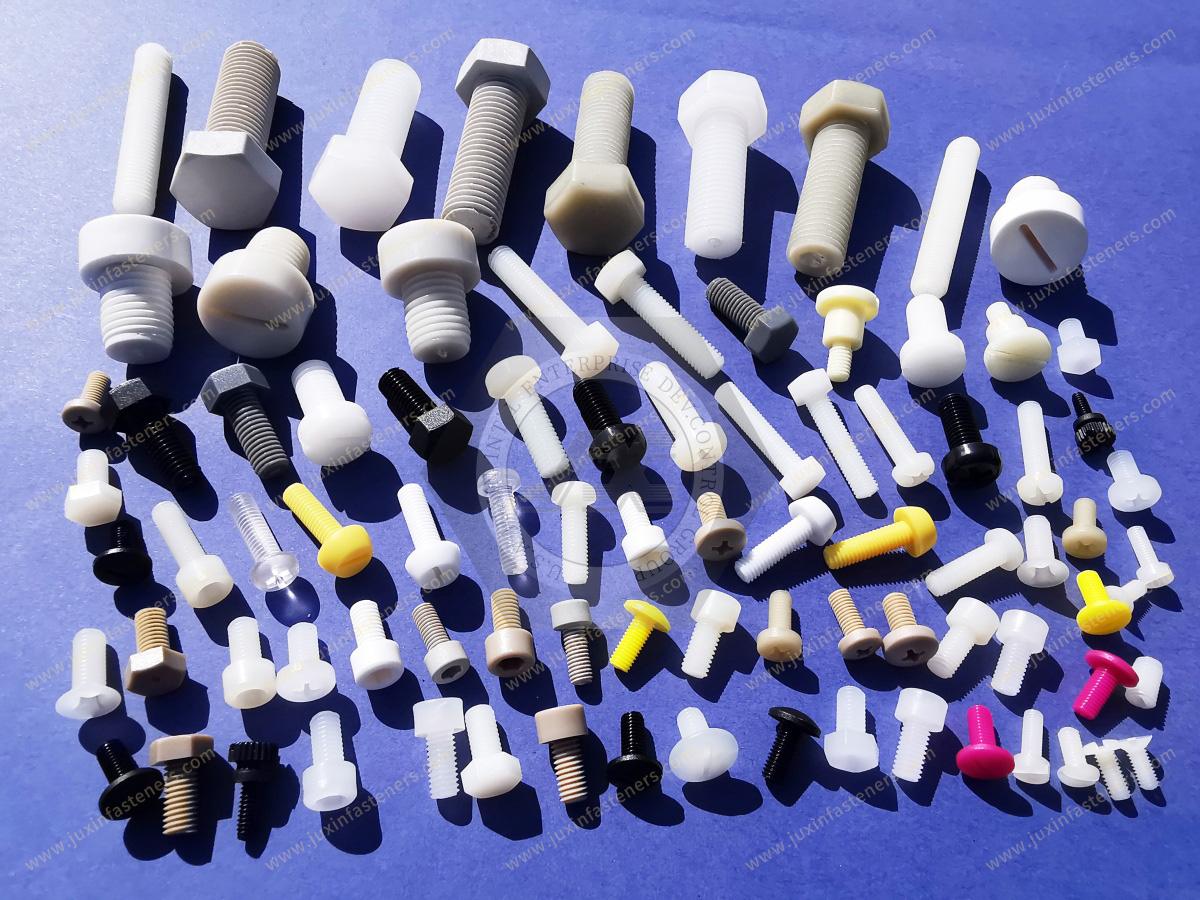
Potential uses include:
sensor positioning;
adjustment hardware;
lightweight component retention;
non-metallic fastening interfaces.
Electrical insulation requirements should be evaluated at equipment level rather than inferred solely from the fastener material.
Potential applications include:
sensor mounts;
knobs;
collars;
adjustment components;
light-duty positioning systems.
Dynamic loads and vibration should be considered where machinery is continuously operating.
Plastic set screws may be useful for selected:
sensor adjustment;
cable-management hardware;
lightweight positioning components;
non-marring interfaces.
They are not a direct substitute for high-load metallic locking hardware in structural robot joints.
Precision equipment can require:
non-metallic components;
controlled surface contact;
positioning hardware;
specialized material requirements.
For semiconductor equipment, project-specific requirements regarding:
cleanliness;
outgassing;
temperature;
chemical exposure;
particle generation;
must be confirmed before material selection.
A standard PA66 fastener should not automatically be represented as suitable for cleanroom or vacuum applications.
Repeated configuration and adjustment can make polymer set screws useful for selected:
fixtures;
positioning components;
instrument housings;
test assemblies.
Repeated thread cycling should be included in validation where adjustment frequency is high.
Possible causes include:
incorrect pitch;
damaged female thread;
cross-threading;
oversized molded thread;
contamination.
Possible causes include:
excessive torque;
undersized tool;
worn tool;
insufficient socket geometry;
softened polymer condition.
Possible causes include:
excessive torque;
insufficient engagement;
damaged mating thread;
inappropriate material or geometry.
Possible causes include:
insufficient contact force;
low interface friction;
contaminated shaft;
incorrect point geometry;
excessive external load;
polymer relaxation.
Possible causes include:
excessive tightening;
sensitive surface;
unsuitable point geometry;
contamination trapped at the interface.
Even polymer fasteners should be tested against highly sensitive surfaces.
Possible contributors include:
polymer stress relaxation;
temperature;
moisture;
mating component creep;
vibration.
Possible contributors include:
differential thermal expansion;
reduced contact force;
material dimensional changes.
Possible causes include:
inadequate initial retention;
joint movement;
stress relaxation;
unsuitable retention architecture.
A proper failure investigation should examine:
Fastener + Mating Thread + Contact Surface + Load + Environment + Installation Process
rather than the set screw alone.
A procurement request may initially state:
“We need an M4 × 8 nylon set screw.”
That is not sufficient to guarantee interchangeability.
Two M4 × 8 polymer set screws can differ in:
pitch;
drive style;
socket size;
socket depth;
point geometry;
thread profile;
polymer;
dimensional tolerance;
contact behavior.
Therefore:
Same thread and length ≠ equivalent set screw.
For second-source qualification, the complete functional interface should be reviewed.
Provide:
manufacturer;
manufacturer part number;
OEM part number;
drawing;
CAD model;
physical sample;
photographs.
Confirm:
metric or Unified thread;
nominal diameter;
pitch / TPI;
overall length;
threaded length where applicable;
mating thread material.
Specify:
hex socket;
slot;
other drive;
tool size where specified;
available installation access.
Identify:
flat point;
dog point;
drawing-defined geometry;
point diameter;
point length where relevant.
Provide:
shaft diameter;
shaft material;
coating;
surface finish where critical;
cosmetic or non-marring requirement.
Identify whether the fastener must resist:
axial movement;
rotational movement;
vibration;
positioning drift;
combined loading.
Specify:
minimum temperature;
maximum temperature;
humidity;
chemical exposure;
vibration;
cleanliness requirements where applicable.
Evaluate the candidate fastener in the actual or representative assembly for:
thread fit;
installation torque;
drive integrity;
surface marking;
holding capability;
adjustment behavior.
Where required, evaluate:
axial slip;
rotational slip;
vibration;
thermal cycling;
repeated adjustment;
long-term retention.
After engineering approval, proceed to:
commercial quotation;
inspection requirements;
material documentation;
packaging;
production planning.
Standard set screws cover many positioning and light-retention applications, but proprietary equipment may require drawing-based geometry.
Custom requirements can include:
special thread size;
custom overall length;
dedicated socket geometry;
special point diameter;
custom dog-point length;
modified flat point;
proprietary adjustment tip;
custom color;
specified polymer.
Juxin Fasteners can support drawing-based custom plastic fastener sourcing through:
2D drawing review;
3D CAD review;
physical sample comparison;
dimensional analysis;
DFM discussion;
material evaluation;
tooling evaluation;
sample validation;
production sourcing.
See our Custom Molded Plastic Fasteners solutions for proprietary OEM plastic fastening components.
For faster engineering review and quotation, provide as much of the following information as possible.
manufacturer;
manufacturer part number;
OEM part number;
drawing;
CAD model;
physical sample;
photographs.
metric or Unified;
nominal diameter;
pitch / TPI;
overall length;
mating thread material;
engagement length.
hex socket;
slot;
other drive type;
tool size where specified.
flat point;
dog point;
custom point;
point diameter;
point length.
shaft diameter;
shaft material;
surface coating;
surface-finish requirement;
non-marring requirement.
axial holding requirement;
rotational holding requirement;
adjustment function;
tightening torque if specified;
vibration;
service frequency.
minimum operating temperature;
maximum operating temperature;
humidity;
chemical exposure;
cleanliness requirements;
indoor / outdoor environment.
PA66;
POM;
other specified polymer;
color;
project-specific material requirements.
sample quantity;
production quantity;
expected annual usage;
delivery schedule;
RoHS declaration;
REACH declaration;
material documentation;
lot traceability;
inspection requirements.
Providing the complete interface allows engineering and sourcing teams to evaluate actual function rather than selecting a replacement from nominal thread size alone.
Related Juxin Fasteners product and engineering solutions include:
Nylon Machine Screws for conventional polymer threaded fastening;
Nylon Thumb Screws for tool-free manual adjustment and service access;
Nylon Hex Nuts for polymer threaded assemblies;
Nylon Flat Washers for bearing-area and interface applications;
Plastic Spacers and Standoffs for precision spacing and component separation;
PA66 vs POM Fasteners for polymer material selection;
Polymer Creep & Stress Relaxation in Plastic Fasteners for long-term retention analysis;
Custom Molded Plastic Fasteners for proprietary OEM fastening geometry.
Each product family addresses a different mechanical function and should be selected according to the actual load path, mating interface, environment, service requirement, and expected lifecycle.
Juxin Fasteners supports OEM engineering teams, mechanical designers, precision instrument manufacturers, optical equipment companies,
automation engineers, procurement departments, supplier-development engineers, strategic sourcing teams, and contract manufacturers requiring standard or custom plastic fastening components.
For plastic set screw and nylon grub screw projects, the sourcing pathway can begin with:
Existing Part / Drawing / Sample → Thread & Drive Review → Point Geometry Review → Shaft & Contact Interface Review
→ Load / Torque / Environment Review → Candidate Fastener → Sample Validation → Functional Testing → Second-Source Qualification → Production RFQ
This process can support:
new equipment development;
non-marring positioning;
precision adjustment;
sensor positioning;
light-duty shaft retention;
metal-to-plastic fastener evaluation;
replacement component sourcing;
supplier consolidation;
second-source qualification;
obsolete component replacement;
custom polymer set screw development.
Send us your existing supplier part number, OEM part number, 2D drawing, 3D CAD model, physical sample, thread specification, point geometry,
shaft material, shaft diameter, load requirement, operating environment, documentation requirements, and expected annual volume for technical review.
Email: info@juxinfasteners.com
Website: www.juxinfasteners.com
Product Packaging
Packaging Standard
At Juxin Fasteners, we apply standardized export packaging to ensure product protection, traceability, and compliance with international logistics requirements.
1. Standard Export Packaging
Unless otherwise specified, all products will be packed according to our factory standard export packaging, which includes:
Moisture-resistant inner protection
Poly bag or small box packing as required
Reinforced export cartons
Clear labeling with part number, specification, batch number, and quantity
Palletizing for sea or air shipment when necessary
Our standard packaging is designed to ensure safe transportation, efficient warehousing, and long-distance international shipping.
2. Customized Packaging Options
We also provide customized packaging solutions according to customer requirements, including but not limited to:
Private labeling
Customized barcodes
Specific carton dimensions
Retail packaging
Special pallet configuration
Customer-specific marking and identification
So that you know, customized packaging may involve additional costs and extended lead time depending on the complexity of the requirements.
3. Compliance & Quality Assurance
All packaging processes are controlled under our ISO 9001 quality management system to ensure consistency, traceability, and product integrity throughout the supply chain.
Product Pictures
Contact Us
Tel.:
+86 020 8621 0320
+86 020 3121 6067
E-mail:
Technical Support:
Navigation
SEND INQUIREY