Call Us
+86 136 6007 9809
Call Us
+86 136 6007 9809

In industrial construction, heavy machinery installation, structural steel assembly, equipment mounting, and engineered mechanical systems,
the fastening method is determined not simply by bolt diameter or nominal strength. Engineers must consider how loads are transferred, how the joint is installed, what mechanical properties are required, what substrate is involved, and which standards or project specifications apply.
Product Specification
In industrial construction, heavy machinery installation, structural steel assembly, equipment mounting, and engineered mechanical systems,
the fastening method is determined not simply by bolt diameter or nominal strength. Engineers must consider how loads are transferred, how the joint is installed,
what mechanical properties are required, what substrate is involved, and which standards or project specifications apply.
Standard bolts, high-strength structural bolting assemblies, cast-in anchor bolts, mechanical expansion anchors, and adhesive anchoring systems solve different engineering problems.
They should therefore not be treated as interchangeable products.
For engineering and procurement teams, the most useful approach is to begin with the joint or anchoring requirement and then select the appropriate fastening system based on load path, material, installation method, environment, tolerances, and applicable specifications.
This guide compares these fastening systems and explains the technical and sourcing considerations that should be reviewed before quotation and production.
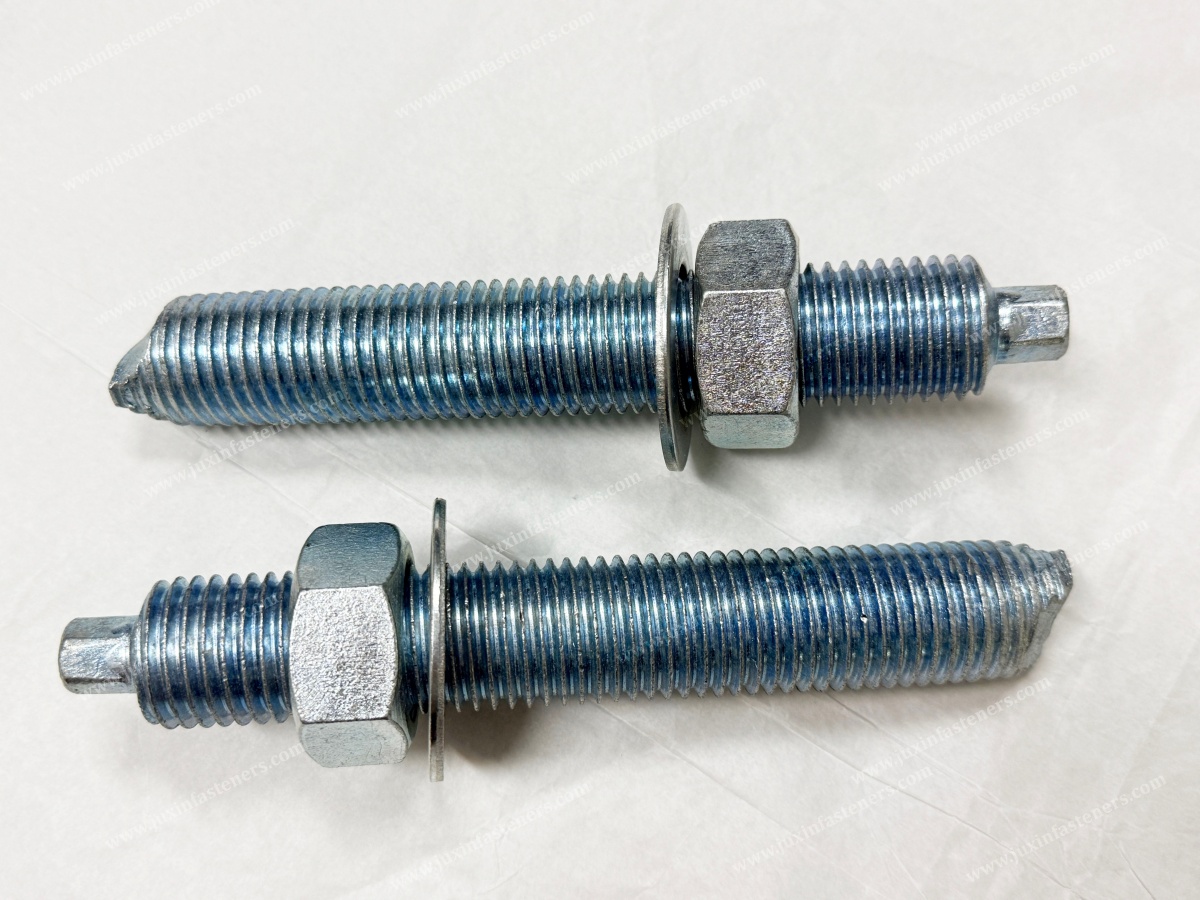
The term “standard bolt” can describe a conventional dimensional or commercially available bolt rather than a specific mechanical strength level.
For metric carbon steel and alloy steel fasteners, mechanical property classes such as 4.8, 5.6, 8.8, 10.9 and 12.9 are defined within relevant fastener standards, including ISO 898-1 for applicable screws, studs and bolts.
This distinction is important because 8.8 should not automatically be classified as a low-strength or ordinary bolt.
Property class 8.8 is widely used in mechanical assemblies and can provide substantially higher mechanical properties than lower classes such as 4.8 or 5.6.
The correct selection depends on the joint design rather than the label “standard.”
A conventional metric bolt may be selected for general mechanical assembly where the required tensile, shear, preload, fatigue performance, environmental resistance,
and installation requirements can be satisfied by the specified fastener.
Property class, diameter, thread geometry, grip length, joint stiffness, preload, and mating materials all influence joint performance.
For example, an M10 bolt does not have a single universal load capacity simply because its nominal diameter is M10.
The actual joint behavior depends on the specified property class, thread condition, engagement, preload, load direction, joint geometry, and design methodology.
In structural steelwork and fabricated assemblies, bolt-hole clearance is normally specified according to the applicable structural standard or project specification.
It should not be assumed that every “standard bolt” uses a fixed clearance such as exactly 1.0 mm over nominal diameter.
For procurement, the drawing or engineering specification should define the required hole size, tolerance, fit, and any special requirements where these factors affect assembly or load transfer.
General-purpose metric bolts and screws are widely used in:
Machinery assemblies
Equipment brackets
Sheet metal structures
Automotive components
Industrial enclosures
Frames and supports
Maintenance assemblies
General mechanical joints
The appropriate property class and configuration should always be selected according to the application.
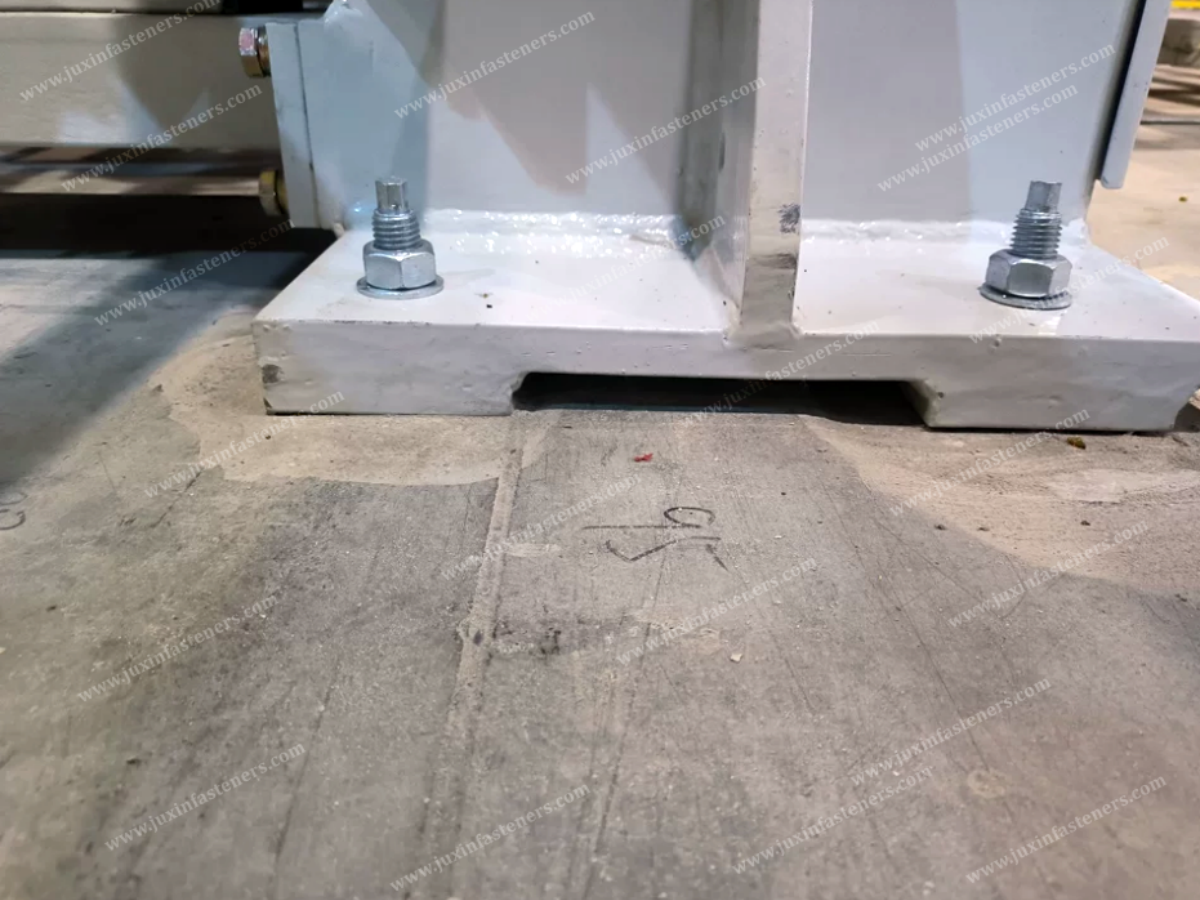
High-strength structural bolting systems are designed for engineered structural connections where controlled mechanical properties, installation procedures, and load-transfer behavior are important.
The phrase “high-strength bolt” can refer to fasteners with relatively high mechanical properties, but structural bolting assemblies are more specifically governed by the requirements of the relevant structural standard.
For example, European structural bolting assemblies can be specified under EN 14399 for high-strength structural bolting assemblies designed for preloading,
while other structural applications may use different standards or specifications.
This means that engineers should identify the complete bolting system and applicable standard rather than selecting a bolt solely because it has a high property class.
Metric fasteners may use property classes such as 8.8, 10.9 and 12.9 under applicable fastener standards.
However, a property class should not be treated as a substitute for a structural product standard.
For structural applications, the engineer may also need to consider:
Bolt and nut compatibility
Washer requirements
Preload requirements
Assembly method
Surface condition
Thread condition
Joint slip requirements
Hole geometry
Environmental exposure
Inspection and installation procedures
The correct combination depends on the structural specification and design requirements.
Some structural bolting systems are specifically designed for controlled preload.
In these connections, the installation method is part of the engineering system. The required preload, tightening method, bolt assembly, surface condition, and inspection requirements may all affect joint behavior.
Therefore, simply specifying a high-strength bolt without specifying the required structural assembly system may not provide enough information for manufacturing or procurement.
One of the most important distinctions in structural bolted-joint engineering is how shear load is transferred.
In a preloaded friction-type connection, the clamping force between connected plates creates resistance to relative movement through friction at the faying surfaces.
The design therefore depends on factors such as:
Required preload
Bolt assembly
Surface condition
Slip factor where applicable
Joint geometry
Applied load
Installation method
Applicable structural design rules
The objective is to control or prevent slip under the specified design condition.
Friction-type connections can be important where slip behavior is a design consideration, including certain fatigue-sensitive or dynamically loaded structures.
However, the suitability of the connection must be established by the applicable design standard rather than assumed from the term “friction-type.”
In a bearing-type bolted connection, relative movement can occur until the bolt comes into bearing against the hole wall under the relevant loading condition.
Load transfer can then involve:
Bolt shear
Bearing between bolt and connected material
Bearing capacity of the connected plates
Hole geometry
Edge distance
Bolt spacing
Joint configuration
Bearing-type connections are widely used in structural engineering and are not inherently unsuitable simply because they permit slip before bearing.
The correct connection type depends on the structural design requirements and the applicable engineering code.
Cast-in anchor bolts are used when steel structures, equipment bases, columns, or other components need to be connected to a concrete foundation.
Unlike a conventional threaded bolt joining two metal components, a foundation anchor transfers load between the steel component and the concrete structure.
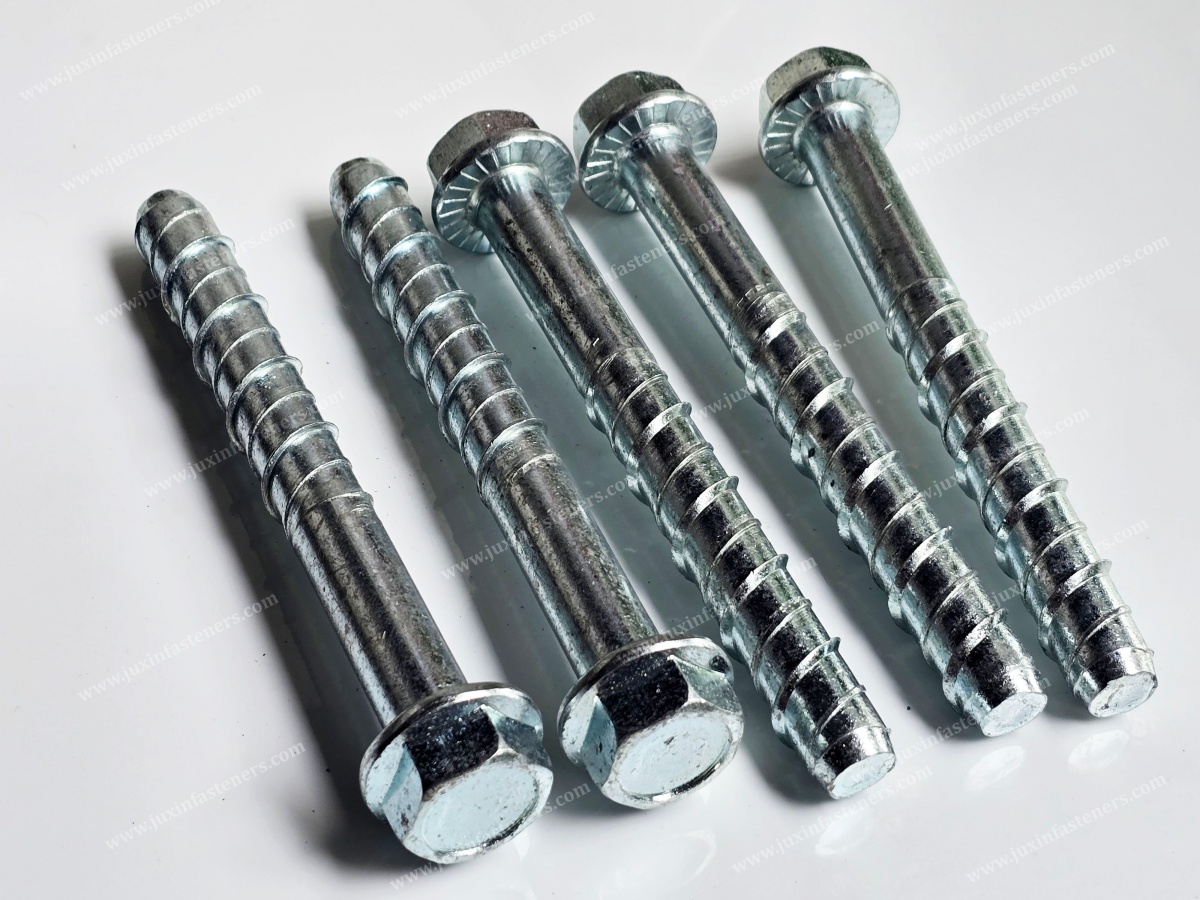
A typical column-base connection may involve:
Steel column or equipment base
Base plate
Anchor bolts
Nuts and washers
Grout where specified
Reinforced concrete foundation
The anchor bolt transfers tension and shear forces between the connected steel assembly and the foundation system.
The required anchor design depends on the structural calculation and project specification.
Anchor bolts should not automatically be assigned a generic structural steel grade such as S235JR or S355JR simply because these are familiar European structural steel grades.
The anchor material, mechanical properties, dimensions, coating, nuts, washers, thread configuration, embedment and installation requirements should be defined by the engineering design and applicable specification.
Anchor performance can depend on several factors, including:
Concrete strength
Anchor diameter
Embedment depth
Effective embedment
Edge distance
Anchor spacing
Concrete member thickness
Tension loading
Shear loading
Concrete breakout
Steel strength
Installation conditions
These parameters must be evaluated as part of the structural design.
A longer anchor is therefore not automatically a stronger anchor. The complete connection and concrete geometry must be considered.
When an installation needs to be made after concrete has already cured, engineers may consider mechanical post-installed anchors or adhesive anchoring systems.
These systems have different installation mechanisms and design considerations.
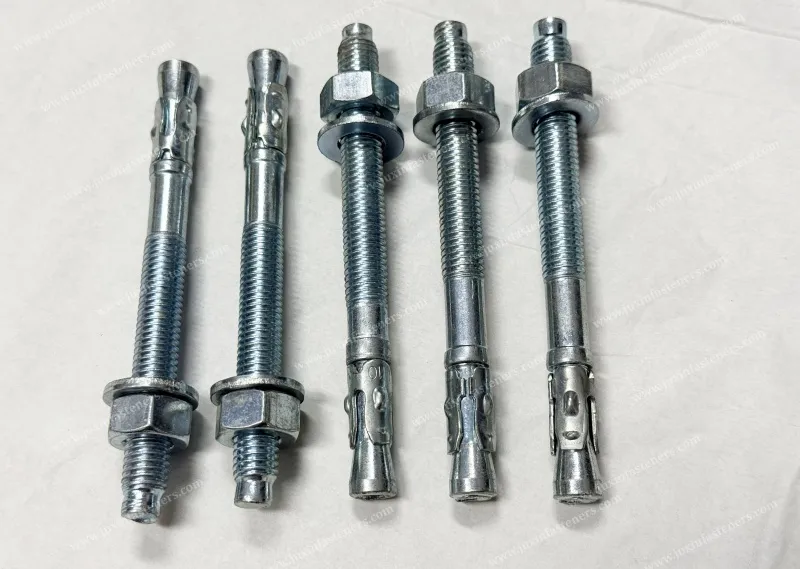
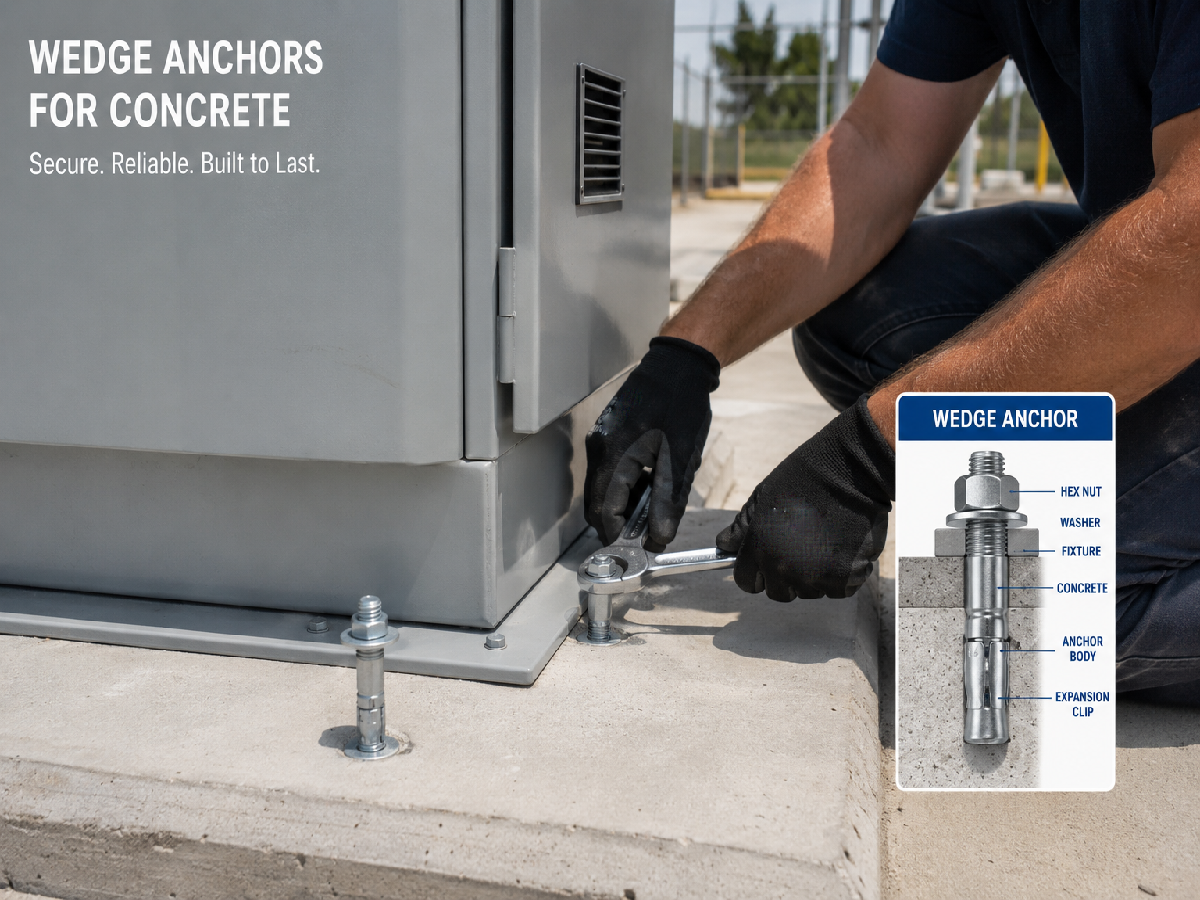
Mechanical expansion anchors use a mechanical expansion mechanism to develop resistance within the concrete.
Depending on the anchor design, tightening the fastener activates a wedge, sleeve, or other expansion mechanism that engages the surrounding substrate.
Their performance can be affected by:
Concrete strength
Hole diameter
Hole depth
Embedment
Edge distance
Anchor spacing
Installation torque
Installation cleanliness
Cracked or uncracked concrete condition
Loading direction
Environmental conditions
Expansion forces can be important when the anchor is installed close to a concrete edge or another anchor. Therefore, edge distance and spacing must be considered during engineering design.
Mechanical expansion anchors are used in a wide range of applications, from equipment mounting to engineered structural installations, depending on the anchor type and its applicable approvals or design requirements.
Adhesive anchoring systems use a resin-based adhesive to bond a threaded rod or other steel element into a drilled hole in concrete or another approved substrate.
Common adhesive technologies include epoxy, vinylester and polyester-based systems, although the appropriate chemistry depends on the specific product and application.
A typical installation sequence may include:
Drilling the hole to the specified diameter and depth
Cleaning the hole according to the adhesive manufacturer's procedure
Installing the adhesive
Inserting the threaded rod or anchor element
Allowing the adhesive to cure for the specified time
Applying the required load only after the installation has reached the required condition
Unlike mechanical expansion anchors, adhesive anchors do not rely on a conventional mechanical wedge expansion mechanism to create holding force.
However, this does not mean that every adhesive anchor has zero installation-related limitations or that it is automatically suitable for every edge-distance, temperature, seismic, fatigue, or moisture condition.
The selected adhesive system must be evaluated against its technical approval, installation requirements, substrate condition, temperature range, loading condition, and applicable design method.
A common procurement mistake is to treat “anchor” as a generic product category and compare unit prices without considering the engineering mechanism.
The two systems can differ significantly in:
Installation method
Required hole preparation
Load-transfer mechanism
Edge-distance requirements
Spacing requirements
Installation equipment
Curing requirements
Inspection requirements
Environmental limitations
Applicable approvals
Design methodology
For this reason, an engineer should define the application and required performance before purchasing an alternative anchor system.
A lower-cost anchor is not necessarily an equivalent replacement if the load-transfer mechanism or installation requirements are different.
| Fastener or Anchoring System | Primary Load-Transfer Principle | Typical Engineering Considerations | Common Application Areas |
|---|---|---|---|
| Standard metric bolts | Mechanical clamping and joint load transfer | Property class, diameter, thread, preload, joint design | Machinery, brackets, frames, equipment |
| High-strength structural bolting assemblies | Controlled preload, friction and/or bearing depending on connection design | Structural standard, preload, assembly, surface condition, hole geometry | Structural steelwork, engineered structures |
| Cast-in anchor bolts | Mechanical load transfer between steel component and concrete foundation | Embedment, concrete strength, edge distance, steel strength, foundation design | Column bases, equipment foundations |
| Expansion anchors | Mechanical expansion and substrate interaction | Hole size, embedment, torque, edge distance, spacing, concrete condition | Equipment mounting, structural and industrial installations |
| Chemical/adhesive anchors | Adhesive bond between anchor element and substrate | Hole cleaning, adhesive system, cure time, embedment, temperature, concrete condition | Equipment bases, retrofits, structural connections where approved |
This comparison should be used as an engineering starting point rather than as a universal product-selection rule.
The most reliable selection process starts with the joint rather than the product name.
Determine whether the connection is primarily exposed to:
Tensile load
Shear load
Combined tension and shear
Static load
Cyclic load
Impact or vibration
Structural load
Assembly load
The load path determines which fastening mechanism is appropriate.
Metal-to-metal joints, steel-to-concrete connections, sheet-metal assemblies, and composite structures require different fastening approaches.
For example, a conventional threaded bolt can directly join two metal components when access and joint geometry permit, while a concrete foundation connection requires a dedicated anchoring strategy.
Consider:
Through-access or blind-side installation
Pre-assembly or field installation
Available installation space
Hole access
Torque requirements
Curing requirements
Assembly sequence
Maintenance requirements
These practical factors can eliminate otherwise technically suitable fastening options.
Depending on the application, specifications may reference standards from organizations such as:
ISO
DIN
EN
ASME
ANSI
SAE
ASTM
BS
The exact standard should be selected according to the fastener type and application.
For example, ISO 898-1 addresses mechanical and physical properties of applicable carbon steel and alloy steel metric screws, studs and bolts.
Structural bolting assemblies may instead be specified under dedicated structural standards such as EN 14399 or applicable ASTM specifications.
An engineering drawing or purchase specification should identify the applicable standard rather than relying only on a commercial product description.
Once the engineering requirement is established, procurement teams need to compare suppliers on an equivalent technical basis.
The following factors can materially affect quotation and supply:
Confirm:
Part type
Diameter
Thread
Length
Head geometry
Material
Property class where applicable
Surface finish
Washer or nut requirements
Special dimensions
Applicable standard
Quantity affects manufacturing economics, tooling considerations, production planning, packaging, and quotation structure.
For custom fasteners, it is useful to distinguish between:
Prototype quantity
Initial production quantity
Estimated recurring quantity
Annual demand, when known
However, an RFQ does not always need a complete annual forecast before a supplier can begin reviewing the project.
Some custom fasteners require dedicated tooling or process development.
Tooling cost may depend on:
Part geometry
Material
Production process
Required tolerances
Expected volume
Existing tooling availability
The supplier should clarify whether tooling is included, charged separately, amortized, or already available.
Corrosion protection should be selected according to the application environment and applicable requirements.
Potential finishes can include:
Trivalent zinc
Zinc-nickel alloy
Black zinc
Other specified protective systems
The quotation should identify the finish clearly because different coatings can affect appearance, corrosion resistance, dimensional characteristics, and cost.
Depending on the project, procurement may require documentation such as:
Material certificates
Mechanical test documentation
Dimensional inspection reports
Coating information
Certificate of conformity
Specific inspection records
Not every project requires the same documentation. The appropriate documentation should be agreed between the customer and supplier.
A structural or industrial fastener quotation can look inexpensive while actually representing a different technical product.
When comparing quotations, procurement teams should check whether suppliers are quoting the same:
Material
Property class
Standard
Thread
Dimensions
Surface finish
Nut and washer combination
Packaging
Inspection requirements
Tooling arrangement
MOQ
Delivery terms
For structural or safety-relevant applications, technical equivalence should be established before price comparison.
A quote for an M12 bolt is not automatically comparable to another M12 bolt if the property class, standard, coating, head dimensions, thread length, or required assembly system differs.
Not every industrial fastening requirement is a standard structural connection.
OEM equipment, automotive assemblies, sheet-metal products, machinery, electrical enclosures, and engineered components often require customized fasteners.
These may include:
Custom screws
Custom bolts
Special nuts
Custom washers
Flange fasteners
Self-clinching fasteners
Weld nuts
Weld studs
Rivet nuts
Clips and retainers
Plastic and nylon fastening hardware
Other drawing-based fastening components
In these applications, the commercial requirement is often not “find the strongest bolt.”
The real requirement may be:
How can the specified fastener geometry, material, thread, finish and assembly function be reproduced consistently for production?
This is where drawing-based and sample-based fastener sourcing becomes important.
For a custom fastener, an engineering drawing can define the required geometry and specifications more accurately than a generic product name.
Useful information may include:
Part number
Overall dimensions
Thread specification
Head geometry
Material
Property class or mechanical requirement
Surface finish
Tolerances
Special features
Inspection requirements
Revision level
A 3D CAD model can also help communicate complex geometry, but the supplier should understand which document controls the final specification when both 2D and 3D files are provided.
If some specifications are still under development, the customer can identify the open points rather than guessing them.
A technical supplier can then clarify which items need confirmation before quotation or production.
Some custom fastener projects begin with a physical sample rather than a complete engineering drawing.
This is common when:
The original drawing is unavailable
The part is an existing production component
The customer is developing a replacement
The design is being transferred between suppliers
The customer wants to reproduce an existing component
A sample can provide useful information about geometry and application, but the supplier should not assume that every internal material,
heat-treatment, tolerance, or coating requirement can be determined from appearance alone.
Where a sample is provided, the customer and supplier should clarify which characteristics are known, which are estimated, and which need technical confirmation.
The same nominal fastener can perform differently in different applications.
For example, engineers may need different specifications for:
Automotive body assemblies
Structural steel
Heavy machinery
Electrical cabinets
HVAC equipment
Rail equipment
Industrial enclosures
Construction equipment
Robotics
EV components
Application context helps the supplier understand why a specific geometry, material, finish, or assembly feature may be required.
This is particularly important for custom fasteners because the part may have been designed around a specific assembly process.
A custom fastener inquiry can begin with the information the customer already has.
For example:
Part: Custom bolt, M8 × 30
Project/Application: Industrial equipment bracket
Available Information: 2D drawing and 3D CAD
Material: Alloy steel, if specified
Property Class: 10.9, if specified
Finish: Trivalent zinc, if specified
Quantity: Current requirement or estimated production quantity
Timing: Required delivery date, if known
Additional Information: Sample available if required
The supplier can then review the information and identify any technical points that need clarification before final quotation.
This approach is more practical than requiring every project to begin with a complete engineering package.
“M10 bolt” is not a complete technical specification.
The material, property class, thread, length, head dimensions and finish may all affect the final product.
Higher nominal mechanical properties do not automatically make a fastener a suitable replacement.
Joint design, mating materials, preload, corrosion environment and application requirements must be considered.
Structural bolting assemblies can differ in standard, preload requirements, assembly method and design function.
Expansion anchors and adhesive anchors have different mechanisms and installation requirements.
A lower unit price may reflect a different material, finish, property class, standard, packaging arrangement or inspection requirement.
If material, finish, property class or quantity is not yet finalized, it is better to identify the item as open for clarification than to make an unsupported assumption.
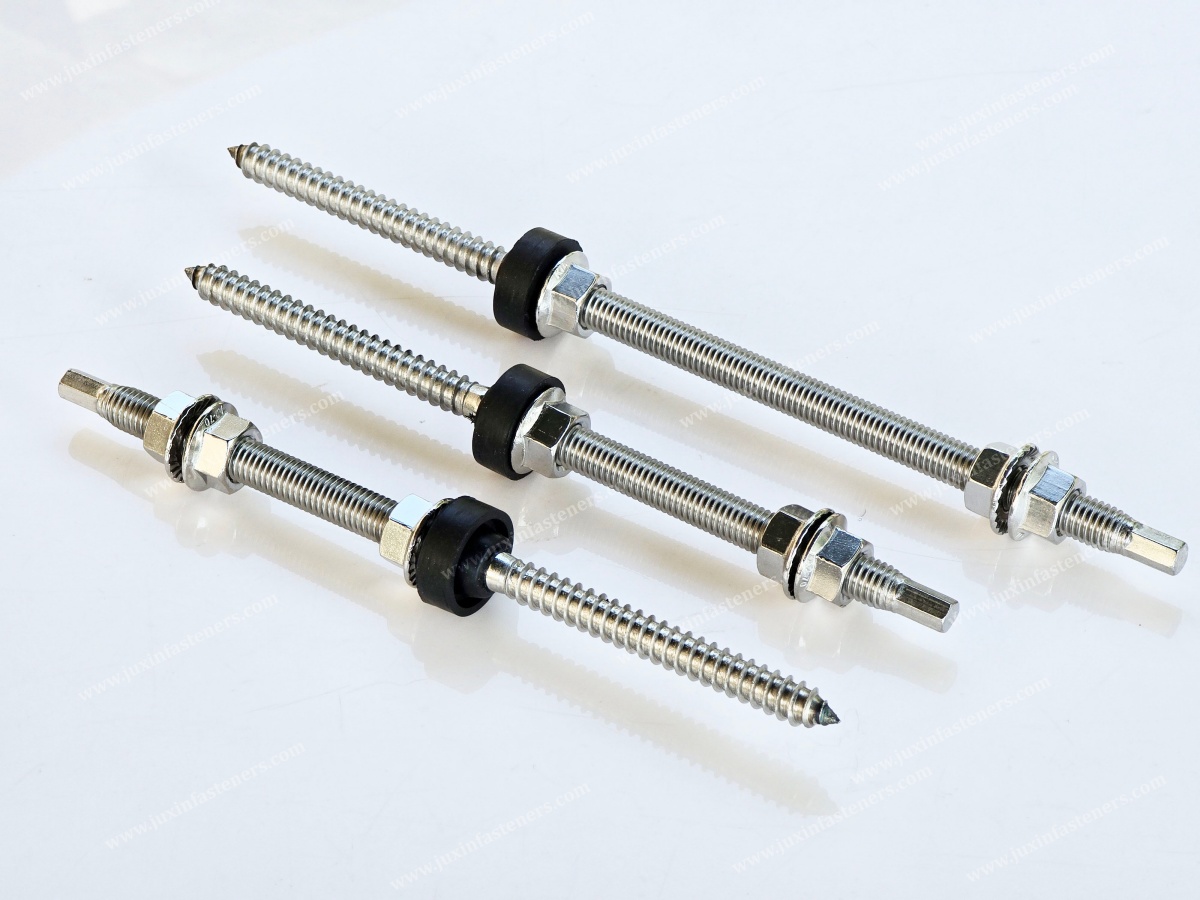
JUXIN FASTENERS focuses on industrial and OEM fastening components, including custom and non-standard fasteners developed according to customer drawings, specifications, samples, or application requirements.
Product categories include:
Custom screws and bolts
Custom nuts and washers
Self-clinching fasteners
Weld nuts
Weld studs
Rivet nuts
Blind rivets
Clips and retainers
Plastic and nylon fastening hardware
CNC machined fasteners and components
Stainless steel and high-strength fasteners
Other application-specific fastening components
These products are used across applications such as automotive, EV and battery-related assemblies, sheet metal, machinery, electrical equipment,
HVAC, rail transit, robotics, construction equipment, and other industrial systems.
For OEM and Tier supplier projects, the commercial starting point may be a drawing, CAD file, sample, photograph with dimensions, or an existing part specification.
The supplier's role is not simply to quote a number. The technical requirement needs to be understood first so that the quoted component matches the intended application.
A practical custom fastener development process can be structured as:
Requirement → Available Drawing/CAD/Sample → Technical Clarification → Feasibility Review → Quotation → Sample/Prototype → Validation → Production
This workflow allows engineering and procurement teams to work together without requiring every project to have a perfectly completed specification on day one.
For a standard fastener, the process may be relatively simple.
For a non-standard automotive or industrial fastener, additional clarification may be required around:
Geometry
Thread
Material
Mechanical properties
Surface finish
Assembly function
Quantity
Quality requirements
Packaging
Delivery requirements
The earlier these points are clarified, the easier it becomes to compare quotations on a technically equivalent basis.
Standard bolts, high-strength bolts, cast-in anchor bolts, expansion anchors, and chemical anchors should not be treated as interchangeable categories.
The correct fastening system depends on:
Load path
Joint design
Connected materials
Mechanical requirements
Installation method
Environmental conditions
Required preload
Concrete or substrate conditions
Applicable standards
Inspection and documentation requirements
For structural applications, engineers should select the complete fastening or anchoring system according to the applicable design standard rather than choosing a component solely by nominal diameter or strength class.
For OEM and industrial manufacturing applications, the requirement may instead be a custom screw, bolt, nut, washer, self-clinching fastener, weld fastener, rivet nut, clip, retainer, or plastic fastening component.
In those cases, drawing-based and sample-based sourcing can provide a practical route from engineering requirement to production.
“Standard bolt” generally describes a conventional commercially available fastener rather than a specific mechanical property level.
High-strength fasteners have higher specified mechanical properties, but the exact classification depends on the applicable standard.
Property class 8.8, for example, is a common metric mechanical property class and should not automatically be described as a low-strength bolt.
Property class 8.8 provides substantially higher specified mechanical properties than lower classes such as 4.8 or 5.6 and is widely used in demanding mechanical applications.
Whether it qualifies as a “high-strength structural bolt” depends on the structural standard and complete bolting assembly specification.
There is no single universal answer for every high-strength bolt and structural connection. Reuse depends on the applicable standard, bolt assembly, installation condition, previous loading, and project specification.
For structural preloaded connections, the relevant standard and engineering specification should determine whether removed components may be reused or must be replaced.
A friction-type connection relies on clamping force and friction between connected surfaces to resist slip under the specified design condition.
A bearing-type connection permits load transfer through bolt-to-hole bearing and bolt shear after relative movement reaches the bearing condition.
The appropriate system depends on structural design requirements.
The decision depends on the substrate, load, installation conditions, edge distance, spacing, temperature, environmental exposure, required approvals, and design methodology.
Neither system is universally superior.
Not automatically. Anchor capacity depends on the specific product, substrate, installation, embedment, loading condition, edge distance, spacing and applicable design or approval requirements.
Comparing “chemical” and “mechanical” anchors by product category alone is not sufficient.
The applicable standard depends on the type of structural bolting assembly and market.
European projects may reference standards such as EN 14399 for high-strength structural bolting assemblies designed for preloading, while other projects may use ASTM or other recognized specifications.
The engineering specification should identify the applicable standard.
The starting information can be as simple as a drawing, CAD file, sample, photograph with dimensions, part number, or basic specification.
Where available, material, thread, property class, finish, quantity, application, and timing can help the supplier prepare a more useful quotation.
If some information is not yet finalized, it is better to identify it as open for clarification rather than make an unsupported assumption.
For industrial and OEM applications, JUXIN FASTENERS supplies custom screws, bolts, nuts, washers, self-clinching fasteners,
weld fasteners, rivet nuts, clips, retainers, plastic and nylon fastening hardware, and other application-specific fastening components.
If you have a technical drawing, CAD file, sample, photograph, or existing specification, you can start the discussion with the information currently available.
Our team can review the requirement, clarify open technical points, and discuss a suitable quotation route for prototype or production requirements.
Email: info@juxinfasteners.com
Website: www.juxinfasteners.com
Product Packaging
Packaging Standard
At Juxin Fasteners, we apply standardized export packaging to ensure product protection, traceability, and compliance with international logistics requirements.
1. Standard Export Packaging
Unless otherwise specified, all products will be packed according to our factory standard export packaging, which includes:
Moisture-resistant inner protection
Poly bag or small box packing as required
Reinforced export cartons
Clear labeling with part number, specification, batch number, and quantity
Palletizing for sea or air shipment when necessary
Our standard packaging is designed to ensure safe transportation, efficient warehousing, and long-distance international shipping.
2. Customized Packaging Options
We also provide customized packaging solutions according to customer requirements, including but not limited to:
Private labeling
Customized barcodes
Specific carton dimensions
Retail packaging
Special pallet configuration
Customer-specific marking and identification
So that you know, customized packaging may involve additional costs and extended lead time depending on the complexity of the requirements.
3. Compliance & Quality Assurance
All packaging processes are controlled under our ISO 9001 quality management system to ensure consistency, traceability, and product integrity throughout the supply chain.
Product Pictures

Contact Us
Tel.:
+86 020 8621 0320
+86 020 3121 6067
E-mail:
Technical Support:
Navigation
SEND INQUIREY