Call Us
+86 136 6007 9809
Call Us
+86 136 6007 9809

Standardized Wheel Bolts and Lug Nuts Solutions for the Automotive Modification Industry
High-Strength Wheel Fastener Engineering System for Safety, Performance & Reliability
In the automotive modification and performance upgrade sector, wheel bolts and lug nuts are among the most critical safety components in the entire vehicle system. As the direct mechanical link between the wheel hub and suspension assembly, automotive wheel fasteners determine driving stability, load transfer efficiency, and high-speed safety performance.
Product Specification
Standardized Wheel Bolts and Lug Nuts Solutions for the Automotive Modification Industry
High-Strength Wheel Fastener Engineering System for Safety, Performance & Reliability
In the automotive modification and performance upgrade sector, wheel bolts and lug nuts are among the most critical safety components in the entire vehicle system. As the direct mechanical link between the wheel hub and suspension assembly, automotive wheel fasteners determine driving stability, load transfer efficiency, and high-speed safety performance.
Due to frequent wheel changes, aftermarket upgrades, and improper installation practices, issues such as thread stripping, bolt fracture, hub damage, and loosening under vibration are common in modification workshops. Therefore, establishing a standardized wheel-bolt and lug-nut fastening system is essential to ensure safety, improve service quality, and reduce long-term maintenance risk.
1. Industry Application Challenges in Wheel Fastener Systems
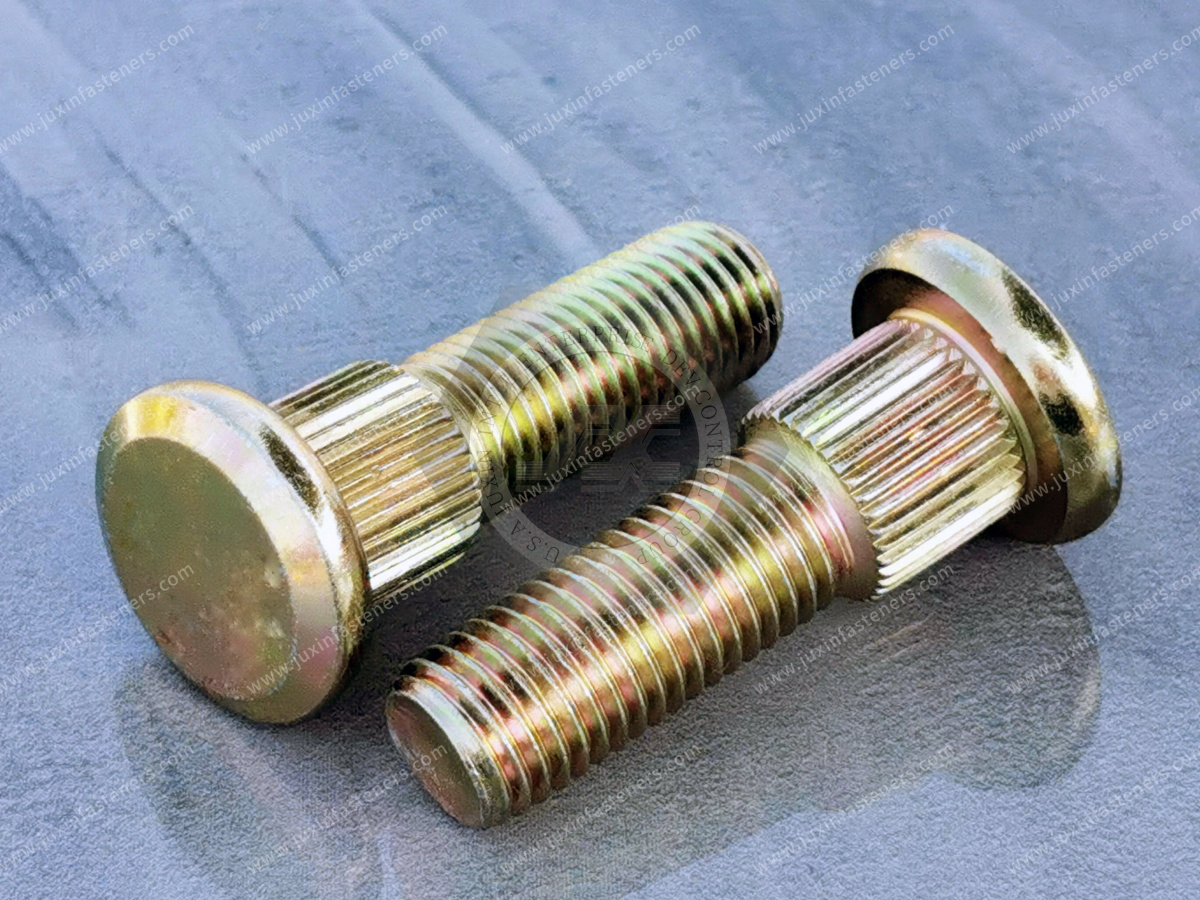
In the automotive modification industry, wheel bolts and lug nut systems are exposed to more aggressive working conditions than OEM factory applications.
Common Industry Pain Points:
Incorrect torque application during installation
Use of non-matching wheel bolt specifications
Thread stripping in wheel hubs
Fatigue fracture of high-load wheel bolts
Corrosion and seizure after long-term use
Damage caused by impact tools (air guns)
These issues often lead to serious safety risks, especially at high speeds, where wheel fastener failure can directly result in wheel detachment.
A standardized engineering approach to automotive wheel bolt and lug nut selection and installation is, therefore, critical for any professional modification workshop.
2. Wheel Bolt and Lug Nut Specification Standards
Proper specification matching is the foundation of a safe wheel fastening system.
2.1 Specification Matching Requirements
When replacing or upgrading wheel bolts and lug nuts, the following must be strictly matched:
Thread size and pitch (OEM exact match required)
Bolt length appropriate to wheel thickness
Seat type compatibility:
Conical seat wheel bolts
Spherical seat lug nuts
Mixing different seat types is strictly prohibited, as it leads to:
Uneven load distribution
Hub surface damage
Accelerated fatigue failure of wheel fasteners
2.2 Torque Specification Standards
Correct torque application is essential for wheel bolt safety performance.
Passenger cars: 80–100 N·m wheel lug nut torque
SUVs & off-road vehicles: 100–120 N·m wheel fastener torque
All torque values must strictly follow OEM specifications for each vehicle model.
2.3 Material and Manufacturing Requirements
High-performance automotive wheel bolts and lug nuts should be manufactured using:
High-strength alloy steel (heat-treated)
Anti-corrosion surface coating (zinc plating, Dacromet, etc.)
Precision thread rolling process
Aftermarket upgrade components should pass:
Tensile strength certification
Fatigue resistance testing
Third-party quality validation
This ensures long-term reliability under dynamic driving conditions.
3. Standard Installation Procedure for Wheel Bolts and Lug Nuts
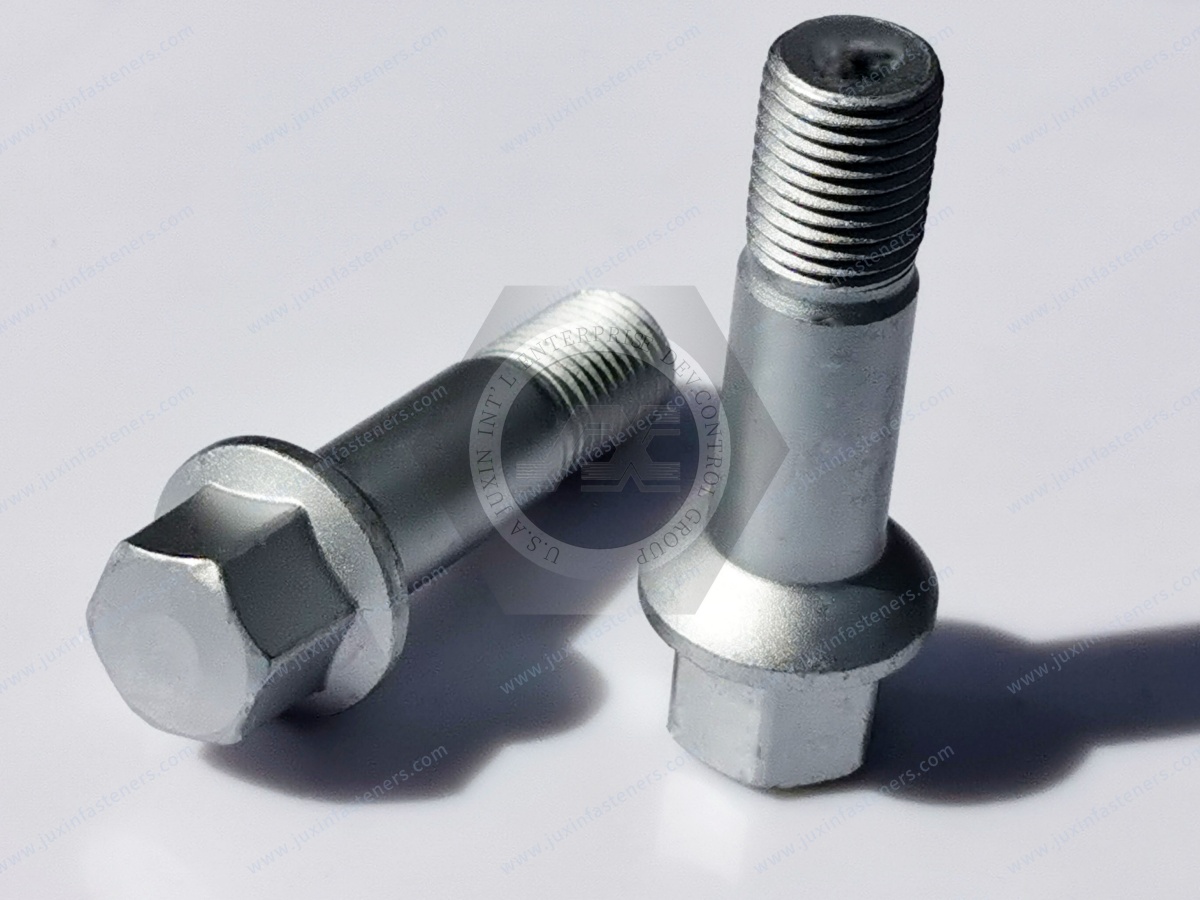
Correct installation of wheel fastening systems is essential to prevent failure and ensure uniform load distribution.
Step 1: Pre-Loosening (Before Lifting Vehicle)
Keep wheels in contact with the ground
Pre-loosen lug nuts by 0.5–1 turn
Use diagonal sequence pattern
This ensures load support remains stable during loosening.
Step 2: Wheel Alignment and Initial Installation
Align wheel bolt holes precisely with hub flange
Ensure vertical threading during installation
Perform hand-tight initial engagement to avoid cross-threading
Improper alignment is one of the main causes of wheel bolt thread damage.
Step 3: Diagonal Tightening Process
After lowering the vehicle:
Tighten lug nuts in a crisscross (star) pattern
Apply torque gradually in stages
Ensure even load distribution across wheel hub
This prevents wheel deformation and uneven stress concentration.
Step 4: Final Torque Application
Use calibrated torque wrench only
Apply OEM-specified torque value
Never rely solely on impact wrench final tightening
Impact tools without torque control can cause:
Bolt stretching
Hub thread damage
Premature fatigue failure
4. Common Fault Diagnosis and Repair Solutions
4.1 Seized or Rusted Wheel Bolts
For corroded wheel lug nuts and bolts, the recommended procedure is:
Apply penetrating lubricant into threads
Allow soaking time for loosening effect
Use controlled vibration tapping to assist release
Apply controlled heat/cooling method if necessary
If failure persists:
Use long leverage tools
Apply professional bolt extractor systems
4.2 Thread Stripping in Wheel Hubs
Thread damage in wheel bolt systems can be repaired as follows:
Minor damage: repeated tightening/loosening cycle (elastic recovery)
Moderate damage: install Heli-Coil wire thread insert repair system
Severe damage: replace wheel hub or axle assembly
Temporary sealants may be used only for non-critical cases.
4.3 Broken Wheel Bolts
If a wheel bolt is fractured, removal depends on exposure:
Exposed head: double-nut method or extractor tool
Embedded bolt: reverse drill extraction method
After removal:
Re-tap threads or install thread insert
Ensure correct alignment before reinstalling new wheel fasteners
Hammering is strictly prohibited due to hub deformation risk.
5. Quality Control and Maintenance System
A professional wheel bolt and lug nut fastening system requires strict quality control throughout the lifecycle.
5.1 Installation Process Control
Use calibrated torque tools
Apply thread gauges for inspection
Maintain full torque documentation records
Ensure traceability of all wheel fastening operations
5.2 Wheel Balancing and Road Testing
After installation:
Perform wheel dynamic balancing
Conduct short-distance road testing
Re-check torque after initial driving cycle
This eliminates vibration-related loosening risks.
5.3 Periodic Inspection System
Regular inspection of automotive wheel fasteners should include:
Torque re-verification
Corrosion inspection
Thread wear assessment
High-load driving condition checks
Frequent inspection is mandatory for modified or high-performance vehicles.
5.4 Tooling and Technician Standards
To ensure safety:
Torque-limited tools must replace impact-only tools
Technicians must be professionally trained and certified
Complex repairs should be handled by specialized workshops
6. Engineering Value of Standardized Wheel Fastening Systems
A standardized wheel bolt and lug nut system for automotive modification delivers significant benefits:
Improved driving safety and wheel stability
Reduced risk of hub and thread failure
Faster and more efficient installation processes
Lower long-term maintenance costs
Extended service life of wheel assembly components
Standardization also reduces inventory complexity for workshops and distributors.
7. JUXIN FASTENERS Automotive Wheel Fastener Solutions
As a professional manufacturer of high-strength automotive wheel bolts and lug nuts, JUXIN FASTENERS provides engineered fastening solutions for:
OEM wheel assembly systems
Automotive modification workshops
Performance upgrade vehicles
Aftermarket wheel replacement markets
Our product range includes:
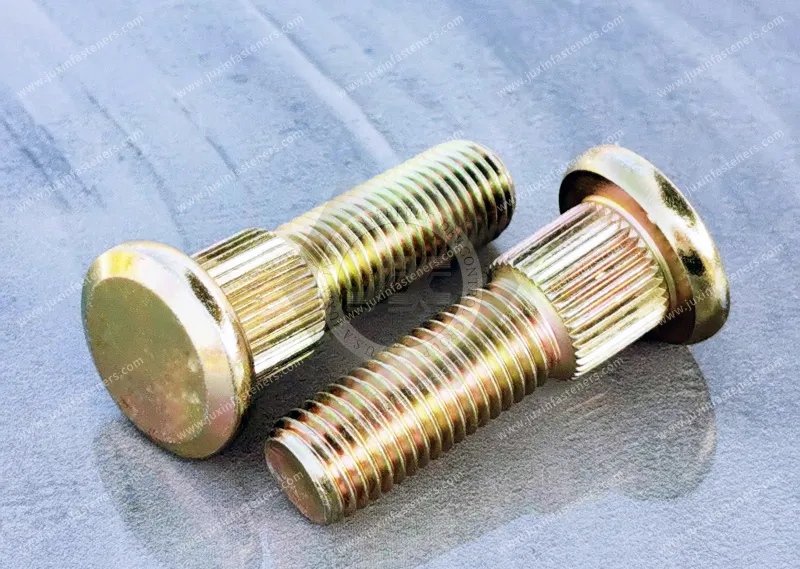
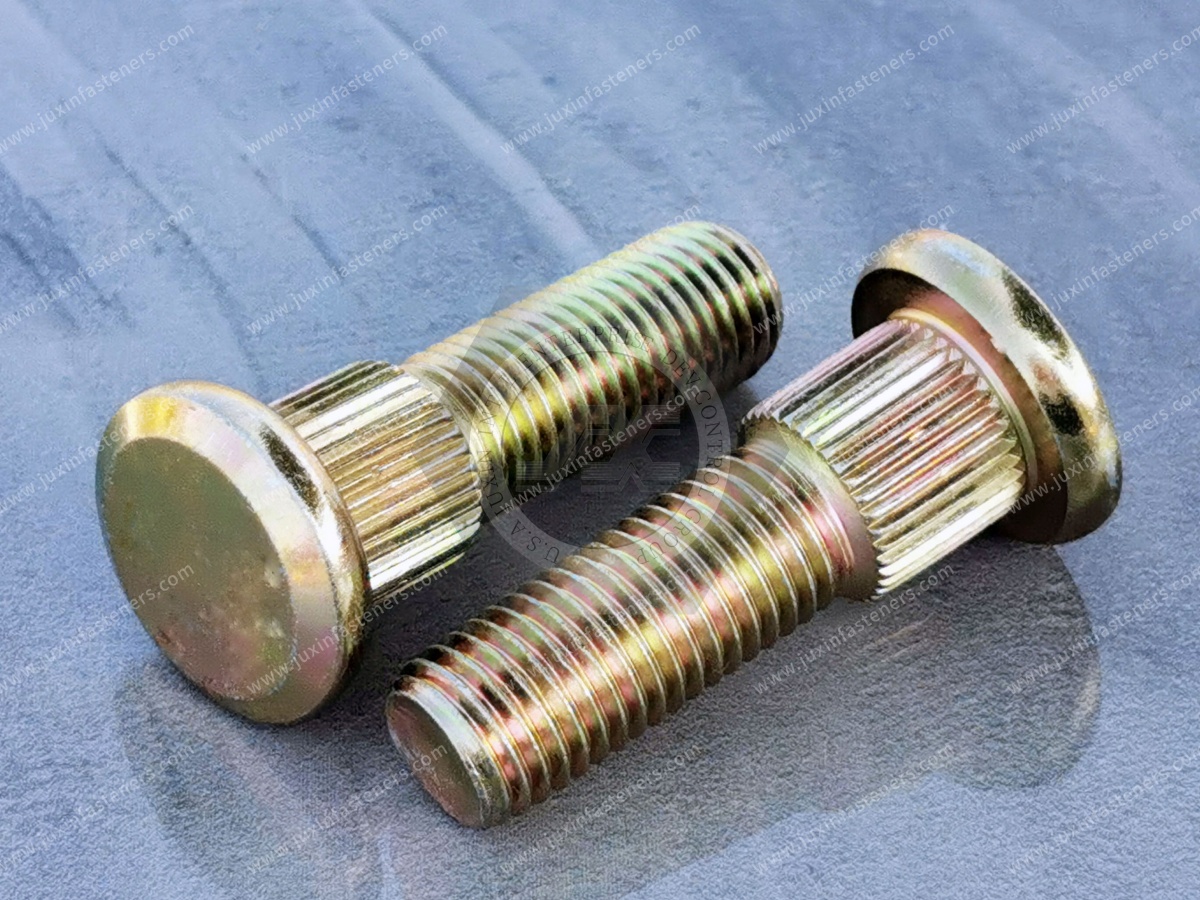
High-strength wheel bolts
Precision lug nuts
Anti-loosening wheel fasteners
Custom OEM wheel fastening solutions
All products are manufactured under strict quality control systems to meet global automotive safety standards.
Conclusion
The standardization of wheel bolts and lug nuts in automotive modifications is a fundamental requirement to ensure driving safety, structural integrity, and long-term reliability. By applying correct specification matching, torque-controlled installation methods, and systematic maintenance procedures, the risk of wheel failure can be significantly reduced.
For automotive workshops and distributors, adopting a professional wheel fastener engineering system is not only a safety requirement but also a key competitive advantage in the modern modification industry.
Product Packaging
Packaging Standard
At Juxin Fasteners, we apply standardized export packaging to ensure product protection, traceability, and compliance with international logistics requirements.
1. Standard Export Packaging
Unless otherwise specified, all products will be packed according to our factory standard export packaging, which includes:
Moisture-resistant inner protection
Poly bag or small box packing as required
Reinforced export cartons
Clear labeling with part number, specification, batch number, and quantity
Palletizing for sea or air shipment when necessary
Our standard packaging is designed to ensure safe transportation, efficient warehousing, and long-distance international shipping.
2. Customized Packaging Options
We also provide customized packaging solutions according to customer requirements, including but not limited to:
Private labeling
Customized barcodes
Specific carton dimensions
Retail packaging
Special pallet configuration
Customer-specific marking and identification
So that you know, customized packaging may involve additional costs and extended lead time depending on the complexity of the requirements.
3. Compliance & Quality Assurance
All packaging processes are controlled under our ISO 9001 quality management system to ensure consistency, traceability, and product integrity throughout the supply chain.
Product Pictures
Contact Us
Tel.:
+86 020 8621 0320
+86 020 3121 6067
E-mail:
Technical Support:
Navigation
SEND INQUIREY