Call Us
+86 136 6007 9809
Call Us
+86 136 6007 9809

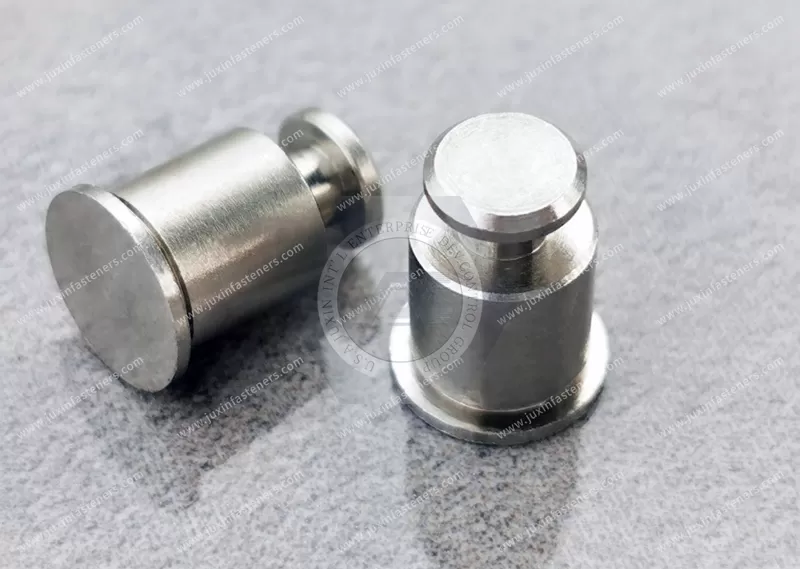
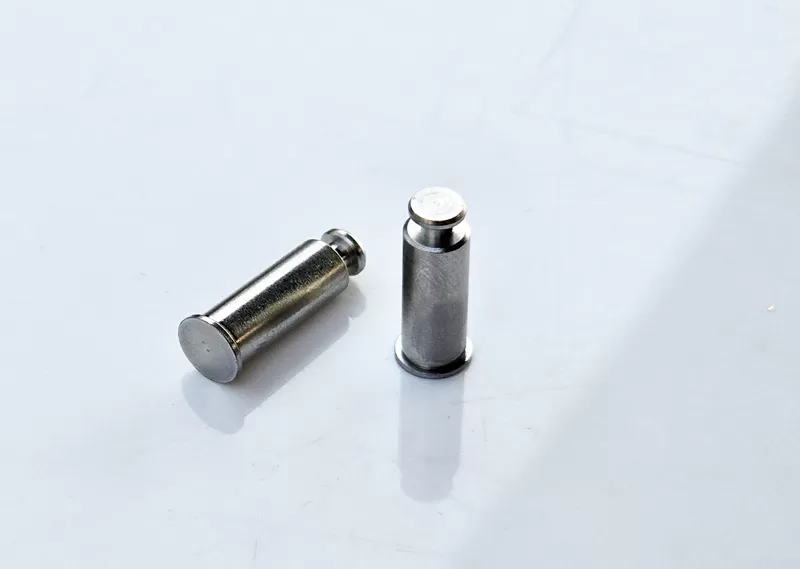
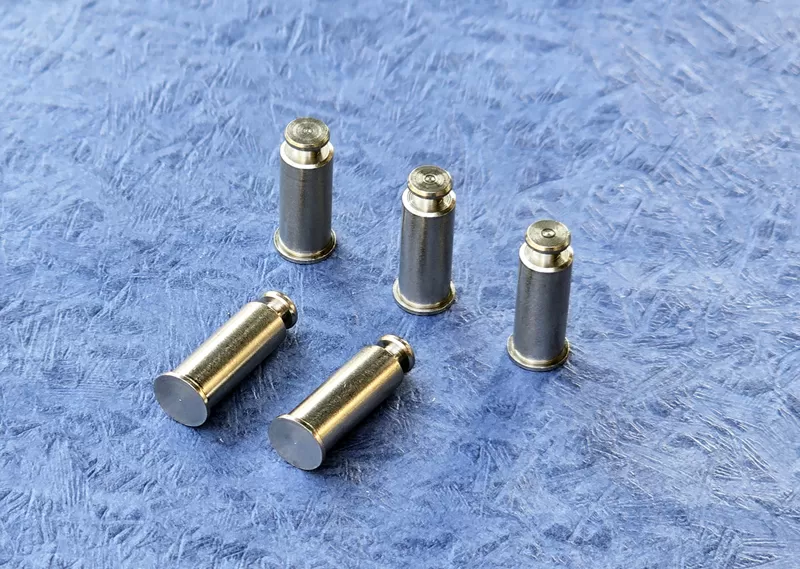
Self-Clinching Keyhole Standoffs – Type JX-SKC
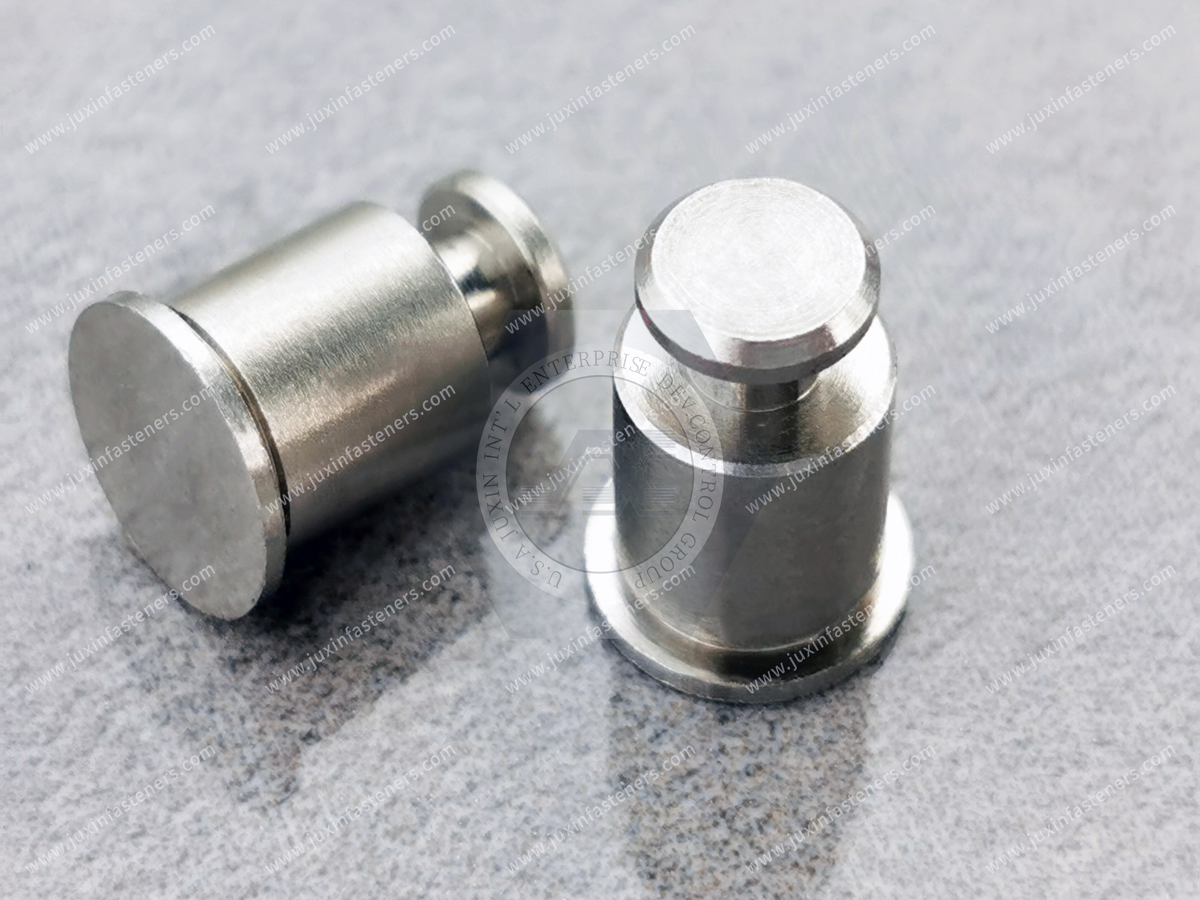
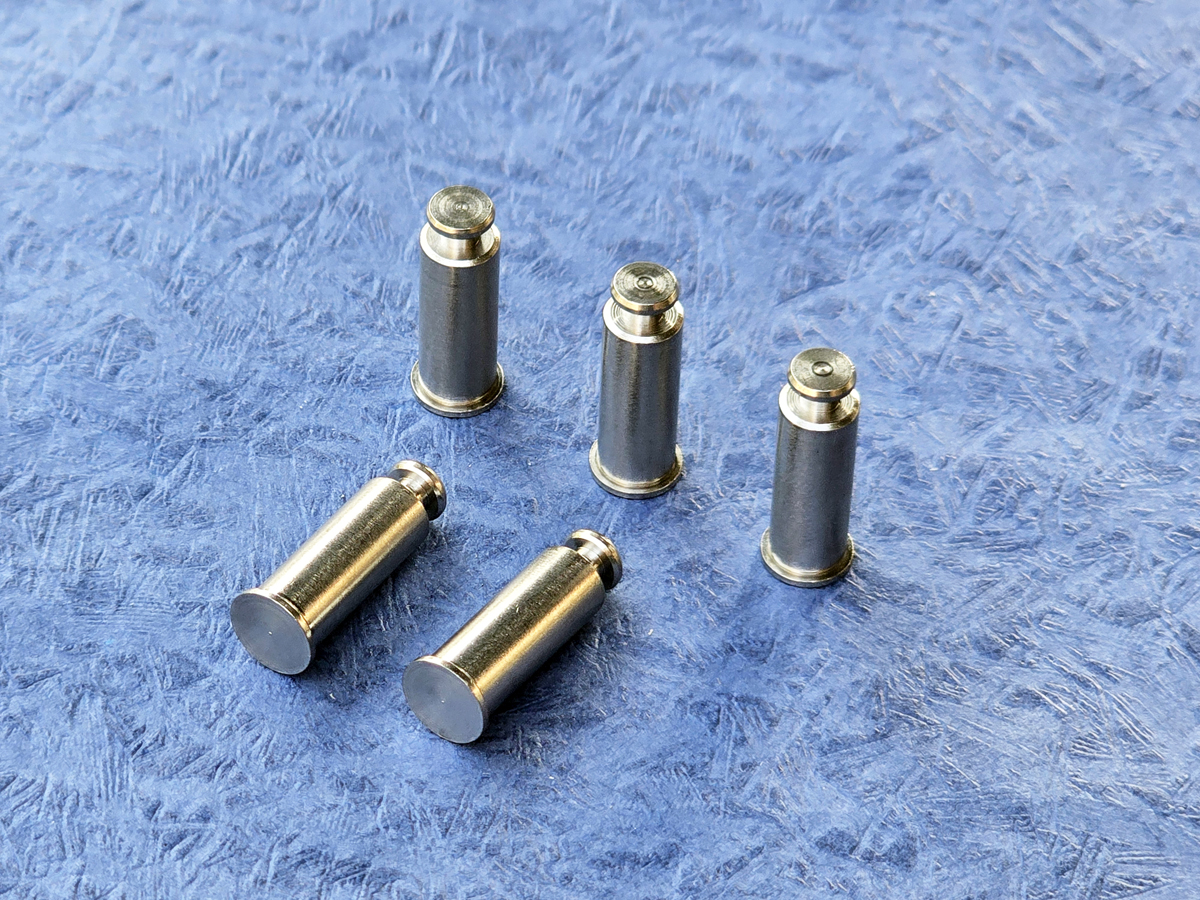
JUXIN FASTENERS JX-SKC self-clinching keyhole standoffs provide a detachable mounting solution for printed circuit boards, sheet-metal panels and replaceable equipment components.
The fastener is permanently installed into a compatible metal sheet using a self-clinching feature.
Its specially shaped barrel and head allow a mating component with suitable keyhole openings to slide into position and be removed without individually unscrewing every mounting point.
JX-SKC standoffs are designed for applications requiring convenient component access, repeatable positioning and reduced loose hardware.
Key Features
Self-clinching installation into compatible metal sheets.
Keyhole-style engagement for detachable panel or PCB mounting.
Flush-head configuration on the designated installation side.
Supports horizontal or vertical component arrangements when properly retained.
Allows removal by sliding and lifting the mating component.
Suitable for use with a separate threaded retaining point to prevent unintended movement.
Available for engineering review in carbon steel and stainless steel.
Customer-specific dimensions subject to drawing and application review.
Material Options
Carbon steel and stainless steel.
The exact material grade, surface finish and installation compatibility should be confirmed for the selected configuration.
Technical Reference
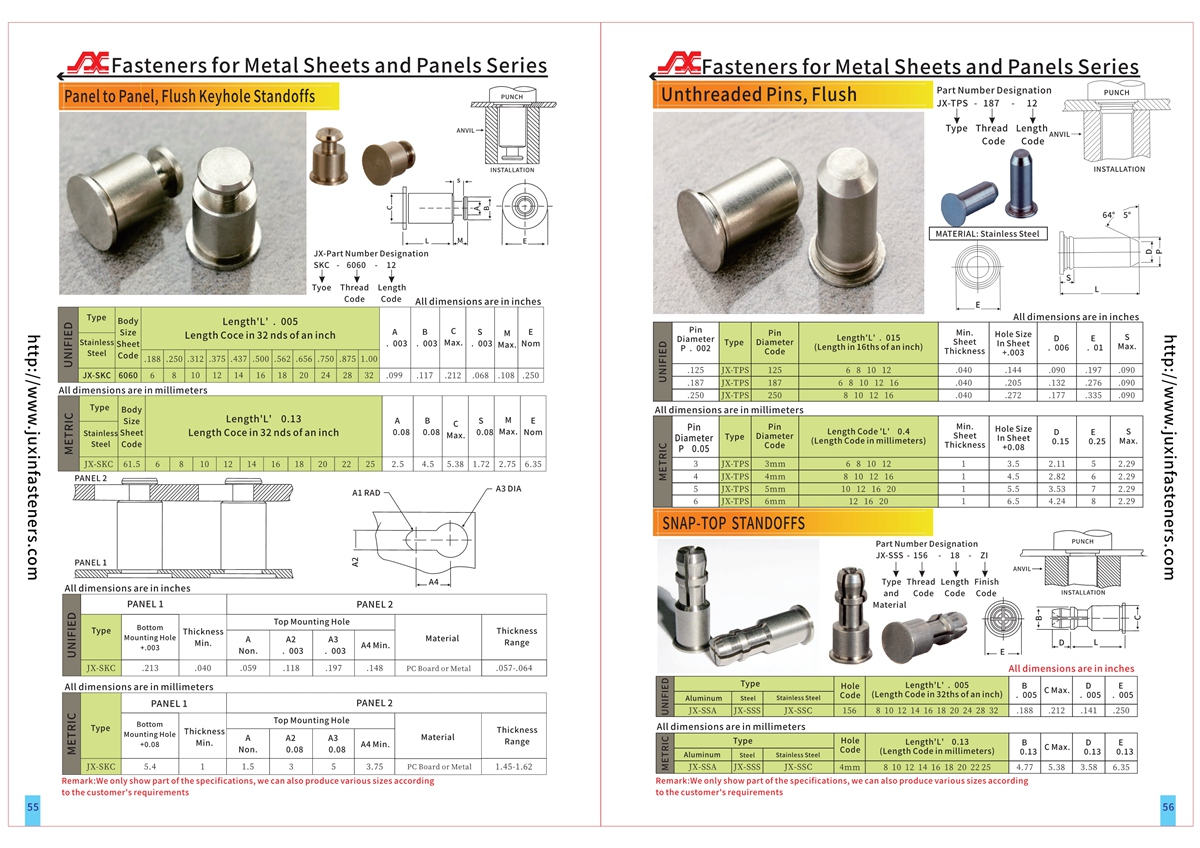
Detailed dimensions and installation information: Product specification PDF and CAD drawings, pages 55–56.
Product Specification
Self-Clinching Keyhole Standoffs – Type JX-SKC
Detachable PCB Mounting, Flush-Head Sheet-Metal Installation and OEM Equipment Assembly Solutions
Product Overview
JUXIN FASTENERS JX-SKC self-clinching keyhole standoffs are designed for detachable spacing and mounting of printed circuit boards, panels and replaceable components.
Unlike conventional threaded standoffs, which generally require individual screws at each mounting location, the JX-SKC design uses a specially shaped head and barrel to engage a compatible keyhole opening.
The component can be positioned over the mounting heads, moved sideways into engagement and subsequently removed by reversing the movement.
This arrangement can reduce the number of screws that must be handled during routine maintenance.
A separate positive retention feature is normally required where the mounted component must be protected against unintended sliding or disengagement.
Product Identification and Technical Specifications
Product series: JX-SKC
Product type: Self-clinching keyhole standoff
Alternative search terminology: Detachable PCB standoff, slide-on panel standoff, keyhole mounting standoff
Primary function: Detachable spacing and positioning of two components
Mounting method: Self-clinching into a compatible metal sheet
Mating interface: Keyhole-shaped opening or approved equivalent geometry
Head configuration: Flush on the designated installation side
Materials: Carbon steel and stainless steel
Applications: PCB mounting, panel mounting and replaceable equipment components
Dimensional reference: Product PDF and CAD drawings, pages 55–56
Custom dimensions: Subject to engineering review and manufacturing feasibility
Exact mounting-hole dimensions, head diameter, barrel geometry, standoff height and panel requirements must be confirmed from the approved drawing.
How the JX-SKC Keyhole Mounting System Works
The JX-SKC standoff is installed permanently in a supporting metal sheet.
A second component, such as a PCB or removable panel, contains appropriately designed keyhole openings.
During assembly, the larger portion of each keyhole passes over the standoff head.
The component is then moved laterally so that the narrower section of the opening engages the standoff barrel beneath the head.
This arrangement supports positioning and spacing without requiring a separate screw at every JX-SKC location.
For removal, the retaining feature is released, the component is moved back toward the larger keyhole opening and then lifted away.
The correct sliding direction and clearance must be considered during equipment design.
Self-Clinching Installation into Sheet Metal
The JX-SKC fastener uses a self-clinching mounting feature to create permanent retention in a compatible metal sheet.
During installation, a controlled pressing force causes the sheet material to flow into the fastener's retaining geometry.
Successful installation depends on the relationship between fastener hardness, sheet hardness, sheet thickness and prepared-hole dimensions.
The fastener should be installed using suitable press tooling with controlled alignment and support.
The approved installation procedure should define the hole dimensions, minimum sheet thickness, installation force and required inspection criteria.
These values must not be assumed from other self-clinching standoff families.
Flush-Head Installation and Surface Clearance
The JX-SKC design provides a flush-head arrangement on the designated side of the supporting metal sheet.
This feature may be useful where the assembly requires a relatively unobstructed exterior or rear surface.
Flush installation does not mean that the entire standoff is recessed into the panel.
The keyhole-engagement portion necessarily extends from the mounting surface to provide the required spacing and detachable connection.
Engineers should verify the complete installed profile, including the head, barrel and supporting sheet.
Keyhole Geometry and Mating Component Design
The keyhole opening is a critical part of the JX-SKC mounting system.
The larger opening must provide sufficient clearance for the standoff head during initial placement.
The narrower slot must engage the barrel while retaining the mating component beneath the head.
If the opening is too small, installation may require excessive force or damage the component.
If the opening is too large, the assembly may exhibit unwanted movement or reduced retention.
The design should define keyhole width, large-hole diameter, transition geometry, positional tolerances and edge clearances.
These dimensions should be validated using the intended component material and thickness.
Engineering Information Gain: Why Keyhole Direction Matters
The direction of keyhole engagement can determine whether a detachable mounting system remains secure in service.
For example, a vertically mounted component may experience gravity loading in a direction that either maintains engagement or encourages sliding toward the release opening.
The mounting orientation should therefore be selected with the expected service loads in mind.
In mobile equipment or vibration-sensitive installations, the designer must also consider movement caused by shock, handling and repeated operation.
A keyhole standoff should not be treated as a complete positive-locking system without a separate retention mechanism or verified equivalent.
This distinction is especially important for serviceable electrical enclosures and equipment installed in moving machinery.
Using JX-SKC with a Threaded Retaining Standoff
A practical mounting arrangement uses several JX-SKC keyhole standoffs for positioning and spacing, together with one conventional threaded standoff and screw.
The keyhole standoffs allow the board or panel to slide into its mounted position.
The threaded fastening point then prevents movement in the disengagement direction.
During servicing, the technician removes the retaining screw, slides the component toward the release openings and lifts it away.
This approach can reduce the number of loose screws handled during maintenance while retaining a positive mechanical securing point.
The number and location of JX-SKC standoffs should be determined by component size, stiffness, weight and loading conditions.
PCB-to-Chassis Mounting Applications
Printed circuit boards often require secure spacing above a metal chassis.
Traditional mounting systems may use multiple threaded standoffs and screws.
A JX-SKC keyhole arrangement offers an alternative where the PCB is designed with suitable mounting slots and frequent removal is anticipated.
Potential applications include electronic control assemblies, instrumentation modules, replaceable boards and equipment requiring periodic service.
The PCB layout must account for the keyhole geometry, copper trace clearances, board stiffness and mechanical loading.
The fastener should not contact exposed electrical conductors unless the contact is intentionally designed and validated.
Panel-to-Panel Detachable Spacing
JX-SKC standoffs can also support detachable spacing between compatible panels.
The design may be considered for access covers, internal mounting plates and removable equipment components.
The spacing height must accommodate any components, wiring or hardware located between the two panels.
The designer should also confirm that the panel can move far enough in the engagement direction without interference from adjacent parts.
Industrial Electronics and Control Equipment
Industrial control cabinets and electronic equipment frequently require internal components to be removed for inspection, repair or replacement.
Keyhole mounting hardware can simplify access where the mechanical design provides a controlled removal path.
JX-SKC standoffs may be considered for mounting plates, circuit boards and serviceable internal modules.
Electrical safety, vibration resistance and required retention must be evaluated at the assembly level.
The use of a detachable standoff alone does not establish compliance with an electrical equipment safety standard.
Telecommunications and Network Equipment
Telecommunications assemblies may contain replaceable electronic boards and mounting subassemblies.
A detachable keyhole mounting arrangement can reduce handling of multiple loose screws during service.
However, the design must provide suitable board support, clearance and positive retention.
For equipment exposed to transportation vibration or repeated servicing, mechanical qualification should be based on the complete installed assembly.
Test, Measurement and Laboratory Equipment
Precision instruments may require removable electronic modules for calibration or maintenance.
JX-SKC keyhole standoffs can provide a repeatable mechanical mounting concept when the mating geometry is controlled.
The engineer should assess whether the permitted movement and dimensional tolerances are acceptable for the instrument.
Where precise alignment is required, additional locating features may be necessary.
Medical and Specialized Equipment Housings
Serviceable equipment housings may benefit from detachable internal component mounting.
JX-SKC standoffs can be evaluated for non-implantable equipment assemblies where the mechanical design supports their use.
The equipment manufacturer remains responsible for determining the applicable safety, cleanliness, reliability and regulatory requirements.
The fastener itself should not be described as medically certified without supporting product-specific documentation.
Material Selection: Carbon Steel and Stainless Steel
Carbon steel and stainless steel are referenced material options for the JX-SKC family.
Carbon steel may be selected where mechanical performance, manufacturing requirements and the specified surface finish support its use.
Stainless steel may be considered where corrosion resistance or material compatibility is important.
However, stainless steel is not a single interchangeable material grade.
Different stainless steel grades have different hardness, strength, corrosion behavior and manufacturing characteristics.
The selected fastener material must also be compatible with the self-clinching installation requirements of the supporting sheet.
Material grade and coating availability should be confirmed before ordering.
Sheet Hardness and Installation Compatibility
A self-clinching fastener must be suitable for the hardness and thickness of the host sheet.
The material surrounding the prepared hole must be capable of flowing into the fastener's retaining features during installation.
If the sheet is too hard or too thin for the selected design, the installation may not develop the required retention.
The engineer should check the approved JX-SKC installation data rather than relying on generic sheet-metal rules.
For difficult materials or unsuitable panel conditions, a different attachment technology may be required.
Mounting Near Panel Edges
Keyhole mounting systems require adequate material around both the permanently installed standoff and the mating component's keyhole opening.
Insufficient edge distance can cause deformation or cracking during installation or repeated servicing.
The supporting sheet must have enough material around the clinching hole to resist installation and service loads.
The mating panel must also have sufficient material around the keyhole slot.
Minimum edge distances should be taken from the approved product drawing and verified for the actual material.
Spacing Height and Component Clearance
The required standoff height should be selected from the complete assembly layout.
The design must account for component height, solder joints, wiring, ventilation and any required electrical clearance.
A nominal spacing height alone may not describe the available clearance beneath every part of the mating component.
Designers should check the installed geometry and the complete tolerance stack-up.
Custom heights may be evaluated where standard configurations do not meet the application requirements.
Tolerance Stack-Up and Multiple Mounting Points
Using several keyhole standoffs introduces a positional tolerance challenge.
If the standoffs are not aligned with the mating keyholes, the component may bind during assembly.
The problem can become more significant as the distance between mounting points increases.
Engineers should evaluate hole-position tolerances, component flatness, thermal expansion and the direction of sliding engagement.
The mounting arrangement should allow repeatable assembly without excessive force.
Prototype testing is recommended before finalizing a multi-point keyhole layout.
Mechanical Loading and Retention
JX-SKC standoffs can provide spacing and support, but their load capacity depends on the installed geometry and mating component.
Relevant loading conditions may include static weight, vibration, shock, handling forces and repeated installation cycles.
The design should consider both the permanent self-clinching attachment and the detachable keyhole interface.
Possible failure modes include standoff rotation, push-out, panel deformation, keyhole wear and unintended disengagement.
Required performance limits should be established by the OEM and verified through testing.
Repeated Assembly and Maintenance
Detachable mounting hardware is particularly useful when components require periodic replacement.
Repeated removal can introduce wear at the keyhole opening and standoff contact surfaces.
The amount of wear depends on component material, geometry, surface finish and handling conditions.
For applications with frequent servicing, the design should specify an appropriate inspection or durability requirement.
A successful initial installation does not automatically establish long-term performance over repeated service cycles.
JX-SKC Versus Conventional Threaded Standoffs
Conventional threaded standoffs provide a direct screw-fastened connection and are widely used in PCB mounting.
They are often preferable when a rigid bolted joint is required at each mounting point.
JX-SKC keyhole standoffs may be preferable where quick removal and reduced loose hardware are important.
The most practical solution can combine both types.
Several JX-SKC standoffs can provide detachable support, while a conventional threaded standoff and screw provide positive retention.
This combination should be evaluated against the actual assembly requirements.
JX-SKC Versus Snap-In PCB Supports
Snap-in PCB supports can offer tool-free assembly in compatible materials.
However, their retention, temperature behavior and service life depend on material and design.
JX-SKC standoffs provide a metal-based keyhole mounting approach using a permanent self-clinching attachment.
The choice depends on board thickness, service temperature, expected maintenance, loading and installation requirements.
Neither approach should be selected solely on the basis of assembly speed.
JX-SKC Versus Broaching Standoffs
Broaching standoffs are designed to engage suitable materials through a broaching or interference-based installation feature.
They may be useful for mounting in compatible PCB or nonmetallic components.
JX-SKC uses a self-clinching attachment intended for a compatible metal sheet and a separate detachable keyhole interface.
The two product families therefore address different installation conditions.
Engineers should select the mounting method based on the supporting material and required assembly function.
Installation Process and Inspection
A controlled installation process begins with confirming the correct fastener and host-sheet specification.
The mounting hole should be prepared according to the approved drawing.
The fastener and panel should be aligned with appropriate press tooling.
After installation, the assembly should be inspected for flushness, distortion and secure attachment.
The mating keyhole component should then be checked for proper engagement and removal.
Where specified, push-out, torque-out or other retention tests should be performed using agreed acceptance criteria.
Installation force and mechanical strength values must be obtained from validated product data.
Relevant International Engineering Standards
ISO 2768 may be used for general dimensional tolerances where explicitly specified and appropriate.
ISO 1101 provides a framework for geometrical tolerancing of component features.
ASME Y14.5 provides requirements for dimensioning and tolerancing on engineering drawings.
ASTM material specifications may be used to define selected carbon steel or stainless steel grades.
IEC 60297 may be relevant to dimensional requirements for certain electronic equipment structures, where applicable.
Applicable material, drawing and assembly standards should be selected according to the actual product design.
These references do not imply that every JX-SKC configuration is certified to the listed standards.
OEM Design and Procurement Considerations
For OEM sourcing, the purchasing specification should identify both the standoff and the mating keyhole interface.
Ordering by model name alone may be insufficient where the assembly depends on exact geometry.
The procurement team should confirm the material grade, dimensions, finish, installation sheet and expected service conditions.
Where the component is part of a new equipment design, prototype evaluation should be completed before production release.
For repeat orders, approved drawings, inspection criteria and revision control help maintain consistency across production batches.
Custom JX-SKC Standoff Requirements
Customer-specific standoff heights, material choices and geometry may be reviewed against manufacturing and application requirements.
Any dimensional change can affect the relationship between the mounting head, barrel and mating keyhole.
Custom modifications should therefore be validated as a complete interface rather than as an isolated fastener dimension.
Customers should provide drawings or 3D models showing both the fastener and mating components.
RFQ Information for JX-SKC Keyhole Standoffs
For engineering review and quotation, please provide:
JX-SKC model or reference drawing.
Required material grade and surface finish.
Standoff height and complete dimensional requirements.
Supporting sheet material, thickness and hardness.
Mounting-hole dimensions and tolerances.
Mating keyhole dimensions and panel thickness.
Horizontal or vertical installation orientation.
Required retention and mechanical loading.
Expected maintenance or removal frequency.
Quantity per assembly and annual purchasing volume.
Inspection, packaging and delivery requirements.
Providing the complete mating-interface information helps reduce the risk of assembly incompatibility.
Frequently Asked Questions
What is a JX-SKC self-clinching keyhole standoff?
It is a permanently installed sheet-metal standoff designed to engage a compatible keyhole opening in a removable PCB or panel.
Does the JX-SKC require a screw at every mounting location?
Not necessarily. Multiple keyhole standoffs can support the component, but a separate positive retention feature is generally needed to prevent unintended sliding.
Can a PCB be removed without removing all mounting hardware?
Yes. With a suitable keyhole layout, the board can be released by removing the necessary retaining hardware, sliding it toward the release openings and lifting it away.
Is the JX-SKC suitable for vertical mounting?
It may be used in vertical arrangements when the loading direction and positive retention are properly designed and validated.
Can the JX-SKC be installed in any metal sheet?
No. Self-clinching installation requires compatible sheet thickness, hardness and hole geometry.
Are stainless steel versions available?
Stainless steel is a referenced material option. The exact grade and available configuration should be confirmed.
Can JX-SKC standoffs be customized?
Customer-specific dimensions and materials may be evaluated based on drawings and manufacturing feasibility.
What is the difference between JX-SKC and a threaded PCB standoff?
JX-SKC uses a detachable keyhole interface. A conventional threaded standoff uses a screw to secure the mating component.
Related JUXIN FASTENERS Products
Self-Clinching Threaded Standoffs
For applications requiring permanent threaded mounting points in compatible sheet metal.
Broaching Standoffs for PC Boards
For suitable PCB and nonmetallic mounting applications requiring interference-based fastener installation.
Self-Clinching Nuts
For load-bearing internal threads in compatible thin metal sheets.
Self-Clinching Floating Nuts
For assemblies requiring threaded fastening with limited hole-alignment compensation.
Captive Panel Screws
For serviceable covers and access panels where retained screws help reduce loose hardware.
Internal links should be connected to the corresponding verified JUXIN FASTENERS product pages or categories.
Request an OEM JX-SKC Standoff Quotation
JUXIN FASTENERS supports industrial OEM customers seeking detachable PCB mounting hardware, self-clinching standoffs and custom sheet-metal fastening solutions.
For JX-SKC inquiries, please provide your drawings, host-sheet material, mating keyhole dimensions, required standoff height, application conditions and estimated order quantity.
Our team can review the requested configuration and manufacturing feasibility before quotation.
Email: info@juxinfasteners.com
Website: www.juxinfasteners.com
Product Packaging
JUXIN FASTENERS provides protective export packaging for JX-SKC self-clinching keyhole standoffs.
Standard Export Packaging
Inner protection: Poly foam or suitable protective packaging.
Outer packaging: Export cartons.
Palletizing: Available according to shipment requirements.
Referenced Carton Dimensions
29 × 19 × 19.5 cm
23.5 × 17.5 × 8 cm
Referenced pallet dimensions: 215 × 100 × 90 cm.
The final carton size, packing quantity and pallet configuration will depend on the order and approved packing instructions.
Product Protection
Packaging is arranged to protect the standoff head, barrel, self-clinching features and surface finish during handling and transportation.
Additional protection may be specified for stainless steel or finished components where surface condition is important.
OEM Identification and Traceability
Carton labels may identify the product model, material, dimensions, quantity and batch information.
Customer-specific barcode labels, part-number formats and packing lists can be arranged according to purchasing requirements.
Customized Packaging
Custom carton dimensions, packing quantities, protective materials, pallet arrangements and private labeling are available for review.
Final packaging requirements should be confirmed before production and shipment.
Product Pictures
Hot Products
Contact Us
Tel.:
+86 020 8621 0320
+86 020 3121 6067
E-mail:
Technical Support:
Navigation
SEND INQUIREY