Call Us
+86 136 6007 9809
Call Us
+86 136 6007 9809

What is the difference between weld nuts and self-clinching nuts?
Weld nuts are attached to a metal substrate through a resistance welding process, commonly resistance projection welding.
The fastener incorporates projections that concentrate electrical current and mechanical force at defined locations.
During welding, localized heating and controlled deformation create the welded connection between the fastener and the sheet.
Product Specification
What is the difference between weld nuts and self-clinching nuts?
Weld nuts are attached to a metal substrate through a resistance welding process, commonly resistance projection welding.
The fastener incorporates projections that concentrate electrical current and mechanical force at defined locations.
During welding, localized heating and controlled deformation create the welded connection between the fastener and the sheet.
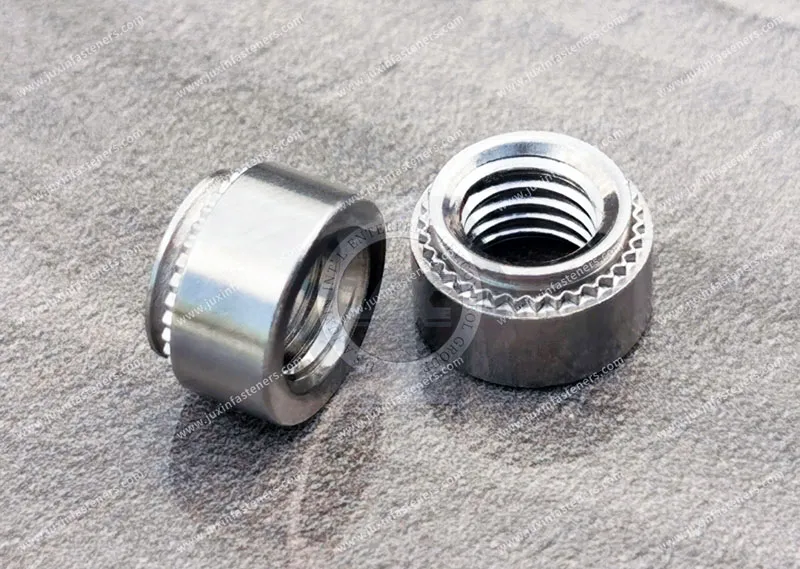
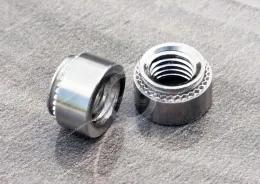
Self-clinching nuts are installed mechanically.
During installation, an appropriately designed portion of the nut enters a prepared hole in a ductile sheet, and installation force causes the surrounding sheet material to deform into the nut's retaining feature.
The resulting mechanical interlock holds the nut in the panel.
The two technologies therefore solve a similar basic problem—creating a permanent or semi-permanent threaded attachment in sheet metal—but use fundamentally different joining mechanisms.
  WELD NUT                                  SELF-CLINCHING NUT

  +---------------+                         +---------------+
  |    WELD NUT   |                         |  CLINCH NUT   |
  +--[PROJECTIONS]+                         +--[RETAINING]--+
        ↓                                          ↓
  Resistance Welding                       Mechanical Installation
        ↓                                          ↓
=========================                 =========================
       SHEET METAL                              SHEET METAL
        ↓                                          ↓
Localized Welded Joint                    Mechanically Deformed Joint
This distinction affects much more than installation equipment.
Engineers should evaluate:
Substrate material
Substrate thickness
Material ductility
Fastener material
Surface condition
Welding accessibility
Hole requirements
Required mechanical performance
Temperature exposure
Corrosion environment
Assembly sequence
Production volume
Automation requirements
Serviceability
Total manufacturing cost
There is therefore no universal rule that weld nuts are always stronger or that self-clinching nuts are always better for thin sheet metal.
The correct choice depends on the complete joint design and manufacturing process.
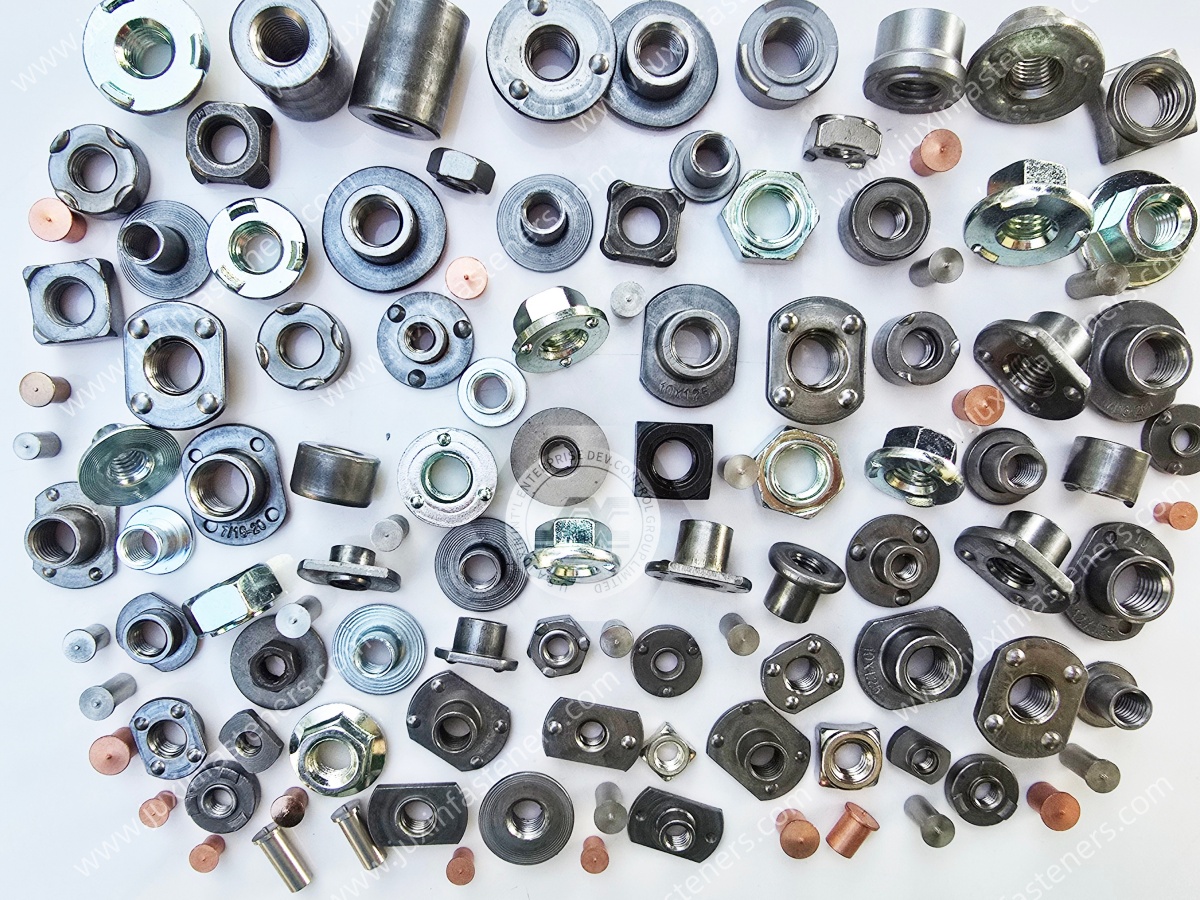
Weld nuts can be attractive when the assembly process already includes resistance welding and the design benefits from attaching a threaded fastener directly to a metal panel.
Potential advantages include:
Integration into automated welding lines
No separate mechanical clinching operation
Multiple projection weld locations
Good suitability for raw sheet-metal subassemblies
Compatibility with many steel sheet applications when the material combination is weldable
Ability to position the threaded feature before subsequent assembly operations
Self-clinching nuts can be attractive when the substrate is sufficiently ductile for mechanical installation and the production process benefits from avoiding localized welding.
Potential advantages include:
No welding heat at the installation location
No resistance-welding equipment required for the fastening operation
Useful for appropriately designed thin sheet-metal applications
Compatibility with selected aluminum and other ductile sheet materials
Straightforward mechanical installation in suitable production equipment
For OEM projects, the selection should be made using application-specific mechanical and manufacturing requirements rather than relying on a simple “weld versus press” rule.
JUXIN FASTENERS supports OEM sourcing and engineering evaluation of weld nuts and other industrial fastening components for sheet-metal assemblies.
The following matrix provides an engineering framework for comparing the two technologies.
                    JOINING TECHNOLOGY COMPARISON

              WELD NUTS                    SELF-CLINCHING NUTS

                 ↓                                  ↓

        Resistance Welding                 Mechanical Press Installation

                 ↓                                  ↓

      Welded / metallurgical          Cold deformation and mechanical
       joint at projections                  material interlock

                 ↓                                  ↓

        Performance depends on          Performance depends on sheet
        weld design and process         ductility, hole, nut geometry,
               validation                   and installation process
| Performance Parameter | Weld Nuts (JUXIN FASTENERS) | Self-Clinching Nuts |
|---|---|---|
| Joining Mechanism | Resistance projection welding at designed projection locations | Mechanical deformation and interlocking of the sheet |
| Push-Out Resistance | Depends on weld design, sheet properties, projection geometry, and welding process | Depends strongly on sheet material, ductility, thickness, hole geometry, and fastener design |
| Torque-Out Resistance | Depends on weld configuration, projection design, fastener geometry, and weld quality | Depends on the mechanical interlock, sheet properties, retaining geometry, and installation quality |
| Substrate Requirements | Requires a compatible and weldable material combination and appropriate welding process | Requires sheet material with sufficient ductility for the specified clinching system |
| Sheet Thickness Range | Application-dependent; weld nut geometry and welding process must match the substrate | Application-dependent; each self-clinching design has its own minimum sheet and installation requirements |
| Thermal Exposure | Depends on fastener material, weld quality, substrate, coatings, and service environment | Depends on fastener material, sheet properties, joint geometry, and temperature-related material behavior |
| Installation Equipment | Resistance welding equipment and suitable electrodes/fixtures | Press or equivalent controlled mechanical installation equipment |
| Heat at Installation | Localized heat is intentionally generated at the weld projections | No resistance-welding heat is required during mechanical installation |
| Surface-Finish Strategy | Often integrated into a pre-coating sheet-metal process, depending on coating and production sequence | Can be useful where welding heat is undesirable, but finish and installation sequence must be evaluated |
| Production Automation | Well suited to automated resistance-welding systems when the joint is designed accordingly | Well suited to controlled press installation and automated mechanical assembly |
| Design Flexibility | Strong when the product architecture already incorporates resistance welding | Strong when the sheet and hole geometry are suitable for mechanical installation |
The fundamental engineering difference is the load-transfer mechanism.
With a weld nut, forces acting on the threaded connection are transferred through the fastener, welded regions, and surrounding sheet.
With a self-clinching nut, the forces are transferred through the nut's retaining geometry and the plastically deformed sheet surrounding the installation feature.
Neither mechanism should be evaluated solely by looking at the nominal thread size.
The actual performance can be influenced by:
Fastener geometry
Sheet properties
Joint geometry
Installation quality
Loading direction
Dynamic loading
Environmental exposure
Manufacturing variation
This is why application-specific testing is important when the joint is safety-critical or subject to demanding cyclic loads.
The following decision framework can help engineers determine which technology deserves further evaluation.
                    START: THREADED FASTENER SELECTION
                                  |
                                  ↓
                 Is the sheet suitable for clinching?
                         /                  \
                       NO                    YES
                       ↓                      ↓
                 Evaluate Weld        Is localized welding
                       Nut             acceptable in the process?
                                            /          \
                                          YES           NO
                                           ↓             ↓
                                    Compare both      Evaluate
                                    technologies      Clinching
                                           |
                                           ↓
                              Does the application require
                              specific weld-process integration?
                                      /             \
                                    YES              NO
                                     ↓                ↓
                               Evaluate Weld      Compare total
                                   Nut            joint requirements
The decision should not be based on sheet thickness alone.
The first question is whether the sheet can physically and mechanically support the selected joining method.
For self-clinching nuts, the sheet generally needs sufficient ductility for the installation process.
For weld nuts, the material combination must be compatible with the selected resistance-welding process.
Important substrate characteristics include:
Material grade
Thickness
Hardness
Ductility
Surface coating
Electrical characteristics
Formed geometry
Accessibility
The production line can strongly influence the correct technology.
If the production process already uses resistance welding for other components, integrating a weld nut may be operationally attractive.
If the production line is primarily based on mechanical pressing and welding would introduce additional equipment, tooling, heat management, or quality-control requirements, self-clinching may deserve evaluation.
The important comparison is therefore not simply fastener price.
It is:
Fastener Cost + Installation Cost + Tooling + Equipment + Labor + Quality Control + Cycle Impact + Process Risk
The operating environment should be considered before selecting the joining method.
Review:
Temperature
Thermal cycling
Vibration
Corrosion
Moisture
Chemical exposure
Assembly loads
Repeated tightening and loosening
Service requirements
A joint exposed to significant thermal or dynamic loading should be validated using conditions representative of the actual application.
The threaded fastener is only one component of the load path.
Engineers should consider:
Mating Screw
     ↓
Threaded Fastener
     ↓
Attachment Mechanism
     ↓
Sheet Metal
     ↓
Bracket / Structure
     ↓
Overall Assembly
A stronger fastener does not automatically create a stronger assembly if the sheet, weld, clinch feature, or surrounding geometry becomes the limiting component.
Weld nuts are often considered when the manufacturing process is already designed around resistance welding or when the assembly architecture benefits from a permanently attached threaded feature.
Potential applications include:
Automotive sheet-metal assemblies
Structural brackets
Chassis-related components
Electrical cabinets
Industrial machinery
HVAC equipment
Appliance structures
Power equipment enclosures
Fabricated steel assemblies
Weld nuts can be especially useful when:
The panel is accessible to welding electrodes
The substrate is compatible with resistance welding
The production line already supports resistance welding
The fastener must remain attached during subsequent assembly
The assembly sequence benefits from welding the threaded feature before coating or final assembly
However, the application should be reviewed for:
Electrode access
Heat-affected areas
Surface coating
Weld spatter
Thread protection
Panel distortion
Welding-process repeatability
Self-clinching nuts can be attractive where the sheet material and geometry are suitable for mechanical installation.
Potential applications include:
Electronic enclosures
Control cabinets
Sheet-metal housings
Electrical equipment
Instrumentation
Lightweight industrial assemblies
Aluminum sheet-metal structures
Pre-finished components where welding heat is undesirable
Potential advantages include avoiding localized welding heat and integrating installation into a mechanical pressing operation.
However, engineers should verify:
Sheet ductility
Hole size
Hole quality
Installation force
Fastener geometry
Minimum edge distance
Sheet thickness
Required torque-out resistance
Required push-out resistance
Surface finish
Assembly sequence
Procurement teams should avoid comparing only the unit price of the two fasteners.
A weld nut may have a competitive component cost while requiring welding equipment, electrodes, fixtures, process monitoring, and maintenance.
A self-clinching nut may avoid welding equipment but require a separate pressing operation and appropriate installation tooling.
A useful cost model is:
TOTAL FASTENING COST

Fastener
   +
Tooling
   +
Installation Equipment
   +
Labor / Automation
   +
Process Inspection
   +
Maintenance
   +
Scrap / Rework Risk
   +
Production Cycle Impact
   =
Total Manufacturing Cost
For high-volume OEM production, the lowest piece price is not necessarily the lowest total cost.
Steel sheet is widely used with both welding and mechanical fastening technologies.
The appropriate solution depends on:
Steel grade
Hardness
Thickness
Surface treatment
Required joint performance
Production method
For weld nuts, weldability and electrical contact conditions are particularly important.
For self-clinching nuts, sheet ductility and installation behavior are critical.
Stainless steel requires careful evaluation because different grades have different electrical, thermal, and mechanical characteristics.
For weld nuts, the resistance-welding process must be developed for the actual fastener and sheet combination.
For self-clinching applications, the sheet must still have the required mechanical characteristics for the selected clinching design.
Aluminum is frequently considered for weight-sensitive assemblies.
Self-clinching solutions can be attractive for suitable aluminum sheet because they avoid localized resistance-welding heat during installation.
However, not every aluminum sheet is automatically suitable for every self-clinching nut.
The actual material, temper, thickness, hole condition, and fastener design must be evaluated.
Resistance welding of aluminum-based assemblies can also require specialized process development.
Surface treatment can significantly influence the selection.
Potential considerations include:
Zinc coating
Organic paint
Powder coating
Anodizing
E-coating
Plating
Corrosion-protection systems
If a weld nut is installed before a coating process, the welding operation may become part of the overall surface-treatment sequence.
If the panel is already finished, the potential effect of mechanical installation on the visible surface must be considered.
The correct sequence depends on the complete production process.
DFM should begin before the fastener is released for production.
For weld nuts, review:
Projection geometry
Projection consistency
Electrode access
Fastener orientation
Sheet thickness
Sheet material
Nearby holes
Bends
Flanges
Existing weld locations
Surface coatings
Thread protection
Welding sequence
The weld nut should be designed around the actual welding process rather than treated as a generic threaded component.
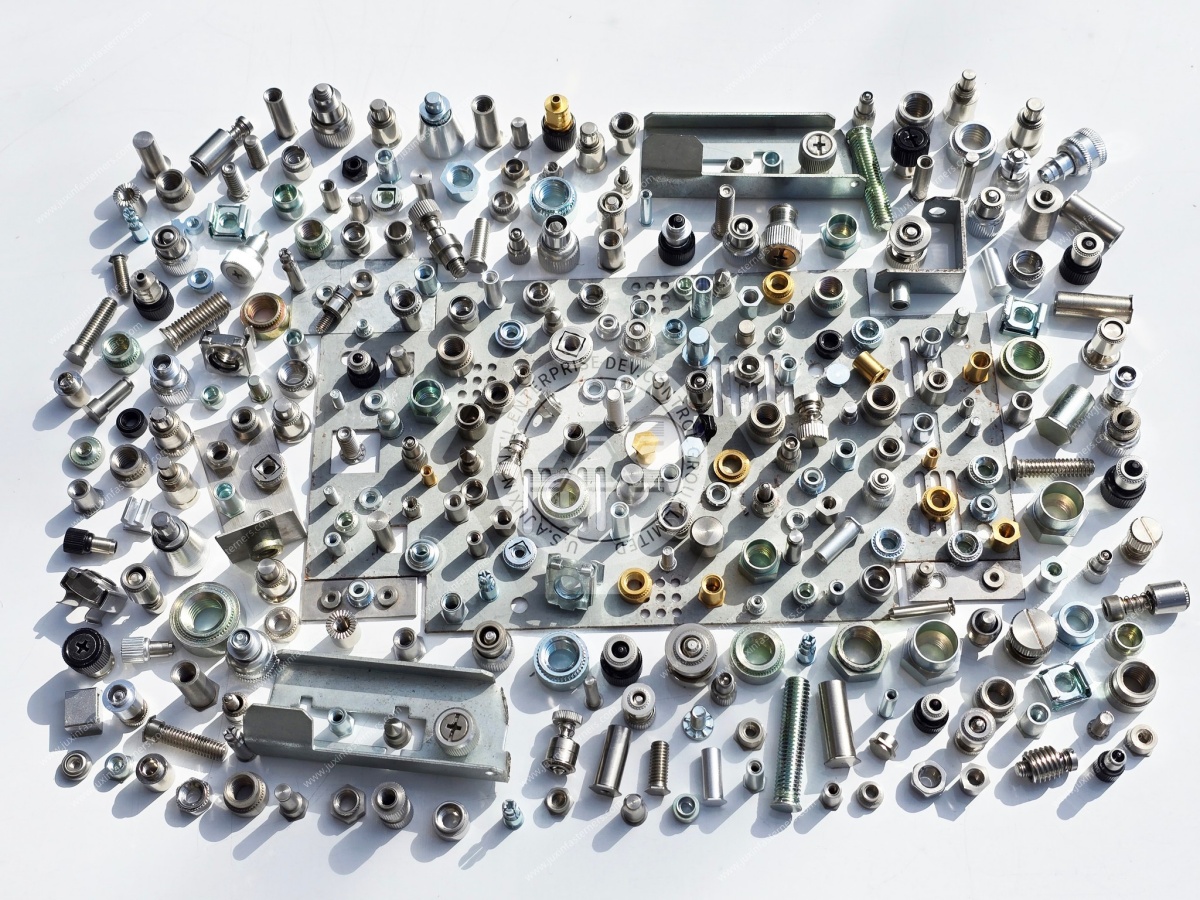
For self-clinching nuts, review:
Hole diameter
Hole tolerance
Sheet thickness
Sheet ductility
Edge distance
Fastener orientation
Installation access
Press capability
Installation force
Surface finish
Panel flatness
The hole is particularly important because a self-clinching nut relies on controlled deformation of the sheet around the fastener's retaining feature.
One common procurement mistake is specifying a fastening technology before understanding the actual application.
For example:
“We always use weld nuts.”
or
“We only use self-clinching nuts.”
A better engineering approach is to define the required joint performance first and then select the joining technology.
This can reduce unnecessary tooling, process restrictions, and supplier limitations.
Potential failure modes include:
Weld separation
Projection-related inconsistency
Excessive expulsion
Sheet tearing
Fastener deformation
Thread damage
Incorrect fastener position
Insufficient weld development
The actual failure mode should be identified through appropriate testing rather than inferred solely from visual appearance.
Potential failure modes include:
Nut spinning
Nut push-out
Sheet cracking
Insufficient mechanical interlock
Hole damage
Incorrect installation force
Panel deformation
Thread damage
The sheet often becomes a critical component of the joint because the mechanical interlock depends directly on the sheet material and installation conditions.
Two fastening systems can have similar nominal thread specifications while failing in completely different ways.
For an OEM design, engineers should ask:
What component is expected to fail first?
Is the failure mode acceptable?
Is the sheet or fastener the limiting component?
Does the joint experience cyclic loading?
Is repeated assembly required?
Can the installation process be monitored?
This approach provides much more useful information than simply comparing catalog strength numbers.
Procurement teams should compare both technologies at the system level.
| Procurement Factor | Weld Nuts | Self-Clinching Nuts |
|---|---|---|
| Fastener Unit Cost | Application-dependent | Application-dependent |
| Installation Equipment | Resistance welding system | Mechanical press system |
| Heat During Installation | Yes, localized | No resistance-welding heat |
| Sheet Compatibility | Requires weld-compatible joint | Requires suitable sheet ductility |
| Process Integration | Strong where welding already exists | Strong where pressing already exists |
| Surface-Finish Sequence | Must be integrated with welding/coating process | Must be integrated with mechanical installation and finish requirements |
| Automation | Highly suitable for automated welding | Highly suitable for automated pressing |
| Process Validation | Welding-process validation required | Installation-process validation required |
| Quality Monitoring | Weld parameters and joint testing | Installation force, dimensions, and mechanical testing |
| Best Selection Method | Joint-specific engineering evaluation | Joint-specific engineering evaluation |
The supplier should be able to discuss more than the fastener itself.
For OEM sourcing, ask whether the supplier can support:
Drawing review
DFM feedback
Material selection
Projection design
Surface-treatment selection
Prototype development
Dimensional inspection
Mechanical testing
Production consistency
Packaging
Export supply
Engineering communication
This becomes increasingly important when the fastener is a custom geometry rather than a standard catalog part.
Pillar Solution Page: JUXIN FASTENERS Weld Fasteners Solutions
Product Category Page: JUXIN FASTENERS Projection Weld Nuts
Engineering Guide: Hexagonal Weld Nuts Engineering & Sourcing Guide
Engineering Guide: Weld Nuts vs. Blind Rivet Nuts Engineering Guide
Commercial Sourcing Page: Request Engineering Consultation from JUXIN FASTENERS
These related pages should form an internal-link structure connecting the weld-fastener category, individual products, engineering selection guides, and OEM sourcing pages.
It should not be decided from the application name alone.
Automotive chassis and other dynamically loaded structures can impose demanding fatigue, vibration, impact, corrosion, and thermal requirements.
Whether a self-clinching nut is suitable depends on the specific load path, sheet material, joint geometry, installation process, environmental conditions, and validated mechanical performance.
A weld nut may be preferred in some applications because the production architecture and welded joint are well suited to the required performance, while a self-clinching solution may be appropriate in other designs.
The correct approach is application-specific validation rather than assuming that one technology is universally stronger.
The cost difference depends on production volume, existing equipment, automation, tooling, labor, quality-control requirements, and process integration.
Weld nuts require a suitable resistance-welding process, electrodes, fixtures, and process control.
Self-clinching nuts require controlled mechanical installation equipment and appropriate tooling.
For high-volume production, procurement should evaluate the total installed cost, not only the unit price of the fastener.
Not universally.
The performance of either system depends on the fastener geometry, sheet material, thickness, installation process, joint configuration, and loading condition.
For a specific application, the appropriate comparison should use defined test methods and acceptance criteria.
Yes, self-clinching nuts can be used in selected aluminum sheet applications, provided the sheet material and fastener design are compatible.
Aluminum grade, temper, thickness, hole condition, edge distance, and installation process should be evaluated before production release.
They can be, but the welding process must be developed for the actual stainless-steel grade, fastener material, surface condition, electrode system, and sheet configuration.
A welding schedule used for carbon steel should not automatically be transferred to stainless steel.
Neither technology is automatically better for every thin-sheet application.
Self-clinching nuts can be attractive when the sheet has sufficient ductility and the manufacturing process favors mechanical installation.
Weld nuts can be attractive when the material combination is weldable and the production process already incorporates resistance welding.
The correct selection depends on the complete joint and manufacturing requirements.
Both technologies can be highly suitable for high-volume automated manufacturing.
Weld nuts can integrate well with automated resistance-welding operations.
Self-clinching nuts can integrate well with controlled press installation.
The better choice depends on existing production equipment, automation architecture, cycle requirements, quality-control strategy, and total installed cost.
An OEM should ideally provide:
Fastener drawing
Thread specification
Sheet material
Sheet thickness
Surface treatment
Hole geometry
Required mechanical performance
Loading conditions
Temperature range
Corrosion environment
Production volume
Assembly method
Automation requirements
Applicable customer or industry standards
With this information, a supplier can evaluate the fastening technology as part of the complete assembly rather than simply quoting a threaded component.
Unsure whether weld nuts, self-clinching nuts, or another threaded fastening technology is best suited to your sheet-metal application?
Send your 2D drawing, sheet material specifications, thickness, surface treatment, application requirements, and production volume to the JUXIN FASTENERS engineering team.
Email: info@juxinfasteners.com
JUXIN FASTENERS supports OEM customers with weld nuts, weld studs, self-clinching fasteners, custom fastening components, DFM evaluation, sample development, and production sourcing for industrial applications.
The objective is not simply to select a fastener.
It is to select a joining technology that works reliably with the material, assembly process, production equipment, and long-term requirements of the finished product.
Precision Fastening Solutions Since 2003
Product Packaging
Packaging Standard
At Juxin Fasteners, we apply standardized export packaging to ensure product protection, traceability, and compliance with international logistics requirements.
1. Standard Export Packaging
Unless otherwise specified, all products will be packed according to our factory standard export packaging, which includes:
Moisture-resistant inner protection
Poly bag or small box packing as required
Reinforced export cartons
Clear labeling with part number, specification, batch number, and quantity
Palletizing for sea or air shipment when necessary
Our standard packaging is designed to ensure safe transportation, efficient warehousing, and long-distance international shipping.
2. Customized Packaging Options
We also provide customized packaging solutions according to customer requirements, including but not limited to:
Private labeling
Customized barcodes
Specific carton dimensions
Retail packaging
Special pallet configuration
Customer-specific marking and identification
So that you know, customized packaging may involve additional costs and extended lead time depending on the complexity of the requirements.
3. Compliance & Quality Assurance
All packaging processes are controlled under our ISO 9001 quality management system to ensure consistency, traceability, and product integrity throughout the supply chain.
Product Pictures
Contact Us
Tel.:
+86 020 8621 0320
+86 020 3121 6067
E-mail:
Technical Support:
Navigation
SEND INQUIREY