Call Us
+86 136 6007 9809
Call Us
+86 136 6007 9809

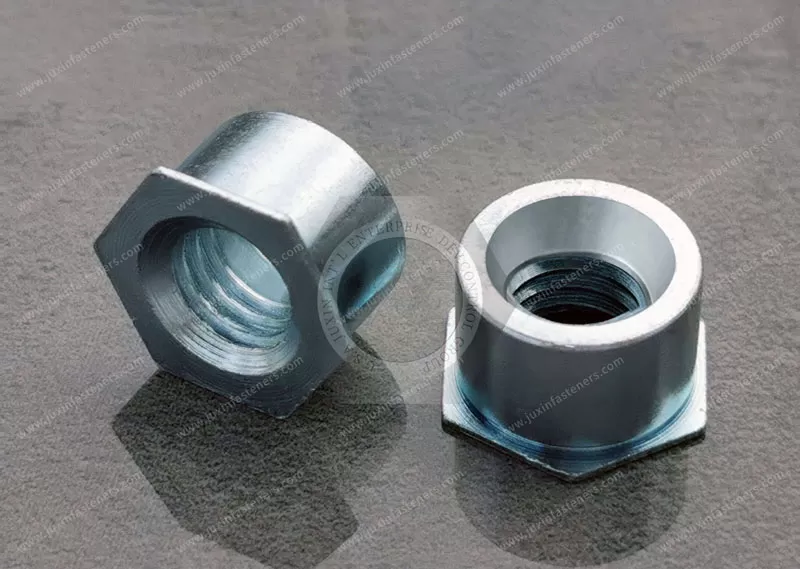
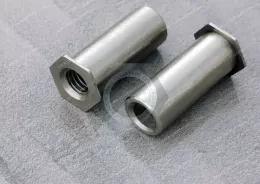
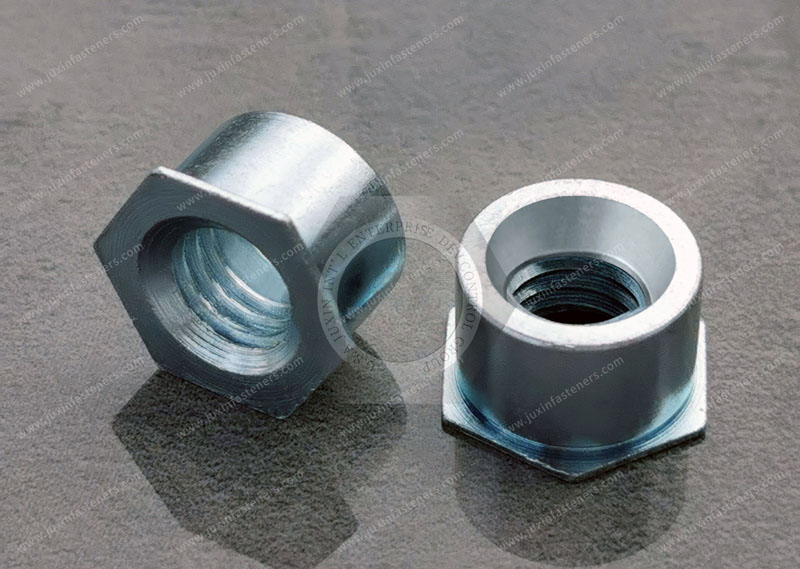
JUXIN FASTENERS supplies JX-SO steel thru-hole threaded self-clinching standoffs for mounting printed circuit boards, electronic modules and mechanical components at a defined distance from sheet-metal panels. Installed by controlled pressing into a properly prepared mounting hole, these standoffs provide permanent internal threads without welding or loose rear-side nuts.
The thru-hole design allows mating screws to engage through the standoff body, while the self-clinching attachment provides a flush interface on the designated mounting surface. Threaded and special-order unthreaded configurations support different OEM assembly requirements.
Product Type: Thru-Hole Self-Clinching Standoff
Series: JX-SO
Material: Steel
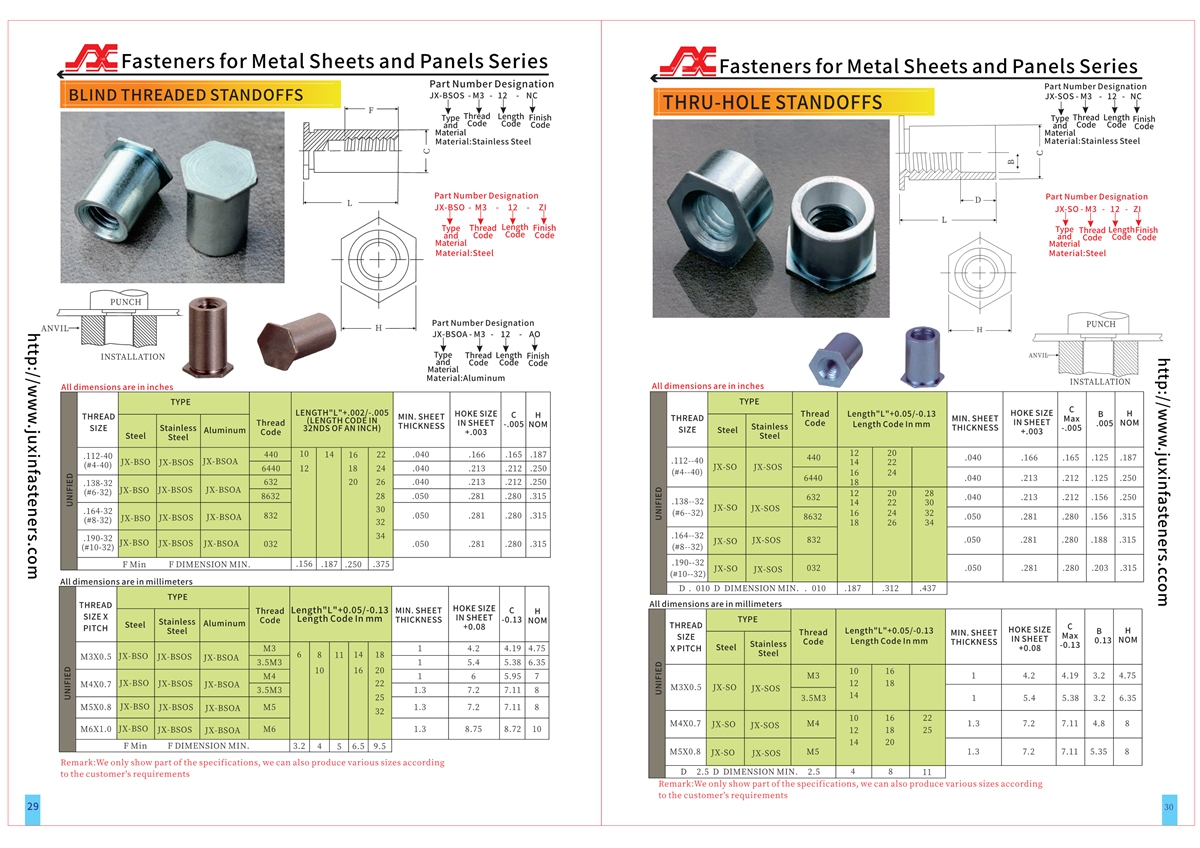
Metric Threads: M3, M4, M5
Inch Threads: Selected #4–#10 sizes
Thread Configuration: Through-Hole Internal Thread
Unthreaded Versions: Subject to technical confirmation
Standoff Height: According to approved drawing
Installation: Controlled Press-Fit Clinching
Applications: Sheet Metal, PCB Mounting, Electronics and Industrial Enclosures
Product Specification
Steel Thru-Hole Threaded Self-Clinching Standoffs for Sheet Metal and OEM Equipment
JUXIN FASTENERS supplies steel thru-hole threaded self-clinching standoffs for manufacturers that need reliable threaded mounting points and consistent component spacing in fabricated sheet-metal assemblies.
The JX-SO series is designed for applications where a threaded spacer must become a retained part of the mounting panel rather than remain a loose component during final assembly. Typical uses include printed circuit board supports, electronic equipment housings, industrial control cabinets, telecommunications assemblies, instrumentation and precision metal enclosures.
Unlike conventional loose spacers, self-clinching standoffs are mechanically installed into the parent sheet. Their retaining features engage the surrounding metal during pressing, creating a secure mounting interface for subsequent screw assembly.
The through-hole internal thread allows the mating screw to pass through the standoff when sufficient clearance is provided by the surrounding structure. This makes the design particularly useful where screw length, service access and component spacing must be coordinated within a compact assembly.
Product Configuration and Available Options
The JX-SO series is the steel version of JUXIN FASTENERS' thru-hole self-clinching standoff family.
Standard product information identifies metric internal threads from M3 to M5 and selected Unified inch-thread sizes from #4 through #10.
The exact thread pitch, standoff height, body dimensions and installation requirements depend on the selected part number.
The steel material may be specified from suitable carbon or free-machining steel grades according to the approved engineering drawing. Material grade, hardness, surface treatment and dimensional tolerances should be confirmed before production.
Special-order unthreaded thru-hole configurations may also be considered when a clearance opening is required instead of a female thread.
For OEM projects, the most important selection parameters are the thread designation, standoff height, mounting-hole diameter, parent-sheet thickness, material compatibility and required installed performance.
How Self-Clinching Standoffs Work
Self-clinching standoffs use mechanical material displacement to create a permanent attachment to sheet metal.
The fastener is positioned in a properly sized hole, and a press applies a controlled squeezing force perpendicular to the mounting surface. The surrounding sheet metal flows into the standoff's retaining features, forming a mechanical interlock.
This process secures the standoff to the panel without a separate nut, welding operation or adhesive.
A properly installed self-clinching standoff can provide resistance to axial displacement and rotation during subsequent screw assembly.
However, installed performance depends on the combination of fastener geometry, parent-sheet material, sheet hardness, hole preparation and installation conditions.
Self-clinching is not simply a tight interference fit. The formation of the mechanical interlock is essential to the attachment principle.
Thru-Hole Threaded Design and Assembly Advantages
The thru-hole threaded design provides a continuous internal opening through the standoff body.
This configuration allows engineers to select mating screw lengths based on the complete assembly geometry rather than the bottoming depth of a closed-end threaded cavity.
The standoff also establishes a controlled separation between the mounting panel and the attached component.
For electronic equipment, this spacing may be necessary to accommodate components mounted beneath a circuit board, provide cable clearance, avoid contact with enclosure surfaces or maintain access for assembly and servicing.
For mechanical equipment, the standoff may position brackets, internal panels or support components at a defined distance from the base sheet.
When correctly specified and installed, the clinching end can provide a flush interface with the designated mounting-panel surface.
The actual flushness requirement should be defined by the applicable drawing and installation specification.
Engineering Selection: Thru-Hole vs. Blind Threaded Standoffs
Thru-hole and blind threaded self-clinching standoffs serve different assembly requirements.
A thru-hole standoff contains an internal opening extending through the body. This allows a mating screw to penetrate beyond the threaded section when the surrounding assembly provides sufficient space.
A blind threaded standoff has an internal thread that terminates within the body. Its closed-end construction can be useful when screw penetration through the standoff must be prevented.
The selection should be based on the required screw engagement, available clearance, mounting orientation, enclosure design and service conditions.
For an enclosure where the exterior surface must remain closed, a suitable blind threaded design may be preferable.
For an internal mounting arrangement where screw penetration is acceptable and additional thread engagement flexibility is useful, a thru-hole configuration may offer a practical solution.
Neither design should be selected solely on the basis of thread size.
Standoff Height and Component Clearance
Standoff height is a functional engineering dimension, not simply a catalog measurement.
It determines the distance between the supporting panel and the component being mounted.
In PCB assemblies, insufficient spacing may allow solder joints, component leads or other conductive features to contact the metal enclosure.
In industrial equipment, incorrect spacing may interfere with connectors, cable routing, ventilation paths or adjacent mechanical components.
An excessively tall standoff may also increase bending demand at the mounting interface when the supported component experiences lateral loads.
Engineers should therefore evaluate standoff height together with component weight, mounting-point distribution, expected vibration, panel stiffness and available enclosure space.
The required height and tolerance should be included in the OEM drawing.
Thread Selection for Metric and Inch Assemblies
JUXIN FASTENERS identifies M3, M4 and M5 metric threads within this steel thru-hole standoff family, together with selected inch-thread configurations from #4 through #10.
Metric thread dimensions and tolerances may be specified using applicable ISO 261 and ISO 965 requirements.
Unified inch threads may be specified using applicable ASME B1.1 requirements.
The thread designation must include the correct pitch or thread series where necessary.
Metric and Unified inch threads are different systems and must not be treated as interchangeable merely because their nominal diameters appear similar.
For international OEM sourcing, purchasing teams should identify the exact mating screw specification rather than request a standoff using only an approximate diameter.
Parent-Sheet Material and Hardness Compatibility
The performance of a self-clinching standoff depends heavily on the material into which it is installed.
During pressing, the parent sheet must deform sufficiently to fill the fastener's retaining geometry.
If the parent sheet is too hard relative to the selected fastener, the required material flow may be restricted.
If the sheet is too thin, there may be insufficient material to form a reliable interlock.
For this reason, fastener material, fastener hardness, sheet material, sheet hardness and sheet thickness must be evaluated together.
Steel JX-SO standoffs should not automatically be assumed suitable for every stainless steel, aluminum or high-strength steel panel.
The approved product drawing and installation data should determine the permitted parent-sheet conditions.
For assemblies using stainless steel panels, an appropriately engineered alternative may be necessary.
Mounting-Hole Preparation and Installation Quality
Correct mounting-hole preparation is essential to consistent self-clinching performance.
The mounting hole should be produced to the specified diameter and tolerance, with appropriate attention to roundness, burr condition and edge quality.
An oversized hole can reduce the amount of material available to form the retaining interlock.
An undersized hole may cause excessive deformation, installation difficulty or damage to the surrounding panel.
Hole position also matters. Insufficient distance from a panel edge, bend or adjacent opening can affect local material flow and structural support.
Installation should use suitable press tooling that applies a controlled, parallel squeezing force.
Uncontrolled hammering or impact installation should not replace the specified clinching process.
The correct punch and anvil arrangement must support the standoff and parent sheet without damaging the internal thread or deforming the spacer body.
Installation requirements should be verified before production approval.
Engineering Information Gain: Why a Strong Thread Does Not Guarantee a Strong Installed Joint
A common design mistake is to evaluate only the strength of the internal thread.
In a self-clinching standoff assembly, several different failure mechanisms must be considered.
The mating screw may fail or the internal thread may strip under excessive loading.
The standoff may rotate in the sheet if the mechanical interlock does not provide sufficient torque resistance.
The standoff may be pushed out of the mounting hole under axial loading.
The parent sheet may deform locally under service loads.
A tall standoff supporting an offset component may also experience bending loads that are not represented by simple axial retention measurements.
These mechanisms depend on different parts of the assembly.
Therefore, thread strength, push-out resistance, torque-out resistance and structural loading should be evaluated separately where relevant.
This is particularly important for equipment exposed to vibration, repeated servicing or significant mechanical loads.
Push-Out and Torque-Out Resistance
Push-out resistance describes the ability of an installed standoff to resist displacement from the parent sheet under a defined axial load.
Torque-out resistance describes its ability to resist rotation within the mounting panel under a defined applied torque.
Both are important during assembly and service.
For example, a standoff may have adequate internal thread strength but still rotate if the parent-sheet material does not form a sufficient mechanical interlock.
Similarly, a standoff may resist rotation while remaining vulnerable to excessive axial loading.
Actual retention performance depends on the selected standoff geometry, mounting-hole dimensions, parent-sheet material, sheet thickness and installation process.
JUXIN FASTENERS recommends defining project-specific performance requirements and confirming the relevant acceptance criteria before production approval.
No universal push-out or torque-out rating should be assumed across all JX-SO configurations.
PCB Mounting and Electronics Manufacturing
Steel thru-hole self-clinching standoffs are used in electronic equipment where circuit boards or modules must be mounted above a metal chassis.
Potential applications include industrial controllers, communication devices, power distribution equipment, test instruments and electronic enclosures.
The standoff establishes a defined mechanical separation between the circuit board and the mounting surface.
This separation can help accommodate underside components and maintain required assembly clearances.
However, steel is electrically conductive.
A steel standoff does not provide electrical insulation by itself. Where electrical isolation is required, the complete assembly must incorporate suitable insulating components and validated clearances.
Engineers should also consider the location of circuit board mounting holes, tightening loads, board support and possible vibration.
Industrial Control Cabinets and Electrical Equipment
In industrial control cabinets, self-clinching standoffs can provide retained mounting points for internal components, equipment modules and secondary panels.
The use of installed standoffs can reduce the need to handle separate nuts and loose spacers during final assembly.
This can be valuable when manufacturing multiple enclosure variants or assembling equipment with restricted internal access.
For electrical equipment, the mounting arrangement must also account for grounding, electrical clearance and the required environmental protection of the finished enclosure.
The presence of a threaded standoff alone does not establish electrical safety or enclosure sealing performance.
Telecommunications and Network Equipment
Telecommunications equipment often combines dense electronic assemblies with compact sheet-metal chassis.
Steel thru-hole standoffs may be used to support circuit boards, internal electronic modules and mounting brackets where the specified mechanical and environmental requirements permit.
Their retained design can support repeatable component positioning during production.
For equipment exposed to vibration, repeated maintenance or transport loading, the installed attachment and complete screw joint should be validated under representative conditions.
Automotive and Transportation Equipment
Selected automotive and transportation electronics may require compact threaded mounting points in fabricated metal housings.
Potential applications include electronic modules, instrument assemblies, communication housings and non-structural support components.
The design must account for vibration, thermal cycling, corrosion exposure and applicable customer qualification requirements.
Use in safety-critical or regulated applications requires separate engineering approval.
A standard industrial standoff should not be assumed qualified for every automotive or railway application.
Steel Self-Clinching Standoffs vs. Loose Threaded Spacers
Loose threaded spacers can be appropriate for low-volume assemblies or designs that require removable spacer components.
However, loose spacers may increase part handling and assembly complexity.
A self-clinching standoff becomes mechanically retained in the mounting panel before the mating component is installed.
This can simplify subsequent assembly operations and help maintain consistent mounting locations.
For OEM manufacturers, the relevant comparison is not limited to the purchase price of the spacer.
The total installed cost may include hole preparation, press installation, component handling, inspection, assembly labor and potential rework.
The best attachment method depends on production volume, equipment availability and assembly requirements.
Steel Self-Clinching Standoffs vs. Welded Standoffs
Welded standoffs are another option for attaching threaded spacers to metal panels.
Welding may be suitable for certain materials and load conditions, but it introduces a thermal joining process and related manufacturing considerations.
Self-clinching standoffs use mechanical pressing instead of welding.
This may be advantageous when the selected parent sheet is compatible with clinching and the manufacturing process benefits from avoiding localized welding heat.
However, self-clinching performance depends on sheet hardness, thickness and installation geometry.
The correct attachment technology should be selected according to the complete application rather than assuming one method is universally stronger or less expensive.
Threaded and Unthreaded Thru-Hole Options
Threaded thru-hole standoffs provide internal female threads for engaging a mating screw.
Unthreaded thru-hole standoffs provide an opening without internal threads.
An unthreaded design may be useful where a screw passes through the spacer and engages a separate threaded component, or where the spacer serves primarily as a positioning or clearance element.
These configurations perform different functions.
An unthreaded spacer is not a direct substitute for a threaded standoff unless the fastening arrangement is redesigned accordingly.
Special-order unthreaded configurations should be defined by an approved drawing, including the clearance-hole diameter and dimensional tolerances.
Surface Finish and Corrosion Considerations
The appropriate surface finish depends on the selected steel grade, manufacturing process and service environment.
Where an electroplated coating is specified, applicable requirements may be established using ISO 4042 where relevant.
For corrosion-sensitive applications, the customer should identify the required coating system, exposure conditions and acceptance criteria.
Salt-spray testing, when specified, may reference ISO 9227 or ASTM B117.
These tests provide comparative corrosion-performance information under defined laboratory conditions. They do not directly predict service life in every operating environment.
Any RoHS-related material or coating requirement should be supported by appropriate documentation rather than inferred from the visual appearance of the finish.
Dimensional and Thread Quality Control
For OEM production, dimensional consistency is important because the standoff must interface with both the parent sheet and the mating screw.
Inspection characteristics may include:
Thread designation and tolerance
Standoff height
Body diameter
Mounting interface geometry
Retaining features
Concentricity and alignment
Surface condition
Material identification
Coating requirements where applicable
The inspection plan should follow the approved drawing and customer acceptance criteria.
For assemblies where standoff positioning is critical, the final installed position and perpendicularity may also require verification.
Design Review: Common Causes of Installation Problems
Insufficient clinching retention can result from an unsuitable combination of mounting-hole size, parent-sheet hardness, sheet thickness and installation conditions.
Panel distortion may occur when the surrounding sheet is inadequately supported or when excessive installation force is applied.
Thread damage may result from incorrect tooling alignment or inappropriate handling.
A standoff that appears properly seated may still have insufficient torque-out or push-out resistance if the required material flow did not occur.
For new applications, representative installation trials are useful before production release.
These trials should use the actual parent-sheet material, thickness, hole-making process and installation tooling intended for production.
OEM Sourcing and Supplier Qualification
For purchasing managers and supplier development engineers, the key objective is not simply obtaining a standoff with the correct nominal thread.
The supplied fastener must also match the installation and functional requirements of the approved assembly.
Important sourcing considerations include material grade, dimensional consistency, thread quality, clinching geometry, surface finish, traceability and packaging.
Where the application requires documented retention performance, the required test method and acceptance criteria should be agreed upon during supplier qualification.
For recurring OEM programs, drawing revision control and consistent part identification are particularly important.
Changes to material, geometry or coating may require technical review because they can affect both installation and service performance.
Related Sheet-Metal Fastening Solutions
JUXIN FASTENERS also supplies related self-clinching and blind fastening product families.
Aluminum Thru-Hole Self-Clinching Standoffs are relevant when a lightweight spacer material is required.
Stainless Steel Thru-Hole Self-Clinching Standoffs may be considered when stainless steel material characteristics are needed, subject to installation compatibility.
Steel Blind Threaded Self-Clinching Standoffs are relevant when a closed-end internal thread is preferred.
Self-Clinching Nuts provide retained internal threads without the extended spacing body of a standoff.
Self-Clinching Studs provide retained external threaded mounting points.
Blind Rivet Nuts provide internal threads for applications where installation access is available from only one side.
These related product categories should be linked to their corresponding verified JUXIN FASTENERS product pages to support engineering comparisons and product selection.
Frequently Asked Questions
What is a thru-hole self-clinching standoff?
A thru-hole self-clinching standoff is a spacer that is mechanically retained in sheet metal and provides a through-opening, commonly with internal threads, for mounting another component at a defined distance.
How are self-clinching standoffs installed?
They are positioned in correctly sized mounting holes and installed using controlled parallel pressing force. The parent-sheet material flows into the fastener's retaining features to create a mechanical attachment.
What is the difference between a thru-hole and a blind threaded standoff?
A thru-hole standoff has an internal opening through the body. A blind threaded standoff has a closed-end threaded cavity. The selection depends on screw penetration, assembly clearance and exterior surface requirements.
Can JX-SO steel standoffs be used in stainless steel panels?
Compatibility must be confirmed against the approved fastener and installation specifications. The material and hardness of the parent sheet are critical to successful clinching.
Do self-clinching standoffs require welding?
No. Their attachment is formed by controlled mechanical pressing rather than welding.
Can self-clinching standoffs be used for printed circuit boards?
Yes. Suitable configurations can support printed circuit boards above metal chassis and enclosure surfaces. The design must provide adequate mechanical support and required electrical clearances.
What thread sizes are available?
The supplied JX-SO product family includes M3, M4 and M5 metric threads and selected #4–#10 Unified inch-thread sizes. Exact configurations should be confirmed from the applicable drawing.
Can JUXIN FASTENERS supply custom standoff dimensions?
Customer-specific dimensions and special configurations can be reviewed against engineering drawings and manufacturing requirements.
How do engineers select the correct standoff height?
The height should be determined from the required component spacing, screw engagement, mechanical loads, assembly clearances and applicable tolerances.
What information is needed for an OEM quotation?
A useful RFQ should include the required thread size, standoff height, material, parent-sheet thickness, mounting-hole requirements, drawing, order quantity and any specified performance or documentation requirements.
Request an OEM Quotation for Steel Thru-Hole Self-Clinching Standoffs
JUXIN FASTENERS supports OEM sourcing requirements for steel self-clinching standoffs and related sheet-metal fastening products.
The JX-SO series is intended for applications requiring retained internal threads and controlled spacing in compatible metal panels.
For a technical review, please send your drawing or CAD file together with the required thread designation, standoff height, parent-sheet material, sheet thickness, installation conditions and estimated purchasing quantity.
Where applicable, include requirements for push-out resistance, torque-out resistance, surface finish, inspection documentation and packaging.
Our team can review the requested configuration and provide a quotation based on the confirmed technical and commercial requirements.
Email: info@juxinfasteners.com
Website: www.juxinfasteners.com
JUXIN FASTENERS — Steel Self-Clinching Standoffs and OEM Sheet-Metal Fastening Solutions.
Product Packaging
Product Packaging
JUXIN FASTENERS supplies steel thru-hole self-clinching standoffs with protective packaging suitable for industrial and OEM shipments.
The standard packing arrangement uses poly foam for inner protection, outer cartons and palletized packaging for transportation.
Available carton dimension references include 29 × 19 × 19.5 cm and 23.5 × 17.5 × 8 cm. The supplied pallet dimension reference is 215 × 100 × 90 cm.
Actual packing quantities, carton selection and pallet arrangements depend on the confirmed standoff dimensions, order quantity and shipping requirements.
Internal threads, clinching features and finished surfaces should be protected against mechanical damage and contamination during handling and transportation.
Customer-specific packaging, labeling and part-number identification requirements can be reviewed before order confirmation.
For OEM programs involving multiple thread sizes or standoff heights, clear part identification helps prevent mixing during storage and assembly.
Please provide any required packaging specifications, labeling instructions or shipment requirements when requesting a quotation.
Email: info@juxinfasteners.com
Website: www.juxinfasteners.com
Product Pictures
Contact Us
Tel.:
+86 020 8621 0320
+86 020 3121 6067
E-mail:
Technical Support:
Navigation
SEND INQUIREY