Call Us
+86 136 6007 9809
Call Us
+86 136 6007 9809

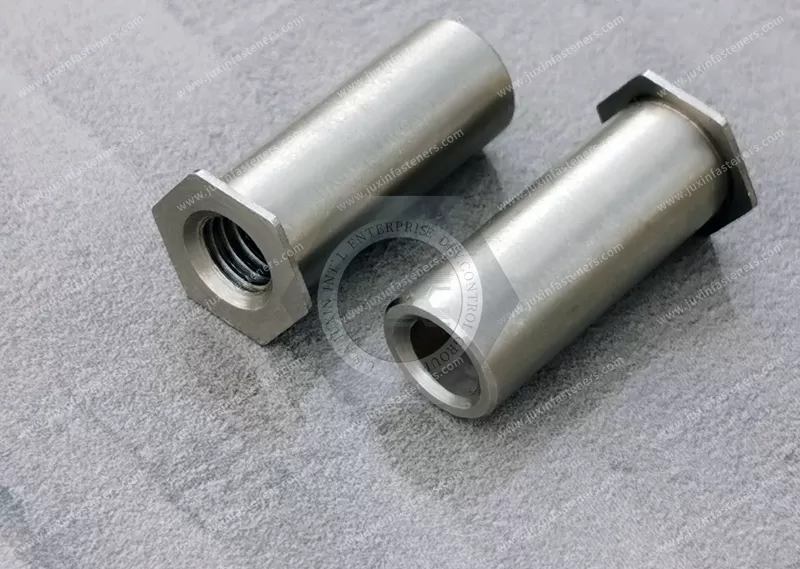
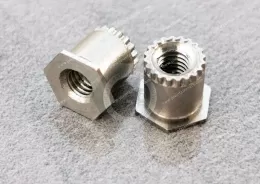
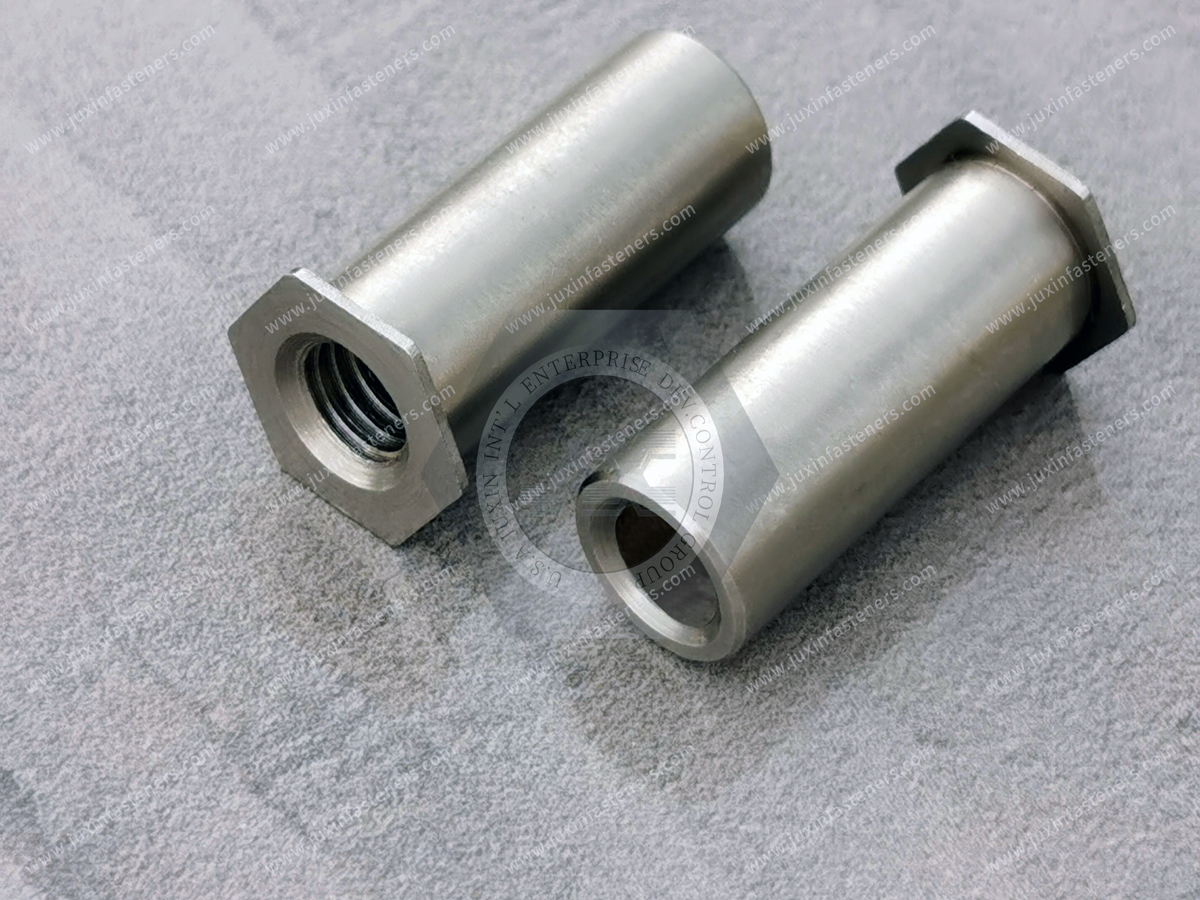
JUXIN FASTENERS supplies JX-SOS stainless steel thru-hole self-clinching standoffs for secure threaded mounting and precise component spacing in sheet-metal assemblies. These press-in standoffs are used to support printed circuit boards, electronic modules, control panels and equipment components without loose rear-side nuts or welding.
The thru-hole threaded design permits mating screw engagement through the standoff body, while the self-clinching attachment creates a mechanically retained mounting point with a flush interface on the designated panel surface. Stainless steel material options support projects requiring specific corrosion resistance and mechanical properties, subject to material and installation verification.
Product Series: JX-SOS
Material: Stainless Steel
Material Grades: According to approved drawing
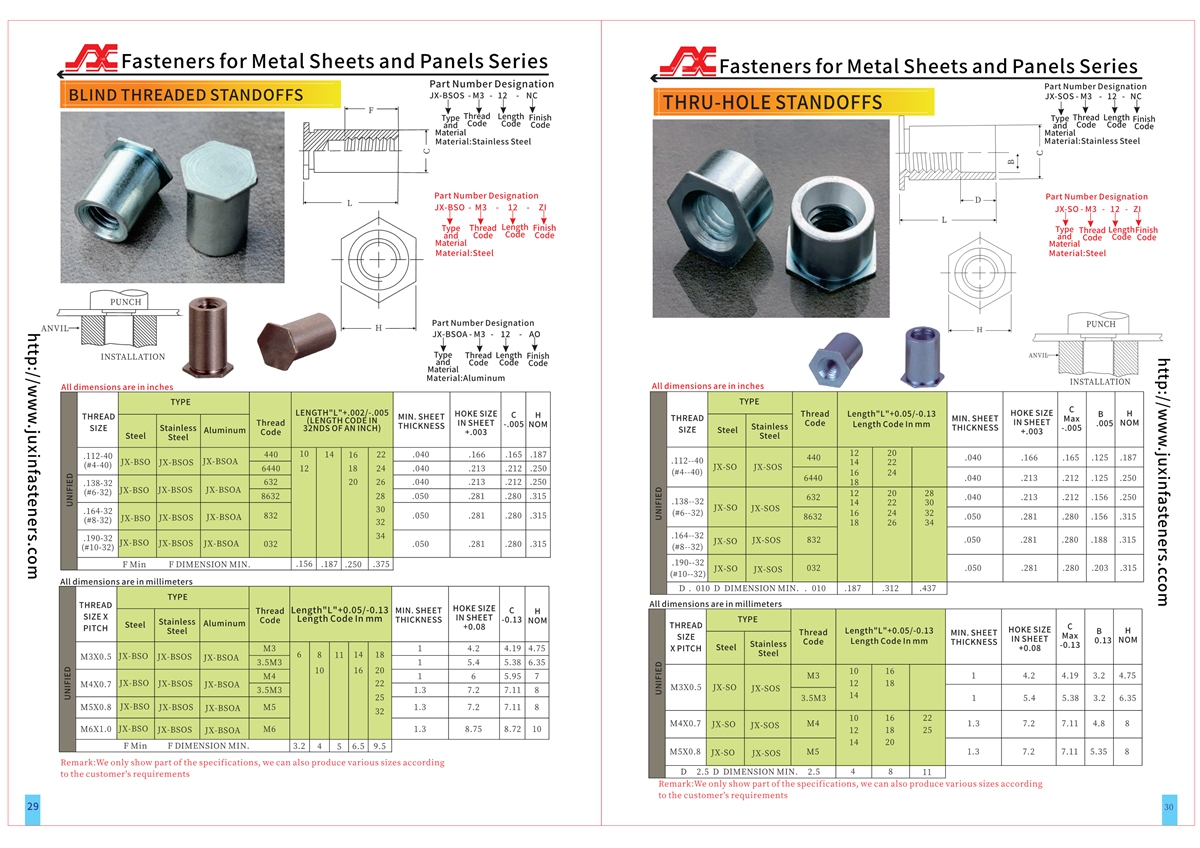
Metric Threads: M3, M4, M5
Inch Threads: Selected #4–#10 sizes
Configuration: Thru-Hole Internal Thread
Unthreaded Options: Subject to technical confirmation
Standoff Height: According to approved drawing
Installation: Controlled Parallel Pressing Force
Applications: PCB Mounting, Electronic Enclosures, Industrial Equipment and Sheet-Metal Assemblies
Product Specification
Stainless Steel Thru-Hole Self-Clinching Standoffs for Sheet Metal and OEM Equipment
JUXIN FASTENERS supplies stainless steel thru-hole threaded self-clinching standoffs for industrial manufacturers requiring mechanically retained threaded mounting points and accurate component spacing in fabricated sheet-metal assemblies.
The JX-SOS series combines a stainless steel spacer body with an internal through-thread and a self-clinching attachment feature. It is intended for applications where a standoff must remain securely positioned in the mounting panel while supporting another component at a specified distance.
Typical applications include printed circuit board mounting, electronic enclosures, telecommunications equipment, industrial control cabinets, instrumentation and precision mechanical assemblies.
Unlike conventional loose threaded spacers, self-clinching standoffs are installed into the parent sheet before final equipment assembly. This allows the mounting panel to be supplied with retained threaded supports, reducing the need to position separate nuts or spacers during subsequent assembly operations.
The correct selection depends on the complete joint design, including stainless steel grade, parent-sheet material, mounting-hole dimensions, standoff height, thread engagement, installation conditions and required mechanical performance.
Product Configuration and Available Thread Sizes
The JX-SOS series is the stainless steel version of this thru-hole self-clinching standoff family.
The supplied product range identifies metric internal threads from M3 to M5 and selected Unified inch-thread sizes from #4 through #10.
The exact thread pitch, standoff height, body diameter and clinching geometry depend on the selected part number.
Custom dimensions and special configurations may be reviewed according to customer drawings and manufacturing requirements.
Unthreaded thru-hole versions may also be considered on special order where a clearance opening is required instead of an internal female thread.
The selected configuration must be confirmed against the applicable technical drawing before production.
Stainless Steel Material Selection
The supplied material information identifies several stainless steel families, including grades commonly designated SUS302, SUS303, SUS316, SUS410, SUS420 and SUS430.
These grades have different mechanical, corrosion and manufacturing characteristics. They should not be treated as interchangeable materials or assumed to be available in every JX-SOS configuration.
Austenitic stainless steels, such as suitable 302, 303 and 316 grades, differ from martensitic and ferritic stainless steels in hardness, strength, corrosion behavior and processing characteristics.
For example, 316 stainless steel may be considered where enhanced resistance to certain chloride-containing environments is required, but its suitability still depends on the actual exposure conditions.
Martensitic stainless steels may provide different hardness characteristics, depending on grade and heat treatment, but corrosion resistance and clinching compatibility must also be evaluated.
Material selection should therefore be based on the approved engineering specification rather than the general description "stainless steel."
The final material grade, condition and surface requirements must be established for each OEM application.
Engineering Information Gain — Stainless Steel Fastener Does Not Mean Universal Stainless Steel Panel Compatibility
A critical distinction in self-clinching technology is the difference between fastener material and parent-sheet material.
A stainless steel standoff is not automatically suitable for installation into every stainless steel panel.
Self-clinching relies on the surrounding sheet metal flowing into the fastener's retaining features during pressing.
If the parent sheet is too hard for the selected fastener design, the required material displacement may not occur.
The result can be inadequate mechanical retention even when the standoff appears seated against the panel.
The engineer must therefore verify the hardness and mechanical compatibility of both the standoff and the parent sheet.
For harder stainless steel panels, a specifically engineered self-clinching fastener may be required.
A material description alone is insufficient to establish installation suitability.
How Thru-Hole Self-Clinching Standoffs Work
A self-clinching standoff is positioned in a properly prepared mounting hole and installed using a controlled squeezing force.
During installation, the surrounding parent-sheet material is displaced into the standoff's retaining geometry.
This material flow creates a mechanical interlock between the fastener and the sheet.
The installed standoff then provides a fixed mounting point for a mating screw and supports the attached component at a defined distance from the mounting panel.
This is different from simply forcing a cylindrical spacer into a tight hole.
The attachment depends on the intended clinching geometry and the ability of the parent sheet to deform correctly.
Installation should use appropriate press tooling and controlled parallel force rather than uncontrolled impact.
Thru-Hole Threaded vs. Blind Threaded Standoffs
Thru-hole and blind threaded standoffs provide different assembly functions.
A thru-hole threaded standoff contains an internal opening extending through its body.
This permits a mating screw to pass through the threaded section when sufficient clearance is available in the surrounding assembly.
A blind threaded standoff has an internal thread that terminates inside the body.
The blind configuration can be useful where screw penetration must be restricted or a closed-end threaded cavity is required.
For an electronic enclosure with limited internal clearance, the engineer should determine whether the mating screw may safely extend beyond the standoff.
For an assembly requiring a closed exterior interface, a suitable blind threaded design may be preferable.
The correct choice depends on screw length, required engagement, available space and enclosure construction.
A thru-hole standoff should not be described as providing a sealed or closed-end threaded connection.
Standoff Height and Functional Component Spacing
The height of a self-clinching standoff determines the separation between the mounting panel and the supported component.
This dimension is particularly important in electronic assemblies.
Printed circuit boards may require clearance for solder joints, electronic components, connector bodies or wiring.
Mechanical equipment may require spacing for brackets, covers, insulation components or adjacent moving parts.
An incorrect standoff height can cause interference, assembly stress or inadequate clearance.
The required height should therefore be established from the complete equipment design.
Engineers should also consider the tolerance stack-up between the mounting panel, standoff, supported component and mating screw.
Standoff height must be specified independently from thread size.
Two standoffs with identical M4 internal threads may have different overall heights and serve different mounting requirements.
Engineering Information Gain — Taller Standoffs Change the Load Path
A standoff is not merely a threaded connection. It also acts as a structural spacer.
When a supported component experiences lateral loading, the distance between the load application point and the mounting sheet can create a bending moment.
Increasing the standoff height can increase this bending demand for the same lateral force.
This is important in assemblies exposed to vibration, repeated movement, transportation loads or service handling.
The engineer should evaluate standoff height, component mass, mounting-point distribution, panel stiffness and expected service loads together.
Push-out resistance and torque-out resistance are useful installation-performance characteristics, but they do not necessarily describe the complete bending or fatigue behavior of the mounted assembly.
Metric and Inch Thread Selection
The supplied JX-SOS thread family includes M3, M4 and M5 metric sizes, together with selected #4–#10 Unified inch-thread configurations.
Metric thread combinations may be specified using applicable ISO 261 requirements.
Metric thread tolerances may be specified using applicable ISO 965 requirements.
Unified inch-thread requirements may be specified using ASME B1.1.
The complete thread designation should be provided in the OEM drawing.
Metric and Unified inch threads are not interchangeable.
For international purchasing programs, the thread pitch and mating screw specification must be confirmed rather than relying only on a nominal diameter.
Through-Hole Thread Engagement and Screw Length
A thru-hole standoff allows the mating screw to engage the internal thread without the closed-end restriction of a blind threaded cavity.
However, this does not mean screw length can be selected without checking the assembly.
The mating screw may extend into an adjacent component, enclosure wall, cable path or other restricted space.
Thread engagement must also be sufficient for the required joint loading.
The engineer should verify the complete screw penetration path, required clamp load, thread engagement and available clearance.
The final screw length should be established from the actual assembled geometry.
Mounting-Hole Preparation
Mounting-hole accuracy directly affects self-clinching installation.
The hole must be prepared to the diameter and tolerance specified for the selected standoff.
Important considerations include hole roundness, burr condition, edge quality, hole position and surrounding sheet geometry.
An oversized hole may reduce the amount of material available to form the mechanical interlock.
An undersized hole may create excessive deformation or interfere with correct installation.
The mounting hole should also be positioned at a suitable distance from panel edges, bends and neighboring openings.
Minimum edge distance and mounting-hole dimensions must be confirmed from the approved installation drawing.
Installation Process and Press Tooling
JX-SOS self-clinching standoffs are installed using a controlled pressing process.
The standoff is positioned in the mounting hole and supported by suitable installation tooling.
A parallel squeezing force is applied until the specified seating condition is achieved.
The parent-sheet material flows into the retaining features and forms the mechanical attachment.
Correct tooling alignment is important because an uneven installation force may tilt the standoff, damage the thread or distort the surrounding panel.
The press setup should provide appropriate support for the parent sheet.
Uncontrolled hammering should not replace the specified installation method.
For new OEM designs, installation trials using representative production panels are recommended before final approval.
Engineering Information Gain — Why Installation Appearance Alone Is Not Enough
A self-clinching standoff can appear flush and correctly seated while still having inadequate retention.
This can occur when the parent sheet does not flow sufficiently into the fastener's retaining features.
Potential causes include unsuitable sheet hardness, incorrect hole diameter, inadequate sheet thickness or improper installation force.
For this reason, visual inspection should be supplemented by appropriate mechanical verification when the application requires documented retention performance.
The installation process should be validated using the actual parent-sheet material, hole-making method and press tooling intended for production.
Push-Out Resistance and Torque-Out Resistance
Push-out resistance describes the installed fastener's resistance to axial displacement from the parent sheet under defined conditions.
Torque-out resistance describes its resistance to rotation within the mounting sheet.
Both characteristics are important for self-clinching standoffs.
During screw tightening, the installed standoff must resist rotation.
During equipment service, removal or mechanical loading, it may also experience axial forces.
Performance depends on the standoff geometry, parent-sheet properties, mounting-hole preparation and installation conditions.
No universal retention rating should be assumed across different JX-SOS sizes or material combinations.
Where required, acceptance values and test conditions should be defined by the customer drawing or qualification specification.
Corrosion Resistance and Stainless Steel Performance
Stainless steel standoffs may be selected where the application requires specific corrosion-resistance characteristics.
However, stainless steel performance depends on grade, surface condition, operating environment and contact with other materials.
Different stainless steel grades do not provide identical resistance to chlorides, chemicals, humidity or elevated temperatures.
In assemblies containing dissimilar metals, galvanic corrosion may also need to be considered when an electrolyte is present.
The engineer should evaluate the complete assembly, including the parent sheet, mating screw and surrounding environment.
A stainless steel designation alone does not establish suitability for marine, chemical-processing or other aggressive environments.
Surface treatment, passivation and cleanliness requirements, where applicable, should be defined by the approved technical specification.
PCB Mounting and Electronic Equipment Applications
Stainless steel thru-hole self-clinching standoffs can be used to mount printed circuit boards and electronic modules at controlled distances from metal chassis.
Potential applications include industrial controllers, network equipment, measuring instruments, electronic housings and communication assemblies.
The standoff supports the circuit board mechanically and helps maintain the required spacing from the mounting surface.
This spacing can accommodate underside components and provide clearance for assembly.
However, stainless steel is electrically conductive.
The use of a stainless steel standoff does not itself provide electrical insulation.
Where electrical isolation is required, suitable insulating hardware and validated clearances must be incorporated into the complete assembly.
Industrial Control Cabinets and Electrical Enclosures
In industrial equipment, retained threaded standoffs can simplify the mounting of internal modules, support panels and equipment components.
Because the standoff is mechanically attached to the sheet, final assembly personnel do not need to position a separate loose spacer at each mounting location.
This can be useful for repeat-production equipment and assemblies with restricted access.
The mounting design should still account for electrical requirements, panel stiffness, service loads and maintenance access.
Where an enclosure requires a specified ingress-protection rating, the complete enclosure construction must be evaluated.
A thru-hole threaded standoff should not be assumed to provide a sealed interface.
Telecommunications and Network Infrastructure
Telecommunications equipment often uses compact sheet-metal enclosures with multiple electronic boards and internal modules.
Stainless steel self-clinching standoffs may provide retained threaded supports where their material and installation characteristics match the design requirements.
Potential uses include communication equipment housings, electronic chassis, network modules and internal equipment supports.
For assemblies exposed to vibration or repeated maintenance, the installed standoff and mating screw joint should be evaluated under representative service conditions.
Medical and Laboratory Equipment
Selected laboratory instruments and non-implantable equipment housings may require stainless steel threaded mounting hardware.
Potential uses include internal support structures, instrument enclosures and electronic module mounting.
The suitability of a specific stainless steel grade depends on cleaning agents, corrosion exposure, mechanical requirements and applicable customer specifications.
No medical-device approval, sterilization compatibility or regulatory certification is implied by the product material description.
Automotive and Railway Electronics
Selected automotive and railway equipment may use self-clinching standoffs in electronic housings, instrument assemblies and non-structural equipment mounting applications.
These environments may introduce vibration, thermal cycling, moisture exposure and repeated mechanical loading.
The required performance should be established through the relevant project qualification process.
The product should not be assumed approved for safety-critical applications without specific engineering validation.
Stainless Steel vs. Steel and Aluminum Standoffs
The JX-SOS stainless steel series should be selected according to the material and performance requirements of the application.
Steel JX-SO standoffs may be appropriate where the specified steel properties and finish satisfy the application.
Aluminum JX-SOA standoffs may be considered where lower component weight is important.
Stainless steel JX-SOS standoffs may be considered where the specified stainless steel grade provides useful corrosion or material characteristics.
These product families should not be substituted solely because their thread sizes and heights are similar.
Different materials may require different installation conditions and may provide different mechanical performance.
The approved drawing and application requirements should govern selection.
Self-Clinching Standoffs vs. Loose Spacers
Loose spacers can be suitable for prototypes, service assemblies or applications where permanent retention is unnecessary.
Self-clinching standoffs become attached to the parent sheet before final assembly.
This can reduce loose-part handling, simplify component positioning and support repeatable production.
For OEM purchasing teams, the comparison should include the total installed cost rather than only the individual fastener price.
Relevant costs include hole preparation, press installation, assembly labor, inspection, rework and inventory handling.
The appropriate solution depends on the manufacturing process and required service performance.
Self-Clinching vs. Welded Standoffs
Welded standoffs use a thermal joining process to attach the spacer to the parent sheet.
Self-clinching standoffs use controlled mechanical pressing.
Each attachment method has different requirements for materials, sheet thickness, equipment and manufacturing conditions.
Self-clinching may be attractive when a compatible parent sheet and suitable press process are available.
Welding may be preferable for other material combinations or load conditions.
The final selection should consider installed strength, production cost, heat effects, surface condition and qualification requirements.
Self-Clinching vs. Broaching and Surface-Mount Standoffs
Broaching standoffs and surface-mount standoffs are used in different attachment environments.
Broaching hardware may be designed for suitable nonmetallic substrates, including certain circuit board materials.
Surface-mount standoffs may be attached to compatible printed circuit boards using soldering processes.
Self-clinching standoffs, by contrast, are designed to form a mechanical attachment through controlled material displacement in a compatible parent sheet.
These technologies should not be treated as interchangeable without reviewing the mounting substrate and assembly process.
Threaded and Unthreaded Thru-Hole Configurations
A threaded thru-hole standoff provides an internal female thread for engaging a mating screw.
An unthreaded thru-hole standoff provides a clearance opening through the spacer body.
An unthreaded configuration may be useful where the screw passes through the spacer and engages a separate threaded component.
The required opening diameter, dimensional tolerances and mounting arrangement should be specified in the approved drawing.
Unthreaded versions are subject to technical and manufacturing confirmation.
OEM Design and Procurement Considerations
For purchasing managers and supplier development teams, successful sourcing requires more than matching the nominal thread size.
The supplied standoff must also match the approved mounting-hole geometry, standoff height, material specification and installation requirements.
A technically complete RFQ should identify the required thread designation, stainless steel grade, standoff height, parent-sheet material, sheet thickness and intended assembly conditions.
Where mechanical retention is critical, the required push-out and torque-out performance should be defined.
The drawing should also identify applicable dimensional tolerances, surface requirements, inspection criteria and revision level.
For recurring production, consistent part identification and change control help reduce the risk of incorrect substitutions.
Relevant International Engineering Standards
ISO 261 provides relevant ISO metric thread combinations.
ISO 965 provides relevant ISO metric thread tolerance requirements.
ASME B1.1 provides relevant Unified inch-thread requirements.
ISO 6508-1 and ASTM E18 provide relevant Rockwell hardness test methods.
ISO 6506-1 and ASTM E10 provide relevant Brinell hardness test methods.
Where stainless steel corrosion testing is required, the applicable test method and acceptance criteria should be established by the customer specification.
These standards are technical references and do not imply that every supplied configuration has been independently certified to each standard.
Frequently Asked Questions
What is a stainless steel thru-hole self-clinching standoff?
It is a stainless steel spacer with a through-opening, typically internally threaded, that is mechanically retained in a compatible sheet-metal panel by controlled pressing.
What is the difference between JX-SOS and JX-SO?
JX-SOS identifies the stainless steel standoff series, while JX-SO identifies the steel series. Material selection and installation compatibility must be verified for the specific application.
Can JX-SOS standoffs be installed in stainless steel sheets?
Only when the selected fastener design and parent-sheet material meet the applicable hardness, thickness and installation requirements. Stainless steel material alone does not guarantee compatibility.
What is the difference between a thru-hole and a blind threaded standoff?
A thru-hole standoff has an internal opening through its body. A blind threaded standoff has a closed-end threaded cavity.
Do stainless steel self-clinching standoffs require welding?
No. The described self-clinching installation uses controlled mechanical pressing.
Can these standoffs be used for PCB mounting?
Yes. Suitable configurations can provide defined spacing and retained threaded mounting points for circuit boards and electronic modules.
Are stainless steel standoffs electrically insulating?
No. Stainless steel is electrically conductive. Electrical isolation requires suitable insulating components and appropriate assembly design.
What thread sizes are available?
The supplied range includes M3, M4 and M5 metric threads and selected #4–#10 Unified inch-thread sizes. Exact configurations must be confirmed.
Can custom standoff heights be supplied?
Customer-specific dimensions can be reviewed according to approved drawings and manufacturing requirements.
What determines push-out and torque-out performance?
Performance depends on the selected fastener geometry, parent-sheet material, mounting-hole dimensions and installation conditions.
Related JUXIN FASTENERS Products
Steel Thru-Hole Self-Clinching Standoffs — for steel threaded spacing applications.
Aluminum Thru-Hole Self-Clinching Standoffs — for lightweight threaded spacing applications.
Stainless Steel Blind Threaded Self-Clinching Standoffs — for applications requiring closed-end internal threads.
Steel Blind Threaded Self-Clinching Standoffs — for steel blind-threaded spacing applications.
Self-Clinching Nuts — for permanent internal threads without an extended spacer body.
Self-Clinching Studs — for retained external threaded mounting points.
Blind Rivet Nuts — for applications requiring threaded installation with access from only one side.
These related product categories should be linked to verified JUXIN FASTENERS product pages to help engineers compare fastening technologies and select the appropriate solution.
Request an OEM Quotation
JUXIN FASTENERS supplies stainless steel self-clinching standoffs and related sheet-metal fastening products for international OEM manufacturers, design engineers, procurement teams and supplier development professionals.
For accurate technical review, please provide the engineering drawing or CAD file, required thread size, standoff height, stainless steel grade, parent-sheet material, sheet thickness and mounting-hole requirements.
Please also identify any specified push-out resistance, torque-out resistance, surface treatment, inspection documentation, packaging requirements and expected purchasing quantities.
Our team can review the requested configuration and prepare a quotation based on the confirmed engineering and commercial requirements.
Email: info@juxinfasteners.com
Website: www.juxinfasteners.com
JUXIN FASTENERS — Stainless Steel Self-Clinching Standoffs and OEM Sheet-Metal Fastening Solutions.
Product Packaging
Product Packaging
JUXIN FASTENERS supplies stainless steel thru-hole self-clinching standoffs with protective packaging for industrial and OEM shipments.
The standard packaging arrangement uses poly foam for inner protection, outer cartons and palletized packing for transportation.
Available carton dimension references include 29 × 19 × 19.5 cm and 23.5 × 17.5 × 8 cm. The supplied pallet dimension reference is 215 × 100 × 90 cm.
Actual packing quantities, carton dimensions and pallet arrangements depend on the confirmed standoff size, order quantity and shipment requirements.
Packaging should protect internal threads, clinching features and stainless steel surfaces against damage and contamination during handling and transportation.
For OEM programs, customer-specific labeling and packaging arrangements may be reviewed before order confirmation.
Part identification may include thread size, standoff height, material grade, drawing revision, quantity and lot information according to the agreed order requirements.
Different thread sizes, standoff heights and material configurations should be clearly identified to reduce mixing during storage and assembly.
For packaging specifications or quotations, please contact:
Email: info@juxinfasteners.com
Website: www.juxinfasteners.com
Product Pictures
Contact Us
Tel.:
+86 020 8621 0320
+86 020 3121 6067
E-mail:
Technical Support:
Navigation
SEND INQUIREY