Call Us
+86 136 6007 9809
Call Us
+86 136 6007 9809

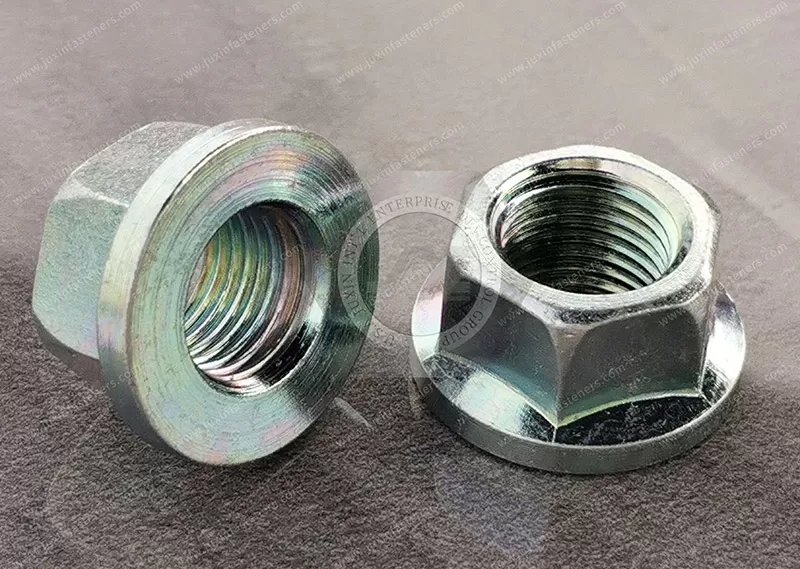
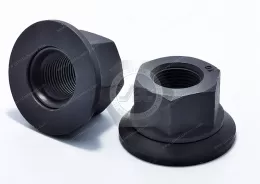
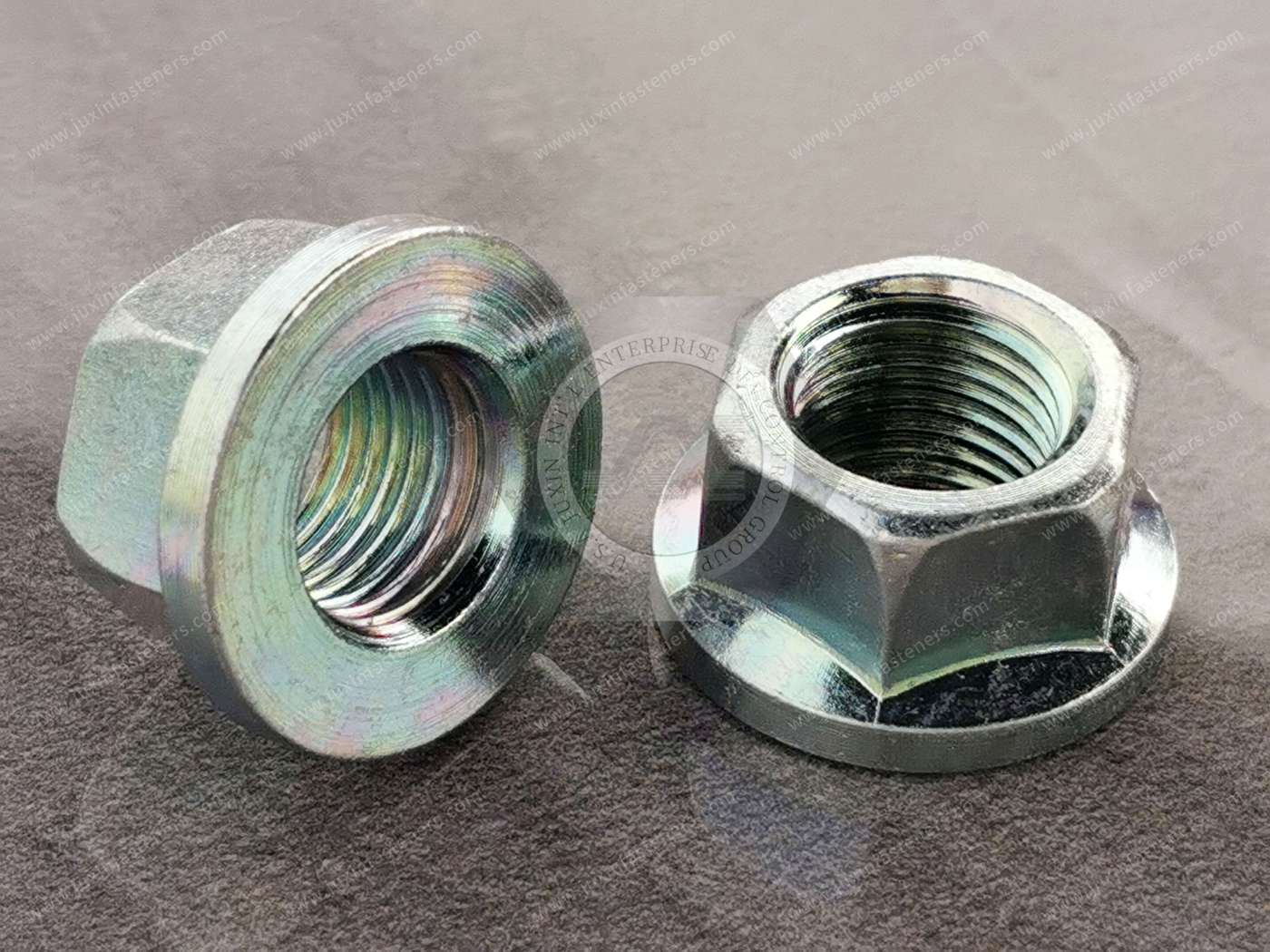
DIN 6331 hexagon collar nuts are 1.5d-high steel hex nuts with an integral collar, designed for workholding, machine fixtures and clamping assemblies requiring repeated tightening and loosening.
The enlarged bearing surface can eliminate the need for a separate washer in suitable applications.
Juxin Fasteners manufactures standard and custom steel collar nuts for OEM industrial equipment, CNC fixtures, production tooling and machinery.
DIN 6331 metric configurations include M6, M8, M10, M12 and M16, while special M5, M14 and Unified inch-thread designs can be evaluated against customer drawings.
Manufacturing options include customer-specified steel grades, mechanical property classes, surface treatments, dimensional tolerances and industrial batch production.
Product Specification
DIN 6331 Hexagon Collar Nuts for Workholding and Clamping
Steel Hexagon Nuts with Integral Collar, 1.5d Height — OEM Manufacturing for Machine Fixtures and Industrial Tooling
Juxin Fasteners manufactures DIN 6331 hexagon collar nuts for industrial workholding systems, machine tool fixtures, production tooling and equipment assemblies requiring repeated tightening and loosening.
DIN 6331 specifies hexagon nuts with an integral collar and a nominal nut height of approximately 1.5 times the nominal thread diameter.
The extended nut body provides additional thread engagement length compared with many conventional hex nuts, while the integral collar provides an enlarged bearing surface.
This design is particularly relevant to clamping applications where separate washers may be unnecessary and components are frequently assembled, adjusted or released.
Also known as hexagon nuts with collar, steel collar nuts or 1.5d-high hex nuts, these fasteners are used in precision workholding and industrial manufacturing equipment.
Juxin Fasteners supports standard and custom DIN 6331-style manufacturing, carbon steel and alloy steel material selection,
metric and Unified inch-thread configurations, drawing-based engineering review and industrial batch production.
Product Technical Specifications
| Parameter | Specification |
|---|---|
| Product Name | DIN 6331 Hexagon Collar Nut |
| Alternative Names | Hex Nut with Collar, Steel Collar Nut |
| Standard | DIN 6331:2003-04 |
| Product Geometry | Hexagonal Nut with Integral Collar |
| Nominal Nut Height | Approximately 1.5 × Nominal Thread Diameter |
| Primary Application | Workholding and Clamping |
| Materials | Carbon Steel / Alloy Steel |
| Material Selection | Customer-Specified |
| Mechanical Property Class | Class 8 / Class 10 Where Applicable and Verified |
| Standard Thread System | ISO Metric |
| DIN 6331 Standard Sizes | M6–M48, According to Standard |
| Supplied Target Sizes | M5, M6, M8, M10, M12, M14, M16 |
| Custom Threads | UNC / UNF Subject to Engineering Review |
| Collar Geometry | According to DIN 6331 or Approved Drawing |
| Thread Tolerance | Applicable Standard or Customer-Specified |
| Surface Finishes | Blackened, Zinc, Zinc-Nickel and Other Specified Finishes |
| Manufacturing | Standard and OEM Made-to-Drawing |
| Production | Industrial Batch Manufacturing |
Important: M5, M14 and Unified inch-thread configurations are custom designs relative to the DIN 6331 standard size table.
They should not automatically be designated as dimensionally compliant DIN 6331 products.
Mechanical property classes and surface finishes must be confirmed for each material and product configuration.
What Is a DIN 6331 Hexagon Collar Nut?
A DIN 6331 hexagon collar nut combines three important geometric characteristics:
A hexagonal wrenching body.
An extended nut height of approximately 1.5d.
An integral collar providing an enlarged bearing surface.
The collar distributes the contact load over a wider area than the bearing surface of a comparable nut without a collar.
The extended height provides additional thread engagement length.
These characteristics make the design suitable for clamping and workholding applications requiring repeated tightening and loosening.
DIN 6331 does not inherently specify a nylon insert, distorted thread or other prevailing-torque locking mechanism.
DIN 6331 Standard — Engineering Definition
DIN 6331:2003-04 is titled "Hexagon collar nuts with a height of 1.5d."
The standard defines a specific nut configuration with an integral collar and increased nut height.
It is intended for clamping applications where frequent assembly and disassembly are expected.
The collar can eliminate the need for separate washers in suitable assemblies.
For standardized procurement, the complete product designation should identify the thread size and applicable DIN 6331 requirements.
Why the 1.5d Nut Height Matters
The term 1.5d describes the relationship between the nominal nut height and nominal thread diameter.
For example:
| Thread Size | Nominal 1.5d Height |
|---|---|
| M6 | 9 mm |
| M8 | 12 mm |
| M10 | 15 mm |
| M12 | 18 mm |
| M16 | 24 mm |
These values correspond to the nominal height relationship used in DIN 6331.
Actual dimensions and tolerances must be verified against the applicable standard and approved drawing.
An increased nut height can provide greater thread engagement length.
However, the resulting joint strength depends on the nut material, thread geometry, mating bolt properties and installation conditions.
A taller nut does not automatically establish a higher mechanical strength class.
Integral Collar and Bearing Surface
The collar is an integral part of the nut body.
Its principal function is to provide an enlarged bearing surface.
Potential engineering benefits include:
Reduced need for separate washers.
More convenient handling during clamping.
Improved load distribution in suitable joints.
Simplified assembly.
Consistent bearing geometry.
Convenient repeated clamping and unclamping.
The collar is not automatically equivalent to a serrated locking flange.
For standard DIN 6331 configurations, locking performance should not be assumed solely from the collar geometry.
DIN 6331 vs. DIN 6923 Hex Flange Nuts
DIN 6331 and DIN 6923 both involve nuts with enlarged bearing surfaces, but they serve different dimensional and application requirements.
| Feature | DIN 6331 | DIN 6923 |
|---|---|---|
| Main Design | 1.5d-High Hex Nut with Collar | Hexagon Flange Nut |
| Typical Application | Workholding and Clamping | General Industrial Assembly |
| Nut Height | Approximately 1.5d | Standard-Specific |
| Bearing Surface | Integral Collar | Integral Flange |
| Standard Geometry | DIN 6331 | DIN 6923 |
| Prevailing-Torque Locking | Not Inherent | Not Inherent |
These products should not be treated as dimensionally interchangeable without engineering verification.
DIN 6331 vs. Distorted-Thread Flange Locknuts
A distorted-thread flange locknut uses intentional thread deformation to generate prevailing torque against the mating bolt.
A standard DIN 6331 collar nut does not rely on this locking mechanism.
The distinction is important:
DIN 6331 focuses on collar geometry and increased nut height.
Distorted-thread locknuts focus on thread-based resistance to loosening.
A standard collar does not establish prevailing torque.
Vibration resistance must be evaluated separately.
Where an OEM requires both collar geometry and a prevailing-torque feature, a custom-engineered design may be considered.
Such a configuration should not automatically be represented as an unmodified DIN 6331 standard nut.
Carbon Steel and Alloy Steel Material Selection
DIN 6331 collar nuts may be manufactured from suitable carbon steel or alloy steel materials.
Material selection depends on:
Mechanical property requirements.
Thread strength.
Clamping load.
Manufacturing process.
Heat treatment.
Surface finishing.
Operating conditions.
Production volume.
Juxin Fasteners supports engineering review of customer-specified materials, including appropriate carbon steel and alloy steel grades.
The actual material must be confirmed through the approved engineering specification.
Mechanical Property Classes
For applicable metric steel nut configurations, Class 8 and Class 10 may be relevant engineering options.
Class selection must account for:
Mating bolt strength.
Thread engagement.
Nut geometry.
Proof load requirements.
Heat treatment.
Applicable mechanical property standards.
Customer specifications.
The material designation alone does not establish the finished nut mechanical property class.
A Class 10 designation must be supported by appropriate material and mechanical property verification.
DIN 6331 Metric Thread Sizes
The published DIN 6331 dimensional range includes M6 through M48 in specified sizes.
The following sizes are particularly relevant to the supplied product family and OEM manufacturing inquiries.
| Thread | Common Coarse Pitch | DIN 6331 Status |
|---|---|---|
| M5 | 0.80 mm | Custom Design |
| M6 | 1.00 mm | Standard Size |
| M8 | 1.25 mm | Standard Size |
| M10 | 1.50 mm | Standard Size |
| M12 | 1.75 mm | Standard Size |
| M14 | 2.00 mm | Custom Design |
| M16 | 2.00 mm | Standard Size |
The thread pitches are common ISO metric coarse-thread designations.
M5 and M14 configurations require drawing-based engineering review and should not automatically be identified as DIN 6331 standard dimensions.
Selected DIN 6331 Dimensional Reference
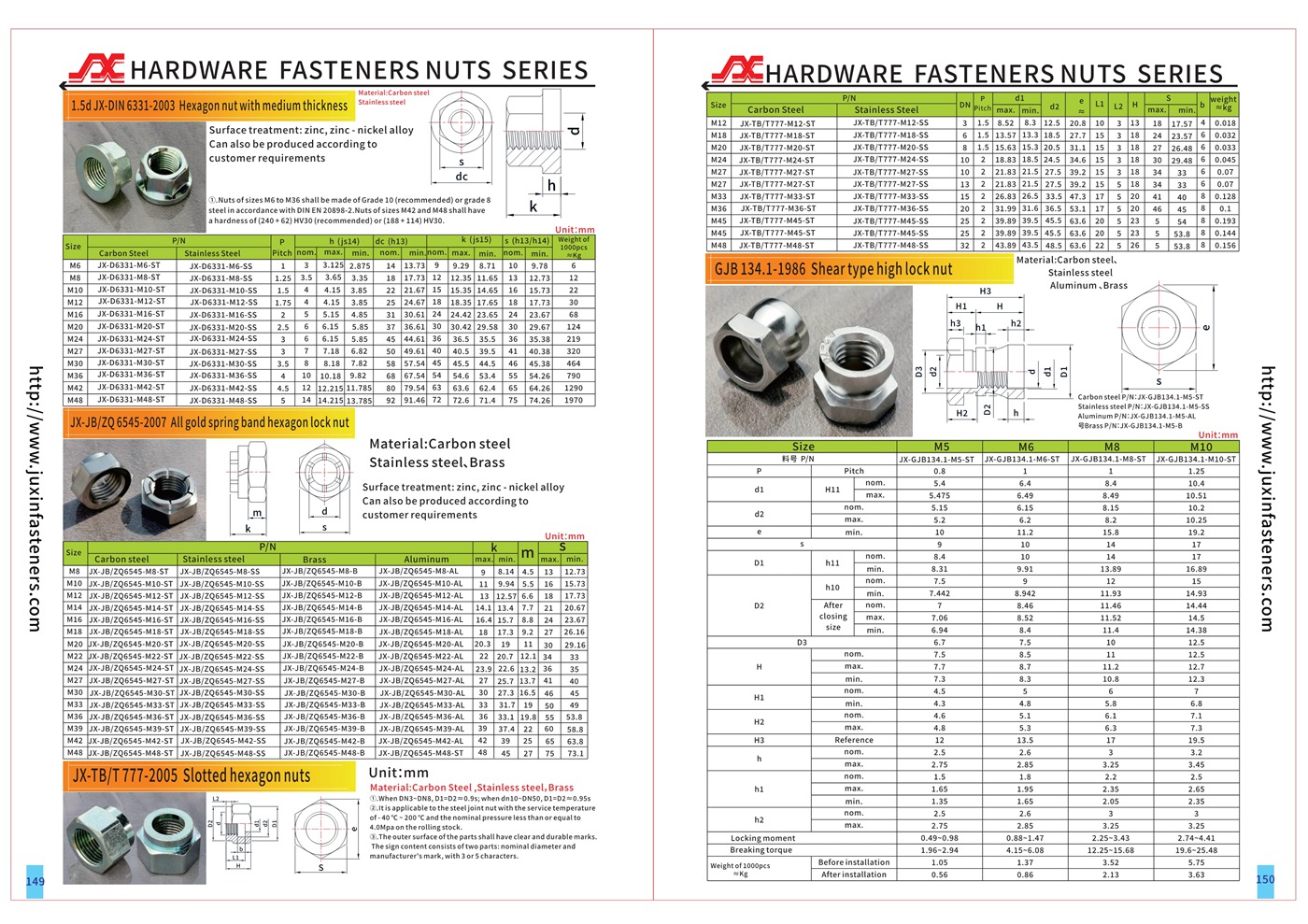
| Thread | Nominal Nut Height | Nominal Collar Diameter | Width Across Flats |
|---|---|---|---|
| M6 | 9 mm | 14 mm | 10 mm |
| M8 | 12 mm | 18 mm | 13 mm |
| M10 | 15 mm | 22 mm | 16 mm |
| M12 | 18 mm | 25 mm | 18 mm |
| M16 | 24 mm | 31 mm | 24 mm |
These nominal values are provided as engineering references.
The complete DIN 6331 dimensional requirements, including tolerances and other geometry, must be checked against the controlling standard edition.
American Unified Inch-Thread Collar Nuts
American OEM manufacturers may specify UNC or UNF threads for custom hexagon collar nuts.
The following sizes correspond to the supplied target inch-thread range.
| Thread | Series | Nominal Diameter | TPI |
|---|---|---|---|
| #6-32 | UNC | 0.1380 in | 32 |
| #8-32 | UNC | 0.1640 in | 32 |
| #10-32 | UNF | 0.1900 in | 32 |
| 1/4-20 | UNC | 0.2500 in | 20 |
| 5/16-18 | UNC | 0.3125 in | 18 |
| 3/8-16 | UNC | 0.3750 in | 16 |
These are Unified inch-thread designations for custom manufacturing evaluation.
They are not DIN 6331 standard metric thread sizes.
Actual nut height, collar diameter, width across flats and mechanical requirements must be defined through the approved drawing.
Additional Custom UNC and UNF Options
Potential additional thread configurations include:
#10-24 UNC.
1/4-28 UNF.
5/16-24 UNF.
3/8-24 UNF.
1/2-13 UNC.
1/2-20 UNF.
These additional sizes are subject to engineering and manufacturing feasibility review.
They are not presented as confirmed standard inventory.
Metric and Unified Inch Threads Are Not Interchangeable
Metric and Unified inch-thread systems have different nominal diameters, pitches and tolerance requirements.
For example:
| Parameter | M6 × 1.0 | 1/4-20 UNC |
|---|---|---|
| Nominal Diameter | 6.000 mm | 6.350 mm |
| Pitch | 1.000 mm | 1.270 mm |
| Thread System | ISO Metric | Unified Coarse |
| Interchangeable | No | No |
Thread compatibility must be verified before manufacturing or assembly.
Blackened Steel Collar Nuts
Blackened steel finishes are common in industrial tooling and workholding equipment.
They provide a dark surface appearance suitable for many machine shop environments.
However, blackening generally offers limited corrosion protection compared with appropriately specified zinc-based coating systems.
Where corrosion resistance is important, the finish must be selected according to the service environment.
Zinc-Plated Collar Nuts
Zinc plating may be specified for suitable carbon steel collar nuts requiring corrosion protection.
Important coating considerations include:
Coating thickness.
Passivation.
Thread fit.
Surface appearance.
Corrosion testing.
Material strength.
Hydrogen embrittlement risk where applicable.
The actual requirements should follow the approved customer specification.
Blue-Passivated Zinc Finish
Blue-passivated zinc provides a metallic appearance commonly used for industrial steel fasteners.
It may be selected for suitable equipment components requiring a defined zinc-based coating system.
Corrosion resistance depends on coating thickness, passivation and service environment.
Yellow Zinc Finish
Yellow zinc may be specified for particular industrial appearance or corrosion protection requirements.
The exact coating chemistry and performance must be confirmed before manufacturing.
Black Zinc Finish
Black zinc may be selected for equipment requiring a dark appearance with zinc-based corrosion protection.
Black zinc and black oxide are different surface treatment systems.
They should not be treated as interchangeable.
Zinc-Nickel Alloy Finish
Zinc-nickel alloy coatings may be considered for applications requiring engineered corrosion protection.
Important requirements include:
Coating composition.
Thickness.
Passivation.
Sealing treatment.
Corrosion test method.
Thread fit.
Mechanical compatibility.
No particular corrosion resistance rating should be assumed without verified test data.
CNC Workholding Applications
DIN 6331 hexagon collar nuts are particularly relevant to CNC workholding and machine tool clamping systems.
Potential applications include:
Milling machine fixtures.
CNC machining centers.
Workpiece clamping systems.
T-slot clamping assemblies.
Fixture plates.
Machine table clamping.
Reusable production tooling.
The increased nut height and integral collar are useful in clamping arrangements requiring repeated tightening and loosening.
The complete clamping system must be designed according to the expected load and operating conditions.
Machine Tool Fixture Manufacturing
Fixture manufacturers may use DIN 6331 collar nuts in assemblies requiring repeatable mechanical clamping.
Potential applications include:
Machining fixtures.
Inspection fixtures.
Welding fixtures.
Assembly fixtures.
Production jigs.
Adjustable workholding devices.
The nut geometry should be compatible with the mating stud, clamping element and bearing surface.
Industrial Production Tooling
Production tooling manufacturers may require fastening components that support repeated clamping cycles.
DIN 6331 collar nuts can be relevant to:
Production line fixtures.
Mechanical positioning systems.
Adjustable clamping brackets.
Manufacturing equipment tooling.
Maintenance fixtures.
Workpiece holding equipment.
For production managers, reduced washer handling and consistent component geometry may improve assembly convenience.
Mold and Die Manufacturing
Mold and die manufacturers may use collar nuts in suitable fixture and clamping assemblies.
Potential applications include:
Mold machining fixtures.
Die maintenance tooling.
Toolroom clamping systems.
Inspection fixtures.
Adjustable setup equipment.
Selection must account for mechanical loads, thread engagement and repeated tightening requirements.
Automotive OEM Production Equipment
Automotive OEM and Tier-1/Tier-2 suppliers may use DIN 6331 collar nuts in manufacturing equipment rather than automatically specifying them for vehicle safety-critical joints.
Potential applications include:
Automotive machining fixtures.
Welding jigs.
Assembly tooling.
Inspection fixtures.
Production equipment clamps.
Maintenance tooling.
This is an important distinction for automotive procurement and manufacturing engineers.
A DIN 6331 collar nut should not automatically be specified for suspension, steering, braking or other critical vehicle connections.
Robotics and Industrial Automation
Automation manufacturers may use steel collar nuts in selected tooling and fixture systems.
Potential applications include:
Robot cell fixtures.
Adjustable workholding assemblies.
Production equipment supports.
Inspection tooling.
Automated machining fixtures.
Actual suitability depends on the joint design, clamping requirements and operating conditions.
Heavy Equipment Manufacturing
Construction and agricultural machinery manufacturers may use collar nuts in manufacturing fixtures and production tooling.
Potential applications include:
Machining fixtures for large components.
Welding fixture assemblies.
Equipment maintenance tooling.
Adjustable production clamps.
Inspection fixtures.
The product should not automatically be presented as a qualified fastener for critical structural or high-vibration machinery joints.
Rail Transit Manufacturing Equipment
Rail vehicle manufacturers may require industrial workholding fasteners for machining, fabrication and inspection equipment.
Potential applications include:
Component machining fixtures.
Assembly tooling.
Welding jigs.
Inspection fixtures.
Production equipment clamps.
Safety-critical rail vehicle connections require separately qualified fastening systems.
Energy and Power Equipment Manufacturing
Manufacturers of energy equipment may use DIN 6331 collar nuts in production tooling and equipment fixtures.
Potential applications include:
Generator component machining fixtures.
Power equipment assembly tooling.
Industrial fabrication fixtures.
Maintenance clamping systems.
Inspection equipment.
The collar nut must be selected according to the actual clamping system requirements.
Aerospace Manufacturing Tooling
Aerospace manufacturers may use DIN 6331-style collar nuts in selected ground-based manufacturing and inspection fixtures.
Potential applications include:
Machining fixtures.
Assembly tooling.
Inspection fixtures.
Maintenance equipment.
Non-flight-critical workholding systems.
Use in aircraft structures or flight-critical hardware requires separate engineering qualification and traceability requirements.
Clamping Force and Installation Considerations
A collar nut does not independently determine the achievable clamping force.
Clamping performance depends on:
Thread size.
Nut mechanical properties.
Mating stud strength.
Thread engagement.
Friction.
Lubrication.
Installation torque.
Bearing surface condition.
Fixture geometry.
The required tightening torque must be established for the specific clamping assembly.
No universal torque value should be assigned solely from the DIN 6331 designation.
Repeated Tightening and Loosening
DIN 6331 collar nuts are relevant to clamping systems requiring frequent tightening and release.
However, repeated use can still cause wear.
Important inspection points include:
Internal thread condition.
Collar bearing surface.
Hexagon wrenching surfaces.
Corrosion.
Deformation.
Mating stud condition.
The replacement interval should be based on the application and maintenance requirements.
Custom DIN 6331-Style Collar Nut Manufacturing
Juxin Fasteners is an industrial fastener manufacturer supporting standard and custom-engineered fastening components for global OEM manufacturers.
Our manufacturing capabilities include:
Cold heading.
Cold forming.
CNC machining.
Product-specific secondary manufacturing operations.
Precision metal component manufacturing.
Custom steel fastener manufacturing.
Made-to-drawing OEM production.
Industrial batch manufacturing.
For hexagon collar nuts, the manufacturing process depends on material grade, collar geometry, nut height, tolerances and production volume.
Certain configurations may require machining or additional operations to achieve the approved geometry.
Cold heading, cold forming and CNC machining are complementary manufacturing capabilities.
Not every collar nut requires every manufacturing process.
OEM Customization Options
Customer-specific requirements may include:
Custom collar diameter.
Modified nut height.
Special hexagon dimensions.
Metric thread configurations.
UNC and UNF thread requirements.
Carbon steel or alloy steel material selection.
Mechanical property requirements.
Heat treatment.
Surface finishing.
Dimensional tolerances.
Special bearing surface geometry.
OEM packaging.
All custom configurations are subject to engineering and manufacturing feasibility review.
Quality Inspection and Production Requirements
A project-specific inspection plan may include:
Material verification.
Internal thread gauge inspection.
Hex width across flats.
Nut height measurement.
Collar diameter measurement.
Collar thickness inspection.
Bearing surface inspection.
Thread engagement inspection.
Mechanical property verification.
Surface finish inspection.
Functional assembly evaluation.
Packaging and quantity verification.
Additional testing may be required according to customer specifications.
Acceptance criteria must be established through the approved drawing and applicable standards.
Production Manager Considerations
Production managers should evaluate:
Fixture assembly efficiency.
Washer elimination where appropriate.
Repeated clamping operations.
Installation tool compatibility.
Thread engagement.
Clamping consistency.
Component wear.
Maintenance requirements.
Production batch consistency.
Total tooling cost.
A properly selected collar nut can simplify certain clamping arrangements, but it must still satisfy the mechanical requirements of the fixture.
OEM Purchasing and Supply Chain Requirements
Purchasing managers and supplier development engineers should confirm:
DIN 6331 or custom drawing designation.
Thread size and pitch.
Nut height.
Collar diameter.
Collar thickness.
Hexagon dimensions.
Material grade.
Mechanical property class.
Heat treatment requirements.
Surface finish.
Inspection criteria.
Sample approval requirements.
Initial order quantity.
Annual purchasing forecast.
Packaging requirements.
Drawing revision control.
For repeat OEM programs, controlled specifications and consistent dimensions support reliable manufacturing and purchasing operations.
Relevant International Engineering Standards
DIN 6331:2003-04
Hexagon collar nuts with a height of 1.5d.
ISO 261 / ISO 724
ISO metric screw-thread designations and basic dimensions.
ISO 965 Series
ISO metric screw-thread tolerances.
ISO 898-2
Mechanical properties of applicable carbon steel and alloy steel nuts within its defined scope.
ASME B1.1
Unified inch screw-thread requirements for custom UNC and UNF configurations.
ASTM B633
Electrodeposited zinc coatings on iron and steel.
ASTM B841
Electrodeposited zinc-nickel alloy coatings.
Customer-Approved Engineering Drawings
The controlling requirements for custom collar geometry, materials, threads, mechanical properties, surface finishes and inspection criteria.
References to standards do not establish automatic conformity or certification.
Frequently Asked Questions
What is a DIN 6331 hexagon collar nut?
It is a hexagonal nut with an integral collar and a nominal height of approximately 1.5 times the thread diameter.
What is the main application of DIN 6331 nuts?
They are primarily used in workholding, clamping fixtures and industrial tooling requiring repeated tightening and loosening.
Are DIN 6331 nuts self-locking?
No. Standard DIN 6331 nuts do not inherently incorporate a prevailing-torque locking mechanism.
What is the difference between DIN 6331 and DIN 6923?
DIN 6331 specifies a 1.5d-high hexagon collar nut, while DIN 6923 specifies a different hexagon flange nut configuration.
Does DIN 6331 eliminate the need for a washer?
The integral collar can eliminate the need for a separate washer in suitable clamping assemblies.
What metric sizes are available?
The standard includes specified sizes from M6 through M48. Juxin Fasteners can evaluate standard and customer-specific configurations.
Is M14 a standard DIN 6331 size?
No. M14 is not included in the published standard dimensional size table and should be treated as a custom configuration.
Can inch-thread collar nuts be manufactured?
Yes. Customer-specific UNC and UNF configurations can be evaluated according to engineering drawings and manufacturing feasibility.
Are metric and UNC threads interchangeable?
No. Metric and Unified threads have different dimensional requirements.
Can Class 10 collar nuts be manufactured?
Class 10 requirements can be evaluated according to the selected material, geometry and applicable mechanical property specifications.
Are DIN 6331 nuts suitable for automotive manufacturing?
They may be used in automotive manufacturing fixtures, machining equipment and production tooling. Critical vehicle connections require separate qualification.
Can Juxin Fasteners manufacture custom hexagon collar nuts?
Yes. Juxin Fasteners supports OEM/ODM manufacturing, drawing-based engineering review and industrial batch production.
Request a Quote — DIN 6331 Hexagon Collar Nuts
Juxin Fasteners manufactures industrial fastening components for global OEM manufacturers,
Tier-1/Tier-2 suppliers, mechanical engineers, production managers, purchasing teams and industrial supply chain professionals.
We support DIN 6331 hexagon collar nut manufacturing for CNC workholding, machine tool fixtures, production tooling, industrial equipment and customer-specific clamping systems.
Recommended RFQ Information
2D engineering drawing or 3D CAD model.
DIN 6331 or custom collar nut configuration.
Metric, UNC or UNF thread designation.
Thread tolerance.
Carbon steel or alloy steel grade.
Mechanical property class.
Nut height.
Collar diameter and thickness.
Hex width across flats.
Bearing surface requirements.
Heat treatment.
Surface finish.
Mating bolt or stud specification.
Clamping load requirements.
Inspection and acceptance criteria.
Initial order quantity.
Estimated annual purchasing volume.
Packaging and delivery requirements.
Please send your engineering drawings, technical specifications and purchasing requirements for manufacturing feasibility review and quotation.
Juxin Fasteners
Industrial Fastener Manufacturer | DIN 6331 Hexagon Collar Nuts | Workholding Fasteners | OEM/ODM Precision Fastener Manufacturing
Website: https://www.juxinfasteners.com/
Email: info@juxinfasteners.com
Product Packaging
Packaging Standard
At Juxin Fasteners, we apply standardized export packaging to ensure product protection, traceability, and compliance with international logistics requirements.
1. Standard Export Packaging
Unless otherwise specified, all products will be packed according to our factory standard export packaging, which includes:
Moisture-resistant inner protection
Poly bag or small box packing as required
Reinforced export cartons
Clear labeling with part number, specification, batch number, and quantity
Palletizing for sea or air shipment when necessary
Our standard packaging is designed to ensure safe transportation, efficient warehousing, and long-distance international shipping.
2. Customized Packaging Options
We also provide customized packaging solutions according to customer requirements, including but not limited to:
Private labeling
Customized barcodes
Specific carton dimensions
Retail packaging
Special pallet configuration
Customer-specific marking and identification
So that you know, customized packaging may involve additional costs and extended lead time depending on the complexity of the requirements.
3. Compliance & Quality Assurance
All packaging processes are controlled under our ISO 9001 quality management system to ensure consistency, traceability, and product integrity throughout the supply chain.
Product Pictures
Contact Us
Tel.:
+86 020 8621 0320
+86 020 3121 6067
E-mail:
Technical Support:
Navigation
SEND INQUIREY