Call Us
+86 136 6007 9809
Call Us
+86 136 6007 9809

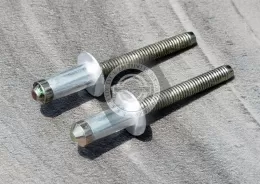
Stainless Steel Structural High-Strength Blind Rivets
JUXIN FASTENERS supplies structural blind rivets with stainless steel bodies and stainless steel pull mandrels for engineering evaluation in demanding OEM sheet-metal and equipment assemblies.
Depending on the selected structural design, features may include mechanical mandrel locking, controlled blind-side formation and enhanced shear and tensile performance.
Stainless steel construction provides material options for corrosion-sensitive applications, subject to grade and environmental compatibility.
Actual stainless steel grades, head geometry, locking mechanism, grip range, mechanical performance, surface finish and installation tooling must be verified against the approved product specification.
Product Specification
Stainless Steel Structural High-Strength Blind Rivets for OEM Manufacturing
Product Overview
JUXIN FASTENERS supplies stainless steel structural blind rivets for OEM manufacturing, industrial sheet-metal fabrication, equipment enclosures and demanding permanent fastening applications.
This product features a stainless steel rivet body and stainless steel pull mandrel.
Structural blind rivets are designed for one-sided mechanical installation in assemblies where access to the rear side is limited or unavailable.
Depending on the specific product design, structural blind rivets may incorporate mechanical mandrel locking, controlled blind-side formation,
enhanced shear and tensile capacity, and other features intended to improve joint performance.
Stainless steel construction offers a material option for assemblies requiring appropriate corrosion resistance and mechanical properties.
However, structural performance and corrosion resistance depend on the actual stainless steel grades, rivet geometry, locking mechanism, installation process and service environment.
Product Identification and Material Configuration
| Item | Product Specification |
|---|---|
| Product Name | Stainless Steel Structural High-Strength Blind Rivets |
| Product Category | Structural / High-Strength Blind Rivets |
| Rivet Type | Structural Break-Mandrel Blind Rivet |
| Rivet Body Material | Stainless Steel |
| Pull Mandrel Material | Stainless Steel |
| Material Combination | Stainless Steel / Stainless Steel |
| Installation Access | One-Sided |
| Installation Method | Mechanical Blind Riveting |
| Head Style | According to approved product drawing |
| Mechanical Mandrel Lock | Product-specific; verification required |
| Blind-Side Formation | According to selected rivet design |
| Grip Range | According to approved specification |
| Rivet Body Stainless Grade | To be confirmed |
| Mandrel Stainless Grade | To be confirmed |
| Surface Finish | To be confirmed |
| Mechanical Strength | According to verified product data |
| Technical Reference | Original PDF/CAD, pages 105–106 |
Key Engineering Characteristics
Depending on the selected product design, relevant features may include:
Stainless steel rivet body
Stainless steel pull mandrel
Structural break-mandrel construction
One-sided installation
Mechanical mandrel locking
Controlled blind-side head formation
High-strength fastening capability
Enhanced hole filling
Product-specific wide grip range
Suitable corrosion-resistant material options
Vibration and fatigue performance subject to verification
OEM drawing-based specifications
Repeatable installation with approved tooling
These features are not universal across all structural blind rivet designs.
Dimensions and Engineering Specifications
| Parameter | Engineering Requirement |
|---|---|
| Nominal Rivet Diameter | Refer to original PDF/CAD |
| Rivet Body Length | Refer to original PDF/CAD |
| Head Diameter | According to approved drawing |
| Head Height | According to approved drawing |
| Mandrel Diameter | According to approved drawing |
| Minimum Grip Thickness | According to selected rivet |
| Maximum Grip Thickness | According to selected rivet |
| Recommended Mounting-Hole Diameter | According to approved drawing |
| Blind-Side Clearance | According to installed geometry |
| Shear Load Capacity | Verified product data required |
| Tensile Load Capacity | Verified product data required |
| Mandrel Retention | Verified product design required |
| Installation Force | According to approved tooling specification |
| Installation Stroke | According to approved tooling specification |
| Corrosion Performance | According to verified grade and test data |
Technical Documentation
Please refer to the original JUXIN product PDF/CAD specification, pages 105–106, for the available dimensions and product configurations.
The approved engineering drawing governs actual material grades, tolerances, grip ranges, mechanical characteristics and installation requirements.
Engineering Solution 1 — How Stainless Steel Structural Blind Rivets Work
A structural blind rivet consists of a rivet body and a pull mandrel.
The rivet is inserted through aligned mounting holes from the accessible side of the assembly.
A compatible installation tool grips and pulls the mandrel.
As the mandrel moves, the rivet body deforms on the inaccessible side, forming the blind-side retaining portion.
In structural rivet designs incorporating a mechanical locking mechanism, a defined feature retains the mandrel within the installed rivet.
The mandrel then breaks at its designed location.
The resulting assembly provides permanent mechanical fastening without requiring access behind the connected components.
Important Installation Note
Structural break-mandrel blind rivets are normally installed mechanically without heating the rivet shank.
The traditional process of heating a steel rivet until red-hot and forming a second head belongs to a different riveting method.
It must not be used as the installation description for this product.
Engineering Solution 2 — Structural vs. Standard Stainless Steel Blind Rivets
| Engineering Factor | Structural Stainless Steel Blind Rivet | Standard Stainless Steel Blind Rivet |
|---|---|---|
| Rivet Body | Stainless steel | Stainless steel |
| Mandrel | Stainless steel | Product-specific |
| Primary Selection | Demanding mechanical fastening | General sheet-metal fastening |
| Mechanical Locking | Available in selected designs | Product-dependent |
| Shear and Tensile Capacity | Structural design-specific | Product-specific |
| Blind-Side Formation | Structural design-specific | Conventional or specialized |
| Grip Range | Product-specific | Product-specific |
| Tooling | May require dedicated tooling | Depends on selected rivet |
| Qualification | Application-specific | Application-specific |
A structural rivet designation does not automatically establish a particular strength rating or suitability for a safety-critical joint.
Engineering Solution 3 — Stainless Steel Body and Mandrel Grades
The original product information specifies stainless steel for both the rivet body and mandrel.
However, stainless steel is a broad material category.
Different stainless steel grades have different characteristics, including:
Corrosion resistance
Mechanical strength
Formability
Work-hardening behavior
Magnetic response
Temperature performance
Chemical compatibility
Common industrial stainless steel classifications include austenitic grades such as 304 and 316, as well as other stainless steel alloys.
However, the actual JUXIN product grades have not been established from the available description.
The rivet body and mandrel should be specified separately.
An international structural rivet may use one stainless steel grade for the rivet body and a different grade for the mandrel.
Therefore, the description Stainless Steel/Stainless Steel does not necessarily mean both components use identical alloys.
Engineering Solution 4 — A2 vs. A4 Stainless Steel Selection
A2 and A4 are commonly encountered stainless steel designations in industrial fastening specifications.
A2-type materials are generally associated with austenitic chromium-nickel stainless steels.
A4-type materials generally incorporate molybdenum and may provide improved resistance to certain chloride-related corrosion mechanisms.
However, the designation alone does not determine the performance of a particular structural blind rivet.
Important considerations include:
Exact alloy specification
Rivet body grade
Mandrel grade
Material processing
Surface condition
Mechanical properties
Operating temperature
Chemical exposure
Chloride concentration
The actual product should not be described as A2, A4, 304 or 316 until its material specification has been verified.
Engineering Solution 5 — Mechanical Mandrel Locking
Mechanical mandrel locking is an important characteristic of many structural blind rivet systems.
In certain designs, a locking feature retains the broken mandrel within the rivet body.
The retained mandrel may contribute to the installed fastener's mechanical performance.
However, locking systems vary between product families.
Important engineering questions include:
Does the rivet incorporate a mechanical lock?
Is the lock internal or externally inspectable?
How is the mandrel retained?
Does the installation tool participate in forming the lock?
Is a special nosepiece required?
What inspection method confirms correct locking?
What mandrel retention requirements apply?
The specific JUXIN locking mechanism must be confirmed from the product drawing.
No proprietary locking system or universal mandrel retention performance is claimed.
Engineering Solution 6 — Shear Strength
Shear loading acts primarily across the fastener and the joint interface.
For stainless steel structural blind rivets, shear capacity depends on:
Rivet diameter
Rivet body stainless grade
Mandrel stainless grade
Retained mandrel geometry
Mechanical locking design
Grip thickness
Mounting-hole dimensions
Installation quality
A high-strength rivet may still be limited by the bearing strength or deformation of the connected panels.
Actual shear values must be obtained from verified product data.
Engineering Solution 7 — Tensile Strength
Tensile loading acts primarily along the rivet axis.
Relevant failure mechanisms include:
Rivet body fracture
Mandrel or locking feature failure
Head-side pull-through
Blind-side pull-through
Panel deformation
Local material failure
Engineers should evaluate the complete joint rather than relying only on the nominal fastener material.
Actual tensile values must be verified for the selected product.
Engineering Solution 8 — Corrosion Resistance of Stainless Steel Structural Rivets
Stainless steel can provide useful corrosion resistance when the correct grade is selected for the operating environment.
However, stainless steel is not corrosion-proof.
Potential corrosion mechanisms include:
Pitting corrosion
Crevice corrosion
Galvanic corrosion
Stress corrosion cracking under susceptible conditions
Surface contamination
Localized corrosion in chloride-containing environments
The resistance of an installed structural rivet depends on the alloy, surface condition, assembly geometry and environmental exposure.
For marine-adjacent equipment, outdoor cabinets and industrial process environments, corrosion requirements should be defined before material selection.
No salt spray rating or corrosion service life is claimed without verified test results.
Engineering Solution 9 — Crevice Corrosion at the Riveted Joint
Crevice corrosion can occur in susceptible stainless steel assemblies where moisture and aggressive chemicals remain trapped in restricted spaces.
Potential locations include:
Beneath the rivet head
Between overlapping panels
Around the mounting hole
Near the formed blind-side head
A stainless steel structural rivet does not automatically eliminate these risks.
Engineering measures may include appropriate alloy selection, joint drainage, compatible surface treatments and environmental validation.
Engineering Solution 10 — Galvanic Compatibility with Aluminum and Carbon Steel Panels
A stainless steel rivet may be installed in an assembly containing aluminum, carbon steel or another metal.
When dissimilar metals are electrically connected in the presence of an electrolyte, galvanic corrosion may occur.
For example, aluminum panels joined using stainless steel fasteners may require careful evaluation in wet or chloride-rich environments.
Relevant factors include:
Mating material
Relative exposed surface areas
Moisture availability
Coatings
Electrical isolation
Drainage
Operating environment
Material selection should consider the complete assembly rather than the rivet alone.
Engineering Solution 11 — Grip Range and Material Stack-Up
The grip range defines the permitted combined thickness of the joined materials.
Some structural blind rivet designs offer multi-grip capability.
However, this feature must be verified for the selected product.
Before choosing a rivet, confirm:
Minimum material stack-up
Maximum material stack-up
Rivet diameter
Rivet body length
Head dimensions
Blind-side clearance
Hole diameter
Required mechanical loads
An incorrect grip range may prevent proper blind-side formation or mechanical locking.
Engineering Solution 12 — Mounting-Hole Preparation
Mounting-hole quality affects the strength and consistency of a structural riveted joint.
Important parameters include:
Hole diameter
Hole tolerance
Hole roundness
Hole alignment
Burr condition
Panel thickness
Edge distance
Rivet spacing
Certain structural rivet systems have enhanced hole-filling capability, but this must not be assumed for every product.
Oversized or slotted holes require specific engineering approval.
Engineering Solution 13 — Blind-Side Formation and Panel Pull-Through
The formed blind-side head transfers load to the inaccessible panel.
The geometry of this formed head affects the joint's resistance to pull-through.
Engineers should evaluate:
Formed head diameter
Formed head height
Panel thickness
Panel strength
Rivet diameter
Grip thickness
Hole dimensions
Joint loading
Even a high-strength stainless steel rivet can fail through panel pull-through if the supporting material is inadequate.
Engineering Solution 14 — Vibration and Fatigue
Structural blind rivets may be considered for assemblies exposed to vibration or cyclic mechanical loading.
However, fatigue performance depends on the complete joint.
Relevant factors include:
Mandrel retention
Rivet geometry
Panel stiffness
Joint fit
Fastener spacing
Load amplitude
Thermal cycling
Corrosion
Installation consistency
No universal vibration-proof or fatigue-life claim is made.
Representative joint testing should be specified where fatigue performance is critical.
Engineering Solution 15 — Installation Tooling and Nosepiece Compatibility
Stainless steel structural rivets may require significant installation force depending on their diameter, grade and design.
The selected installation tool must provide the required pulling capacity and stroke.
Important considerations include:
Pulling force
Tool stroke
Nosepiece geometry
Mandrel diameter
Head clearance
Operator access
Cycle time
Mandrel collection
Tool maintenance
Installation monitoring
Some mechanical-lock designs require dedicated tooling or nosepieces.
A standard hand riveter should not be assumed suitable.
Typical Installation Procedure
Confirm the selected rivet part number.
Verify the stainless steel body and mandrel grades.
Review the approved engineering drawing.
Confirm the combined material thickness and grip range.
Prepare the mounting holes within the specified tolerances.
Remove burrs and inspect mating surfaces.
Select the approved riveting tool and nosepiece.
Insert the rivet from the accessible side.
Seat the rivet head against the panel.
Pull the mandrel to form the blind-side retaining portion.
Complete the locking operation where applicable.
Complete the mandrel break.
Inspect head seating, blind-side formation and locking condition.
Verify the installed joint against the approved acceptance criteria.
Engineering Solution 16 — Metric and Inch Diameter Reference
Common nominal structural blind rivet diameter references include:
| Metric Diameter | Approximate Inch Reference |
|---|---|
| 4.8 mm | 3/16 in |
| 6.4 mm | 1/4 in |
| 9.5 mm | 3/8 in |
| 12.7 mm | 1/2 in |
These are general industry dimensional references, not confirmed available sizes for this JUXIN product.
Actual metric and inch-designated rivets must be verified for dimensions, tolerances, grip ranges, hole requirements and installation tooling before substitution.
Industrial Applications & Engineering Solutions
Stainless steel structural blind rivets may be evaluated for industrial applications requiring one-sided installation, appropriate corrosion resistance and verified mechanical fastening performance.
The following are potential engineering applications, not product-specific certifications or approvals.
1. Industrial Stainless Steel Equipment
Stainless steel equipment may incorporate protective panels, brackets and auxiliary housings.
Structural blind rivets may be considered where permanent fastening and rear-side access limitations justify their use.
Mechanical strength, corrosion and installation requirements must be verified.
2. Food Processing Machinery
Food-processing machinery may use stainless steel guards, equipment covers and auxiliary brackets.
Stainless steel structural rivets may be considered for suitable non-product-contact assemblies.
Engineers should evaluate:
Stainless steel grade
Cleaning chemicals
Crevice formation
Surface finish
Hygienic design
Corrosion
Inspection accessibility
No direct food-contact or hygienic certification is implied.
3. Medical Equipment
Medical equipment may incorporate stainless steel housings, instrument supports and auxiliary metal components.
Structural blind rivets may be evaluated for approved non-patient-contact mechanical connections.
Cleaning exposure, traceability, corrosion and applicable regulatory requirements must be reviewed.
No medical-device qualification is claimed.
4. Marine Auxiliary Equipment
Marine equipment may include stainless steel enclosures, covers and brackets.
Stainless steel structural rivets may be considered where the actual alloy and joint design meet the service requirements.
Chloride exposure, crevice corrosion and galvanic compatibility require careful assessment.
No seawater structural qualification is implied.
5. HVAC and Industrial Ventilation
HVAC equipment may use stainless steel housings, fan guards and auxiliary brackets.
Structural blind rivets may be evaluated for mechanically demanding connections.
Vibration, condensation, corrosion and serviceability must be considered.
6. AI Data Center Infrastructure
AI data centers may include cooling equipment housings, power cabinets, equipment supports and auxiliary metal assemblies.
Stainless steel structural rivets may be considered for suitable mechanically loaded connections.
Engineers should evaluate:
Material compatibility
Mechanical loads
Condensation
Electrical bonding
Installation access
Maintenance requirements
No suitability for coolant pressure boundaries or primary building structures is implied.
7. Power Distribution Equipment
Power distribution equipment may use stainless steel cabinets, protective covers and support brackets.
Structural blind rivets may be evaluated where permanent one-sided fastening is appropriate.
Electrical clearances, bonding and equipment qualification requirements must be reviewed.
8. Energy Storage Systems
Energy storage equipment may incorporate stainless steel cabinets, protective panels and auxiliary brackets.
Structural rivets may be considered for approved mechanical connections.
Thermal cycling, vibration, electrical isolation and corrosion requirements must be evaluated.
9. Telecommunications Equipment
Telecommunications equipment may use stainless steel outdoor cabinets and protective housings.
Structural rivets may be evaluated where corrosion resistance and permanent mechanical fastening are important.
Wind-related loading, vibration, environmental exposure and electrical bonding must be assessed.
10. Commercial Vehicle Manufacturing
Commercial vehicles may incorporate stainless steel panels, brackets and auxiliary equipment housings.
Structural blind rivets may be considered where verified mechanical performance and one-sided installation are required.
Fatigue, corrosion, vibration and customer-specific approval requirements must be established.
11. Automotive OEM and Tier-1 Assemblies
Automotive assemblies may use stainless steel components in selected equipment and protective structures.
Structural blind rivets may be evaluated where the product meets the required engineering specifications.
Safety-critical or crash-related connections require separate qualification.
12. Rail Transit Equipment
Rail transit equipment may incorporate stainless steel enclosures, auxiliary brackets and equipment covers.
Structural blind rivets may be considered only where the project specification permits their use.
Vibration, fatigue, fire and smoke, traceability and other applicable requirements must be addressed.
13. Semiconductor Equipment
Semiconductor equipment may use stainless steel cabinets, auxiliary frames and protective housings.
Structural blind rivets may be considered for approved non-process-critical assemblies.
Cleanliness, particle generation, material compatibility and serviceability must be evaluated.
No cleanroom or process-chamber qualification is implied.
14. Industrial Machinery
Industrial machinery may use stainless steel guards, covers and structural brackets.
Structural blind rivets may be evaluated where permanent one-sided fastening and verified mechanical performance are required.
Vibration, impact, corrosion and maintenance requirements must be considered.
15. Chemical Processing Equipment
Chemical processing equipment may include stainless steel auxiliary covers, guards and equipment housings.
Structural rivets may be considered only where the selected alloy is compatible with the actual environment.
Chemical exposure, temperature and corrosion mechanisms must be assessed.
No pressure-vessel or process-fluid boundary qualification is implied.
16. Agricultural and Outdoor Equipment
Agricultural equipment may incorporate stainless steel protective panels and auxiliary brackets.
Structural blind rivets may be considered for suitable outdoor mechanical connections.
Vibration, impact, corrosion and field maintenance requirements must be reviewed.
17. Container and Equipment Enclosure Manufacturing
Industrial containers and enclosures may use stainless steel panels, protective covers and equipment compartments.
Structural blind rivets may be evaluated for suitable permanent connections.
Primary structural connections require separate engineering approval.
18. Aerospace Ground-Support Equipment
Ground-support equipment may use stainless steel tooling housings, protective panels and auxiliary structures.
Structural blind rivets may be considered only where the approved engineering specification permits them.
No aircraft structural or flight-critical qualification is claimed.
Application Selection Matrix
| Engineering Requirement | Selection Consideration |
|---|---|
| Stainless steel body and mandrel | Verify both material grades |
| High shear loading | Verify actual shear test data |
| High tensile loading | Verify actual tensile test data |
| Mechanical mandrel locking | Confirm locking design and inspection |
| Outdoor equipment | Evaluate corrosion and exposure |
| Chloride-containing environment | Evaluate alloy and crevice corrosion |
| Aluminum mating panels | Assess galvanic compatibility |
| Vibration exposure | Validate complete joint fatigue performance |
| Wide grip range | Confirm actual product capability |
| Limited rear-side access | Evaluate blind riveting |
| High-volume production | Validate tooling and process controls |
| Safety-critical assembly | Require separate qualification |
Production Engineering and Quality Control
For production managers and manufacturing engineers, consistent structural riveting requires controlled fastener identification, tooling and inspection.
Important production characteristics include:
Approved rivet part number
Stainless steel body grade
Stainless steel mandrel grade
Surface finish
Rivet diameter and length
Head dimensions
Grip range
Mounting-hole diameter
Panel thickness
Tool and nosepiece identification
Installation force and stroke, where specified
Blind-side formation
Mandrel break condition
Locking feature inspection, where applicable
Joint deformation
Sampling requirements
Material traceability
Production trials should be completed where required before full-volume release.
Common Installation Problems and Engineering Checks
| Potential Problem | Recommended Engineering Check |
|---|---|
| Incomplete rivet setting | Verify grip range and tool stroke |
| Incomplete mandrel locking | Confirm locking design and nosepiece |
| Unexpected mandrel break | Check rivet configuration and tooling |
| Loose joint | Review material stack-up and hole dimensions |
| Panel deformation | Evaluate head bearing and joint design |
| Blind-side pull-through | Review formed head and panel strength |
| Insufficient mechanical strength | Verify product data and joint loading |
| Fatigue failure | Evaluate cyclic loading and installation |
| Pitting or crevice corrosion | Review alloy and service environment |
| Galvanic corrosion | Review mating materials and coatings |
| Production inconsistency | Inspect tooling and process controls |
International Standards and Technical Qualification
Structural blind rivets may be specified using manufacturer product specifications, customer-approved engineering drawings and applicable international standards.
There is no single universal locking mechanism or strength rating applicable to all structural blind rivets.
For this stainless steel/stainless steel product, qualification should establish:
Actual rivet body grade
Actual mandrel grade
Rivet dimensions and tolerances
Head geometry
Grip range
Mechanical locking design
Shear and tensile performance
Mandrel retention
Installation tooling
Corrosion behavior
Fatigue requirements
Inspection criteria
Where ISO, DIN, EN, ASTM, SAE or customer-specific requirements apply, conformity must be verified against the actual product and relevant specification.
International proprietary structural rivet systems, including Avdel Monobolt and Huck Magna-Lok, have defined designs and performance characteristics.
Product equivalence must be demonstrated rather than inferred from appearance or material category.
OEM Procurement and Supplier Development
For purchasing managers, supplier development engineers and supply chain managers, stainless steel structural rivets should be sourced according to complete engineering requirements.
A technical RFQ should identify:
Approved product drawing
Rivet body stainless steel grade
Mandrel stainless steel grade
Surface finish
Rivet diameter and body length
Head style
Grip range
Mounting-hole dimensions
Required shear and tensile loads
Mechanical locking requirements
Vibration and fatigue requirements
Corrosion and environmental requirements
Installation tooling
Inspection and traceability
Packaging
Annual demand forecast
The total installed cost should consider tooling, cycle time, inspection, scrap and supply consistency rather than unit price alone.
Frequently Asked Questions
What is a stainless steel structural blind rivet?
It is a structural break-mandrel blind rivet with a stainless steel body and stainless steel pull mandrel, designed for one-sided mechanical installation.
How is it different from a standard stainless steel blind rivet?
Selected structural designs may provide enhanced mechanical performance and specialized mandrel locking or blind-side forming features.
Are the rivet body and mandrel always the same stainless steel grade?
No. Different grades may be selected for the rivet body and mandrel. Both must be confirmed from the specification.
Are these rivets available in 304 or 316 stainless steel?
The original product information does not confirm specific grades. Availability must be verified against the actual product specification.
Are stainless steel structural rivets corrosion-proof?
No. Corrosion resistance depends on the alloy, environment and joint design.
Are all structural blind rivets mechanically locked?
Not necessarily. The locking mechanism must be confirmed for the selected design.
Can structural blind rivets be installed with a standard rivet gun?
Not always. Some designs require specific installation tools or nosepieces.
Are stainless steel structural rivets suitable for vibration?
They may be evaluated for vibration-exposed assemblies, but the complete joint must meet the specified fatigue and vibration requirements.
Can stainless steel structural rivets be used with aluminum panels?
They may be considered where mechanical and galvanic compatibility have been evaluated.
Are these rivets suitable for marine equipment?
Suitability depends on the actual stainless steel grades, chloride exposure, joint geometry and corrosion requirements.
Can JUXIN review custom stainless steel structural rivet specifications?
Customer drawings, material requirements, dimensions and performance criteria can be submitted for engineering review and quotation.
Request a Stainless Steel Structural Blind Rivet OEM Quotation
JUXIN FASTENERS supplies industrial fastening solutions for OEM manufacturing, equipment assembly and bulk purchasing projects.
For technical evaluation and quotation, please provide:
2D engineering drawing or 3D CAD model
Stainless steel rivet body grade
Stainless steel mandrel grade
Rivet diameter and body length
Head style and dimensions
Minimum and maximum grip thickness
Mounting-hole diameter and tolerance
Required shear and tensile performance
Mechanical mandrel locking requirements
Vibration and fatigue requirements
Corrosion and environmental requirements
Installation tooling and nosepiece requirements
Inspection and traceability requirements
Expected order quantity
Annual demand forecast
Packaging specifications
Target delivery schedule
Email: info@juxinfasteners.com
Website: https://www.juxinfasteners.com/
JUXIN FASTENERS — Stainless Steel Structural High-Strength Blind Rivets for Global OEM Manufacturing.
Product Packaging
Packaging Standard
At Juxin Fasteners, we apply standardized export packaging to ensure product protection, traceability, and compliance with international logistics requirements.
1. Standard Export Packaging
Unless otherwise specified, all products will be packed according to our factory standard export packaging, which includes:
Moisture-resistant inner protection
Poly bag or small box packing as required
Reinforced export cartons
Clear labeling with part number, specification, batch number, and quantity
Palletizing for sea or air shipment when necessary
Our standard packaging is designed to ensure safe transportation, efficient warehousing, and long-distance international shipping.
2. Customized Packaging Options
We also provide customized packaging solutions according to customer requirements, including but not limited to:
Private labeling
Customized barcodes
Specific carton dimensions
Retail packaging
Special pallet configuration
Customer-specific marking and identification
So that you know, customized packaging may involve additional costs and extended lead time depending on the complexity of the requirements.
3. Compliance & Quality Assurance
All packaging processes are controlled under our ISO 9001 quality management system to ensure consistency, traceability, and product integrity throughout the supply chain.
Product Pictures


Contact Us
Tel.:
+86 020 8621 0320
+86 020 3121 6067
E-mail:
Technical Support:
Navigation
SEND INQUIREY