Call Us
+86 136 6007 9809
Call Us
+86 136 6007 9809

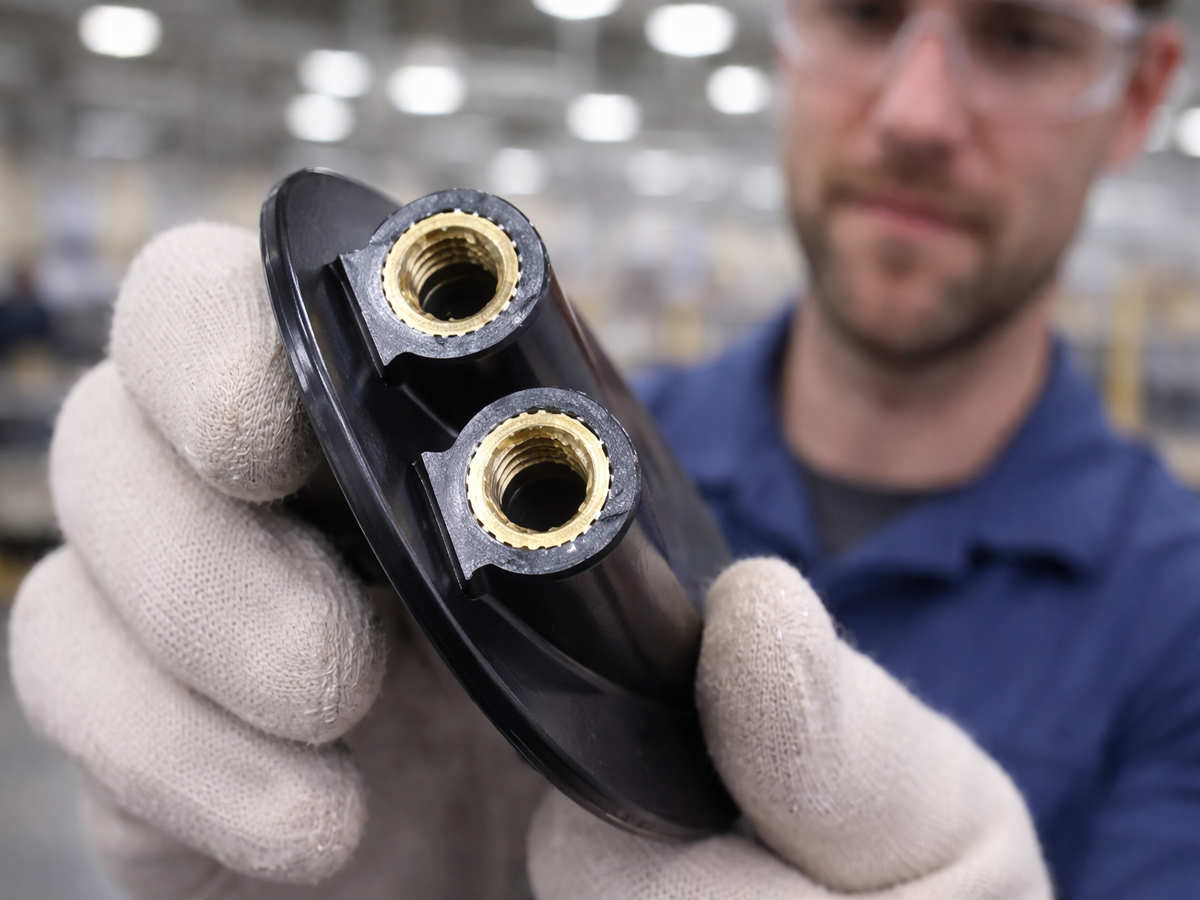
Thread insert nuts, also known as heat-set threaded inserts, are industrial fasteners designed to create strong, durable internal threads in plastic components. These inserts are typically installed into thermoplastic parts through heat insertion or ultrasonic embedding, providing reliable fastening points for repeated assembly and disassembly.
Product Specification
Thread Insert Nuts for Plastics: Heat-Set and Ultrasonic Installation Solutions
Overview
Thread insert nuts, also known as heat-set threaded inserts, are industrial fasteners designed to create strong, durable internal threads in plastic components. These inserts are typically installed into thermoplastic parts through heat insertion or ultrasonic embedding, providing reliable fastening points for repeated assembly and disassembly.
Thread insert nuts are widely used in electronic products, medical equipment, precision electrical housings, and plastic structural components where high-strength threaded connections are required.
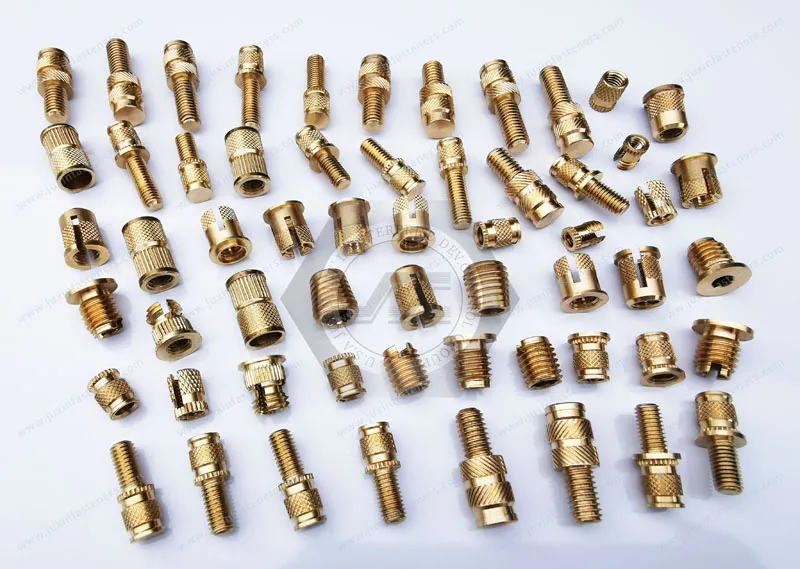
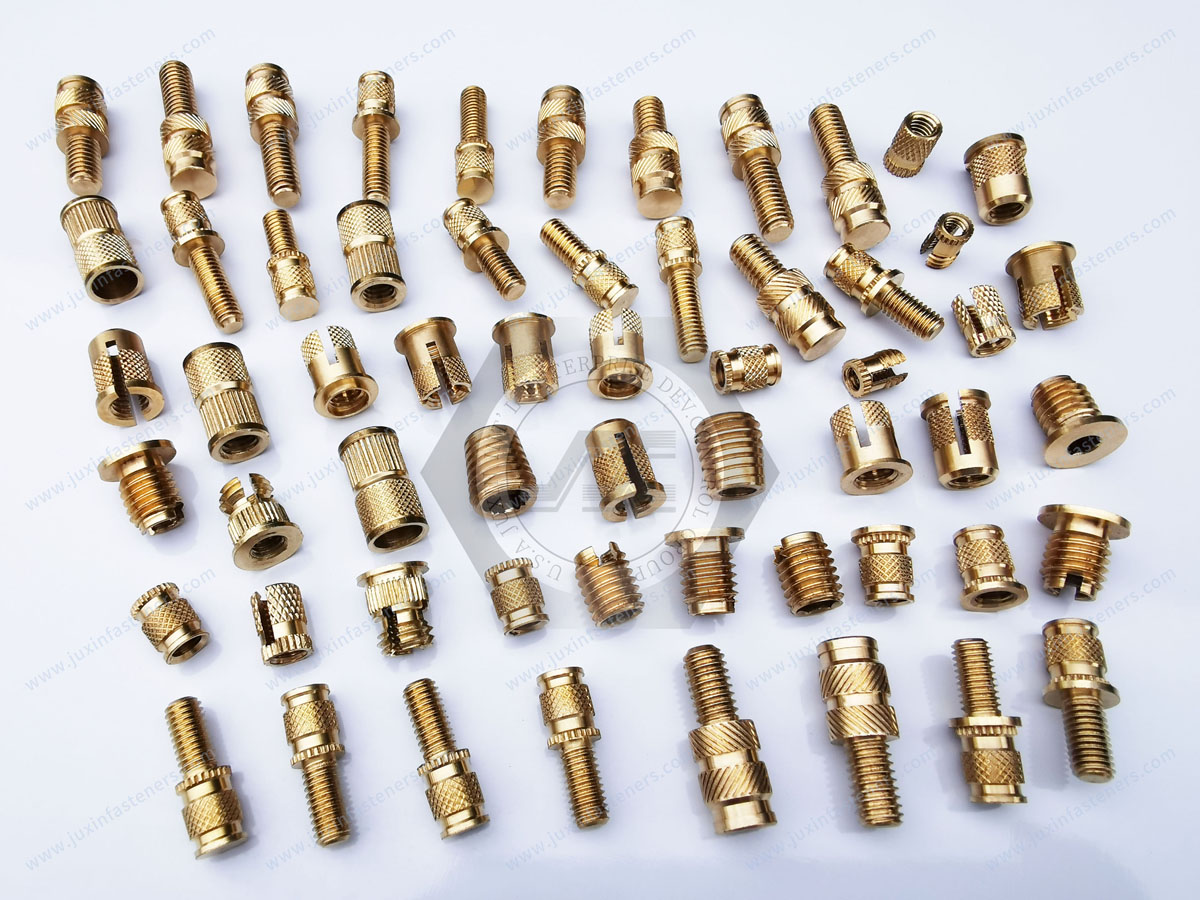
Typical insert series include JX-SL, JX-SHK, JX-IS, and JX-TH, each designed for specific structural and installation requirements.
Common materials include:
Brass:excellent machinability and conductivity
Stainless steel:high corrosion resistance and strength
Aluminum : lightweight and lead-free
These materials allow threaded inserts to meet the demands of various industrial environments.
Key Design Features of Thread Insert Nuts
Modern thread-insert nuts for plastics incorporate several structural features to ensure reliable performance when installed in plastic materials.
Precision Lead-in Design
Most inserts feature a rounded lead-in head, enabling accurate positioning during installation and preventing misalignment or tilting.
Progressive Outer Diameter Structure
The external profile often uses a stepped or progressive-diameter design, enabling the insert to embed in the plastic substrate gradually. This design helps prevent plastic cracking during installation.
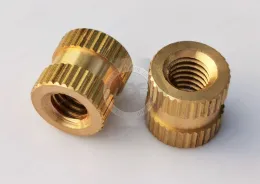
Opposing Knurl Patterns
High-performance inserts feature dual opposing knurl patterns, which create a strong mechanical bond with the plastic material. This structure significantly improves:
Pull-out resistance
Torque resistance
As a result, the threaded insert remains firmly locked within the plastic component.
Installation Methods for Thread Insert Nuts
Thread insert nuts are primarily installed using two industrial processes:
Ultrasonic Insertion
Ultrasonic installation uses high-frequency vibration energy to generate frictional heat between the insert and the plastic material. The process typically converts 220V/60Hz electrical power into 20–30 kHz ultrasonic energy, which is transmitted through the installation horn to the insert.
Advantages include:
Fast installation speed
Clean and precise embedding
Low thermal impact on surrounding materials
This method is widely used in high-volume manufacturing environments.
Heat-Set Installation
Heat-set installation involves heating the threaded insert to a controlled temperature before pressing it into the plastic component. The surrounding plastic softens, allowing the insert to embed smoothly.
Once cooled, the plastic solidifies around the insert, creating a strong mechanical lock.
Advantages include:
Excellent appearance and alignment
Lower internal stress within plastic parts
Suitable for larger components or multiple insert installations
Heat-set installation is one of the most common industrial methods for installing threaded inserts.
Some inserts, such as the JX-IU series, are compatible with both ultrasonic and heat-set installation methods.
Major Types of Thread Insert Nuts
JX-SL Series
The JX-SL series features a classic three-stage tapered knurl design, suitable for both heat-set and ultrasonic installation.
Key features include:
Rounded lead-in design for accurate positioning
Progressive diameter structure to prevent plastic cracking
Opposing knurl patterns for high torque and pull-out resistance
This design also allows plastic components to be designed with thinner wall sections.
Material options include:
Brass (JX-SL-B)
Stainless steel (JX-SL-S)
Carbon steel (JX-SL-C)
JX-SHK Series
The JX-SHK series is based on the SL structure but includes an additional flange head design.
This flange allows loads to be supported by the insert rather than the plastic material, helping prevent plastic deformation or overflow during installation.
Like the SL series, it can be installed via heat-set or ultrasonic methods.
JX-IS Series
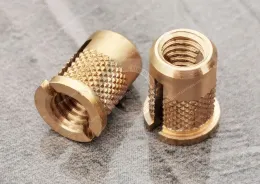
The JX-IS series features a symmetrical design with center knurling and end slots.
Because of this structure, the insert does not require orientation during installation, improving assembly efficiency in automated production environments.
This series is compatible with both:
Straight holes
Tapered holes
in plastic components.
JX-TH Series
The JX-TH series is a tapered heat-set threaded insert designed for plastic applications.
Compared with the SHK series, the TH design includes additional slots, increasing pull-out resistance by more than 10%.
Key features include:
Optimized knurling structure
Enhanced retention performance
Heat-set installation into straight plastic holes
Performance Characteristics
The most important performance indicators for thread insert nuts in plastics include:
Pull-Out Strength
Pull-out strength measures the axial force required to remove the insert from the plastic material.
Torque-Out Resistance
Torque-out resistance measures the rotational torque required to rotate the insert within the plastic substrate.
These values depend on several factors, including:
Insert size and design
Material of the insert
Type of plastic substrate (ABS, PC, PA, PE/PP, etc.)
Installation method and process control
Because installation parameters greatly affect final performance, actual test results after installation should be used as the final reference.
Typical Applications
Due to their reliable mechanical performance, thread insert nuts for plastics are widely used in many industries, including:
Consumer electronics housings
Medical device enclosures
Precision electrical equipment
Communication and networking devices
Plastic structural components
3D-printed plastic parts
Recent studies also show that optimized parameters such as insert design, installation temperature, and hole diameter can significantly improve the durability of threaded inserts used in 3D-printed plastic components.
Selection and Installation Design Guidelines
Proper design and installation are critical to achieving optimal performance.
Insert Selection
When selecting thread insert nuts, engineers should consider:
Thread specification (metric or imperial)
Material such as brass (C3604), stainless steel (SUS303), or aluminum
Structural type, such as flange inserts or symmetrical inserts
Application environment
Plastic Part Design Recommendations
To ensure reliable installation, plastic parts should follow several structural guidelines:
Reserve 1–3 mm space at the bottom of the hole for molten plastic flow
Recommended hole wall thickness ≥ 1.5–2 mm
Hole diameter slightly smaller than the insert outer diameter
The top opening is slightly larger by 0.1–0.2 mm for easier positioning
Bottom of the hole should include a radius ≥ 0.2 mm or reinforcing ribs
Process Control
Key process parameters include:
Heat-set temperature (typically 180–220°C)
Ultrasonic energy control
Pressing speed and pressure
Proper control helps prevent insert misalignment during installation.
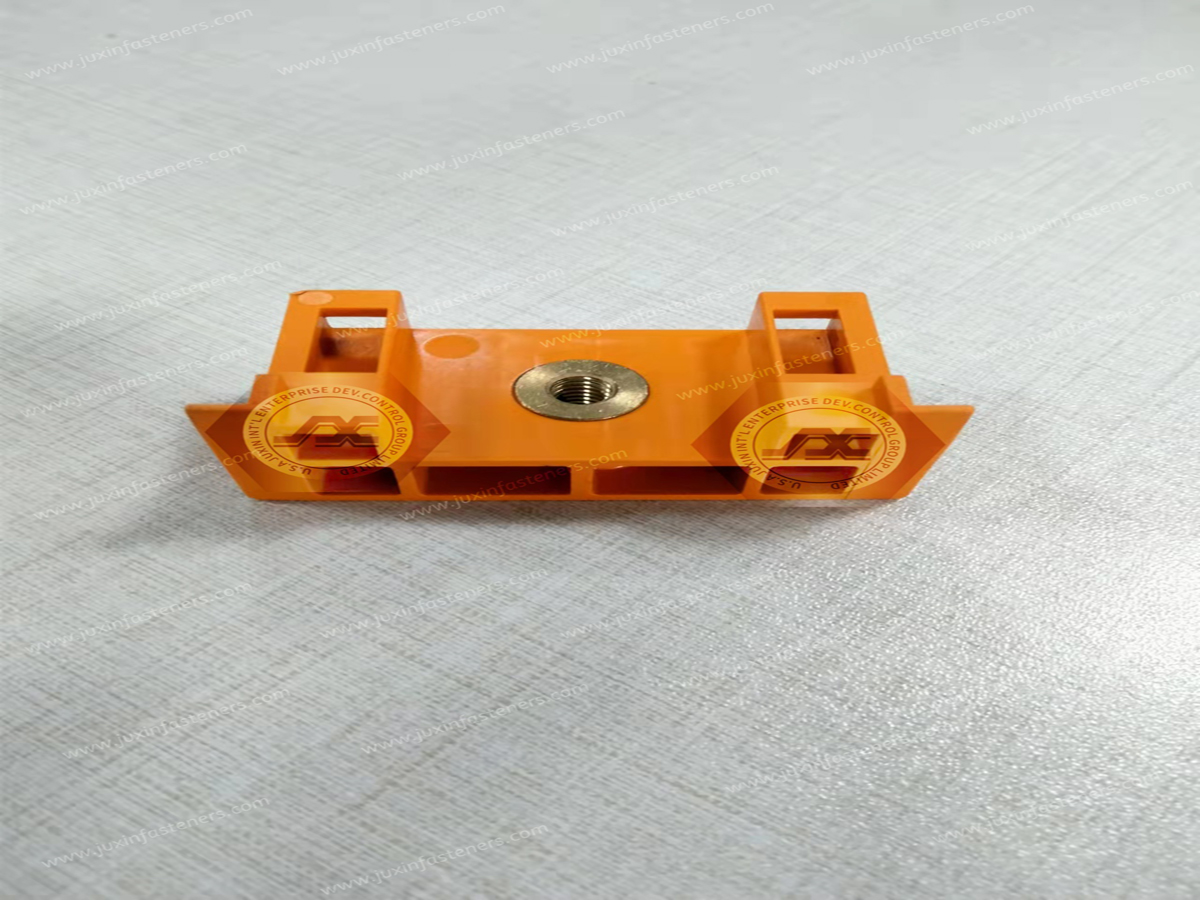
After installation, the metal insert surface may sit approximately 0.1 mm above the plastic surface, which is acceptable in most designs.
Conclusion
Thread insert nuts for plastics provide a reliable and efficient method for creating durable metal threads in plastic components. Through advanced structural designs and optimized installation processes such as heat-set and ultrasonic insertion, these inserts deliver excellent pull-out strength and torque resistance.
As plastic components continue to replace metal parts in many industries, threaded inserts remain an essential fastening solution for high-strength plastic assemblies.
Manufacturers such as Juxin Fasteners offer a wide range of precision thread inserts designed to meet the needs of modern industrial applications.
Product Pictures
Contact Us
Tel.:
+86 020 8621 0320
+86 020 3121 6067
E-mail:
Technical Support:
Navigation
SEND INQUIREY