Call Us
+86 136 6007 9809
Call Us
+86 136 6007 9809

Self-Locating Projection Weld Nuts – JX-WN / JX-WNS
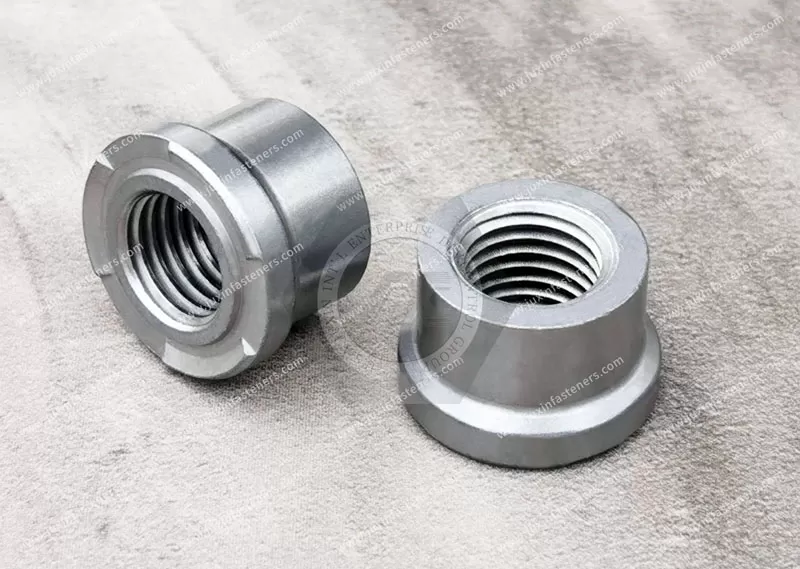
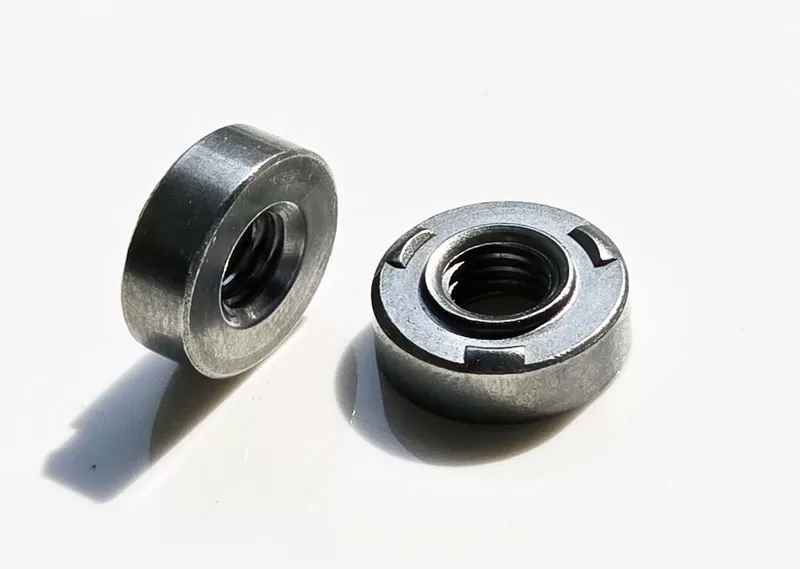
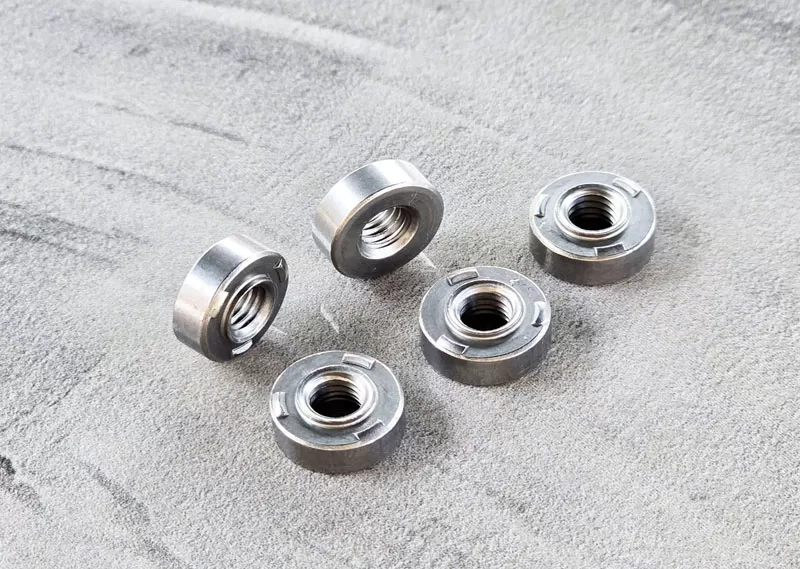
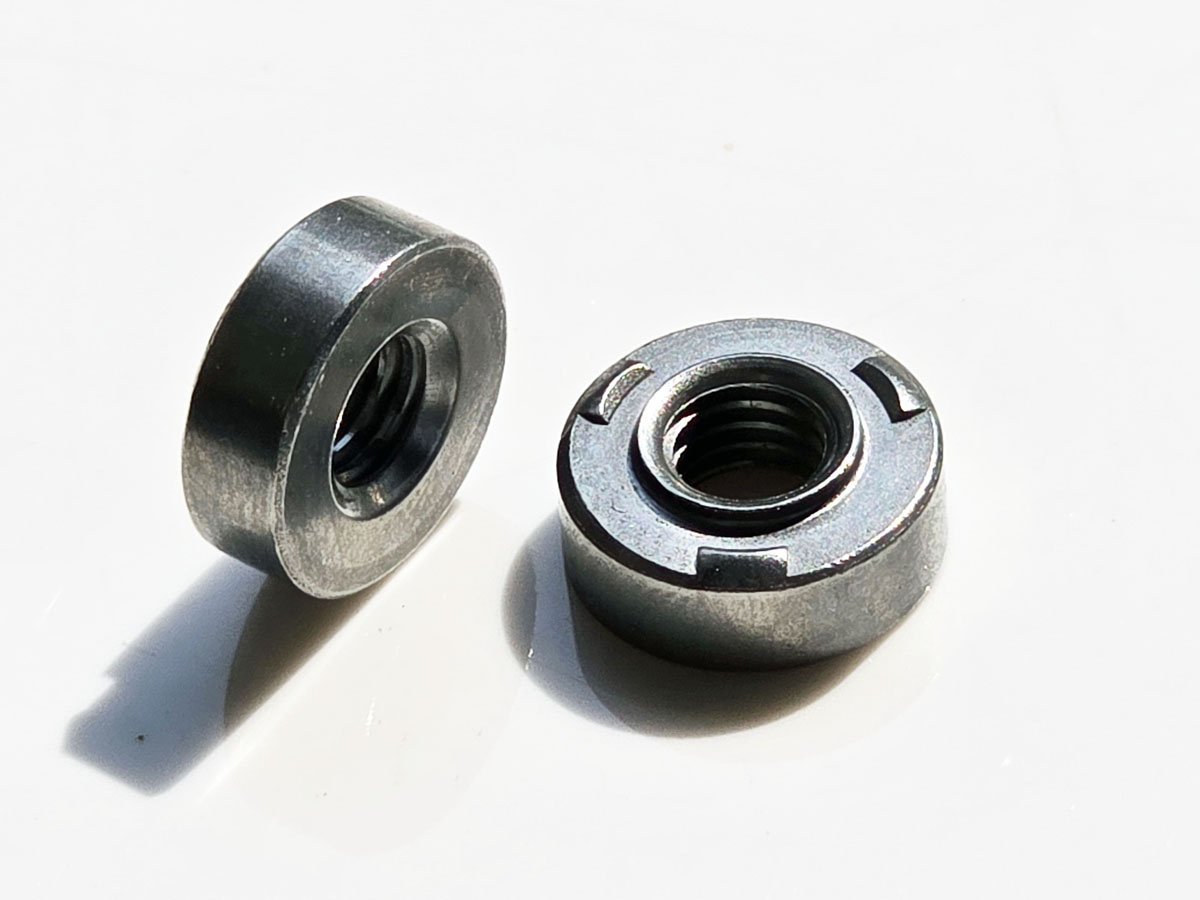
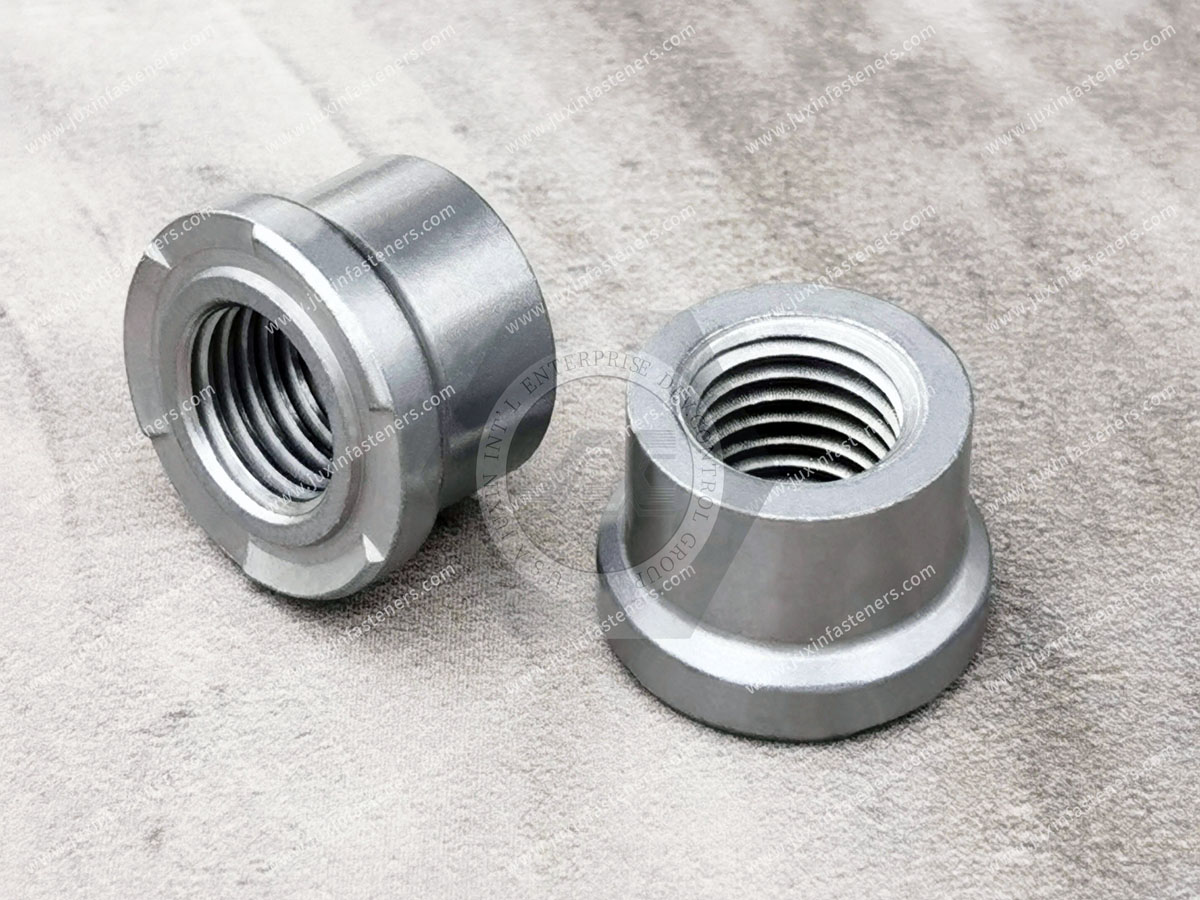
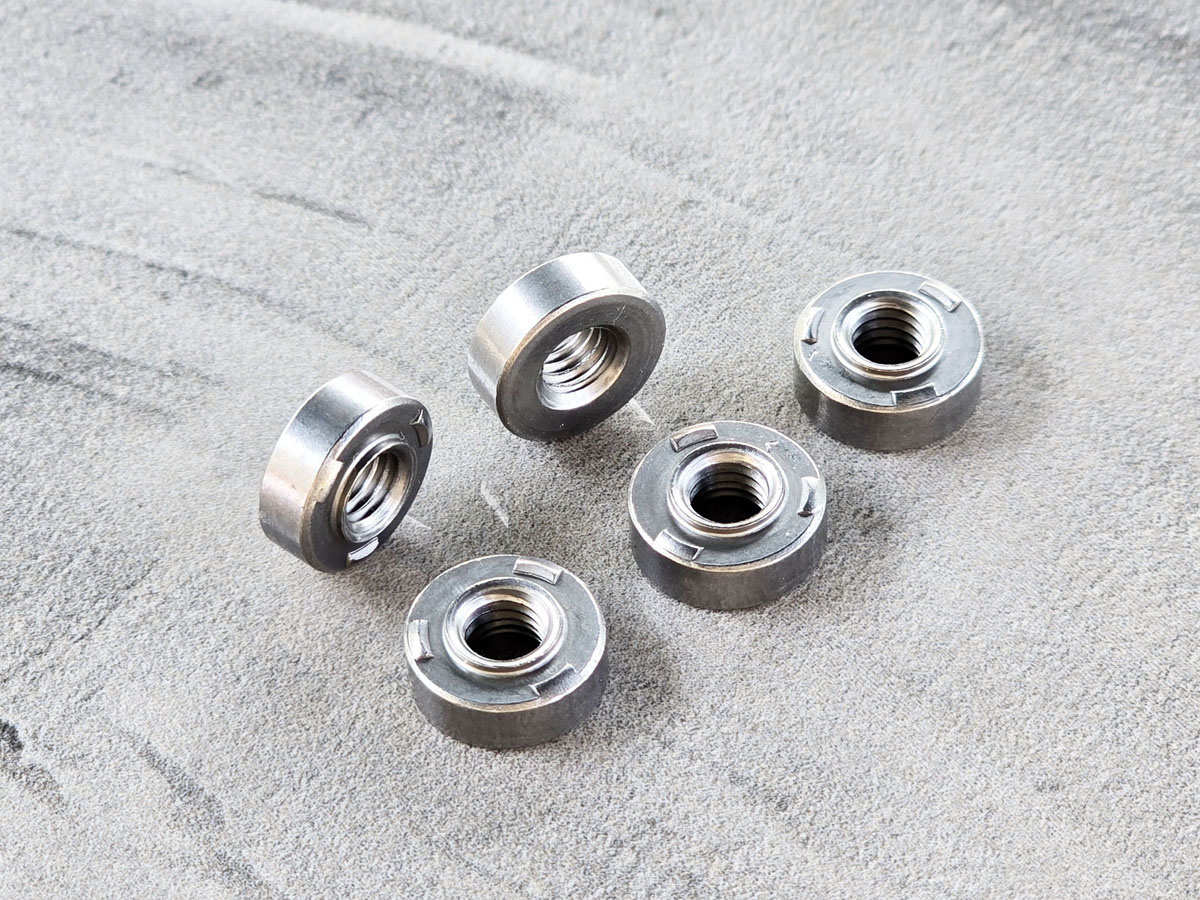
JX-WN and JX-WNS self-locating projection weld nuts provide permanent, load-bearing threaded attachment points in metal sheets where direct tapping may not provide sufficient thread engagement.
Their round design combines self-locating geometry with welding projections to support accurate positioning and resistance projection welding in industrial sheet-metal assemblies.
These weld nuts are suitable for fabricated chassis, industrial equipment frames, metal enclosures, brackets and OEM components requiring reliable threaded attachment.
Key Features
Self-locating design for positioning in prepared sheet-metal holes.
Round projection-weld construction.
Permanent threaded attachment after successful resistance welding.
Suitable for thin sheet-metal fastening applications.
Designed to support repeatable installation in industrial production.
Referenced Unified thread sizes from #4 to 1/4 inch.
Referenced metric thread sizes from M3 to M12.
Carbon steel and stainless steel material options.
Custom sizes and configurations subject to engineering review.
Material Options
Carbon steel and stainless steel are the primary material options.
Brass is also referenced as a possible material, subject to separate manufacturing and welding feasibility assessment.
Surface Finish Options
Zinc, zinc-nickel and copper-based finishes may be reviewed according to corrosion protection and welding-process requirements.
The appropriate coating and processing sequence must be confirmed before production.
Technical Documentation
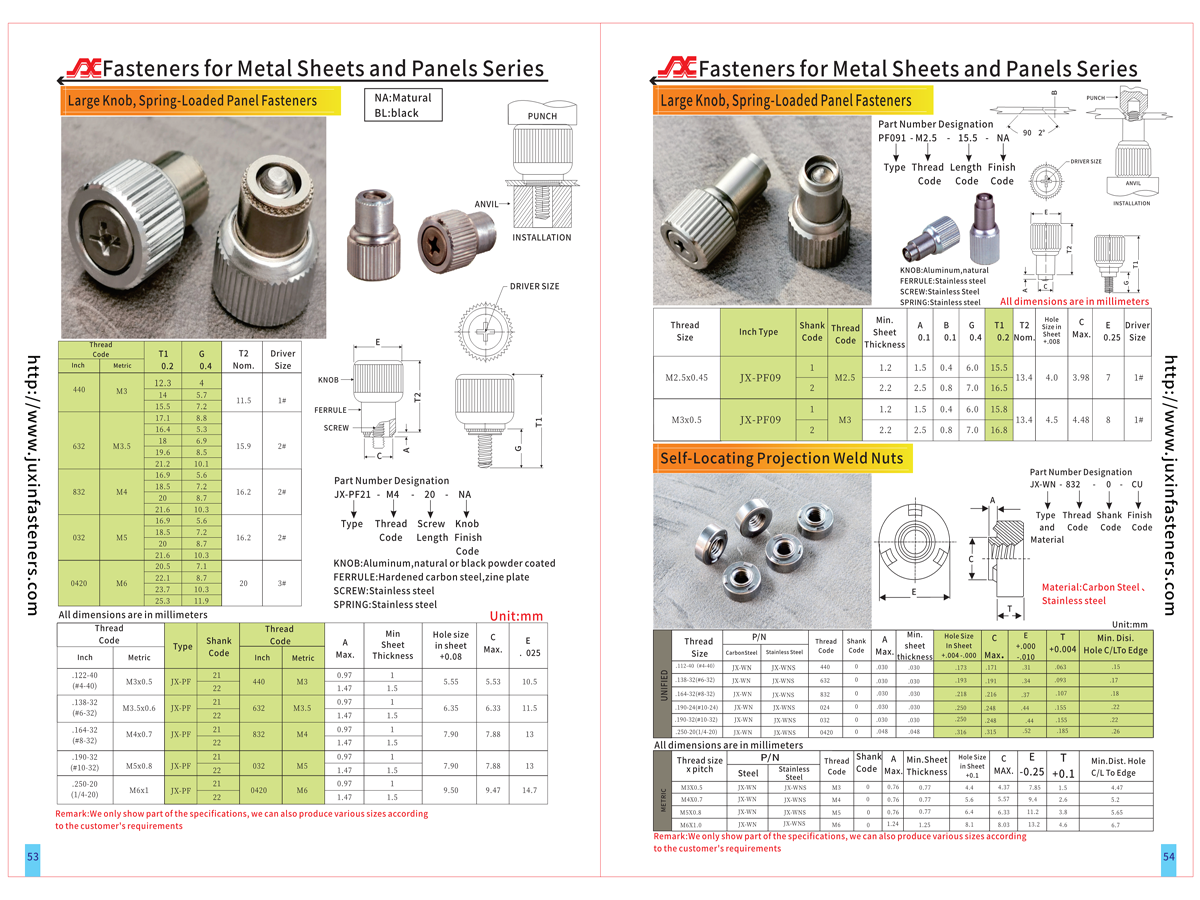
Refer to the corresponding product PDF and CAD drawings on pages 53–54 for dimensions, thread configurations and installation requirements.
Product Specification
Self-Locating Projection Weld Nuts – JX-WN / JX-WNS
Engineering Solutions for Resistance Projection Welding, Thin Sheet Metal and OEM Threaded Assemblies
Product Overview
JUXIN FASTENERS supplies JX-WN and JX-WNS self-locating projection weld nuts for industrial equipment manufacturers, sheet-metal fabricators and OEM procurement teams.
These fasteners provide permanent threaded attachment points in fabricated metal components where the base sheet is too thin for practical direct tapping or where a welded nut offers assembly advantages.
The self-locating geometry assists positioning relative to a prepared mounting hole. Welding projections concentrate electrical contact at designated locations during resistance projection welding.
The final assembly provides a threaded connection integrated into the sheet-metal component.
Product family: Self-locating projection weld nuts
Models: JX-WN and JX-WNS
Fastener configuration: Round projection weld nut
Installation method: Resistance projection welding
Primary function: Permanent threaded attachment
Referenced Unified thread range: #4 to 1/4 inch
Referenced metric thread range: M3 to M12
Primary materials: Carbon steel and stainless steel
Additional material for feasibility review: Brass
Typical applications: Chassis, metal enclosures, equipment frames and fabricated brackets
Technical documentation: Product PDF and CAD drawings, pages 53–54
Actual dimensions, material availability, locating geometry and model differences must be confirmed from the approved product drawings.
How Self-Locating Projection Weld Nuts Work
A self-locating projection weld nut is positioned against a prepared metal sheet using its locating geometry.
During installation, the nut and sheet are held between suitable welding electrodes.
Electrical current passes through the assembly, generating localized heat at the projection contact points.
Under controlled welding force and current, the projections form welded joints between the nut and the sheet.
The resulting assembly provides a permanent threaded attachment point for subsequent bolt installation.
Weld quality depends on the projection design, material combination, electrode geometry, welding current, welding time and applied force.
Why Projection Weld Nuts Are Used in Thin Sheet Metal
Thin sheet metal may not provide sufficient thread engagement for a conventional tapped hole.
Even when tapping is possible, the available engagement length may be inadequate for the intended joint loading.
A projection weld nut adds a separate threaded component without requiring the entire sheet-metal panel to be made thicker.
This can be useful for fabricated equipment housings, mounting brackets and industrial chassis.
The designer must still verify both the threaded connection and the welded attachment.
A sufficiently strong internal thread does not guarantee that the welded joint or surrounding sheet can carry the required load.
Self-Locating Geometry and Positioning Accuracy
Positioning accuracy is important in production welding.
If a weld nut is incorrectly positioned, the mating bolt may not align with the threaded hole during final assembly.
This can increase assembly time and create a risk of cross-threading.
The self-locating feature is intended to assist repeatable positioning relative to the prepared sheet-metal hole.
However, locating geometry does not eliminate the need for suitable fixtures and process controls.
The engineer should verify mounting-hole dimensions, locating clearances and the positional tolerance of the mating component.
Projection Design and Weld Formation
Projection weld nuts use specially formed contact features to concentrate electrical resistance and heating.
During welding, these projections influence where the joint develops.
Their geometry affects current concentration, contact resistance and deformation.
Incorrect projection dimensions or inconsistent material conditions may lead to uneven weld formation.
Potential defects include incomplete fusion, excessive expulsion, local distortion and poor attachment strength.
The exact projection arrangement for JX-WN and JX-WNS must be established from the corresponding engineering drawings.
Weld Spatter Control and Thread Protection
Weld spatter can enter the internal threads of a projection weld nut.
This may interfere with bolt installation or require corrective processing.
Proper projection geometry, electrode alignment and welding parameters can help control spatter.
However, no weld nut design can guarantee the complete elimination of spatter under all operating conditions.
Production engineers should consider thread protection and post-weld inspection where required.
For critical assemblies, thread gauging may be included in the inspection plan.
Preventing Burn-Through in Thin Sheets
Thin metal sheets are sensitive to excessive welding heat.
An unsuitable welding process may cause local burn-through, excessive indentation or panel distortion.
Insufficient heat input may produce an incomplete or weak weld.
The welding process must balance electrical current, welding time and electrode force.
The acceptable process window depends on nut size, sheet thickness, material composition and surface condition.
Trial welding should be performed using representative production components before approving a new configuration.
Resistance Projection Welding Equipment
JX-WN and JX-WNS weld nuts require suitable resistance welding equipment.
The supplied technical reference describes a 50 kVA press-type welding machine as an example of equipment used for this fastener family.
This is not a universal equipment requirement for every nut size or material combination.
Actual equipment capacity should be selected according to the welding current, electrode force, material combination and production requirements.
The reference also describes flat-faced electrodes with a tip diameter approximately 3.2 mm larger than the nut's specified E dimension.
That relationship must be checked against the actual product drawing and validated by the welding engineer.
Electrode condition, alignment and cooling arrangements can also influence welding consistency.
Carbon Steel Weld Nuts
Carbon steel is a practical material option for many fabricated steel assemblies.
It may be suitable where the nut and sheet have compatible resistance welding characteristics.
The selected grade should meet the required mechanical and welding properties.
Material consistency is important for repeatable projection welding.
Surface condition, coatings and contamination should be controlled during production.
Where material standards are specified, the corresponding ASTM or EN grade requirements should be established from the approved purchase specification.
Stainless Steel Weld Nuts
Stainless steel projection weld nuts may be selected for applications requiring corrosion resistance.
However, stainless steel grades differ in weldability, strength and corrosion behavior.
The nut grade must be compatible with the base sheet and approved welding procedure.
Dissimilar metal combinations require additional review.
The welding process can affect the local material condition and corrosion performance.
The specific grade and any post-weld treatment should be confirmed before production.
Brass Material Feasibility
Brass is mentioned among the supplied material options.
However, its electrical and thermal properties differ from those of carbon steel and stainless steel.
A welding procedure developed for steel projection weld nuts cannot automatically be applied to brass.
Any brass JX-WN or JX-WNS configuration should be treated as a special engineering request.
Material selection, manufacturing feasibility and joining-process validation must be completed before confirming supply.
Unified Inch Thread Specifications
The referenced Unified thread range extends from #4 through 1/4 inch.
ASME B1.1 provides a relevant reference for Unified screw-thread designations and tolerances.
The purchase drawing should specify the exact diameter, thread pitch and tolerance class.
The mating bolt must use a compatible Unified thread.
The availability of individual sizes must be confirmed against the selected JX-WN or JX-WNS configuration.
Metric Thread Specifications
The referenced metric range extends from M3 through M12.
ISO 261 provides a relevant reference for metric thread designations.
ISO 965 provides a relevant reference for metric thread tolerances.
The required pitch and tolerance class must be specified.
Metric and Unified threads are not directly interchangeable.
A similar nominal diameter does not establish compatibility between different thread systems.
Surface Treatments and Welding Compatibility
The supplied product information references zinc, zinc-nickel and copper-based finishes.
These finishes may be considered according to the required corrosion protection and production process.
However, surface coatings can affect electrical contact resistance and weld formation.
Coating thickness and material composition may change the welding process window.
For some applications, welding before final surface treatment may be appropriate.
For others, a validated welding process may permit pre-coated components.
The coating sequence should be established through engineering review.
No specific corrosion-test rating or coating performance should be assumed without supporting documentation.
Relevant International Engineering Standards
The following standards may provide relevant references for product design, materials and welding qualification.
ISO 261 – General plan for ISO metric screw threads.
ISO 965 – Tolerances for ISO metric screw threads.
ASME B1.1 – Unified inch screw threads.
ISO 14329 – Resistance welding destructive testing, including failure types and geometric measurements.
ISO 14270 – Resistance welding mechanized peel testing, where applicable.
Applicable ASTM material standards – Selected according to the verified nut material grade.
Applicable EN material standards – Selected according to the approved material specification.
These references do not establish automatic certification or compliance for every product configuration.
Any required standard, test method or acceptance criterion must be identified in the customer's approved specification.
Weld Joint Strength and Failure Modes
The strength of a projection-welded nut assembly depends on more than the nut material.
Important factors include sheet thickness, projection geometry, weld formation and applied loading.
Potential failure modes include incomplete welding, separation at the weld interface, sheet tearing, thread stripping and nut deformation.
The controlling failure mode may vary with the joint design.
Engineers should evaluate the complete welded assembly rather than relying only on nominal fastener strength.
Application-specific qualification may include torque resistance, push-out, pull-out or other appropriate testing.
Torque Resistance and Bolt Tightening
Weld nut torque resistance is important when a bolt is tightened into the installed nut.
An insufficient weld may allow the nut to rotate or detach.
The required resistance depends on bolt size, joint geometry and the specified tightening procedure.
Production qualification may include torque testing with agreed acceptance limits.
A single torque value should not be applied to all JX-WN and JX-WNS sizes.
The required performance must be defined for each application.
Push-Out and Pull-Out Performance
Push-out and pull-out testing can help evaluate the attachment between the weld nut and the sheet.
Test results depend on the material combination, sheet thickness, weld quality and loading direction.
Results obtained from one sheet configuration should not automatically be transferred to another.
For demanding applications, testing should use representative production assemblies.
The OEM should define the test method and acceptance criteria before production approval.
Projection Weld Nuts Versus Self-Clinching Nuts
Projection weld nuts use a welding process to create permanent attachment.
Self-clinching nuts use mechanical displacement of suitable sheet material.
Projection weld nuts may be appropriate where resistance welding is already part of the manufacturing process.
Self-clinching nuts may be preferable where welding heat is undesirable or the panel material supports reliable clinching.
The selection should consider sheet hardness, material thickness, corrosion protection, equipment availability and required joint performance.
Neither installation method is universally superior.
Projection Weld Nuts Versus Rivet Nuts
Rivet nuts create threaded attachment through mechanical deformation.
They can be useful where installation access is available from only one side.
Projection weld nuts require appropriate welding access and equipment.
They may integrate efficiently into manufacturing operations that already use resistance welding.
The choice should reflect installation access, material compatibility, production volume and required attachment strength.
Projection Weld Nuts Versus Tapped Holes
A tapped hole avoids installing a separate fastener.
However, the sheet must provide sufficient thread engagement for the intended loading.
Projection weld nuts provide an additional threaded component.
This may allow designers to use thinner sheet metal while retaining a suitable threaded attachment point.
The complete welded joint must still be evaluated.
Industrial Applications
Automotive Sheet-Metal Components
Projection weld nuts may be used in fabricated brackets, chassis-related components and equipment mounting structures.
Applications requiring automotive production approval should follow the customer's specified validation process.
Electric Vehicle Equipment
Potential applications include fabricated housings, auxiliary brackets and supporting structures.
Welded joints used in safety-related assemblies require appropriate engineering qualification.
Industrial Machinery
Projection weld nuts provide permanent threaded attachment points in selected equipment frames, covers and fabricated supports.
Electrical Enclosures and Control Cabinets
Thin sheet-metal cabinets may use weld nuts for internal mounting brackets, hardware supports and equipment attachment.
HVAC Equipment
Fabricated housings, brackets and supporting frames may benefit from integrated threaded connections.
Industrial Automation
Weld nuts may be used in machine frames, guards and modular equipment structures.
Agricultural and Construction Equipment
Selected fabricated components may use projection weld nuts where material and joint-strength requirements are satisfied.
Commercial Equipment
Industrial cabinets, equipment frames and fabricated metal housings may use welded threaded fasteners to support repeatable assembly.
Engineering Example: Thin Steel Equipment Enclosure
Consider a fabricated steel enclosure requiring an internal mounting bracket.
The enclosure sheet is too thin to provide sufficient tapped-thread engagement.
A self-locating projection weld nut may be selected to provide the required threaded attachment point.
The locating feature assists positioning relative to the prepared hole.
The nut is resistance welded using an approved process.
The manufacturer then verifies the internal thread and welded attachment.
This approach creates a permanent threaded connection without increasing the thickness of the entire enclosure.
The design should still account for joint loading, weld strength and sheet-metal deformation.
Production Process Validation
A reliable production process requires consistent control of the weld nut, sheet material and welding conditions.
Important process variables include nut positioning, mounting-hole dimensions, electrode condition, welding current, welding time, electrode force and surface cleanliness.
Inspection may include visual weld assessment, dimensional verification, thread gauging and mechanical testing.
The appropriate inspection frequency depends on the application and customer requirements.
A welding procedure approved for one nut size or material combination should not automatically be assumed suitable for another.
OEM Procurement and Supplier Qualification
Procurement teams should specify the complete fastener configuration.
The model number alone may not identify every material, thread, projection or finish requirement.
An approved drawing should define the critical product characteristics.
For controlled manufacturing programs, the customer may also require material traceability, production samples and documented inspection results.
Any special quality documentation should be agreed upon before order confirmation.
For repeat orders, consistent drawing revision control is essential.
RFQ Information for JX-WN / JX-WNS
To support technical review and quotation, please provide the following information:
Required product model and engineering drawing.
Metric or Unified thread size and pitch.
Nut dimensions and dimensional tolerances.
Locating feature and projection geometry.
Nut material grade.
Base sheet material and thickness.
Surface finish and welding sequence.
Required corrosion protection.
Welding process requirements.
Mechanical performance and inspection criteria.
Estimated order quantity and annual demand.
Delivery schedule and packaging requirements.
Providing complete technical information helps reduce quotation uncertainty and supports more efficient supplier evaluation.
Frequently Asked Questions
What is a self-locating projection weld nut?
It is a threaded fastener with locating geometry and welding projections, designed for resistance welding to a compatible metal sheet.
Why use projection weld nuts in thin sheet metal?
They provide a separate threaded attachment point where direct tapping may not offer sufficient engagement.
What is the difference between JX-WN and JX-WNS?
Both are referenced product models. Their exact material and dimensional differences must be verified against the corresponding drawings.
Are carbon steel and stainless steel options available?
Both material families are referenced. Individual grade and size availability requires confirmation.
Can projection weld nuts be used with aluminum sheets?
Compatibility cannot be assumed. The material combination and joining process require separate engineering validation.
Are metric and inch thread sizes available?
The supplied range references metric M3–M12 and Unified #4–1/4 inch sizes. Availability depends on the selected configuration.
Do projection weld nuts completely prevent welding spatter?
No. Appropriate nut design and welding-process control can help reduce spatter, but performance must be validated.
Can zinc-nickel surface treatment be specified?
It can be reviewed as a finish requirement, subject to material compatibility, welding sequence and application needs.
Can custom projection weld nuts be supplied?
Customer-specific configurations can be evaluated using engineering drawings and production requirements.
Related JUXIN FASTENERS Products
Self-Clinching Nuts
Alternative mechanically installed threaded fasteners for suitable sheet-metal materials.
Self-Clinching Floating Nuts
Threaded attachment solutions for sheet-metal assemblies requiring limited positional adjustment.
Blind Rivet Nuts
Threaded fastening solutions for applications with one-sided installation access.
Self-Clinching Standoffs
Permanent spacing and threaded attachment solutions for compatible sheet-metal panels.
Broaching Fasteners
Threaded or unthreaded fastening solutions for selected printed circuit boards and compatible nonmetallic components.
Connect these descriptive product names to the corresponding verified JUXIN FASTENERS product or category pages.
Request an OEM Projection Weld Nut Quotation
JUXIN FASTENERS supplies industrial fastening solutions for equipment manufacturers, sheet-metal fabricators and international OEM purchasing teams.
For JX-WN and JX-WNS inquiries, please provide the required thread size, material, sheet thickness, welding requirements, engineering drawings and estimated order quantity.
Standard and customer-specific configurations can be reviewed according to the application and manufacturing requirements.
Email: info@juxinfasteners.com
Website: www.juxinfasteners.com
Product Packaging
JUXIN FASTENERS provides protective export packaging for JX-WN and JX-WNS self-locating projection weld nuts.
Standard Export Packaging
Inner packaging may include protective polybags or small boxes selected according to fastener size, weight and order quantity.
Outer packaging consists of suitable export cartons.
Palletizing can be arranged for consolidated international shipments when required.
Product Protection
Packaging should protect the internal threads, locating features and welding projections from damage or contamination during transportation.
Suitable protective arrangements may be selected according to the product geometry and surface finish.
Product Identification
Labels can identify the product model, thread specification, material, quantity and production batch or lot number.
Additional customer-specific identification requirements can be incorporated into the approved packaging instructions.
Customized OEM Packaging
Available arrangements for review include private labels, barcode identification, specified packing quantities, carton markings and customized pallet configurations.
Final packing quantities, carton dimensions and shipment arrangements will be confirmed according to the approved purchase order and packaging requirements.
Product Pictures
Contact Us
Tel.:
+86 020 8621 0320
+86 020 3121 6067
E-mail:
Technical Support:
Navigation
SEND INQUIREY