Call Us
+86 136 6007 9809
Call Us
+86 136 6007 9809

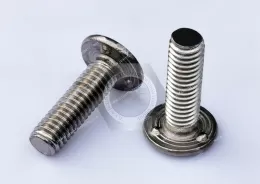
Juxin Fasteners manufactures aluminum capacitor discharge (CD) weld studs with external threads, circular welding flanges and precision ignition tips for lightweight automotive and industrial assemblies.
Designed for tip-ignition stud welding, these aluminum threaded fasteners provide permanent attachment points on compatible aluminum sheet metal without requiring through-holes.
Primary applications include automotive aluminum roof panels, body panels, vehicle wiring harness brackets, lightweight equipment enclosures and fabricated aluminum structures.
The product is associated with ISO 13918 Type PT designs.
Common metric threads include M3, M4, M5, M6 and M8, with custom lengths, flange dimensions and selected UNC inch-thread configurations available for engineering evaluation.
Juxin Fasteners supports OEM manufacturing according to customer 2D/3D drawings, including aluminum alloy selection, welding-tip geometry, dimensional tolerances and production inspection requirements.
Product Specification
Aluminum CD Weld Studs for Automotive Roof Panels – ISO 13918 Type PT
Juxin Fasteners manufactures aluminum capacitor discharge (CD) weld studs for automotive lightweight construction, aluminum roof panels, vehicle body assemblies and industrial sheet metal applications.
These externally threaded aluminum welding studs feature a circular flange and a precisely formed ignition tip. They are designed to create permanent threaded mounting points on compatible aluminum surfaces using capacitor discharge stud welding.
For automotive OEMs, Tier-1 suppliers, manufacturing engineers and purchasing teams, aluminum CD weld studs offer a lightweight fastening solution for applications where additional mounting hardware, through-holes or conventional mechanical fastening operations may be undesirable.
Juxin Fasteners supports standard and custom aluminum welding stud manufacturing according to customer engineering drawings.
Product Specifications
Product Name: Aluminum CD Weld Studs
Alternative Names: Aluminum Capacitor Discharge Studs, Aluminum Tip-Ignition Threaded Studs, Aluminum Flanged Welding Studs
Material: Aluminum Alloy
Typical Material Reference: AlMg3 / EN AW-5054, Subject to Customer Specifications
Alternative Aluminum Alloys: Evaluated According to Welding Compatibility and Approved Drawings
Product Standard: ISO 13918 Type PT
Historical References: ISO 13918:1998 and DIN 32501
Welding Process: Capacitor Discharge Arc Stud Welding
Welding Method: Tip Ignition
Thread Type: External Thread
Welding Base: Circular Flange with Central Ignition Tip
Metric Thread References: M3, M4, M5, M6, M8
Custom Thread Options: UNC Inch Threads and Special Metric Threads
Surface Finish: Natural Aluminum, Unless Otherwise Specified
Manufacturing: OEM and Custom Drawing-Based Production
Primary Applications: Automotive Aluminum Roof Panels, Lightweight Body Structures, Aluminum Sheet Metal Assemblies
What Are Aluminum CD Weld Studs?
Aluminum CD weld studs are externally threaded fasteners designed for capacitor discharge arc stud welding.
A small ignition tip is located at the center of the welding face. During welding, stored electrical energy initiates a short-duration arc between the stud and the workpiece.
The welding interface melts locally, and the stud is brought into contact with the parent material to form a metallurgical joint.
After welding, the threaded shank provides a permanent mounting point for brackets, nuts, clips and other mechanical components.
Unlike conventional bolted connections, the welding operation does not require a through-hole in the parent sheet.
This makes aluminum CD studs particularly useful for applications where reverse-side appearance, panel integrity and lightweight construction are important.
Why Aluminum CD Weld Studs Are Used in Lightweight Automotive Engineering
Automotive manufacturers increasingly use aluminum alloys in selected body panels, structural components and vehicle equipment assemblies to reduce weight.
Aluminum has a density of approximately 2.7 g/cm³, compared with approximately 7.85 g/cm³ for carbon steel.
For components with equivalent geometry, aluminum can provide a substantial mass reduction.
However, material selection must also account for mechanical strength, stiffness, fatigue performance and weldability.
Aluminum CD weld studs offer several engineering advantages:
Reduced Fastener Weight
Compatibility with Selected Aluminum Parent Materials
Permanent Threaded Attachment Points
No Through-Hole Required in the Parent Panel
Potential Reduction in Secondary Assembly Operations
Suitable for Automated Welding Processes
Compact Mounting Geometry
Customizable Thread and Flange Dimensions
These advantages depend on proper material selection, qualified welding parameters and application-specific validation.
Automotive Roof Panel Applications
Automotive aluminum roof panels are a key application area for lightweight threaded welding fasteners.
Potential mounting applications include:
Roof Reinforcement Brackets
Interior Roof Support Components
Roof Wiring Harness Retainers
Roof-Mounted Electrical Equipment Brackets
Lightweight Roof Module Mounting Points
Roof Trim Support Structures
Auxiliary Mounting Brackets
Selected Sunroof Assembly Support Components
For these applications, welding performance must be evaluated against the actual roof panel alloy, sheet thickness and surface condition.
Automotive exterior panels may have strict requirements for visible surface appearance.
Capacitor discharge welding can offer shallow weld penetration, but a completely mark-free reverse surface cannot be guaranteed without testing.
Engineers should verify weld penetration, panel distortion, local strength and visible surface quality before approving the fastening design.
Automotive Sunroof and Roof Module Engineering
Sunroof assemblies combine structural brackets, guide systems, motors, electrical components and trim attachments.
Aluminum threaded weld studs may be considered for compatible metal mounting structures within these assemblies.
Potential applications include sunroof support brackets, motor mounting structures and auxiliary component attachments.
The selected stud must withstand the specified service loads, vibration, environmental exposure and assembly torque.
Critical attachment points require validation according to the vehicle manufacturer's engineering specifications.
Aluminum Alloy Selection – AlMg3 and Alternative Materials
AlMg3 is an established aluminum material used in European threaded CD weld stud product ranges.
It provides a practical combination of corrosion resistance, formability and weldability for suitable applications.
Alternative aluminum alloys may be considered when the application requires different mechanical or metallurgical properties.
Important material selection factors include:
Aluminum Alloy Composition
Compatibility with the Parent Metal
Mechanical Strength
Electrical and Thermal Conductivity
Surface Oxide Characteristics
Corrosion Environment
Welding Process Requirements
Automotive Material Specifications
The aluminum alloy of the stud should be selected in conjunction with the alloy and condition of the parent material.
Using aluminum fasteners does not automatically eliminate galvanic corrosion risks, particularly when other metals are present in the completed assembly.
ISO 13918 Type PT – Tip-Ignition Threaded Studs
ISO 13918 specifies requirements for studs used in arc stud welding.
Type PT identifies externally threaded studs intended for tip-ignition welding.
The product geometry includes the threaded shank, welding flange and ignition tip.
Important dimensional characteristics include:
Thread Diameter
Thread Pitch
Stud Length
Welding Flange Diameter
Welding Flange Thickness
Ignition-Tip Diameter
Ignition-Tip Height
Thread-to-Flange Concentricity
For standardized configurations, the applicable ISO drawing and dimensional tolerances should be used.
Customer-specific modifications must be identified separately from standard-compliant configurations.
Metric Thread Specifications
Common aluminum Type PT stud thread references include:
M3 × 0.5 — Nominal Diameter 3 mm / 0.1181 in.
M4 × 0.7 — Nominal Diameter 4 mm / 0.1575 in.
M5 × 0.8 — Nominal Diameter 5 mm / 0.1969 in.
M6 × 1.0 — Nominal Diameter 6 mm / 0.2362 in.
M8 × 1.25 — Nominal Diameter 8 mm / 0.3150 in.
These inch values are dimensional conversions of the metric thread diameters.
They do not represent interchangeable UNC or UNF thread specifications.
Stud length, welding flange dimensions and ignition-tip geometry must be selected according to the applicable design.
UNC Inch Thread Options for North American OEM Projects
Juxin Fasteners can evaluate custom aluminum CD weld studs with Unified inch-series threads.
Common engineering references include:
#4-40 UNC — Nominal Diameter 0.112 in.
#6-32 UNC — Nominal Diameter 0.138 in.
#8-32 UNC — Nominal Diameter 0.164 in.
#10-24 UNC — Nominal Diameter 0.190 in.
#10-32 UNF — Nominal Diameter 0.190 in.
1/4-20 UNC — Nominal Diameter 0.250 in.
5/16-18 UNC — Nominal Diameter 0.3125 in.
The actual availability and manufacturing feasibility of each inch-threaded aluminum stud must be confirmed.
Custom inch-thread designs should follow the applicable ASME B1.1 requirements.
Metric and Unified threads must not be treated as interchangeable.
Precision Flange and Ignition-Tip Design
The circular welding flange provides the welding interface between the stud and the parent material.
The ignition tip initiates the arc during capacitor discharge welding.
Consistent flange geometry and ignition-tip dimensions contribute to repeatable welding behavior.
For automated OEM production, dimensional control is particularly important.
The welding flange must be matched to the stud diameter, welding equipment and application requirements.
Nonstandard flange designs can be evaluated when the parent sheet has limited installation space or special mounting requirements.
Aluminum CD Welding Process Considerations
Aluminum stud welding requires careful control of the welding process.
Aluminum naturally forms a surface oxide layer that can interfere with welding.
Its high thermal conductivity also affects heat distribution during the welding cycle.
Important process variables include:
Parent Material Alloy
Parent Sheet Thickness
Surface Oxide Condition
Surface Cleaning
Welding Energy
Welding Gun Setup
Stud Alignment
Ignition-Tip Geometry
Electrical Grounding
Welding Cable Configuration
Weld Cycle Duration
Shielding Gas Requirements, Where Applicable
Different capacitor discharge welding methods have different process requirements.
Shielding gas is not universally required for every contact or gap CD welding operation.
The selected welding procedure should be qualified for the specific aluminum alloy combination and production conditions.
Can Aluminum CD Studs Be Welded to Steel?
Aluminum-to-steel joining presents metallurgical challenges, including the formation of brittle intermetallic compounds.
Conventional aluminum CD stud welding should not be assumed suitable for direct attachment to steel panels.
For mixed-material automotive structures, engineers should evaluate the approved joining method and material combination.
Alternative mechanical or specialized joining solutions may be more appropriate.
Additional Automotive Applications
Beyond roof panels, aluminum CD weld studs may be considered for:
Lightweight Vehicle Body Panels
Automotive Interior Aluminum Brackets
Vehicle Wiring Harness Mounting
Aluminum Equipment Housings
Selected EV Battery Pack Auxiliary Structures
Vehicle Electronics Mounting Brackets
Aluminum Access Panels
Lightweight Mechanical Support Components
For battery pack applications, mechanical loading, electrical isolation, corrosion performance and assembly safety must be evaluated.
These studs should not be assumed suitable for safety-critical or high-voltage applications without the required engineering approval.
Electrical Equipment and Aluminum Enclosures
Aluminum CD weld studs may also be used in industrial equipment where lightweight construction and compact mounting are important.
Potential applications include:
Aluminum Electrical Cabinets
Industrial Control Enclosures
Power Electronics Housings
Communication Equipment Panels
UPS Equipment Enclosures
Aluminum Instrument Housings
Industrial Automation Equipment
The stud creates a threaded mounting point for brackets, internal components or accessory hardware.
Electrical grounding or bonding performance must be separately validated when required.
Data Center and Telecommunications Equipment
Lightweight aluminum enclosures and structural panels are used in selected telecommunications and electronic equipment designs.
Aluminum CD weld studs can support mounting requirements for:
Communication Equipment Housings
Network Equipment Enclosures
Aluminum Electronics Cabinets
Equipment Access Panels
Internal Mounting Brackets
Thermal Management Equipment Structures
The application should be selected based on material compatibility, installation loads and manufacturing requirements.
Industrial Equipment and Transportation Applications
Additional potential applications include:
Rail Vehicle Aluminum Panels
Industrial Machinery Covers
Lightweight Equipment Frames
HVAC Aluminum Housings
Transportation Equipment Panels
Automation Equipment Structures
Instrument Enclosures
Each application requires appropriate verification of stud strength and welded-joint performance.
Aluminum CD Weld Studs vs. Carbon Steel CD Weld Studs
Aluminum and carbon steel CD weld studs serve different engineering requirements.
Aluminum studs are commonly selected for compatible aluminum assemblies where weight reduction and material compatibility are important.
Copper-plated carbon steel studs are commonly selected for compatible steel sheet metal applications.
The two materials differ in density, mechanical properties, corrosion behavior and welding requirements.
Material substitution should not be made without reviewing the parent metal and welding process.
Welding Quality and Mechanical Validation
The strength of an aluminum CD welded connection depends on both the fastener and the completed weld.
Quality verification may include:
Visual Weld Inspection
Stud Alignment Inspection
Dimensional Verification
Thread Gauge Inspection
Bend Testing
Tensile Testing
Torque Testing
Weld Failure Evaluation
Surface Appearance Inspection
Production Process Monitoring
Testing methods and acceptance criteria should be established according to the qualified welding procedure and customer specifications.
A successful weld must satisfy the actual application requirements rather than relying solely on the nominal strength of the aluminum stud.
OEM Custom Manufacturing Capabilities
Juxin Fasteners manufactures custom aluminum threaded welding fasteners according to approved customer drawings.
Customization options include:
Aluminum Alloy Selection
Metric Thread Sizes
UNC and UNF Thread Designs
Custom Stud Lengths
Special Welding Flange Diameters
Flange Thickness Modifications
Ignition-Tip Geometry
Thread Tolerance Requirements
Special Surface Requirements
Automotive-Specific Dimensions
Custom Packaging
Prototype and Production Quantities
Manufacturing feasibility and production lead times are determined according to the design and order requirements.
Engineering Information Required for Quotation
For accurate engineering evaluation, customers should provide:
2D Engineering Drawings
3D CAD Models, If Available
Thread Size and Pitch
Stud Length
Flange Diameter and Thickness
Ignition-Tip Dimensions
Aluminum Alloy Specification
Parent Metal Alloy
Parent Sheet Thickness
Surface Condition
Welding Equipment and Process
Mechanical Performance Requirements
Quality Documentation Requirements
Estimated Annual Usage
Required Delivery Schedule
Frequently Asked Questions
What is an aluminum CD weld stud?
An aluminum CD weld stud is a threaded aluminum fastener designed to be permanently attached to a compatible metal surface using capacitor discharge arc stud welding.
Are aluminum CD weld studs suitable for automotive roof panels?
They can be suitable for compatible aluminum roof panel assemblies when the stud material, parent metal, welding procedure and mechanical performance have been validated.
What is ISO 13918 Type PT?
Type PT is the designation for externally threaded studs designed for tip-ignition stud welding.
What aluminum alloy is commonly used?
AlMg3 is a recognized material used in commercial aluminum Type PT welding studs.
Alternative alloys require engineering evaluation.
Do aluminum CD weld studs require copper plating?
Copper plating is not a standard requirement for aluminum Type PT studs.
The finish should be specified according to the material and welding process.
Can aluminum CD weld studs be supplied with UNC threads?
Custom UNC threaded designs can be evaluated according to customer drawings and manufacturing requirements.
Can aluminum studs be welded directly onto steel panels?
Direct aluminum-to-steel welding requires specialized evaluation because of metallurgical compatibility issues.
Standard aluminum CD welding suitability should not be assumed.
Do aluminum CD weld studs require pre-drilled mounting holes?
No. In a properly qualified capacitor discharge stud welding process, the stud is welded directly onto the compatible parent surface.
Can Juxin Fasteners manufacture custom aluminum welding studs?
Yes. Juxin Fasteners supports drawing-based OEM manufacturing of aluminum threaded welding studs, including customized dimensions, flange designs and ignition-tip configurations.
Request a Quote – Aluminum CD Weld Studs for Automotive and Industrial Applications
Juxin Fasteners supports international OEM manufacturers, automotive component suppliers, engineering teams and industrial procurement departments requiring aluminum CD welding fasteners.
We welcome inquiries from design engineers, manufacturing engineers, production managers, purchasing managers and supplier development teams.
Send your 2D/3D drawings, aluminum alloy specifications, thread dimensions, application requirements and estimated order quantities for manufacturing review.
Manufacturer: Juxin Fasteners
Website: www.juxinfasteners.com
Email: info@juxinfasteners.com
Aluminum CD Weld Studs | ISO 13918 Type PT | Automotive Lightweight Fastening | OEM Manufacturing
Product Packaging
Packaging Standard
At Juxin Fasteners, we apply standardized export packaging to ensure product protection, traceability, and compliance with international logistics requirements.
1. Standard Export Packaging
Unless otherwise specified, all products will be packed according to our factory standard export packaging, which includes:
Moisture-resistant inner protection
Poly bag or small box packing as required
Reinforced export cartons
Clear labeling with part number, specification, batch number, and quantity
Palletizing for sea or air shipment when necessary
Our standard packaging is designed to ensure safe transportation, efficient warehousing, and long-distance international shipping.
2. Customized Packaging Options
We also provide customized packaging solutions according to customer requirements, including but not limited to:
Private labeling
Customized barcodes
Specific carton dimensions
Retail packaging
Special pallet configuration
Customer-specific marking and identification
So that you know, customized packaging may involve additional costs and extended lead time depending on the complexity of the requirements.
3. Compliance & Quality Assurance
All packaging processes are controlled under our ISO 9001 quality management system to ensure consistency, traceability, and product integrity throughout the supply chain.
Product Pictures


Contact Us
Tel.:
+86 020 8621 0320
+86 020 3121 6067
E-mail:
Technical Support:
Navigation
SEND INQUIREY