Call Us
+86 136 6007 9809
Call Us
+86 136 6007 9809

Blind Rivet Nuts vs Self-Clinching Fasteners: Which Fastening Solution Is Better for Thin Sheet Metal Assemblies?
In modern sheet metal manufacturing, selecting the right fastening solution directly impacts assembly efficiency, structural strength, serviceability, and long-term reliability.
Among the most widely used thin-sheet fastening solutions, Blind Rivet Nuts and Self-Clinching Fasteners are common choices across automotive, electronics, industrial equipment, HVAC, EV battery systems, and metal enclosure manufacturing.
Although both create strong threaded connections in thin sheet metal, their installation methods, performance characteristics, and application scenarios are fundamentally different.
This article explains the differences between Blind Rivet Nuts and Self-Clinching Fasteners, helping engineers and purchasing teams select the most suitable fastening solution for their projects.
Product Specification
Blind Rivet Nuts vs Self-Clinching Fasteners: Which Fastening Solution Is Better for Thin Sheet Metal Assemblies?
In modern sheet metal manufacturing, selecting the right fastening solution directly impacts assembly efficiency, structural strength, serviceability, and long-term reliability.
Among the most widely used thin-sheet fastening solutions, Blind Rivet Nuts and Self-Clinching Fasteners are common choices across automotive, electronics, industrial equipment, HVAC, EV battery systems, and metal enclosure manufacturing.
Although both create strong threaded connections in thin sheet metal, their installation methods, performance characteristics, and application scenarios are fundamentally different.
This article explains the differences between Blind Rivet Nuts and Self-Clinching Fasteners, helping engineers and purchasing teams select the most suitable fastening solution for their projects.
What Are Blind Rivet Nuts?
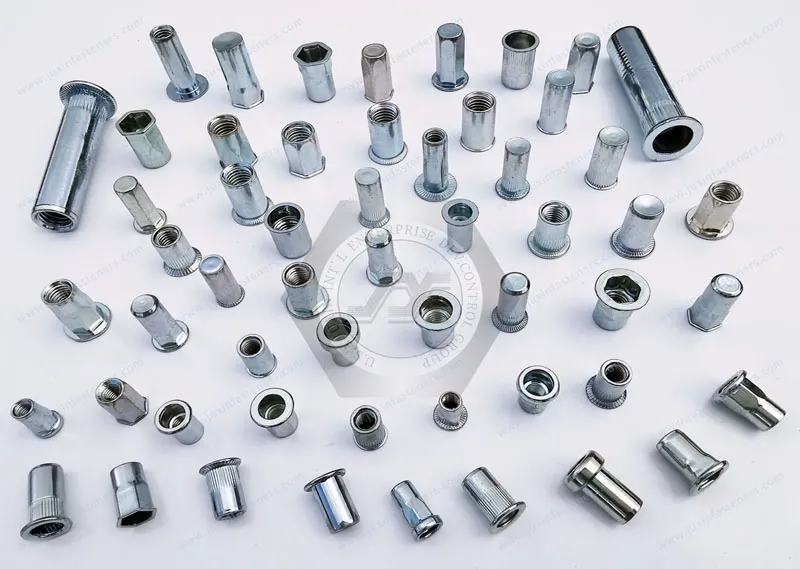
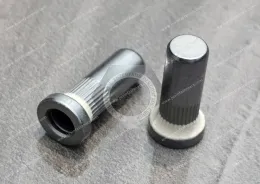
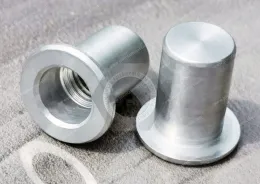
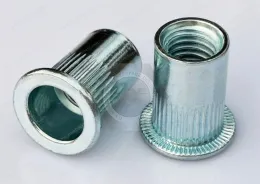
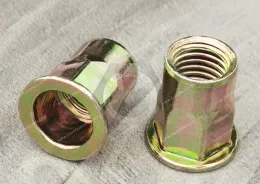
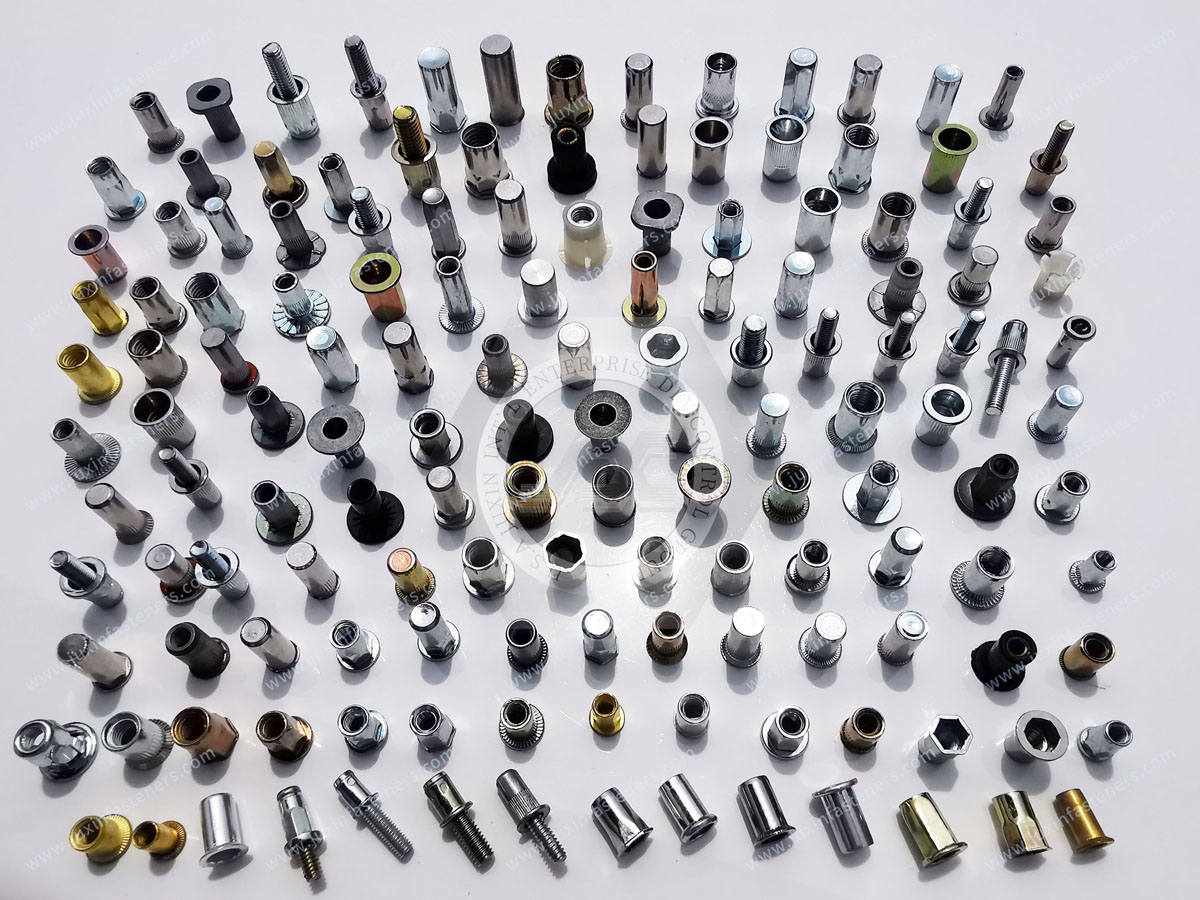
Blind Rivet Nuts, also known as Rivnuts or Threaded Inserts, are internally threaded fasteners designed for thin sheet materials and hollow structures where access is only available from one side.
During installation, the rivet nut is inserted into a pre-drilled hole and mechanically deformed using a rivet nut tool. The backside of the fastener expands and clamps the sheet metal securely, creating a reusable threaded connection.
Key Advantages of Blind Rivet Nuts
One-sided installation capability
Ideal for hollow sections and tubular structures
No welding required
Suitable for post-assembly installation
Compatible with coated or painted materials
Easy maintenance and replacement
Typical Applications
Blind Rivet Nuts are widely used in:
Automotive aftermarket assemblies
EV battery enclosures
HVAC systems
Metal furniture
Outdoor equipment
Industrial cabinets
Agricultural machinery
For applications where backside access is impossible, Blind Rivet Nuts provide an efficient and cost-effective fastening solution.
What Are Self-Clinching Fasteners?
Self-Clinching Fasteners are permanent fastening components installed in ductile sheet metal by pressing.
During installation, the sheet metal flows into the clinching groove under controlled pressure, permanently locking the fastener into the panel.
Common self-clinching products include:
Self-Clinching Nuts
Self-Clinching Studs
Self-Clinching Standoffs
PEM Fasteners
These fasteners are widely used in high-volume sheet-metal production environments.
Key Advantages of Self-Clinching Fasteners
Flush surface installation
Excellent torque-out resistance
High push-out performance
Fast automated assembly
Permanent and vibration-resistant connection
Ideal for mass production
Typical Applications
Self-Clinching Fasteners are commonly used in:
Electronics enclosures
Server cabinets
Telecom equipment
Automotive body panels
Industrial control cabinets
Precision sheet metal fabrication
For manufacturers requiring high assembly efficiency and clean surface appearance, clinching fasteners are often the preferred solution.
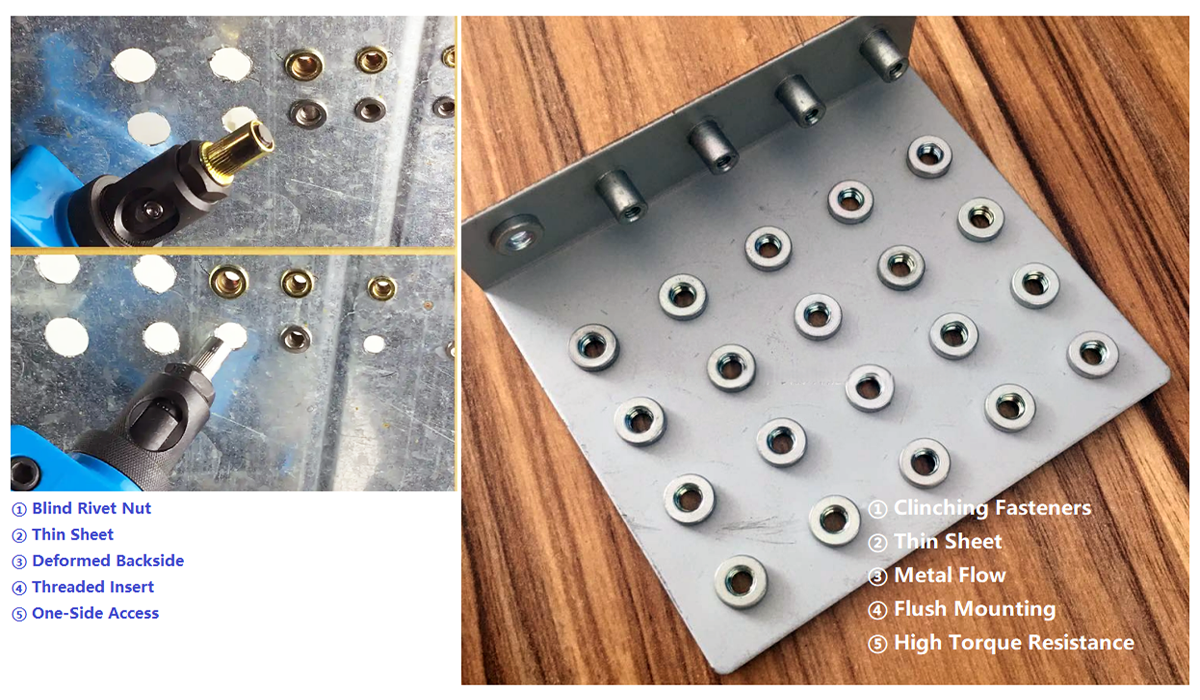
Blind Rivet Nuts vs Self-Clinching Fasteners
When comparing Blind Rivet Nuts and Self-Clinching Fasteners, the selection usually depends on several engineering factors.
Choose Blind Rivet Nuts When:
Installation access is available from only one side
The structure is closed or tubular
Welding is not suitable
Post-painting installation is required
Maintenance and serviceability are important
Choose Self-Clinching Fasteners When:
Both sides of the sheet are accessible during production
High-volume manufacturing efficiency is required
Flush mounting is critical
High torque and pull-out resistance are needed
Automated production lines are used
Fastening Solution Selection for Modern Manufacturing
In today’s industrial manufacturing environment, fastening selection is no longer based only on thread size or material strength.
Engineers increasingly evaluate fastening systems based on:
Assembly efficiency
Automation compatibility
Structural performance
Weight reduction
Corrosion resistance
Long-term maintenance requirements
Production cost optimization
Both Blind Rivet Nuts and Self-Clinching Fasteners play essential roles in modern thin sheet metal assembly solutions.
Selecting the right fastening technology can significantly improve manufacturing efficiency, product reliability, and overall production quality.
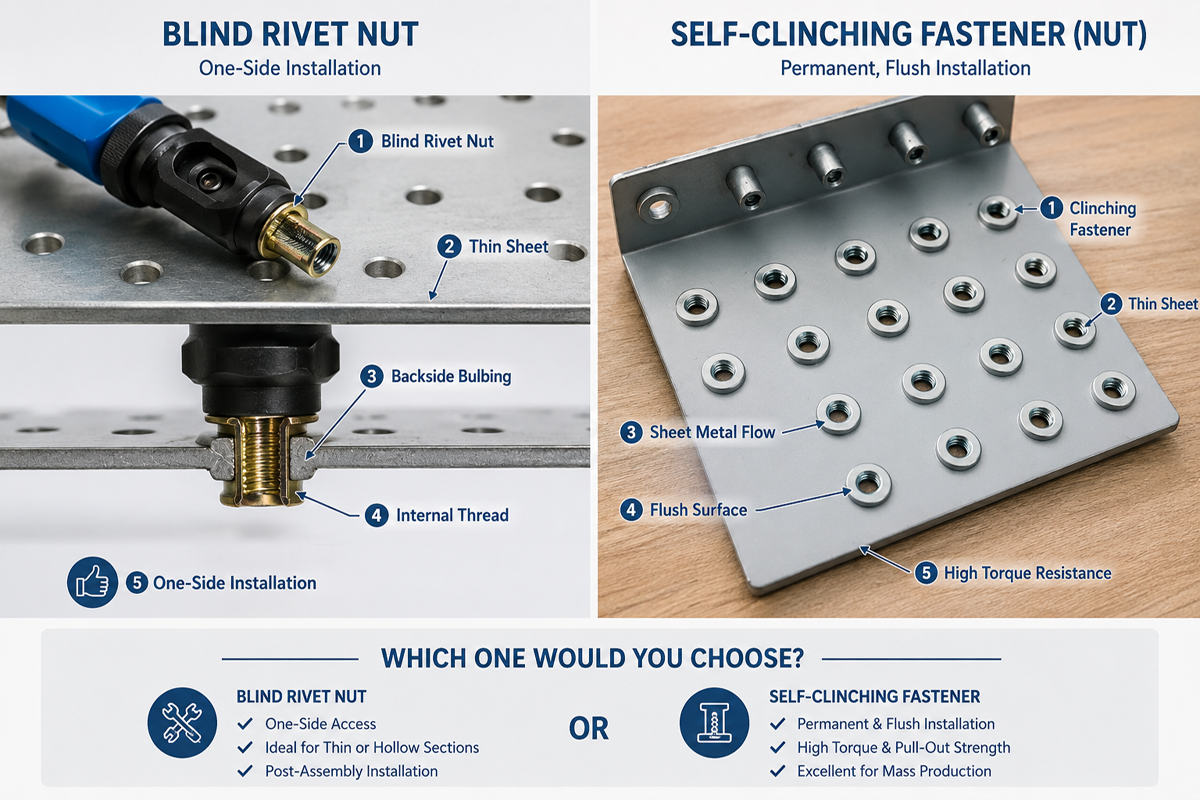
Professional Thin Sheet Fastening Solutions
As an experienced industrial fastener manufacturer, JUXIN FASTENERS provides a wide range of:
Blind Rivet Nuts
Self-Clinching Fasteners
Clinching Nuts
Clinching Studs
Threaded Inserts
Custom Sheet Metal Fastening Solutions
Our fastening products are widely used in automotive, electronics, industrial equipment, and precision sheet metal applications worldwide.
If you are evaluating fastening solutions for thin-sheet assemblies, our engineering team can recommend the most suitable fastening system for your production requirements.
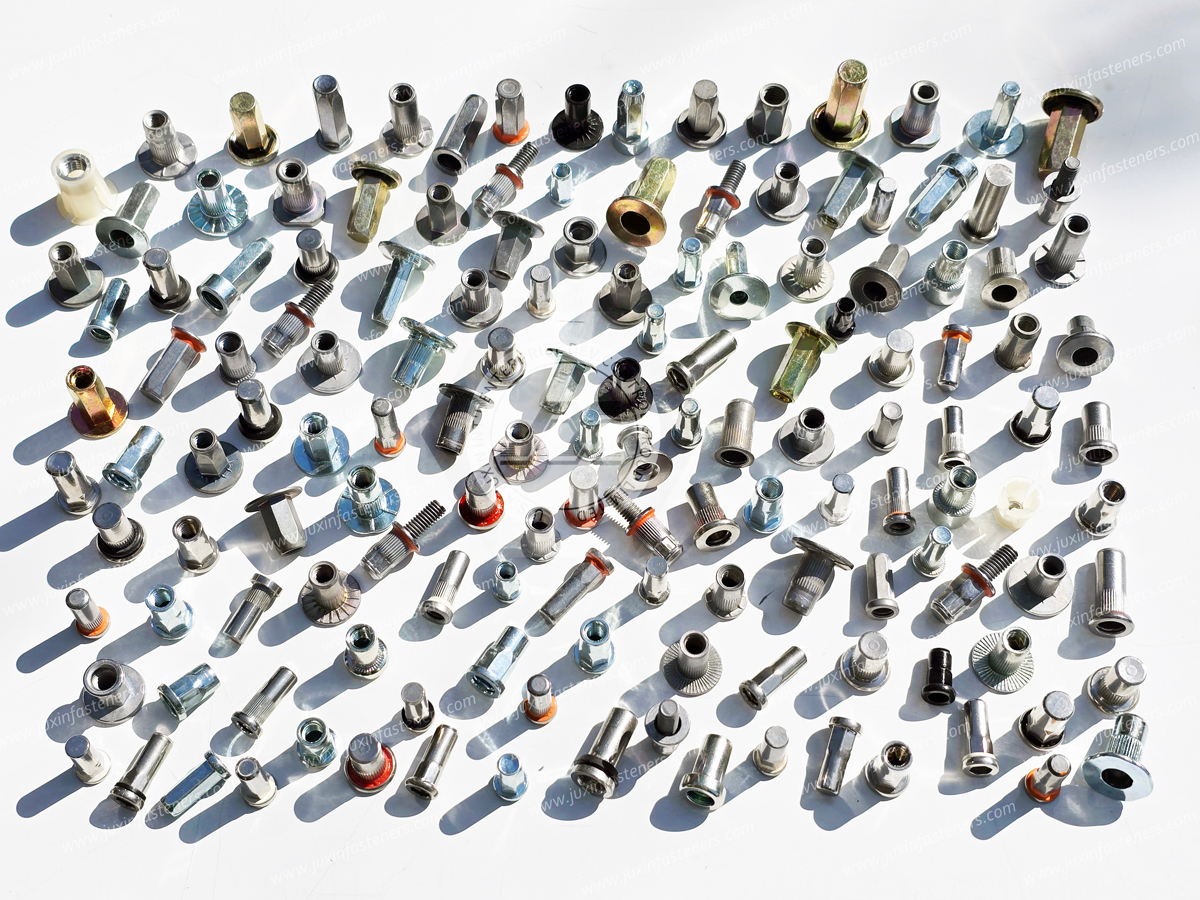
Product Packaging
Packaging Standard
At Juxin Fasteners, we apply standardized export packaging to ensure product protection, traceability, and compliance with international logistics requirements.
1. Standard Export Packaging
Unless otherwise specified, all products will be packed according to our factory standard export packaging, which includes:
Moisture-resistant inner protection
Poly bag or small box packing as required
Reinforced export cartons
Clear labeling with part number, specification, batch number, and quantity
Palletizing for sea or air shipment when necessary
Our standard packaging is designed to ensure safe transportation, efficient warehousing, and long-distance international shipping.
2. Customized Packaging Options
We also provide customized packaging solutions according to customer requirements, including but not limited to:
Private labeling
Customized barcodes
Specific carton dimensions
Retail packaging
Special pallet configuration
Customer-specific marking and identification
So that you know, customized packaging may involve additional costs and extended lead time depending on the complexity of the requirements.
3. Compliance & Quality Assurance
All packaging processes are controlled under our ISO 9001 quality management system to ensure consistency, traceability, and product integrity throughout the supply chain.
Product Pictures
Contact Us
Tel.:
+86 020 8621 0320
+86 020 3121 6067
E-mail:
Technical Support:
Navigation
SEND INQUIREY