Call Us
+86 136 6007 9809
Call Us
+86 136 6007 9809

Large-Knob Spring-Loaded Captive Panel Screws – JX-PF11, JX-PF12 and JX-PF15
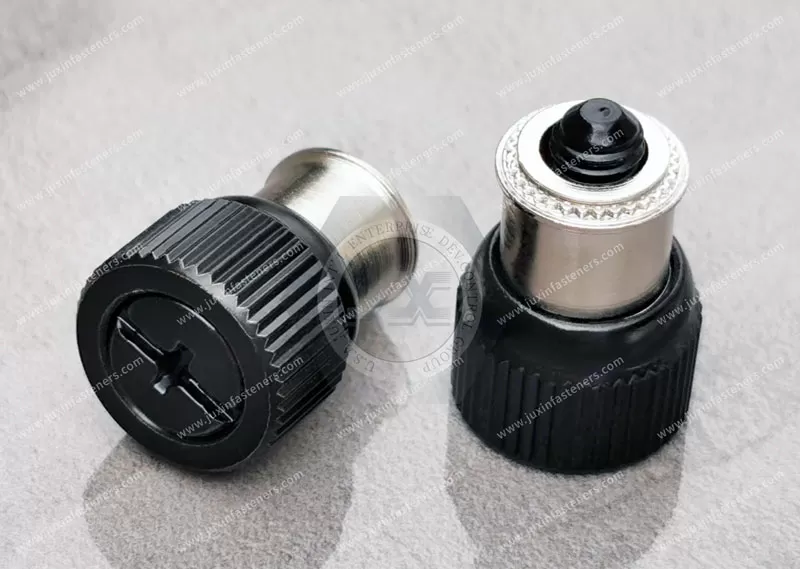
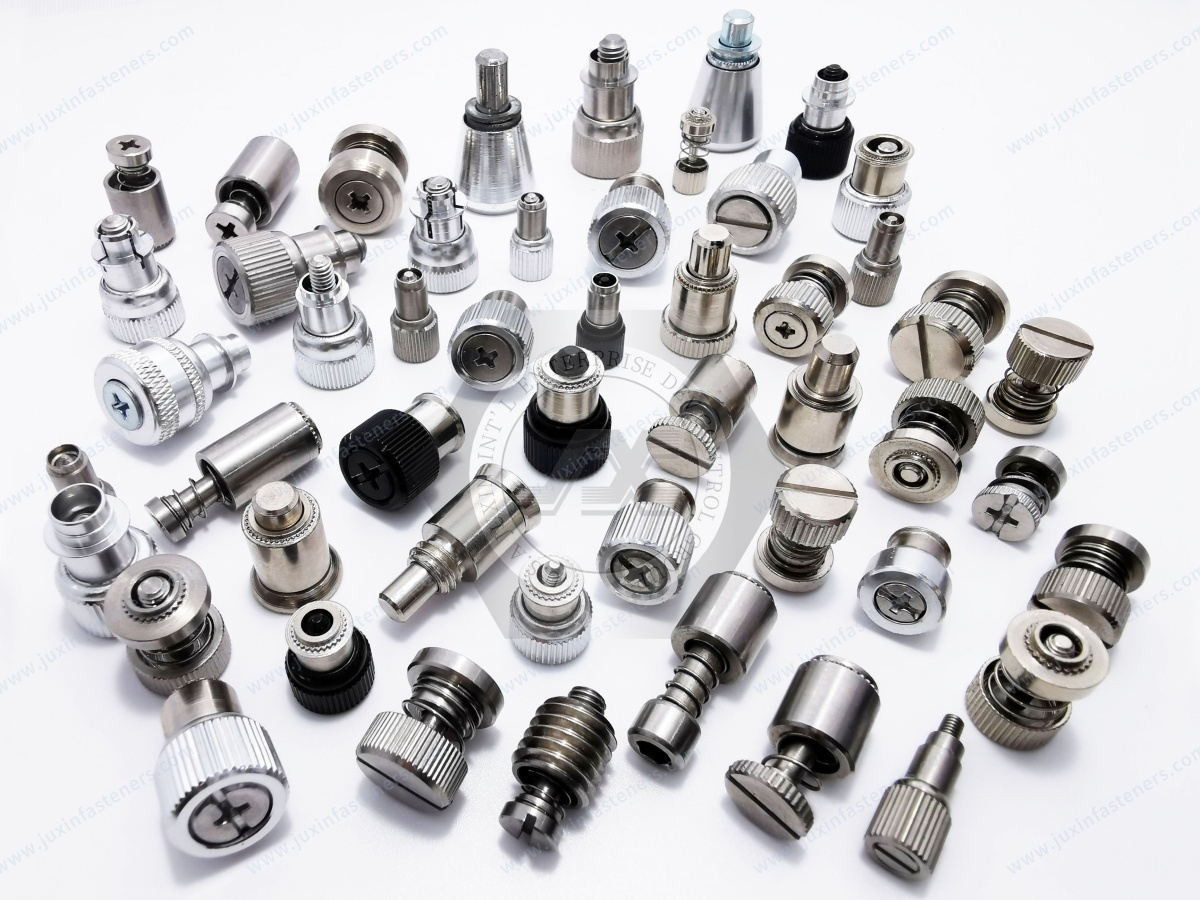
JX-PF11, JX-PF12 and JX-PF15 large-knob captive panel screws combine a spring-loaded retaining mechanism with an easy-grip knob for convenient access to removable equipment panels.
The knurled knob supports manual operation, while the universal slot/Phillips drive provides an additional tool-operated option.
The captive construction helps prevent screw loss during equipment assembly and maintenance.
Key Features
Large knurled knob for convenient hand operation.
Spring-loaded captive screw construction.
Universal slot/Phillips drive.
Retainer shoulder provides a positive installation stop.
Self-clinching, flaring and floating mounting options.
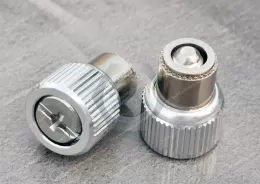
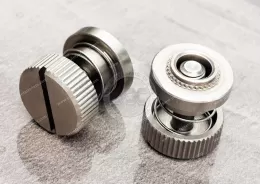
Knurled or smooth metal caps, black metal caps and custom-color plastic caps.
Referenced Unified thread sizes from #4 to 1/4 inch and metric sizes from M3 to M6.
Material Options
Stainless steel, steel and aluminum are referenced as material options.
The specific material of each screw, retainer, spring and knob must be confirmed for the selected configuration.
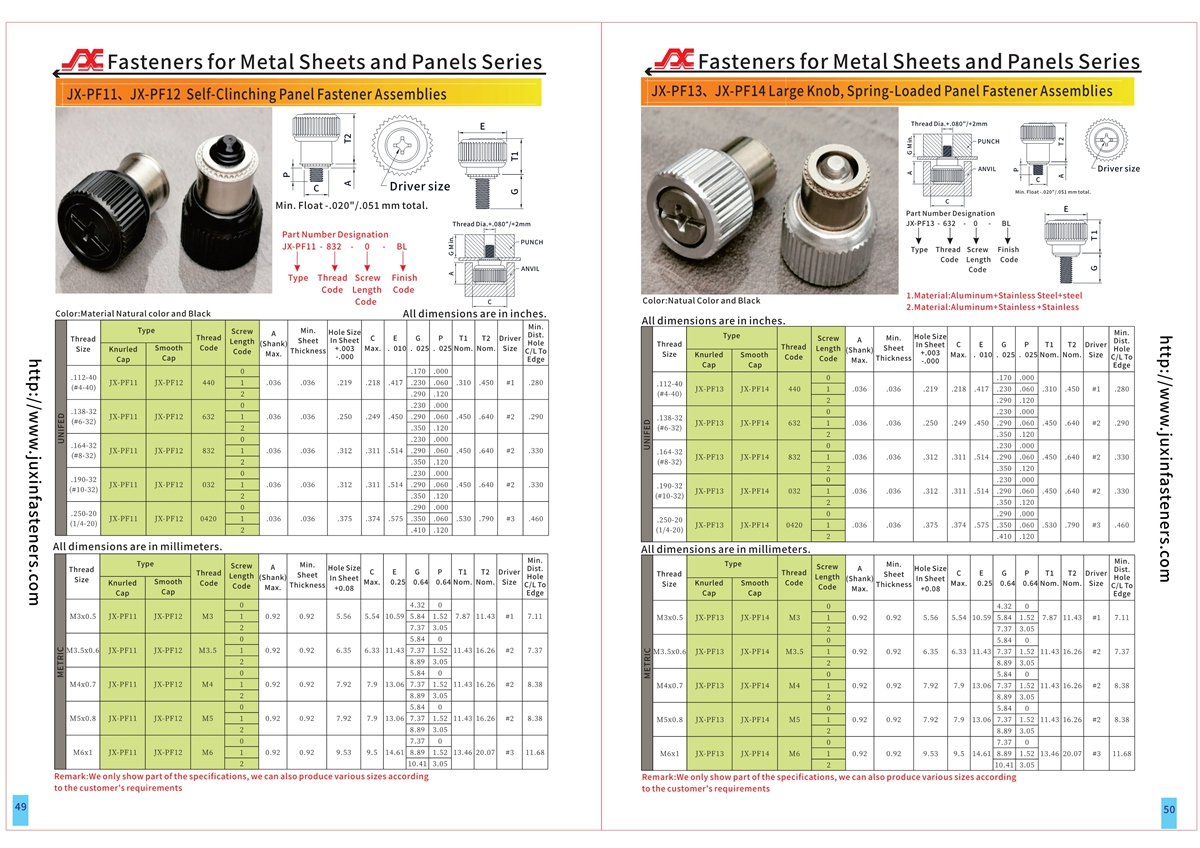
Detailed dimensions, mounting requirements and available configurations are provided in the product PDF and CAD documentation on pages 49–50.
Product Specification
Large-Knob Spring-Loaded Captive Panel Screws – JX-PF11 / JX-PF12 / JX-PF15
Hand-Operated Captive Fastening Solutions for Industrial Enclosures, Machinery Covers and Service Access Panels
JUXIN FASTENERS supplies large-knob spring-loaded captive panel screws for OEM equipment manufacturers requiring retained threaded fasteners with convenient manual access.
The JX-PF11, JX-PF12 and JX-PF15 product family combines a large operating knob, spring-loaded captive screw mechanism and mounting retainer.
The knurled knob provides an accessible gripping surface, while the universal slot/Phillips drive supports tool operation when required.
These features are useful for equipment panels opened periodically for inspection, adjustment, cleaning or maintenance.
Compared with loose screws, captive panel screws remain associated with the mounting panel when disengaged, helping reduce misplaced hardware and simplifying repeated servicing.
Product Overview
Product series: JX-PF11, JX-PF12 and JX-PF15
Product type: Large-knob spring-loaded captive panel screws
Operating head: Large knob with knurled or smooth cap options
Drive configuration: Universal slot/Phillips
Mechanism: Spring-loaded captive screw
Mounting options: Self-clinching, flaring and floating
Retainer feature: Shoulder providing a positive installation stop
Referenced Unified thread range: #4 through 1/4 inch
Referenced metric thread range: M3 through M6
Material families: Stainless steel, steel and aluminum
Cap options: Knurled metal, smooth metal, black metal and custom-color plastic
Applications: Industrial access panels, electronic enclosures, machinery covers and serviceable equipment
Technical documentation: Product PDF and CAD drawings, pages 49–50
Customization: Drawing-based OEM technical review
The exact dimensions, materials, thread pitches, mounting configurations and spring travel must be confirmed from the approved drawing.
Large-Knob Design for Convenient Access
The large operating knob is the primary distinguishing feature of this product family.
It provides a gripping surface for users who need to open and close equipment panels without handling separate loose screws.
A knurled surface can improve grip during manual operation.
This may be especially useful when maintenance personnel need to access several fasteners on the same cover.
The actual ease of operation depends on knob dimensions, surrounding clearance and the required tightening force.
The engineer should verify that the knob can be reached and operated in the installed assembly.
Universal Slot/Phillips Drive
The supplied product information identifies a universal slot/Phillips drive.
This provides an additional operating method when finger tightening or loosening is inconvenient.
For applications requiring controlled tightening, a compatible tool may be preferable.
The exact recess geometry and tool compatibility should be verified from the product drawing.
A universal slot/Phillips description should not be interpreted as compatibility with every screwdriver design.
The OEM should establish the appropriate installation and service procedure.
Spring-Loaded Captive Retention
The spring-loaded mechanism helps position the screw during engagement and disengagement.
The captive construction retains the screw in the mounting panel when it is disengaged from its mating thread.
This can reduce loose hardware during maintenance.
It can also simplify handling of removable covers.
The spring does not replace the threaded joint's clamping function.
The screw must still engage the mating thread sufficiently to secure the panel.
The available spring travel and retracted screw position must be verified for the selected configuration.
Positive-Stop Retainer Shoulder
The product family includes a retainer shoulder intended to provide a positive stop during installation.
This feature can help define the installed position of the retaining component.
However, the shoulder does not eliminate the need for correct installation tooling and panel preparation.
The mounting method must be compatible with the selected retainer geometry.
The approved drawing should specify the required hole dimensions, panel thickness and installation conditions.
Excessive installation force may damage the panel or captive assembly.
Self-Clinching Mounting
Self-clinching captive panel fasteners are designed for installation into compatible sheet-metal panels.
The mounting retainer is pressed into a prepared hole under controlled force.
Panel material, thickness and hardness must be suitable for the selected configuration.
The fastener and panel must have compatible mechanical properties to achieve the intended retention.
The installation process should be validated using the actual panel material.
Self-clinching is not automatically suitable for every metal or plastic panel.
Flaring Mounting
Flaring captive fasteners use a mounting arrangement in which part of the retaining component is formed to secure it to the panel.
This can provide an alternative where conventional self-clinching installation is unsuitable.
The panel must have the required hole geometry and forming clearance.
The selected configuration should be installed using the specified tooling and procedure.
Flaring requirements cannot be inferred from the self-clinching version.
Floating Mounting
Floating captive panel fasteners provide a degree of positional accommodation between the screw and mating threaded component.
This can be useful where small manufacturing or assembly variations create alignment challenges.
However, the available float is configuration-dependent.
No specific floating range should be assumed without dimensional data.
The engineer should confirm the allowable movement, engagement conditions and clearance requirements.
Floating capability should not be used to compensate for uncontrolled manufacturing tolerances.
Choosing the Correct Mounting Style
The three mounting methods serve different engineering requirements.
Self-clinching mounting may be suitable for compatible sheet-metal panels where controlled press installation is available.
Flaring mounting may be considered where the panel material or design favors a formed retainer.
Floating mounting may be useful where limited mating-hole misalignment must be accommodated.
The correct choice depends on panel material, thickness, hole geometry, available tooling and assembly tolerance.
The product family should not be treated as offering every mounting method in every size without confirmation.
Knob and Cap Options
The supplied product information references several cap configurations.
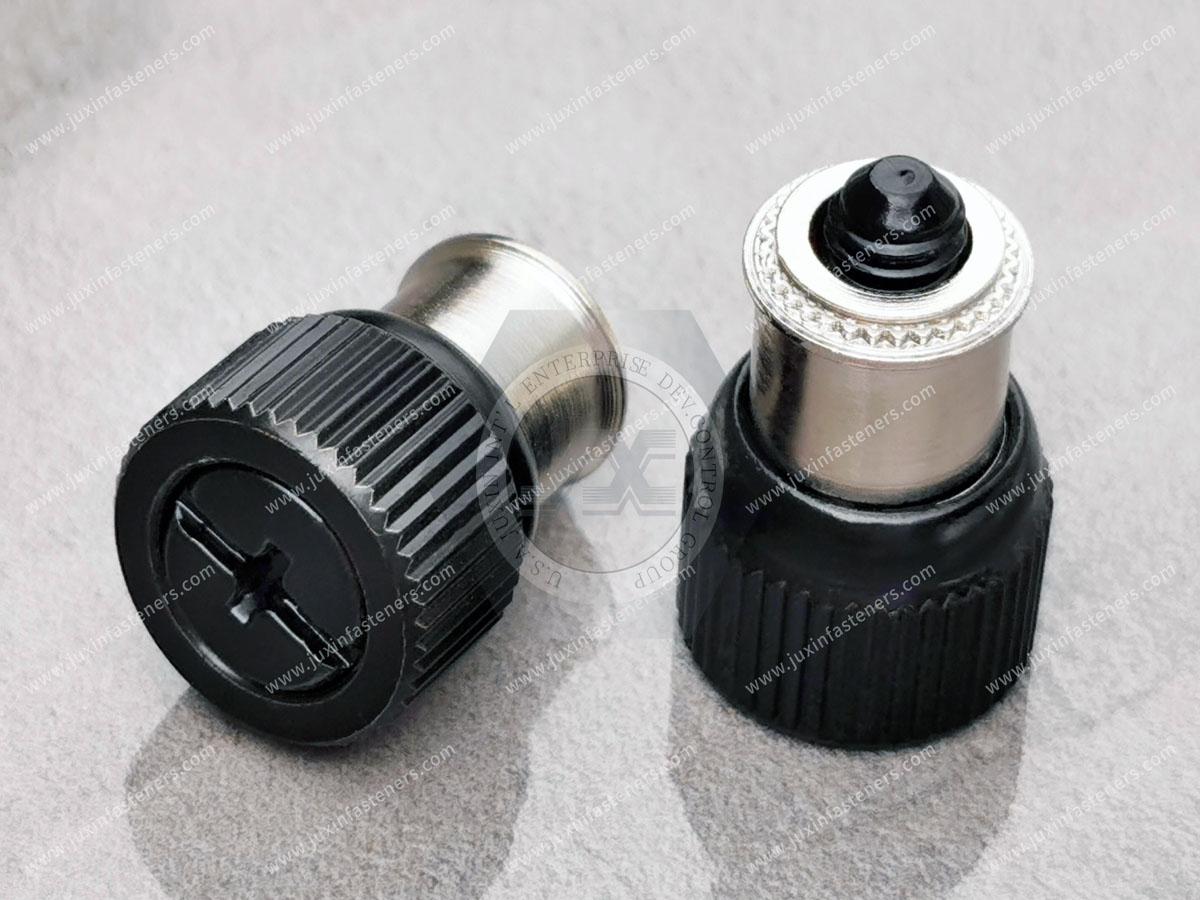
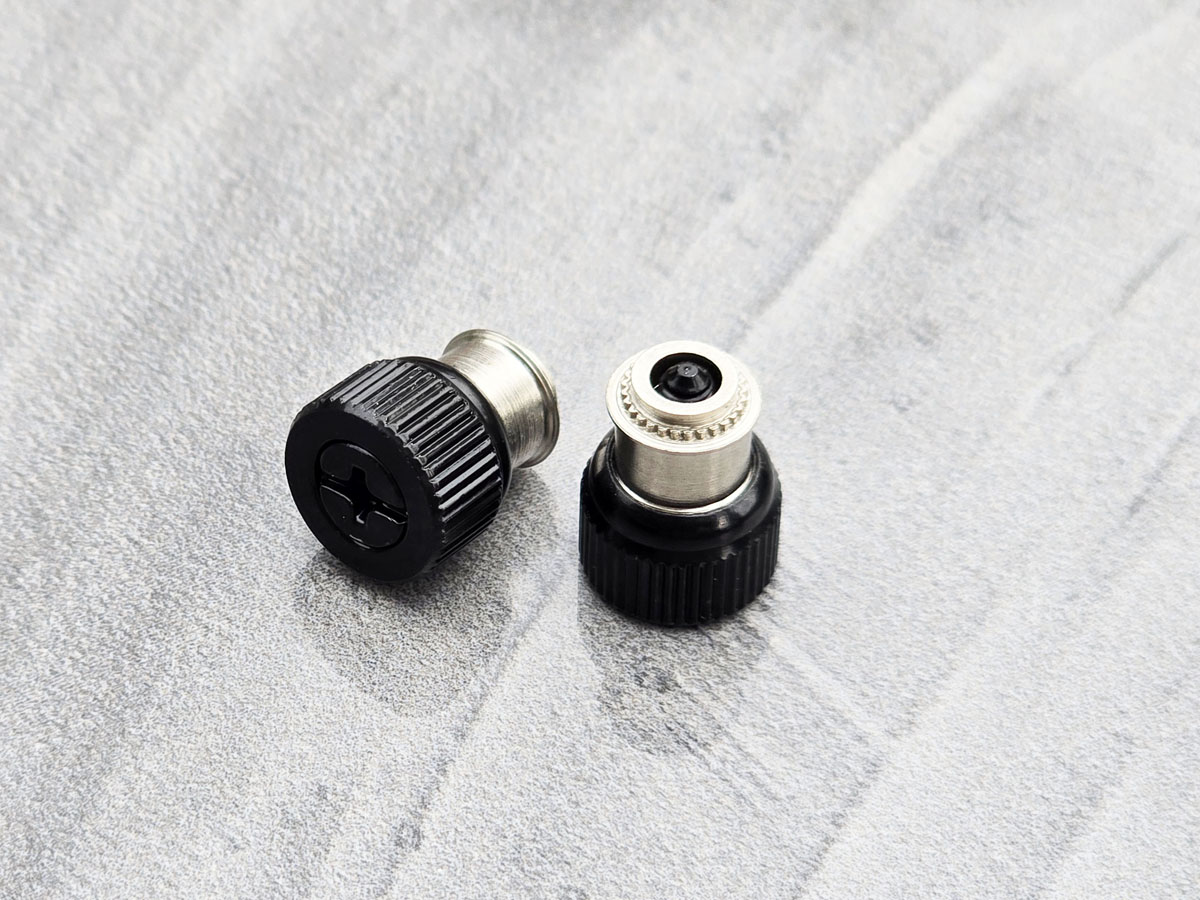
These include knurled metal caps, smooth metal caps, black metal caps and custom-color plastic caps.
Knurled metal caps provide a textured gripping surface.
Smooth metal caps may be selected where a different appearance or operating feel is preferred.
Black metal caps may support equipment appearance requirements.
Custom-color plastic caps may help with visual identification or equipment design consistency.
Color and cap material should not be used as substitutes for functional safety controls.
Actual color, material and configuration availability must be confirmed before production.
Material Selection
The supplied product information references stainless steel, steel and aluminum.
These materials differ in corrosion resistance, strength, weight and manufacturability.
A captive panel screw is a multi-component assembly.
The screw, retainer, spring and operating cap may use different materials.
The material specification must therefore identify the relevant component rather than treating the entire assembly as a single material.
For projects requiring specific international material designations, applicable ASTM, SAE or EN specifications should be defined during engineering review.
Material substitutions should require customer approval.
Corrosion and Environmental Considerations
Industrial equipment may operate in indoor, outdoor or controlled environments.
The appropriate material and finish depend on moisture exposure, cleaning conditions and other environmental factors.
Stainless steel components may be considered where corrosion resistance is important.
Steel components may require a suitable protective finish.
Aluminum components may require evaluation of contact conditions with dissimilar metals.
The complete captive assembly should be assessed, including springs and retainers.
No specific corrosion rating or environmental service life should be assumed without supporting test data.
Unified Inch Thread Selection
The product information references Unified thread sizes from #4 through 1/4 inch.
ASME B1.1 provides a relevant reference for Unified screw-thread designations.
The exact pitch and tolerance class must be identified for each selected part number.
The mating threaded component must use a compatible thread.
The nominal diameter alone is not sufficient to define the complete thread.
Metric M3–M6 Thread Selection
The product family also references ISO metric threads from M3 through M6.
ISO 261 and ISO 965 provide relevant references for metric thread dimensions and tolerances.
The exact metric pitch and tolerance class should be confirmed from the approved drawing.
Metric and Unified threads are not directly interchangeable.
For example, M3 should not be substituted for a Unified #4 screw merely because the nominal diameters appear similar.
The correct thread system must be maintained throughout the purchasing and production process.
Panel Thickness and Installation Geometry
The mounting panel must be compatible with the selected captive fastener configuration.
Important parameters include panel thickness, mounting-hole diameter, substrate material and installation clearance.
The retainer must be securely installed without restricting the screw's intended movement.
The installation geometry may differ between self-clinching, flaring and floating configurations.
Minimum panel thickness and substrate hardness limits must be confirmed from the relevant drawing.
A successful installation should be validated using representative production panels.
Screw Engagement and Assembly Stack-Up
The captive screw must engage its mating thread correctly.
The engineer should account for mounting panel thickness, mating component position and any intermediate spacers.
The available screw travel must accommodate the required engagement and disengagement positions.
Insufficient engagement can compromise joint performance.
Excessive screw length may cause bottoming or interference.
The correct configuration should be selected from the approved assembly drawing.
Engineering Trade-Off: Large Knob Versus Low-Profile Knob
Large-knob captive screws provide a more accessible gripping surface.
They may be preferable for equipment panels opened frequently.
However, larger knobs require more external space.
Low-profile knob captive screws may be more appropriate for compact enclosures or equipment with strict protrusion limits.
The choice should consider service frequency, operating clearance and the overall equipment envelope.
Engineering Trade-Off: Captive Screws Versus Loose Screws
Loose screws may have a lower initial component cost.
They also avoid certain captive-retainer installation requirements.
However, they must be handled separately when removed.
This can increase the risk of misplaced hardware during servicing.
Captive screws remain associated with the panel.
For equipment opened repeatedly, this may improve maintenance convenience.
The OEM should compare total assembly and service requirements rather than component price alone.
Engineering Trade-Off: Manual Access Versus Tool-Restricted Access
Large-knob captive screws are useful where convenient manual operation is intended.
However, not every equipment panel should be opened without a tool.
Panels requiring restricted service access may need a tool-only captive screw configuration.
The correct choice depends on the equipment's access-control requirements.
A convenient hand-operated knob should not be selected for an application that specifically requires tool-operated access.
Engineering Trade-Off: Floating Versus Fixed Mounting
Fixed mounting provides a defined captive screw position.
Floating mounting may accommodate limited alignment variation.
The floating option can be useful where mating holes are difficult to align consistently.
However, additional movement may be undesirable in applications requiring tightly controlled positioning.
The available floating range and assembly requirements must be verified.
The correct selection depends on the tolerance stack-up of the complete equipment.
Industrial Applications
Industrial Control Cabinets
Large-knob captive panel screws can be used on removable covers that require periodic inspection and maintenance.
Electronic Equipment Enclosures
Captive screws help retain fastening hardware during repeated enclosure opening.
Industrial Machinery Covers
Large operating knobs may be useful for machine panels requiring convenient maintenance access.
Telecommunications Equipment
Communication equipment housings may benefit from retained fasteners on serviceable panels.
Test and Measurement Equipment
Instrument covers may use hand-operated captive screws where regular access is part of the intended service procedure.
Industrial Automation Equipment
Automation modules and equipment consoles may incorporate captive screws for removable panels.
Server and Network Equipment
Serviceable equipment covers may use captive fastening where retained hardware and convenient access are desirable.
EV Charging Equipment
Captive panel screws may be considered for suitable equipment covers where manual access is permitted by the complete enclosure design.
Applications requiring tool-restricted access should be evaluated separately.
Engineering Example: Frequently Serviced Industrial Control Panel
Consider an industrial control cabinet with a removable panel that is opened regularly for inspection.
Conventional screws must be removed and stored separately.
A large-knob spring-loaded captive screw can remain attached to the panel during servicing.
The knurled cap provides a convenient gripping surface.
The universal slot/Phillips drive offers an additional tool-operated option.
Before selecting the fastener, the engineer should verify panel thickness, mounting method, screw travel and mating thread engagement.
The available space around each knob must also be checked.
If the panel must be opened only with a tool, a different captive screw design may be required.
This example demonstrates why operating access and mounting geometry should be considered together.
OEM Procurement and Supplier Qualification
For purchasing and supply-chain teams, the correct captive screw configuration should be defined by the approved drawing.
A complete purchasing specification should identify the model, thread, mounting style, knob type, material and finish.
The required screw travel and installation geometry should also be included.
For replacement projects, visual similarity is not sufficient to establish interchangeability.
A captive screw with a similar knob may have different retainer dimensions or mounting requirements.
Drawing review and sample approval can reduce sourcing risk.
RFQ Information
Product series: JX-PF11, JX-PF12 or JX-PF15
Required Unified or metric thread
Knob and cap configuration
Mounting style: Self-clinching, flaring or floating
Panel material and thickness
Mounting-hole dimensions
Screw length and operating travel
Mating thread specification
Material and surface finish
Environmental conditions
Estimated order quantity and annual demand
Engineering drawing and revision
Inspection and functional testing requirements
Packaging and labeling requirements
Providing these details helps JUXIN FASTENERS review the intended configuration and prepare a quotation.
Quality and Functional Verification
A suitable inspection plan may include dimensional inspection, thread verification, material confirmation and functional operation checks.
The screw should remain captive when disengaged.
The spring-loaded mechanism should operate smoothly.
The retainer should remain securely mounted.
The knob should be properly attached.
The screw should engage the mating thread without abnormal interference.
Where repeated servicing is expected, the OEM may specify operation-cycle testing.
Acceptance criteria should be agreed before production.
No fixed spring force, retention load, tightening torque or service-life rating should be assumed without validated data.
Frequently Asked Questions
What are JX-PF11, JX-PF12 and JX-PF15?
They are large-knob spring-loaded captive panel screw configurations for retained fastening in removable equipment panels.
Are these captive screws designed for hand operation?
The large knob and knurled cap support convenient manual operation, subject to the selected configuration and required tightening conditions.
Do they have a screwdriver recess?
The supplied product information identifies a universal slot/Phillips drive.
What thread sizes are referenced?
Unified #4 through 1/4 inch and metric M3 through M6.
Are multiple mounting styles available?
The product family references self-clinching, flaring and floating mounting options. Availability must be confirmed for the selected configuration.
Can the knob color be customized?
Custom-color plastic caps are referenced as an available option for technical review.
Are metal knob options available?
The supplied information references knurled metal, smooth metal and black metal cap options.
Can custom dimensions be requested?
Custom requirements can be reviewed using customer drawings and application specifications.
Related JUXIN FASTENERS Products
Standard Spring-Loaded Captive Panel Screws – JX-PFC2 / JX-PFS2
For removable equipment panels requiring standard screw-head operation.
Tool-Only Captive Panel Screws – JX-PFC2P
For concealed-head, tool-operated service-access applications.
Low-Profile Knob Captive Panel Screws – JX-PF30 / JX-PF31 / JX-PF32
For spring-loaded captive fastening where reduced external projection is important.
Phillips and Six-Lobe Captive Panel Screws – JX-PF50 / JX-PF60
For low-profile captive screws with recessed-drive configurations.
No-Spring Captive Panel Screws – JX-PFHV
For compact retained panel fastening without spring-assisted screw retraction.
Self-Clinching Standoffs
For threaded spacing and mounting support within compatible sheet-metal assemblies.
Use these descriptive product names as internal-link anchor text and connect them to the corresponding verified JUXIN FASTENERS pages.
Request a JX-PF11 / JX-PF12 / JX-PF15 OEM Quotation
JUXIN FASTENERS supplies captive panel fastening solutions for industrial equipment manufacturers, electronic enclosure designers, sheet-metal fabricators and international OEM procurement teams.
For large-knob captive panel screw inquiries, please provide the required model, thread size, mounting style, knob configuration, panel material, sheet thickness and expected order quantity.
Engineering drawings, annual demand and inspection requirements will help support technical review and quotation preparation.
Email: info@juxinfasteners.com
Website: www.juxinfasteners.com
Product Packaging
JUXIN FASTENERS provides export packaging for JX-PF11, JX-PF12 and JX-PF15 large-knob spring-loaded captive panel screws.
Standard Packaging
Inner protection: Polyfoam, with polybags or small boxes as required.
Outer packaging: Export cartons with protective packing arrangements.
Palletizing: Available for consolidated international shipments.
Referenced carton sizes: 29 × 19 × 19.5 cm and 23.5 × 17.5 × 8 cm.
Referenced pallet size: 215 × 100 × 90 cm.
The final carton dimensions, packing quantities and pallet configuration depend on the product size, order quantity and shipment requirements.
Identification and Traceability
Packaging labels can identify the product part number, specification, batch or lot number and quantity.
Customer-Specific Packaging
OEM packaging requirements can be reviewed, including private labels, barcode labels, designated carton sizes, special pallet configurations and customer-specific identification.
Custom packaging may involve additional costs or lead-time adjustments depending on the requirements.
Packaging and inspection requirements should be confirmed before production and shipment.
Product Pictures
Contact Us
Tel.:
+86 020 8621 0320
+86 020 3121 6067
E-mail:
Technical Support:
Navigation
SEND INQUIREY