Call Us
+86 136 6007 9809
Call Us
+86 136 6007 9809

For a spring-loaded or moving fastener, it can create a functional problem.
Product Specification
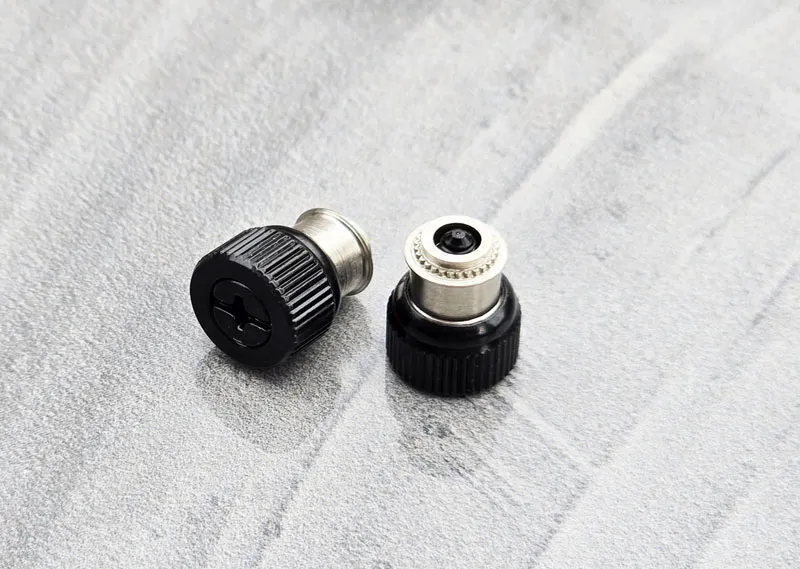
“Black finish” is one of the most common—and incomplete—surface-finish descriptions found on fastener drawings, purchasing specifications and replacement-part RFQs.
For a static decorative component, the missing information may primarily create an appearance problem.
For a spring-loaded or moving fastener, it can create a functional problem.
Spring plungers, indexing plungers, spring-loaded locating pins, retractable pins, captive hardware and other moving fasteners contain surfaces that must slide, retract, rotate, engage or repeatedly contact mating components.
Changing the finish can therefore affect:
appearance;
dimensional buildup;
sliding clearance;
friction;
engagement;
wear;
corrosion behavior;
mating-component interaction.
For engineering and procurement teams, the correct specification is not simply:
“Make the fastener black.”
The better question is:
“Which black surface-finish system provides the required appearance and environmental protection without interfering with the mechanical function of the moving component?”
A component can appear black using different surface-treatment systems.
Depending on the base material and application, potential options may include:
black zinc;
black nickel;
dark or black zinc-nickel systems;
black oxide;
another customer-specified black finish.
These processes are not automatically interchangeable.
They can differ in:
coating structure;
dimensional effect;
corrosion behavior;
wear behavior;
appearance;
process compatibility;
interaction with the base material.
Therefore:
Black Appearance ≠ Same Surface Finish
This distinction is especially important when qualifying an alternative supplier.
Before choosing a black finish, identify whether the component is:
static;
sliding;
retractable;
rotating;
spring-loaded;
repeatedly engaged;
manually actuated;
visible after assembly.
A coating suitable for a stationary bracket may not be the preferred solution for a close-clearance moving pin.
Surface-finish selection should begin with component function.
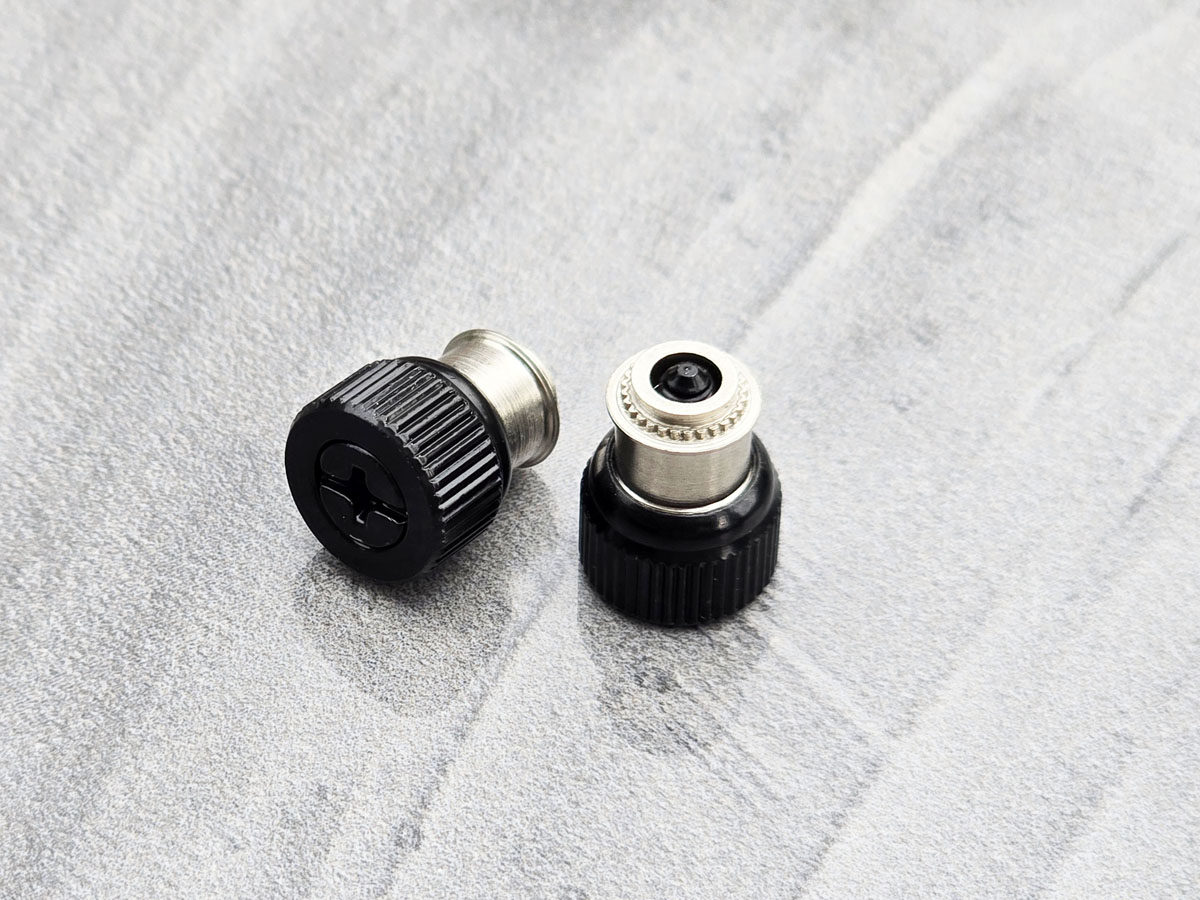
Consider a spring plunger.
It may contain:
a threaded body;
a moving nose or pin;
an internal spring;
sliding interfaces;
exposed contact surfaces.
These features do not necessarily require the same surface treatment.
The body may need:
corrosion protection;
black appearance;
mounting compatibility.
The moving pin may need:
dimensional control;
wear resistance;
smooth movement;
mating-surface compatibility.
The spring may have another material or finish requirement.
Therefore, specifying one generic finish for the entire assembly may not always be the best engineering approach.
A useful design question is:
Which surfaces actually need to be black?
In some equipment, the external body is visible but the moving pin is not.
In other applications, both surfaces are visible.
In still others, appearance is secondary and corrosion or wear is the primary requirement.
This allows engineers to consider:
External Appearance Surface
separately from:
Moving / Sliding / Contact Surface
That separation can prevent cosmetic requirements from unintentionally controlling functional surfaces.
A plated or coated surface changes the dimensions of the treated component.
For a static fastener with generous clearance, this may not affect assembly.
For a moving fastener, the relationship can be much more sensitive.
Relevant interfaces can include:
plunger-to-body clearance;
locating pin-to-guide clearance;
pin-to-mating-hole clearance;
sliding shaft surfaces;
retractable mechanism interfaces;
threaded mounting features.
If the finish changes these relationships sufficiently, movement can change.
Therefore:
Finish Change ≠ Color Change Only
Suppose an existing moving fastener operates correctly with one surface treatment.
A replacement part is manufactured to apparently similar metal dimensions but receives a different coating system.
The finished component may behave differently because the functional interface exists after finishing, not before finishing.
This creates an important sourcing question:
Are the critical dimensions controlled before coating or as finished?
The answer depends on the drawing and the specific design.
There is no responsible universal coating allowance that should be applied to every spring plunger, locating pin or captive mechanism.
The required dimensional relationship depends on:
finish system;
component geometry;
mating geometry;
movement;
required clearance;
manufacturing process;
customer drawing.
Where the finish can affect function, finished-condition validation is more useful than copying a generic numerical allowance.
Black oxide is used on steel components where a dark appearance and a conversion-type surface treatment are appropriate.
Current industrial spring and indexing plunger product families demonstrate that black-oxide steel remains a real finish/material combination for moving positioning hardware.
However, that does not mean black oxide is automatically the correct choice for every black spring-loaded fastener.
Selection should consider:
base material;
corrosion environment;
appearance requirement;
contact surfaces;
maintenance conditions;
customer specification.
Black oxide should not be presented as universally equivalent to plated corrosion-protection systems.
Black zinc may be considered where a zinc-based electroplated system and black appearance are required and technically appropriate.
Engineering review should consider:
base material;
component hardness where relevant;
geometry;
moving clearances;
contact surfaces;
environmental requirement;
post-treatment system;
customer specification.
The phrase “black zinc” should still be supported by a defined process specification where the project requires controlled production.
Black nickel can provide a dark metallic appearance and may be technically evaluated for certain components.
However, it should not be selected solely because the customer wants a black part.
For spring-loaded or moving hardware, review:
base material;
underlayer system;
dimensional buildup;
movement;
sliding surfaces;
wear;
appearance requirement;
corrosion requirement.
For a custom part, sample finishing followed by functional evaluation is often more useful than assuming the finish will behave identically to another black coating.
Zinc-nickel systems may also be considered where technically applicable and where the required appearance can be achieved with the specified finishing system.
But “zinc-nickel” alone does not define:
exact appearance;
complete coating stack;
post-treatment;
finished dimensions;
corrosion requirement.
The customer drawing or finish specification should identify the actual requirement.
A physical sample can help communicate appearance.
But visual inspection alone cannot reliably identify the complete surface-treatment system.
Two parts can look similar while using different:
coating systems;
underlayers;
post-treatments;
base materials.
Therefore:
Same Color ≠ Same Coating
When reverse-engineering or second-sourcing an existing black component, the finish should be treated as an engineering requirement, not merely a visual match.
Color descriptions can be useful for communication, but they should not replace the controlled finish requirement.
Terms based mainly on appearance do not fully define:
coating chemistry;
passivation system;
corrosion requirement;
process controls;
compatibility with the component.
For JUXIN projects, hexavalent chromium systems should not be treated as an acceptable default.
Where zinc-based finishes are required, trivalent systems should be specified where applicable to the customer requirement.
Moving fasteners create contact.
Repeated contact can alter the surface at:
sliding interfaces;
pin tips;
detent contacts;
mating-hole edges;
actuation surfaces.
This can create a difference between:
Initial Cosmetic Appearance
and
Appearance After Repeated Mechanical Contact
If the black appearance must remain visible on a high-contact surface, that requirement should be discussed before production.
A customer may require a uniform black component at delivery.
That is an appearance requirement.
A customer may also require the surface to remain black after repeated sliding contact.
That is a different engineering requirement.
Do not assume one automatically proves the other.
A useful drawing review should identify:
static external surfaces;
moving surfaces;
sliding surfaces;
contact points;
mating interfaces;
visible cosmetic surfaces.
This creates a more rational coating decision than treating the entire component as one identical surface.
The tip of a spring-loaded locating or indexing pin may repeatedly contact:
a hole;
slot;
notch;
bracket;
moving panel;
another mechanical feature.
The finish at this location can experience different conditions from the threaded body.
If tip wear changes engagement or appearance, it should be included in sample validation.
The fastener is only one half of the contact pair.
A finished steel pin may engage:
steel;
stainless steel;
aluminum;
coated sheet metal;
painted panels;
another treated component.
The material and finish combination can affect both surfaces.
Therefore:
Fastener Finish Selection Should Consider the Mating Component
not only the fastener itself.
Moving fasteners used with painted or powder-coated metal panels require special attention to the contact interface.
A pin, plunger or captive mechanism may:
contact the coating;
compress it;
scratch it;
wear through it;
slide across it.
If coating damage matters to corrosion, appearance or equipment performance, this interaction should be reviewed at assembly level.
When moving steel hardware interacts with anodized aluminum, engineers should consider:
contact geometry;
relative hardness;
wear;
surface damage;
galvanic environment where relevant;
required appearance.
A black fastener should not be selected independently of the host material.
A black finish may be selected because the equipment is black.
But appearance and corrosion protection are separate requirements.
The engineer should define:
What should the part look like?
and
What environment must it withstand?
Possible environmental factors include:
indoor equipment;
humidity;
condensation;
outdoor exposure;
cleaning environment;
temperature;
contact with other materials.
The coating system should be evaluated against both requirements.
Salt-spray testing can be part of a coating specification where required.
But a salt-spray value should not be treated as a direct prediction of field service life.
Actual corrosion behavior depends on the complete environment, including:
moisture;
temperature;
contaminants;
coating damage;
mating materials;
assembly geometry;
maintenance.
Therefore, JUXIN should not invent a universal corrosion-hour claim for black-finished spring-loaded hardware.
For susceptible high-strength steel components that undergo electroplating, hydrogen embrittlement can be an engineering consideration.
The relevant requirements depend on factors such as:
material;
hardness;
strength level;
plating process;
applicable specification;
customer requirements.
There is no responsible universal baking recipe that should be applied to every black-plated moving fastener.
The requirement must be determined for the specific component and process.
A customer may want stainless-steel mechanical properties or corrosion behavior together with a black appearance.
That requirement should be reviewed as a complete material-and-finish system.
Do not assume that a black finish used on carbon steel can automatically be transferred to stainless steel with identical processing or performance.
Likewise:
Stainless Steel ≠ Corrosion-Proof
The actual environment still matters.
Threaded spring plungers and indexing hardware often use the body thread as the mounting interface.
A finish can influence:
thread fit;
installation behavior;
friction;
locking features;
finished dimensions.
Where thread fit is functionally important, evaluate the thread in the finished condition according to the controlled specification.
Some threaded moving components use additional retention features to help maintain installation position.
If a locking patch, locking element, nut or other retention feature is used, the coating and retention system should be reviewed together.
Do not assume that changing the body finish has no effect on installation behavior.
Indexing plungers and retractable pins can include:
knobs;
rings;
handles;
exposed actuators.
These components may combine several materials.
For example, an assembly can contain:
treated steel body;
stainless moving pin;
stainless spring;
polymer knob.
A customer request for “all black” may therefore require more than one material/finish decision.
The same engineering logic applies beyond spring plungers.
Black-finished moving hardware may include:
captive panel screws;
spring-loaded captive screws;
retractable panel hardware;
locating pins;
indexing mechanisms;
custom access hardware.
Within the broader Engineered Metal Panel Fasteners category, appearance requirements often interact with panel design and equipment styling.
But the finish must still preserve the mechanical function.

Black moving hardware can be relevant to:
access panels;
control panels;
internal positioning mechanisms;
service hardware;
equipment covers.
Engineering concerns can include:
appearance;
repeated access;
corrosion;
panel coating;
clearance;
maintenance.
A black coating does not automatically provide electrical bonding or grounding.
Those requirements must be evaluated separately.
Data-center infrastructure contains substantial sheet-metal equipment, including:
server and network chassis;
rack-mounted equipment;
network cabinets;
power equipment;
control cabinets;
cooling equipment;
liquid-cooling systems;
cooling distribution units;
removable service panels.
Black hardware may be relevant where equipment appearance and serviceability are both important.
For moving fasteners, the engineering question is not simply whether the fastener matches a black chassis.
It is whether the finish remains compatible with:
repeated access;
movement;
tight packaging;
panel interfaces;
maintenance;
the required environment.
Cooling distribution units and liquid-cooling equipment may contain:
sheet-metal cabinets;
removable panels;
internal brackets;
service hardware;
positioning mechanisms.
Where black-finished moving fasteners are used, the finish should be evaluated against the actual equipment environment and mating materials.
Do not assume the fastener itself creates sealing or fluid containment.
Automation equipment often combines:
black machine frames;
guards;
fixtures;
sensors;
adjustable mechanisms;
positioning hardware.
Spring plungers and locating pins may be exposed to repeated movement.
For these components, wear and movement can be more important than initial cosmetic appearance alone.
Black-finished moving hardware may be selected for:
machine guards;
adjustable assemblies;
fixtures;
covers;
access mechanisms;
control hardware.
The finish should reflect both the equipment appearance and the actual service environment.
Semiconductor equipment can use custom positioning and panel hardware in compact assemblies.
Relevant considerations may include:
appearance;
dimensional control;
movement;
wear;
service access.
Do not infer vacuum or cleanroom compatibility from a black finish.
Those are separate engineering requirements.
Black hardware may be used in:
diagnostic equipment;
laboratory instruments;
equipment panels;
positioning mechanisms;
service assemblies.
Material and finish should be selected for the actual cleaning and equipment environment.
A black finish does not imply medical certification, sterilization compatibility or biocompatibility.
Visible black hardware can be particularly relevant where equipment styling requires low-contrast external components.
Possible applications include:
adjustable housings;
brackets;
panels;
positioning hardware;
service mechanisms.
However, appearance should not be converted into unsupported optical or anti-reflectivity claims.
A black component is not automatically an engineered optical surface.
If a moving component operates before finishing but binds afterward, investigate:
coating buildup;
sliding clearance;
thread fit;
mating-component fit;
masking requirements;
surface condition;
assembly alignment.
Do not automatically assume the spring force is incorrect.
Possible contributors include:
repeated mechanical contact;
side loading;
mating-material hardness;
contact geometry;
sliding movement.
Determine whether the requirement is:
acceptable functional wear;
maintained cosmetic appearance;
maintained corrosion protection;
controlled dimensional performance.
These are different requirements.
This is a classic second-source problem.
The replacement may visually match the original while differing in:
coating system;
coating buildup;
surface condition;
underlying material;
friction behavior.
Therefore:
Visual Match ≠ Functional Finish Equivalence
Black appearance can depend on the complete material and finishing process.
If visual consistency is important, the RFQ and drawing should identify the required appearance criteria rather than relying only on the word “black.”
For visible OEM hardware, approved samples can help establish expectations.
One useful engineering approach is to classify surfaces.
Movement and clearance dominate.
Repeated mechanical interaction dominates.
Fit and installation dominate.
Appearance dominates.
Environmental protection dominates.
One component can contain several of these surface types.
Recognizing them helps prevent one finish requirement from being applied blindly to every feature.
Some designs may require certain surfaces to be treated differently or protected during finishing.
Whether selective finishing or masking is appropriate depends on:
coating process;
component geometry;
critical dimensions;
moving interfaces;
thread requirements;
appearance requirements.
This should be determined during manufacturing feasibility review rather than assumed universally.
When second-sourcing a black spring plunger, indexing plunger or locating pin, do not compare only:
overall size;
thread;
color.
Also review:
base material;
moving geometry;
travel;
clearance;
mating component;
finish system;
wear surfaces;
corrosion requirement;
appearance requirement.
A black replacement part is not automatically equivalent because it looks similar.
Second-source projects may require different outcomes.
The customer specification identifies a controlled finish system that must be reproduced.
A different finish system may be evaluated if it satisfies the required form, fit, function, appearance and environmental requirements.
The customer intentionally changes the finish to solve a corrosion, appearance, availability or manufacturing problem.
These should not be mixed during supplier qualification.
For moving hardware, finish equivalence may require review of:
appearance;
dimensional impact;
movement;
wear;
corrosion;
material compatibility;
mating-component compatibility.
A visually identical finish may not be functionally equivalent.
A visually different process may sometimes meet the functional requirement—but only if the customer accepts the appearance and validates the assembly.
When the original finish specification is unavailable, a physical sample can provide information about:
appearance;
geometry;
wear locations;
contact surfaces;
assembly condition.
However, appearance alone cannot reliably establish the exact coating chemistry or complete original process.
Additional customer documentation or appropriate external verification may be required when exact finish identification is critical.
For a custom or replacement component, sample validation may include the characteristics relevant to the application:
appearance;
dimensional fit;
thread fit;
installation;
movement;
retraction;
return;
engagement;
mating-component compatibility;
visible wear after relevant assembly evaluation.
The customer should define any additional program-specific validation requirements.
Mechanical and design engineers may search:
black finish spring plunger;
black oxide spring plunger;
black finish locating pin;
black coating moving fasteners;
coating clearance spring plunger;
black zinc vs black oxide fasteners;
black nickel moving parts.
Their underlying question is:
Which black finish can meet the appearance requirement without changing the function of the moving component?
Procurement and supplier-development teams may search:
black spring plunger manufacturer;
custom black locating pin supplier;
black indexing plunger OEM;
black fastener coating supplier;
replacement black plunger;
custom black panel fasteners;
black finish fastener second source.
Their underlying question is:
Can a supplier reproduce both the required appearance and the functional characteristics of the finished component?
Provide the information relevant to the project:
2D drawing;
3D model where available;
physical sample where applicable;
component function;
base material;
requested finish if known;
required color or appearance;
cosmetic surfaces;
moving surfaces;
sliding surfaces;
wear/contact surfaces;
critical finished dimensions;
mating component;
panel or host material;
corrosion environment;
installation method;
sample quantity;
production quantity;
annual usage;
packaging requirements.
If the existing drawing says only “black”, provide any available information about the original finish or functional requirements.
JUXIN FASTENERS supports custom fasteners and engineered hardware based on customer drawings, 3D models and physical samples.
Depending on the base material, component design and customer requirement, finish options may include where technically applicable:
trivalent clear zinc;
trivalent yellow zinc;
black zinc;
zinc-nickel;
nickel plating;
black nickel where technically validated;
stainless passivation;
Dacromet or Geomet where applicable;
PTFE where applicable.
Finish availability and suitability depend on the specific product and application.
JUXIN does not treat hexavalent chromium as the default solution for color matching.
For moving hardware, the finish should be reviewed together with geometry, clearance, wear surfaces and mating components.
A strong sourcing process follows this path:
Black Appearance Requirement
→ Component Function
→ Base Material
→ Static vs Moving Surfaces
→ Sliding / Wear Interfaces
→ Mating Material
→ Clearance Requirements
→ Corrosion Environment
→ Candidate Finish System
→ Drawing / Sample Review
→ Finish Sample
→ Dimensional & Movement Validation
→ Customer Approval
→ Production RFQ
For custom spring-loaded fasteners, black locating pins, indexing hardware, captive panel hardware and drawing-based engineered metal panel fasteners, contact:
The most important question is not:
“Which coating makes the part black?”
It is:
“Which finish can make the component black while preserving the movement, clearance, wear behavior and environmental performance required by the complete assembly?”
That distinction turns a cosmetic request into an engineering specification—and creates a much more reliable basis for OEM sourcing.
Product Packaging
Packaging Standard
At Juxin Fasteners, we apply standardized export packaging to ensure product protection, traceability, and compliance with international logistics requirements.
1. Standard Export Packaging
Unless otherwise specified, all products will be packed according to our factory standard export packaging, which includes:
Moisture-resistant inner protection
Poly bag or small box packing as required
Reinforced export cartons
Clear labeling with part number, specification, batch number, and quantity
Palletizing for sea or air shipment when necessary
Our standard packaging is designed to ensure safe transportation, efficient warehousing, and long-distance international shipping.
2. Customized Packaging Options
We also provide customized packaging solutions according to customer requirements, including but not limited to:
Private labeling
Customized barcodes
Specific carton dimensions
Retail packaging
Special pallet configuration
Customer-specific marking and identification
So that you know, customized packaging may involve additional costs and extended lead time depending on the complexity of the requirements.
3. Compliance & Quality Assurance
All packaging processes are controlled under our ISO 9001 quality management system to ensure consistency, traceability, and product integrity throughout the supply chain.
Product Pictures
Contact Us
Tel.:
+86 020 8621 0320
+86 020 3121 6067
E-mail:
Technical Support:
Navigation
SEND INQUIREY