Call Us
+86 136 6007 9809
Call Us
+86 136 6007 9809

Removable access panels are common across industrial electronics, medical equipment, server chassis, electrical cabinets, automation systems and laboratory instruments.
Product Specification
Removable access panels are common across industrial electronics, medical equipment, server chassis, electrical cabinets, automation systems and laboratory instruments.
The engineering challenge is simple to describe:
The panel must be removable, but the fastener should preferably stay with the panel.
A conventional machine screw can work mechanically, but every service operation creates loose hardware that must be removed, handled and reinstalled.
A captive fastening architecture addresses this problem by retaining the screw or fastener assembly with the removable panel even after it has disengaged from the mating thread.
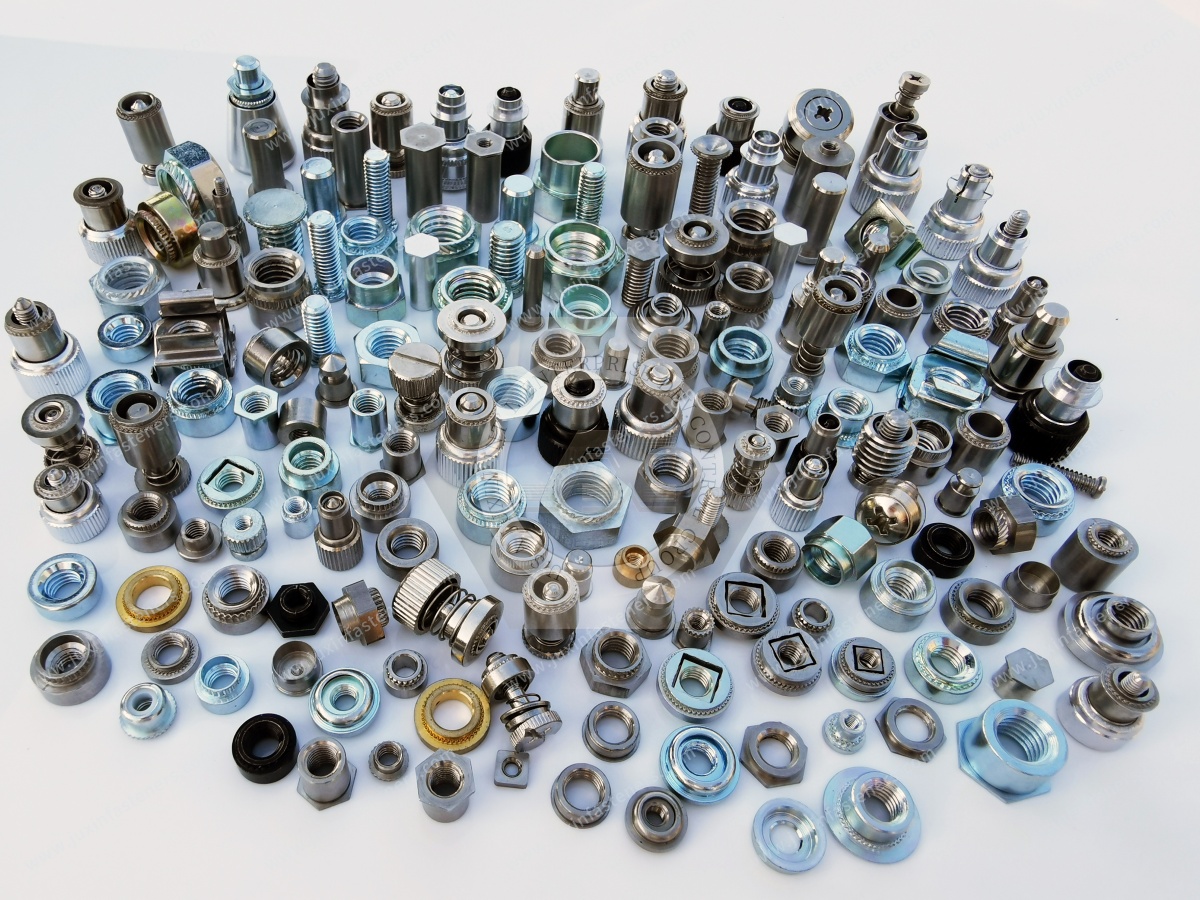
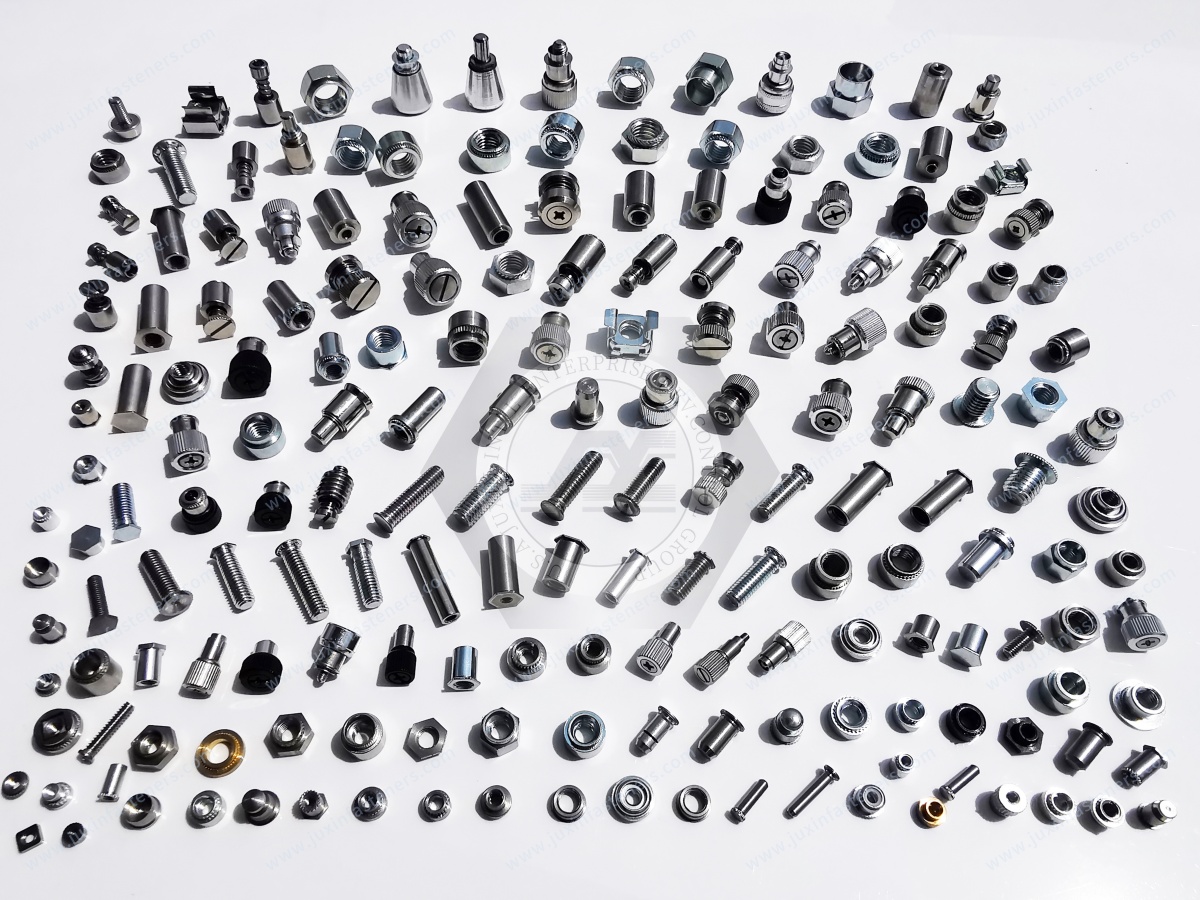
JUXIN FASTENERS supports engineered fastening solutions for equipment enclosures, including self-clinching fasteners,
threaded hardware, PCB hardware, plastic fastening components and drawing-based custom components.
For projects requiring captive panel screws or specialized retained fasteners, JUXIN FASTENERS can review the drawing,
panel geometry, mating thread, retention concept, material requirement and service conditions to evaluate the appropriate manufacturing solution.
Applications can include:
Industrial electronics enclosures
Medical equipment housings
Laboratory instruments
Server chassis
Data center equipment
Telecom cabinets
Electrical control cabinets
Automation equipment
HVAC control enclosures
Food-service equipment
Power electronics
Service access panels
The important engineering principle is:
A captive panel screw is not simply a normal screw with an additional feature. It is part of a complete panel-retention and service-access system.
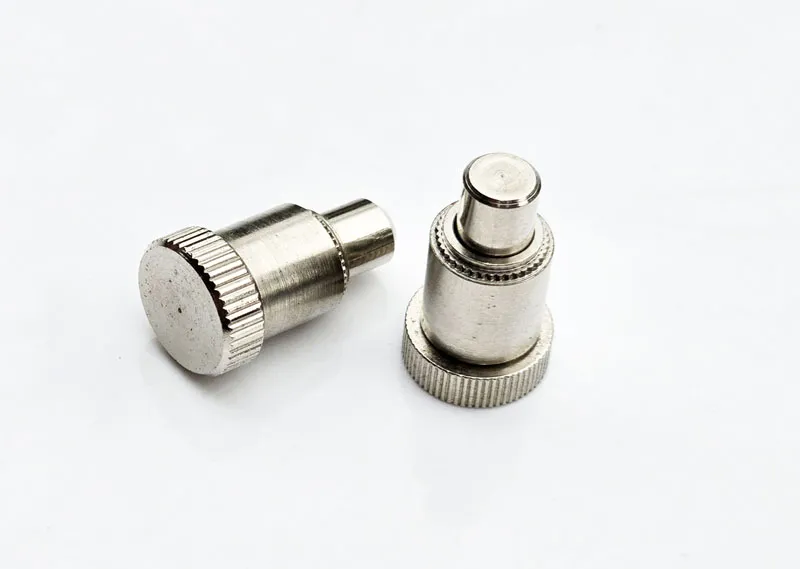
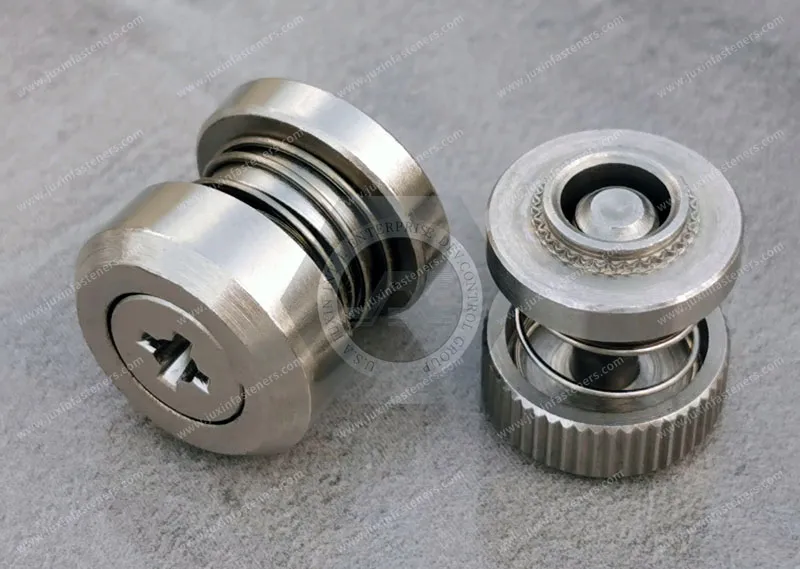
A captive panel screw is a threaded fastener designed to remain attached to a panel or cover when disengaged from its mating thread.
The exact retention architecture can vary.
Depending on the design, a captive fastening assembly may involve:
Retaining geometry on the screw
Washer or retaining ring
Spring element
Panel-mounted retainer
Press-in component
Self-clinching retention feature
Custom shoulder geometry
Reduced shank section
Captive nut or mating hardware
Drawing-specific retention components
The objective is not necessarily to make the screw impossible to remove under every circumstance.
The objective is to retain the fastener during the intended service operation.
This distinction is important.
A captive fastener addresses:
Where does the screw go when the panel is opened?
A locking fastener addresses:
How does the assembled threaded joint resist unwanted rotation or loosening?
These are different engineering functions.
A captive panel screw can remain attached to the panel and still require a separate locking strategy if the assembled joint is exposed to vibration.
Conversely, a prevailing-torque lock nut can resist loosening while the screw remains completely removable from the panel.
Therefore:
Captive retention and vibration resistance should be specified separately.
A retained screw is not automatically a vibration-resistant screw.
The assembled joint still depends on:
Clamp load
Mating thread
Joint stiffness
Bearing surface
Tightening method
Screw material
Thread friction
Locking method where required
If vibration resistance is important, engineers should define that requirement independently from captive retention.
Some captive fasteners can be hand-operated.
Others use:
Hex socket
Phillips recess
Slotted drive
Torx-style drive
Other customer-specified drive systems
Whether the panel should be tool-operated or tool-less is a separate design decision.
For safety-sensitive equipment, requiring a tool may actually be intentional.
Many captive fastening systems are designed to remain with the panel during normal service.
That does not necessarily mean the fastener can never be intentionally disassembled.
Retention architecture should be evaluated according to:
Manufacturing assembly
Normal field service
Repair
Replacement
End-of-life disassembly
The word captive should therefore be connected to the intended service condition.
Captive hardware can be useful where access panels are opened repeatedly.
Potential advantages include:
Reduced handling of loose screws
Faster service access
Easier panel reinstallation
Reduced chance of hardware being left inside equipment
Better control of service hardware
Simplified maintenance procedures
These advantages can be especially valuable where a panel contains multiple screws.
Instead of a technician removing and storing six separate screws, the fasteners remain associated with their original panel positions.
Industrial electronic systems often contain removable:
Control covers
Power-module panels
Fan-access panels
Filter covers
I/O panels
Service doors
Cable-management covers
Loose hardware can complicate maintenance inside equipment containing:
PCBs
Wiring
connectors
power electronics
cooling components
A captive fastening architecture can reduce loose-hardware handling during service.
However, the retention method must fit the panel design and mating structure.
Non-implant medical equipment can include:
Diagnostic equipment
Laboratory instruments
Medical carts
Electronic control housings
Service covers
Internal equipment modules
Captive fasteners may be considered where panels are repeatedly opened for:
Calibration
Inspection
Filter replacement
Electronic service
Cleaning access
The material and surface requirements should follow the actual OEM environment.
The term medical-grade captive screw should not be used as a substitute for a defined engineering specification.
Server chassis, network equipment and data center hardware can contain frequently serviced components such as:
Fan modules
Power supplies
Covers
Cable-management panels
Internal electronics
Service doors
Captive screws can help keep panel hardware associated with the correct cover during maintenance.
But server equipment can use many different fastening architectures.
Depending on the location, the appropriate solution may instead be:
Cage nut
Self-clinching nut
Self-clinching stud
Self-clinching standoff
Rivet nut
Conventional machine screw
Captive retention should be selected only where the service architecture benefits from it.
Fastener selection often begins with:
What screw size do we need?
For a captive service panel, a better first question is:
What does the technician need to do when opening this panel?
Consider:
Which panel is removed first?
How often is it opened?
Is the equipment powered during service?
Can the technician see every fastener?
Can a loose screw fall into the enclosure?
Must the screw retract away from the mating structure?
Is tool access restricted?
Does the panel need to hang, slide or lift away?
How will the technician realign the panel during closing?
These questions can determine the captive architecture before thread size is selected.
Not every captive screw needs a spring.
The screw remains attached to the panel after disengagement.
This can be sufficient where:
The panel can be lifted away easily
Screw projection does not interfere
Automatic retraction is unnecessary
A spring can be used in some designs to retract or bias the screw after disengagement.
This may be useful where:
Screw projection would interfere with panel removal
The panel slides laterally
Automatic screw positioning benefits service
But a spring adds:
Components
Axial stack height
Cost
Assembly requirements
Additional dimensional considerations
Therefore:
Spring-loaded is not automatically better than retained-only.
The correct choice follows the panel motion.
Consider two panels using the same thread.
Pulls directly outward after screws are released.
Must slide sideways before it can be removed.
Panel B may require more screw retraction clearance because a projecting screw could interfere with the frame during lateral movement.
Therefore, the panel's removal path is part of the captive screw specification.
This is often missed when the fastener is selected from a catalog before the service sequence is reviewed.
Where a retractable design is required, engineers should define:
Engaged position
Fully disengaged position
Required retraction
Remaining projection
Spring travel where applicable
Panel thickness
Retainer position
Insufficient retraction can prevent the panel from clearing the frame.
Excessive travel can increase package size unnecessarily.
The correct travel should come from the actual panel movement.
Panel thickness affects the captive assembly.
Depending on the retention architecture, it can influence:
Retainer engagement
Shoulder length
Retaining groove location
Spring stack
Installed projection
The captive screw should therefore be reviewed together with the panel.
A screw drawing without the panel cross-section may not provide enough information to evaluate retention.
The panel hole can serve several functions.
It may need to:
Allow the screw body to move
Capture the retaining feature
Accommodate a retainer
Allow limited float
Control screw position
If the hole is too small, movement can bind.
If it is too large, retention or alignment may be compromised depending on the architecture.
The hole should be treated as a functional part of the captive system.
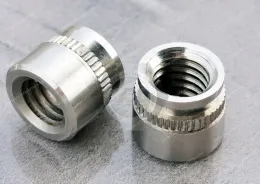
A captive panel screw still needs a mating thread.
Possible mating architectures can include:
Self-clinching nut
Rivet nut
Weld nut
Cage nut
Tapped structure
Threaded insert
Custom nut component
The best choice depends on:
Parent material
Access
Panel thickness
Required service cycles
Alignment tolerance
Production method
The captive screw and mating thread should therefore be selected as a pair.
This can be useful in sheet-metal equipment where the removable panel carries the captive screw and the frame contains a permanent female thread.
Potential applications include:
Electronic enclosures
Automation cabinets
Medical equipment
Server chassis
Industrial controls
The self-clinching nut should be selected according to:
Frame sheet material
Sheet thickness
Sheet hardness
Mounting hole
Required thread
The captive screw then needs compatible thread and engagement.
A rivet nut can provide the mating female thread where access is available from only one side during fastener installation.
This can be useful for:
Closed frames
Tubular structures
Fabricated enclosures
Retrofitted panels
However, rivet-nut anti-rotation and captive-screw retention are separate functions.
Both interfaces should be evaluated.
Rack systems can use cage nuts where the mating thread must remain replaceable or positionally adjustable.
This architecture can be appropriate in:
Server racks
Telecom cabinets
Data center equipment
The cage nut provides the female thread.
The captive panel screw controls the removable-panel hardware.
Again, the two functions should not be confused.
For sufficiently thick structures, a tapped hole can provide the mating thread.
The engineer should consider:
Material
Available thread engagement
Service cycles
Repair strategy
Thread wear
If the thread is damaged, replacement may be more difficult than replacing a separate nut component.
Thread engagement should be sufficient for the intended joint without creating unnecessary screw length.
The designer should consider:
Mating nut thickness
Frame thickness
Washer thickness
Panel gap
Screw travel
Required engagement
A captive screw that is too long can:
Interfere with internal components
Increase disengagement travel
Slow service
Create clearance problems
Longer is not automatically safer.
A conventional screw is usually evaluated mainly in its tightened position.
A captive screw must often work in at least two:
Engaged position
and:
Disengaged but retained position
The screw length must therefore satisfy both conditions.
This is a fundamental difference from ordinary screw selection.
Access panels can experience tolerance accumulation from:
Panel fabrication
Bending
Frame fabrication
Hinge position
Gasket compression
Mating nut location
A captive screw system may require some alignment allowance.
But excessive float can also make initial thread engagement difficult.
The correct system should balance:
Alignment tolerance
Screw guidance
Mating-thread location
Panel position
Adding more lateral movement may appear to make assembly easier.
But if the screw is too free to move, the technician may have difficulty locating the mating thread.
Therefore:
Maximum float is not the design goal.
The objective is sufficient positional accommodation with controlled screw guidance.
Head geometry affects:
Tool access
Installation torque
Panel appearance
External projection
Safety
Service ergonomics
Potential configurations can include customer-specified:
Socket head
Low-profile head
Phillips drive
Slotted drive
Other drawing-defined geometries
JUXIN FASTENERS should evaluate the actual drawing rather than assume one universal captive screw head.
Low-profile hardware can be useful where:
Exterior projection must be minimized
Equipment clearance is restricted
Appearance is important
However, reducing head height can influence:
Drive depth
Tool engagement
Torque capacity
Manufacturing geometry
A low-profile head should therefore be selected as part of the complete fastening requirement.
The best drive system depends partly on how the technician reaches the fastener.
Questions include:
Is access straight-on?
Is the fastener recessed?
Is there limited vertical clearance?
Is powered tooling used?
Is field service performed manually?
Must the tool remain captive to the head during initial engagement?
Drive style should follow service access rather than appearance alone.
Captive fasteners are often used because a panel is opened repeatedly.
But the statement:
“Rated for 1,000 cycles”
is meaningless without a defined test.
Service durability can depend on:
Screw material
Mating-thread material
Surface condition
Tightening torque
Alignment
Lubrication
Contamination
Retainer design
Spring design where applicable
If a project has a required service-cycle target, it should be included in the specification and validated accordingly.
Stainless steel may be selected for:
Corrosion resistance
Appearance
Material compatibility
Cleaning environments
Customer material requirements
Potential stainless material selection should follow the actual application.
304 and 316-family stainless steels should not automatically be specified simply because the equipment is medical or electronic.
The environment should drive material selection.
Repeated assembly of stainless threaded components can create galling risk under certain combinations of:
Material
Surface condition
Thread fit
Speed
Load
Lubrication
Galling is a tribological problem.
It should not be solved by assuming that tighter dimensional tolerances alone will eliminate it.
Where repeated stainless-to-stainless assembly is required, the complete mating pair and assembly process should be considered.
Steel captive components can be appropriate for many industrial applications.
The project may specify a protective finish based on:
Corrosion environment
Appearance
Electrical requirement
Friction requirement
The coating should be defined rather than represented only by marketing language such as “high corrosion resistance.”
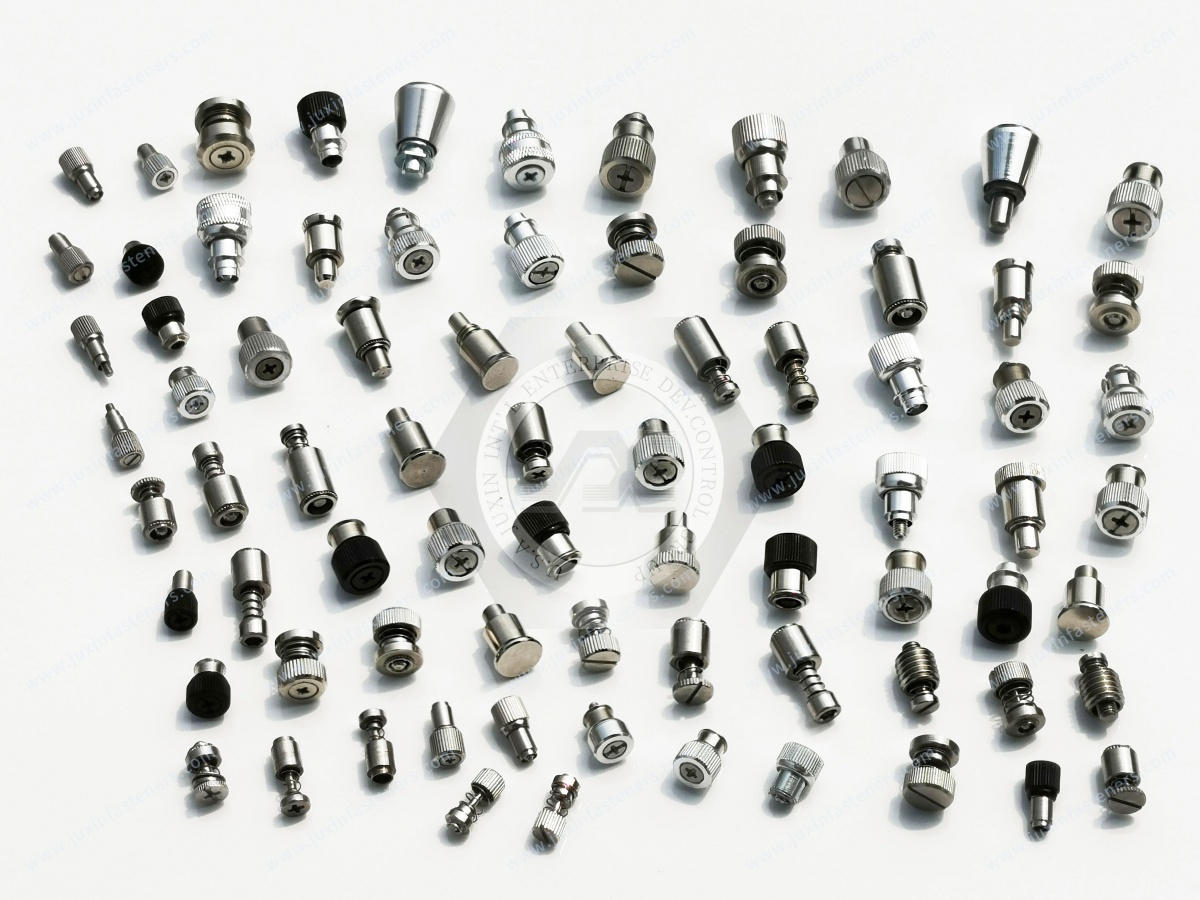
Zinc-based or zinc-nickel coatings may be considered where specified for suitable steel components.
However, coating performance depends on:
Coating system
Thickness
Passivation
Topcoat
Base material
Geometry
Test method
Therefore, JUXIN FASTENERS should not assign a universal salt-spray-hour claim to every zinc-nickel captive component.
Where corrosion testing is required, ASTM B117 may be specified as a test method.
But the requirement should also define acceptance criteria.
For example:
White corrosion criterion
Red corrosion criterion
Test duration
Evaluation method
Salt-spray hours should not be presented as a direct prediction of real-world service life.
Medical and laboratory equipment may encounter:
Alcohol-based cleaners
Detergents
Disinfectants
Other facility-specific chemicals
Fastener material compatibility depends on the actual chemical, concentration, exposure time, temperature and cleaning frequency.
Therefore:
“Medical equipment” does not automatically define the correct stainless grade or surface finish.
The cleaning environment should be included in the RFQ when relevant.
A captive panel screw may mechanically attach a panel that is also part of an electrical bonding path.
But mechanical fastening does not automatically guarantee electrical continuity.
Electrical behavior can be affected by:
Paint
Powder coating
Anodizing
Plating
Washers
Contact pressure
Mating material
If electrical bonding is required, that requirement should be defined and validated separately.
Painted and powder-coated panels introduce more than an appearance issue.
Coatings can affect:
Bearing friction
Electrical continuity
Clamp-load retention
Surface compression
Mating contact
If the screw also participates in grounding or bonding, the coating architecture becomes part of the fastening system.
Access panels may use:
EMI gaskets
Environmental seals
Foam gaskets
Elastomeric seals
Gasket compression changes the joint.
The captive screw must provide sufficient engagement and travel for the gasketed assembly.
The designer should consider:
Initial gasket thickness
Compressed thickness
Required clamp
Panel stiffness
Screw location
A screw length selected before the gasket is finalized may later become incorrect.
EMI-sensitive electronic equipment can use captive panel hardware.
But the screw alone does not guarantee EMC performance.
EMI performance depends on the enclosure architecture, including:
Panel contact
Conductive gasket
Fastener spacing
Coating
Contact pressure
Seam design
The captive screw is one mechanical component within that system.
Retaining panel screws can reduce the chance that ordinary service screws are handled as separate loose components.
This can be valuable around:
Electronics
Fans
Moving mechanisms
Electrical wiring
Medical equipment
Industrial machinery
However, no fastening architecture should be described as eliminating all foreign-object risk.
Other loose components and service activities still exist.
The correct claim is:
Captive hardware can reduce loose-fastener handling during service.
Serviceability is an engineering requirement.
A technically strong fastener can still create poor maintenance ergonomics if:
Tool access is difficult
Screw travel is excessive
Head geometry is uncomfortable
Alignment is poor
The screw does not retract sufficiently
The panel must be held manually while engaging multiple screws
Captive fastening design should consider the technician, not only the CAD model.
A useful way to compare service-panel architectures is to count actions.
For example:
Technician may need to:
Loosen screw
Remove screw
Store screw
Repeat for each location
Remove panel
Find correct screws during reassembly
Reinsert each screw
Tighten
The screw remains associated with the panel during the service sequence.
This can reduce loose-part handling.
For equipment requiring frequent maintenance, this operational difference can matter more than the purchase price of the screw itself.
During production, captive hardware may introduce additional operations compared with an ordinary screw.
These can include:
Retainer installation
Pressing
Spring assembly
Washer assembly
Panel preparation
Therefore, captive hardware is not automatically the lowest-cost assembly method.
Its value often comes from:
Serviceability
Hardware retention
Maintenance control
Equipment architecture
The complete lifecycle should be considered.
The engineer should ask:
How frequently is the panel opened?
Who opens it?
What tool do they have?
Is the equipment energized?
Can screws fall into inaccessible locations?
Must the panel slide?
Must screws retract?
Is the panel hinged?
Is there a gasket?
Is electrical bonding required?
Is visual appearance important?
These answers determine whether a captive solution provides real value.
| Engineering Factor | Conventional Machine Screw | Captive Panel Screw Architecture |
|---|---|---|
| Removed from panel during service | Usually yes | Designed to remain retained |
| Loose hardware handling | Required | Reduced |
| Retention components | Usually none | May be required |
| Panel design interaction | Lower | Higher |
| Service access optimization | Limited | Can be engineered |
| Cost and complexity | Usually lower | Usually higher |
| Best use | Infrequent access or simple joints | Repeatedly serviced panels |
Captive hardware should therefore be selected because the service requirement justifies it.
Some service panels use quarter-turn fasteners instead of threaded captive screws.
Quarter-turn hardware can provide fast access.
Threaded captive screws may be preferred where:
Controlled threaded engagement is desired
Higher clamp adjustment is required
Existing mating threads are used
Standard tools are preferred
Quarter-turn systems may be preferred where extremely rapid access is more important.
The correct architecture depends on the enclosure.
Thumb screws can support tool-less service.
But a thumb screw is not automatically captive.
Likewise, a captive screw does not have to be a thumb screw.
These are separate design attributes:
Captive = retention
Thumb screw = hand-operated head
A project can require one, both or neither.
For accurate technical evaluation, procurement teams should provide:
2D drawing
3D model where available
Thread size
Thread pitch
Screw length
Head geometry
Drive type
Panel material
Panel thickness
Panel-hole dimensions
Retention method
Retainer drawing where available
Required retraction
Spring requirement where applicable
Mating-thread type
Mating-nut material
Required tightening torque
Required service cycles where specified
Corrosion requirement
Cleaning chemical exposure where applicable
Electrical bonding requirement where applicable
Prototype quantity
Annual production quantity
Inspection requirements
Packaging requirements
For an existing captive assembly, send the complete assembly drawing rather than only the screw drawing whenever possible.
This is especially important when qualifying an alternate supplier.
A screw may match:
Thread
Length
Head diameter
and still fail to function in the existing captive assembly because of differences in:
Shoulder diameter
Retaining groove
Reduced shank
Groove location
Retainer fit
Spring stack
Panel thickness
Therefore:
Captive hardware should be sourced from functional assembly dimensions, not from thread size alone.
Do not compare only:
M4 + stainless + captive + price.
Compare:
Thread
Head
Drive
Shoulder geometry
Retention feature
Retaining groove
Panel compatibility
Retainer interface
Spring characteristics where applicable
Mating thread
Surface finish
Installed travel
Retracted position
Assembly behavior
Service behavior
Drawing revision control
Sample-to-production consistency
For custom retained hardware, dimensional interchangeability is critical.
When developing an alternate supplier, a practical process can include:
Existing Assembly Review → Critical Dimension Identification → Material & Finish Review → Prototype → Panel Installation
→ Mating Thread Evaluation → Service Sequence Evaluation → Golden Sample Approval → Production
If the OEM specifies:
Cycle testing
Corrosion testing
Retention-force testing
Torque testing
Electrical testing
the acceptance criteria should be provided before validation.
Some captive fastening requirements cannot be satisfied by a standard product.
Custom development may be appropriate where the OEM requires:
Special shoulder
Reduced shank
Retaining groove
Special head
Low-profile geometry
Special drive
Custom thread
Special length
Custom retainer interface
Spring-loaded architecture
Customer-specified material
Customer-specified finish
JUXIN FASTENERS can review drawing-based retained fastening components against actual manufacturing capability and application requirements.
For complex captive assemblies, feasibility should be confirmed before the component is presented as a production solution.
For custom retained fastening projects, a practical approval process can follow:
Application Requirement → Panel & Mating Structure Review → Retention Concept → Drawing Review → Prototype / Sample
→ Installation Evaluation → Service Sequence Evaluation → Required Validation → Golden Sample Approval → Production
This is more reliable than qualifying a captive fastener from catalog dimensions alone.
Design engineers should begin with:
What is the panel supposed to do after the screw is released?
Then determine:
Panel removal direction
Panel thickness
Required screw retention
Required retraction
Mating thread
Alignment tolerance
Service frequency
Tool access
Environmental exposure
Electrical requirements
Gasket requirements
Material and finish
Only then should the final screw geometry be frozen.
Send us your project when you need a fastening solution for:
Removable electronics panels
Medical equipment service covers
Laboratory instruments
Server chassis
Telecom cabinets
Automation control systems
Electrical enclosures
HVAC control panels
Power electronics
Food-service equipment
Industrial machinery
If your project already uses a captive panel screw, send:
Drawing + Panel Cross-Section + Mating Thread + Retainer Details + Quantity
If the captive architecture is still under development, send:
Panel Drawing + Removal Direction + Required Thread + Service Requirement + Material + Quantity
We can then evaluate whether the requirement fits an available fastening technology or requires a drawing-based component.
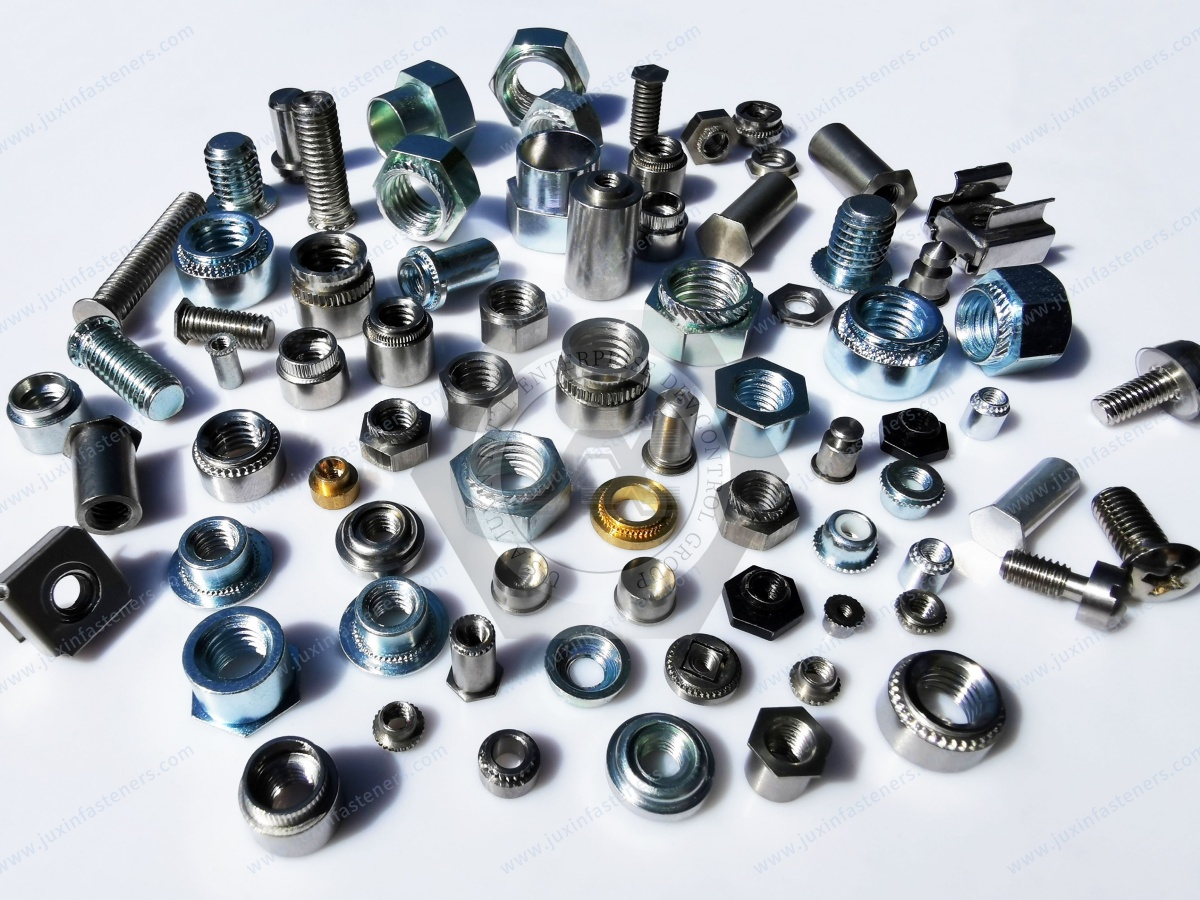
Related fastening pages should include:
Fastening Solutions for Medical Device Housings & Laboratory Equipment — industry-level fastening architecture for non-implant medical equipment
Self-Clinching Fasteners for Telecom Cabinets & AI Data Center Enclosures — permanent fastening solutions for thin sheet
Self-Clinching Studs for Thin Sheet Metal & Equipment Enclosures — permanent male threaded mounting points
Self-Clinching Standoffs for AI Server Chassis & Electronic Enclosures — controlled spacing and threaded mounting
Blind Rivet Nuts for Sheet Metal Enclosures & One-Sided Assembly — blind-side female threads
Cage Nuts for 19-Inch Server Racks & Electrical Cabinets — replaceable and positionally adjustable rack threads
All-Metal Prevailing-Torque Lock Nuts for High-Vibration Industrial Assemblies — locking architecture where resistance to unwanted nut rotation is required
The internal decision path should be:
Need removable panel + retained screw → Captive Panel Fastening
Need permanent male thread → Self-Clinching Stud
Need permanent female thread → Self-Clinching Nut
Need thread + spacing → Self-Clinching Standoff
Need one-sided installation → Rivet Nut
Need replaceable rack thread → Cage Nut
Need vibration-resistant nut → Prevailing-Torque Lock Nut
This prevents engineers from treating unrelated fastener technologies as interchangeable.
Captive panel hardware is highly dependent on the complete assembly.
For the fastest technical review, send:
Screw drawing
Panel drawing
Retainer details
Mating-thread specification
Material requirement
Surface-finish requirement
Required service behavior
Estimated quantity
JUXIN FASTENERS will review the requirement against our actual manufacturing and fastening capabilities before recommending a production route.
For drawing-based projects, the goal is not simply to manufacture a screw that looks similar.
The goal is to reproduce the functional relationship between screw, retainer, panel and mating thread.
JUXIN FASTENERS
Website: www.juxinfasteners.com
Engineering & RFQ: info@juxinfasteners.com
Product Packaging
Packaging Standard
At Juxin Fasteners, we apply standardized export packaging to ensure product protection, traceability, and compliance with international logistics requirements.
1. Standard Export Packaging
Unless otherwise specified, all products will be packed according to our factory standard export packaging, which includes:
Moisture-resistant inner protection
Poly bag or small box packing as required
Reinforced export cartons
Clear labeling with part number, specification, batch number, and quantity
Palletizing for sea or air shipment when necessary
Our standard packaging is designed to ensure safe transportation, efficient warehousing, and long-distance international shipping.
2. Customized Packaging Options
We also provide customized packaging solutions according to customer requirements, including but not limited to:
Private labeling
Customized barcodes
Specific carton dimensions
Retail packaging
Special pallet configuration
Customer-specific marking and identification
So that you know, customized packaging may involve additional costs and extended lead time depending on the complexity of the requirements.
3. Compliance & Quality Assurance
All packaging processes are controlled under our ISO 9001 quality management system to ensure consistency, traceability, and product integrity throughout the supply chain.
Product Pictures
Contact Us
Tel.:
+86 020 8621 0320
+86 020 3121 6067
E-mail:
Technical Support:
Navigation
SEND INQUIREY