Call Us
+86 136 6007 9809
Call Us
+86 136 6007 9809

Railway rolling stock interiors, passenger equipment enclosures, HVAC control cabinets and industrial air-handling systems frequently require permanent internal threads in relatively thin sheet metal.
These assemblies may experience vibration, temperature changes, repeated maintenance and environmental exposure.
The fastening challenge is not simply to install a threaded nut.
Product Specification
Railway rolling stock interiors, passenger equipment enclosures, HVAC control cabinets and industrial air-handling systems frequently require permanent internal threads in relatively thin sheet metal.
These assemblies may experience vibration, temperature changes, repeated maintenance and environmental exposure.
The fastening challenge is not simply to install a threaded nut.
It is to establish a reliable connection between the nut, the host sheet and the mating screw while maintaining suitable panel geometry and serviceability.
Self-clinching nuts provide permanent internal threads in compatible sheet metal through controlled mechanical press installation.
They can be considered for selected railway interior components, electrical cabinets, HVAC equipment housings and industrial sheet metal assemblies.
However, a self-clinching nut is not automatically a vibration-locking device.
Its retention in the panel and the rotational security of the mating screw are separate engineering requirements.
JUXIN FASTENERS supplies self-clinching fastening components for industrial OEM applications, including self-clinching nuts, studs and standoffs.
This guide explains how to evaluate self-clinching nuts for railway and HVAC equipment, with particular attention to:
Sheet material compatibility
Minimum panel thickness
Installation hole geometry
Push-out resistance
Torque-out resistance
Vibration
Thermal cycling
Corrosion protection
Assembly sequence
OEM sourcing and qualification
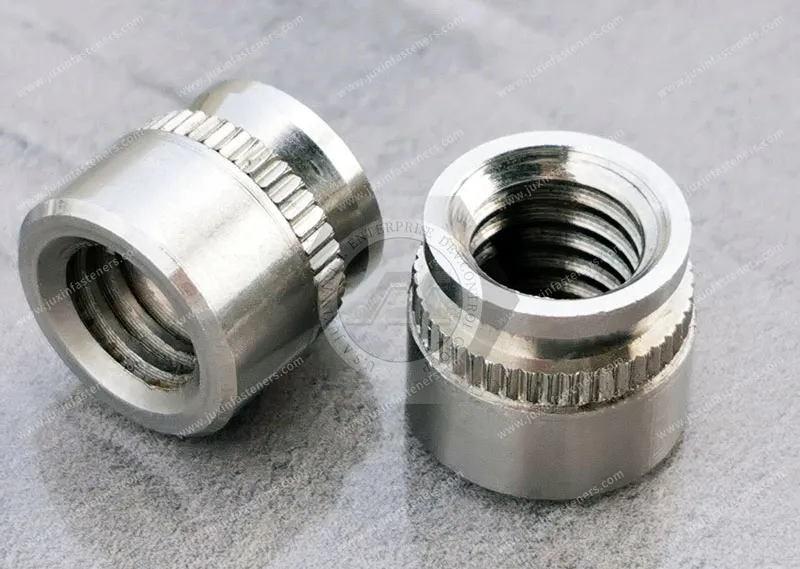
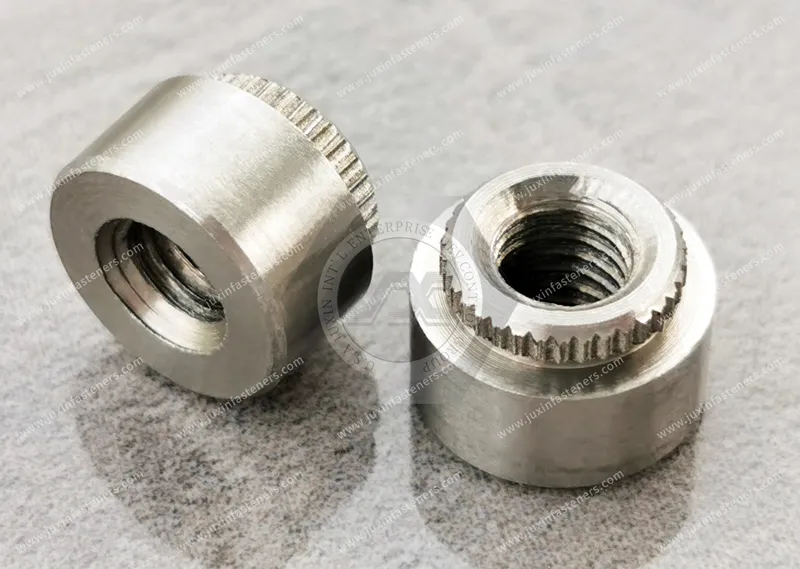
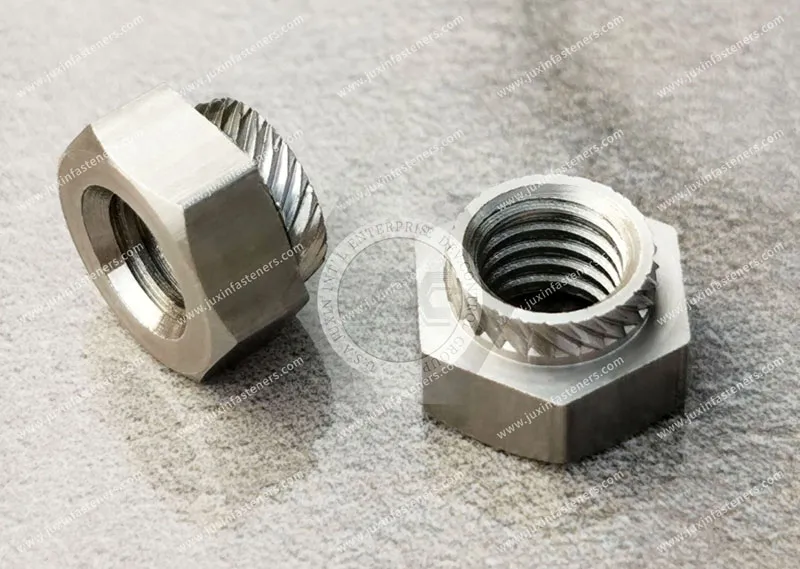
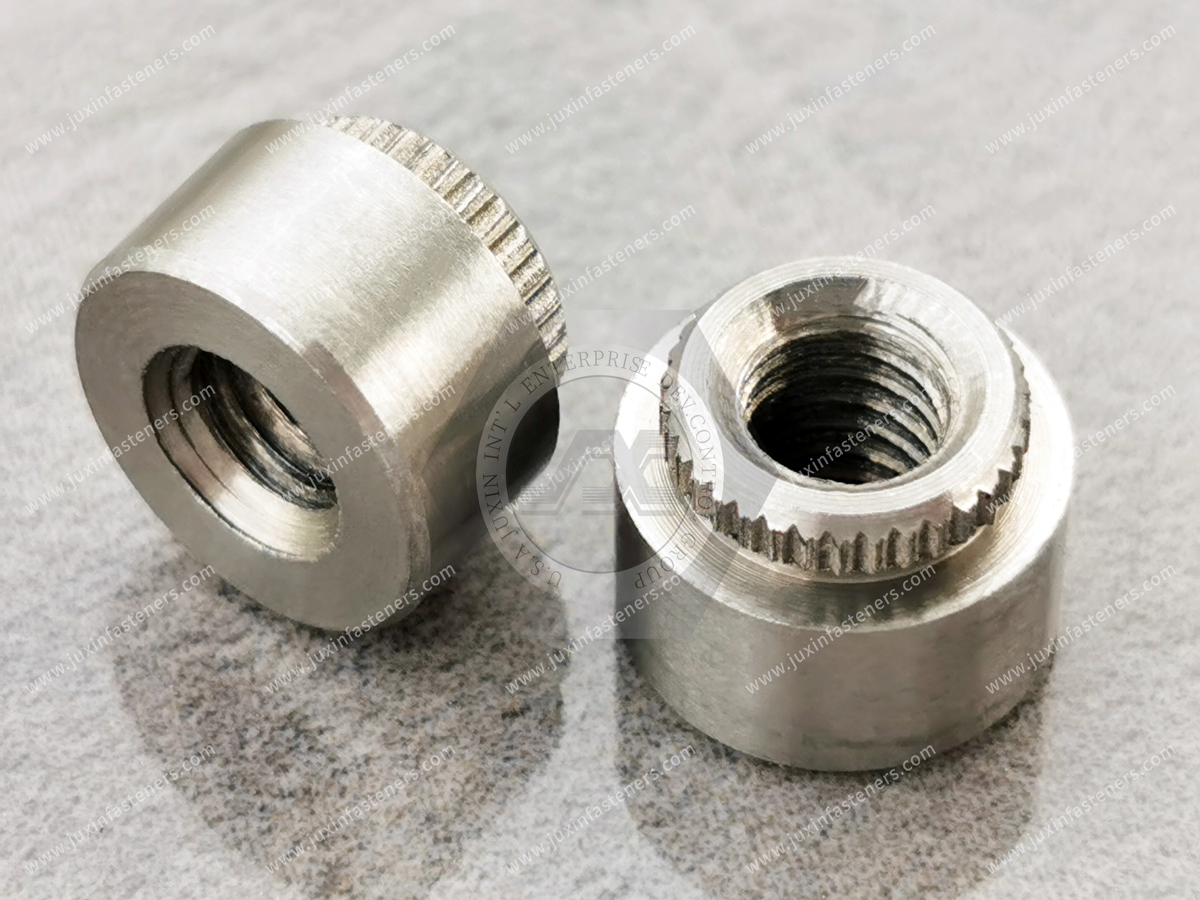
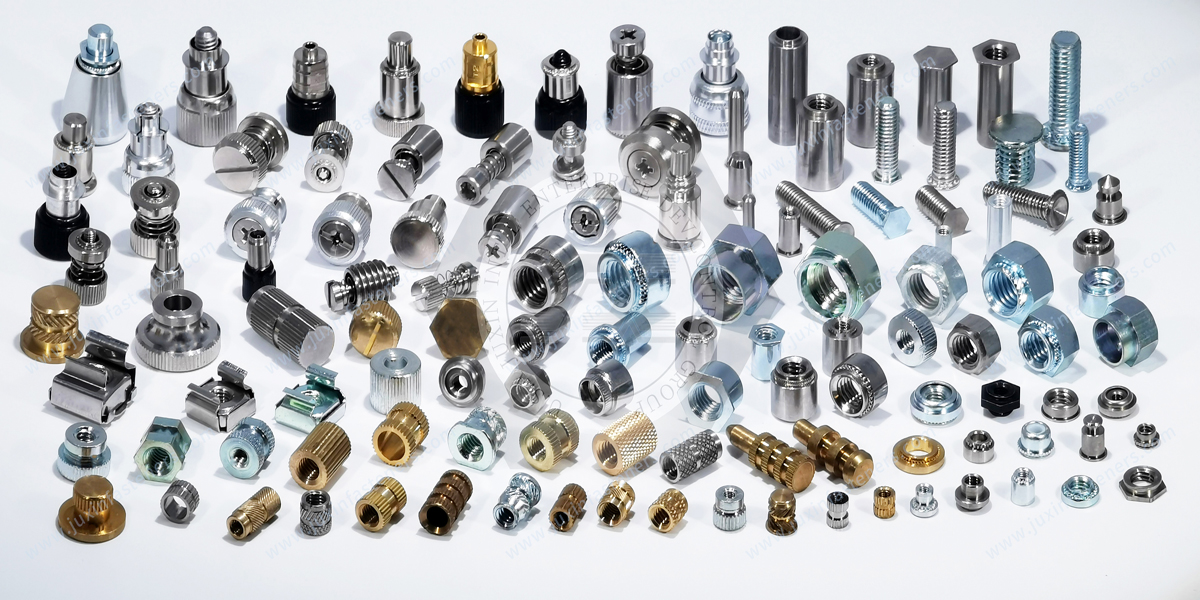
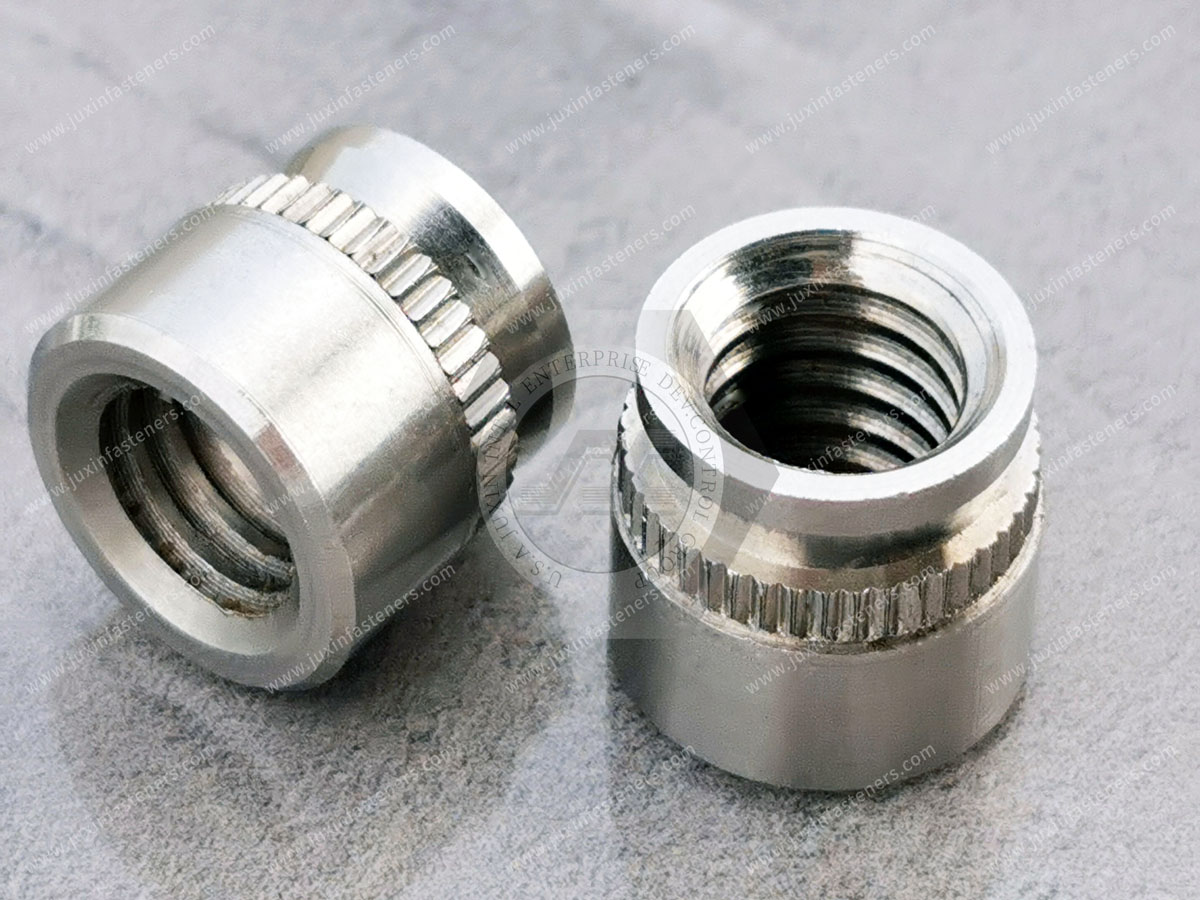
A self-clinching nut is a threaded fastener designed to become mechanically retained in suitable sheet metal through a controlled press-installation process.
The fastener typically includes a displacer or clinching feature and an undercut retention geometry.
During installation, the host sheet plastically deforms into the retention feature.
This creates resistance to axial displacement and rotation.
Self-clinching nuts are also commonly described as:
Clinch nuts
Press-in nuts
Self-clinching threaded nuts
Sheet metal clinch nuts
Captive threaded nuts
The term captive in this context refers to the nut being retained in the sheet.
It does not mean that the mating screw is captive or retained when removed.
Potential benefits include:
Permanent threaded attachment points
Reduced loose-nut handling
Threaded mounting in suitable thin sheet metal
Mechanical installation without welding heat
Compatibility with selected automated sheet metal fabrication processes
Repeatable mounting interfaces
Potential simplification of final assembly
However, the benefits depend on the actual component and manufacturing process.
Self-clinching nuts are not appropriate for every sheet thickness, material or joint load.
Potential applications include:
Interior equipment cabinets
Passenger information system enclosures
Electrical control housings
Auxiliary equipment panels
Interior mounting brackets
Nonstructural sheet metal accessories
Serviceable equipment covers
Railway applications vary significantly in mechanical and regulatory requirements.
A fastening component suitable for an interior electrical cabinet should not automatically be approved for:
Safety-critical structures
Primary vehicle structures
Passenger restraint systems
Structural seating attachments
Crash-critical assemblies
Those applications require separate engineering qualification.
Potential applications include:
HVAC electrical control cabinets
Air-handling unit enclosures
Equipment access panels
Fan control housings
Sensor mounting brackets
Electrical accessory panels
Sheet metal support assemblies
Commercial ventilation equipment
The suitability of self-clinching nuts depends on the actual panel and loading requirements.
For example, a small electrical accessory bracket and a heavily loaded motor support may require different fastening systems.
Both industries use sheet metal assemblies.
However, their operating environments and qualification requirements may differ.
| Engineering Factor | Railway Interior Equipment | HVAC Equipment |
|---|---|---|
| Vibration | Vehicle operation and equipment-specific dynamic loading | Fans, compressors and equipment operation |
| Temperature | Vehicle and equipment service conditions | Heating, cooling and environmental cycles |
| Corrosion | Interior humidity, cleaning and selected external exposure | Condensation, humidity and outdoor exposure |
| Maintenance | Vehicle service schedules | Building or equipment maintenance schedules |
| Qualification | Project-specific rail requirements | Equipment and installation-specific requirements |
| Fastening concern | Retention, serviceability and dynamic loading | Panel compatibility, corrosion and thermal cycling |
The correct fastener should be selected according to the actual assembly rather than the industry name alone.
Thin sheet metal may not provide sufficient thread engagement for a directly tapped hole.
This can create a risk of thread stripping during installation or service.
Self-clinching nuts introduce a separate threaded component into the panel.
The nut provides a defined internal thread, while the clinching geometry retains it in the host sheet.
However, the nut must be compatible with the actual panel thickness.
Thread size
Panel thickness
Panel material
Panel hardness
Installation hole diameter
Edge distance
Installation force
Required retention performance
These variables should be confirmed before the enclosure drawing is released.
A self-clinching nut may have sufficient thread strength for the mating screw.
But if the host sheet is too thin or too hard for the selected clinching design, the nut may not be retained reliably.
This creates two separate load paths:
Screw → Internal Nut Thread
Nut → Clinching Interface → Sheet Metal
Both must satisfy the application requirements.
Railway equipment and HVAC machinery can experience vibration.
However, the effects depend on:
Vibration amplitude
Frequency
Loading direction
Joint stiffness
Preload
Mating screw
Assembly geometry
A self-clinching nut resists rotation and displacement relative to the panel.
It does not automatically prevent the mating screw from loosening.
This is one of the most important distinctions in clinch nut engineering.
Torque-out resistance measures resistance to rotation of the installed nut in the panel under a defined test.
Vibration loosening resistance concerns the behavior of the assembled threaded joint under dynamic loading.
A clinch nut may have excellent torque-out resistance while the mating screw still loses preload or rotates loose.
Where vibration loosening is a concern, the engineer should separately evaluate:
Joint preload
Screw strength
Thread engagement
Joint stiffness
Prevailing-torque locking
Other suitable locking methods
Required vibration testing
The clinch nut's panel retention and the screw's locking behavior must be evaluated independently.
JUXIN FASTENERS also supplies prevailing-torque lock nut products for appropriate industrial applications.
However, a conventional prevailing-torque lock nut is not automatically interchangeable with a self-clinching nut.
A prevailing-torque lock nut is designed to resist relative rotation in a threaded connection.
A self-clinching nut is designed to remain mechanically retained in a suitable panel.
A specialized self-clinching locking nut would need to satisfy both functions,
and its availability and performance would require confirmation against the actual product specification.
Railway and HVAC equipment may experience temperature changes.
Different materials expand at different rates.
For example, aluminum and steel have different coefficients of thermal expansion.
In a mixed-material assembly, thermal cycling may influence:
Joint loading
Panel deformation
Relative movement
Contact pressure
Fastener retention
Long-term service behavior
However, thermal effects depend on the complete joint geometry and operating temperature range.
A steel clinch nut installed in aluminum sheet does not automatically maintain constant retention under every thermal condition.
The engineer should consider:
Panel material
Fastener material
Operating temperature range
Thermal cycling frequency
Mechanical loading
Installation geometry
Where thermal cycling is critical, the complete installed joint may require application-specific testing.
Self-clinching installation depends on controlled deformation of the host sheet.
The panel material must be compatible with the fastener's clinching geometry and hardness.
Potential substrates include:
Low-carbon steel sheet
Aluminum sheet
Certain stainless steel sheet configurations
Other compatible metallic panels
The correct selection depends on the actual material grade and hardness.
A self-clinching nut suitable for mild steel may not be suitable for a harder stainless steel panel.
Stainless steel may be selected for corrosion resistance.
However, clinching compatibility is a separate issue.
A stainless steel nut and stainless steel panel may have unsuitable hardness relationships for a particular clinching design.
Therefore, the OEM should specify:
Fastener material
Panel material
Panel hardness
Sheet thickness
Installation requirements
A material match alone does not establish compatibility.
The installation hole is a critical part of the clinching system.
Important factors include:
Hole diameter
Hole roundness
Burr condition
Edge distance
Panel flatness
Installation-side orientation
An oversized hole may reduce retention.
An undersized hole may prevent correct installation or cause damage.
The correct hole dimensions should follow the selected fastener specification.
Two clinch nuts may both have M4 internal threads.
But their installation hole requirements may differ.
A purchasing decision based only on the thread size can therefore create assembly problems.
For alternative sourcing, the OEM should verify:
Thread Size + Clinching Geometry + Installation Hole + Sheet Compatibility
rather than thread size alone.
Push-out resistance is the axial force required to displace the installed fastener from the panel under a defined test condition.
It depends on:
Fastener geometry
Sheet thickness
Sheet material
Sheet hardness
Installation hole
Installation process
Push-out values should be evaluated using the actual or appropriately representative panel configuration.
Torque-out resistance describes the rotational resistance of the installed nut relative to the panel.
Insufficient torque-out resistance may cause the nut to rotate during screw installation or removal.
Potential contributing factors include:
Incorrect hole size
Inadequate installation
Incompatible sheet hardness
Incorrect nut selection
Panel damage
The required torque-out performance should be defined according to the application.
Push-Out Test: Will the installed nut resist axial displacement?
Torque-Out Test: Will the installed nut resist rotation?
Neither test alone proves that the complete threaded joint will maintain clamp load under vibration.
For demanding applications, additional assembly-level evaluation may be necessary.
Self-clinching nuts are generally installed through controlled pressing.
The required installation force depends on:
Fastener design
Sheet material
Sheet thickness
Installation tooling
Panel support
Insufficient force may prevent full clinching.
Excessive force may deform the panel or damage the fastener.
The installation process should follow the applicable product specification.
A common mistake is to increase press force when retention appears inadequate.
However, the actual problem may be:
Incorrect hole diameter
Unsuitable sheet hardness
Incorrect fastener geometry
Inadequate panel thickness
Poor tooling alignment
Increasing force without identifying the cause can make the joint worse.
The installation process should be validated rather than adjusted by trial and error alone.
Railway interior equipment and HVAC cabinets may require controlled panel flatness for:
Door alignment
Cover fit
Sealing interfaces
Equipment appearance
Assembly clearance
Self-clinching installation avoids welding heat, but mechanical pressing can still deform the panel if the process is unsuitable.
Engineers should consider:
Panel thickness
Local stiffness
Installation force
Tooling support
Nearby bends
Edge distance
HVAC equipment may experience:
Humidity
Condensation
Cleaning exposure
Outdoor conditions
Temperature cycling
Railway equipment may also experience moisture, cleaning and environmental exposure depending on the installation location.
Potential material and finish options may include:
Carbon steel with protective coating
Stainless steel where compatible
Customer-specified surface treatments
The selected finish should be evaluated against the actual environment.
Carbon steel clinch nuts may be suitable for compatible sheet metal applications.
Selection should consider:
Fastener hardness
Panel hardness
Mechanical requirements
Coating
Corrosion environment
A carbon steel nut should not be assumed suitable for every steel panel.
Stainless steel clinch nuts may be considered where corrosion resistance is required.
However, the actual grade and installation compatibility must be reviewed.
For example, 304 and 316 stainless steels have different corrosion-resistance characteristics.
Neither grade provides universal resistance to every chemical or environmental condition.
Potential surface treatments may include:
Zinc-based protective coatings
Zinc-nickel coatings
Stainless steel passivation where appropriate
Other customer-specified finishes
The selected treatment should consider:
Base material
Corrosion environment
Dimensional requirements
Installation process
Electrical contact requirements
ASTM B117 may be used for specified salt spray testing, but the test result does not directly establish field service life.
For HVAC cabinets, condensation may be a significant concern.
A fastener's suitability depends on:
Material
Coating
Water exposure
Temperature cycling
Joint geometry
Contact with dissimilar metals
A generic salt spray result should not replace application-specific corrosion evaluation.
Self-clinching nuts and weld nuts provide different attachment methods.
| Selection Factor | Self-Clinching Nuts | Weld Nuts |
|---|---|---|
| Installation | Mechanical pressing | Welding |
| Heat input | No intentional welding heat | Localized welding heat |
| Panel compatibility | Depends on sheet formability and hardness | Depends on weldability |
| Installation access | Press tooling and support required | Welding access required |
| Main retention mechanism | Mechanical interlock | Weld joint |
| Key validation | Push-out and torque-out | Weld integrity and joint performance |
Neither method is universally superior.
The correct choice depends on the actual panel, production process and load requirements.
Blind rivet nuts can provide internal threads in sheet metal using a pull-type installation process.
They are often considered where access is available from only one side.
| Selection Factor | Self-Clinching Nuts | Blind Rivet Nuts |
|---|---|---|
| Installation method | Press installation | Pull-type setting |
| Access | Tooling access and panel support required | One-sided installation possible |
| Retention | Mechanical clinching | Body deformation |
| Sheet compatibility | Controlled by clinching requirements | Controlled by grip range and hole geometry |
| Common application | Fabricated sheet metal panels | Blind-side or completed assemblies |
For a completed HVAC cabinet where rear-side access is unavailable, a blind rivet nut may be more practical.
Consider two assembly stages.
Stage A: A flat sheet metal panel before bending and enclosure assembly.
Stage B: A completed cabinet with limited internal access.
Self-clinching nuts may be practical during Stage A.
Blind rivet nuts may be more practical during Stage B.
Therefore, fastener selection should consider the manufacturing sequence, not only the finished product geometry.
Cage nuts provide captive threaded hardware and may offer positional float depending on design.
Self-clinching nuts generally establish a fixed threaded position.
A cage nut may be preferable where alignment variation or replaceability is important.
A self-clinching nut may be preferable where a fixed permanent thread is required and the panel is suitable for clinching.
A self-clinching nut provides an internal thread.
A self-clinching standoff provides a defined spacing height and mounting interface.
For HVAC control boards and railway electronic modules, a standoff may be more appropriate where controlled separation from the chassis is required.
A self-clinching stud provides a permanently installed male thread.
A self-clinching nut provides a permanently installed female thread.
The choice depends on:
Assembly direction
Tool access
Mating component
Service procedure
Mounting geometry
The product should be selected according to the assembly function.
Self-clinching nuts can provide permanent threaded attachment.
However, if a panel requires frequent replacement or the threaded component must be replaceable, another fastening architecture may be preferable.
Potential alternatives include:
Cage nuts
Blind rivet nuts
Captive panel screw systems
Other customer-specific mounting arrangements
Serviceability should be considered during design.
Railway OEM projects may include additional requirements relating to:
Mechanical loading
Vibration
Environmental exposure
Material control
Documentation
Fire and smoke requirements
Equipment-specific safety requirements
The applicable requirements depend on the component and its location.
For example, EN 61373 may be relevant to vibration and shock testing of equipment installed on rolling stock where the project specification calls for it.
However, a self-clinching nut is not automatically certified to EN 61373 simply because it is intended for railway equipment.
The relevant assembly and test requirements must be established by the OEM.
A fastener may be part of equipment subject to railway standards.
That does not mean the fastener itself has been independently certified to every applicable railway requirement.
Procurement teams should distinguish between:
Material specification
Fastener drawing
Mechanical test requirement
Assembly-level qualification
Finished equipment compliance
This distinction prevents unsupported certification claims.
HVAC manufacturers may specify requirements relating to:
Corrosion resistance
Temperature
Vibration
Electrical safety
Mechanical retention
Serviceability
The applicable standards depend on the equipment type and market.
A self-clinching nut should be evaluated according to the actual assembly and purchase specification.
| Application Requirement | Main Engineering Question | Possible Fastening Direction |
|---|---|---|
| Thin compatible sheet | Is permanent internal threading required? | Self-clinching nut |
| One-sided access | Is press support unavailable? | Blind rivet nut |
| Welded fabrication | Is welding already part of production? | Weld nut |
| Positional adjustment | Is thread float needed? | Cage nut |
| Controlled spacing | Is a mounting height required? | Self-clinching standoff |
| Male threaded attachment | Is a permanent stud needed? | Self-clinching stud |
| Vibration locking | Must screw rotation be resisted? | Separate locking-system evaluation |
| Frequent service | Must the fastening element be replaceable? | Serviceability review |
Before finalizing the panel drawing, engineers should confirm:
Sheet material
Sheet hardness
Sheet thickness
Installation hole
Edge distance
Tooling access
Installation force
Coating sequence
Required retention
Assembly sequence
The design should also account for nearby bends, ribs, cutouts and other features.
A self-clinching nut may fit within the final cabinet.
However, the manufacturing process may not allow sufficient access for the installation press and support tooling.
This is particularly important near:
Deep bends
Narrow channels
Box sections
Reinforcing ribs
Closely spaced mounting points
The installation process should be reviewed before the sheet metal design is frozen.
Specify the required metric or inch thread.
Identify the sheet material and grade.
Check compatibility with the proposed fastener.
Verify the minimum installation thickness.
Use the correct product-specific hole requirements.
Ensure sufficient surrounding material.
Confirm press and tooling clearance.
Consider push-out, torque-out and joint loads.
Evaluate the complete threaded joint.
Perform the required installation and functional tests.
For accurate technical review and quotation, provide:
Product drawing or reference specification
Thread size
Fastener dimensions
Fastener material
Panel material
Panel hardness where available
Panel thickness
Installation hole diameter
Surface finish
Corrosion requirement
Push-out requirement
Torque-out requirement
Vibration requirement where applicable
Thermal cycling requirement where applicable
Prototype quantity
Annual purchasing quantity
Packaging requirements
Required documentation
For custom products, provide a 2D drawing and available 3D model.
Two self-clinching nuts may both accept an M5 screw.
But they may differ in:
Clinching profile
Installation hole
Minimum sheet thickness
Material hardness
Installation force
Push-out resistance
Torque-out resistance
Therefore, alternative sourcing should validate the actual installed joint.
A practical OEM qualification process may follow:
Existing Part Review → Drawing Review → Panel Compatibility → Installation Hole Verification → Sample → Press Installation
→ Push-Out / Torque-Out Evaluation → Required Vibration or Environmental Testing → Golden Sample Approval → Production
The OEM should define the acceptance criteria.
Where the fastener is used in railway equipment, the applicable project-specific qualification requirements should be confirmed.
An approved sample should be linked to:
Drawing revision
Material specification
Surface finish
Critical dimensions
Installation conditions
Required functional results
The purpose is to establish a controlled production reference.
Depending on the project, inspection may include:
Dimensional verification
Thread inspection
Material verification
Surface finish inspection
Installation evaluation
Push-out testing
Torque-out testing
Environmental testing where specified
Additional inspection documents, including EN 10204 documentation where applicable, should be agreed during RFQ review.
Depending on the product and application, relevant references may include:
ISO metric thread specifications
ASME/ANSI inch-thread specifications
Applicable ISO or ASTM material specifications
ISO 3506 series for relevant stainless steel fastener mechanical-property requirements within its scope
ASTM B117 for specified salt spray testing
EN 10204 for agreed inspection documentation
EN 61373 for applicable rolling stock equipment vibration and shock qualification requirements
Customer-specific drawings and acceptance criteria
Self-clinching nut installation geometry and retention requirements are often controlled by product-specific specifications.
No single universal standard should be assumed to define every self-clinching nut.
Standard clinch nuts cover many applications.
Custom requirements may include:
Special thread sizes
Nonstandard external dimensions
Restricted installation space
Special materials
Customer-specific retention requirements
Special surface finishes
JUXIN FASTENERS can review drawing-based custom self-clinching nut requirements according to actual manufacturing feasibility.
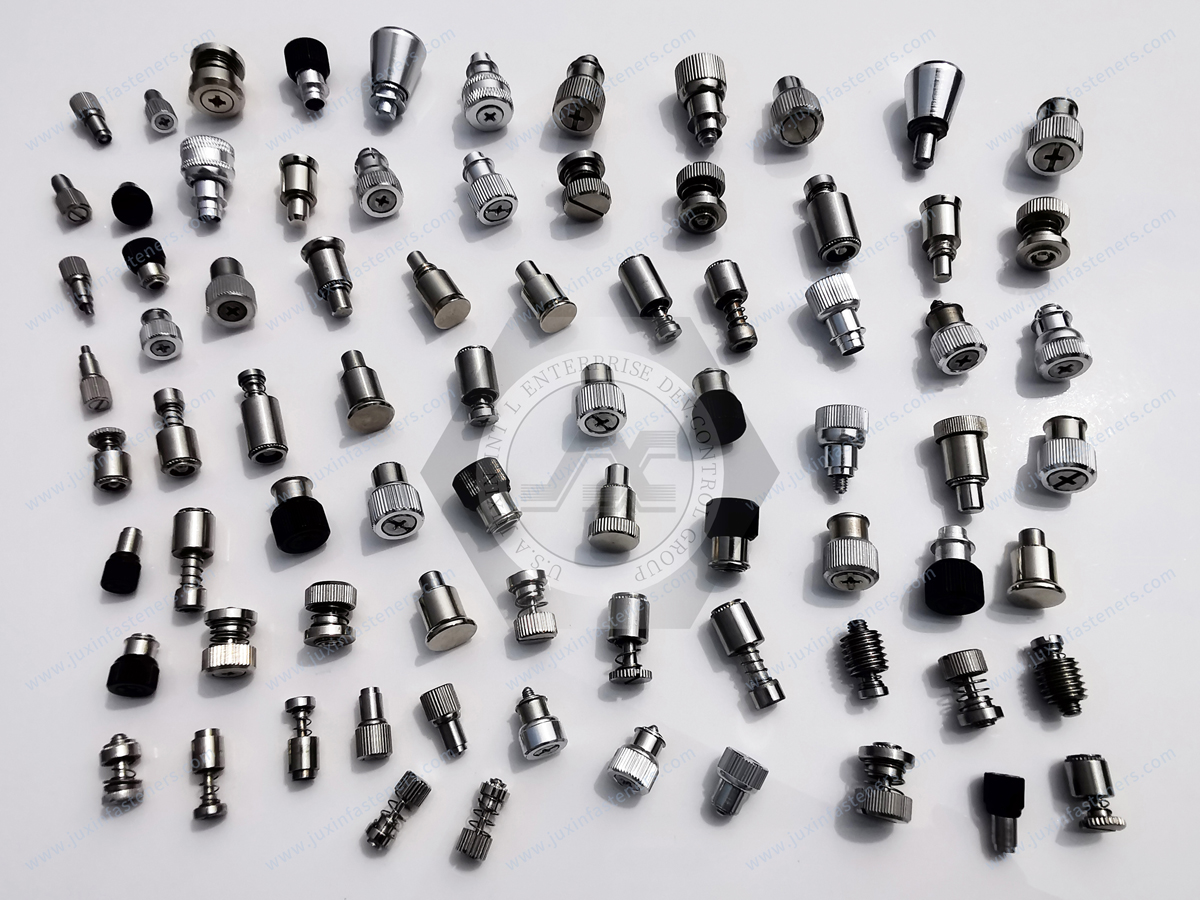
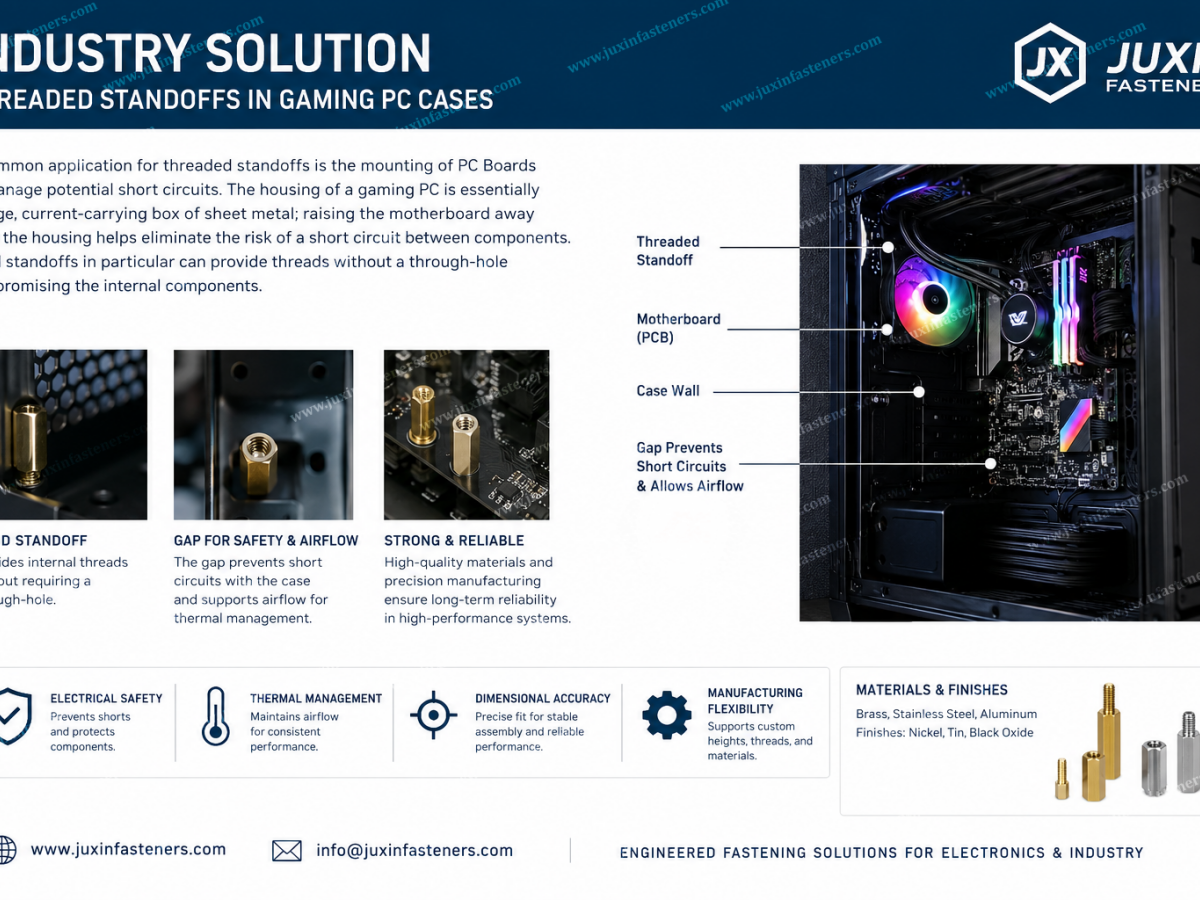
For related fastening requirements, explore:
A detailed guide to sheet compatibility, installation holes, push-out and torque-out performance.
Broader self-clinching fastener selection for thin sheet metal equipment.
Threaded fastening where installation access is limited to one side.
Rotational locking solutions for vibration-sensitive threaded joints.
Permanent threaded mounting interfaces with controlled spacing.
Welded threaded attachment for suitable fabricated structures.
These related solutions help engineers distinguish between permanent threading, blind-side installation, spacing and vibration locking.
Are you sourcing self-clinching nuts for:
Railway rolling stock interior equipment
Passenger information system enclosures
Railway electrical cabinets
HVAC control cabinets
Air-handling units
Commercial ventilation equipment
Industrial sheet metal enclosures
Equipment mounting brackets
JUXIN FASTENERS can review standard and drawing-based self-clinching nut requirements for industrial OEM applications.
For an efficient technical review, send:
Drawing + Thread Size + Panel Material + Panel Thickness + Installation Hole + Surface Finish + Required Retention + Quantity
If your project includes vibration, thermal cycling or special railway qualification requirements, please include the relevant specifications.
The objective is to select a self-clinching nut that works in the actual panel and operating environment—not merely one that matches the nominal thread size.
JUXIN FASTENERS
Website: www.juxinfasteners.com
Engineering & RFQ: info@juxinfasteners.com
Send your drawing and application requirements for technical review and quotation.
Product Packaging
Packaging Standard
At Juxin Fasteners, we apply standardized export packaging to ensure product protection, traceability, and compliance with international logistics requirements.
1. Standard Export Packaging
Unless otherwise specified, all products will be packed according to our factory standard export packaging, which includes:
Moisture-resistant inner protection
Poly bag or small box packing as required
Reinforced export cartons
Clear labeling with part number, specification, batch number, and quantity
Palletizing for sea or air shipment when necessary
Our standard packaging is designed to ensure safe transportation, efficient warehousing, and long-distance international shipping.
2. Customized Packaging Options
We also provide customized packaging solutions according to customer requirements, including but not limited to:
Private labeling
Customized barcodes
Specific carton dimensions
Retail packaging
Special pallet configuration
Customer-specific marking and identification
So that you know, customized packaging may involve additional costs and extended lead time depending on the complexity of the requirements.
3. Compliance & Quality Assurance
All packaging processes are controlled under our ISO 9001 quality management system to ensure consistency, traceability, and product integrity throughout the supply chain.
Product Pictures
Contact Us
Tel.:
+86 020 8621 0320
+86 020 3121 6067
E-mail:
Technical Support:
Navigation
SEND INQUIREY