Call Us
+86 136 6007 9809
Call Us
+86 136 6007 9809

Telecommunications cabinets, AI server enclosures, network equipment, power distribution units and industrial electrical cabinets increasingly rely
on thin-sheet metal structures to reduce weight, optimize internal space and simplify fabrication.
Product Specification
Telecommunications cabinets, AI server enclosures, network equipment, power distribution units and industrial electrical cabinets increasingly rely
on thin-sheet metal structures to reduce weight, optimize internal space and simplify fabrication.
But thin sheet creates a basic mechanical problem:
How do you create a strong, reusable machine thread when the parent sheet itself is too thin to provide sufficient thread engagement?
For many sheet-metal enclosure designs, self-clinching fasteners provide an effective solution.
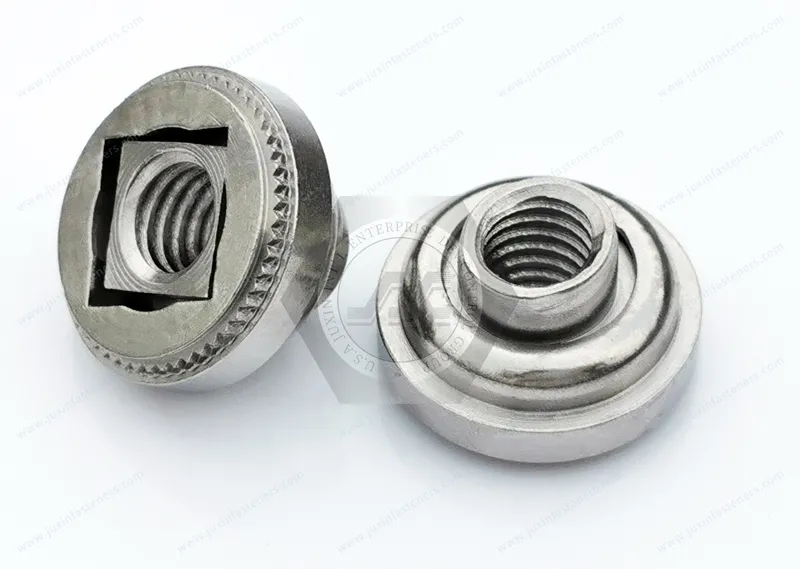
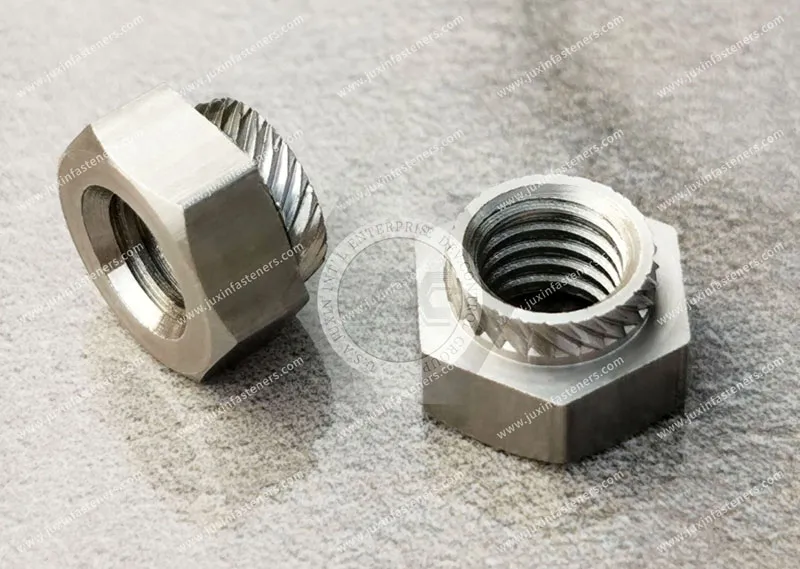
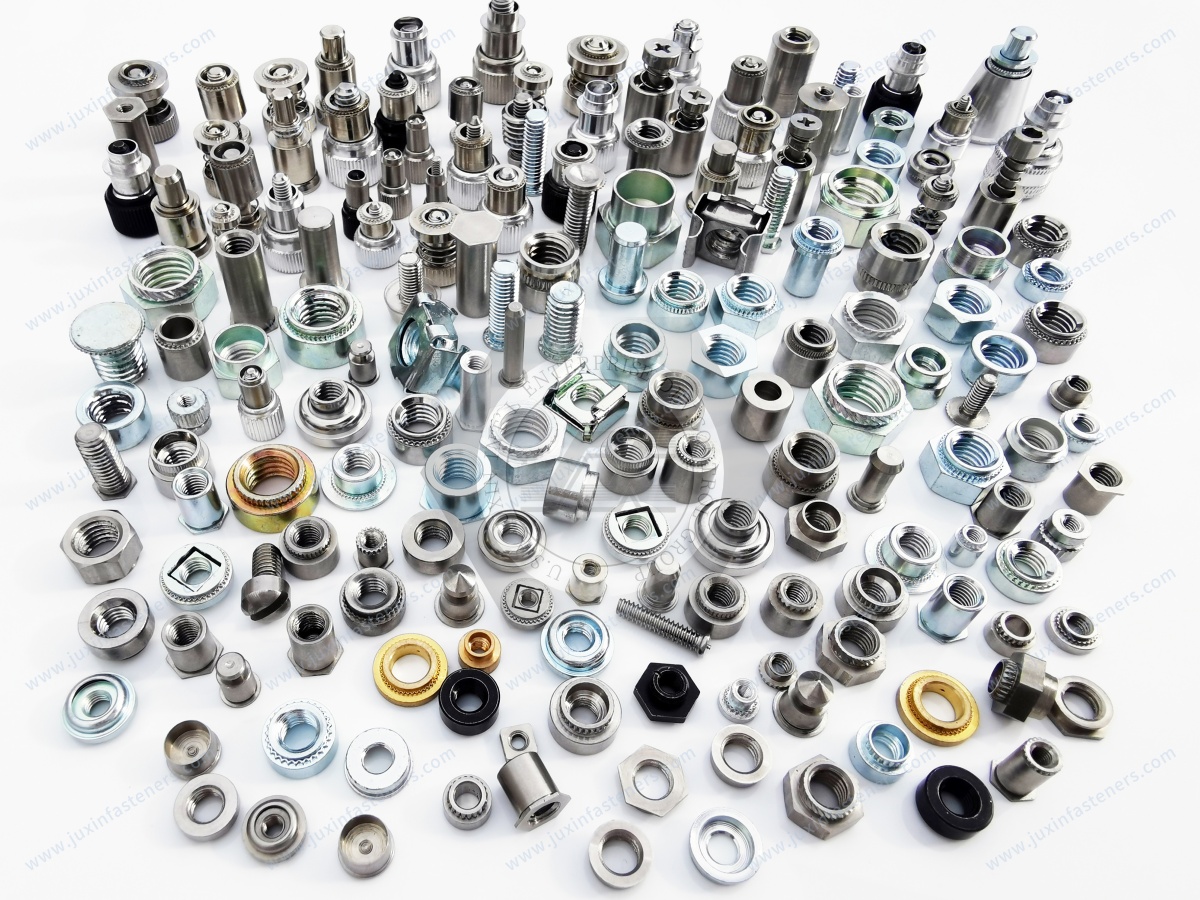
JUXIN FASTENERS supplies self-clinching nuts, self-clinching studs, self-clinching standoffs and miniature self-clinching fasteners for
OEM sheet-metal assemblies used in telecommunications, data infrastructure, electrical equipment and industrial electronics.
The correct self-clinching fastener, however, cannot be selected by thread size alone.
Sheet material, hardness, thickness, hole preparation, edge distance, installation access and the required mechanical function all influence whether a clinching fastener will perform correctly.
This guide explains how engineers and procurement teams should evaluate those variables before specifying a production fastener.
Self-clinching hardware is particularly useful where manufacturers need permanent threaded or mounting features in relatively thin sheet-metal components.
Typical applications include:
Potential fastening locations include:
Internal equipment mounting plates
Network equipment brackets
Power supply brackets
Cable-management assemblies
Door hardware
Internal support structures
Control electronics
Grounding-related mounting points
Removable service panels
Self-clinching fasteners can be used in:
GPU server chassis
Server covers
Internal structural brackets
Fan assemblies
Power supply mounts
Power shelves
Cable-management brackets
PCB mounting locations
Control electronics
Equipment trays
Potential applications include:
Internal mounting plates
Busbar support structures
Electrical component brackets
PCB mounting
Control modules
Protective covers
Power module supports
Cable-management hardware
The same fastening principles extend beyond data centers and telecommunications.
Self-clinching nuts, studs and standoffs are also relevant to:
Electrical control cabinets
Automation equipment
Industrial electronics
Power conversion equipment
HVAC control enclosures
Communication equipment
Lighting equipment
Instrumentation enclosures
The common engineering requirement is the creation of a reliable mounting feature in sheet metal without depending entirely on threads formed directly in the sheet.
A tapped thread requires sufficient material thickness to provide useful thread engagement.
When the sheet becomes relatively thin compared with the thread size, the available engagement decreases.
This can increase the risk of:
Thread stripping
Inconsistent tightening
Damage during repeated servicing
Cross-threading
Reduced joint repeatability
The exact limit cannot be defined by one universal sheet-thickness number because performance depends on:
Thread size
Sheet thickness
Sheet material
Material strength
Required tightening torque
Service load
Number of assembly cycles
This is why statements such as “all 1.0 mm sheet requires a self-clinching nut” are technically incomplete.
The correct decision comes from the complete joint.
A self-clinching fastener is installed into a correctly sized mounting hole using controlled pressing force.
The installation process causes the parent sheet material to flow into the fastener's retention features.
This creates a mechanical interlock between the fastener and the sheet.
Depending on the fastener design, the retention geometry may include features such as:
Undercuts
Annular grooves
Displacer features
Serrations or anti-rotation geometry
The objective is to create resistance to both:
Push-out — axial force attempting to remove the fastener from the sheet.
Torque-out — rotational force attempting to turn the fastener within the mounting hole.
These two performance characteristics should not be confused.
A fastener may experience different loading depending on its geometry and application.
The three product families solve different mechanical problems.
A self-clinching nut creates a reusable internal machine thread in sheet metal.
Typical applications include:
Chassis panels
Internal brackets
Equipment mounting plates
Server enclosures
Telecom cabinets
Electrical cabinets
Use a self-clinching nut when the design requires a female machine thread permanently retained in the sheet.
A self-clinching stud creates a permanently retained male threaded mounting point.
Typical applications include:
Equipment mounting
Bracket positioning
Electrical components
Cable-management hardware
Internal module mounting
A stud can be useful when assembly is easier by placing the component over a fixed threaded post before installing a nut or other retaining hardware.
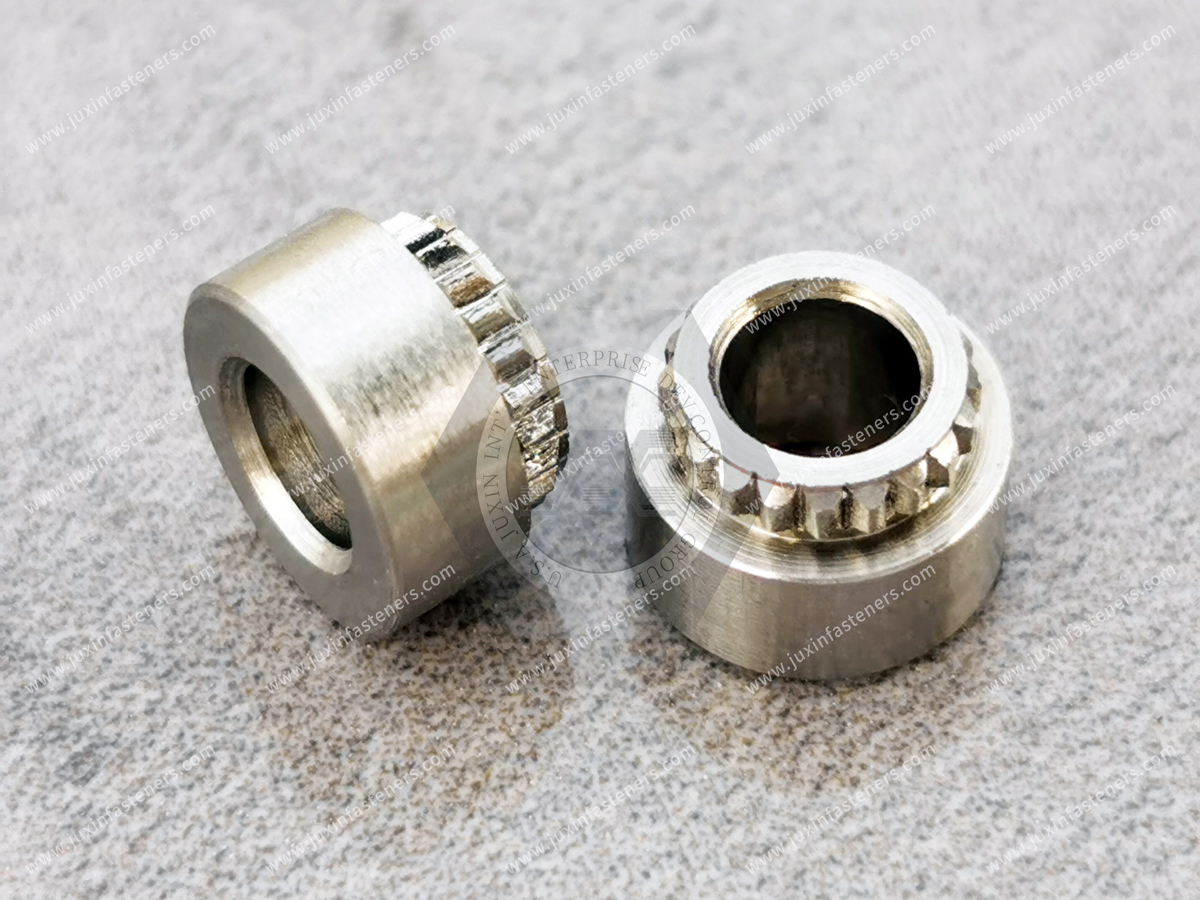
A self-clinching standoff combines mechanical attachment with controlled spacing.
Typical applications include:
PCB mounting
Electronic control boards
Sensor modules
Internal electronic assemblies
Component stacking
Use a standoff where the design requires a defined distance between the sheet-metal chassis and the mounted component.
One of the most useful rules in self-clinching fastener selection is:
Do not start with “I need an M4 nut.” Start with the sheet.
Before selecting the fastener, identify:
Sheet material
Sheet hardness
Sheet thickness
Available edge distance
Mounting-hole geometry
Installation access
Required thread
Expected mechanical load
Why?
Because self-clinching installation depends on controlled deformation of the parent material.
If the sheet does not deform appropriately around the fastener's retention geometry, the joint may not develop the expected retention.
The thread size alone tells the supplier very little about this interaction.
Engineers frequently focus on sheet thickness while overlooking material hardness.
But self-clinching fasteners rely on the parent sheet flowing into retention features during installation.
If the relationship between fastener hardness and sheet hardness is unsuitable, proper clinching may be difficult.
This means two sheets of identical thickness can behave differently if they are made from different materials or processed to different hardness levels.
For example, the correct solution for:
Cold-rolled steel
Galvanized steel
Stainless steel
Aluminum
may not necessarily be identical even when nominal sheet thickness is the same.
The fastener should therefore be selected according to the actual substrate specification.
The mounting hole for a self-clinching fastener should not be treated as an approximate clearance hole.
Hole diameter influences installation and retention.
A hole that is outside the intended range can affect how the sheet material flows around the fastener during pressing.
Important considerations include:
Hole diameter
Hole tolerance
Hole quality
Burr condition
Hole location
Distance from the sheet edge
This is why the mounting-hole requirement should be included on the sheet-metal drawing before production tooling is finalized.
Installing a clinching fastener too close to the edge of a panel can cause local deformation.
Potential problems can include:
Edge bulging
Panel distortion
Reduced retention
Cosmetic damage
The minimum practical edge distance depends on the fastener geometry, size, sheet material and thickness.
For compact telecom or server enclosures, this becomes particularly important because engineers are often trying to place many components within a limited space.
A few millimeters of packaging space can affect whether a selected fastener can be installed correctly.
This should be evaluated during DFM review rather than discovered during production.
Self-clinching hardware is not installed like a conventional rivet or threaded screw.
It normally requires controlled pressing force applied in the appropriate direction.
Too little installation force may result in incomplete seating.
Improper tooling or excessive force can deform the sheet or fastener.
Engineers should therefore consider:
Press access
Installation direction
Tooling geometry
Support of the sheet
Fastener orientation
Installation sequence
before releasing the enclosure design.
A theoretically suitable fastener can still become impractical if the finished component geometry prevents installation tooling from reaching the location.
Both products can create reusable machine threads in sheet metal, but they solve different manufacturing problems.
| Design Condition | Self-Clinching Nut | Blind Rivet Nut |
|---|---|---|
| Typical installation access | Press access normally required | One-sided installation possible |
| Retention principle | Sheet material flows into clinching features | Rivet nut body deforms to clamp sheet |
| Typical manufacturing stage | Sheet-metal fabrication | Fabrication, assembly or retrofit |
| Blind installation | Generally not the primary advantage | Major advantage |
| Application | Thin-sheet chassis and panels | Closed sections and blind-access structures |
| Replacement | Usually treated as permanently installed | Can be replaced with appropriate repair process |
The question is therefore not:
“Which fastener is stronger?”
A better question is:
“Which installation and retention method matches the structure and manufacturing sequence?”
For a flat chassis panel accessible to press tooling, a self-clinching nut may be appropriate.
For a closed frame where only one side is accessible, a rivet nut may be the more practical solution.
Weld nuts are another method of creating strong threaded attachment points in sheet-metal structures.
The two technologies fit different manufacturing strategies.
Self-clinching fasteners can avoid:
Welding heat input
Weld spatter
Local weld discoloration
Some post-weld cleaning requirements
Weld nuts, however, remain highly useful in many structural assemblies and should not be treated as an inferior technology.
A weld nut may be appropriate where:
The assembly is already welded
The substrate and geometry suit welding
Structural manufacturing processes already include resistance or projection welding
The required nut geometry is designed for welded attachment
A self-clinching fastener may be attractive where:
Press installation fits the production flow
Heat input is undesirable
Thin-sheet distortion must be minimized
A clean mechanical installation process is preferred
The correct choice depends on the manufacturing system, not marketing claims.
Aluminum is widely used where equipment manufacturers want lower weight or corrosion resistance.
However, aluminum sheet has different mechanical behavior from carbon steel.
When specifying a self-clinching fastener for aluminum, engineers should evaluate:
Aluminum alloy
Temper
Sheet thickness
Fastener material
Required retention
Installation force
Galvanic compatibility
Operating environment
Dissimilar-metal combinations can require additional consideration in outdoor or humid environments.
Material compatibility should therefore be reviewed as part of the complete enclosure design.
Stainless steel enclosures are used in applications requiring corrosion resistance, cleanliness or environmental durability.
But stainless steel sheet can present a different clinching condition from softer sheet materials.
The correct fastener must be selected according to the stainless sheet grade, hardness and thickness.
It is not technically correct to assume that a self-clinching fastener suitable for cold-rolled steel can automatically be installed into any stainless steel panel.
For stainless enclosure projects, send the actual sheet specification with the RFQ.
Outdoor telecommunications equipment may be exposed to:
Humidity
Rain
Condensation
Temperature cycling
Salt-containing environments
Atmospheric pollutants
Fastener corrosion resistance therefore matters.
Possible material and finish directions can include:
Stainless steel
Zinc-plated carbon steel
Zinc-nickel coated components
Other drawing-specified finishes
However, corrosion performance should not be defined by coating name alone.
Engineers and procurement teams should specify the required corrosion test or environmental requirement where applicable.
ASTM B117 salt spray testing, for example, is a laboratory corrosion test method.
The required exposure duration and acceptance criteria should come from the project specification rather than being assumed for every telecom cabinet.
This distinction prevents suppliers from substituting marketing claims for actual application requirements.
Telecom and electrical equipment can combine:
Aluminum panels
Carbon steel frames
Stainless fasteners
Copper conductors
Coated sheet metal
When dissimilar metals are electrically connected in the presence of an electrolyte, galvanic corrosion can become a design consideration.
The risk depends on more than the fastener material.
Factors include:
Metal combination
Surface area relationship
Coatings
Moisture exposure
Environmental severity
Electrical contact
Drainage and enclosure design
For outdoor equipment, material selection should therefore consider the entire joint rather than selecting stainless steel automatically.
Self-clinching fasteners are sometimes used at mounting or bonding locations in metal enclosures.
However, a mechanical fastener alone does not guarantee grounding continuity or EMI shielding performance.
Electrical performance can also depend on:
Paint and coating
Surface preparation
Contact geometry
Oxide layers
Joint pressure
Grounding architecture
Bonding hardware
Equipment design
If a clinching fastener forms part of an electrical bonding path, the electrical requirement should be defined and validated as part of the complete enclosure design.
This is especially important in telecommunications, data center and power electronics equipment where mechanical and electrical requirements overlap.
Self-clinching standoffs can simplify PCB installation by integrating the mounting point directly into the chassis.
Compared with using a loose spacer plus separate nut, an integrated standoff can reduce the number of loose components required during assembly.
Applications can include:
Network control boards
Server management boards
Power control electronics
PDU control boards
Communication modules
Industrial control electronics
Important selection parameters include:
Standoff height
Internal or external thread
Sheet thickness
Sheet material
PCB mounting-hole geometry
Electrical clearance
Service requirements
For very compact electronic assemblies, JUXIN can also evaluate miniature self-clinching fasteners where appropriate.
Some enclosure designs require the exterior panel surface to remain visually clean.
This can occur in:
Cabinet doors
Visible side panels
Equipment front panels
Interior architectural equipment
Commercial electronic enclosures
Depending on the exact panel geometry and cosmetic requirement, concealed or low-profile fastening concepts may be considered.
However, the allowable panel thickness, material and backside installation space must be evaluated before selecting the fastener.
For cosmetic surfaces, prototype evaluation is particularly useful because mechanical retention and visible panel quality must both be acceptable.
When a self-clinching fastener fails in production, the thread designation may not be the problem.
Common root causes can include:
The hole does not match the intended fastener geometry or tolerance.
The parent material cannot flow properly into the retention features.
The sheet deforms near the panel edge.
The fastener is not fully seated or the sheet becomes distorted.
The joint experiences push-out, torque-out or service loads that were not considered during selection.
For quality teams, these points are important because replacing the fastener supplier will not solve a problem caused by an incompatible sheet design or installation process.
Depending on product geometry and application requirements, JUXIN FASTENERS can evaluate self-clinching fasteners in material and finish combinations such as:
Common for general industrial sheet-metal applications where mechanical performance and cost efficiency are priorities.
Surface treatment can be specified according to the project requirement.
Available for applications requiring appropriate corrosion resistance or stainless material compatibility.
Material options can include 304 and 316L stainless steel depending on component design and requirements.
Applicable to selected lightweight fastening applications where the mechanical requirements and mating material are suitable.
Depending on the component and customer drawing, surface treatment requirements may include:
Zinc plating
Zinc-nickel plating
Stainless steel passivation
Other project-specific finishes
Corrosion requirements should be defined according to the actual equipment environment and customer specification.
For design engineers, begin with these questions:
What is the sheet material?
Cold-rolled steel, stainless steel, aluminum or another substrate?
What is the sheet thickness?
This affects the available clinching geometry.
What is the material hardness?
The parent sheet must interact correctly with the fastener retention features.
Is there enough edge distance?
Compact enclosure geometry can restrict installation.
Can press tooling reach the installation location?
A correct fastener is useless if it cannot be installed.
Do you need an internal thread, external stud or controlled spacer?
Choose nut, stud or standoff accordingly.
What load must the installed fastener resist?
Consider push-out, torque-out and the final assembled joint.
This decision path is more reliable than selecting a fastener from thread size alone.
Descriptions such as:
M4 self-clinching nut
M5 clinch nut
M3 standoff
M6 self-clinching stud
are useful starting points but are not complete production specifications.
For accurate evaluation, procurement teams should provide:
Fastener type
Thread size and pitch
Sheet material
Sheet thickness
Sheet hardness where known
Mounting-hole diameter
Required standoff height where applicable
Stud length where applicable
Fastener material
Surface finish
Application environment
Drawing or CAD file
Sample quantity
Production quantity
Inspection requirements
Packaging requirements
If the existing part is being replaced, providing the current drawing and assembly information can significantly reduce specification uncertainty.
Comparing only unit price can hide important differences.
For self-clinching fasteners, supplier comparison should also consider:
Material specification
Dimensional consistency
Thread quality
Mounting-hole compatibility
Retention geometry
Surface treatment
Sample approval
Production repeatability
Inspection requirements
Packaging
Drawing revision control
For OEM projects, the lowest-priced component is not necessarily the lowest-cost solution if installation problems create panel scrap, rework or line stoppage.
Before finalizing a telecom cabinet, server chassis or electrical enclosure drawing, confirm:
Correct sheet material
Correct sheet thickness
Suitable sheet hardness
Fastener installation direction
Sufficient edge distance
Correct mounting-hole diameter
Tool access
Press access
Clearance behind the panel
Surface treatment sequence
Final assembly sequence
Service access
This review should happen before production tooling and enclosure geometry are frozen.
Moving the mounting hole later can be much more expensive than selecting the correct fastener earlier.
For standard and customized self-clinching fastener projects, a typical development path may include:
Application Requirement → Sheet & Joint Review → Fastener Selection → Drawing Confirmation → Sample Evaluation → Golden Sample Approval → Production
For customized components, tooling and manufacturing requirements can be evaluated after the drawing is reviewed.
JUXIN FASTENERS supports OEM manufacturers, sheet-metal fabricators, equipment integrators,
electrical equipment manufacturers and industrial supply chains with standard and drawing-based fastening components.
This page focuses specifically on self-clinching technology.
For applications requiring other fastening methods, related JUXIN engineering solutions include:
AI Data Center Server Rack & Cabinet Fastening Solutions — for complete rack, chassis, PDU and data center fastening architecture
Blind Rivet Nuts — for one-sided installation and closed sheet-metal structures
Cage Nuts and Floating Nuts — for rack rails and applications requiring positional adjustment
Weld Nuts — for welded structural sheet-metal assemblies
PCB Supports and Standoffs — for electronic equipment mounting
Nylon and Engineering-Plastic Fasteners — for insulation, spacing and selected electronic assemblies
All-Metal Lock Nuts — for suitable vibration and prevailing-torque applications
Custom CNC-Machined Components — for drawing-based non-standard fastening requirements
These technologies should be selected according to the actual joint rather than treated as interchangeable products.
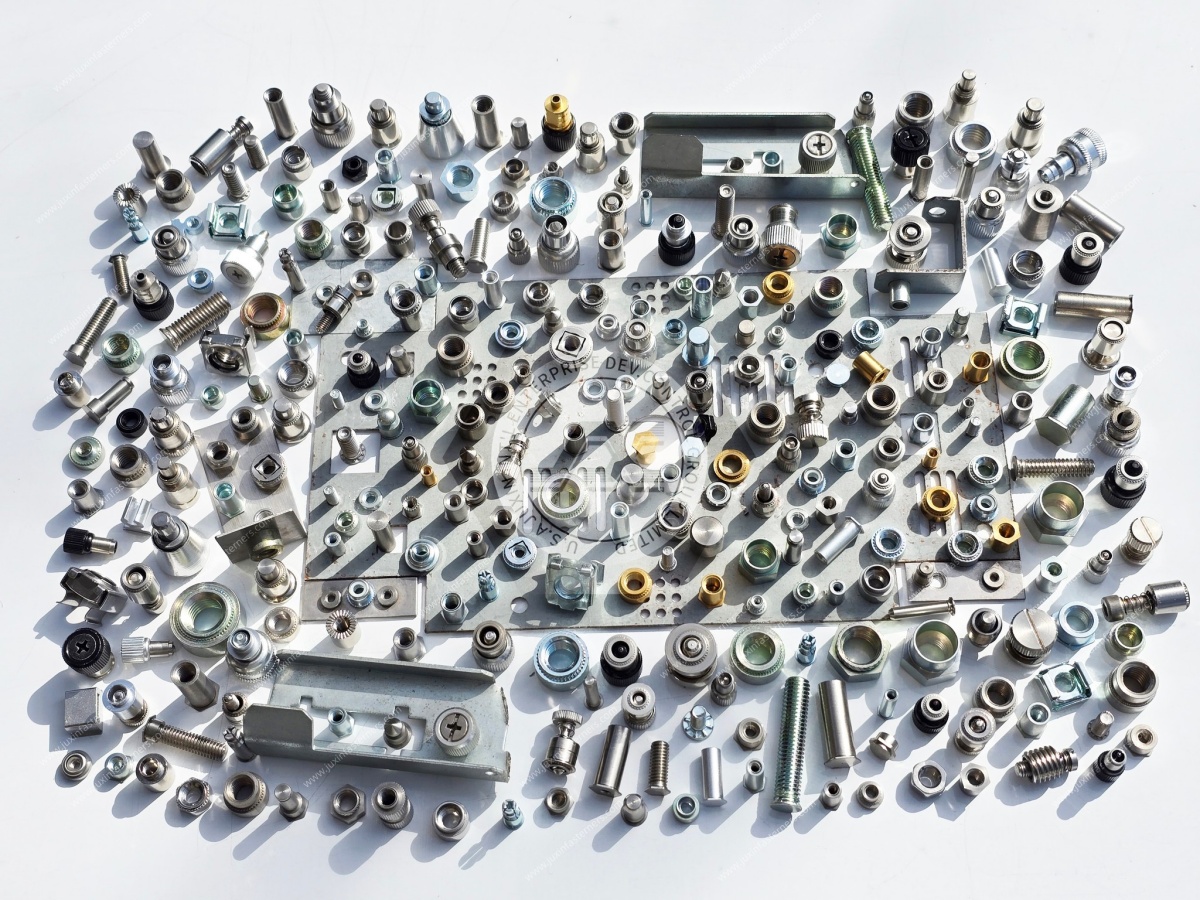
If you are designing or sourcing fastening components for:
Telecom cabinets
Outdoor telecommunications enclosures
Base station equipment
AI server chassis
GPU server cabinets
Data center equipment
Network cabinets
PDU enclosures
UPS systems
Power conversion equipment
Electrical control cabinets
Industrial electronics
send us your 2D drawing, 3D model where available, sheet material, sheet thickness, mounting-hole information, required thread and estimated quantity.
For self-clinching applications, providing the actual sheet specification is particularly important because fastener selection depends on the interaction between the fastener and parent material.
JUXIN FASTENERS can review the application and evaluate suitable self-clinching nuts, studs, standoffs or customized fastening components according to the assembly requirements.
JUXIN FASTENERS
Website: www.juxinfasteners.com
Engineering & RFQ: info@juxinfasteners.com
Product Packaging
Packaging Standard
At Juxin Fasteners, we apply standardized export packaging to ensure product protection, traceability, and compliance with international logistics requirements.
1. Standard Export Packaging
Unless otherwise specified, all products will be packed according to our factory standard export packaging, which includes:
Moisture-resistant inner protection
Poly bag or small box packing as required
Reinforced export cartons
Clear labeling with part number, specification, batch number, and quantity
Palletizing for sea or air shipment when necessary
Our standard packaging is designed to ensure safe transportation, efficient warehousing, and long-distance international shipping.
2. Customized Packaging Options
We also provide customized packaging solutions according to customer requirements, including but not limited to:
Private labeling
Customized barcodes
Specific carton dimensions
Retail packaging
Special pallet configuration
Customer-specific marking and identification
So that you know, customized packaging may involve additional costs and extended lead time depending on the complexity of the requirements.
3. Compliance & Quality Assurance
All packaging processes are controlled under our ISO 9001 quality management system to ensure consistency, traceability, and product integrity throughout the supply chain.
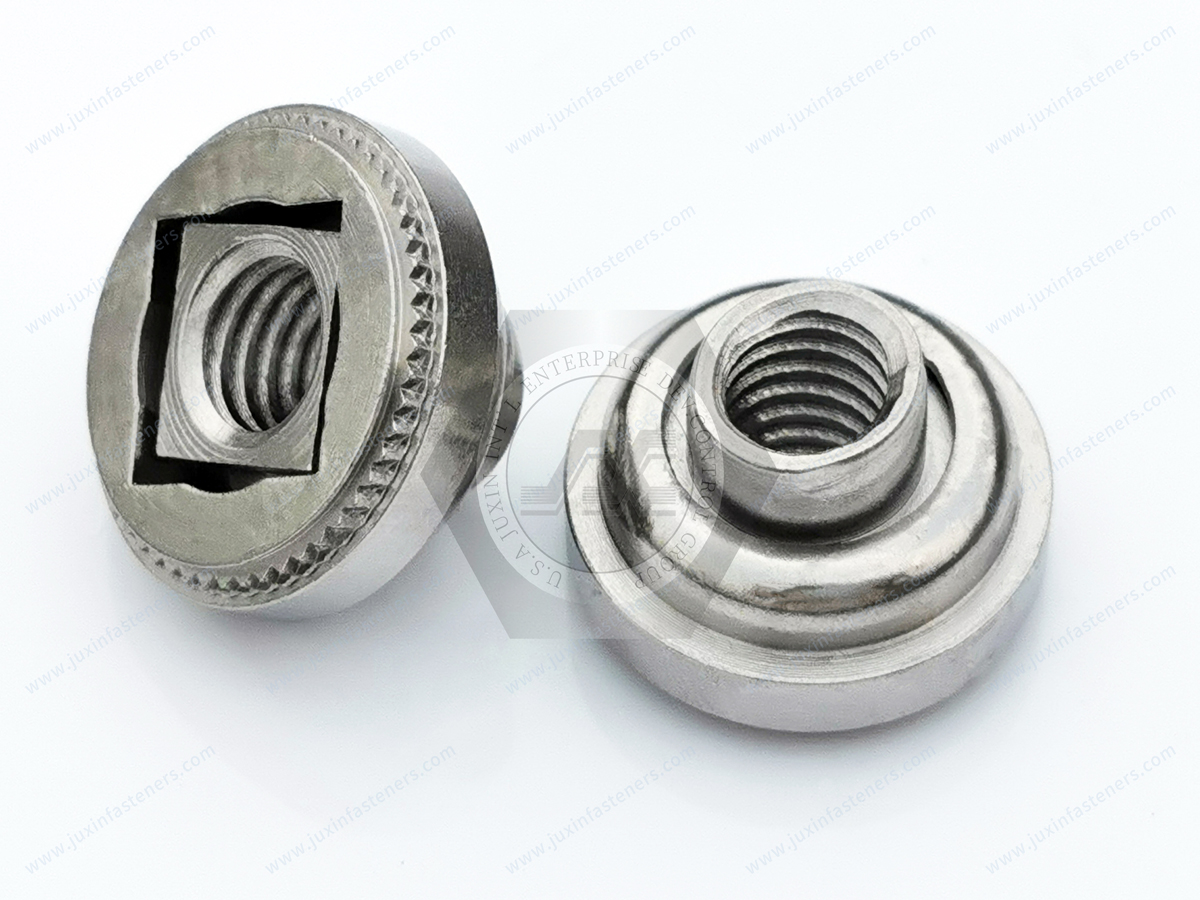
Product Pictures
Hot Products
Contact Us
Tel.:
+86 020 8621 0320
+86 020 3121 6067
E-mail:
Technical Support:
Navigation
SEND INQUIREY