Call Us
+86 136 6007 9809
Call Us
+86 136 6007 9809

AI data centers are changing the mechanical design requirements of server racks, GPU server cabinets, power distribution units,
UPS systems, power conversion equipment, cooling hardware, and supporting electrical enclosures.
Higher computing density does not simply mean installing more servers into a conventional rack.
Modern AI infrastructure integrates high-density GPU compute systems, power shelves, rack-level power distribution,
high-capacity cooling systems, busbars, cable-management assemblies, control electronics,
and increasingly complex monitoring hardware within limited mechanical space.
Product Specification
AI data centers are changing the mechanical design requirements of server racks, GPU server cabinets, power distribution units, UPS systems, power conversion equipment,
cooling hardware, and supporting electrical enclosures.
Higher computing density does not simply mean installing more servers into a conventional rack.
Modern AI infrastructure integrates high-density GPU compute systems, power shelves, rack-level power distribution,
high-capacity cooling systems, busbars, cable-management assemblies, control electronics, and increasingly complex monitoring hardware within limited mechanical space.
Behind these systems is an important mechanical engineering challenge:
How can manufacturers create strong, repeatable, serviceable threaded attachment points in thin sheet metal while maintaining alignment,
assembly efficiency, electrical clearance, and long-term joint reliability?
JUXIN FASTENERS supplies engineered fastening components for sheet-metal assemblies, electrical equipment,
telecommunications hardware, server cabinets, industrial enclosures, and related equipment manufacturing.
Relevant product families include:
Self-clinching nuts
Self-clinching studs
Self-clinching standoffs
Miniature self-clinching fasteners
Blind rivet nuts
Full-hex and half-hex rivet nuts
Round and knurled rivet nuts
Cage nuts and floating nut assemblies
Weld nuts
All-metal prevailing-torque lock nuts
Nylon insert lock nuts
PCB supports and standoffs
Nylon screws, nuts, washers, and spacers
Insulation components
Custom cold-formed fasteners
Custom CNC-machined fastening components
For AI data center equipment manufacturers, the objective is not simply to select a screw or nut.
The more important engineering decision is selecting the correct thread-generation, retention, alignment,
and mounting method for the actual enclosure structure and assembly process.
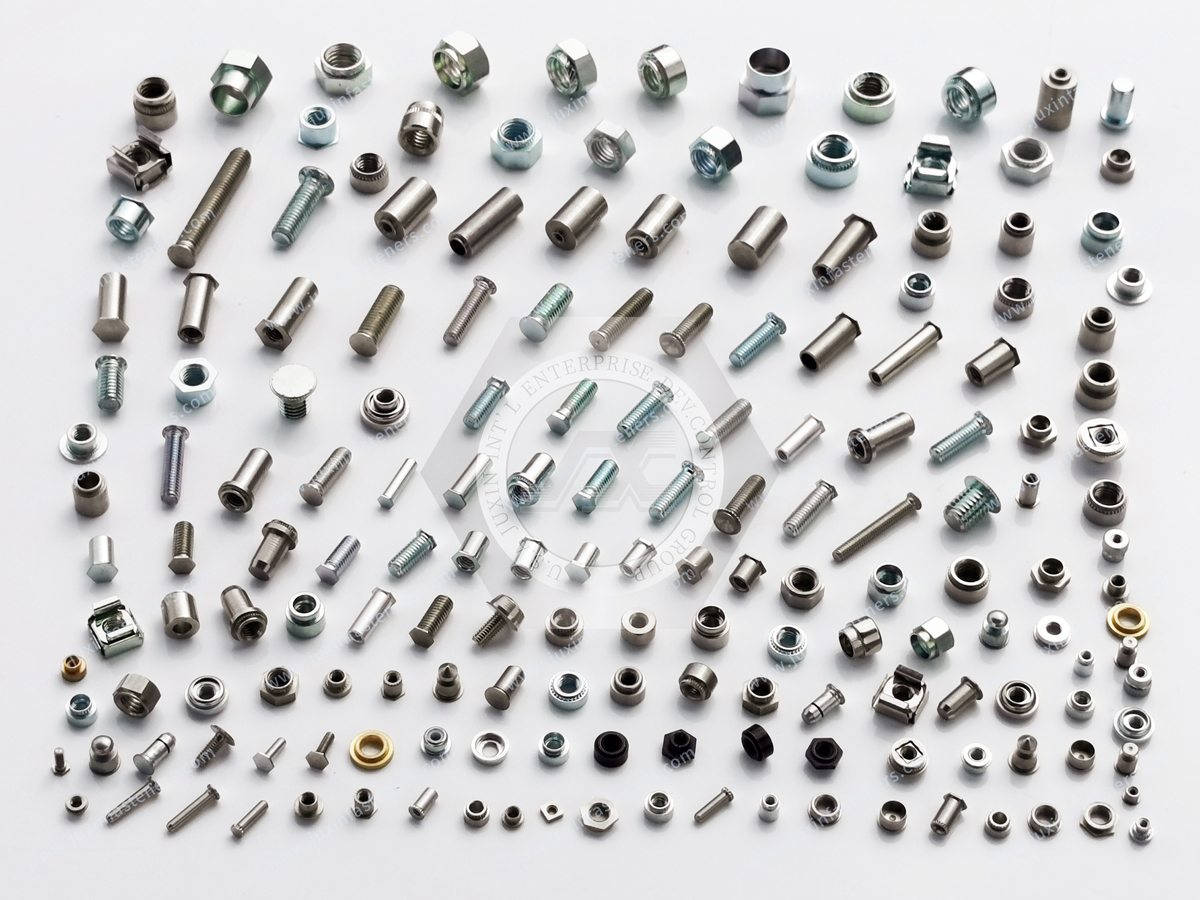
Fastener requirements vary significantly according to the location of the joint, sheet-metal structure, service requirements, and assembly sequence.
Typical fastening locations include:
Vertical mounting rails
Horizontal structural members
Side panels
Rear panels
Top and bottom panels
Door assemblies
Cable-management brackets
Fan mounting brackets
Internal equipment support rails
Power equipment mounting brackets
Grounding and accessory mounting locations
These structures may use combinations of cage nuts, rivet nuts, self-clinching nuts, weld nuts, machine screws, standoffs, and locking fasteners.
GPU servers and high-density compute systems require large numbers of compact fastening points within limited internal space.
Applications can include:
Chassis covers
Internal structural brackets
Fan modules
Power supply mounting
Cable-management hardware
PCB mounting
Internal partitions
Card-support structures
Power module brackets
Control electronics
Thin sheet material and restricted tool clearance make self-clinching nuts, miniature self-clinching fasteners, studs, and threaded standoffs particularly relevant.
Rack PDUs and related power distribution equipment may require fastening solutions for:
Sheet-metal enclosure panels
Busbar supports
Terminal mounting
PCB assemblies
Protective covers
Internal brackets
Cable-management components
Service-access panels
Electrical isolation components
In these applications, mechanical strength is only one consideration.
Electrical clearance, insulation, accessibility, maintenance procedures, material compatibility, and assembly sequence can also influence fastener selection.
UPS systems, rectifiers, inverters, and power conversion equipment commonly combine:
Sheet-metal housings
Power electronics
Copper conductors
Control boards
Cooling systems
Cable assemblies
Internal structural brackets
Electrical insulation components
A single enclosure may therefore require several different fastening technologies rather than one universal fastener type.
One of the most common fastening challenges in server cabinet and electrical enclosure manufacturing is creating reliable internal threads in thin sheet metal.
Directly tapping thin sheet provides limited thread engagement.
As sheet thickness decreases, conventional tapped holes can become unsuitable for joints requiring higher tightening torque, repeated servicing,
or greater resistance to thread stripping.
The engineering question therefore becomes:
Should the thread be created directly in the sheet, or should a separate threaded fastener be mechanically integrated into the sheet?
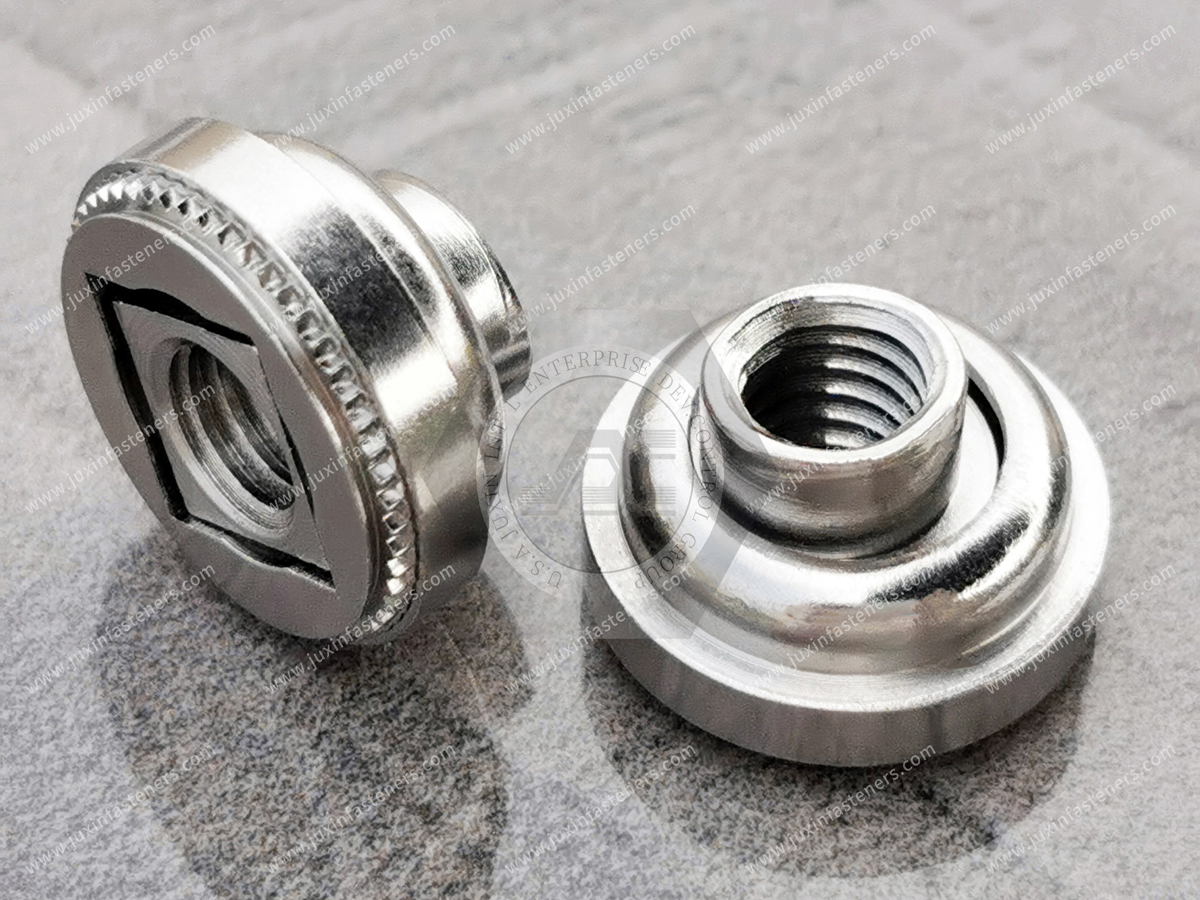
Self-clinching nuts are installed into correctly prepared sheet-metal holes using controlled pressing force.
During installation, the parent sheet material flows into the retention geometry of the fastener, creating a mechanically retained threaded attachment point.
Typical applications include:
Server chassis
GPU server enclosures
Electrical cabinets
Internal mounting brackets
Equipment trays
Power shelves
Control cabinets
Telecommunications enclosures
However, specifying only a thread size such as “M4 self-clinching nut” or “M6 self-clinching nut” is not sufficient for engineering selection.
Important variables include:
Sheet material
Sheet thickness
Parent material hardness
Mounting-hole diameter
Hole tolerance
Distance from mounting hole to sheet edge
Installation force
Thread size
Fastener material
Required push-out resistance
Required torque-out resistance
Assembly load direction
A self-clinching fastener should therefore be selected according to the complete sheet-fastener-joint combination, not according to thread size alone.
Not every server rack or data center enclosure provides access to both sides of the sheet during assembly.
Tubular structures, closed profiles, completed cabinet sections, and certain equipment frames may make conventional nut-and-bolt installation impractical.
This is where blind rivet nuts, also known as threaded rivet nuts, blind threaded inserts, or rivnuts, can provide an effective fastening solution.
JUXIN FASTENERS supplies multiple rivet nut configurations, including:
Round-body rivet nuts
Knurled-body rivet nuts
Full-hex rivet nuts
Half-hex rivet nuts
Open-end rivet nuts
Closed-end rivet nuts
Flat-head rivet nuts
Countersunk rivet nuts
A blind rivet nut can be considered when:
Only one side of the assembly is accessible
The sheet is too thin for sufficient tapped-thread engagement
Welding is undesirable
An existing enclosure requires an additional threaded mounting point
Assembly sequence prevents access to a conventional rear nut
A removable machine-screw joint is required in thin material
For procurement teams, specifying only “M6 rivet nut” does not provide enough information for reliable sourcing.
A useful RFQ should also identify:
Sheet thickness
Sheet material
Mounting-hole geometry
Required grip range
Head style
Body style
Open-end or closed-end construction
Fastener material
Surface finish
Installation method
Expected mechanical load
Application environment
These parameters determine whether the selected rivet nut is appropriate for the actual cabinet structure.
Server racks introduce another fastening challenge: dimensional stack-up.
Rack rails, structural members, brackets, and installed equipment are manufactured as separate components. Small dimensional variations can accumulate across the assembly.
A completely rigid threaded position can therefore make rack-mounted equipment unnecessarily difficult to install.
This is one reason cage nuts and floating nut assemblies are widely relevant to rack and cabinet fastening.
The threaded element is allowed limited controlled movement within the retaining structure, helping compensate for alignment variation between the rack rail and installed equipment.
Typical applications include:
19-inch server racks
AI server cabinets
Network cabinets
Telecommunications racks
Rack-mounted switches
PDU mounting
Equipment support rails
Removable rack accessories
An important engineering principle is:
Controlled thread float is not necessarily the result of poor tolerance control. In the correct assembly,
limited movement is intentionally designed to compensate for positional variation and simplify equipment installation.
Data center equipment is not always assembled once and left untouched throughout its service life.
Fans, power modules, electronic assemblies, covers, filters, cooling components, and other modules may require inspection, replacement, or upgrading.
Repeated servicing changes the requirements of the threaded joint.
A fastening point that performs adequately during initial factory assembly may not be the best solution after repeated removal and reinstallation.
Mechanical engineers should consider:
Expected number of assembly and service cycles
Thread wear
Tool accessibility
Risk of loose hardware
Risk of cross-threading
Replacement procedures
Field-service conditions
Whether the threaded element itself should be replaceable
For frequently serviced locations, cage nuts, replaceable threaded inserts, captive fastening arrangements,
or other service-friendly fastening systems may offer advantages over threads formed directly in thin sheet metal.
The term “vibration-resistant fastener” is too broad to be useful without understanding the actual joint.
Potential vibration sources in AI data center equipment can include:
High-speed cooling fans
Pumps in liquid-cooling systems
Equipment transportation
Handling and installation
Rotating auxiliary equipment
Repeated door or panel operation
Different joints may therefore require different approaches to maintaining clamp load and preventing unwanted loosening.
Where prevailing torque is appropriate, JUXIN FASTENERS supplies all-metal prevailing-torque lock nuts and nylon insert lock nuts for suitable industrial applications.
The correct locking method should be selected according to:
Joint temperature
Fastener material
Mating material
Required preload
Service environment
Maintenance requirements
Installation method
The same locking solution should not automatically be specified throughout the entire server cabinet.
There is no universally “best” threaded fastener for AI server cabinets.
The correct solution depends on the enclosure structure and manufacturing process.
| Engineering Condition | Typical Fastening Direction | Engineering Reason |
|---|---|---|
| Thin sheet with press access during manufacturing | Self-clinching nut | Creates an integrated reusable machine thread in thin sheet |
| Blind assembly with access from only one side | Blind rivet nut | Can be installed without rear-side access |
| Rack rail requiring positional compensation | Cage nut or floating nut | Controlled movement helps accommodate mounting variation |
| Welded structural sheet-metal assembly | Weld nut | Threaded feature can be integrated during fabrication |
| PCB or electronic module requiring controlled spacing | Threaded standoff | Provides repeatable mechanical spacing and mounting height |
| Frequently serviced equipment | Captive or replaceable fastening system | Reduces loose hardware risk and simplifies maintenance |
This decision should ideally be made during mechanical design and DFM review rather than after the enclosure has already entered production.
This is a common engineering and sourcing question.
The answer depends primarily on the manufacturing process.
A self-clinching nut is often suitable when the sheet-metal component is still accessible to press tooling during fabrication.
A rivet nut becomes particularly useful when only one side of the finished structure can be accessed.
For a new sheet-metal enclosure, self-clinching hardware may provide a compact integrated fastening point when sheet material,
hardness, thickness, edge distance, and installation access are appropriate.
For an assembled frame, tubular section, retrofit, or blind-access location, a rivet nut may be more practical.
The decision should therefore start with assembly access and sheet condition, not with the thread size.
These two products solve different problems.
A cage nut provides a removable threaded element with controlled positional float and is particularly useful where rack-mounted equipment must align with mounting rails.
A rivet nut creates a more fixed threaded position in the sheet or structural member.
For equipment mounting rails where alignment compensation is valuable, cage nuts may be preferable.
For structural brackets, closed profiles, or locations where a permanent fixed threaded point is required, rivet nuts may be more appropriate.
This distinction is important for both rack designers and procurement teams because two fasteners with the same thread size can perform very different mechanical functions.
Engineers frequently ask:
“Our cabinet uses 1.0 mm sheet. Which nut should we use?”
Sheet thickness is important, but it is only one variable.
Fastener performance also depends on:
Parent material type
Parent material hardness
Mounting-hole diameter
Hole tolerance
Distance from the sheet edge
Installation method
Fastener material
Fastener geometry
Load direction
Tightening torque
Frequency of servicing
For example, two panels with the same nominal thickness but different material hardness may behave differently during self-clinching installation.
Likewise, the same rivet nut installed into different hole geometries or different sheet materials may provide different resistance to rotation.
For this reason, JUXIN recommends evaluating the complete joint condition before confirming a production fastener.
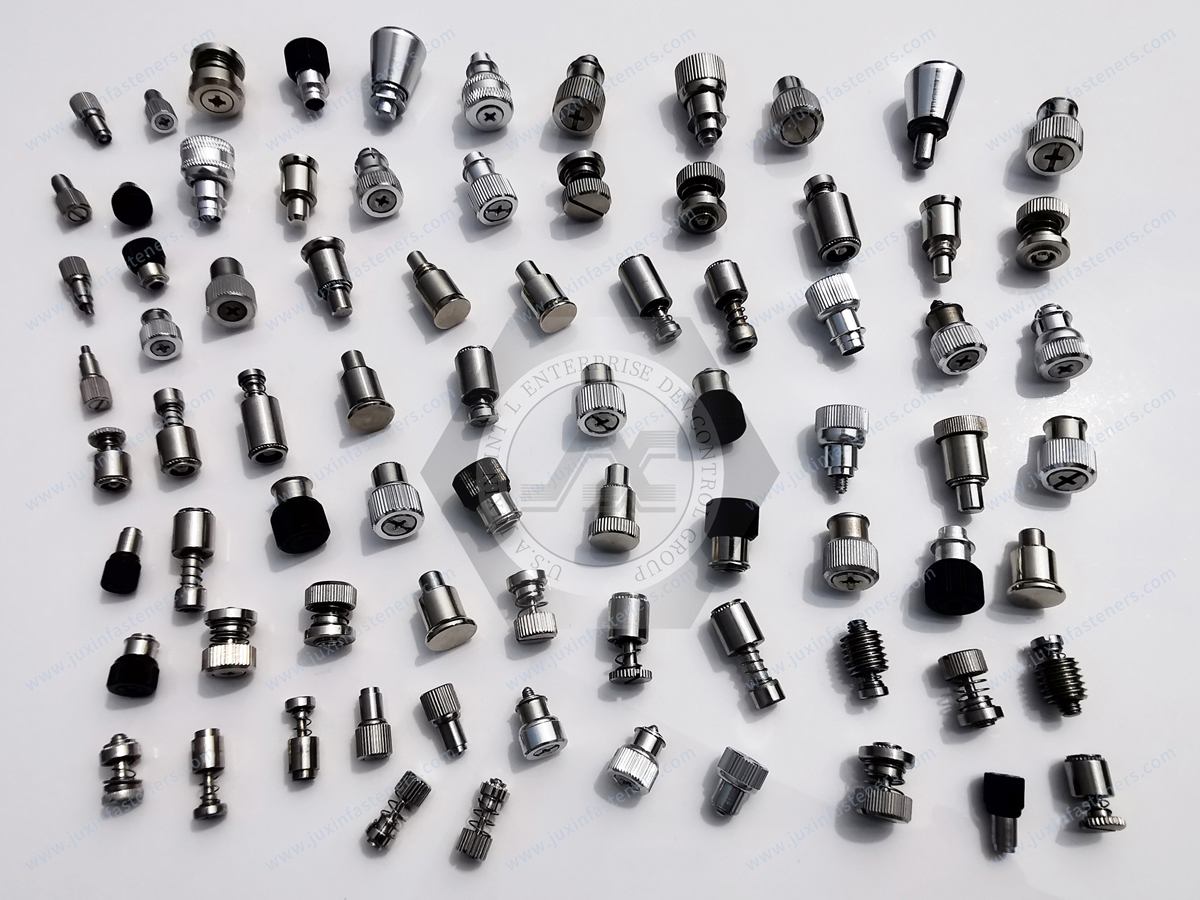
AI infrastructure contains extensive control electronics in addition to high-power compute hardware.
PCB and electronic module mounting may require:
Threaded standoffs
Miniature self-clinching standoffs
Nylon spacers
PCB supports
Nylon screws
Nylon nuts
Nylon washers
Insulating hardware
These components can support:
Controlled PCB-to-chassis spacing
Mechanical board support
Electrical isolation where required by the equipment design
Simplified assembly
Separation between electronic components and metal enclosures
JUXIN FASTENERS supplies both metal and engineering-plastic fastening components for electrical and electronic equipment assemblies.
Available engineering-plastic materials can include:
PA6
PA66
POM / Acetal
PC
PP
PVDF
PEEK
PTFE
Material selection should be based on the actual application requirements, including temperature, electrical performance, mechanical loading,
moisture exposure, chemical environment, and applicable equipment specifications.
As rack-level power density increases, power distribution hardware becomes increasingly important in AI data center mechanical design.
Busbars, terminals, power modules, and supporting structures may combine:
Copper
Aluminum
Carbon steel
Stainless steel
Engineering plastics
Insulating supports
Fasteners used around these assemblies should not be selected according to tensile strength alone.
Depending on the equipment design, engineers may also need to consider:
Electrical clearance
Creepage requirements
Insulation
Thermal expansion
Galvanic compatibility
Contact pressure
Tool accessibility
Maintenance procedures
JUXIN can supply metal fastening components together with selected nylon washers, insulating spacers, plastic nuts, plastic screws,
and custom insulation components for assemblies where mechanical fastening and electrical separation interact.
Final electrical-system requirements must always be determined by the equipment designer according to the applicable equipment design and safety requirements.
Fastener material should be selected according to the joint rather than applying one material specification across the entire cabinet.
Carbon steel is suitable for many structural enclosure, rack, chassis, and internal bracket applications where mechanical strength,
manufacturing efficiency, and surface treatment flexibility are important.
Surface treatment can be selected according to the required application environment and drawing specification.
Austenitic stainless steel fasteners can be considered where corrosion resistance, cleanliness, or environmental durability is important.
Common material families supplied by JUXIN include:
A2 / 304 stainless steel
316 / 316L stainless steel
The stainless steel grade should be selected according to the actual operating environment rather than assuming stainless steel is required throughout the complete server rack.
Aluminum fastening components may be considered for selected lightweight assemblies or applications where compatibility with aluminum structures is important.
Plastic fastening components can provide electrical insulation, low weight, corrosion resistance, and other application-specific advantages.
Available material options may include:
PA6
PA66
POM / Acetal
PC
PP
PVDF
PEEK
PTFE
No single plastic material is suitable for every data center application.
Temperature, mechanical load, electrical requirements, moisture absorption, chemical exposure,
and any applicable flame-performance requirements should be evaluated before final material selection.
Typical fastening directions can include:
Self-clinching nuts
Self-clinching studs
Miniature self-clinching fasteners
Threaded standoffs
PCB supports
Machine screws
Nylon spacers
Nylon washers
Typical fastening directions can include:
Cage nuts
Floating nut assemblies
Rivet nuts
Self-clinching nuts
Weld nuts
Lock nuts
Threaded studs
Custom fastening components
Typical fastening directions can include:
Self-clinching nuts and studs
Threaded standoffs
Rivet nuts
Insulating washers
Nylon hardware
Lock nuts
Typical fastening directions can include:
Weld nuts
Self-clinching nuts
Rivet nuts
All-metal lock nuts
Threaded standoffs
Insulating components
Typical fastening directions can include:
Cage nuts
Rivet nuts
Self-clinching hardware
Standoffs
PCB supports
Plastic fastening components
Depending on the mechanical design, fastening requirements may include:
Sheet-metal enclosure fasteners
Mounting studs
Rivet nuts
Self-clinching hardware
Locking fasteners
Bracket fasteners
Insulating components
The correct selection depends on the enclosure structure, cooling architecture, vibration environment, maintenance requirements, and assembly access.
One of the most expensive fastening problems occurs when engineers discover too late that the selected threaded hardware is incompatible with the finished sheet-metal design.
Fastener selection can influence:
Mounting-hole diameter
Sheet thickness
Edge distance
Press access
Installation direction
Tooling clearance
Coating sequence
Welding sequence
Assembly sequence
Service accessibility
For example, specifying a self-clinching nut after the sheet-metal geometry has already been finalized may reveal insufficient edge distance or inadequate access for installation tooling.
Likewise, choosing a rivet nut late in the project can affect mounting-hole preparation, installation access, coating considerations, and production sequence.
For new AI server cabinet, GPU chassis, PDU, UPS, or electrical enclosure projects,
fastening architecture should therefore be considered during DFM and mechanical design review, rather than treated as a final purchasing item.
For design engineers, the fastest path to the correct fastener is usually to identify the mechanical problem first.
Ask:
Is the sheet too thin to tap?
Consider self-clinching fasteners or rivet nuts.
Can the assembly be accessed from only one side?
Consider blind rivet nuts.
Does the threaded position need alignment compensation?
Consider cage nuts or floating nut systems.
Is the structure already designed for welded fabrication?
Evaluate weld nuts.
Does the PCB or electronic module require controlled spacing?
Evaluate threaded standoffs, PCB supports, or insulating spacers.
Will the joint be repeatedly opened during maintenance?
Evaluate serviceability, thread durability, replaceability, and captive hardware requirements.
This problem-first selection method is more reliable than starting with a generic fastener catalog.
For procurement managers and supplier development teams, the most common sourcing problem is an incomplete fastener specification.
Descriptions such as:
M5 rivet nut
M6 cage nut
M4 self-clinching nut
Stainless steel standoff
may describe the general product family but still leave critical engineering variables undefined.
A production RFQ should identify as much of the following information as possible:
2D drawing or 3D model
Fastener type
Thread size and pitch
Sheet material
Sheet thickness
Mounting-hole dimensions
Available installation access
Required fastener material
Surface finish
Expected tightening torque
Mechanical load direction
Corrosion requirement
Operating environment
Annual or project quantity
Prototype or sample quantity
Packaging requirements
Labeling requirements
Inspection requirements
For customized components, a technical drawing is strongly preferred.
This allows the supplier to evaluate the actual application rather than quoting only from a generic catalog description.
Different stakeholders evaluate the same fastener from different perspectives.
JUXIN can support discussions involving:
Fastener type selection
Thin-sheet attachment methods
Material alternatives
Thread configuration
Installation constraints
Custom geometry
Sample evaluation
Drawing-based manufacturing
DFM considerations
Important sourcing considerations can include:
Material specification
Dimensional requirements
Surface treatment
Production quantity
Packaging
Inspection requirements
Lead time
Logistics requirements
Sample approval
Supplier qualification may also require consideration of:
Drawing revision control
Material consistency
Manufacturing process stability
Sample approval
Batch identification
Packaging control
Production repeatability
Communication of engineering changes
The objective is to convert the mechanical requirement into a clearly controlled production specification.
For a new or customized fastening project, the development path can typically follow:
Application Requirement → Drawing Review → Material and Process Selection → Sample Manufacturing
→ Dimensional and Functional Evaluation → Golden Sample Approval → Production
For custom components, tooling and special processing requirements can be evaluated after drawing review.
JUXIN FASTENERS supplies standard and customized fastening components for OEM manufacturers, equipment integrators, sheet-metal fabricators,
electrical equipment manufacturers, telecommunications equipment manufacturers, and industrial supply chains.
As AI computing infrastructure becomes more mechanically and electrically dense, seemingly small fastening decisions can affect much larger assembly processes.
A poorly selected threaded attachment point can create:
Assembly difficulty
Thread stripping
Installation misalignment
Excessive rework
Serviceability problems
Loose hardware
Unnecessary part complexity
Higher manufacturing cost
The correct fastener does not need to be complicated.
It needs to match the sheet material, geometry, access condition, mechanical load, installation process, and service requirement of the joint.
For server rack manufacturers and AI infrastructure equipment manufacturers,
this is why fastening architecture should be treated as part of the mechanical system rather than as a commodity purchased only after the design is complete.
If you are designing, manufacturing, or sourcing fastening components for:
AI server racks
GPU server cabinets
GPU server chassis
19-inch rack systems
High-density compute enclosures
PDU enclosures
UPS cabinets
Power conversion equipment
Electrical control cabinets
Telecommunications racks
Network cabinets
Busbar support assemblies
PCB mounting systems
Liquid-cooling equipment enclosures
send us your 2D drawing, 3D model, sheet material, sheet thickness, application requirements, and estimated quantity.
JUXIN FASTENERS can review the application and evaluate an appropriate fastening direction based on the actual assembly structure.
JUXIN FASTENERS
Website: www.juxinfasteners.com
Engineering & RFQ: info@juxinfasteners.com
Product Packaging
Packaging Standard
At Juxin Fasteners, we apply standardized export packaging to ensure product protection, traceability, and compliance with international logistics requirements.
1. Standard Export Packaging
Unless otherwise specified, all products will be packed according to our factory standard export packaging, which includes:
Moisture-resistant inner protection
Poly bag or small box packing as required
Reinforced export cartons
Clear labeling with part number, specification, batch number, and quantity
Palletizing for sea or air shipment when necessary
Our standard packaging is designed to ensure safe transportation, efficient warehousing, and long-distance international shipping.
2. Customized Packaging Options
We also provide customized packaging solutions according to customer requirements, including but not limited to:
Private labeling
Customized barcodes
Specific carton dimensions
Retail packaging
Special pallet configuration
Customer-specific marking and identification
So that you know, customized packaging may involve additional costs and extended lead time depending on the complexity of the requirements.
3. Compliance & Quality Assurance
All packaging processes are controlled under our ISO 9001 quality management system to ensure consistency, traceability, and product integrity throughout the supply chain.
Product Pictures
Contact Us
Tel.:
+86 020 8621 0320
+86 020 3121 6067
E-mail:
Technical Support:
Navigation
SEND INQUIREY