
Call Us
+86 136 6007 9809
Call Us
+86 136 6007 9809

Nov. 27, 2026
An OEM fastener program is not always solved by selecting a catalog part.
A special head profile, captive washer, extended shank, custom thread, anti-rotation feature or controlled surface finish may help address packaging constraints or simplify an assembly.
The choice to order a custom component should be justified by the complete joint design, manufacturing feasibility and commercial requirements.
Juxin Fasteners is an industrial fastener manufacturer supporting standard and custom-engineered fasteners, OEM/ODM programs, made-to-drawing production and industrial batch supply.
Our manufacturing assessment considers cold heading, cold forming, CNC machining and applicable secondary operations according to the individual product.
The selected route may combine these processes where justified by geometry, material, quality and volume.
This article is a procurement-oriented guide to defining the scope of an OEM fastener project before quotation.
Its focus is the relationship between customizable attributes, tooling economics, supply requirements and a clear RFQ, so engineering and purchasing teams can define a comparable quotation scope.
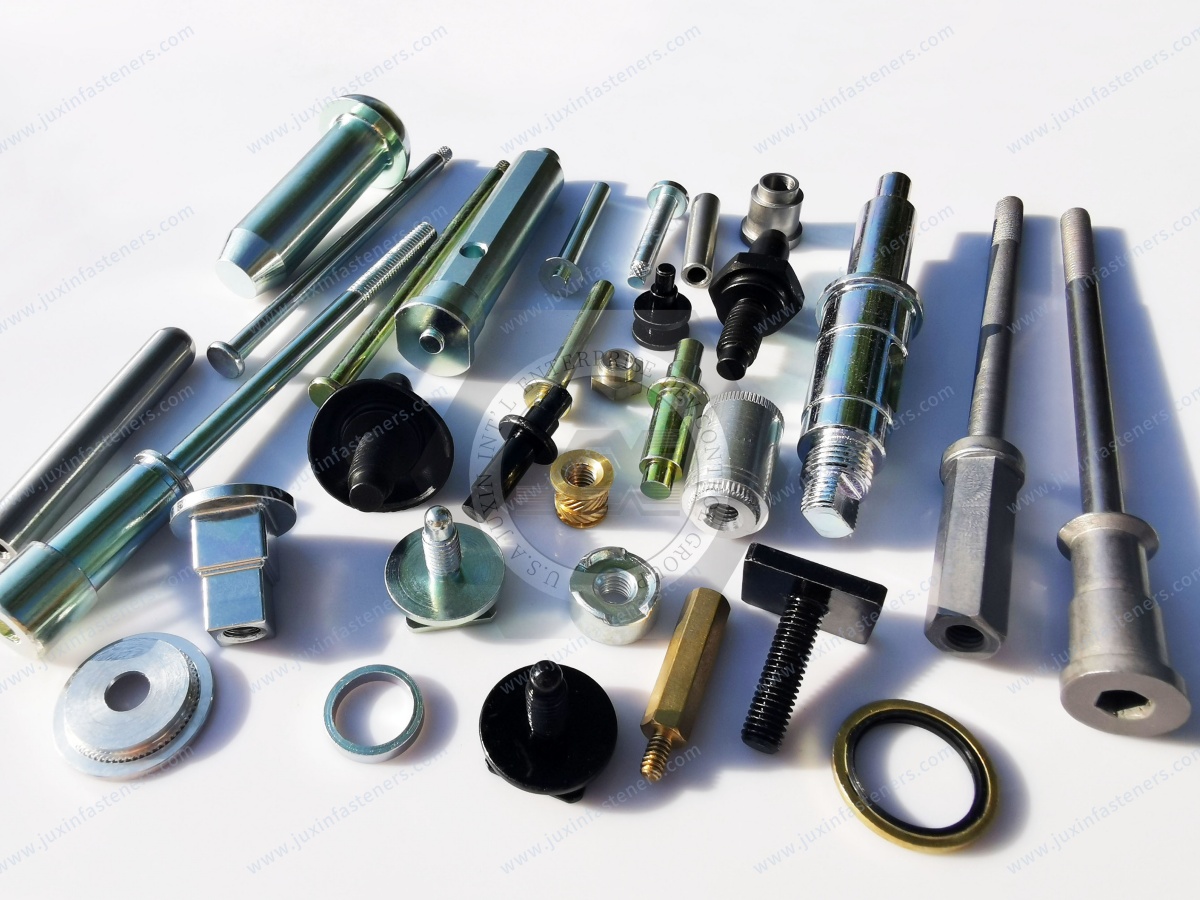
Customization options and drawing scope
Custom head geometry, stepped shanks, captive elements, flange dimensions and anti-rotation features can address assembly requirements in suitable joints.
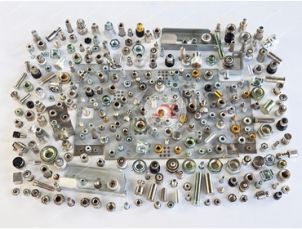
Examples of product families include blind rivet nuts, self-clinching hardware, weld fasteners, lock nuts, specialty screws, pins and precision threaded components.
Confirm the specific product format and mating interface before requesting a manufacturing route.
Thread requirements may include ISO metric, Unified coarse or fine threads, or specialized thread forms where technically appropriate.
Define the mating thread system, tolerance class, finish allowance and usable engagement.
Special left-hand or other non-standard features require drawing-based review; they should not be assumed available for every product family.
Material selection and surface treatment also depend on the service environment.
Carbon and alloy steel, stainless steel, aluminum, brass and engineering plastics may be considered for appropriate components.
Zinc or zinc-nickel plating, black oxide, passivation and anodizing are examples of finish options, subject to alloy compatibility, corrosion requirements, geometry and process feasibility.
Applicable ISO, DIN, ASME, SAE, ASTM or other standards should be identified on the customer's controlled specification.
Manufacturing economics and quotation comparability
An economically competitive component is not simply the one with the lowest initial unit price.
Tooling investment, material utilization, inspection requirements, feature changes, production volume and packaging can affect the total program cost.
Ask suppliers to quote against the same drawing and acceptance requirements, and identify whether tooling, samples or documentation are separate line items.
| Route | Typical economic consideration | Decision criteria |
|---|---|---|
| CNC machining | Often flexible for smaller lots and design revisions; workholding and cycle time can add cost | Feature complexity, stock availability, tolerance and quantity |
| Cold heading or cold forming | Dedicated tooling may be justified by repeat volume; suitable formed geometries vary by process | Formability, geometry, die investment and volume stability |
| Combined forming and CNC | May reduce material removal while finishing selected precision features | Blank design, feature allowances, secondary operations and repeat volume |
| Plastic hardware production | Tooling and resin suitability must be evaluated separately | Polymer grade, mold geometry, dimensional stability, batch volume |
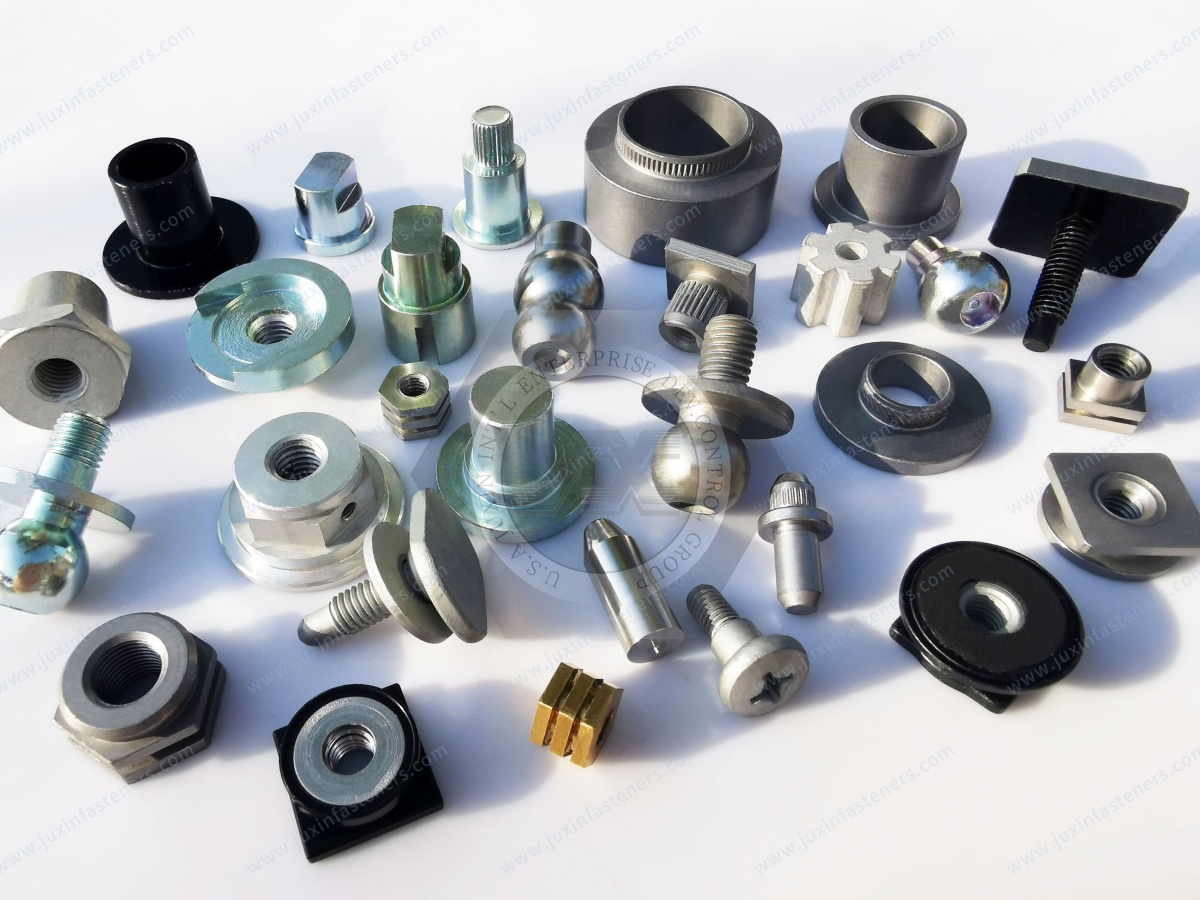
Working with OEM engineering, purchasing and production teams
Engineering teams should provide the controlled 2D drawing and available 3D model, flag the dimensions critical to function and identify the mating substrate and assembly method.
Where the design is still developing, identify which requirements are fixed and which can be evaluated through a feasibility review.
Production teams should describe feeding, tool access, installation sequence and any constraints on loose components.
Purchasing managers and supplier-development engineers need a comparable commercial scope.
Share annual usage, order-release expectations, sample requirements, packaging requirements and the required inspection documents.
Supply-chain teams should identify lead-time expectations and forecast assumptions, without treating a preliminary process estimate as a guaranteed production commitment.
After feasibility assessment, agree the sample and inspection plan. Representative samples may be used for dimensional confirmation, fit-up and application-specific performance testing.
For example, an insert or threaded component may require an agreed retention or torque-related test.
The exact acceptance criteria, quality documentation, material verification and production-release requirements must be specified for the project.
Start a made-to-drawing fastener RFQ
Juxin Fasteners supports quotation and engineering review for industrial batch production based on the agreed drawing and supply scope.
To request a project-specific manufacturing assessment, email info@juxinfasteners.com and include:
Controlled 2D PDF drawings, available STEP/IGES models, revision level and intended application.
Requested fastener geometry, thread system, material grade, finish and functional requirements.
Critical dimensions, assembly method, required standards, inspection criteria and sample or first-article requirements.
Estimated annual usage, initial order quantity, release schedule, packaging needs and quotation scope.
 MORE NEWS
Contact Us
Tel.:
+86 020 8621 0320
+86 020 3121 6067
E-mail:
Technical Support:
Navigation
SEND INQUIREY