
Call Us
+86 136 6007 9809
Call Us
+86 136 6007 9809

Nov. 27, 2026
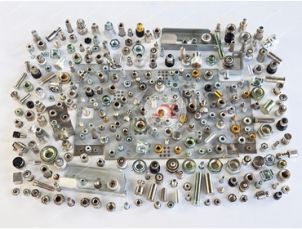
Metal threaded inserts provide a machine-thread interface within a plastic housing or molded boss.
They are often evaluated for assemblies that require repeated screw installation, controlled threaded engagement or greater resistance to wear than a direct polymer thread can provide.
Their performance depends on the insert, the surrounding plastic and the complete joint.
Juxin Fasteners is an industrial fastener manufacturer supporting custom-engineered threaded components and made-to-drawing solutions for OEM programs.
Depending on the geometry, material, precision and volume, metal insert projects may involve cold forming, CNC machining and applicable secondary operations.
Brass and stainless steel are common candidate material families; the exact alloy and manufacturing route are confirmed during drawing review.
A successful threaded insert design must address two different mechanical demands: axial resistance to extraction and resistance to rotation during screw tightening or servicing.
The first is commonly evaluated through pull-out testing, and the second through torque-out testing. Neither result should be inferred solely from the thread size or a visually aggressive knurl.
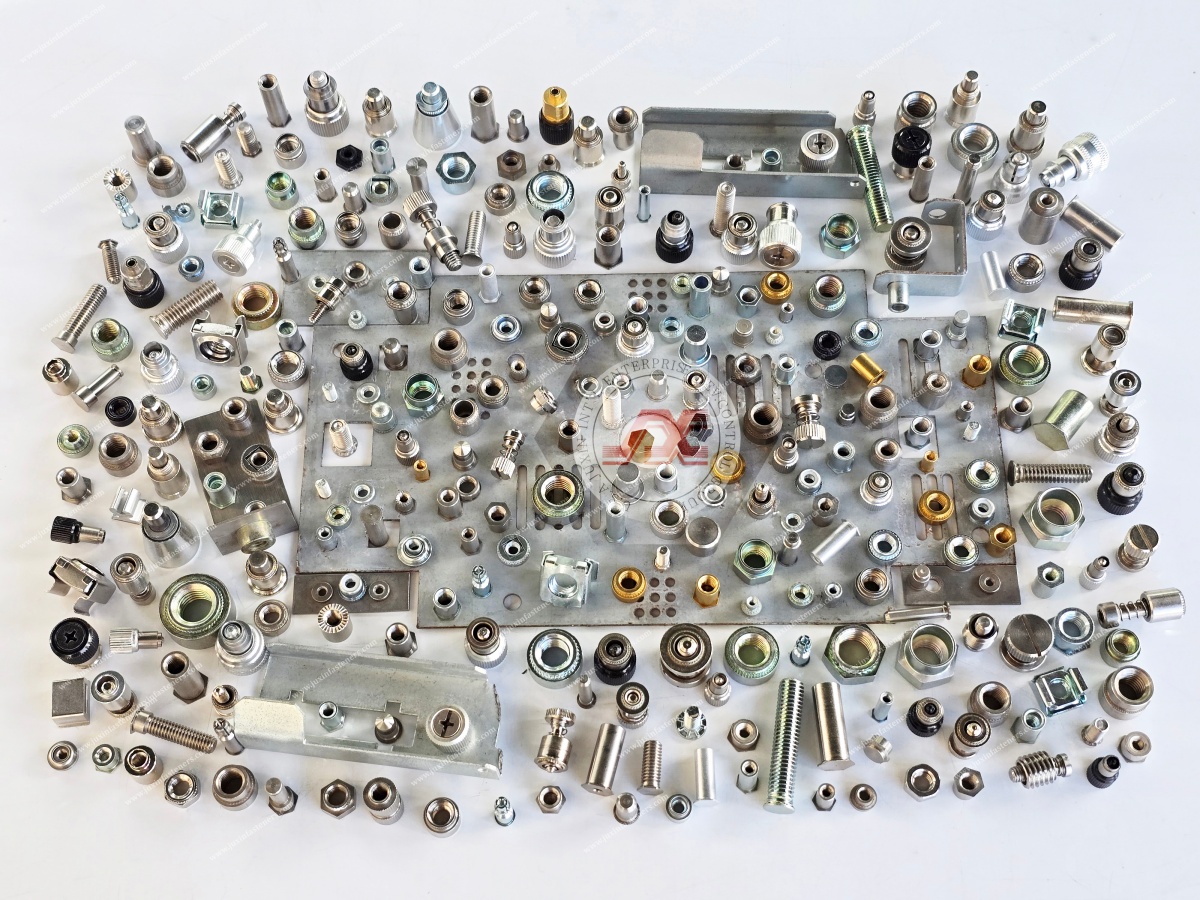
Installation methods and retention mechanisms
Heat-set inserts use controlled local heating to allow a suitable thermoplastic to flow around external retention features.
Ultrasonic installation uses vibrational energy and tooling developed for the insert and plastic assembly. Both methods depend on the insert design, resin behavior, pilot-hole geometry and installation settings;
correct seating is more important than treating one process as automatically superior.
Press-fit inserts use mechanical engagement with the prepared hole and may be considered where thermal insertion is unsuitable.
The installation force and hoop stress must be compatible with the housing. Some thermoset or brittle polymers require particular caution, since excessive interference can produce cracking.
Molded-in inserts are positioned in the mold before resin is introduced.
This can offer attractive integration and retention opportunities when the mold and insert are designed together. It also requires control of insert location, thread protection, flash, tooling clearance and production consistency. It does not automatically guarantee the highest pull-out capability.
Boss geometry and host polymer selection
A boss is the local molded structure surrounding the insert.
Its outer dimensions, pilot-hole diameter, depth, draft, ribs and material quality govern whether the insert seats without splitting the housing.
Use the insert manufacturer's controlled hole and boss recommendations as the starting point. Do not treat a fixed outer diameter ratio as a universal minimum across all polymer families or insert designs.
| Host material | Processes to evaluate | Design and validation priorities |
|---|---|---|
| ABS or PC-ABS | Heat-set or ultrasonic where compatible | Hole size, local softening, boss support and residual stress |
| Polycarbonate | Qualified thermal or ultrasonic process | Stress cracking, resin grade, interference and installation heat |
| Unfilled PA6 or PA66 | Thermal or ultrasonic installation | Moisture condition, shrinkage, process window and retained fit |
| Glass-filled polyamide | Qualified insertion or molded-in design | Filler content, resin flow around features, wall integrity and actual retention |
| Thermoset or heat-sensitive resin | Compatible mechanical or molded-in option | Brittleness, insertion force, cracking risk and joint-specific testing |
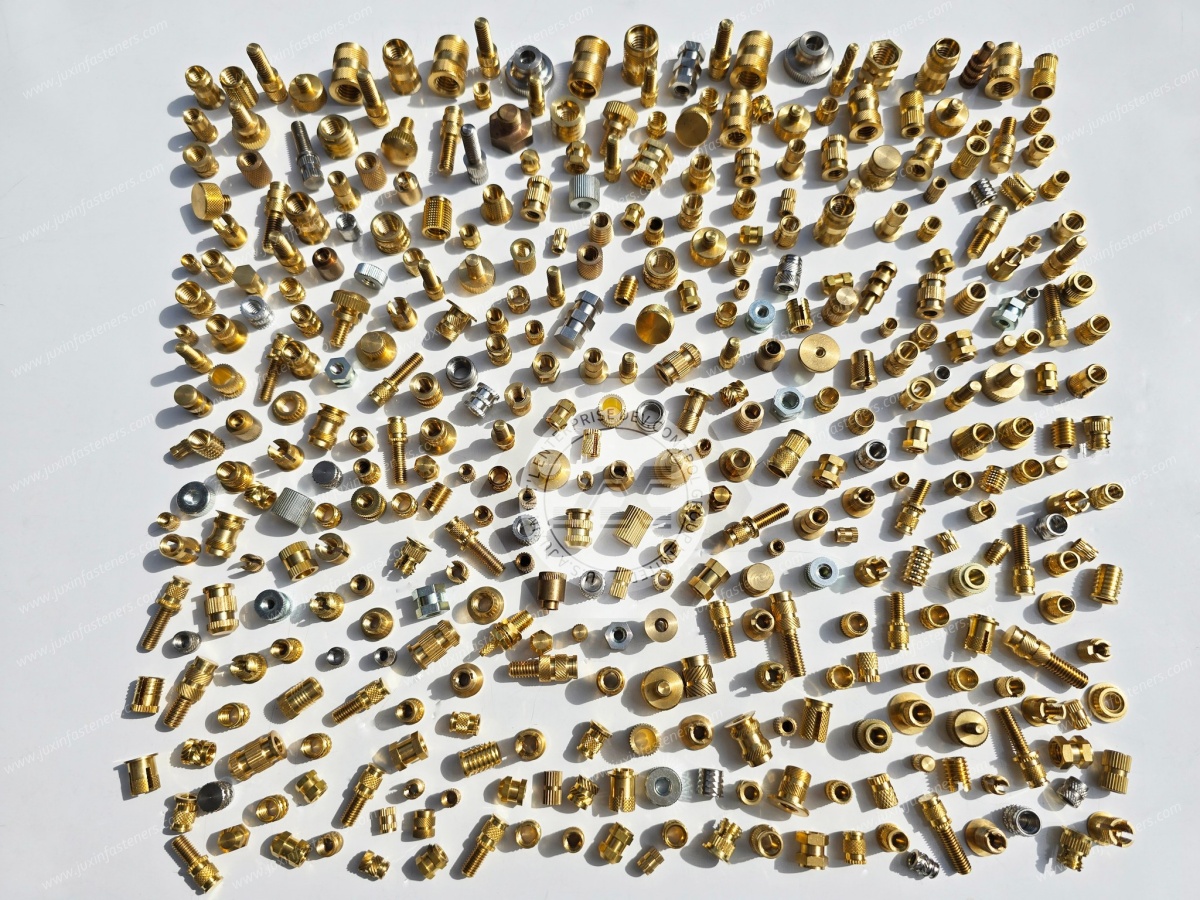
Pull-out, torque-out and thread acceptance
External features such as knurls, ribs and grooves influence how the surrounding polymer engages the insert. An overly small hole may damage the boss; an overly large hole may compromise retention.
The joint should be tested on representative molded components, including the actual resin, filler content, hole geometry and installation process.
Define the required axial and rotational test conditions with the customer. Record the mode of failure as well as the peak result.
An insert that turns in the housing, pulls out, damages the surrounding resin or strips its internal thread indicates different potential corrective actions.
Test representative conditioning states and operating environments when the project requires them.
Thread specifications belong on the controlled drawing. For example, 6H is an ISO metric internal-thread tolerance class and 2B is a Unified internal-thread class; they describe different systems.
The selected screw and gauging requirement must match the specified thread.
A brass designation such as C36000 or CW614N should be evaluated against its applicable material specification rather than assumed interchangeable.
Verify relevant alloy restrictions, finish and any project-specific compliance needs.
Custom insert engineering and OEM RFQ
Made-to-drawing inserts may require slim outside diameters, headed profiles, blind ends, asymmetric features or special thread lengths.
Juxin Fasteners evaluates the suitability of available manufacturing processes against tolerance, feature geometry, material and volume.
The required quality checks can include thread gauging, outside diameter, length and retention-feature geometry, together with assembly tests agreed with the customer.
Send your requirements to info@juxinfasteners.com:
Controlled 2D PDF and 3D STEP drawings with insert dimensions, thread designation and revision.
Host polymer grade, filler content and boss/hole geometry, including applicable tolerances.
Intended installation process, mating screw, tightening requirement and service environment.
Pull-out and torque-out acceptance criteria, sample needs and estimated annual usage.
 MORE NEWS
Contact Us
Tel.:
+86 020 8621 0320
+86 020 3121 6067
E-mail:
Technical Support:
Navigation
SEND INQUIREY