Call Us
+86 136 6007 9809
Call Us
+86 136 6007 9809

Anti-Loosening Fastener Technologies: Mechanisms and Engineering Countermeasures for Threaded Joint Reliability
Why Threaded Fastener Loosening Remains a Critical Engineering Challenge
Threaded fasteners are fundamental components in mechanical engineering, structural assemblies, transportation systems, energy infrastructure, and industrial equipment. Despite decades of development in fastening technology, joint loosening remains one of the most persistent causes of equipment failure.
Product Specification
Anti-Loosening Fastener Technologies: Mechanisms and Engineering Countermeasures for Threaded Joint Reliability
Why Threaded Fastener Loosening Remains a Critical Engineering Challenge
Threaded fasteners are fundamental components in mechanical engineering, structural assemblies, transportation systems, energy infrastructure, and industrial equipment. Despite decades of development in fastening technology, joint loosening remains one of the most persistent causes of equipment failure.
Field data from industrial maintenance and reliability engineering show that a significant proportion of mechanical downtime is directly attributable to loss of clamp load in bolted joints rather than to fastener fracture.
In applications such as wind turbine bolts, rail transit fastening systems, EV battery pack fasteners, and heavy machinery structural joints, even a minor reduction in preload can lead to vibration amplification, fatigue crack initiation, and progressive joint degradation.
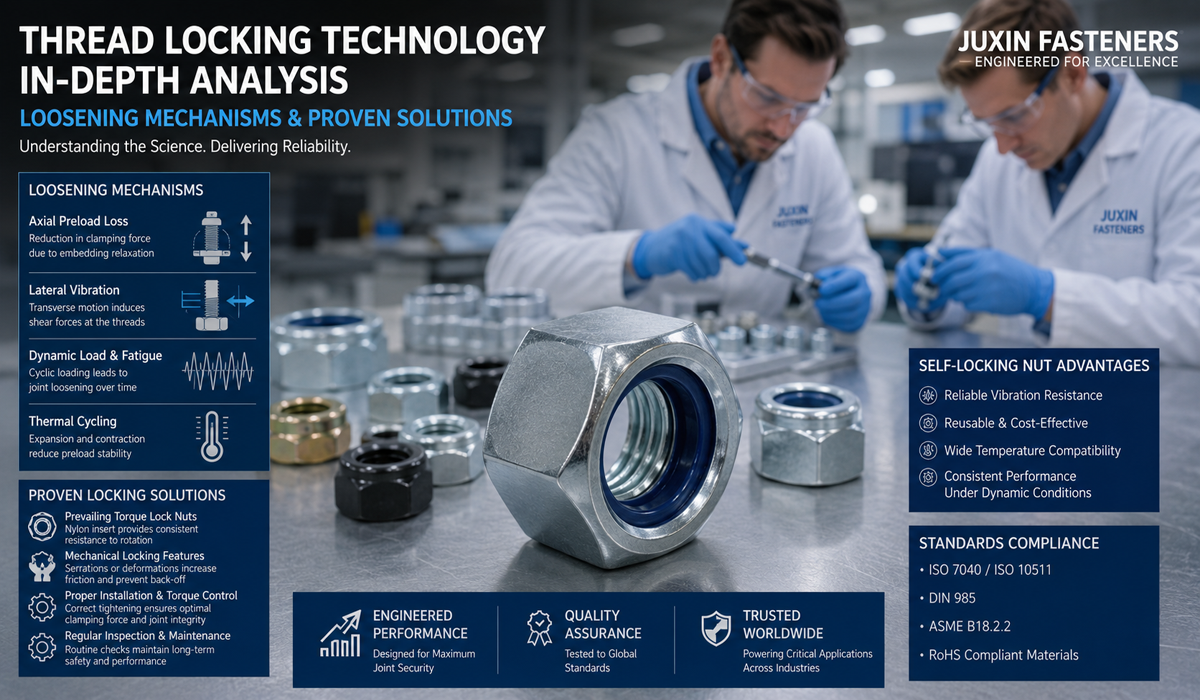
Understanding the Mechanism Behind Bolt Loosening
A bolted joint functions by converting tightening torque into axial preload. This preload generates clamping force between connected components, producing frictional resistance that prevents relative movement.
During service, this equilibrium is continuously challenged by:
Cyclic vibration loads
Transverse shear forces
Thermal expansion mismatch
Embedding and surface settling
Material creep under sustained load
As these effects accumulate, preload gradually decreases. Once frictional resistance drops below the external transverse forces, micro-slippage occurs between the thread flanks and the bearing surfaces.
This transition marks the onset of rotational loosening, which typically accelerates rapidly once initiated.
Preload Loss vs. Rotational Loosening: A Critical Distinction
In engineering practice, preload degradation and rotational loosening are often confused, although they represent fundamentally different mechanisms.
Preload Relaxation
In this condition, the fastener remains rotationally stable, but the clamp force decreases due to:
Surface embedding effects
Gasket relaxation
Material creep
Temperature cycling
This type of degradation is common in structural fasteners and flange connections.
Rotational Loosening
Rotational loosening involves actual relative rotation between bolt and nut under dynamic loading. Once this occurs, preload reduction becomes rapid and nonlinear.
According to the engineering principles defined in VDI 2230, joint stability is strongly dependent on maintaining sufficient preload to prevent micro-slip at the interface.
Overview of Industrial Anti-Loosening Technologies
Modern engineering practice uses multiple strategies to improve fastener stability under dynamic conditions. Each solution addresses different failure mechanisms and operating environments.
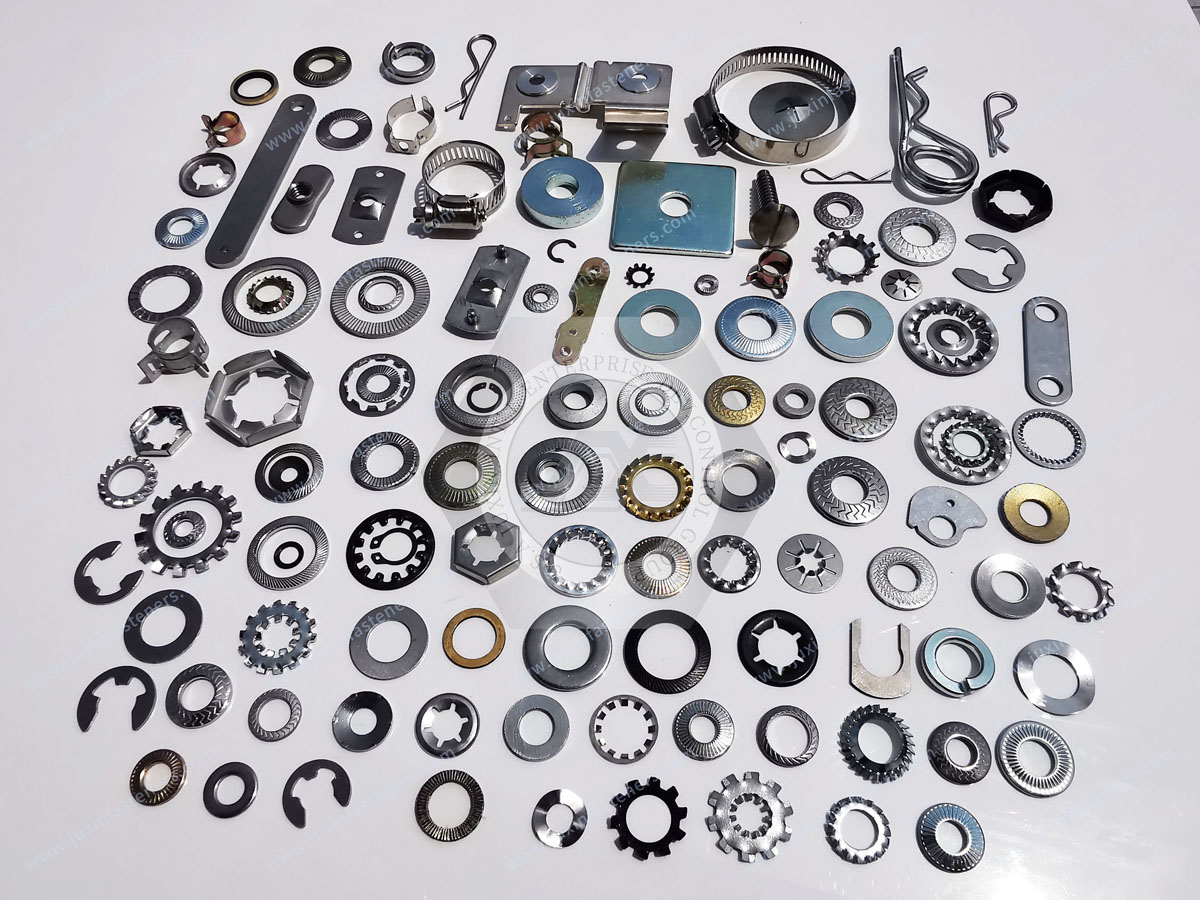
1. Spring Lock Washers
Spring washers generate elastic resistance and localized surface friction at the bearing interface.
They are widely used due to their low cost and ease of installation. However, under high vibration or cyclic loading conditions, their effectiveness decreases significantly as surface embedding reduces spring force over time.
These solutions are generally limited to low-load industrial assemblies and non-critical equipment.
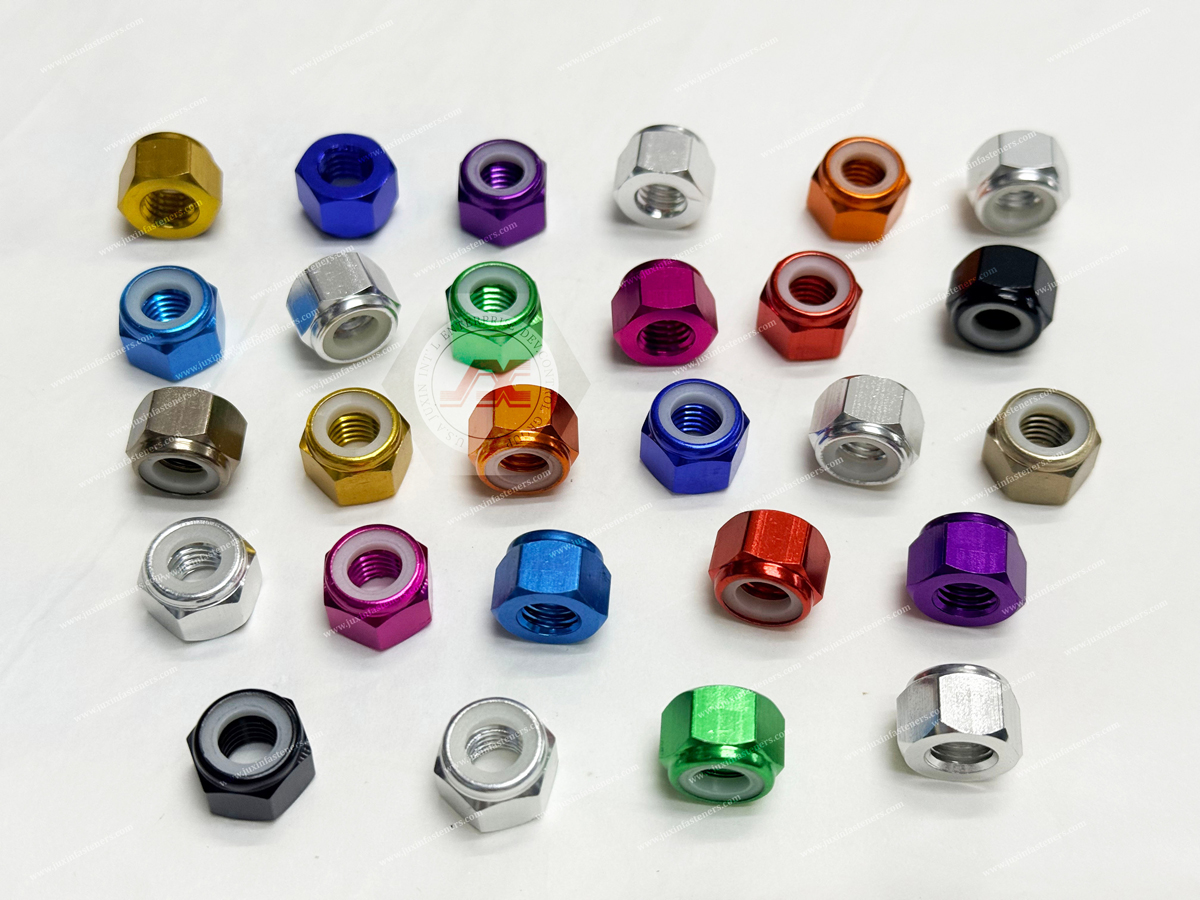
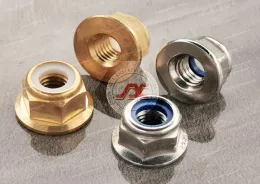
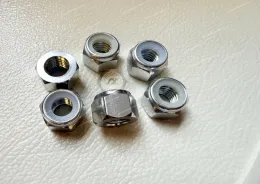
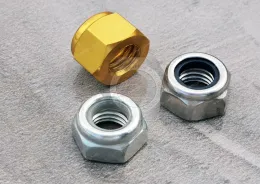
2. Nylon Insert Lock Nuts
Nylon insert lock nuts generate prevailing torque by elastic deformation of a polymer ring within the nut body.
They are widely used in automotive interior systems, light machinery, and electrical assemblies.
However, polymer-based locking mechanisms are temperature-sensitive. Above approximately 120°C, material relaxation reduces locking performance, making them unsuitable for high-temperature or high-load environments such as turbine systems or powertrain assemblies.
3. Double Nut Locking Systems
The jam nut principle uses frictional interference between two nuts to prevent rotation.
This method is still used in railway vehicles, bridge structures, and legacy heavy engineering systems.
While mechanically reliable, the system increases axial space requirements and assembly complexity, limiting its use in compact modern designs.
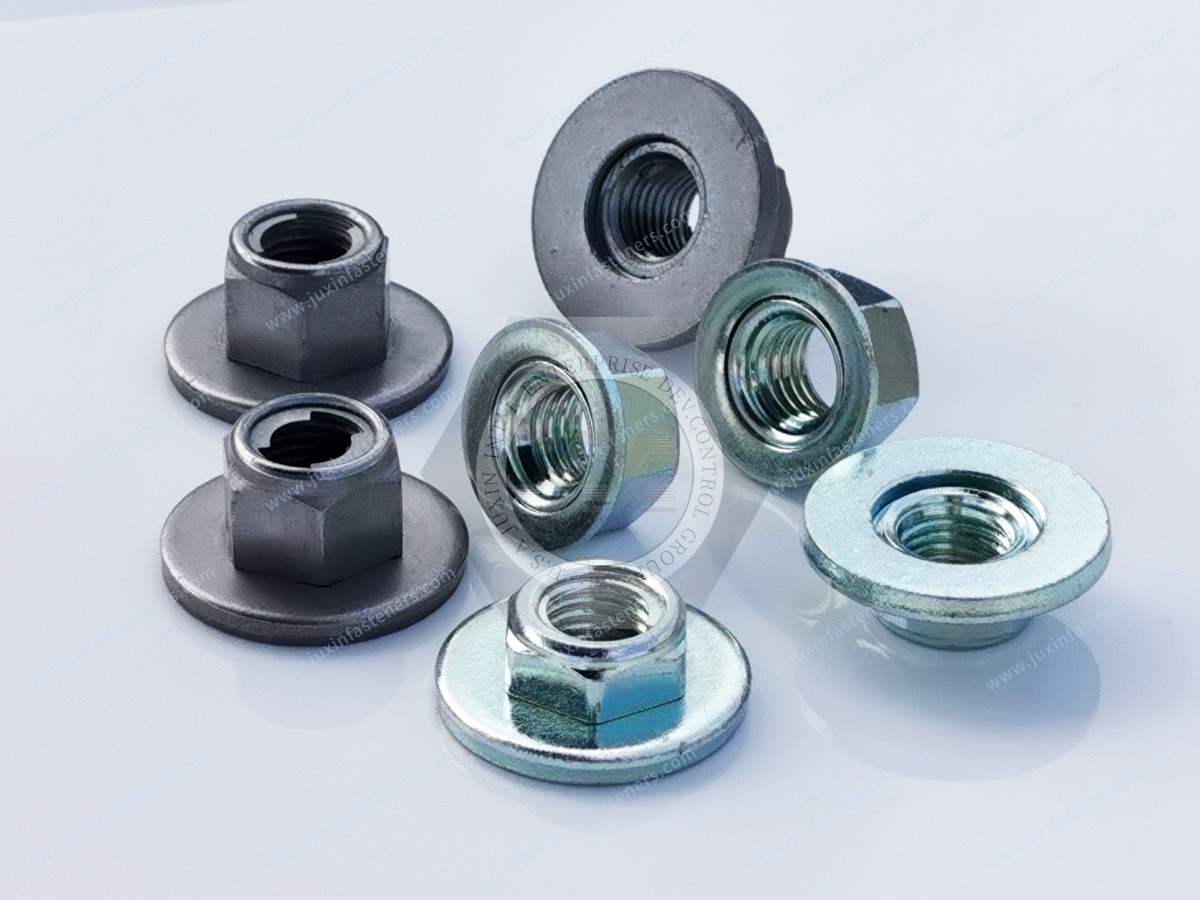
4. All-Metal Prevailing Torque Lock Nuts
All-metal lock nuts achieve locking through controlled elastic and plastic deformation of the thread geometry.
This design provides stable performance in:
High-temperature environments
High-vibration systems
Safety-critical industrial assemblies
Compared with polymer-based systems, all-metal self-locking nuts maintain stable performance over a wider temperature range. They are commonly used in aerospace fasteners, wind energy systems, and heavy-duty structural connections.
5. Thread Locking Adhesives
Anaerobic adhesives cure in the absence of oxygen, filling thread clearance gaps and forming a rigid polymer structure after assembly.
This method provides both locking and sealing functions, making it widely used in automotive, industrial automation, and precision mechanical assemblies.
However, adhesive performance depends heavily on surface cleanliness and curing conditions, and disassembly for maintenance often requires thermal or mechanical intervention.
6. Preload-Controlled Fastening Systems (Engineering-Preferred Approach)
From a mechanical design perspective, the most reliable anti-loosening strategy is not based solely on locking devices, but on controlled preload management.
When bolt preload reaches approximately 70–80% of the material yield strength, the joint interface develops sufficient frictional resistance to prevent micro-slip under dynamic loading.
This principle is widely supported by ISO 16047 and VDI 2230 engineering guidelines.
Advanced tightening methods include:
Torque–angle-controlled tightening
Yield-controlled bolt tensioning
Hydraulic bolt tensioning systems
Direct axial force measurement systems
These methods are especially critical in:
Wind turbine flange bolts
Rail transit structural joints
EV battery pack fasteners
Heavy industrial structural connections
Engineering Factors That Influence Fastener Loosening Performance
1. Application-Specific Load Definition
An accurate understanding of operating conditions is essential before selecting any anti-loosening solution.
Key parameters include:
Dynamic vibration amplitude
Shock loading frequency
Thermal cycling range
Environmental corrosion exposure
Maintenance accessibility requirements
Fastener selection without system-level load analysis often leads to premature joint failure.
2. Influence of Friction and Surface Engineering
Friction conditions at both thread and bearing surfaces strongly influence clamp load consistency.
Surface treatments such as:
Zinc flake coatings
Zinc-nickel electroplating
Phosphate coatings
Mechanical galvanizing
Hot-dip galvanizing
can significantly alter torque–tension relationships even under identical tightening conditions.
This variability must be considered during preload design and assembly calibration.
3. Tightening Process as a Critical Reliability Factor
In many failure investigations, improper tightening methodology is identified as a root cause rather than fastener design.
For safety-critical joints, recommended practices include:
Calibrated torque tools
Torque–angle tightening procedures
Real-time clamp load verification
Digital assembly traceability systems
In modern industrial production, digital fastening systems are increasingly used to ensure repeatability and process control.
4. Preventive Maintenance and Inspection Strategy
Even properly designed fastening systems experience preload relaxation over time due to operational conditions.
Regular inspection is essential in:
Wind energy systems
Railway rolling stock
Construction machinery
Mining and heavy equipment
Industrial process systems
Special attention should be given to high-vibration and high-temperature zones where preload degradation occurs more rapidly.
Application Areas of Anti-Loosening Fastener Systems
Modern anti-loosening fastening technologies are widely applied in:
Wind energy turbine structural connections
Electric vehicle battery pack assemblies
Rail transit bogie and structural systems
Aerospace mechanical assemblies
Heavy industrial machinery and hydraulic systems
In these environments, fastener reliability directly impacts system safety, uptime, and lifecycle cost.
Conclusion
Threaded fastener loosening is not a single-point failure mechanism but a system-level engineering challenge involving preload design, friction control, material behavior, installation quality, and operational loading conditions.
While traditional solutions such as lock washers, nylon insert nuts, and thread locking adhesives each serve specific purposes, long-term joint reliability depends primarily on proper preload control and application-specific fastening system design.
For critical industrial applications—including wind turbine bolts, EV battery pack fasteners, rail transit fastening systems, and structural heavy-duty joints—engineers must evaluate fastening systems as integrated mechanical systems rather than isolated components.
At JUXIN Fasteners, we support global industries with engineered fastening solutions, including high-strength bolts, structural fasteners, self-locking nuts, prevailing torque lock nuts, and customized anti-loosening fastening systems designed in accordance with ISO, DIN, ASTM, and VDI engineering standards.

Product Packaging
Packaging Standard
At Juxin Fasteners, we apply standardized export packaging to ensure product protection, traceability, and compliance with international logistics requirements.
1. Standard Export Packaging
Unless otherwise specified, all products will be packed according to our factory standard export packaging, which includes:
Moisture-resistant inner protection
Poly bag or small box packing as required
Reinforced export cartons
Clear labeling with part number, specification, batch number, and quantity
Palletizing for sea or air shipment when necessary
Our standard packaging is designed to ensure safe transportation, efficient warehousing, and long-distance international shipping.
2. Customized Packaging Options
We also provide customized packaging solutions according to customer requirements, including but not limited to:
Private labeling
Customized barcodes
Specific carton dimensions
Retail packaging
Special pallet configuration
Customer-specific marking and identification
So that you know, customized packaging may involve additional costs and extended lead time depending on the complexity of the requirements.
3. Compliance & Quality Assurance
All packaging processes are controlled under our ISO 9001 quality management system to ensure consistency, traceability, and product integrity throughout the supply chain.
Product Pictures
Hot Products
Contact Us
Tel.:
+86 020 8621 0320
+86 020 3121 6067
E-mail:
Technical Support:
Navigation
SEND INQUIREY