Call Us
+86 136 6007 9809
Call Us
+86 136 6007 9809

DIN985 Aluminum Nylon Self-Locking Nuts for Automotive Applications | High-Reliability Anti-Loosening Fastener Solution
Introduction: Engineering-Grade Anti-Loosening Fasteners for Modern Automotive Systems
In today’s automotive manufacturing industry, vibration-induced loosening remains one of the most critical challenges affecting vehicle safety, durability, and long-term performance. DIN985 Aluminum Nylon Self-Locking Nuts provide a proven engineering solution designed to maintain stable threaded connections under continuous vibration, dynamic load changes, and harsh road conditions.
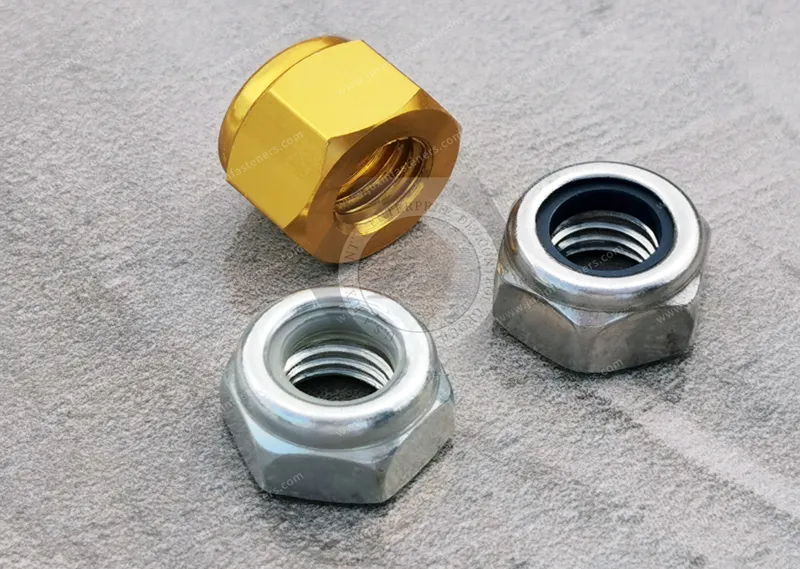
As a high-performance aluminum nylon self-locking nut, this fastener integrates a lightweight aluminum alloy body with a precision-engineered nylon insert (typically PA66), delivering consistent prevailing torque and long-term anti-loosening performance. It is widely used in automotive powertrain systems, chassis assemblies, suspension structures, and electrical mounting applications where reliability is mission-critical.
Product Specification
DIN985 Aluminum Nylon Self-Locking Nuts for Automotive Applications | High-Reliability Anti-Loosening Fastener Solution
Introduction: Engineering-Grade Anti-Loosening Fasteners for Modern Automotive Systems
In today’s automotive manufacturing industry, vibration-induced loosening remains one of the most critical challenges affecting vehicle safety, durability, and long-term performance. DIN985 Aluminum Nylon Self-Locking Nuts provide a proven engineering solution designed to maintain stable threaded connections under continuous vibration, dynamic load changes, and harsh road conditions.
As a high-performance aluminum nylon self-locking nut, this fastener integrates a lightweight aluminum alloy body with a precision-engineered nylon insert (typically PA66), delivering consistent prevailing torque and long-term anti-loosening performance. It is widely used in automotive powertrain systems, chassis assemblies, suspension structures, and electrical mounting applications where reliability is mission-critical.
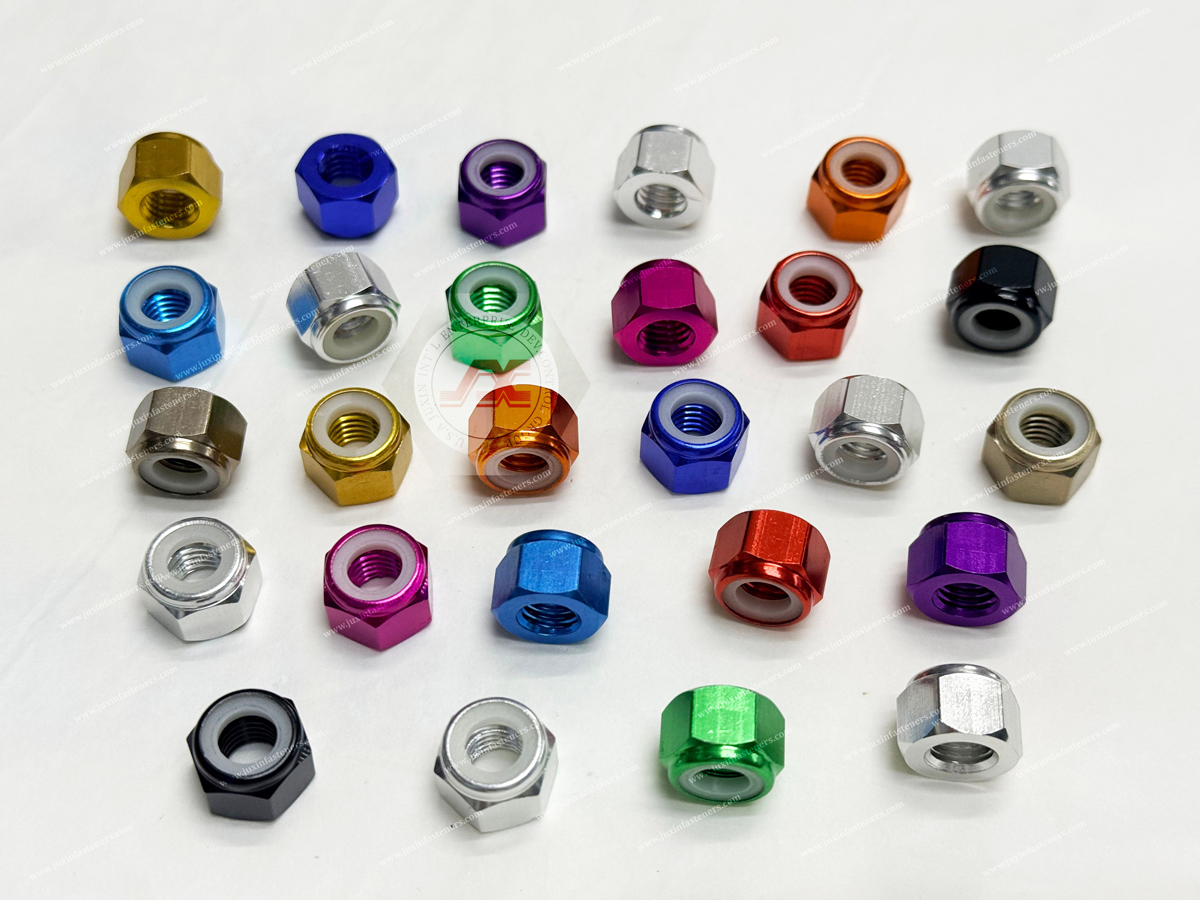
1. Technical Principle of DIN985 Aluminum Nylon Self-Locking Nuts
The DIN985 Aluminum Nylon Self-Locking Nut operates using a prevailing torque locking mechanism.
When the bolt is tightened:
The threads compress the nylon insert (PA66)
The nylon deforms elastically under pressure
Continuous radial friction is generated on the bolt threads
A stable locking torque is maintained even under vibration and impact
This creates a highly effective anti-loosening fastening system without requiring additional washers, adhesives, or secondary locking components.
2. Core Advantages of Aluminum Nylon Self-Locking Nuts in Automotive Engineering
Compared with traditional fastening systems, DIN985 Aluminum Nylon Self-Locking Nuts offer significant performance advantages in automotive applications:
2.1 High Reliability Anti-Loosening Performance
Exceptional resistance to vibration-induced loosening
Service life under vibration can be several to tens of times longer than standard nuts
Ideal for dynamic automotive environments such as engines and chassis systems
2.2 Lightweight Engineering Solution
Aluminum alloy body significantly reduces fastener weight
Supports overall vehicle lightweight design strategy
Helps improve fuel efficiency and handling performance
2.3 Simplified Assembly Process
Pre-applied locking function eliminates need for washers or adhesives
Reduces assembly time and production complexity
Improves consistency in automated manufacturing lines
2.4 Additional Functional Benefits
Nylon insert provides partial sealing and electrical insulation properties
Suitable for hybrid mechanical-electrical mounting environments
3. Key Application Areas in Automotive Manufacturing
The DIN985 Aluminum Nylon Self-Locking Nut is widely used in multiple critical automotive systems requiring secure and vibration-resistant fastening.
3.1 Powertrain Systems
Engine block and transmission housing connections
Auxiliary component mounting under continuous vibration
These are high-load environments where fastener loosening can lead to severe mechanical failure.
3.2 Chassis and Suspension Systems
Suspension control arms
Stabilizer bar connections
Structural mounting points exposed to road shocks and dynamic loads
Reliable locking performance directly impacts vehicle safety and driving stability.
3.3 Electrical and Accessory Systems
Motor end covers
Sensor mounting brackets
Wiring harness supports
The combination of lightweight design and insulation properties makes aluminum nylon lock nuts ideal for modern vehicle electronics integration.
4. Material Selection and Engineering Specifications
Proper selection of DIN985 Aluminum Nylon Self-Locking Nuts is essential to ensure optimal performance in automotive environments.
4.1 Nylon Insert Material
Engineering-grade PA66 (Polyamide 66)
Provides excellent elasticity, fatigue resistance, and friction stability
4.2 Aluminum Alloy Body Options
Common materials include:
6061 aluminum alloy – balanced strength and corrosion resistance
7075 aluminum alloy – high-strength applications
4.3 Thread and Standard Compliance
DIN985 standard compliance
Metric thread accuracy recommended at 6H grade
Ensures optimal thread engagement and consistent locking torque
5. Engineering Considerations for Selection and Use
To ensure maximum performance of aluminum nylon self-locking nuts in automotive applications, the following factors must be considered:
5.1 Temperature Limitations
Long-term operating range: -50°C to +120°C
High-temperature engine bay zones must be evaluated carefully
Nylon performance decreases under prolonged heat exposure
5.2 Reusability Guidelines
Recommended reuse: maximum 3–5 cycles
Nylon insert loses elasticity after repeated tightening
Critical safety joints should use new fasteners after disassembly
5.3 Material Compatibility and Environment
Avoid exposure to strong acids and alkalis
Not suitable for highly corrosive chemical environments
Ensure compatibility with surrounding structural materials
5.4 Thread Fit and Installation Quality
Tight tolerance thread engagement improves locking consistency
Improper fit can reduce prevailing torque performance
6. Comparison with Other Self-Locking Fastening Solutions
In automotive engineering, different anti-loosening technologies are selected based on operating conditions.
6.1 Metal Self-Locking Nuts
Metal locking nuts offer:
Higher temperature resistance (200°C+)
Better corrosion resistance
However:
Higher installation torque required
Less effective in severe vibration environments compared to nylon lock nuts
6.2 Flange Serrated Nuts
Provide anti-loosening through surface friction and tooth embedding
Suitable for soft material joints such as aluminum or magnesium alloys
May damage mating surfaces under repeated assembly
6.3 High-Performance Special Locking Nuts
(e.g., Spiralock-type designs)
Excellent vibration resistance and reusability
Higher manufacturing cost
More complex structure and machining requirements
6.4 Engineering Conclusion
DIN985 Aluminum Nylon Self-Locking Nuts provide the best balance between:
Cost efficiency
Vibration resistance
Lightweight design
Assembly simplicity
for standard automotive applications within normal temperature ranges.
7. Industry Development Trends and Supply Chain Standards
The automotive fastener industry continues to evolve toward higher reliability and quality assurance standards.
7.1 Technology Development Trends
Integrated nylon insert structures to prevent detachment
Improved anti-vibration performance designs
Enhanced corrosion-resistant aluminum alloys
Optimized drainage and sealing structures
7.2 Quality and Certification Requirements
For automotive OEM supply chains, it is recommended to select suppliers that meet:
IATF 16949 automotive quality system certification
ISO 9001 quality management certification
7.3 Performance Validation Standards
Typical testing requirements include:
Vibration test ≥ 1000 cycles without loosening
Torque retention performance verification
Thermal cycling resistance testing

Conclusion: A High-Performance Solution for Automotive Anti-Loosening Challenges
DIN985 Aluminum Nylon Self-Locking Nuts represent one of the most effective and widely adopted fastening solutions in modern automotive engineering. By combining:
Lightweight aluminum alloy construction
PA66 nylon insert prevailing torque locking
Proven vibration resistance performance
Cost-effective assembly advantages
they deliver a reliable engineering solution for preventing fastener loosening in critical vehicle systems.
For OEM manufacturers, procurement engineers, and automotive design teams, proper selection of aluminum nylon self-locking nuts (DIN985 standard) ensures an optimal balance of safety, performance, and cost efficiency in demanding automotive applications.
Product Packaging
Packaging Standard
At Juxin Fasteners, we apply standardized export packaging to ensure product protection, traceability, and compliance with international logistics requirements.
1. Standard Export Packaging
Unless otherwise specified, all products will be packed according to our factory standard export packaging, which includes:
Moisture-resistant inner protection
Poly bag or small box packing as required
Reinforced export cartons
Clear labeling with part number, specification, batch number, and quantity
Palletizing for sea or air shipment when necessary
Our standard packaging is designed to ensure safe transportation, efficient warehousing, and long-distance international shipping.
2. Customized Packaging Options
We also provide customized packaging solutions according to customer requirements, including but not limited to:
Private labeling
Customized barcodes
Specific carton dimensions
Retail packaging
Special pallet configuration
Customer-specific marking and identification
So that you know, customized packaging may involve additional costs and extended lead time depending on the complexity of the requirements.
3. Compliance & Quality Assurance
All packaging processes are controlled under our ISO 9001 quality management system to ensure consistency, traceability, and product integrity throughout the supply chain.
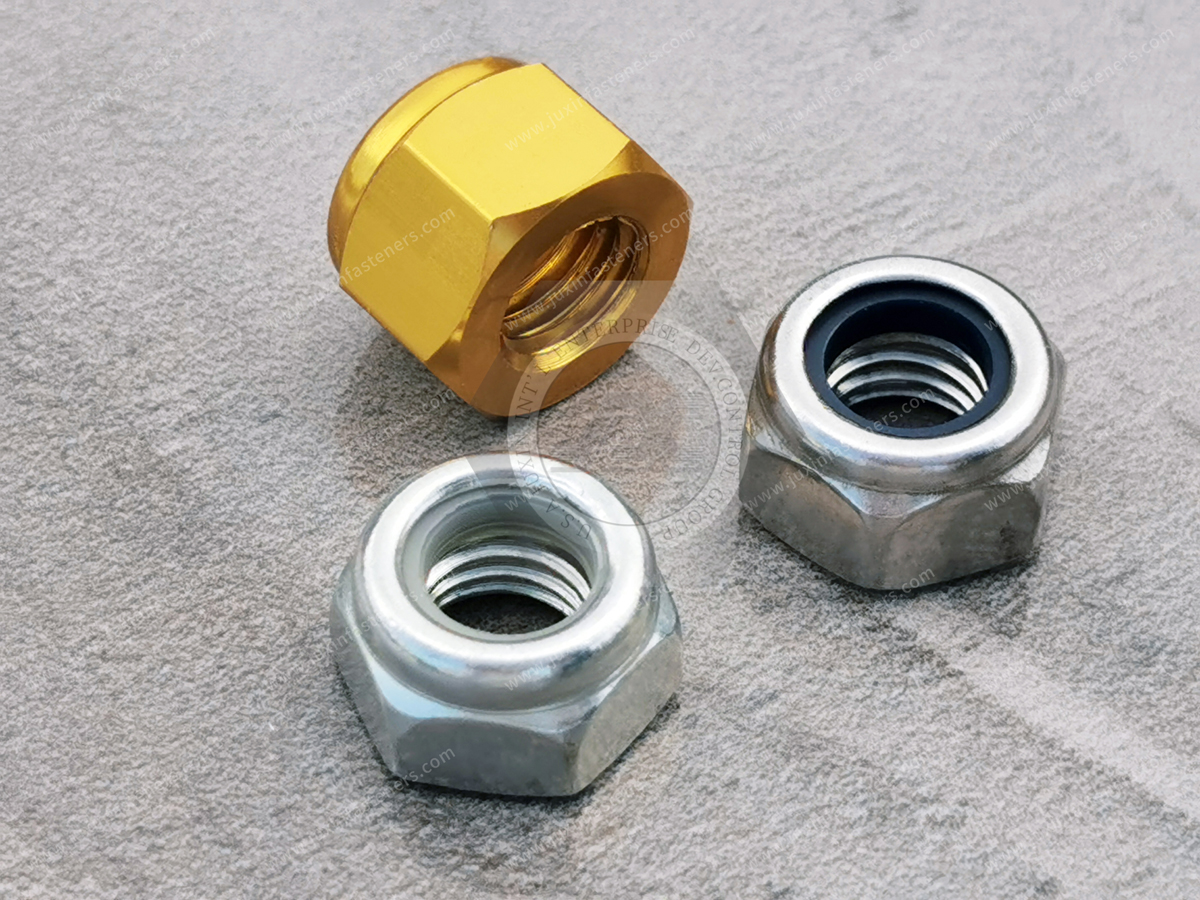
Product Pictures
Contact Us
Tel.:
+86 020 8621 0320
+86 020 3121 6067
E-mail:
Technical Support:
Navigation
SEND INQUIREY