Call Us
+86 136 6007 9809
Call Us
+86 136 6007 9809

AI data centers, high-performance computing systems, GPU server platforms, network infrastructure, power distribution equipment,
and advanced digital infrastructure create increasingly demanding mechanical requirements for plastic fasteners and cable management hardware.
Product Specification
AI data centers, high-performance computing systems, GPU server platforms, network infrastructure, power distribution equipment,
and advanced digital infrastructure create increasingly demanding mechanical requirements for plastic fasteners and cable management hardware.
The challenge is not simply the number of components inside a rack or enclosure. Modern AI computing infrastructure combines dense PCB assemblies,
accelerator modules, high-current power delivery, fiber optic connectivity, cooling hardware, sensors, control electronics, serviceable modules, and large cable populations within tightly controlled mechanical architectures.
Plastic fasteners and molded hardware can perform several important functions within these systems:
support and space printed circuit boards;
route high-density cable and wire assemblies;
protect cables passing through sheet metal;
manage fiber optic routing;
retain lightweight panels and airflow components;
close unused enclosure openings;
separate components from conductive chassis surfaces;
provide non-metallic fastening interfaces where required;
support tool-efficient assembly and serviceability.
However, a component should not be selected simply because it is described as a “nylon fastener.”
Plastic hardware for AI data centers and digital infrastructure should be selected according to its mechanical function, mounting interface,
thermal environment, polymer grade, cable or PCB requirements, airflow architecture, serviceability, and applicable equipment specifications.
Juxin Fasteners supplies standard and custom plastic and nylon fastening components for AI servers, HPC equipment, data center power infrastructure, network hardware, electrical enclosures, and related digital infrastructure.
Product families include snap-fit PCB supports, plastic spacers and standoffs, nylon snap bushings, strain relief bushings, nylon cable clips,
P-clips, adjustable cable clamps, cable tie mounts, push rivets, panel fasteners, panel hole plugs, nylon screws and nuts, and drawing-based custom molded plastic components.
For OEM sourcing and second-source programs, technical evaluation can begin from an existing supplier part number, OEM part number, physical sample, 2D drawing, 3D CAD model, or application specification.
There is no single “data center plastic fastener.”
Different zones require different mechanical functions.
A GPU PCB support, fiber routing clip, sheet metal snap bushing, airflow baffle retainer, and power cabinet cable clamp may all be manufactured from engineering polymers, but they solve different problems.
The correct selection process begins by identifying the interface and required function.
AI and HPC servers can contain densely populated PCB assemblies supporting processors, accelerators, memory, networking, storage, power conversion, monitoring, and control functions.
Plastic PCB supports and standoffs can provide:
controlled board-to-chassis spacing;
local PCB support;
separation from conductive surfaces;
snap-fit assembly in appropriate designs;
reduced loose-hardware requirements;
defined positioning within an enclosure.
Available configurations may include:
snap-fit PCB supports;
edge-locking PCB supports;
threaded plastic standoffs;
non-threaded spacers;
custom molded PCB support geometries.
Selection should consider:
PCB thickness;
PCB hole diameter;
chassis mounting hole;
standoff height;
board mass;
connector insertion and extraction loads;
vibration;
board flexure;
service access;
neighboring components.
Higher standoff height is not automatically better.
Increasing the support height can change board bending leverage, vibration response, connector alignment, airflow, and packaging geometry.
The correct standoff should be selected as part of the complete PCB-to-chassis interface.
AI computing infrastructure can contain dense combinations of:
power cables;
signal wiring;
control harnesses;
sensor wiring;
fan and pump wiring;
network cables;
fiber optic cables.
Cable management hardware may include:
nylon cable clips;
P-clips;
adjustable cable clamps;
cable tie mounts;
snap-in retainers;
custom molded routing components.
The objective is not simply to make the harness visually organized.
Cable routing affects:
airflow;
service access;
connector loading;
abrasion risk;
cable movement;
maintenance;
mechanical stress.
Bundle diameter ≠ dynamic harness load.
Two cable bundles with the same outside diameter can have very different mass, stiffness, movement, and retention requirements.
Therefore, cable clamp selection should consider the actual cable assembly rather than diameter alone.
High-bandwidth data center and network infrastructure relies heavily on fiber connectivity.
Fiber routing requires particular mechanical care because excessive bending, compression, twisting, or localized stress can affect cable integrity or performance.
Engineers should consider:
cable construction;
permitted bend radius;
routing path;
clip geometry;
local compression;
service loops;
connector access;
maintenance requirements.
Maximum clamp tightness ≠ maximum fiber reliability.
A retention component should keep the fiber routing controlled without introducing unnecessary compression or violating the cable manufacturer's routing requirements.
A cable clip suitable for a conventional wire harness should not automatically be assumed suitable for fiber.
Where routing geometry is critical, dedicated or custom molded fiber retainers may be evaluated.
Server chassis, network enclosures, power distribution equipment, cooling systems, and control cabinets frequently route cables through sheet metal openings.
Depending on the function, engineers may evaluate:
Nylon Snap Bushings for panel-edge protection;
Strain Relief Bushings where cable pull or movement must be managed;
Closed Grommets where an unused cable entry needs to be closed;
Panel Hole Plugs for unused enclosure openings.
These products are not functionally identical.
Edge protection ≠ strain relief ≠ environmental sealing.
The component should be selected according to what the cable-panel interface actually needs to accomplish.
Thermal management is central to AI computing infrastructure.
Servers and associated equipment may use:
cooling fans;
airflow guides;
baffles;
ducts;
filter frames;
lightweight covers;
liquid cooling control hardware.
Plastic push rivets, panel fasteners, clips, or custom molded retainers may be used to secure lightweight internal components where appropriate.
However, the local thermal environment matters.
A plastic fastener located near a heat-generating component can experience different conditions from another fastener elsewhere in the same chassis.
Engineers should consider:
local temperature;
exposure duration;
mechanical loading;
airflow;
vibration;
creep;
stress relaxation;
maintenance frequency.
Cabinet ambient temperature ≠ actual fastener temperature.
Material selection should therefore consider the local component environment rather than relying only on room or rack inlet temperature.
AI data centers increasingly integrate liquid cooling equipment alongside conventional airflow management.
Plastic hardware may be used in appropriate locations around:
sensor wiring;
control electronics;
cable routing;
lightweight covers;
monitoring equipment;
auxiliary brackets and internal components.
However, proximity to a liquid cooling system does not automatically mean a plastic fastener is suitable for direct fluid contact.
Where a component may contact coolant, cleaning agents, condensation, or other chemicals, material compatibility should be specifically evaluated.
Plastic ≠ universal chemical compatibility.
The actual resin grade, chemical composition, concentration, temperature, exposure duration, and mechanical stress all influence suitability.
AI data centers require substantial power distribution and conversion infrastructure.
Plastic fastening components may be used within:
power distribution units;
UPS equipment;
power conversion systems;
control cabinets;
monitoring systems;
electrical enclosures;
auxiliary power modules.
Applications can include PCB mounting, cable routing, panel interfaces, insulation support functions, and lightweight component retention.
However:
A plastic fastener should not be treated as a complete electrical insulation system.
Electrical isolation must be evaluated at assembly level according to the applicable equipment requirements.
Material selection should be based on actual mechanical, thermal, electrical, environmental, and manufacturing requirements.
PA66 is commonly used for molded fastening and cable-management components because suitable grades can provide a useful combination of:
stiffness;
toughness;
wear resistance;
molded feature definition;
snap-fit behavior;
manufacturing suitability for complex retention features.
Applications can include:
PCB supports;
snap bushings;
cable clips;
push rivets;
panel fasteners;
spacers;
cable tie mounts.
However, “PA66” alone does not define component performance.
Resin formulation, moisture condition, additives, geometry, temperature, loading, and environment can all affect behavior.
Polyamides are hygroscopic and absorb moisture from their environment.
Moisture conditioning can affect:
stiffness;
toughness;
dimensions;
snap-feature flexibility;
retention behavior;
assembly characteristics.
Dry-as-molded nylon and conditioned nylon can therefore behave differently.
This is especially relevant for:
snap-fit PCB supports;
push rivets;
panel bushings;
cable clips;
tight-tolerance molded interfaces.
Moisture absorption is neither universally beneficial nor universally harmful; it changes the mechanical state of the polymer.
For precision interfaces, environmental conditioning should be considered during design validation.
Heat-stabilized nylon grades may be considered for components located near:
high-density computing hardware;
power conversion modules;
cooling systems;
power distribution equipment;
other elevated-temperature zones.
However:
Heat-stabilized nylon does not have one universal service-temperature limit.
Performance depends on the specific resin grade, temperature, exposure duration, geometry, mechanical loading, moisture, and aging requirements.
Server, network, and electrical equipment may require defined flammability characteristics.
Flame-retardant polymer grades can be considered where specified.
However:
A flame-retardant resin classification does not automatically mean the finished molded fastener carries an independent finished-component certification.
Where UL 94 or another flammability requirement applies, engineers and procurement teams should specify:
required classification;
applicable resin grade;
relevant thickness;
color where applicable;
required material documentation;
equipment-level compliance requirements.
These requirements should be confirmed during RFQ review.
Plastic fasteners and spacers can help avoid direct conductive contact at selected interfaces.
They may be useful for:
PCB-to-chassis separation;
component spacing;
selected non-metallic mounting points;
reducing direct contact between dissimilar metals.
But:
Plastic hardware ≠ complete electrical isolation system.
Creepage, clearance, dielectric withstand, working voltage, pollution conditions, material properties, geometry, and applicable equipment safety requirements must be evaluated at assembly level.
The electrical engineer should define the isolation requirement first; the fastener can then be selected as one component within that architecture.
Plastic components under sustained mechanical stress can experience creep and stress relaxation.
This is relevant for:
continuously deflected snap features;
cable clamps;
loaded PCB supports;
panel retainers;
components exposed to elevated temperature.
A component that feels secure immediately after assembly may behave differently after prolonged load and thermal exposure.
Therefore:
Initial installation fit ≠ long-term retention performance.
Applications requiring sustained mechanical retention should be evaluated under representative service conditions.
Plastic and metal components generally respond differently to temperature changes.
Repeated thermal cycling can influence:
snap-fit preload;
hole engagement;
cable clamp pressure;
PCB support alignment;
dimensional relationships;
long-term retention.
The complete interface should therefore be considered rather than evaluating the plastic fastener independently.
In AI servers and HPC systems, cable and hardware placement can influence cooling airflow.
Poorly routed harnesses or unnecessarily bulky retention hardware may obstruct airflow paths or complicate thermal management.
Plastic hardware selection should therefore consider:
component envelope;
routing location;
airflow path;
maintenance access;
cable population;
surrounding thermal hardware.
A cable-management solution should secure the harness without creating unnecessary obstruction inside a dense chassis.
AI server and data center hardware frequently uses field-replaceable or serviceable modules.
Plastic snap-fit hardware can support efficient assembly and maintenance, but engineers should distinguish between:
permanent push-in retainers;
removable fasteners;
reusable clips;
one-time installation components;
rear-access components.
Tool-free installation ≠ automatically reusable or tool-free removal.
Service strategy should therefore be included in the component selection process.
Possible causes include:
incorrect PCB hole size;
incorrect chassis hole;
unsuitable standoff height;
insufficient retention;
connector insertion loads;
vibration;
support layout mismatch.
Possible causes include:
missing panel-edge protection;
incorrect bushing size;
sharp sheet metal;
excessive cable movement;
inappropriate clamp geometry.
Possible causes include:
excessive bending;
over-tight retention;
localized compression;
unsuitable routing geometry;
poor service-loop management.
Possible causes include:
incorrect bundle range;
vibration;
creep;
stress relaxation;
unsuitable mounting interface;
thermal exposure.
Possible factors include:
excessive insertion interference;
incompatible hole size;
unsuitable material condition;
repeated removal beyond intended design;
temperature or environmental aging.
Possible causes include:
oversized cable bundles;
poorly positioned cable tie mounts;
unsuitable clip geometry;
routing through critical cooling paths.
Possible contributors include:
excessive local temperature;
unsuitable resin grade;
chemical exposure;
UV exposure in relevant installations;
combined environmental stresses.
Failure analysis should evaluate the complete application rather than attributing a problem to “plastic” as a generic material.
| Application Requirement | Plastic Hardware to Evaluate |
|---|---|
| Support PCB above chassis | Snap-Fit PCB Support / Plastic Standoff |
| Protect cable through sheet metal | Nylon Snap Bushing |
| Manage cable movement at entry | Strain Relief Bushing |
| Route fixed cable bundle | Nylon P-Clip |
| Accommodate varying bundle size | Adjustable Cable Clamp |
| Secure harness with cable tie | Cable Tie Mount |
| Manage fiber routing | Suitable Cable Clip / Custom Retainer |
| Retain airflow baffle or lightweight panel | Nylon Push Rivet / Panel Fastener |
| Close unused enclosure opening | Panel Hole Plug / Closed Grommet |
| Non-standard chassis interface | Custom Molded Plastic Fastener |
This selection logic helps engineers choose hardware according to actual function rather than generic material descriptions.
Plastic hardware can support:
PCB mounting;
accelerator and control board support;
sensor wiring;
fan wiring;
cable routing;
airflow components;
internal panel retention.
Selection should consider dense packaging, thermal conditions, airflow, connector loads, and serviceability.
HPC equipment can require high-density PCB support and complex cable routing within restricted mechanical envelopes.
Fastener selection should consider:
board geometry;
vibration;
airflow;
thermal exposure;
service access;
cable population.
Network switches, optical equipment, rack systems, and connectivity hardware may require:
fiber routing;
cable management;
PCB supports;
enclosure bushings;
panel plugs;
lightweight retainers.
Fiber routing should be evaluated independently from conventional electrical harness management.
Power infrastructure can use plastic hardware for:
control PCB mounting;
cable routing;
panel interfaces;
monitoring equipment;
auxiliary internal assemblies.
Electrical requirements must be evaluated at the complete assembly level.
Plastic fasteners may support appropriate non-pressure-retaining functions around:
control wiring;
sensors;
electronics;
covers;
cable routing.
Material compatibility should be reviewed where coolant or chemical exposure is possible.
Many of the same plastic hardware families are also used in telecommunications, fiber distribution, network enclosures, and communication equipment.
Requirements may differ between controlled indoor installations and outdoor infrastructure, particularly for UV, moisture, thermal cycling, and environmental exposure.
Procurement teams often begin a sourcing project with an existing manufacturer part number or sample.
This is useful, but dimensional resemblance alone is not sufficient.
Visual similarity ≠ functional interchangeability.
Depending on the product, second-source comparison should evaluate:
mounting dimensions;
panel thickness;
PCB thickness;
PCB hole diameter;
standoff height;
cable bundle range;
locking geometry;
retention mechanism;
polymer;
resin grade requirements;
flammability requirements;
thermal environment;
chemical environment;
installation method;
serviceability.
Provide:
existing supplier part number;
OEM part number;
physical sample;
2D drawing;
3D CAD;
clear photographs.
Depending on the component, confirm:
panel hole;
panel thickness;
PCB thickness;
PCB hole;
standoff height;
cable diameter;
bundle range;
mounting method;
mating component.
Define whether the component provides:
PCB support;
cable retention;
edge protection;
strain management;
panel retention;
hole closure;
spacing;
another mechanical function.
Identify:
local temperature;
humidity;
chemical exposure;
UV exposure where relevant;
vibration;
resin requirements;
flammability requirements;
electrical design considerations.
Evaluate samples in the actual assembly or a representative fixture.
Depending on the component, review:
insertion behavior;
retention;
board fit;
cable fit;
routing geometry;
removal;
serviceability;
interference with surrounding components.
After technical approval, procurement teams can proceed with documentation, commercial evaluation, packaging requirements, and production sourcing.
Standard components cover many common applications, but advanced computing equipment can require proprietary molded geometries.
Custom plastic fasteners may be considered for:
unique server chassis interfaces;
dedicated fiber routing;
integrated cable retention;
custom PCB support geometry;
airflow-management hardware;
obsolete component replacement;
equipment-specific mounting features.
Juxin Fasteners can support drawing-based custom plastic component sourcing through:
2D drawing review;
3D CAD review;
dimensional and interface evaluation;
DFM discussion;
resin selection according to project requirements;
tooling evaluation;
prototype or sample validation;
production sourcing.
See our Custom Molded Plastic Fasteners solutions for non-standard applications.
For efficient engineering and sourcing review, provide the information relevant to the component.
supplier part number;
OEM part number;
drawing;
CAD model;
physical sample;
product photographs.
PCB thickness;
PCB hole diameter;
chassis hole;
required standoff height;
board retention style;
significant connector or mechanical loads where relevant.
cable type;
cable diameter;
bundle range;
cable jacket information where relevant;
mounting method;
routing constraints;
fiber bend requirements where applicable;
dynamic movement or vibration requirements.
mounting hole or cutout geometry;
hole tolerance;
panel thickness;
panel material;
coating or surface finish;
installation direction.
required polymer;
local operating environment;
temperature requirement;
humidity;
chemical exposure;
UV exposure where applicable;
flame-retardant requirement;
color.
prototype or sample quantity;
estimated annual volume;
production schedule;
material documentation;
RoHS declaration;
REACH declaration;
lot traceability;
inspection requirements;
customer-specific documentation.
A detailed RFQ allows the supplier to evaluate the functional interface rather than simply searching for a visually similar plastic component.
AI and digital infrastructure typically require several plastic hardware families working together.
Related Juxin Fasteners solutions include:
Snap-Fit PCB Supports for board mounting;
Plastic Spacers and Standoffs for controlled PCB and component spacing;
Nylon Snap Bushings for sheet metal cable-edge protection;
Strain Relief Bushings for cable-entry retention;
Nylon P-Clips for fixed harness routing;
Adjustable Cable Clamps for variable bundle sizes;
Cable Tie Mounts for tie-based harness retention;
Nylon Push Rivets for lightweight panel and airflow hardware;
Panel Hole Plugs and Closed Grommets for unused enclosure openings;
Custom Molded Plastic Fasteners for proprietary server and infrastructure interfaces.
These components should be selected according to their mechanical function, not simply because they belong to the same plastic hardware category.
Juxin Fasteners supports AI server manufacturers, data center equipment manufacturers, HPC hardware developers, network equipment manufacturers, power infrastructure suppliers, enclosure manufacturers, contract manufacturers, engineering teams, procurement departments, and supplier-development programs requiring standard or custom plastic fastening components.
For AI data center and digital infrastructure projects, the sourcing path can begin with:
Existing Part Number / Drawing / Sample → Application & Interface Review → Material Requirement → Candidate Component → Sample Validation → Second-Source Qualification → Production RFQ
This process can support:
new AI server hardware development;
HPC equipment development;
data center power infrastructure;
network and fiber equipment;
liquid cooling auxiliary hardware;
second-source qualification;
obsolete component replacement;
supplier consolidation;
custom molded component sourcing.
Send us your existing supplier part number, OEM part number, drawing, CAD model, physical sample, PCB or panel dimensions, cable information, material requirements, operating environment, documentation requirements, and expected annual volume for technical review.
Email: info@juxinfasteners.com
Website: www.juxinfasteners.com
Product Packaging
Packaging Standard
At Juxin Fasteners, we apply standardized export packaging to ensure product protection, traceability, and compliance with international logistics requirements.
1. Standard Export Packaging
Unless otherwise specified, all products will be packed according to our factory standard export packaging, which includes:
Moisture-resistant inner protection
Poly bag or small box packing as required
Reinforced export cartons
Clear labeling with part number, specification, batch number, and quantity
Palletizing for sea or air shipment when necessary
Our standard packaging is designed to ensure safe transportation, efficient warehousing, and long-distance international shipping.
2. Customized Packaging Options
We also provide customized packaging solutions according to customer requirements, including but not limited to:
Private labeling
Customized barcodes
Specific carton dimensions
Retail packaging
Special pallet configuration
Customer-specific marking and identification
So that you know, customized packaging may involve additional costs and extended lead time depending on the complexity of the requirements.
3. Compliance & Quality Assurance
All packaging processes are controlled under our ISO 9001 quality management system to ensure consistency, traceability, and product integrity throughout the supply chain.
Product Pictures
Hot Products
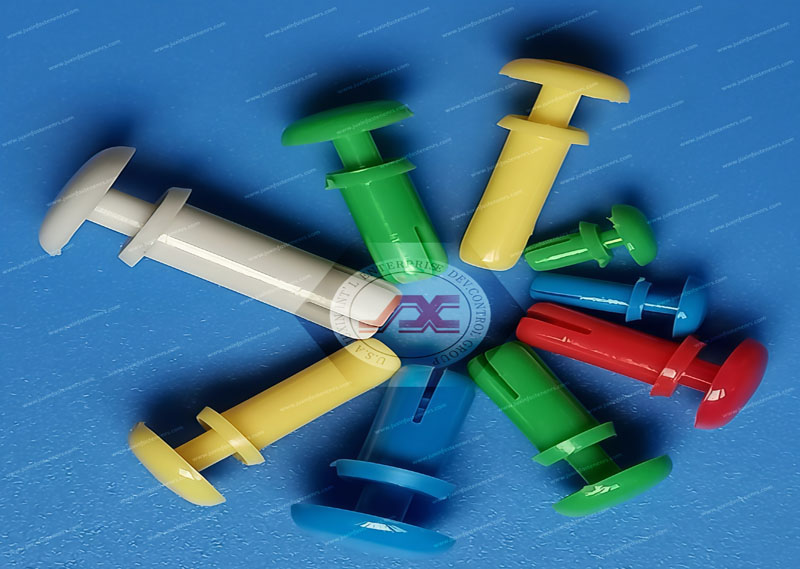
Automotive Plastic Fasteners Solutions for Modern Vehicle Assembly
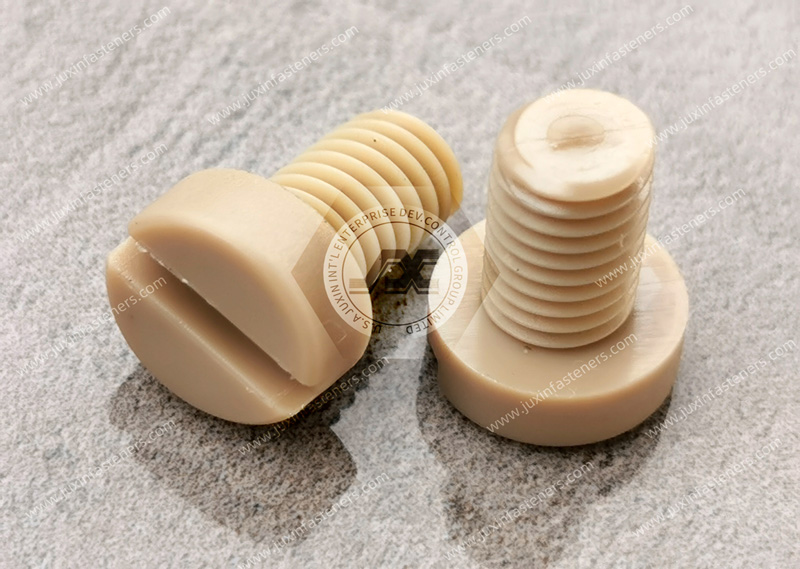
Plastic Hardware for Industrial Machinery & Robotics: Engineering Selection & OEM Sourcing
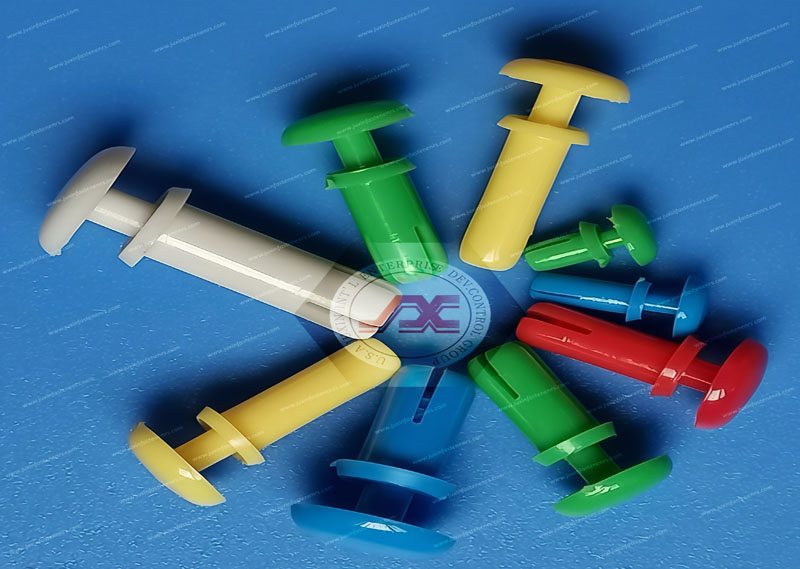
Push-In Rivets vs Traditional Fasteners – Efficiency in Automotive Assembly
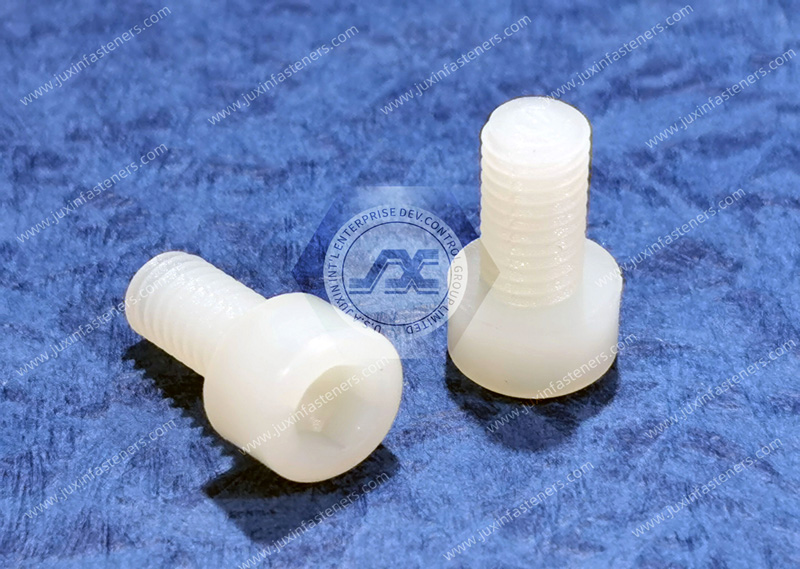
Custom Plastic Machine Screws & Nylon Bolts: Engineering Selection & OEM Sourcing
Contact Us
Tel.:
+86 020 8621 0320
+86 020 3121 6067
E-mail:
Technical Support:
Navigation
SEND INQUIREY