Call Us
+86 136 6007 9809
Call Us
+86 136 6007 9809

Industrial original equipment manufacturers (OEMs) across automotive, EV, electronics, electrical equipment, telecommunications, industrial machinery,
robotics, HVAC, medical equipment, semiconductor equipment and other engineered-product sectors frequently encounter fastening requirements that cannot be satisfied by standard catalog hardware.
Product Specification
Industrial original equipment manufacturers (OEMs) across automotive, EV, electronics, electrical equipment, telecommunications, industrial machinery, robotics,
HVAC, medical equipment, semiconductor equipment and other engineered-product sectors frequently encounter fastening requirements that cannot be satisfied by standard catalog hardware.
The requirement may involve a non-standard head geometry, unusual thread configuration, extended shank, controlled insulating distance,
special washer profile, custom spacer length, proprietary installation interface, or a polymer material selected for a particular combination of mechanical, thermal, chemical, electrical or environmental requirements.
In these situations, custom plastic fasteners should not be treated simply as modified commodity hardware.
The engineering decision involves the component geometry, polymer selection, mating materials, installation method,
operating environment, dimensional requirements, production volume and long-term supply strategy.
JUXIN FASTENERS provides industrial fastening and custom component solutions for OEM applications, with engineering-oriented support covering drawing review,
product specification evaluation, material and application discussions, sample development where applicable, inspection requirements and production sourcing.
For procurement and engineering teams, the objective is not simply to find a supplier capable of producing one unusual plastic screw.
The objective is to establish a repeatable supply solution that can support the complete fastening BOM,
from individual custom components to related plastic hardware such as nuts, washers, spacers, standoffs and other application-specific components.
This guide explains when OEM programs should consider custom plastic fasteners,
how to define the engineering requirement, how polymer selection affects the design decision, how production routes should be evaluated,
and what information procurement and engineering teams should include in an OEM RFQ.
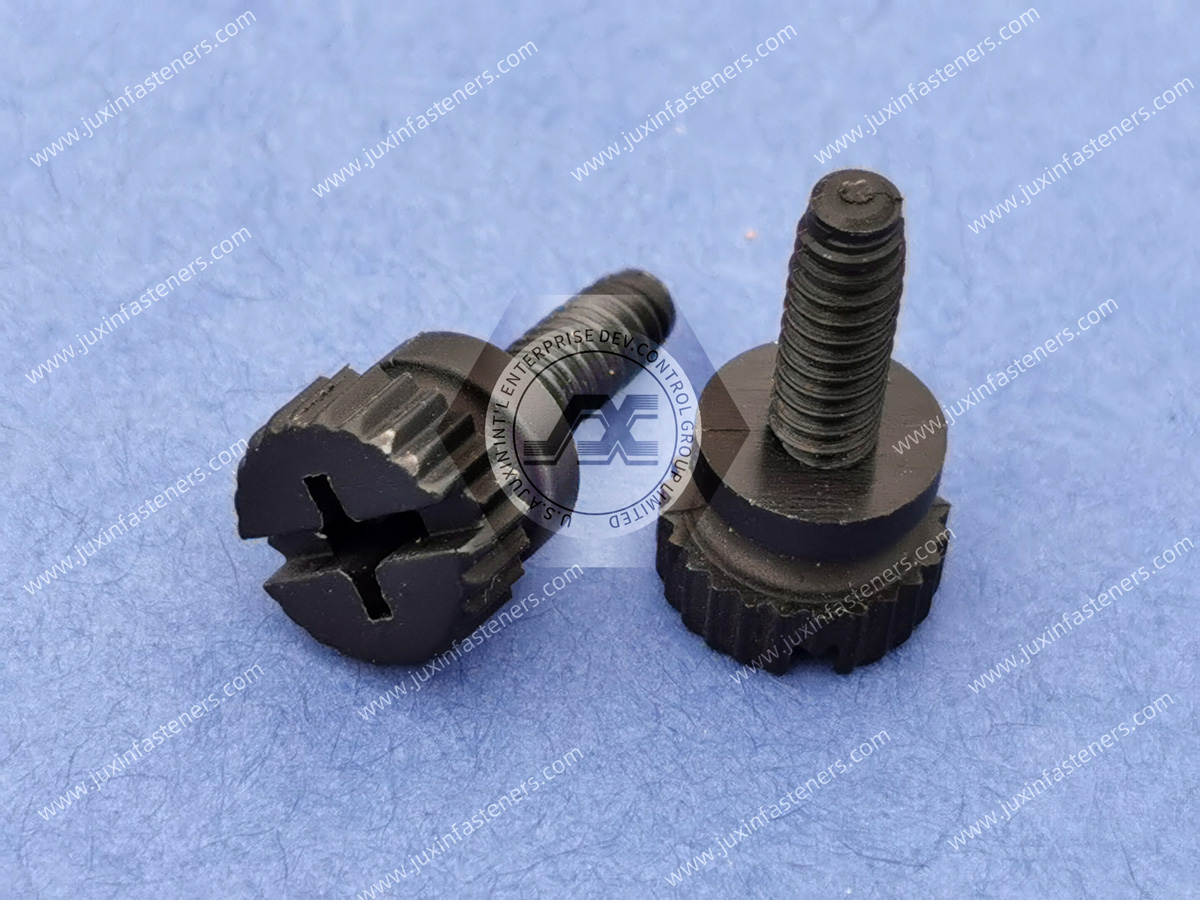
Design engineers and sourcing teams should consider moving from standard catalog components to custom-engineered plastic fasteners when the application requires a combination of dimensions, geometry, material or assembly characteristics that standard hardware cannot provide.
Typical situations include:
Non-standard thread configurations, thread lengths or unthreaded shank sections required by a particular assembly architecture.
Extended or reduced shank lengths needed to accommodate a specific panel thickness, housing wall, bracket stack-up or internal clearance.
Special head geometries designed around restricted enclosure space, access limitations, assembly tools or product aesthetics.
Custom shoulders or locating features required to control axial position, spacing or component alignment.
Special washer or insulation profiles required to protect a panel surface or create a controlled interface around a clearance hole.
Custom spacer and standoff dimensions required to establish a specific PCB, electronics or component spacing relationship.
Polymer material requirements that differ from common nylon hardware because of temperature, moisture, chemical exposure, dimensional stability, friction or electrical isolation considerations.
Multi-feature components combining several functions into one plastic part, subject to engineering and manufacturing feasibility.
Low-volume or prototype requirements where a standard catalog product is unavailable and a suitable custom production route needs to be evaluated.
High-volume OEM programs where a custom component may provide a better fit to the product architecture than repeatedly adapting several standard components.
Multi-SKU sourcing requirements, where custom screws, nuts, washers, spacers and related plastic hardware need to be coordinated as one OEM supply program.
The key decision is therefore not simply:
“Can this plastic fastener be made?”
A stronger OEM sourcing question is:
“Can the required geometry, material, dimensional control, production route, inspection method and supply model be defined clearly enough for repeatable production?”
That distinction is important when qualifying a long-term industrial supplier.
Custom plastic fasteners require a different design approach from conventional metal fasteners because polymer behavior can influence both dimensional performance and assembly behavior.
Plastic components can respond differently from metallic components to temperature, moisture, molding history, machining conditions and long-term mechanical loading.
For that reason, a drawing should identify which dimensions are functionally critical rather than treating every dimension as equally important.
For example, the following may have very different engineering priorities:
thread dimensions;
shoulder diameter;
head diameter;
overall length;
unthreaded shank length;
locating diameter;
washer seating surface;
clearance-hole interface;
mating component position.
A supplier should review the drawing with the intended assembly function in mind.
For OEM programs, this is particularly important when a custom plastic component is part of a larger dimensional stack-up.
The polymer family influences how a component behaves under load, temperature, moisture and environmental exposure.
Nylon or polyamide can provide a useful balance of toughness, weight and general industrial applicability, but moisture absorption and dimensional
changes should be considered when tight dimensional relationships are involved.
Glass-filled nylon may provide increased rigidity compared with an unfilled grade, but the appropriate formulation depends on the specific design and application requirements.
POM/Acetal may be considered where rigidity, dimensional behavior and low-friction characteristics are important.
PVDF and PEEK may be considered for applications requiring particular chemical, thermal or environmental characteristics,
but material selection should always be based on the actual operating conditions rather than on the polymer name alone.
The important engineering question is therefore not:
“Which plastic is strongest?”
It is:
“Which polymer family and grade provide an appropriate balance of mechanical behavior, dimensional stability, environmental resistance, manufacturability and cost for this component?”
The most appropriate production route depends on the component geometry, material, annual quantity, dimensional requirements and tooling economics.
For some custom plastic components, CNC machining may be appropriate, particularly for prototypes, development quantities, low-volume production or geometries that are difficult to justify with dedicated tooling.
For higher-volume components, other production routes may become commercially attractive depending on geometry and material availability.
However, an OEM should not select a manufacturing process simply because a supplier advertises it as “high volume” or “precision.”
The production route should be evaluated against:
annual demand;
batch size;
component geometry;
material;
required dimensional control;
tooling investment;
prototype requirements;
inspection method;
expected production life;
change-control requirements;
total landed cost.
For this reason, technical drawing review should take place before the production route is committed.
Custom plastic fasteners are rarely purchased completely independently.
A product assembly may require a combination of screws, nuts, washers, spacers, standoffs, insulating components and threaded reinforcement.
This creates an opportunity for OEM procurement teams to evaluate the complete plastic hardware BOM rather than sourcing every component independently.
Potential configurations include:
custom plastic screws;
nylon screws;
plastic machine screws;
nylon machine screws;
plastic bolts;
nylon bolts;
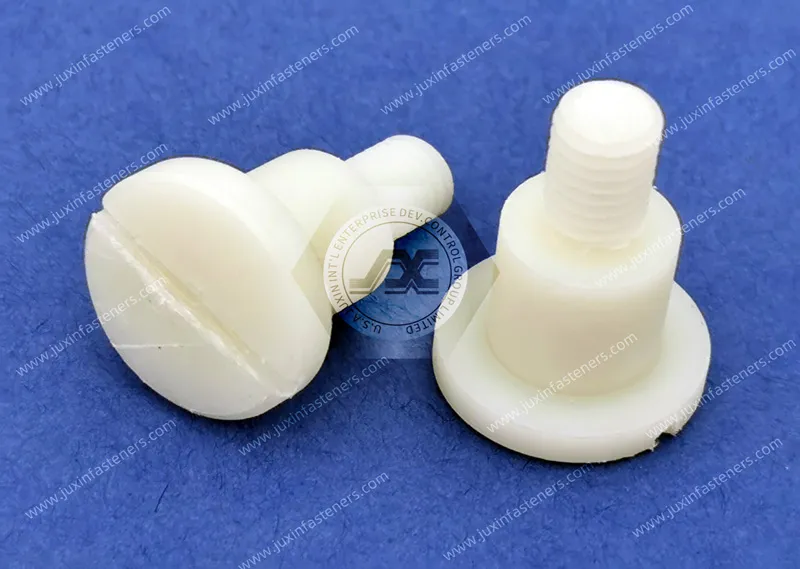
custom shoulder screws;
custom-length screws;
application-specific head profiles.
The final configuration should be based on the mating component, installation method, mechanical requirement and operating environment.
Related products may include:
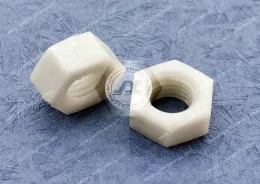
plastic nuts;
nylon nuts;
plastic hex nuts;
nylon hex nuts;
custom plastic nuts;
application-specific nut geometries.
Where a standard nut does not provide the required geometry, custom dimensions may be considered based on the assembly design.
A custom plastic hardware program may also include:
plastic flat washers;
nylon insulating washers;
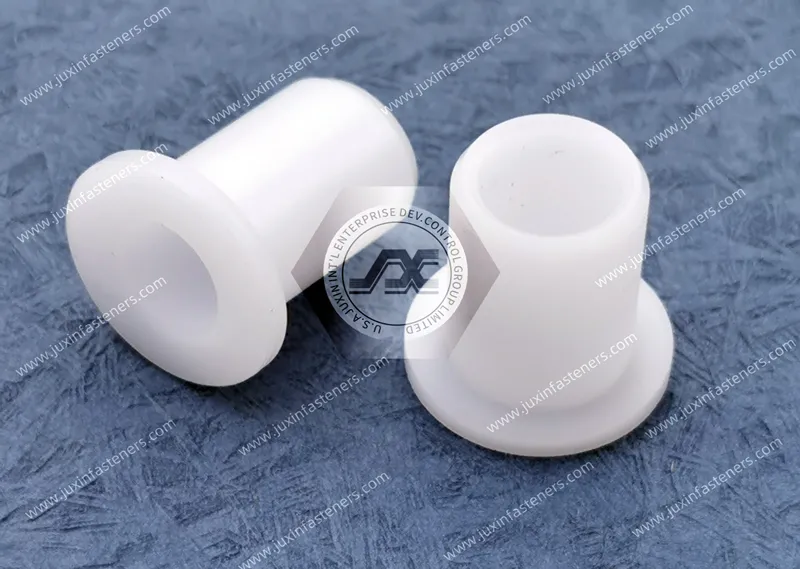
shoulder washers;
insulating cup washers;
cup washers;
custom washer profiles.
These components can serve functions such as surface separation, electrical isolation at a selected interface, clearance-hole protection or controlled spacing.
The important point is that a plastic washer does not automatically make an entire assembly electrically isolated.
Engineers should identify the complete conductive path through the assembly before specifying the component.
Custom spacers can be used where the design requires controlled distance between components.
The product family may include:
plastic spacers;
nylon spacers;
industrial plastic spacers;
PCB spacers;
threaded standoffs;
male-to-female standoffs;
female-to-female standoffs;
custom-length standoffs.
These components can be especially relevant to electronics, electrical enclosures, control systems, telecommunications equipment and industrial assemblies.
Some plastic assemblies require more than a plastic thread.
Where repeated assembly, increased thread durability or localized reinforcement is part of the design requirement, engineers may evaluate threaded inserts for plastic.
Similarly, where a fastener compresses a polymer housing or plastic wall, a compression limiter may be considered to control the compressed interface.
These are not automatic requirements. They should be selected according to the actual joint design, installation process and expected service conditions.
Polymer selection should start with the application environment rather than the product name.
The following comparison provides a practical starting point for engineering discussion.
| Polymer Family | Common Engineering Considerations | Potential Application Areas | Key Design Considerations |
|---|---|---|---|
| Nylon / Polyamide | Toughness, lightweight construction, general industrial use | Enclosures, electrical equipment, automotive components, machinery, general fastening | Moisture absorption and dimensional changes should be considered |
| PA6 / PA66 | Common polyamide families with different application characteristics | Industrial hardware, equipment assemblies, automotive and electrical applications | Grade, reinforcement, moisture exposure and dimensional requirements require evaluation |
| Glass-Filled Nylon | Increased rigidity compared with many unfilled grades | Structural plastic components, equipment hardware, automotive applications | Reinforcement affects processing behavior, dimensional characteristics and mechanical response |
| POM / Acetal | Rigidity, low-friction behavior and dimensional stability in suitable applications | Precision mechanisms, sliding components and equipment assemblies | Chemical compatibility, temperature and mating-interface conditions should be evaluated |
| PVDF | Chemical and environmental resistance in suitable applications | Chemical equipment, semiconductor-related equipment and specialized industrial environments | Actual chemical exposure and operating conditions must be reviewed |
| PEEK | High-performance engineering polymer for demanding applications | Specialized industrial equipment, electronics and high-temperature applications | Material cost, grade selection, processing route and application requirements require detailed review |
This table should be treated as an engineering screening tool, not a material approval chart.
A polymer that performs well in one application may not be appropriate in another because the final behavior depends on the exact grade, geometry, loading, temperature, moisture, chemical environment, mating material and assembly conditions.
One of the most useful ways to reduce unnecessary design iterations is to describe what the component must do at each interface.
Instead of beginning with:
“We need a custom nylon screw.”
Start with:
What does the fastener contact?
What is the fastener securing?
Does the head contact painted, coated, metal or polymer material?
Does the shank pass through a clearance hole?
Is electrical separation required at a particular interface?
Is the component primarily structural, locating, spacing or retaining?
Is the plastic thread carrying the working load?
Is a metal threaded insert required?
Is the component exposed to moisture, chemicals or elevated temperature?
Is the component installed once or repeatedly during service?
This interface-first approach often reveals that the required solution is not necessarily a custom screw.
For example:
Surface protection requirement → plastic flat washer
Radial hole isolation requirement → shoulder washer
Controlled component spacing → plastic spacer or standoff
Repeated polymer threading → threaded insert may be considered
Controlled compression of a polymer wall → compression limiter may be considered
Non-conductive low-load attachment → plastic or nylon screw/nut/bolt may be considered
This is a more useful engineering decision path than selecting a polymer first and attempting to force the geometry around it.
A second important sourcing consideration is the difference between custom geometry and custom product architecture.
Not every OEM requirement needs a completely new component.
A design may potentially be addressed by:
changing the overall length;
changing the thread length;
changing the shoulder dimension;
changing the head diameter;
modifying a washer;
combining a standard component with a spacer;
selecting a different plastic hardware configuration;
adding a threaded insert;
adding a compression limiter;
or developing a fully custom component.
This distinction matters because the commercial and technical consequences can be very different.
A minor dimensional modification may have a different development path from a completely new geometry requiring dedicated tooling or a new production process.
Therefore, OEM sourcing teams should provide the supplier with the functional requirement and drawing, rather than assuming the manufacturing method before engineering review.
Custom hardware becomes more attractive when the standard product creates repeated compromises in the assembly.
Typical examples include:
A standard fastener head may interfere with another component, cable, PCB, cover or internal structure.
A custom head profile or reduced overall height may provide a better fit if technically feasible.
An assembly may require a specific distance between a PCB, housing, bracket, sensor, cover or electronic component.
A custom spacer or standoff can be evaluated instead of stacking multiple standard washers or spacers.
A plastic screw, washer or standoff can be considered where a particular metal-to-metal contact should be avoided.
The entire assembly should still be reviewed for other conductive paths.
Plastic and nylon hardware can provide a lower-density alternative to metal components in applications where the mechanical requirements permit polymer hardware.
This may be relevant to electronics, transportation equipment, industrial equipment and other assemblies where component mass is one factor in the overall design.
The appropriate comparison should be made at the assembly level rather than assuming that replacing every metal fastener with plastic will always provide an engineering or commercial benefit.
Plastic hardware may be considered where direct metal contact or exposure to a particular environment creates a corrosion-related design concern.
However, polymer hardware should not automatically be described as a universal corrosion solution. The surrounding materials, environment, fastener loading and complete joint architecture still need to be evaluated.
Custom plastic hardware is not automatically suitable for every fastening application.
Metal hardware may remain preferable where the joint requires mechanical characteristics that the selected polymer cannot provide.
Engineers should carefully evaluate applications involving:
high structural loads;
significant sustained preload;
elevated temperatures;
long-term creep-sensitive joints;
repeated high-cycle loading;
severe wear;
aggressive chemicals;
tight dimensional relationships;
demanding electrical requirements;
or other conditions where polymer behavior must be validated.
The correct decision depends on the actual application rather than on the general category of “plastic fastener.”
For some designs, the best solution may be a hybrid architecture combining plastic components with metal threaded inserts, compression limiters or other reinforcement elements.
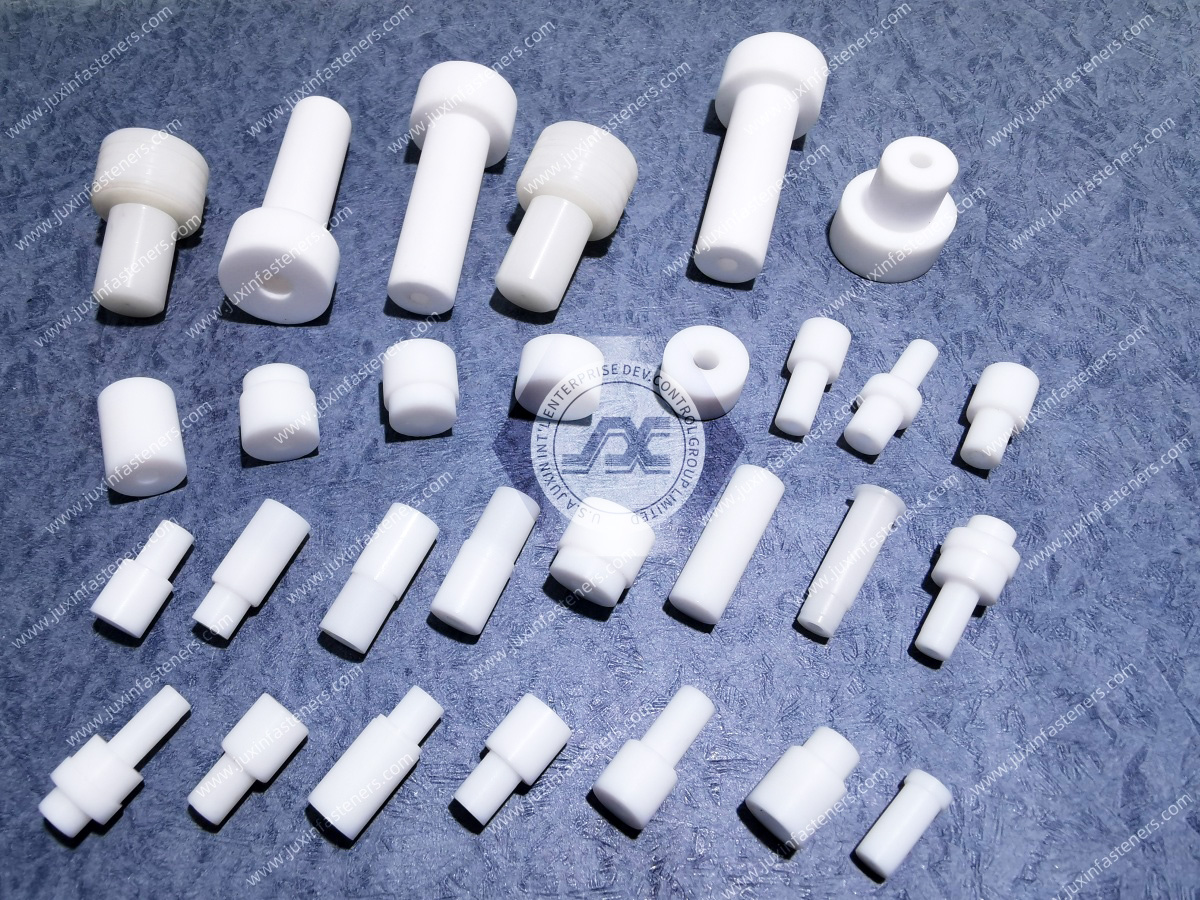
Custom polymer hardware can be evaluated across a wide range of OEM product architectures.
Potential applications include:
electrical enclosures;
battery-related assemblies;
sensor mounting;
cable management;
interior components;
brackets;
insulation interfaces;
plastic housings;
electronic control assemblies.
Automotive and EV applications require careful consideration of temperature, vibration, moisture, dimensional stability and the complete fastening interface.
Plastic screws, nuts, washers, spacers and standoffs can be evaluated for:
control cabinets;
electrical enclosures;
equipment housings;
terminal and control assemblies;
internal mounting structures;
panel interfaces.
Where electrical isolation is part of the requirement, engineers should define the exact interface that needs separation rather than assuming the entire assembly becomes non-conductive.
Relevant products may include:
PCB spacers;
threaded standoffs;
male-to-female standoffs;
female-to-female standoffs;
nylon screws;
nylon nuts;
insulating washers;
custom plastic spacers.
The key requirements may include board spacing, component clearance, assembly access and electrical separation.
Plastic hardware can be considered for:
telecommunications equipment;
antenna assemblies;
base-station equipment;
electronic enclosures;
cable and component mounting;
insulating interfaces.
Environmental exposure, UV conditions, temperature and electrical requirements should be evaluated according to the actual installation environment.
Polymer components may be considered for specialized equipment where material compatibility, contamination considerations, chemical exposure, dimensional stability or electrical isolation are important.
The material and manufacturing requirements should be defined according to the specific equipment environment rather than
relying on broad statements such as “cleanroom compatible” or “semiconductor grade” without project-specific verification.
Custom plastic hardware may support:
protective covers;
sensors;
cable routing;
control assemblies;
machine housings;
positioning components;
non-structural fastening points;
component spacing.
For moving systems, engineers should additionally consider friction, wear, vibration, repeated movement and long-term dimensional behavior.
Plastic and nylon hardware may be considered for:
equipment housings;
panels;
control components;
insulation interfaces;
brackets;
spacers;
electrical separation.
Moisture, temperature cycling, chemical exposure and the surrounding materials should be included in the engineering review.
Plastic hardware may be evaluated for equipment housings, covers, internal mounting and component spacing.
However, application-specific regulatory, material, cleanliness and documentation requirements must be clearly specified by the OEM.
A supplier should not assume medical-grade, regulatory or certification status without project-specific verification.
A complete technical package significantly improves the quality and speed of engineering evaluation.
Procurement managers, strategic sourcing teams and design engineers should prepare the following information.
Identify what the component is intended to do.
Examples include:
custom plastic screw;
nylon machine screw;
custom plastic nut;
shoulder screw;
insulating washer;
plastic spacer;
threaded standoff;
PCB spacer;
custom retaining component;
application-specific plastic hardware.
Also explain its role within the assembly.
Provide a dimensioned drawing showing:
critical dimensions;
thread specification;
tolerances;
datum references where applicable;
material;
surface or finish requirements;
color requirements;
inspection requirements.
If GD&T is used, identify the functional characteristics clearly.
Where available, provide a 3D CAD model to communicate:
overall geometry;
interfaces;
clearances;
mating features;
assembly orientation;
complex surfaces.
The 3D model should complement rather than replace the controlled 2D engineering drawing where a formal drawing exists.
Specify the preferred polymer family and grade when known.
Examples may include:
PA6;
PA66;
glass-filled nylon;
POM/Acetal;
PVDF;
PEEK;
or another specified polymer.
If the material is not yet determined, provide the environmental and functional requirements so the supplier can participate in the material-selection discussion.
Include relevant information such as:
temperature exposure;
moisture;
chemical exposure;
UV exposure;
vibration;
mechanical loading;
electrical isolation requirements;
repeated assembly;
expected service environment.
This information is often more useful than simply specifying “high-performance plastic.”
Provide:
prototype quantity;
initial production quantity;
estimated annual volume;
batch size;
forecast horizon;
expected ramp-up;
number of SKUs.
This helps determine the appropriate production and sourcing approach.
Clearly identify required inspection documentation, such as:
dimensional inspection reports;
material documentation where required;
sample approval requirements;
first-article requirements where applicable;
lot identification;
traceability requirements;
customer-specific quality documentation.
Requirements should be agreed during the sourcing and qualification process rather than assumed.
For enterprise OEM programs, packaging can be part of the engineering supply solution.
Specify:
individual or bulk packaging;
kit requirements;
label requirements;
lot identification;
multi-SKU packaging;
assembly-line delivery requirements;
carton or inner-pack requirements;
forecast and release structure.
One of the commercial advantages of a broader plastic hardware supplier is the ability to evaluate multiple related SKUs together.
An OEM may require:
custom plastic screws;
nylon machine screws;
plastic nuts;
nylon hex nuts;
plastic flat washers;
nylon insulating washers;
shoulder washers;
cup washers;
plastic spacers;
industrial plastic spacers;
PCB spacers;
threaded standoffs;
male-to-female standoffs;
female-to-female standoffs;
threaded inserts;
compression limiters.
Instead of treating every item as an isolated purchasing event, procurement teams can evaluate whether several components can be coordinated through one qualified supply program.
This can simplify:
supplier communication;
drawing management;
sample coordination;
quality documentation;
packaging coordination;
purchase-order administration;
SKU consolidation;
production forecasting.
However, consolidation should not replace technical qualification. Each component still needs to meet its own drawing, material and application requirements.
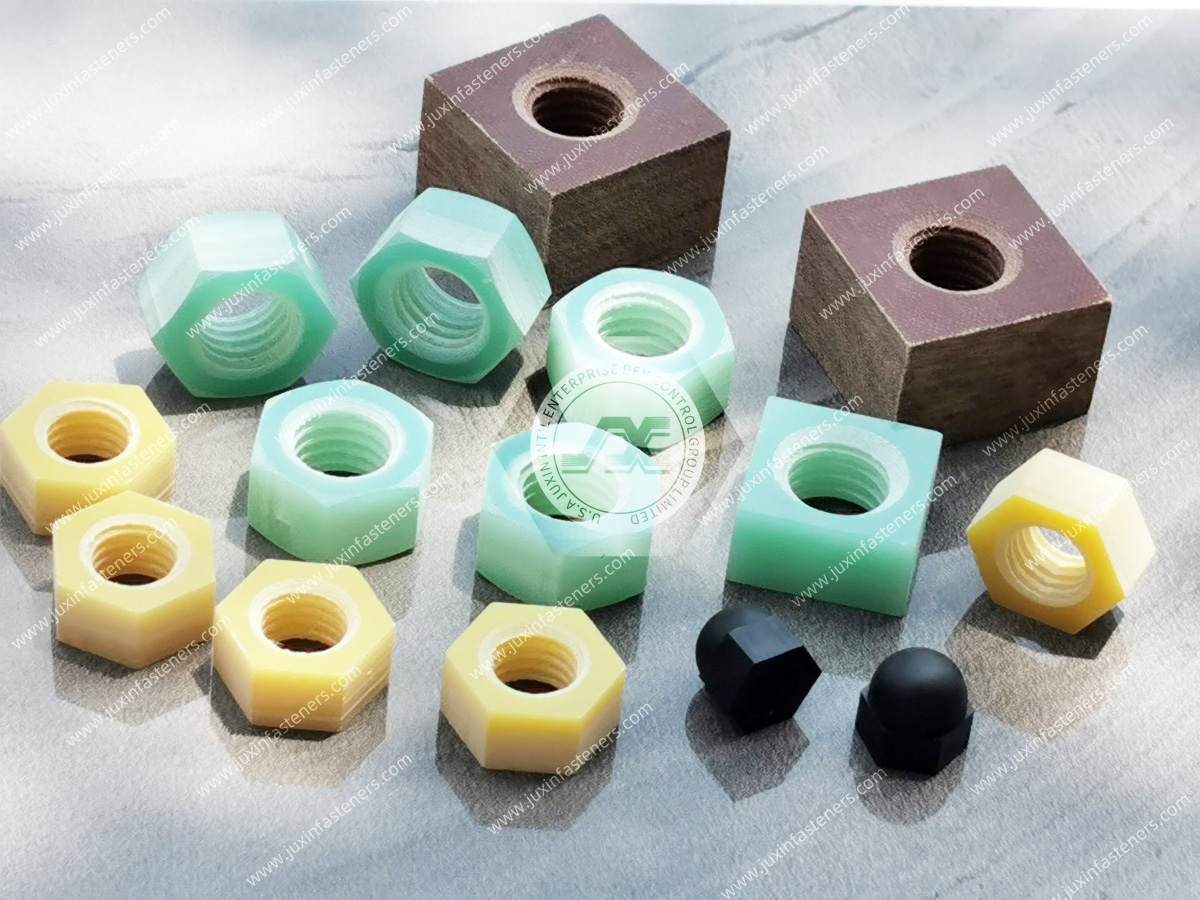
For strategic OEM programs, supplier evaluation should extend beyond a website product list.
Procurement and engineering teams should evaluate whether the supplier can support:
Can the supplier understand the drawing, functional interfaces and critical dimensions?
Can the supplier work with the specified polymer family and understand the implications of moisture, temperature, chemicals and dimensional requirements?
Can the supplier discuss whether the requested geometry and volume are compatible with the proposed manufacturing route?
Can the supplier maintain communication between sample development and production requirements?
Can the supplier agree on critical dimensions, sampling, inspection documentation and lot identification?
Can the supplier manage multiple plastic hardware SKUs rather than treating every component as a separate project?
Can the supplier follow customer-specific packaging, labeling and lot-control requirements?
Can the supplier support forecast-based production and ongoing OEM purchasing requirements?
These questions are particularly important for procurement managers and supply chain managers who are evaluating a supplier for a long-term BOM rather than a single trial order.
A practical OEM sourcing process can be structured as:
Application Requirement
↓
Functional Interface Definition
↓
Component Architecture
↓
Material Selection
↓
Drawing / CAD Review
↓
Production-Route Evaluation
↓
Prototype or Sample Review
↓
Dimensional and Functional Verification
↓
Production Qualification
↓
Multi-SKU BOM Coordination
↓
Ongoing OEM Supply
This approach helps prevent a common sourcing mistake: requesting a quotation before the engineering requirement has been clearly defined.
For custom components, the quotation is only one step in the process.
A successful OEM program depends on the alignment between design intent, component specification, manufacturing route, inspection requirements and supply-chain execution.
OEMs should consider custom plastic fasteners when standard products cannot satisfy required dimensions, geometry,
thread configuration, material selection, spacing, insulation interface or other application-specific requirements.
Potential material options depend on the component design, material availability, production route and application requirements.
Common engineering polymer families considered for industrial applications include nylon/polyamide, POM/Acetal, PVDF and PEEK.
The final grade should be evaluated against the actual operating environment.
Thread and dimensional requirements can be specified according to applicable international standards such as ISO, DIN, ASME/ANSI and other customer-designated standards where relevant.
For custom components, the controlled engineering drawing remains critical because many geometries are application-specific rather than fully defined by a standard.
The appropriate manufacturing route depends on geometry, volume, tooling economics, material and dimensional requirements.
CNC machining can be useful for prototypes, development quantities, low-volume production and certain specialized geometries.
For larger-volume applications, other production routes may become commercially appropriate depending on the component design and tooling requirements.
The correct process should therefore be determined through technical and commercial evaluation rather than selected solely from the expected production quantity.
Color requirements can be included in the engineering specification. The feasibility depends on the selected material, grade, available color options and production route.
Exact color matching should be treated as a project-specific requirement and evaluated accordingly.
JUXIN FASTENERS can evaluate multi-SKU plastic hardware sourcing requirements as part of an OEM project.
The exact product scope, materials, quantities, drawings and production requirements should be reviewed before confirming the applicable supply capability.
The preferred RFQ package includes 2D drawings, 3D CAD files where available, material requirements, critical dimensions and tolerances, application conditions, quantities, annual demand, packaging requirements and quality-documentation requirements.
If several related plastic hardware SKUs are required, a BOM or consolidated SKU list can help the supplier evaluate the complete sourcing requirement.
Custom plastic fasteners are most effective when they are treated as part of an engineered product architecture rather than as isolated commodity components.
For OEM programs, the engineering requirement should connect:
Function → Interface → Geometry → Polymer → Production Route → Inspection → Packaging → Supply
This approach gives both engineering and procurement teams a clearer basis for evaluating custom plastic screws, nylon machine screws, plastic nuts,
nylon hex nuts, insulating washers, shoulder washers, cup washers, plastic spacers, PCB spacers, threaded standoffs and other custom polymer fastening components.
JUXIN FASTENERS supports industrial fastening and custom component sourcing for OEM applications. Engineering and procurement teams can submit drawings,
CAD data, material requirements and BOM information for project review.
For a custom plastic fastener or engineered polymer component inquiry, provide:
2D engineering drawing;
3D CAD file where available;
material or polymer requirement;
critical dimensions and tolerances;
application environment;
prototype and production quantities;
annual volume;
packaging requirements;
quality and inspection requirements;
related SKU or BOM information.
Send your technical package to:
JUXIN FASTENERS can then evaluate the component requirements, clarify the applicable manufacturing and sourcing considerations, and determine the appropriate next step for your OEM project.
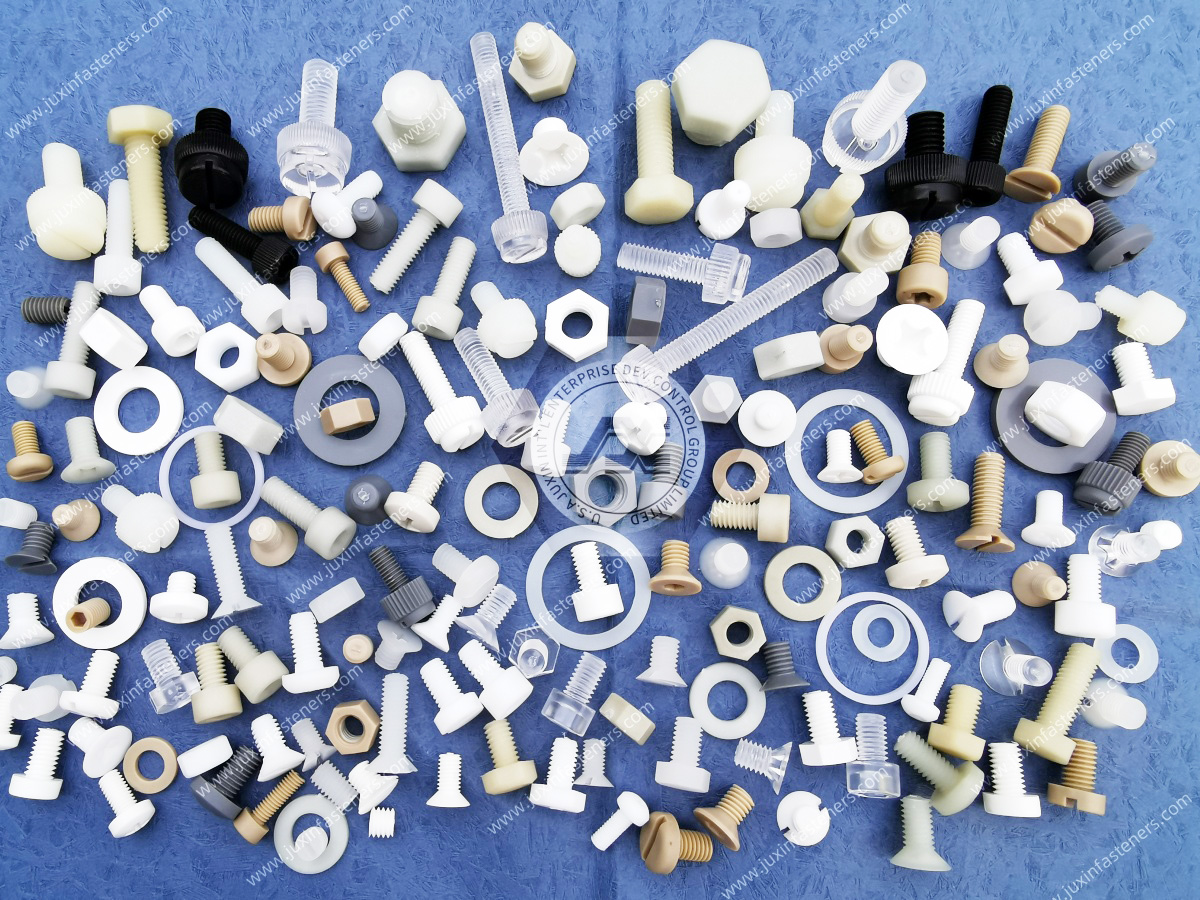
Product Packaging
Packaging Standard
At Juxin Fasteners, we apply standardized export packaging to ensure product protection, traceability, and compliance with international logistics requirements.
1. Standard Export Packaging
Unless otherwise specified, all products will be packed according to our factory standard export packaging, which includes:
Moisture-resistant inner protection
Poly bag or small box packing as required
Reinforced export cartons
Clear labeling with part number, specification, batch number, and quantity
Palletizing for sea or air shipment when necessary
Our standard packaging is designed to ensure safe transportation, efficient warehousing, and long-distance international shipping.
2. Customized Packaging Options
We also provide customized packaging solutions according to customer requirements, including but not limited to:
Private labeling
Customized barcodes
Specific carton dimensions
Retail packaging
Special pallet configuration
Customer-specific marking and identification
So that you know, customized packaging may involve additional costs and extended lead time depending on the complexity of the requirements.
3. Compliance & Quality Assurance
All packaging processes are controlled under our ISO 9001 quality management system to ensure consistency, traceability, and product integrity throughout the supply chain.
Product Pictures
Contact Us
Tel.:
+86 020 8621 0320
+86 020 3121 6067
E-mail:
Technical Support:
Navigation
SEND INQUIREY