Call Us
+86 136 6007 9809
Call Us
+86 136 6007 9809

Industrial original equipment manufacturers (OEMs) designing electronic control units, instrumentation housings, electrical distribution cabinets,
telecommunications equipment, PCB assemblies, and industrial control systems frequently encounter challenges maintaining controlled spacing between printed circuit boards (PCBs),
brackets, enclosure walls, and other components.
Product Specification
Industrial original equipment manufacturers (OEMs) designing electronic control units, instrumentation housings, electrical distribution cabinets,
telecommunications equipment, PCB assemblies, and industrial control systems frequently encounter challenges maintaining controlled spacing between printed circuit boards (PCBs),
brackets, enclosure walls, and other components.
The mounting hardware must often satisfy several requirements simultaneously: maintaining board position, controlling physical separation,
protecting mounting interfaces, supporting assembly geometry, and providing electrical separation where required by the design.
Relying on improvised hardware or unverified structural supports can create problems such as board flexure, mounting-hole damage,
dimensional stack-up issues, unwanted contact, or insufficient mechanical support.
Specifying engineered nylon spacers, plastic spacers, PCB spacers, PCB standoffs,
and threaded separation hardware can help address these mechanical and packaging requirements when the selected material and geometry are appropriate for the application.
However, successful component integration requires evaluating material grades, inner and outer diameters, body length, thread configurations,
mounting-hole geometry, tolerance stack-up, environmental exposure, and thermal conditions rather than treating spacing components as generic accessories.
JUXIN FASTENERS supports industrial fastening and custom component requirements through engineering review, manufacturing coordination,
multi-SKU bill of materials (BOM) consolidation, and production quality control. This guide examines the engineering principles,
material selection criteria, product-family differences, and procurement requirements involved in specifying nylon spacers and PCB mounting hardware for industrial applications.
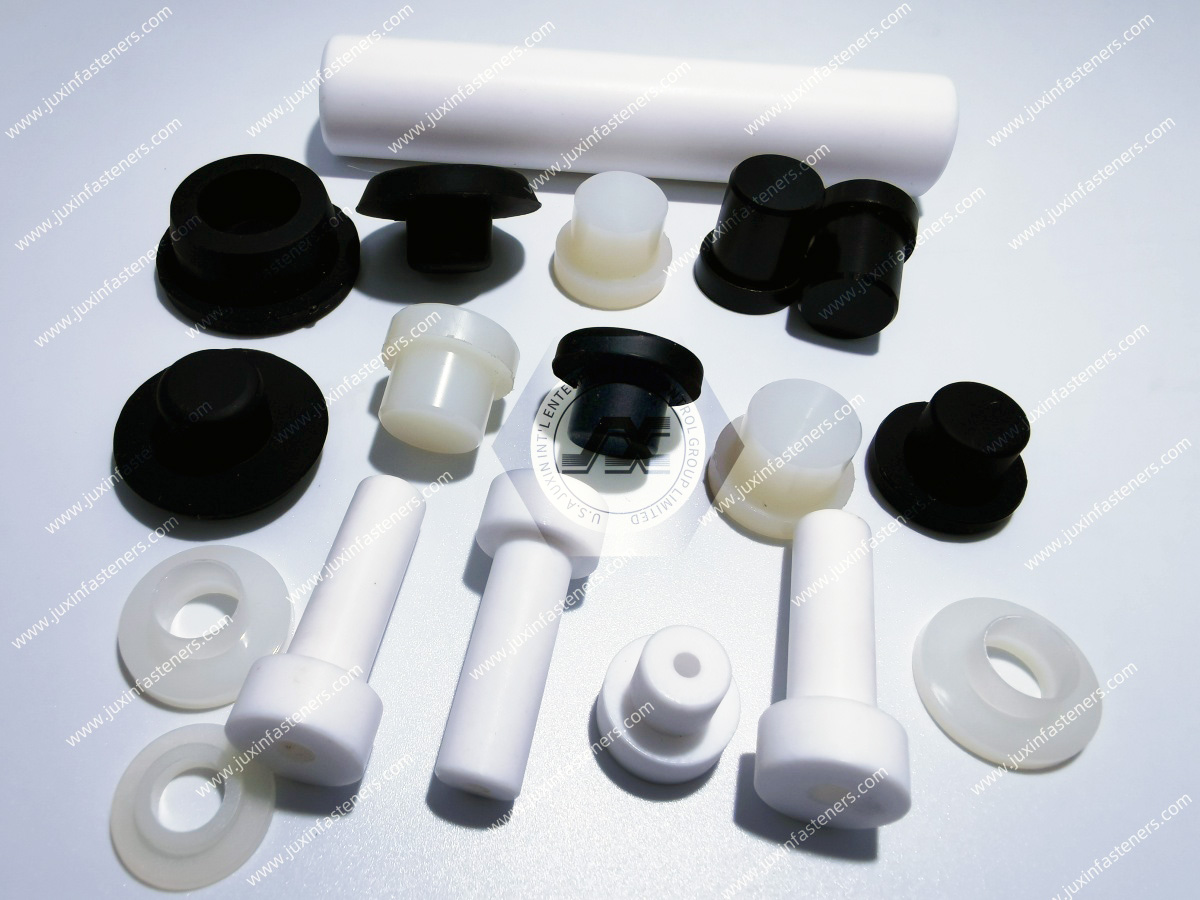
Design engineers can consider nylon spacers, plastic spacers, PCB spacers, plastic standoffs, and nylon standoffs when an application requires controlled physical separation, PCB mounting, or a non-metallic mounting interface.
Typical requirements include:
Maintaining consistent separation distances between printed circuit boards and conductive metal enclosures or brackets.
Providing electrical separation between a PCB mounting interface and conductive hardware where the selected polymer and assembly design are appropriate for the required isolation function.
Securing stacked sub-assemblies using male-to-female standoffs, female-to-female standoffs, or other threaded configurations where the mounting architecture requires threaded connection between components.
Reducing assembly weight in portable electronic equipment, instrumentation panels, compact industrial control systems, and other applications where polymer hardware is mechanically appropriate.
Establishing a controlled mounting distance between a PCB and an enclosure, bracket, panel, or secondary board.
Creating repeatable spacing in multi-level electronic packaging where the board position must be controlled by the component geometry rather than improvised washers or sleeves.
The engineering question is therefore not simply:
"Can nylon spacers be used?"
It is:
"Does the selected spacer or standoff provide the required geometry, mechanical support, environmental compatibility, and electrical separation for this specific assembly?"
Electronic packaging design involves both geometrical and electrical constraints. Selecting an unsuitable spacer or standoff can create several engineering problems.
Unsupported or poorly supported circuit boards can deflect under their own weight, attached component weight, assembly forces, or other operating conditions.
Strategically positioned nylon spacers, PCB spacers, or PCB standoffs can provide defined mounting points and help establish a controlled mechanical support structure.
The actual number, position, spacing, and load capability of mounting points should be determined from the PCB design and application requirements rather than from a universal rule.
Direct contact between a conductive PCB mounting area, exposed conductive feature, screw, bracket, or metallic enclosure can create an unwanted electrical connection if the design requires separation.
Non-conductive polymer standoffs and insulating washers may be considered where electrical separation is required.
However, a nylon spacer does not automatically guarantee complete electrical isolation throughout an assembly.
Engineers should evaluate the complete electrical path, including:
PCB geometry
Mounting holes
Exposed copper or conductive features
Screw or bolt material
Washer material
Spacer or standoff material
Enclosure or chassis
Clearance and creepage requirements where applicable
Other conductive contact paths
In multi-board electronic assemblies, even relatively small dimensional variations can accumulate across several components.
For example:
PCB → Spacer → Bracket → Standoff → Second PCB
creates a dimensional stack-up that may influence connector alignment, enclosure fit, cable routing, component clearance, and board-to-board spacing.
Engineers should therefore consider spacer length, standoff height, thread dimensions, washer thickness, PCB thickness, bracket thickness, and relevant component tolerances as part of the complete stack-up.
Controlled spacing beneath or between electronic components can influence airflow and the physical arrangement of heat-generating components.
A defined gap may provide space for airflow or prevent unwanted contact with an enclosure surface.
However, a spacer or standoff should not automatically be described as a thermal-management solution.
Actual thermal performance depends on the complete enclosure design, heat sources, airflow path, cooling method, material properties, and operating conditions.
Where a screw passes through a PCB, sheet-metal panel, polymer housing, or other relatively sensitive mounting surface, an appropriate washer or shoulder washer may be used to control the interface.
For example, a nylon shoulder washer can be considered where the design requires insulation around the fastener shank or controlled separation from the mounting hole.
This is different from the primary function of a spacer or standoff.
These products are related, but their engineering functions are not identical.
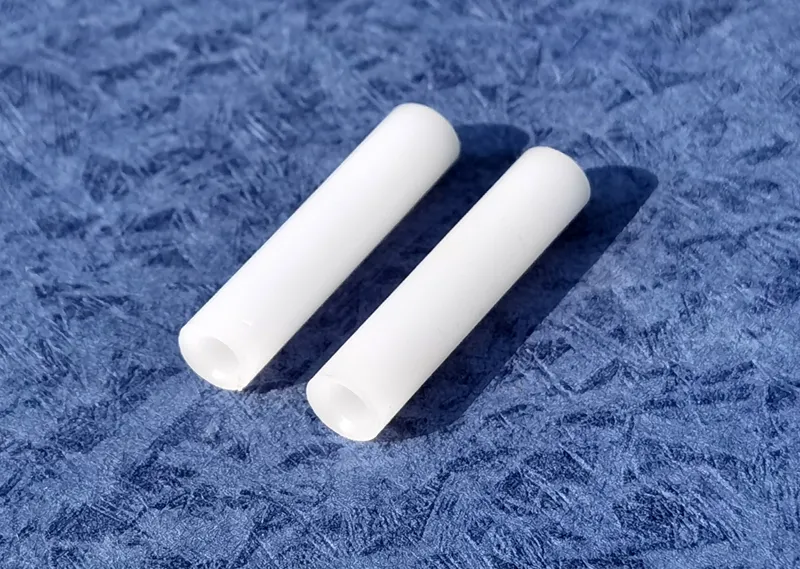
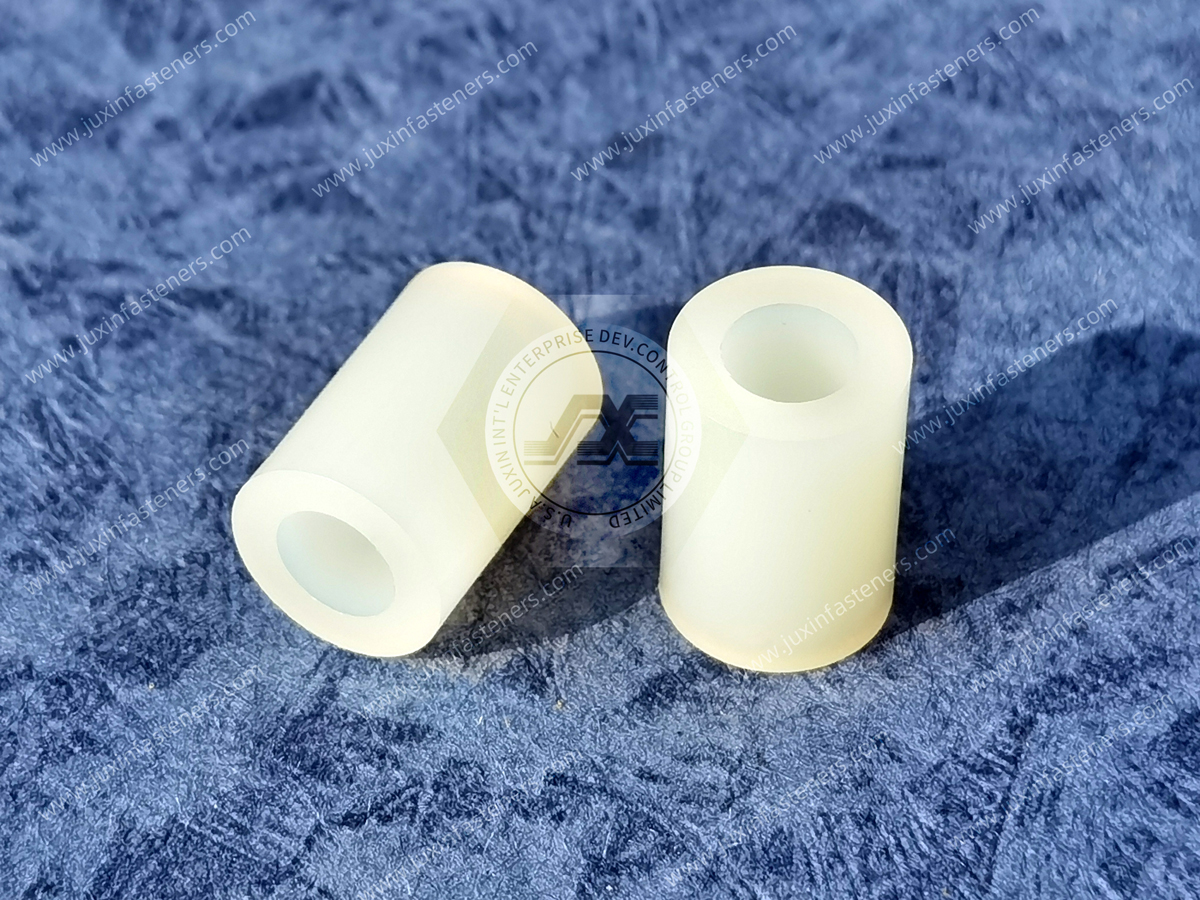
A nylon spacer is generally used to maintain a physical distance between two components.
Common configurations can include:
Round spacers
Cylindrical spacers
Hex spacers
Unthreaded spacers
Custom-length spacers
An unthreaded spacer typically provides a passage for a separate screw or bolt.
Plastic spacers are the broader product category and can be manufactured from different engineering polymers depending on the required mechanical, thermal, chemical, dimensional, and electrical characteristics.
The material should be selected based on the application rather than assuming that every plastic spacer has the same performance.
PCB spacers are designed around printed circuit board mounting and board-to-board or board-to-enclosure spacing requirements.
They can be used to establish mounting height and physical separation within electronic assemblies.
A plastic standoff or nylon standoff is a mounting component designed to establish a defined distance and may incorporate internal or external threads.
Threaded standoffs can reduce the need for separate nuts in certain mounting architectures.
Threaded standoffs may include:
Female-to-female standoffs
Male-to-female standoffs
Male-to-male standoffs
Internal-thread standoffs
External-thread standoffs
The correct configuration depends on how the PCB, bracket, screw, nut, or enclosure is assembled.
A shoulder washer performs a different function.
It may be used to provide insulation around a fastener shank, protect a mounting hole, or create a controlled interface between a fastener and the surrounding material.
A shoulder washer should not be treated as a direct substitute for a spacer.
A simple selection rule is:
Washer → bearing surface / load distribution
Shoulder washer → controlled fastener-hole interface / separation around the shank
Spacer → physical distance between components
Standoff → mounting distance combined with a mounting interface, often threaded
This distinction helps prevent incorrect component substitution during design and sourcing.
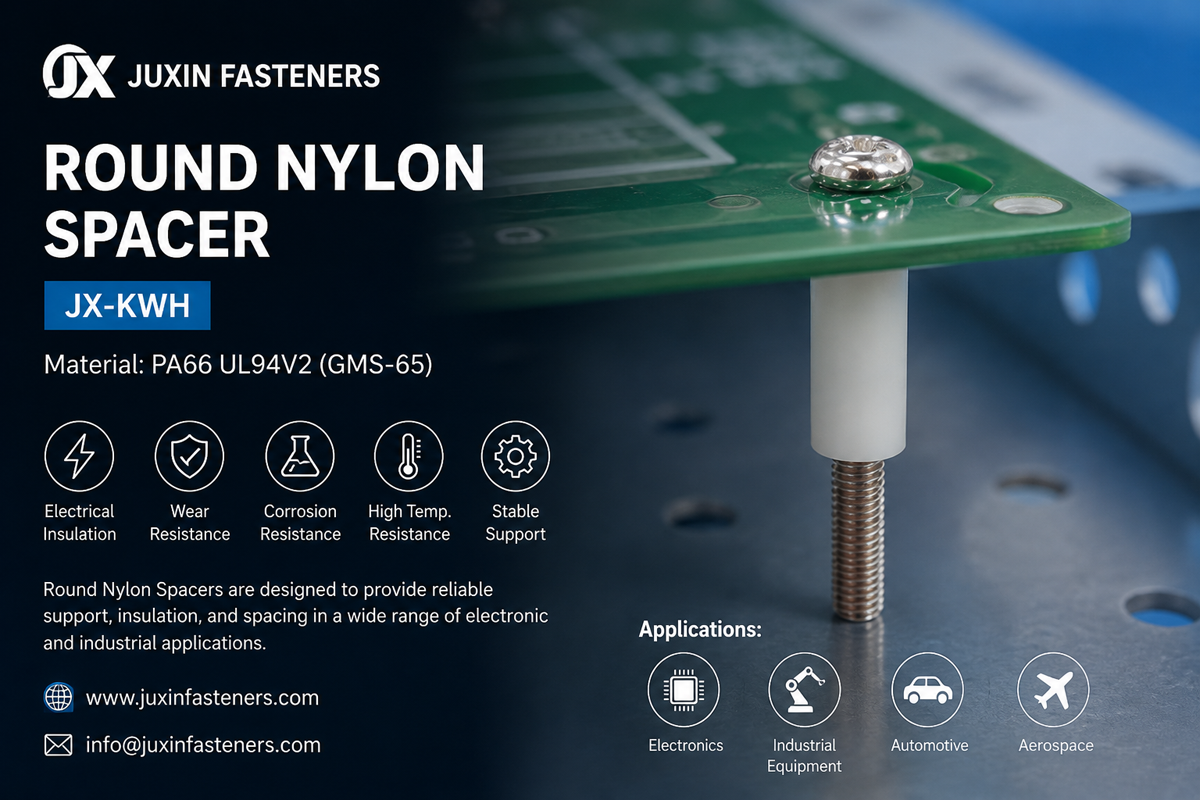
Polymer selection influences mechanical behavior, dimensional stability, environmental compatibility, and service conditions.
| Polymer Family | Typical Industrial Grades | General Engineering Characteristics | Potential Applications | Engineering & Sourcing Considerations |
|---|---|---|---|---|
| Nylon / Polyamide | PA6, PA66, unfilled or glass-filled grades | Useful strength-to-weight characteristics, toughness, and processability; moisture absorption can influence dimensions and mechanical behavior | Electrical equipment, control panels, electronic housings, industrial machinery | Evaluate moisture uptake, dimensional changes, creep, mounting load, and required material grade |
| POM / Acetal | Homopolymer / copolymer acetal | High rigidity, low friction, and good dimensional stability for many applications | Precision mechanisms, equipment housings, selected mechanical assemblies | Evaluate dimensional requirements, loading, friction, chemical compatibility, and manufacturing route |
| PVDF | Polyvinylidene fluoride | Strong chemical and environmental resistance characteristics for selected applications | Chemical processing equipment, semiconductor-related equipment, selected outdoor environments | Confirm compatibility with actual chemicals, temperature, exposure duration, stress, and geometry |
| PEEK | Polyetheretherketone | High-performance engineering polymer with strong thermal, mechanical, chemical, and wear characteristics compared with many commodity polymers | Demanding industrial equipment, specialized electronics, aerospace-related components | Higher material and processing cost; application-specific validation and manufacturing review may be required |
Nylon is a widely considered material family for industrial plastic fastening components.
PA6 and PA66 can offer useful combinations of toughness, strength, processability, and cost.
However, nylon absorbs moisture, and moisture uptake can influence dimensions and mechanical behavior.
This matters when a spacer or standoff is used in a close-tolerance stack-up or where environmental humidity varies significantly.
Glass-filled nylon can provide different stiffness and dimensional characteristics from unfilled nylon,
but the actual resin grade should be specified and verified rather than assuming that all glass-filled nylon materials perform identically.
POM can be considered where rigidity, dimensional stability, and low-friction characteristics are important.
It may be suitable for selected precision spacer and component applications, but engineers should still evaluate the actual loading, temperature, chemical environment, geometry, and manufacturing requirements.
PVDF can be considered when chemical and environmental resistance is a significant selection factor.
Its suitability should be evaluated against the actual chemical concentration, exposure duration, temperature, mechanical stress, and component geometry.
PEEK is a high-performance engineering polymer that can be considered where demanding thermal, mechanical, chemical, or dimensional requirements justify the higher material and processing cost.
It should be selected based on verified application requirements rather than simply assuming that PEEK is necessary whenever a component operates at elevated temperature.
Every polymer material has operational boundaries. Nylon spacers and plastic standoffs may not be suitable when the application requires:
Sustained high compressive structural loads that exceed the verified crush resistance or long-term deformation capability of the selected polymer.
Continuous or intermittent temperature exposure beyond the verified operating range of the selected polymer grade.
Extremely tight dimensional stability in high-humidity or submerged environments where moisture absorption may affect nylon dimensions and mechanical behavior.
Specialized chemical resistance against strong mineral acids, oxidizing agents, solvents, or other aggressive environments where the selected polymer has not been validated.
Highly controlled mechanical interfaces where dimensional variation, creep, or long-term deformation cannot be tolerated without application-specific validation.
Structural loads or safety-critical requirements for which a metal mounting system may be more appropriate.
Nylon is a material option, not a universal engineering solution.
When a spacer or standoff is exposed to high load, elevated temperature, aggressive chemicals, significant moisture,
or demanding dimensional requirements, engineers should compare alternative polymers or metallic components against the actual application conditions.
Spacer length directly contributes to the physical distance between mounted components.
For a simple assembly, the stack-up may include:
PCB thickness + spacer/standoff height + bracket thickness + washer thickness + fastener interface
If multiple boards are mounted in a stacked configuration, each spacer or standoff contributes to the total mounting height.
Engineers should evaluate:
Nominal spacer length
Spacer tolerance
PCB thickness
Bracket thickness
Washer thickness
Fastener dimensions
Connector clearance
Component height
Enclosure clearance
Thermal or airflow requirements
A spacer should therefore be selected as part of the entire mechanical stack-up rather than as an isolated dimension.
Nylon and other insulating polymers can be considered where electrical separation between conductive components is part of the design.
A nylon spacer may physically separate a PCB or bracket from a conductive chassis.
However, using a nylon spacer does not automatically establish complete electrical isolation for the entire assembly.
Engineers should verify the complete electrical architecture, including:
Material resistivity requirements where applicable
Mounting-hole design
Screw and bolt materials
Washer materials
PCB surface features
Chassis geometry
Clearance
Creepage
Other conductive paths
Applicable customer or industry requirements
Where the fastener itself must be separated from a mounting hole, a shoulder washer or insulating washer may be needed in addition to the spacer.
The decision depends on the function required.
The primary requirement is:
Load distribution
Surface protection
Bearing-area control
Fastener interface management
The primary requirement is:
Maintaining physical separation
Establishing a defined distance
Creating a mounting gap
Separating two components in a stack-up
The assembly requires:
A defined mounting height
Threaded connection
PCB mounting
Board-to-board mounting
Board-to-enclosure mounting
For example, a PCB mounted to an enclosure may use a threaded standoff rather than a simple unthreaded spacer when the standoff itself must provide the threaded mounting interface.
Threaded standoffs form part of a larger fastening assembly.
Depending on the configuration, engineers may combine:
Nylon screws
Plastic screws
Nylon machine screws
Plastic machine screws
Nylon nuts
Plastic nuts
Nylon washers
Shoulder washers
Threaded standoffs
For example, a female-to-female standoff may receive a screw from each side in a board-to-board configuration.
A male-to-female standoff may combine an external mounting thread on one end with an internal thread on the other.
The correct configuration depends on the PCB arrangement, enclosure, bracket geometry, fastener direction, assembly sequence, and required mounting distance.
The standoff should therefore be selected together with its mating fastener rather than specified independently.
Nylon spacers, PCB standoffs, and related plastic hardware can be considered across a range of industrial applications when their mechanical and environmental characteristics are suitable.
Electrical cabinets and control panels may use plastic spacers, nylon standoffs, insulating washers, and related polymer hardware for selected PCB, control-board, sensor, and mounting assemblies.
Electronic assemblies commonly require controlled mounting distances between:
PCB and enclosure
PCB and bracket
PCB and PCB
PCB and shielding structure
Board and mounting panel
Depending on the design, engineers may combine PCB spacers, threaded standoffs, nylon screws, nylon nuts, and shoulder washers.
Telecommunications cabinets, base stations, antenna equipment, and communication hardware may use polymer mounting components where weight,
electrical separation, environmental exposure, and assembly geometry permit.

Automotive and EV electronic equipment may use plastic spacers, PCB standoffs, insulating washers, and related components in selected electronic housings, control systems, brackets, and equipment assemblies.
The actual polymer selection must be validated against the application environment rather than assuming that every nylon component is suitable for automotive use.
Battery and energy-storage equipment may incorporate polymer spacers, standoffs, washers, and other insulating components where mounting geometry and electrical separation are relevant.
Thermal, electrical, mechanical, chemical, and safety requirements should be evaluated for the actual application.
Instrumentation and control equipment may use nylon spacers and standoffs to establish mounting positions for PCBs, sensors, displays, control boards, and internal brackets.
HVAC control systems, electrical panels, sensors, controllers, and electronic housings may use plastic spacers and standoffs where the application requirements permit.
Selected semiconductor equipment and electronic manufacturing systems may require polymer components because of chemical exposure, electrical separation, cleanliness, or material compatibility requirements.
The actual polymer should be selected against the process environment and customer specification.
Smart-home controllers, electronic devices, control modules, displays, sensors, and compact electronic housings may use PCB spacers, plastic standoffs, nylon screws, and related polymer fastening components.
Submitting a comprehensive Request for Quotation (RFQ) streamlines technical evaluation, tooling review, sampling, and production planning.
Procurement managers and design engineers should prepare a complete technical package covering:
Specify the required hardware type, such as:
Round unthreaded spacer
Cylindrical plastic spacer
Hex unthreaded spacer
Nylon spacer
PCB spacer
PCB support pillar
Female-to-female threaded standoff
Male-to-female standoff
Male-to-male standoff
Internal-thread standoff
External-thread standoff
Custom plastic standoff
Include the applicable drawing or standard reference where required.
Provide 2D technical drawings and 3D CAD files where available, specifying:
Inner diameter
Outer diameter
Overall body length
Thread size
Thread pitch
Thread designation
Across-flats dimension where applicable
Mounting geometry
Chamfers
Tolerances
Critical dimensions
Specify the exact polymer family and, where required, the resin grade.
Potential examples include:
PA6
PA66
Unfilled nylon
Glass-filled nylon
POM
PVDF
PEEK
Other customer-specified polymer
Also specify:
Color
Natural or black material
Custom color requirement
Appearance requirements
Customer-approved material alternatives where applicable
Provide relevant requirements such as:
Operating temperature
Humidity
Water exposure
Chemical exposure
Electrical separation requirements
Expected mounting load
Compression requirements
Vibration environment
Dimensional stability requirements
Repeated assembly requirements
Where numerical performance is critical, provide the required value and validate it against the actual product rather than relying on generic polymer assumptions.
Procurement teams should also provide:
Annual volume
Initial order quantity
Batch quantities
Forecast requirements
Multi-SKU BOM
Packaging requirements
Kit packaging requirements where applicable
Labeling requirements
Inspection requirements
Sample requirements
Delivery expectations
Before releasing a spacer or standoff design for production, engineers should verify the complete mounting architecture.
Confirm the actual polymer family and resin grade.
Verify:
Outer diameter
Inner diameter
Length
Thread configuration
Head or flange geometry where applicable
Critical tolerances
Check:
PCB thickness
Spacer/standoff height
Bracket thickness
Washer thickness
Fastener dimensions
Connector position
Enclosure clearance
Component height
Determine whether the component is primarily intended for:
PCB mounting
Board-to-board spacing
Board-to-enclosure spacing
Electrical separation
Mechanical separation
Mounting alignment
Surface protection
Structural support
Evaluate:
Temperature
Humidity
Water exposure
Chemicals
UV exposure where applicable
Vibration
Repeated assembly
Consider:
Compression
Fastener preload
Thread engagement where applicable
Creep
Long-term deformation
Mounting-hole stress
Board deflection
No universal compression load, thread engagement, torque, temperature, or service-life value should be assigned without product-specific engineering data.
Confirm:
Drawing interpretation
Tooling feasibility
Molding or machining route
Critical dimensions
Thread production
Inspection method
Sampling requirements
Production scalability
The correct spacer or standoff is the result of matching:
Material + Geometry + Mounting Interface + Stack-Up + Load + Environment + Manufacturing Process
rather than simply selecting a standard nylon length.
Price is only one part of supplier qualification for engineered PCB hardware.
The supplier should be able to review:
Spacer dimensions
Thread specifications
Critical tolerances
Material requirements
PCB mounting interfaces
Special geometry
CAD data
The supplier should identify the supplied material clearly and support customer requirements for material documentation where required.
OEM buyers should understand whether the supplier can support:
Standard spacer production
Custom spacer dimensions
Threaded standoffs
Custom standoff geometry
Required tooling
Prototype quantities
Production volumes
Depending on the drawing, inspection may include:
Dimensional verification
Thread checking
Visual inspection
Critical feature inspection
Customer-specified inspection requirements
Inspection criteria should be agreed before production rather than assumed.
A capable OEM supplier should support the transition from:
Drawing → Prototype / Sample → Validation → Production → Repeat Supply
For OEM customers purchasing multiple polymer fastening components, sourcing related products from one qualified supplier may simplify:
Supplier management
BOM administration
Packaging
Shipment consolidation
Quality communication
Forecast coordination
This can include nylon spacers, PCB spacers, plastic standoffs, nylon standoffs, threaded standoffs, nylon washers, shoulder washers,
plastic nuts, nylon nuts, plastic screws, nylon screws, plastic bolts, and nylon bolts where the supplier's actual manufacturing scope supports them.
International OEM sourcing also requires clear communication regarding:
Drawing revisions
Samples
Production schedules
Packaging
Shipping
Quality issues
Forecast changes
Repeat orders
A nylon spacer or standoff supplier should be evaluated not only as a source of commodity hardware, but also according to its ability to interpret drawings,
control materials and dimensions, manage custom production, support sampling, consolidate related BOM items, and maintain repeat OEM supply.
Nylon spacers can provide a lightweight, non-metallic mounting interface and can be considered where electrical separation or reduced metallic contact is important.
They may also be useful where the assembly benefits from polymer material characteristics.
However, a nylon spacer does not automatically guarantee complete electrical isolation, prevent every possible short circuit, or provide the mechanical performance of a metal spacer.
An unthreaded spacer generally provides physical separation and contains a passage for a separate screw or bolt.
A threaded standoff incorporates an internal or external thread and can provide both mounting distance and a fastening interface.
A PCB spacer primarily establishes physical separation between the PCB and another component.
A PCB standoff is generally a mounting component that establishes board height and may incorporate internal or external threads.
The correct choice depends on the mounting architecture.
Custom plastic standoffs can be designed around specified metric or inch-based thread requirements where supported by the manufacturing process.
The customer drawing should identify the required thread form, size, pitch, tolerance, and mating fastener.
JUXIN FASTENERS should not claim universal compliance with every ISO, DIN, ASME, or ANSI thread standard unless the specific product and drawing requirements have been verified.
PCB support pillars can establish mounting positions and provide physical support for circuit boards.
Depending on the design, support pillars may be integrated with different mounting or retention features.
The exact configuration, retention method, material, and dimensional requirements should be specified according to the actual PCB and enclosure design.
The answer depends on the actual nylon grade, component geometry, loading condition, exposure duration, and environment.
Different polymer families have different thermal characteristics. High-performance materials such as PEEK may be considered for demanding thermal environments,
but material selection should be based on verified application requirements rather than a generic temperature assumption.
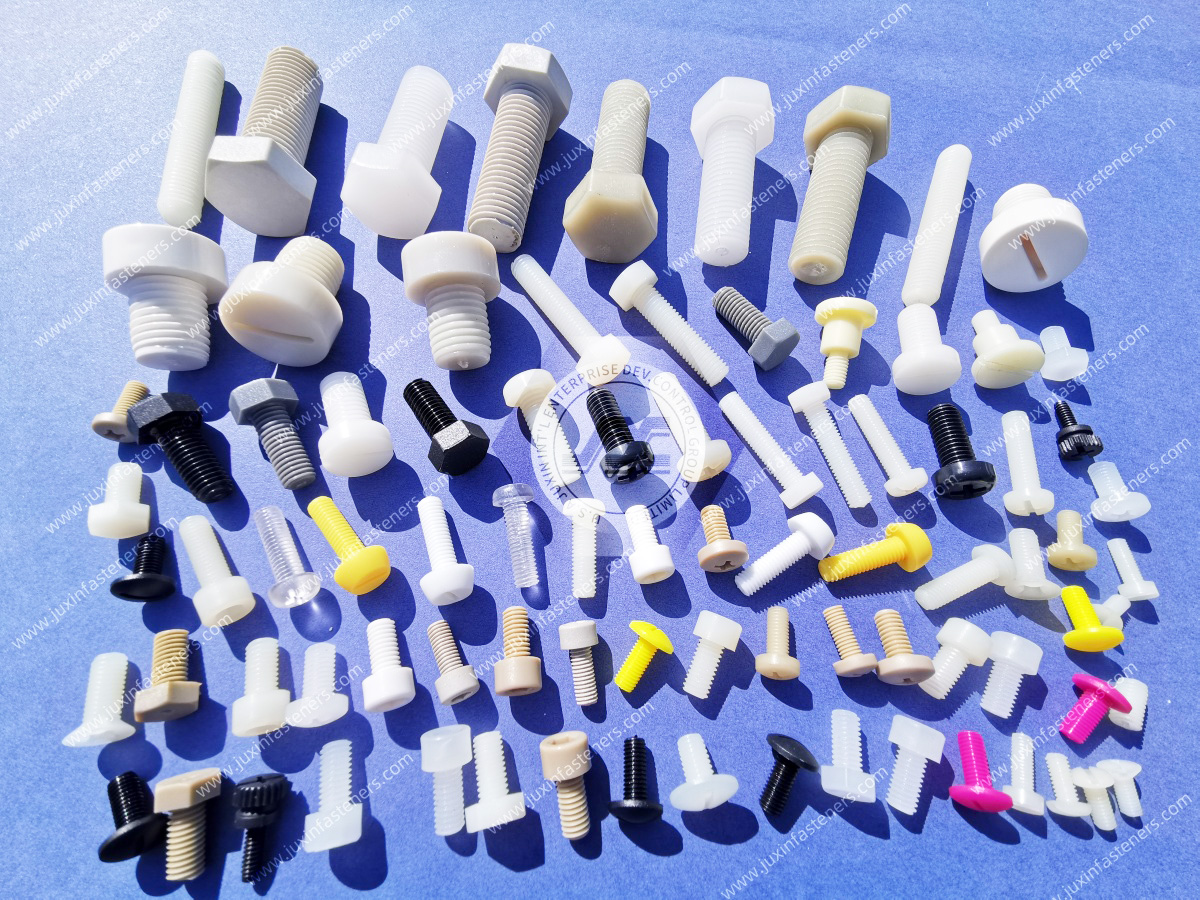
A male-to-female standoff can be considered when the assembly requires an external mounting thread on one side and an internal thread on the other.
This configuration can simplify certain stacked PCB or enclosure mounting architectures.
A female-to-female standoff can be considered when both ends need internal threaded interfaces and screws are used from both sides.
The correct length and thread specification should be determined from the complete stack-up.
No.
Depending on the assembly, nylon standoffs can be paired with nylon screws, plastic screws, or metallic screws where the thread compatibility,
mechanical requirements, electrical requirements, and environment are suitable.
A shoulder washer may be appropriate when the design requires insulation or separation around the fastener shank, protection of the mounting hole, or a controlled interface between the fastener and the PCB or panel.
It performs a different function from a spacer or standoff.
Procurement teams should provide:
2D technical drawings
3D CAD files where available
Spacer or standoff type
Inner and outer dimensions
Length
Thread specification where applicable
Material grade
Color
Tolerances
Application environment
Mechanical requirements
Electrical requirements
Annual volume
Initial order quantity
Packaging requirements
Multi-SKU BOM information
Inspection requirements
Complete technical information allows the supplier to evaluate manufacturability, tooling, material selection, inspection, and production requirements before quotation.
Selecting nylon spacers, PCB spacers, plastic standoffs, nylon standoffs, and threaded standoffs requires more than choosing a standard length.
The engineering decision should consider:
Material → Geometry → Thread → Stack-Up → Mounting Function → Load → Environment → Manufacturing → Inspection
For assemblies that also require nylon screws, plastic screws, nylon nuts, plastic nuts, nylon washers, plastic washers, shoulder washers,
or other polymer fastening components, evaluating the complete fastening system can help engineers avoid interface problems during prototype and production.
JUXIN FASTENERS supports OEM customers with drawing review, custom fastening component evaluation, manufacturing coordination, multi-SKU BOM sourcing, sampling, and production supply.
Submit your 2D/3D CAD files, technical requirements, annual volume projections, and relevant application information to info@juxinfasteners.com for engineering review and an OEM quotation.
Product Packaging
Packaging Standard
At Juxin Fasteners, we apply standardized export packaging to ensure product protection, traceability, and compliance with international logistics requirements.
1. Standard Export Packaging
Unless otherwise specified, all products will be packed according to our factory standard export packaging, which includes:
Moisture-resistant inner protection
Poly bag or small box packing as required
Reinforced export cartons
Clear labeling with part number, specification, batch number, and quantity
Palletizing for sea or air shipment when necessary
Our standard packaging is designed to ensure safe transportation, efficient warehousing, and long-distance international shipping.
2. Customized Packaging Options
We also provide customized packaging solutions according to customer requirements, including but not limited to:
Private labeling
Customized barcodes
Specific carton dimensions
Retail packaging
Special pallet configuration
Customer-specific marking and identification
So that you know, customized packaging may involve additional costs and extended lead time depending on the complexity of the requirements.
3. Compliance & Quality Assurance
All packaging processes are controlled under our ISO 9001 quality management system to ensure consistency, traceability, and product integrity throughout the supply chain.
Product Pictures
Contact Us
Tel.:
+86 020 8621 0320
+86 020 3121 6067
E-mail:
Technical Support:
Navigation
SEND INQUIREY